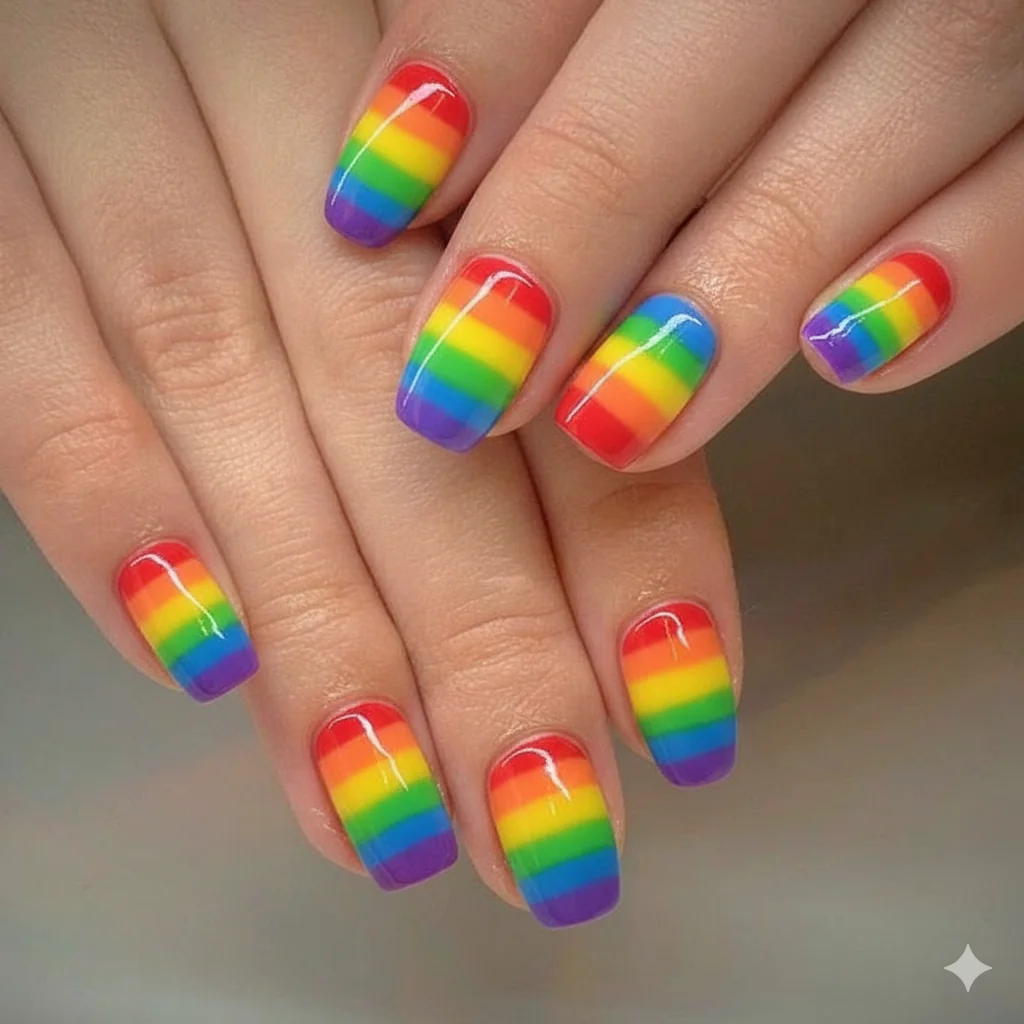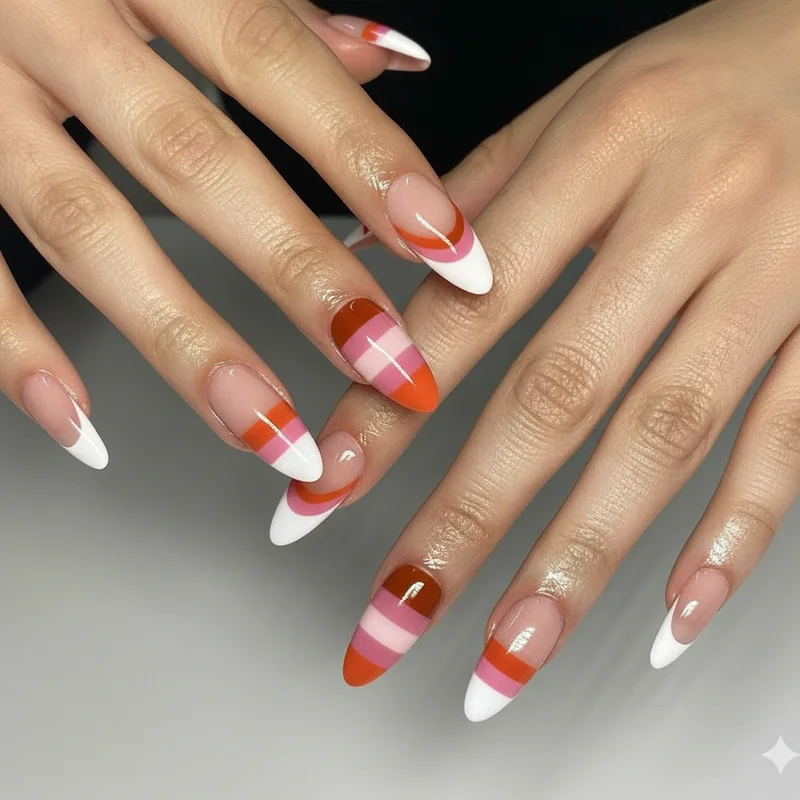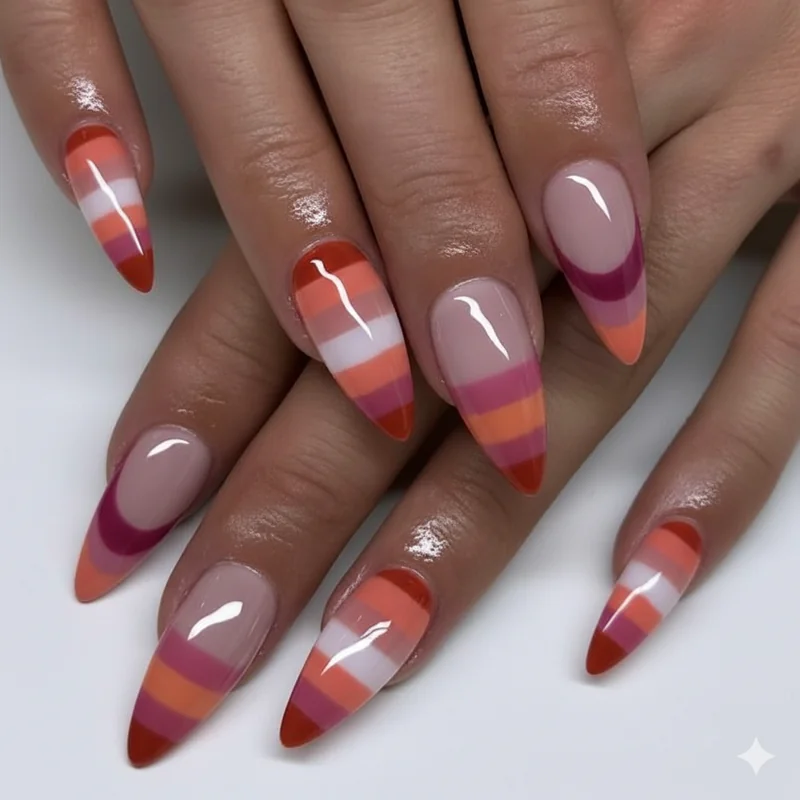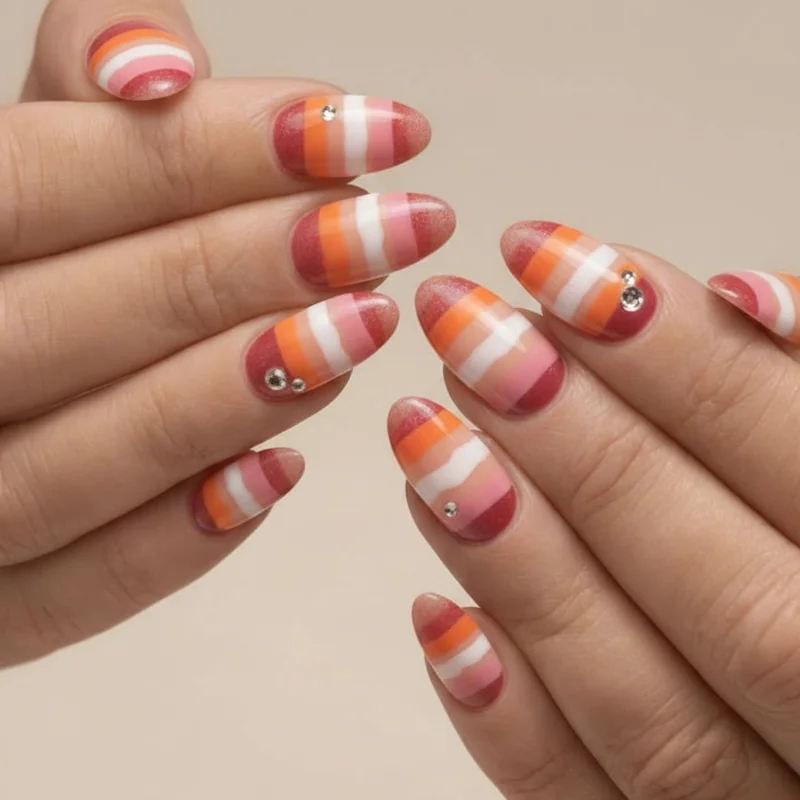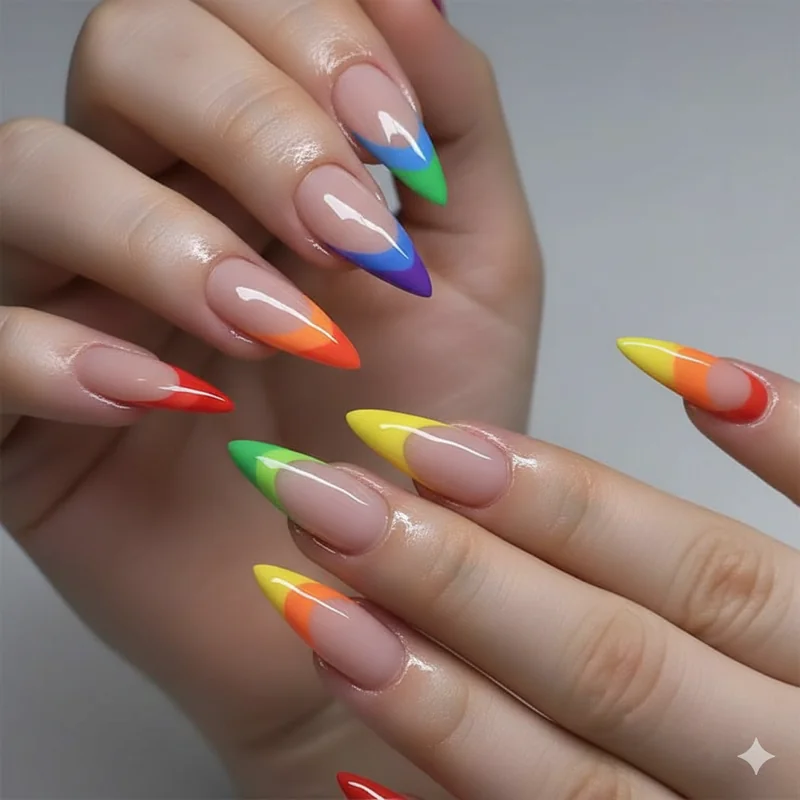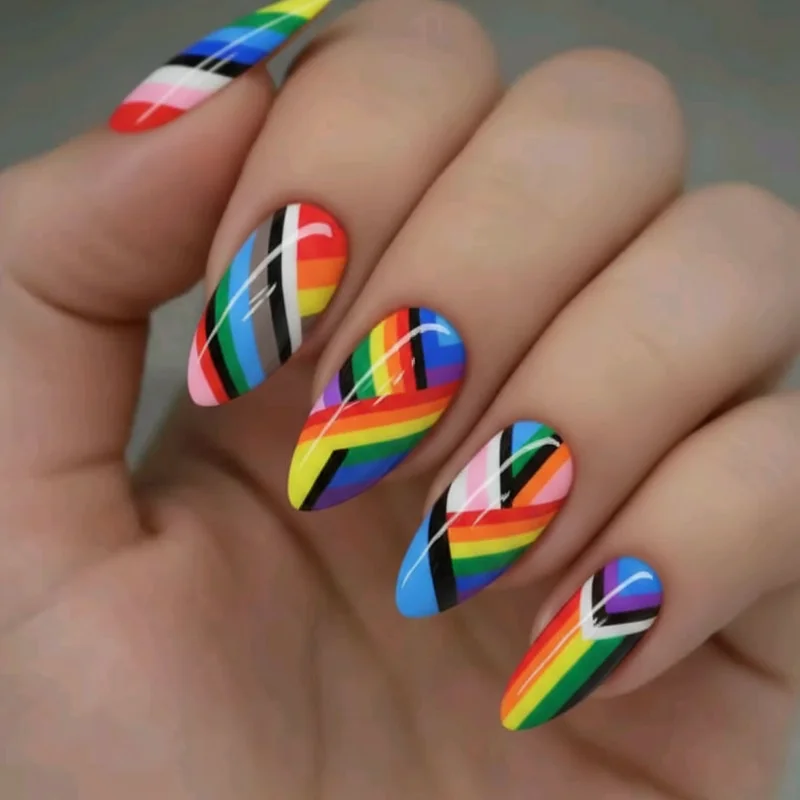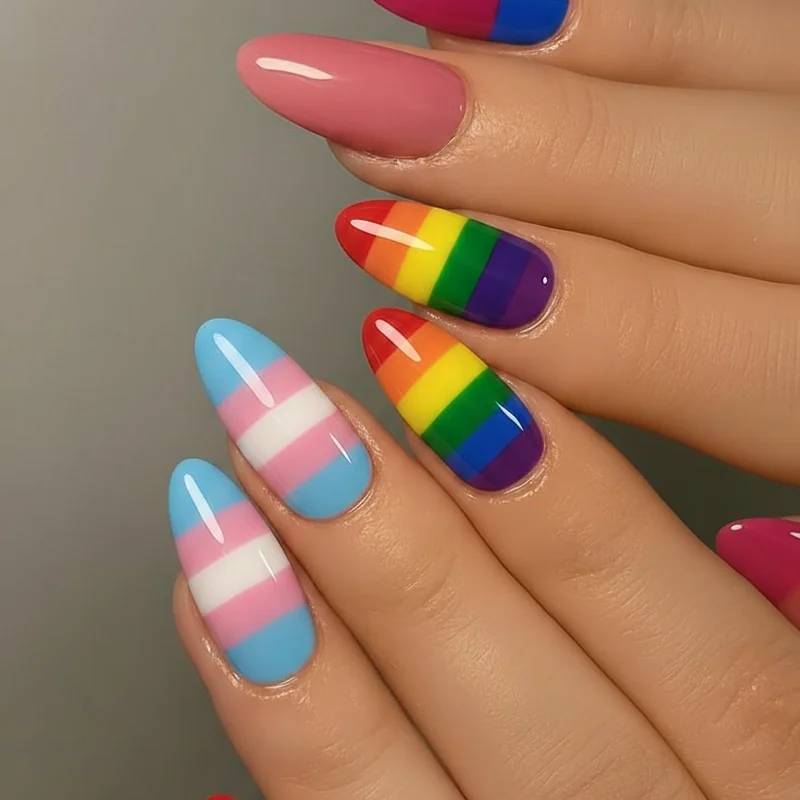
Wearing your flag on your nails is not a small thing. Pride flag nails are one of the most visible, personal ways to carry your identity into the world and when the colours are right, they land differently. Not just as decoration. As a statement that is entirely yours.
This guide covers every major LGBTQ+ identity flag the exact colours, what they mean, how to translate them into nail designs that actually look intentional, and which techniques make flag stripes achievable at home. Whether you know your flag and want design inspo, or you are still figuring out which colours are yours, this is the post that bridges the gap between flag knowledge and nail execution. For the full scope of June nail inspo beyond flags, Pride Month Nails: 50+ Ideas to Celebrate in June 2026 is your starting point and Summer Nail Trends 2026 puts pride nails inside the broader seasonal picture.
Why Your Flag Matters on Your Nails
Visibility is not vanity. For a lot of people, wearing pride flag nails during June or any month is the one form of public visibility they feel safe with. Not a t-shirt, not a badge. Ten small canvases on their fingertips that say something true about who they are.
The colours carry weight precisely because they were chosen deliberately. Every flag in the LGBTQ+ community was designed by someone who wanted their community to have something to point to a symbol that was theirs. Getting those colours right on your nails is a form of respect for that intention. A coral-leaning pink standing in for the specific pale rose of the trans flag is not the same thing. An orange that reads red on the lesbian flag changes the statement entirely.
This post exists because most nail content either covers the flags without design guidance, or covers pride nail art without flag accuracy. The result is a lot of "bi-inspired" ombres in colours that don't match the flag, and a lot of trans nail inspo in the wrong shade of blue. You deserve better than that and so does your manicure.
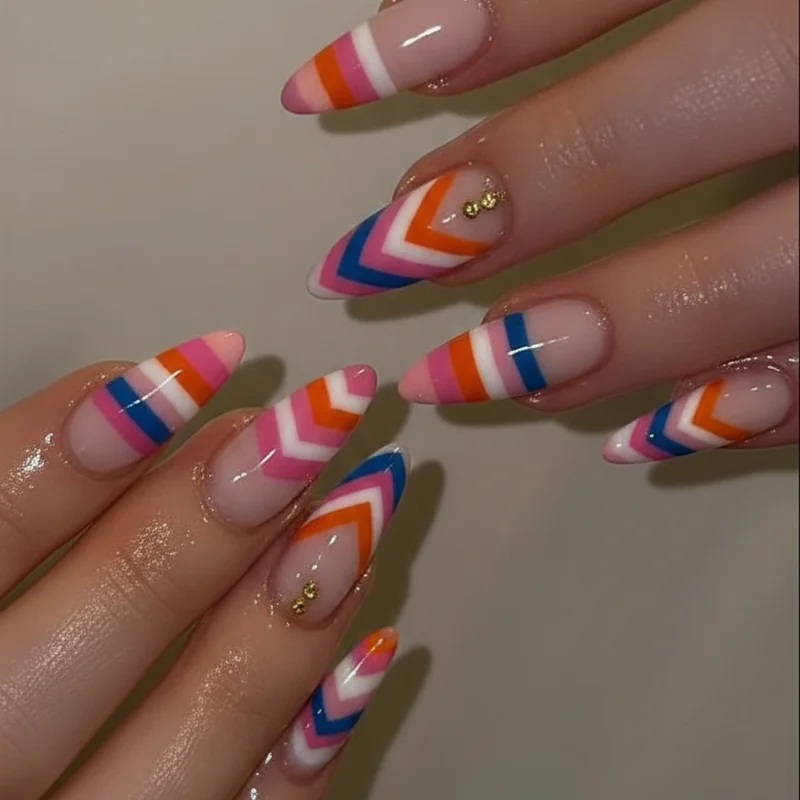
The Rainbow Flag and Progress Pride Flag: Which One Are You Wearing in 2026?
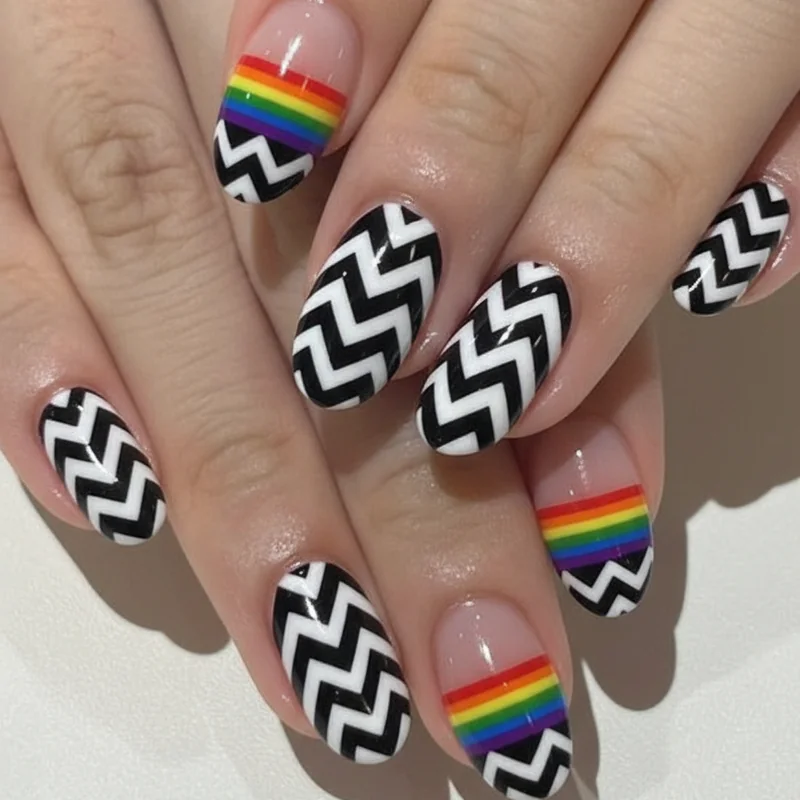
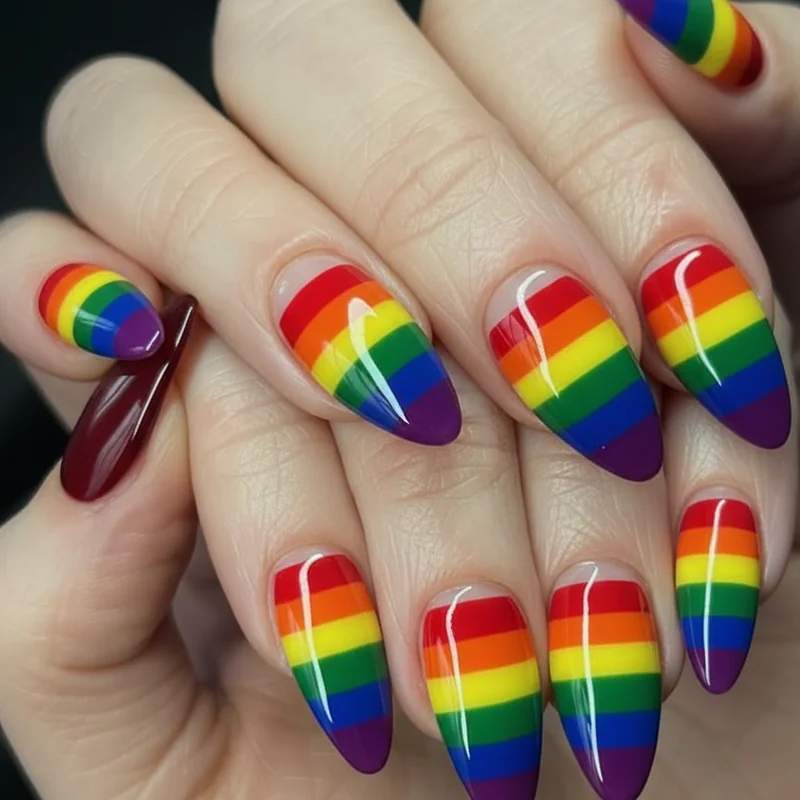
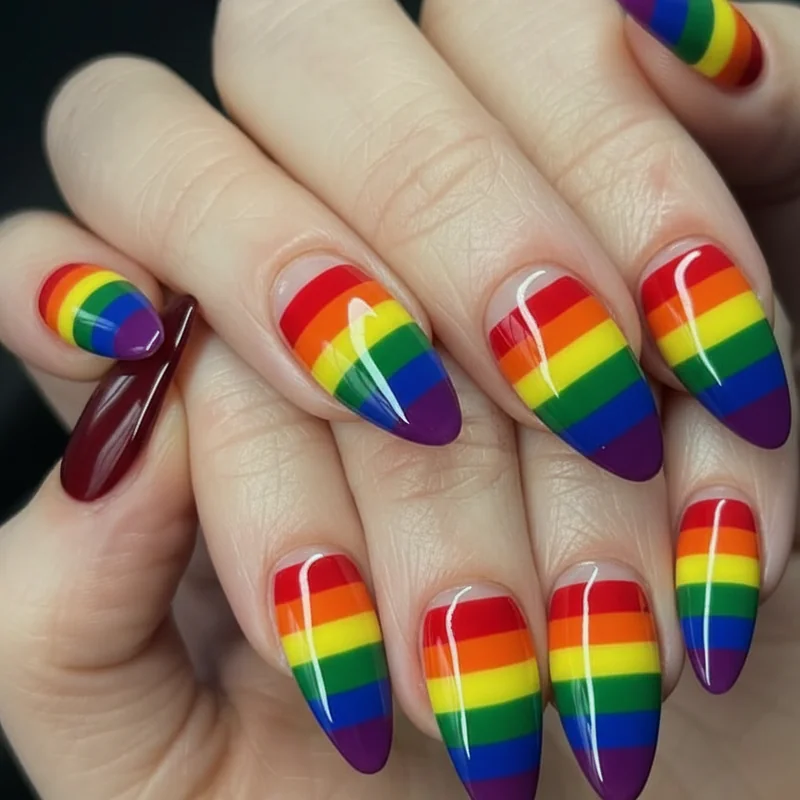
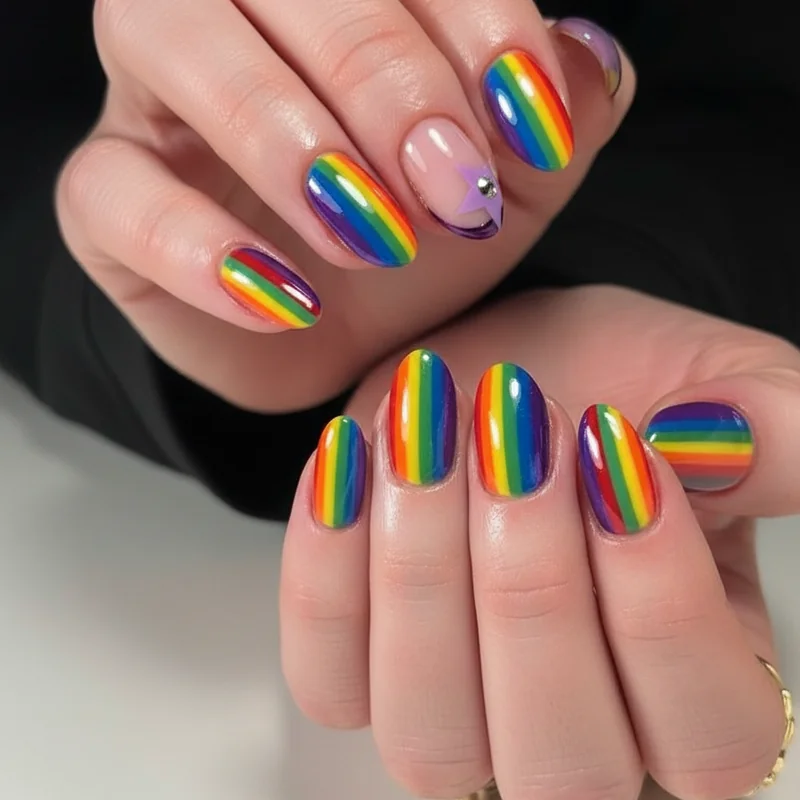
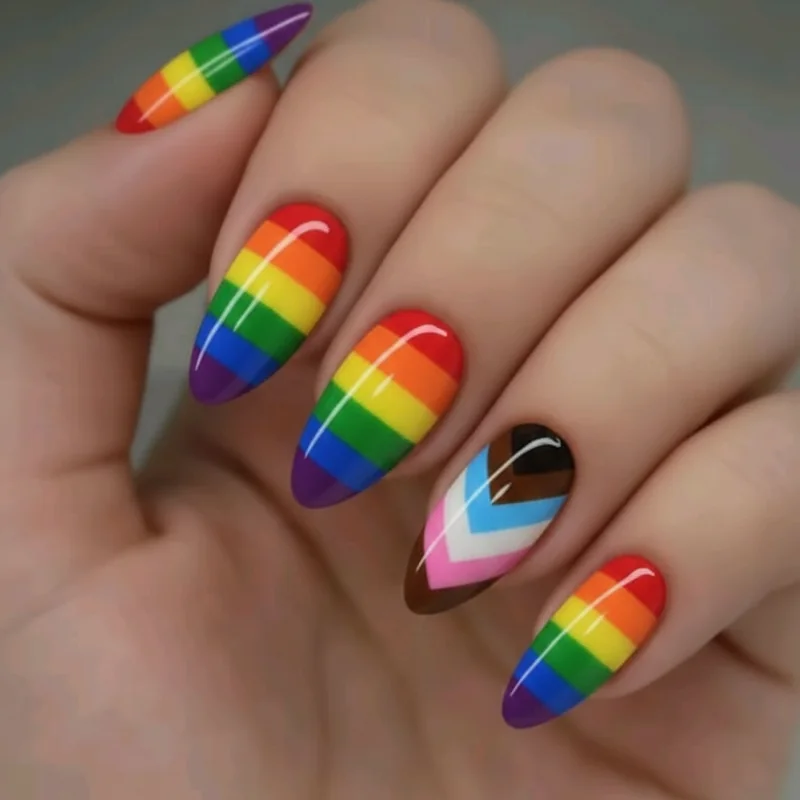
The six-stripe rainbow flag is an icon. Red, orange, yellow, green, blue, violet it is immediately legible as a symbol of queer pride across every culture and context. As a nail design, it is also one of the most satisfying to execute: six clean horizontal stripes, one per nail or distributed across the set.
The Progress Pride Flag is something more. Designed in 2018 by Daniel Quasar, it added black and brown chevron stripes to represent marginalised LGBTQ+ communities of colour, and incorporated the trans flag's pink, white, and blue. Then in 2021, Valentino Vecchietti added the yellow triangle and purple circle representing the intersex community creating what is now known as the Intersex-Inclusive Progress Pride Flag, now in the Smithsonian's Cooper Hewitt collection. As of 2026, this is the most up-to-date and inclusive umbrella pride flag.
So which one do you wear? Both are valid. The rainbow flag remains a powerful, universally understood symbol of queer solidarity. The Intersex-Inclusive Progress Pride Flag is the more current statement of inclusion. On nails, the rainbow is easier to execute cleanly; the Progress flag is a project but a rewarding one. The section on translating the Progress flag into a nail design is further down, with specific technique guidance for handling all eleven colours. For bold rainbow nail inspo, Rainbow Nails for Pride: Bold Designs for Parade Season has every format covered.
Lesbian Flag Nails: The Colours, the Meaning, and the Best Designs
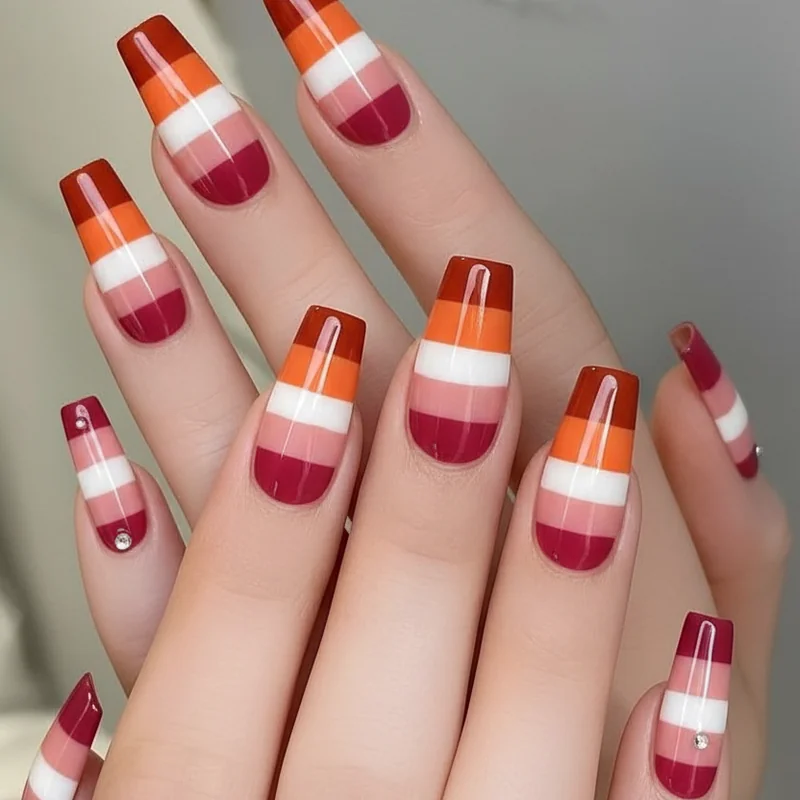
The modern lesbian flag the one you want for your nails uses five stripes: dark orange, orange, white, pink, and dark rose. This replaced the older lipstick lesbian flag and is now the widely recognised standard. The orange tones represent gender nonconformity and independence; white is unique to lesbianism; the pinks represent love and femininity.
For nail designs, the three-stripe version (dark orange, white, dark rose) is the most beginner-friendly and the most legible at small scale. Five stripes across a nail requires a very fine liner brush and steady hands achievable, but not a first attempt. The orange and rose tones are genuinely beautiful together, and they sit well in both matte and glossy finishes. A terracotta-adjacent orange (think dusty, warm, not neon) paired with a muted dusty rose is the closest polish match to the flag's intended shades.
For a full deep-dive into designs and formats, Lesbian Nails: Ideas, Designs, and Inspo for WLW has everything you need. The flag stripe version is one option among many.
Bisexual Flag Nails: Pink, Purple, and Blue Done Beautifully
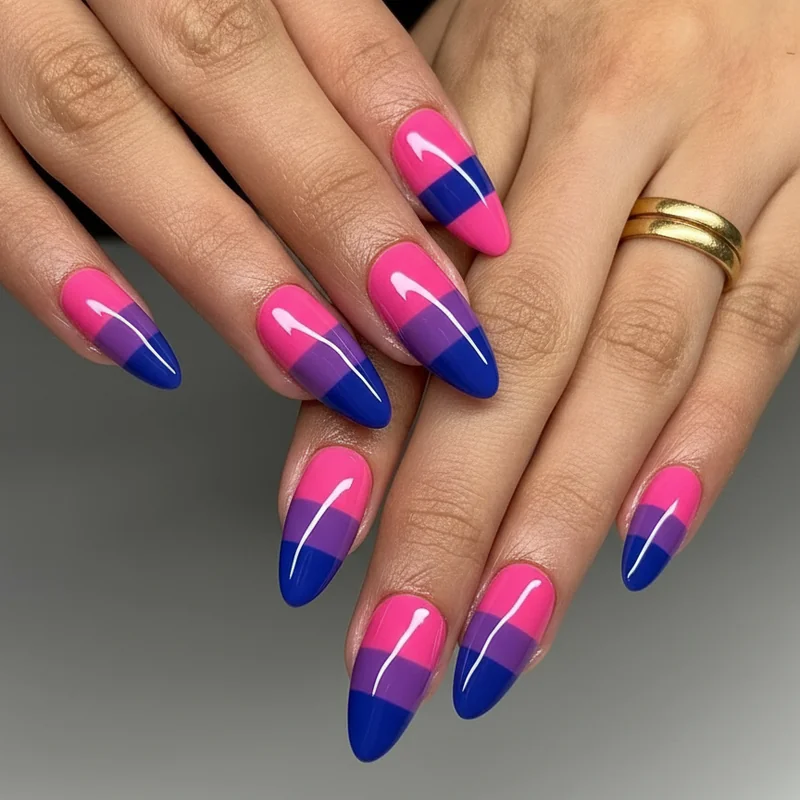
Three stripes. Hot pink on top, lavender in the middle, royal blue on the bottom the bisexual flag is one of the most nail-friendly designs in the entire LGBTQ+ lexicon, because the colour combination is genuinely striking as a beauty look regardless of what it represents.
The pink stripe is the widest, representing same-gender attraction. The blue is equal in width to the pink, representing different-gender attraction. The purple stripe narrower, sitting between them represents attraction to both, where those two overlap. Getting the proportions right matters here: the purple should be noticeably thinner than the pink and blue, not equal thirds.
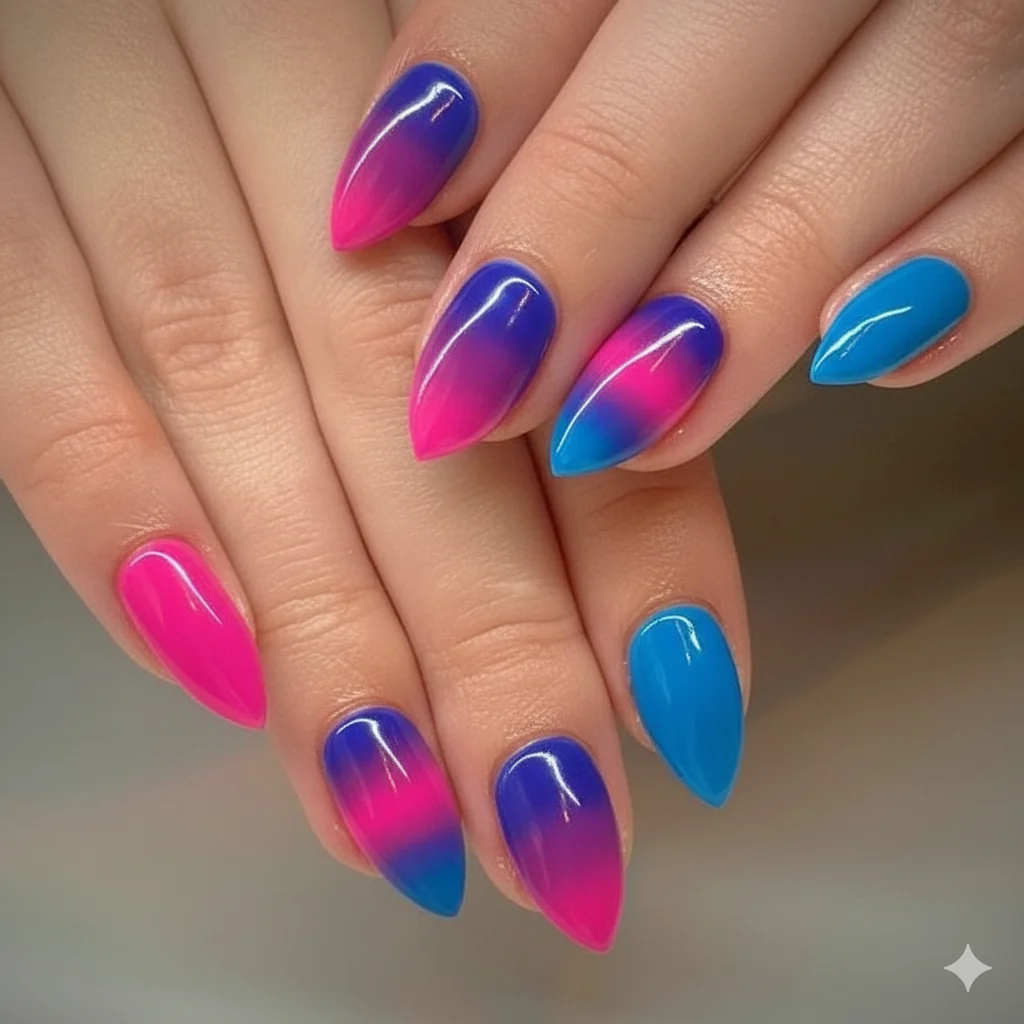
For nail execution, two approaches work well. The stripe method (striping tape, three clean horizontal bands) is the most flag-accurate. The ombre method sponging from hot pink through lavender to blue is more wearable as an everyday manicure and still clearly reads as bi pride to anyone who knows the flag. Bisexual Nails: Ideas and Designs for Bi Pride covers both in full, plus every shape from short square to long almond.
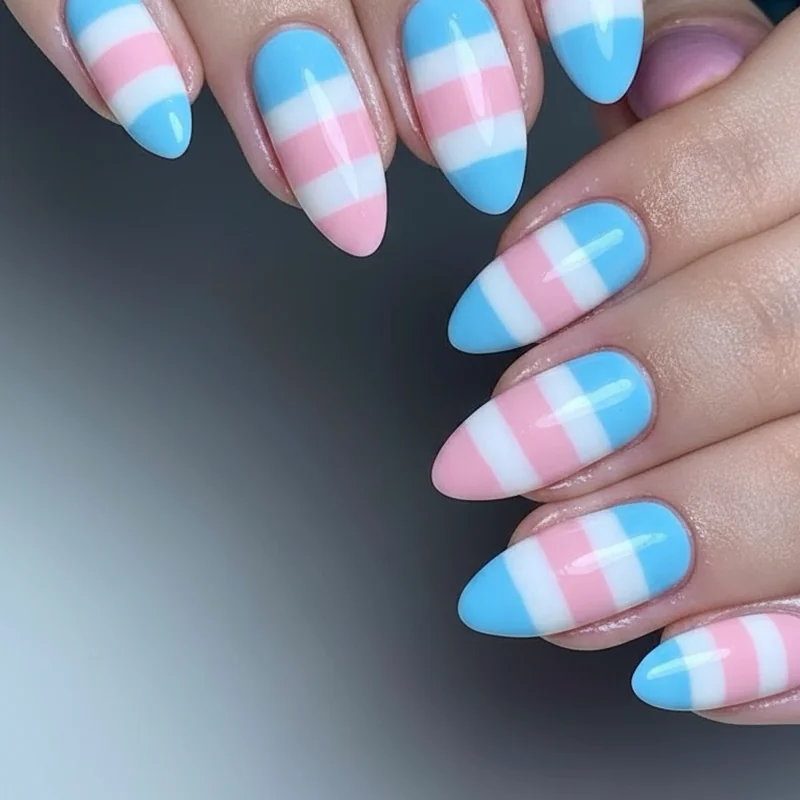
Transgender Flag Nails: Blue, Pink, and White That Actually Look Right
Colour accuracy matters more on the trans flag than almost any other. The pale blue is not a baby blue or a sky blue it is a very specific, soft, almost dusty light blue that sits closer to powder than periwinkle. The pink is a gentle, pale rose not hot pink, not fuchsia, not coral. When those colours drift, the flag loses its meaning.
The trans flag has five stripes: light blue, light pink, white, light pink, light blue. It is symmetrical by design Monica Helms, who created it in 1999, said this was intentional, representing trans people finding correctness in their lives. The LGBTQ+ pride flags resource from the Human Rights Campaign describes the blue and pink as representing the traditional colours assigned to boys and girls, with white representing those who are intersex, gender-neutral, or transitioning.
For nails: a white base with pale blue on the pinky and ring finger, pale pink on the index and middle, is the cleanest and most legible approach for shorter nails. For longer nails, five horizontal stripes across one feature nail is achievable with a fine liner brush. The white must be a true white not off-white or cream to keep the flag accurate. Trans Nails: Designs Celebrating Transgender Pride goes deeper into every format.
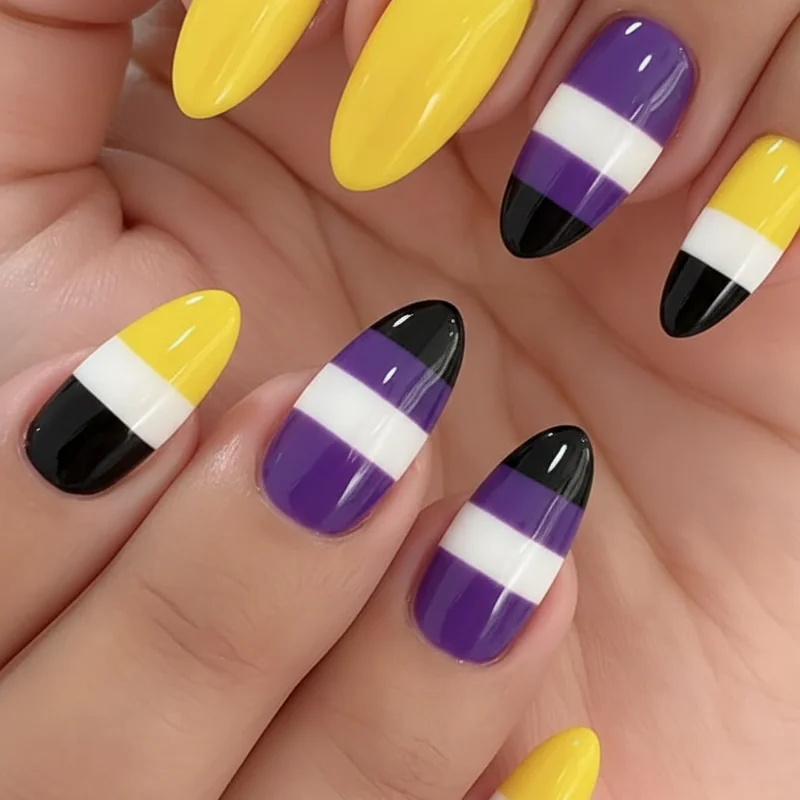
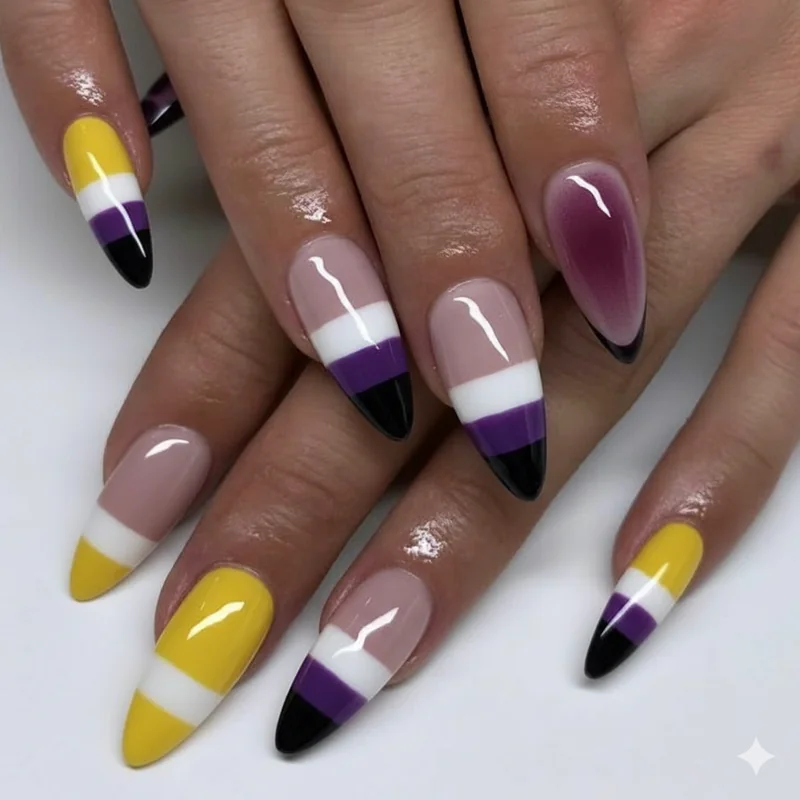
Nonbinary Flag Nails: Yellow, White, Purple, and Black
Four colours, four stripes, and a combination that is striking enough to work as a standalone nail look without anyone needing to clock it as a flag. Yellow at the top, white, purple, black at the bottom the nonbinary flag was designed to represent gender outside the binary. Yellow for gender outside the blue-pink spectrum, white for all genders, purple for mixed or fluid genders, black for agender identities.
The yellow is the most distinctive element and the one most likely to stray in nail polish form. The flag's yellow reads bright and clean think primary yellow, not gold, not mustard. A chrome yellow nail polish in two coats over white is the closest achievable match for most ranges.
Nail design options: the four-stripe horizontal is the most flag-literal. A colour-blocking approach one nail each in yellow, white, purple, and black is more geometric and very modern. The latter works especially well on short nails where fine stripes would be too small to read.
For full enby and pan nail inspo and the design formats that work across every nail length, Nonbinary Nails: Designs for Nonbinary and Pansexual Pride is the complete resource.
Pansexual, Asexual, and Genderqueer Flag Nails: Designs for Every Identity
Pansexual Flag Nails
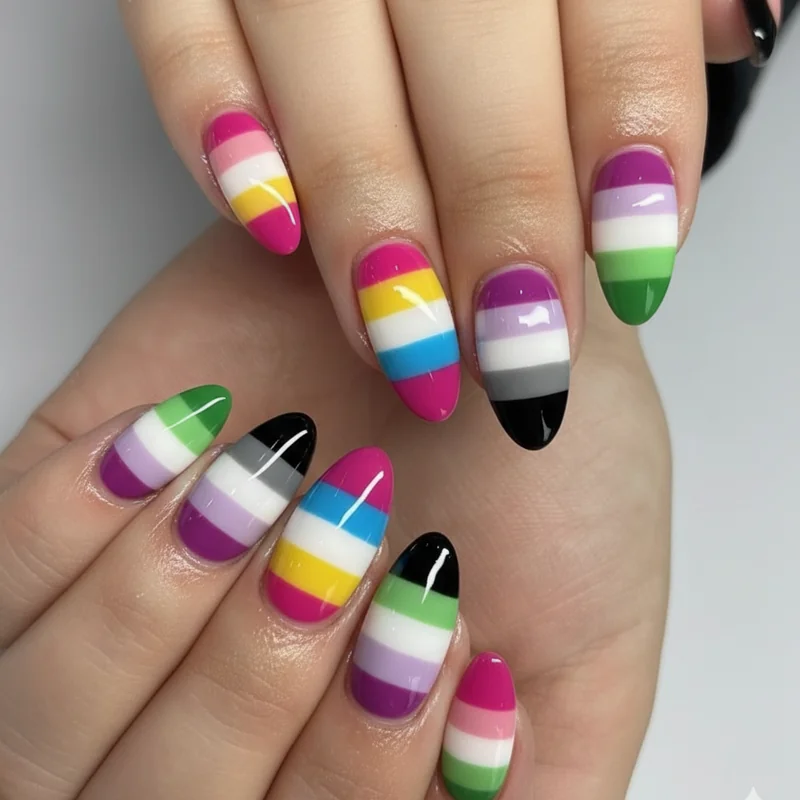
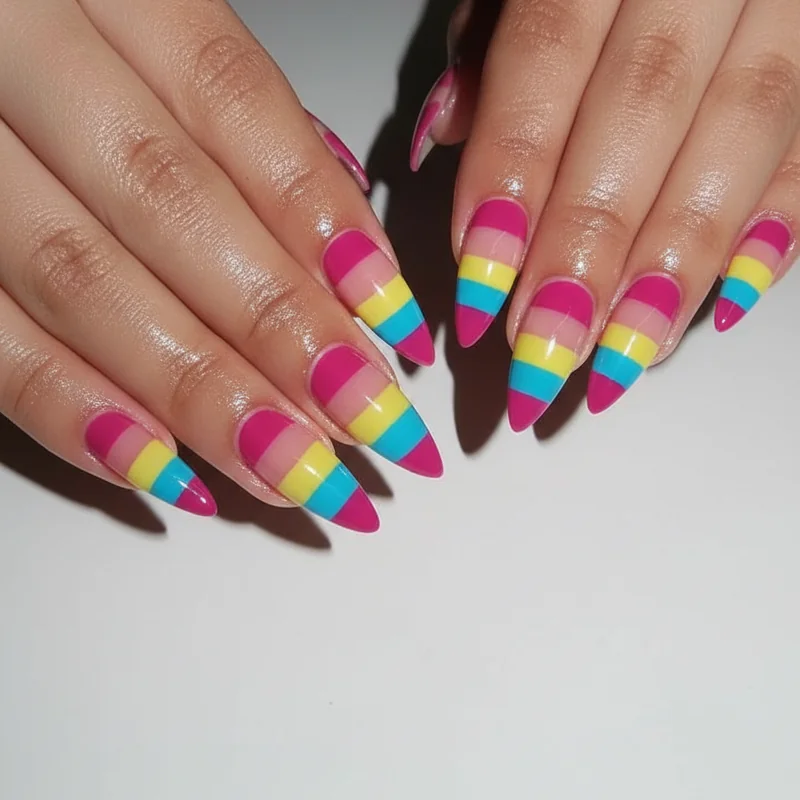
The pan flag is three stripes: hot pink, yellow, and cyan blue. The pink represents attraction to women, the blue to men, and the yellow a bright, warm mid-tone represents attraction to people of all genders, including nonbinary identities. The yellow is the key colour here and the most distinctive element; a neon or pastel yellow won't carry the same weight as the flag's specific warm sunshine tone. On nails, the three-stripe approach is clean and modern. The colour combination also lends itself beautifully to a neon interpretation a 2026 format that reads as intentionally contemporary while staying flag-accurate. For neon flag colour ideas, Neon Summer Nails: Bold Colours & Designs for 2026 has the technique guidance.
Asexual Flag Nails
Black, grey, white, purple. The ace flag moves from black at the top through grey and white to a rich purple at the base representing the spectrum of sexual attraction (or its absence), with purple symbolising the asexual community specifically. The colour story is quiet and sophisticated, and it translates to nails in a way that reads as both intentional and genuinely wearable. Black and grey together have a natural elegance; the purple base adds the identity marker. For ace nails, the ombre approach works particularly well sponging from black through grey to white, with the purple as a solid accent nail.
Genderqueer Flag Nails
Lavender, white, and dark green. The genderqueer flag uses lavender to represent androgyny, white for agender identity, and dark green for those whose identities fall outside the binary. The green is a deep, forest-leaning tone not lime, not sage and it is what makes this flag's nail translation most distinctive. Lavender and forest green together is an underrated colour combination that works beautifully in a stripe or colour-blocked format.
The Progress Pride Flag as a Nail Design: How to Make All Those Colours Work
Eleven colours. A chevron shape. A yellow triangle with a purple circle nested inside it. The Intersex-Inclusive Progress Pride Flag is the most complex flag to translate into a nail design and the most rewarding when it works.
The flag breaks into two zones: the six rainbow stripes across the body, and the chevron on the left side containing black, brown, white, pink, and light blue, with the intersex triangle and circle at the point. On nails, you cannot do all of this on one nail. That is not a failure of the design it is just physics.
The most successful approaches: spread the flag across the full set. Pinky and ring finger in rainbow stripes (two or three colours each, working through red-orange-yellow and green-blue-violet). Middle finger as the chevron nails black and brown on the outer edges, white-pink-blue in the centre. Index finger in yellow with a purple circle drawn in nail art pen or dotting tool. Thumb as a solid from the rainbow sequence.
Alternatively, a colour-blocked interpretation each nail a solid from the flag's palette, ordered to echo the flag's left-to-right progression is more beginner-accessible and still clearly communicates the Progress flag's breadth. The complete guide to pride flags by Proud Zebra is a useful reference for exact colour values when you are matching polishes.
How to Wear Two Flags on One Nail Set
This is the question nobody answers and it is a real, common situation. Being trans and lesbian. Being bisexual and nonbinary. Being ace and genderqueer. Identity is not single-flag territory for a lot of people, and the nail set should be able to reflect that.
The cleanest approach: primary flag on the main nails, second flag on the accent nails. If you are wearing a trans flag manicure pale blue, white, pale pink as the base colour scheme your ring finger accent nails can carry the lesbian flag stripe instead. The two flags share the same set without competing.
A second approach: alternate flags by hand. One hand carries your first flag's colours, the other hand carries the second. This works especially well when the two flags share a colour (bi and pan both use pink; nonbinary and progress both use yellow) the transition reads as intentional rather than mismatched.
For the nail itself, accent nails in a contrasting flag colour tend to work better than trying to stripe both flags onto a single nail, where the design becomes unreadable at scale. Legibility is the goal a flag that requires explanation has not landed the way you intended it to.