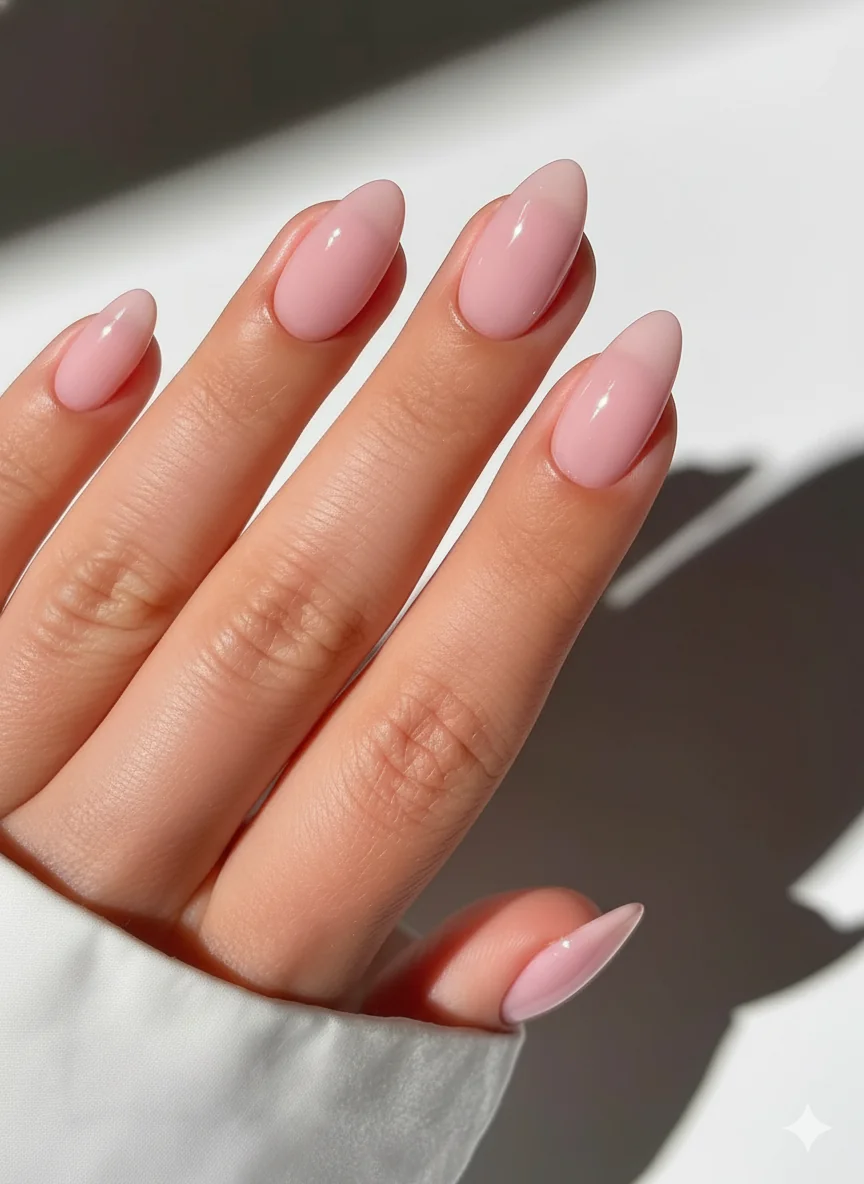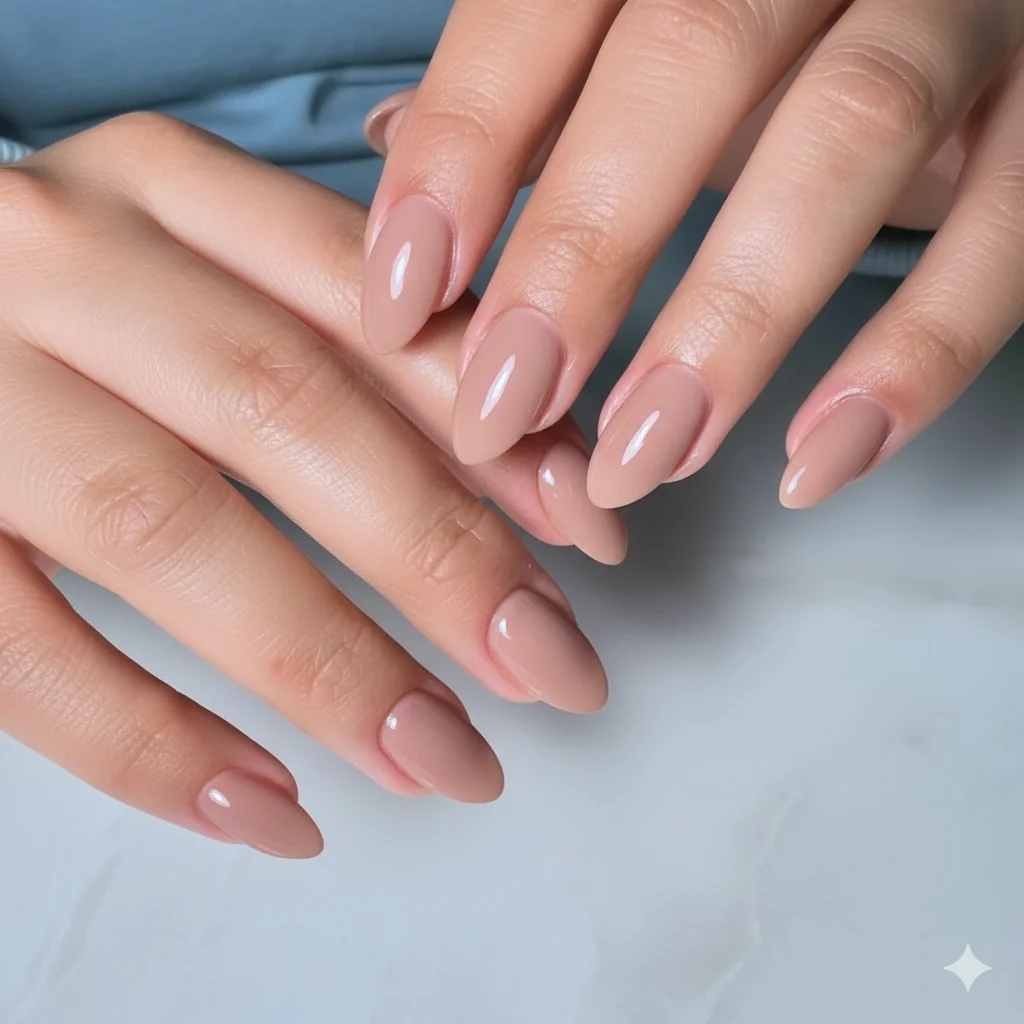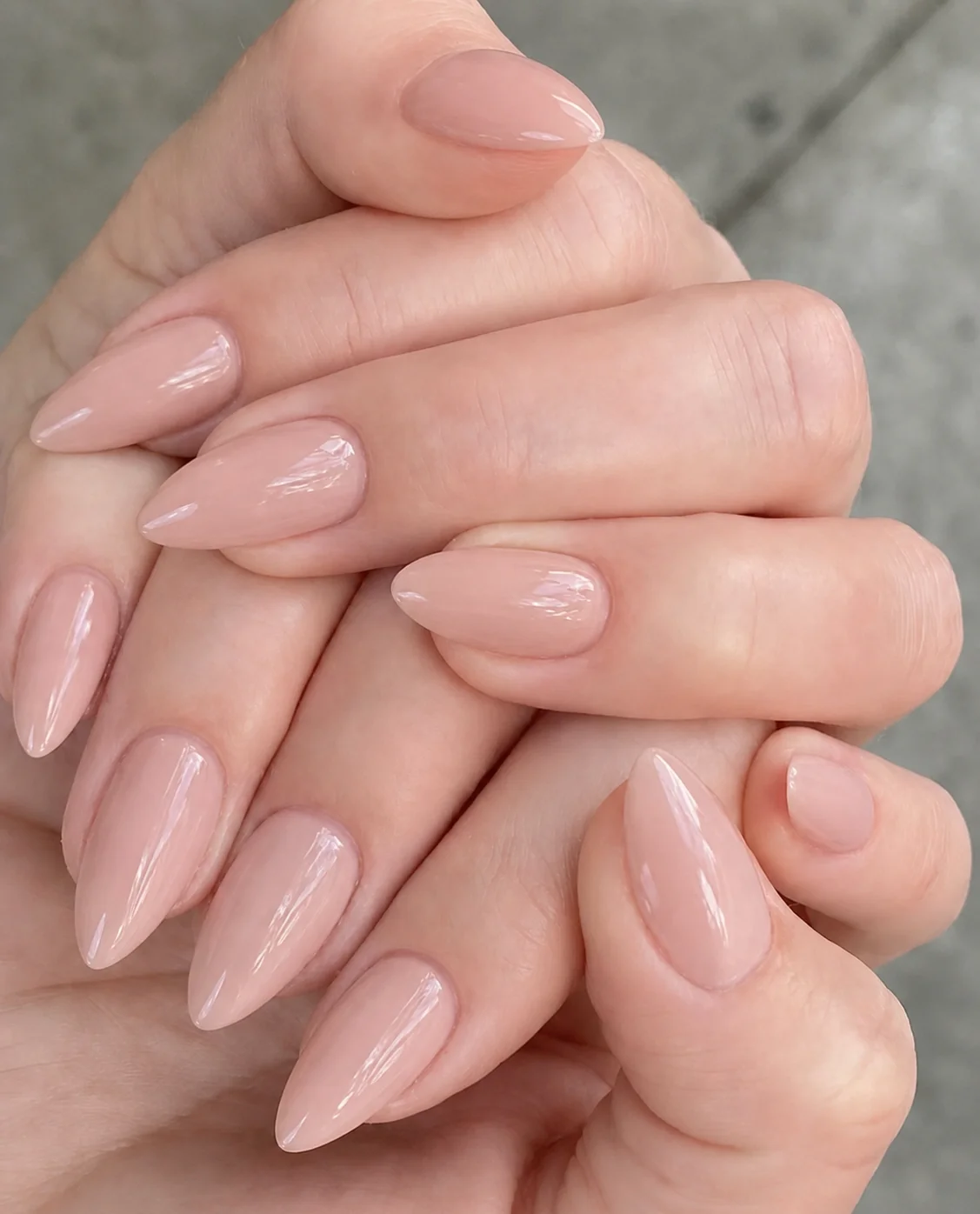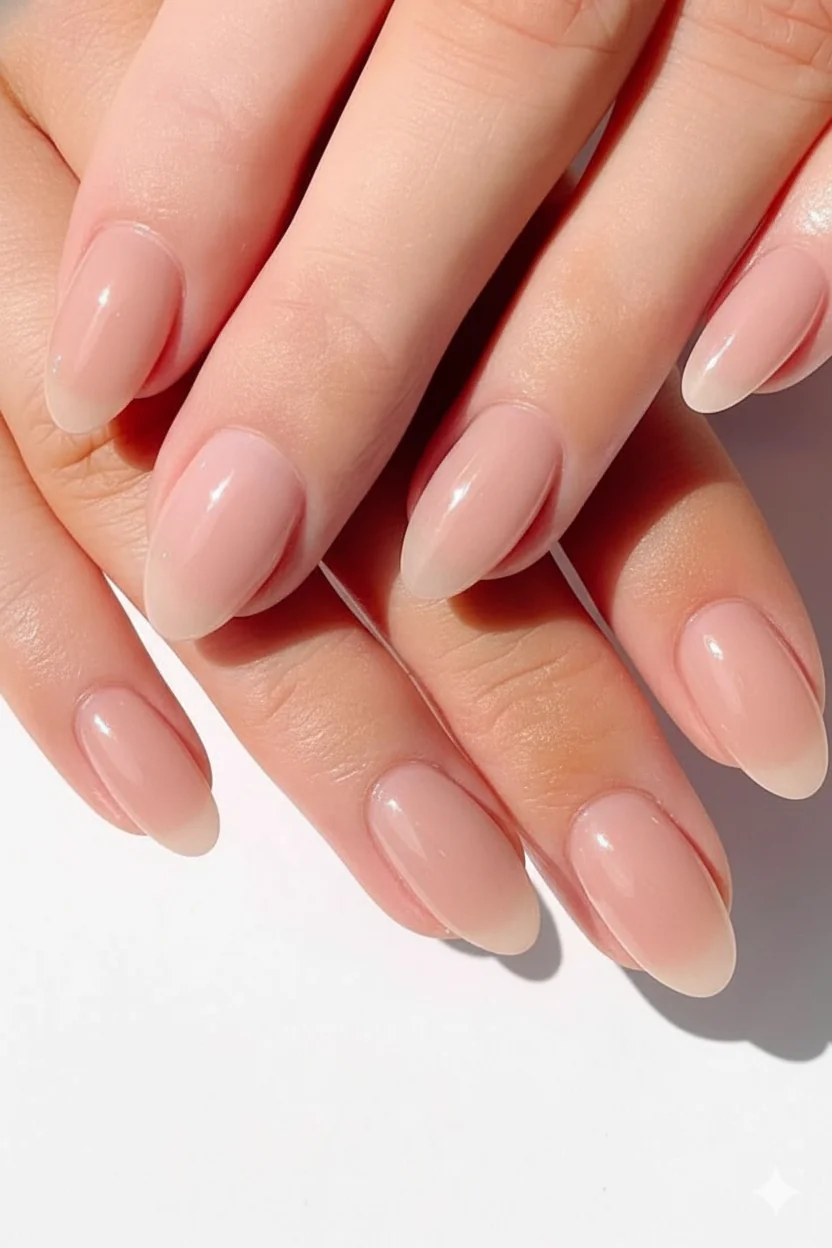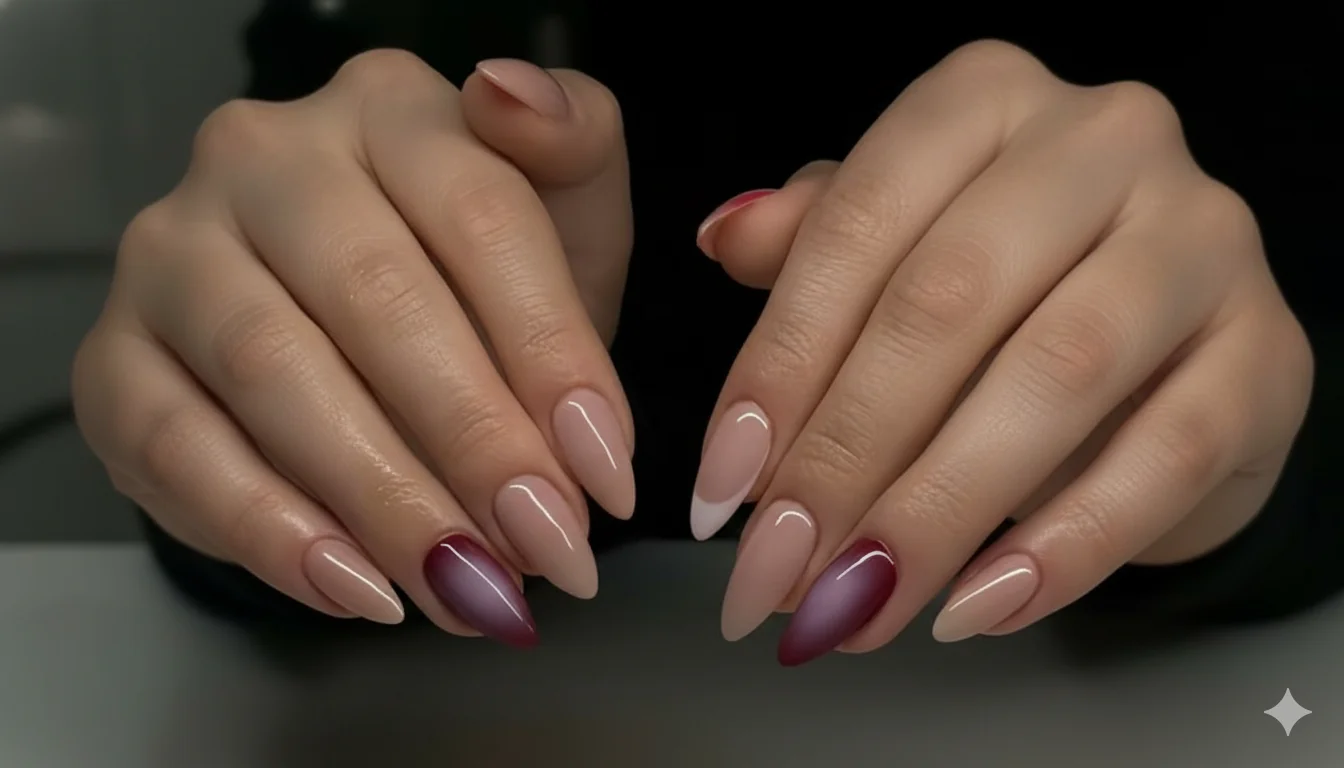
The screenshot is already on your phone. You know the shape — that tapered, softly pointed tip that reads elegant without being aggressive. Almond nails for beginners is one of those topics that sounds simple until you are sitting in the salon chair, second-guessing whether you said the right thing. This guide covers everything: the shape itself, whether it suits you, the length question everyone worries about, what product to choose, what to actually say when you book, and what happens after you leave. No jargon left unexplained. No gaps where the important bit used to be.
What Exactly Are Almond Nails? (And Why Everyone Gets the Shape Wrong)
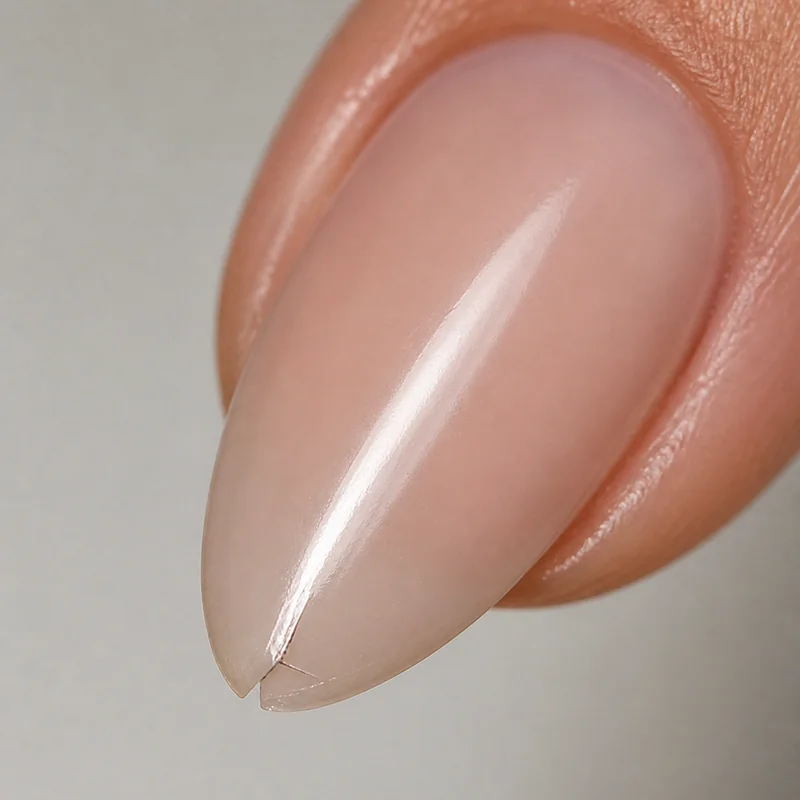
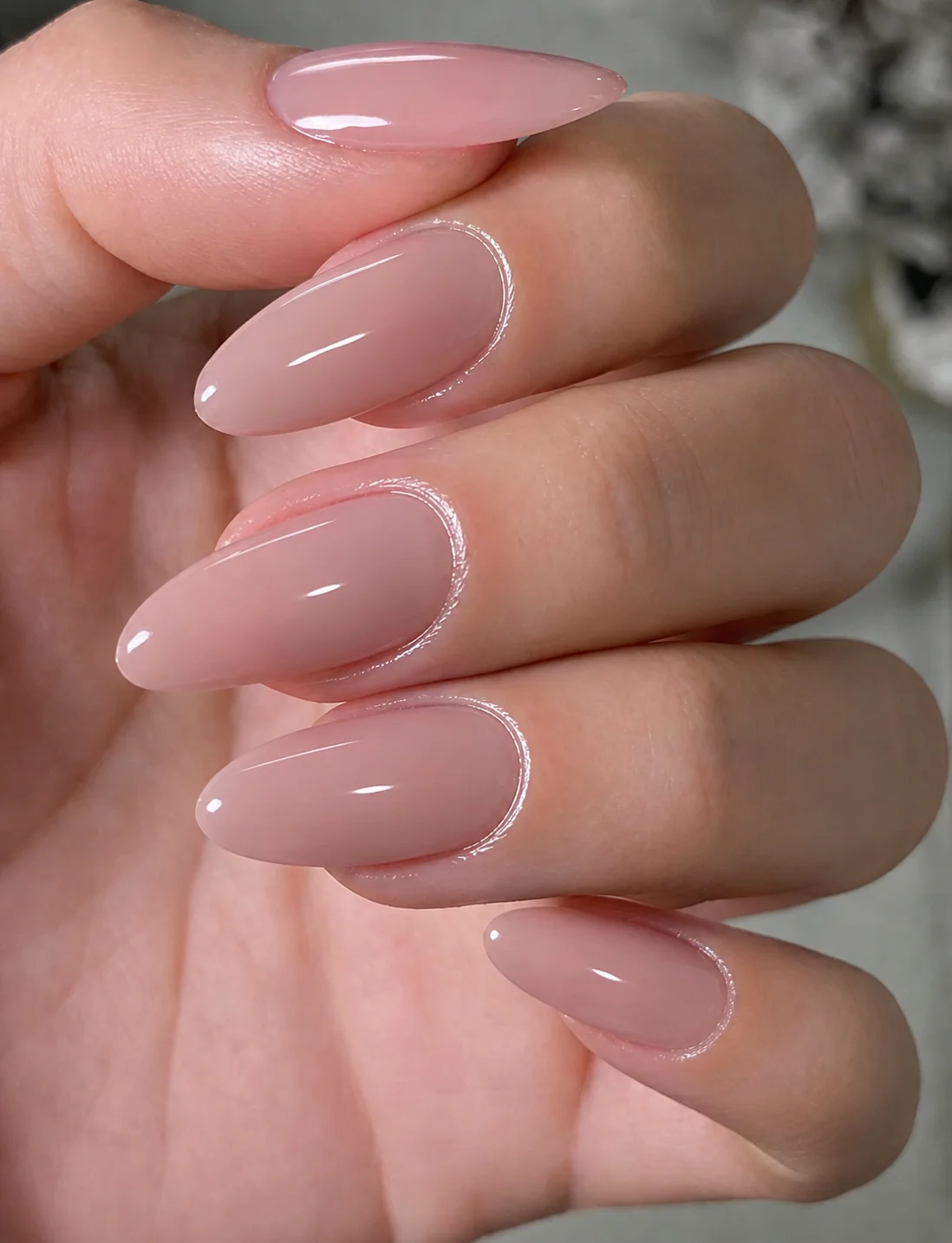
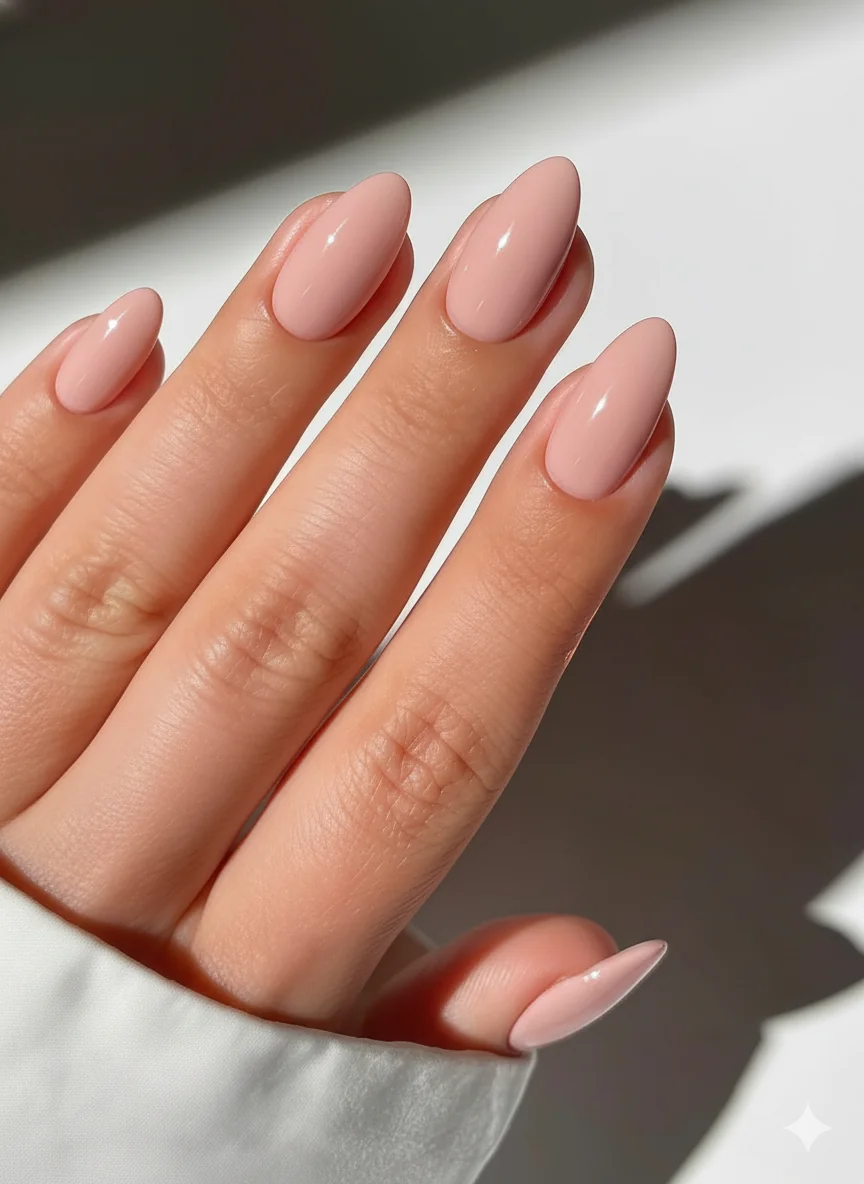
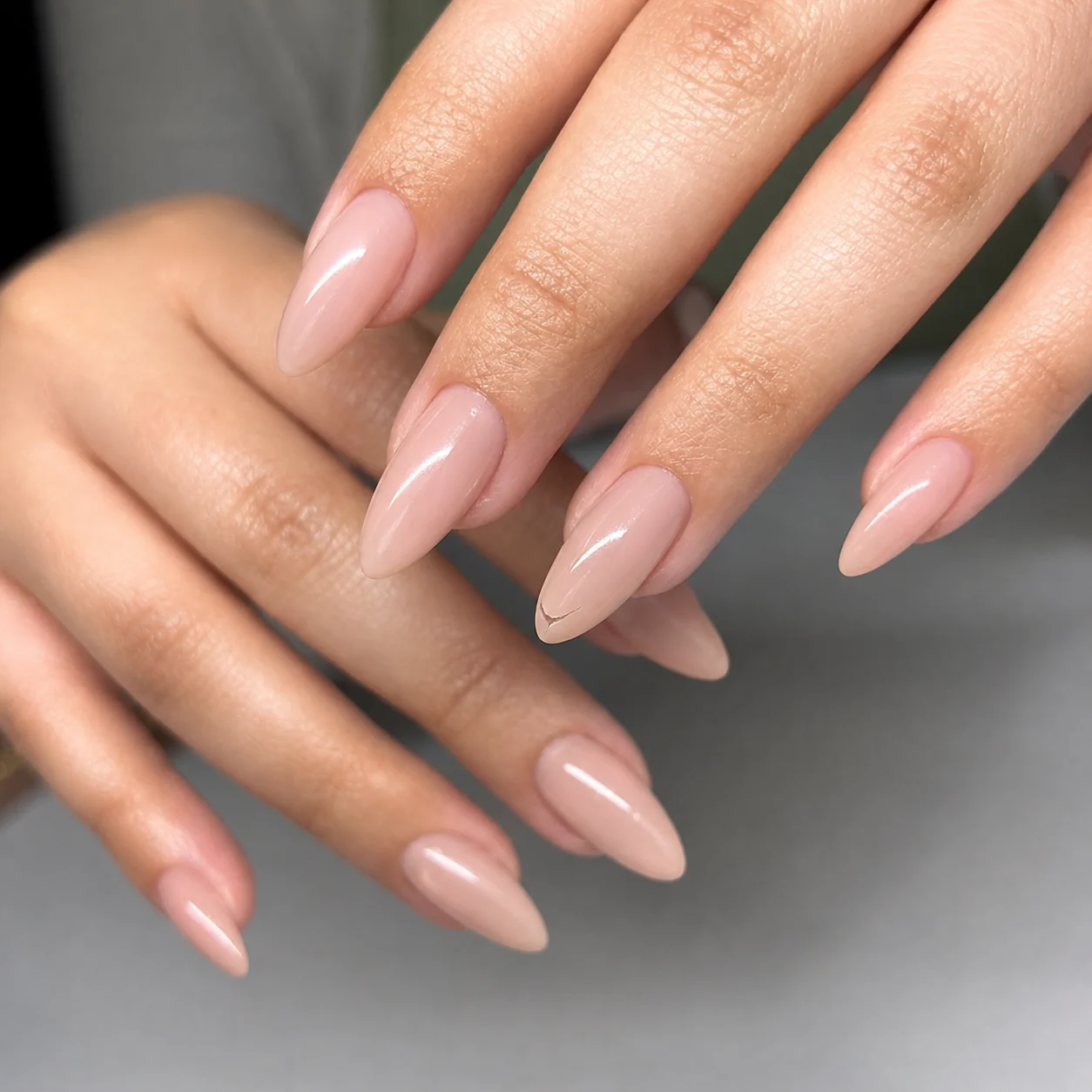
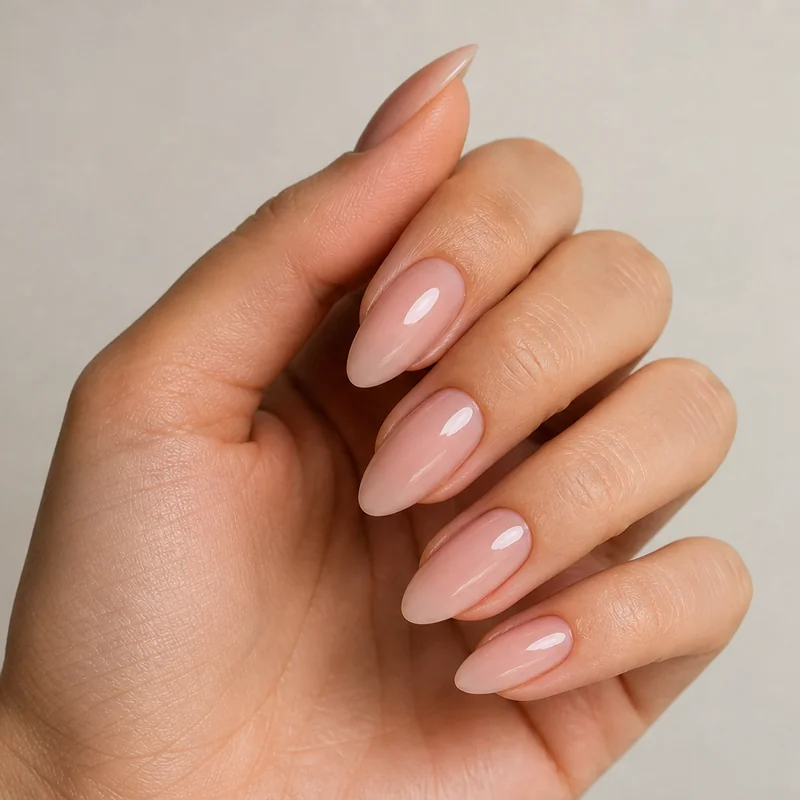
Picture an actual almond. Wider at one end, sides that curve inward as they move toward a point, a tip that is rounded rather than sharp. That is precisely what the shape looks like on a nail — wider at the base where it meets the skin, both sides tapering as they climb, finishing at a soft point that is never a full spike.
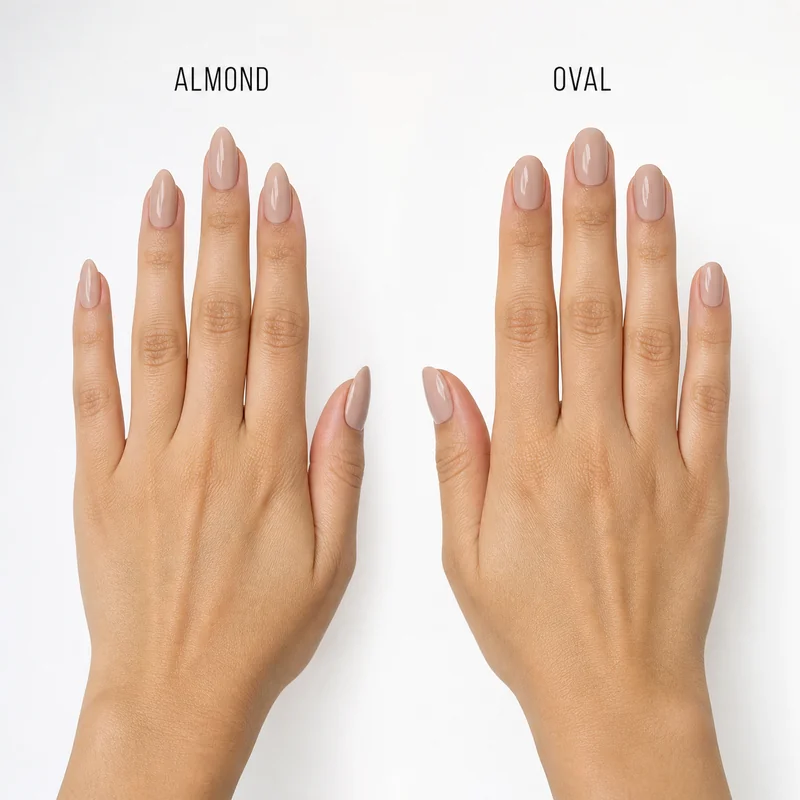
The confusion comes in at that tip. Beginners tend to imagine almond as more dramatic than it is, or mistake it for oval because both shapes curve. The critical difference: almond nails visibly narrow as they go up. You can see the taper. With oval, the width stays consistent until a dome-shaped curve at the very top. If the sides are straight, it is not almond. If there is no taper, it is not almond.
Understanding this one distinction — that the narrowing is the point — is what will save you from leaving the salon with the wrong shape.
Almond vs Oval Nails: The Difference Nobody Actually Explains Clearly
Side by side, the shapes tell the story quickly. Oval is soft, rounded, a bit like a stretched circle. It is almost universally flattering, relatively easy to maintain, and tends to be what beginners end up with when they ask for almond and do not clarify. Almond is more structured — the taper creates an elongated silhouette that reads as more intentional, more "done."
In practical terms: oval ends in a gentle curve across the top. Almond ends in a soft point. The sides of an oval nail run fairly parallel. The sides of an almond nail converge.
When you are at the salon, this distinction matters. Showing a reference photo is the single most reliable way to make sure your technician is picturing the same shape you are. A quick search for "almond nail shape" will give you comparison images immediately — screenshot one, show it, done. See the section below on salon communication for the exact words to use alongside it.
Do Almond Nails Actually Suit Your Hand Shape? Honest Answer Here
The short version: almond suits most hands, and it especially flatters shorter fingers and wider nail beds. The tapered silhouette draws the eye upward, creating the visual impression of length. If you have looked at your hands and wondered whether the shape is "for you," the answer is probably yes.
Longer fingers with narrow nail beds can wear any shape well, so almond is an easy choice there. Wider nail beds benefit most from the taper — the narrowing effect is exactly what creates the illusion of a slimmer fingertip. The only scenario where almond is genuinely tricky is very short, wide nail beds with bitten-down nails, where there simply is not enough surface area for the taper to register. Extensions solve that.
For the full breakdown by finger and hand type, this guide on whether almond nails actually suit you goes through it properly with specific guidance for different nail beds.

Do You Actually Need Long Nails for the Almond Shape?
This is the question that stops more people from booking than any other. The anxiety is understandable — almond nails do look longer than square or oval, so it is natural to assume you need significant natural length to get there. You do not, but there are some realities to manage.
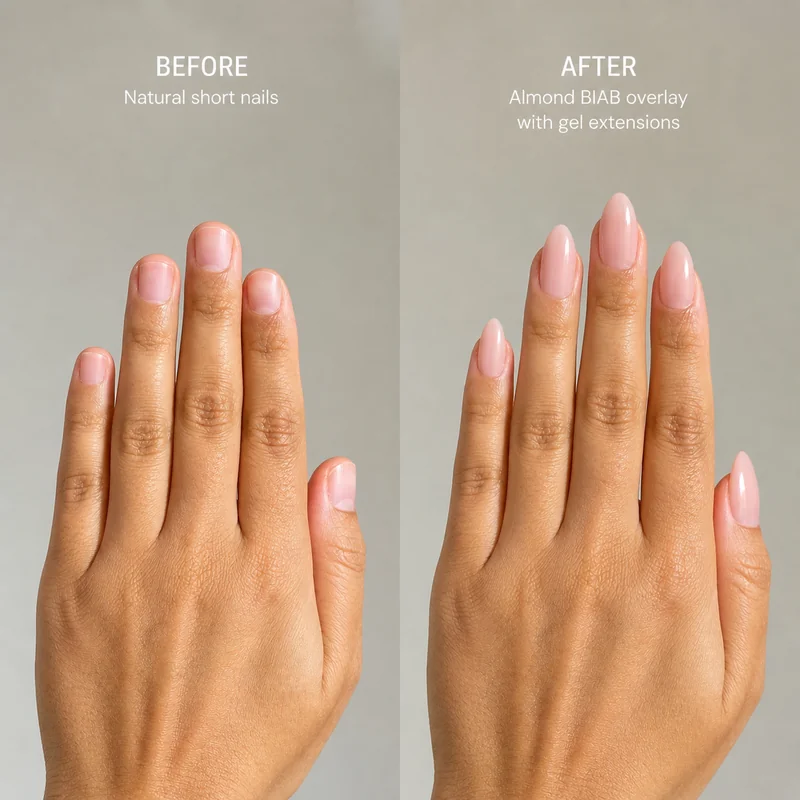
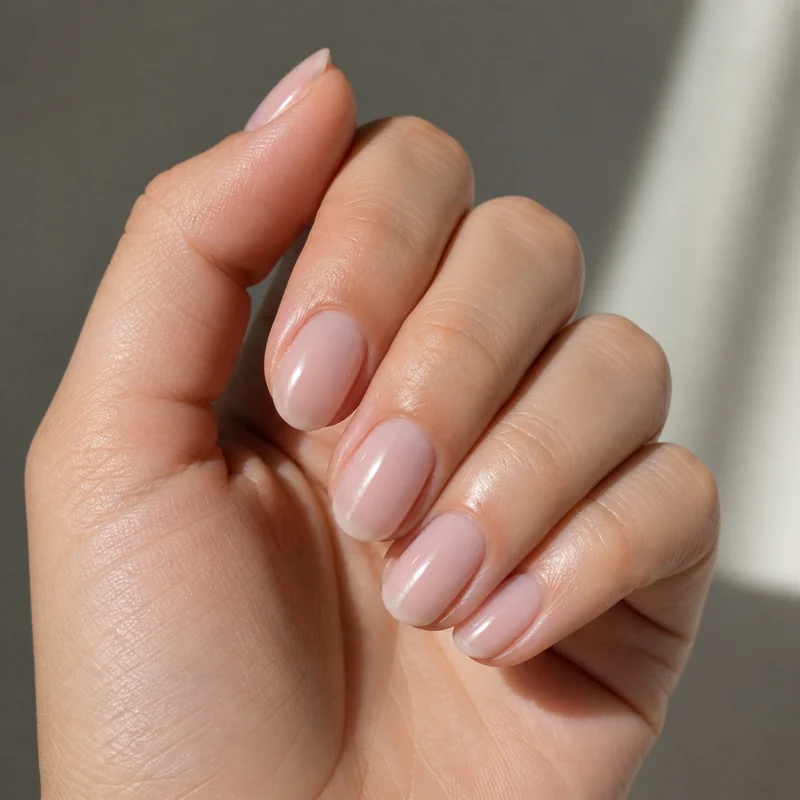
If your natural nails have a free edge — even a small one — a good technician can often file a basic almond shape. It will be subtle, a "baby almond" rather than the full tapered version, but it is achievable. The minimum that works varies by nail bed width, so ask your technician to assess it when you sit down.
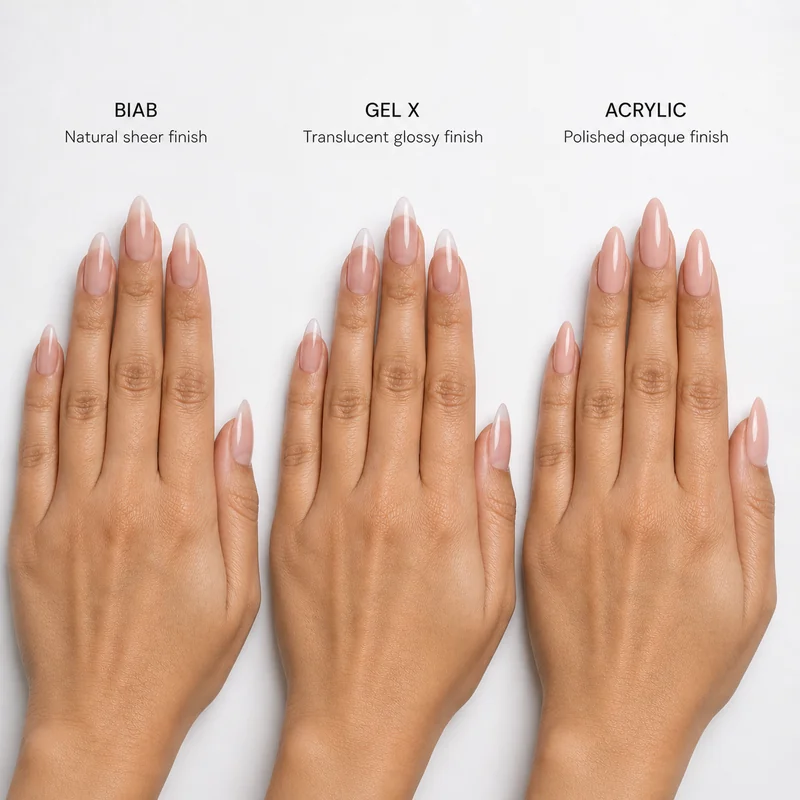
For shorter natural nails, three options open up. BIAB (Builder in a Bottle, also called structured gel overlay) adds strength and a little length over your natural nail without extending it dramatically — good for nails that are borderline in length. Gel-X, a soft gel extension system, adds instant length and is gentler on natural nails than traditional acrylic. Standard acrylic tips give the most length and durability. Press-ons are worth mentioning too: the quality of press-on almond shapes in 2025/26 is genuinely impressive, and they are a completely commitment-free way to try the shape before committing to a full salon set.
Getting almond nails with short natural nails covers each option in detail. If you are thinking about growing your own nails to the right length first, this guide on growing your nails for almond shape has what you need.
Gel, Acrylic, BIAB, or Gel-X: Which One Do You Actually Need for Almond Nails?
The salon menu is genuinely confusing the first time. Here is a framework that cuts through it.
Acrylic is the traditional option for almond nails. It is durable, holds a taper well, and gives the most length. The trade-off is that removal requires more care, and it can feel heavier than other options. For dramatic almond length, it remains the most reliable choice.
BIAB (Builder in a Bottle) is a structured gel overlay — it cures under LED, feels lighter than acrylic, and has become the dominant choice in the UK and Australia, with growing uptake in the US. It does not add as much length as acrylic, but it strengthens natural nails while giving them a defined shape. For a softer, more natural-length almond, BIAB is excellent. The Woman & Home guide to BIAB nails is a useful primer if the term is new to you.
Gel-X (the Aprés Nail system) uses soft gel tips that bond over your natural nail, then are shaped and cured. Length without the heaviness of acrylic. Good for beginners who want more length but are nervous about committing to traditional acrylics.
Standard gel polish alone will not create almond shape — it is a colour product, not a structural one. If you are seeing "gel nails" as an option at a salon, clarify whether they mean gel overlay or just gel polish over natural nails.
For the full side-by-side, gel vs acrylic for almond nails breaks down the decision properly. The Nail Aesthetic's BIAB vs Gel-X breakdown is worth reading if you are torn between those two specifically.
What to Say at the Nail Salon to Get the Almond Shape You Actually Want
Salon anxiety around nail terminology is real and well-documented — Refinery29's piece on nail anxiety captures exactly why so many first-timers rehearse their appointments in advance. The gap between "I want these nails" and "I know how to ask for them" is emotionally charged for a lot of people. Here is exactly what to say.
At booking: "I'd like an almond shape set, please. Tapered sides with a soft rounded point — I'll bring a reference photo."
At the appointment, before sitting down: "Here's the shape I'm going for — can you see what I mean? I want the sides to visibly taper, not just round at the top."
That second line is the one most beginners skip. Confirming the shape from a reference photo before the technician starts is how you avoid leaving with oval when you wanted almond. Once the filing is done, it is much harder to correct.
For the full salon guide — including what to ask about product options and how to handle it if you are not sure what you are looking at — see what to ask for at the nail salon.
Are Almond Nails Actually Practical? What Nobody Tells You Before Your First Set
The typing question comes up constantly. The honest answer: you adjust within a few days, and for most people the adjustment period is unremarkable. Typing with almond nails is different to typing with short natural nails, but it is not the obstacle it sounds like. You use more pad, less tip. It becomes automatic quickly.
Where almond nails genuinely require a behavioural shift: anything that involves force at the tip — opening ring pulls, scratching stickers off surfaces, using your nails as tools. The tip is the structurally weakest point of the shape. Using it as a lever is how nails break.
If your lifestyle involves constant manual work or you are in an environment where long nails are discouraged, almond nails for work addresses this directly. The short version: a "baby almond" — the same shape in a shorter length — is the practical version of this shape, and it wears like a square nail in everyday life while still reading as almond.
The Length, Breaking Risk, and Maintenance Reality of Almond Nails
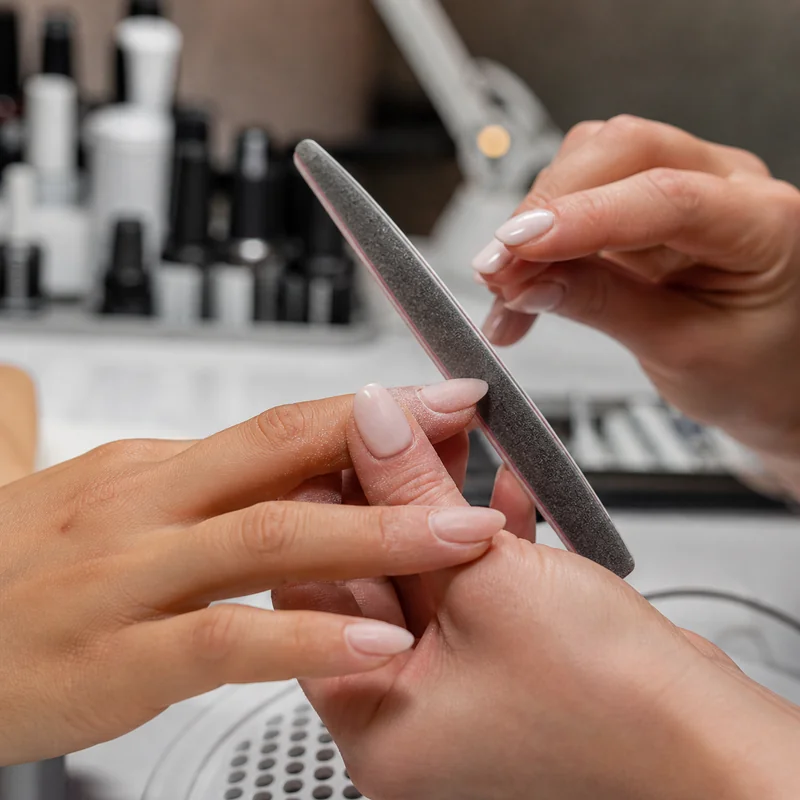
Almond nails break more than square or oval. That is not a scare — it is a structural fact, and knowing it upfront means you can manage it rather than be blindsided by it. The taper that makes the shape beautiful is also what makes the tip the weakest point. NAILS Magazine's guide to almond nail shaping covers the structural considerations of filing the shape correctly, which directly affects how the tip holds up.
Breakage at the almond tip usually happens for one of three reasons: using the tip as a tool, catching it on something with lateral force, or letting growth go too long without a fill appointment. The fill schedule matters — gel and BIAB sets need attention every two to three weeks; acrylic typically every two weeks. Letting grown-out nails go four or five weeks without maintenance stresses the tip and makes breakage much more likely.
For more on why tips fail and how to stop it, why almond nails keep breaking covers the causes in detail, and how to make almond nails last longer has the practical habits that make a real difference.
The Beginner's Biggest Almond Nail Mistakes (And Exactly How to Avoid Them)
Going too long on the first set. First-timers consistently overestimate the length they can comfortably manage. Starting at a medium length is the right call — you can always go longer next time once you know how you move with the shape.
Not bringing a reference photo. Describing a shape verbally is imprecise. "Tapered" means different things to different technicians. A photo removes all ambiguity.
Confusing almond with oval when booking. If you book asking for "oval, but more pointed," some technicians will give you a pointy oval, not a true almond. Ask for almond by name and show the photo.
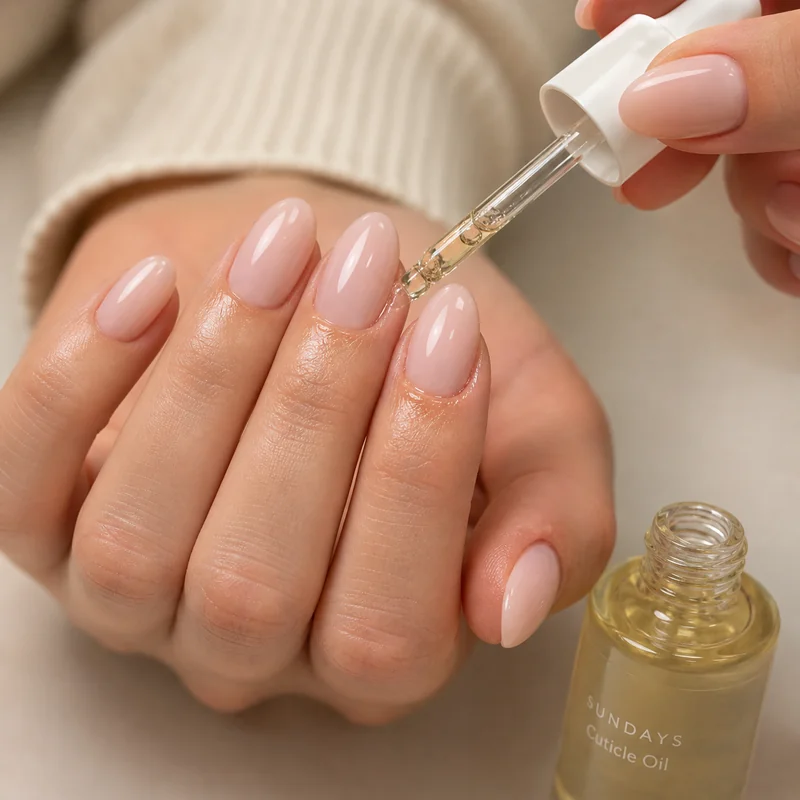
Skipping aftercare. Cuticle oil is not optional — it is the single most effective thing you can do for nail longevity. Most beginners skip it and wonder why their set lifts early.
Going back too late for fills. That fourth or fifth week of grown-out nails is where breakage happens. Fills are maintenance, not a luxury. Budget for them when you book the first set.
Treating the tips like tools. Your nails are not a replacement for your fingertips. Open things with the pad. Scratch things with a key. The tips are decorative and structural — not functional tools.