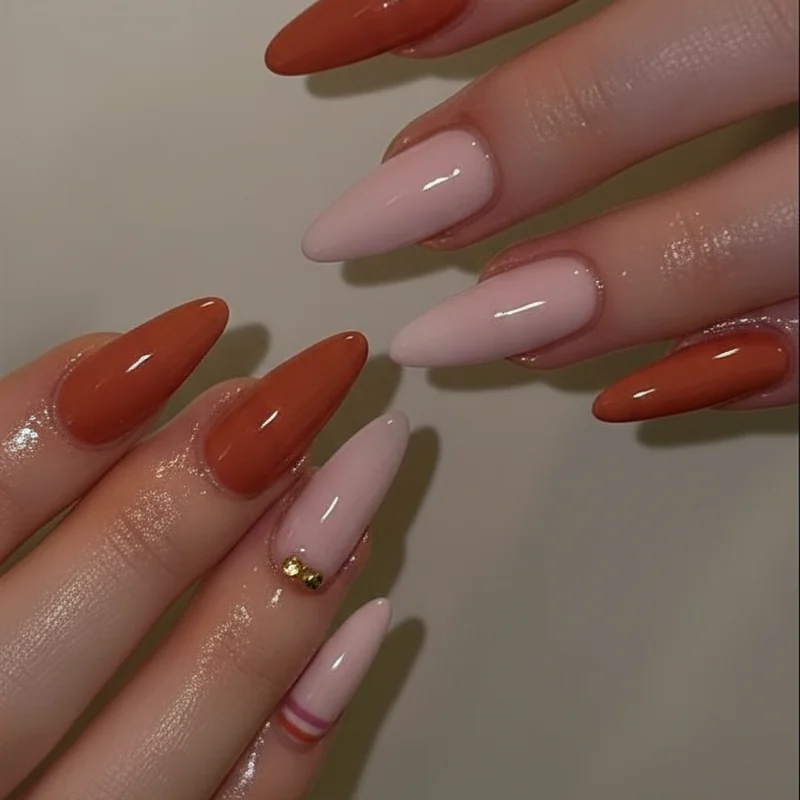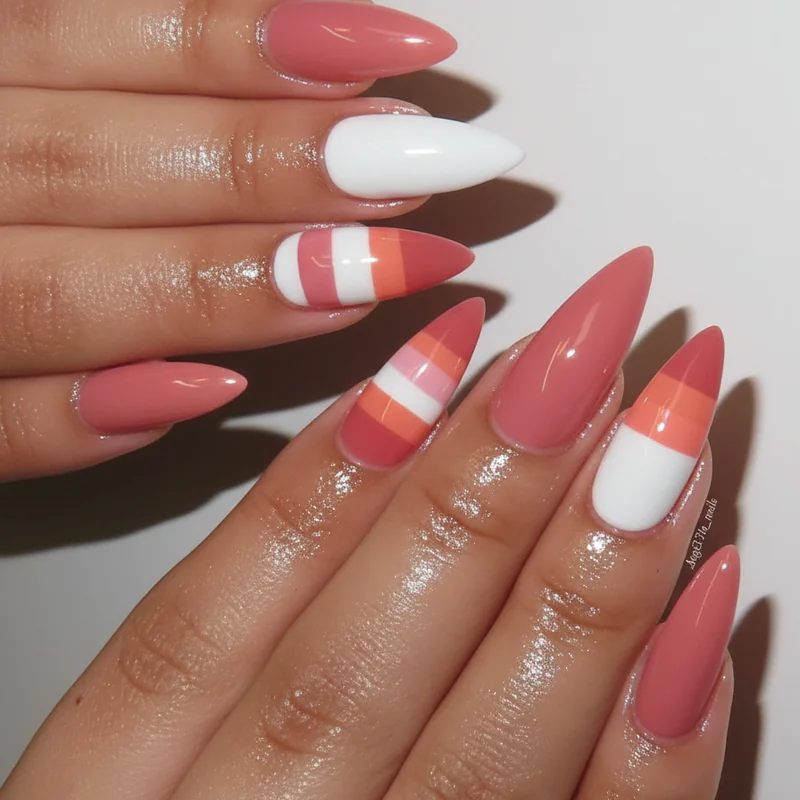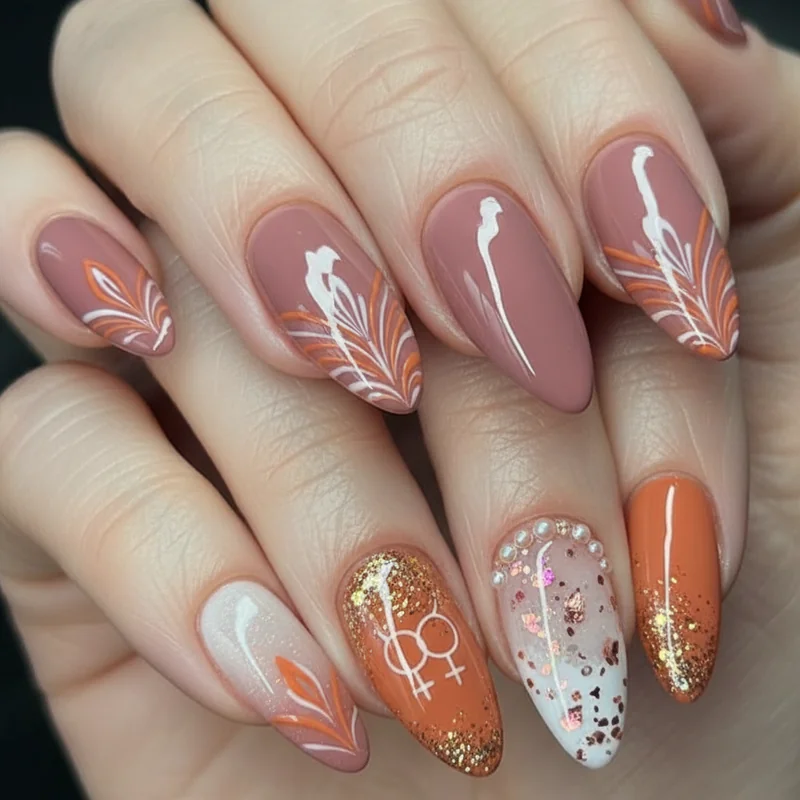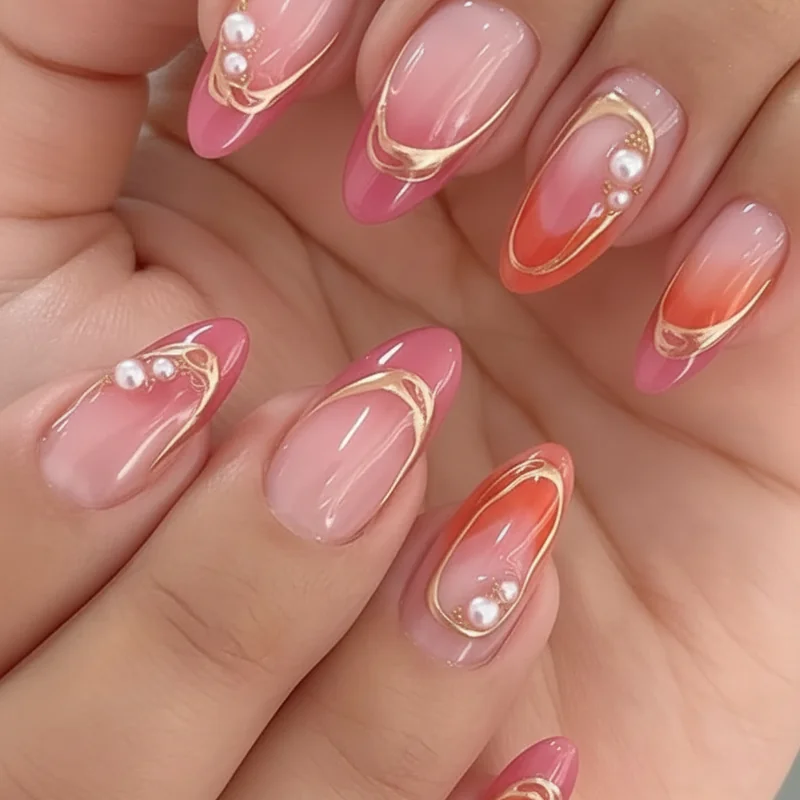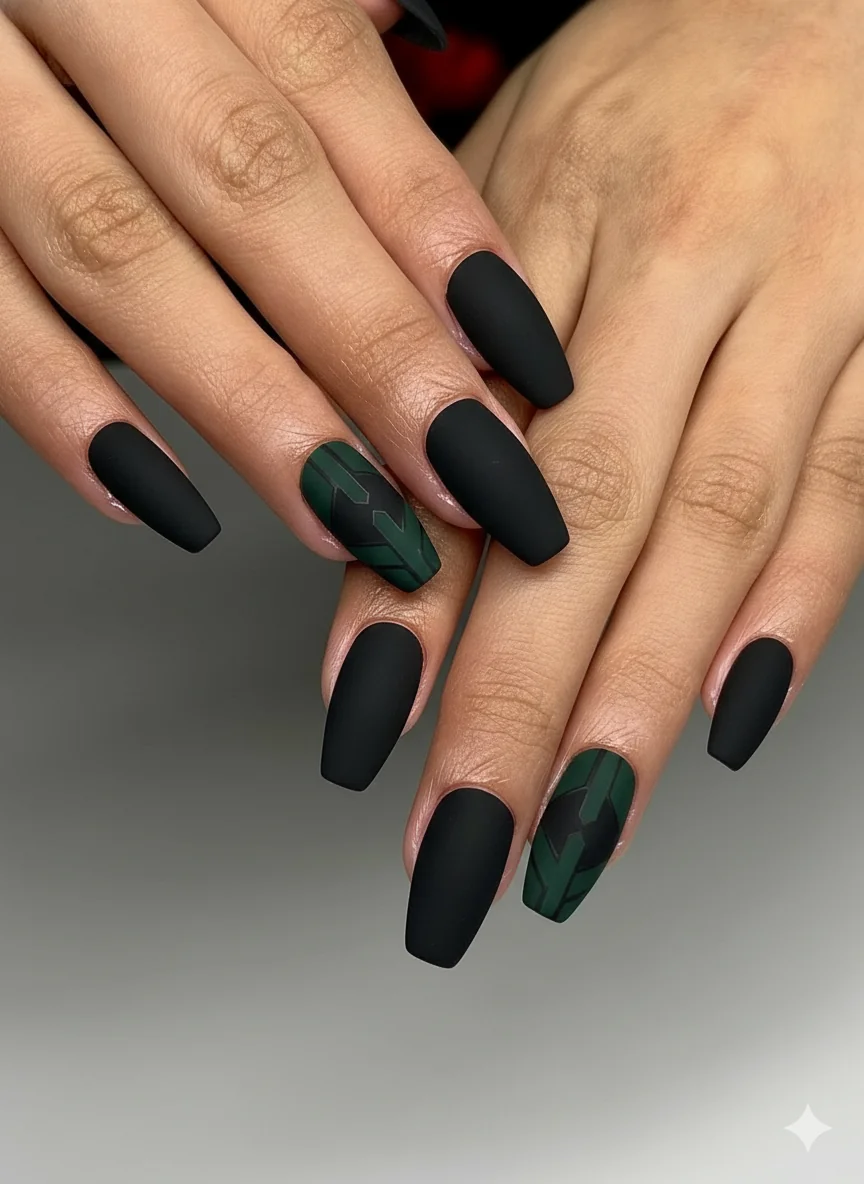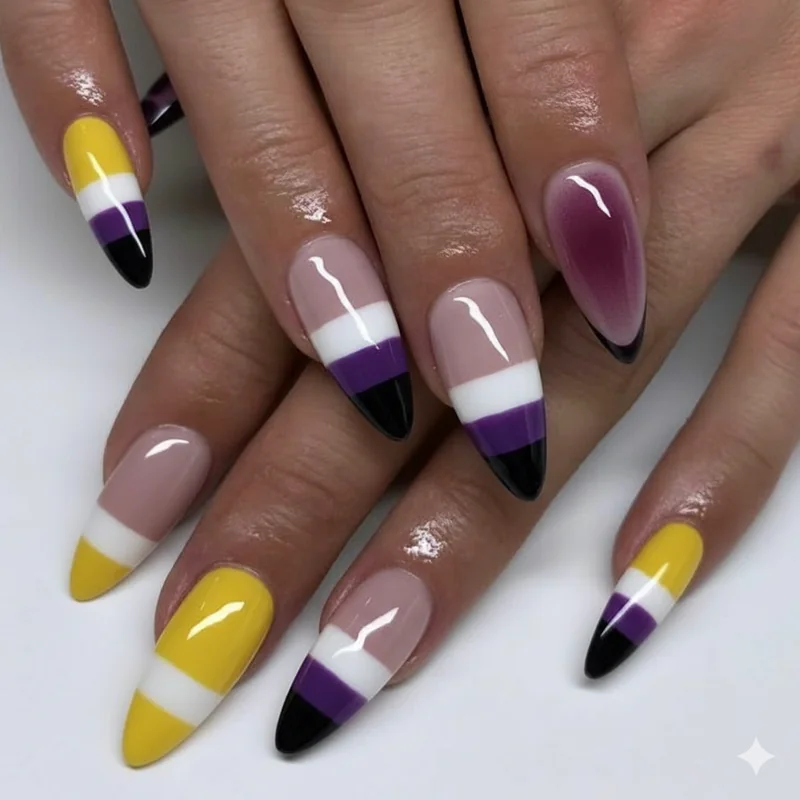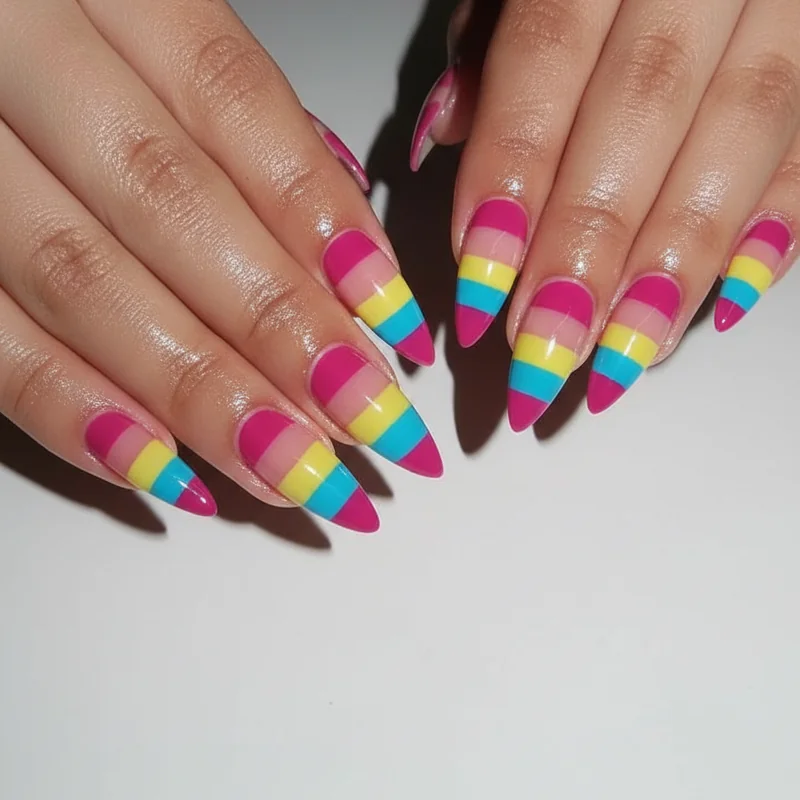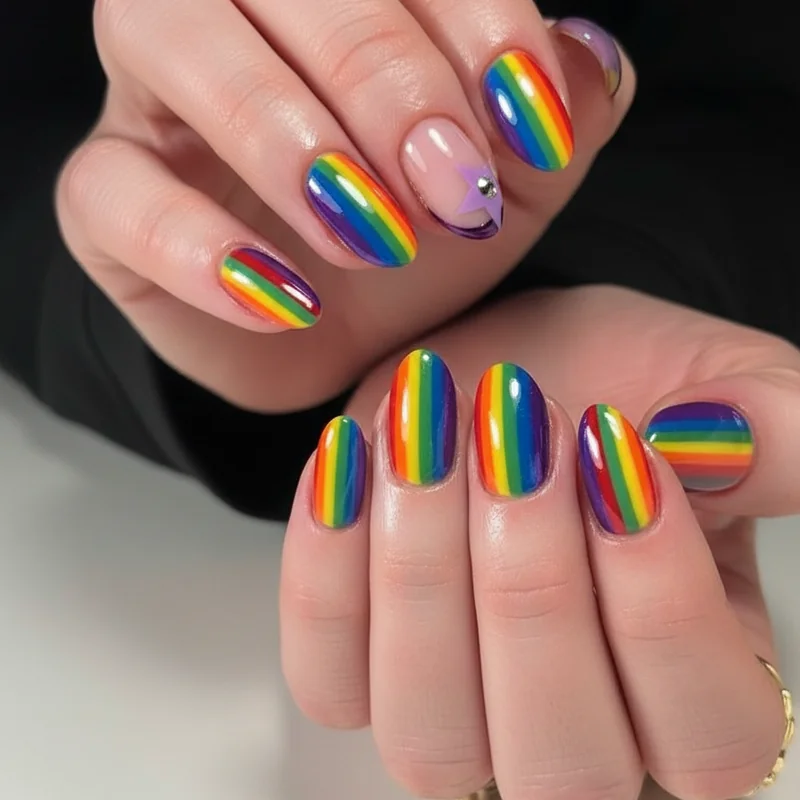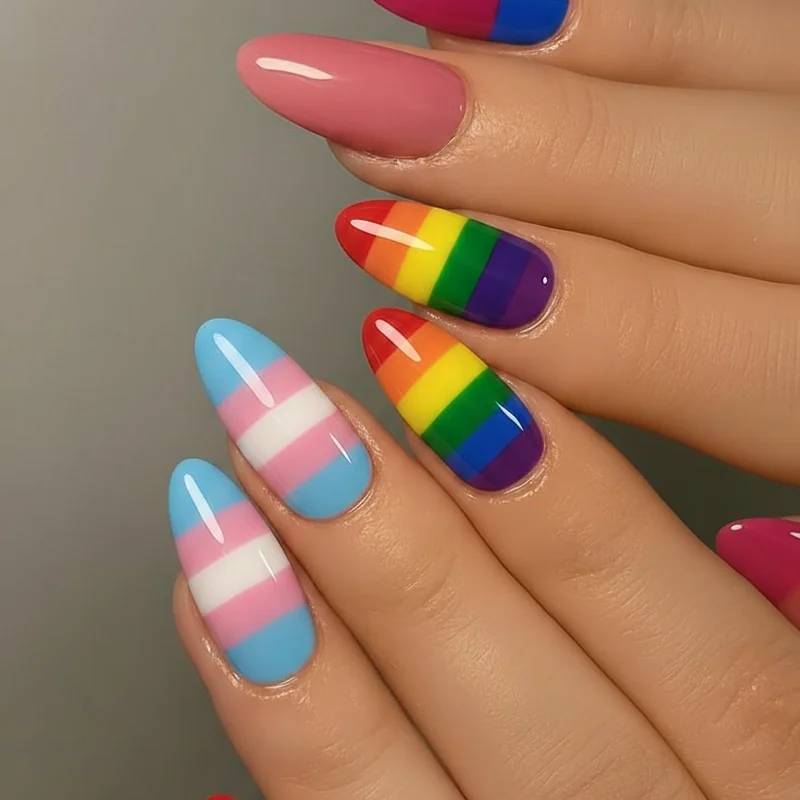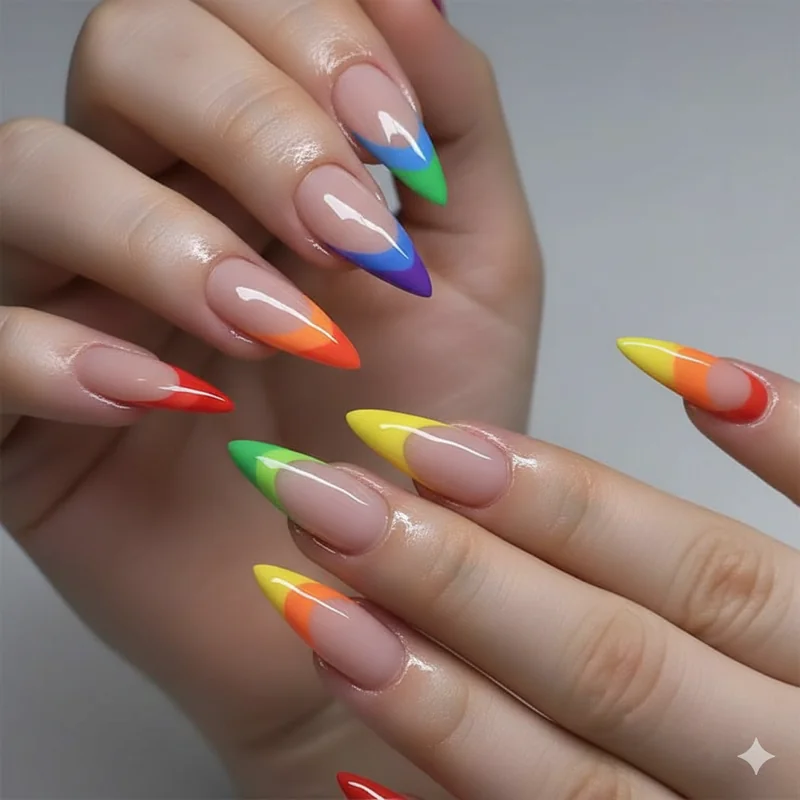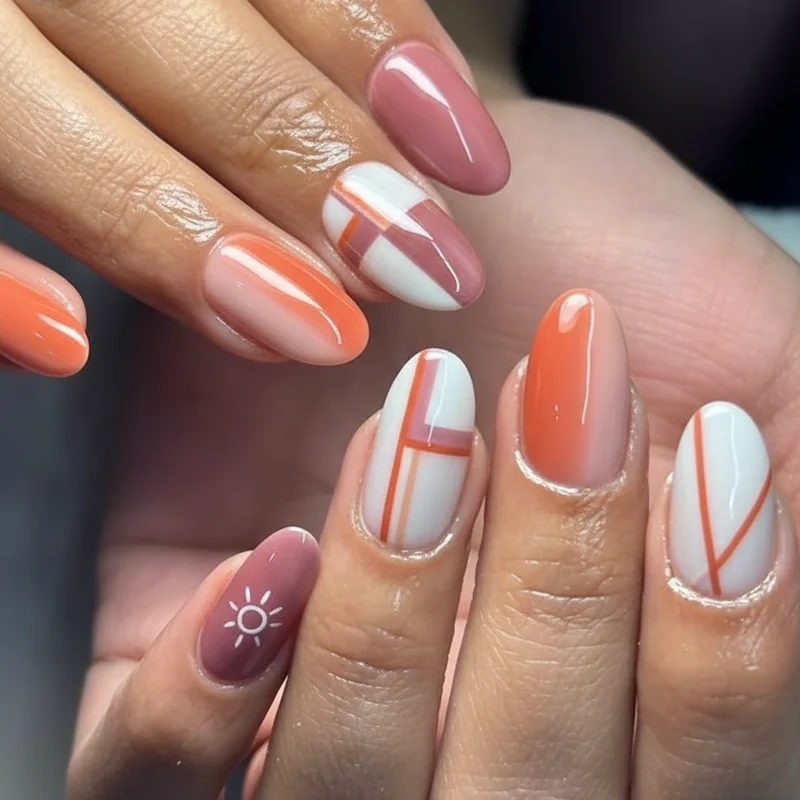
You have probably seen it without knowing what you were looking at. Two nails cut short on an otherwise long, decorated hand. And if you are in the know, you felt it immediately: that's a lesbian manicure.
Two short nails on a lesbian are one of the most recognised non-verbal signals in WLW culture, and yet the full picture rarely gets the treatment it deserves: where the style came from, what it actually means, what it is called, and what you can do with it aesthetically. For the curious, the newly out, and the femme who has been told her acrylics make her look "too straight": this is that treatment. For the broader picture of lesbian nails, designs, and inspo, that guide sits alongside this one. And if you are here in June, the Summer Nails 2026 roundup has the seasonal colour palette to match.
What Do Two Short Nails Mean on a Lesbian?
The meaning is both practical and cultural. You need both halves to understand it properly.
The practical half first: for WLW who engage in digital penetration during sex, long nails on the active fingers are a safety issue. Sharp or long nail edges can cause discomfort or injury to a partner. Keeping the index and middle fingers short solves that problem directly, without requiring the wearer to sacrifice their entire manicure.
The cultural half: over decades, that practical choice became a community signal. A way to be seen. A shorthand that said, to anyone who knew how to read it, I'm one of you. The queer manicure became a form of lesbian flagging, a visible identity marker that worked precisely because it was legible to the community and invisible to everyone else.
For the WLW community, reading a woman's hands is a well-documented part of social navigation. Lesbian women have described studying a new person's nails to evaluate them as a potential partner, a quiet, instinctive check that many WLW will recognise immediately.
The two short nails lesbian style sits at the intersection of those two things: function and identity, practicality and pride.
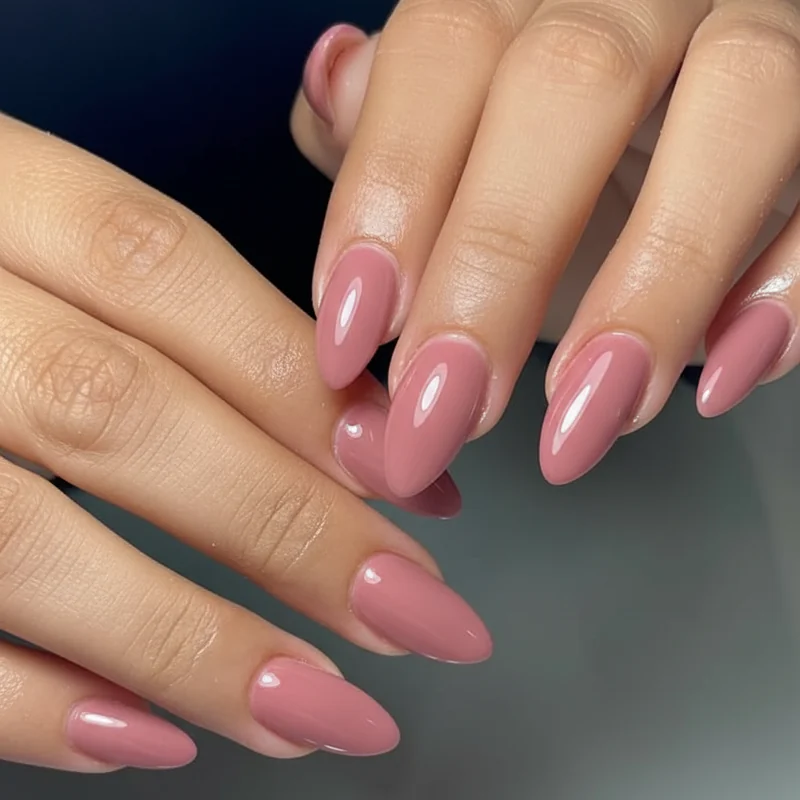
Which Fingers Are Kept Short and Why Those Ones?
The index and middle fingers. That is the answer, and the reason is anatomical.
These two fingers are the ones most commonly used during digital penetration. Keeping them filed short and smooth eliminates the risk of discomfort or injury to a partner. The other fingers are purely decorative from a functional standpoint, which is why they get to be as long, shaped, and decorated as the wearer wants.
In the community, those two short fingers have a nickname: the party fingers. It is the kind of term that is funny and frank at the same time, which is very much the register in which lesbian nail culture tends to operate.
As for which hand: the dominant hand is most common, since it is the hand most often used during sex. But there is no rule. Some people keep both hands with the two short fingers. Some keep just the non-dominant hand short. The choice is personal, and both read clearly to anyone who knows what they are looking at.
For bisexual women and queer women who are not strictly lesbian-identified, the style works exactly the same way. The two-short-nails look is a WLW signal, not one that belongs exclusively to lesbians.
The History Behind Short Nails in Lesbian Culture
A 2018 Autostraddle poll found that 95% of respondents kept their nails short. That number is striking. It did not appear from nowhere.
The association between short nails and lesbian identity developed gradually across the latter half of the twentieth century, shaped by practical necessity and community self-recognition. In a world where queer women had very few ways to signal identity safely, no rings, no flags, no open discourse, small physical markers took on outsized meaning. Nail length became one of them.
By the 1990s and early 2000s, the association had moved from subcultural knowledge into mainstream queer culture. The moment that did the most to cement it for a generation of WLW came from television: The L Word. In an early scene, Shane observes a woman at The Planet coffee shop and reads her as straight based on her long, polished nails. The exchange was brief, maybe thirty seconds of screen time, but for millions of queer women who treated that show as something close to scripture, it landed like a fact.
It embedded an expectation: short nails were queer, long nails were straight. The binary was always an oversimplification, but it shaped how an entire generation of lesbian and bisexual women thought about their manicures and, by extension, their visibility.
What Is the Femmicure (and Why It Changed Everything)?
If you have ever felt like you had to choose between your nails and your queerness, the femmicure was made for you.
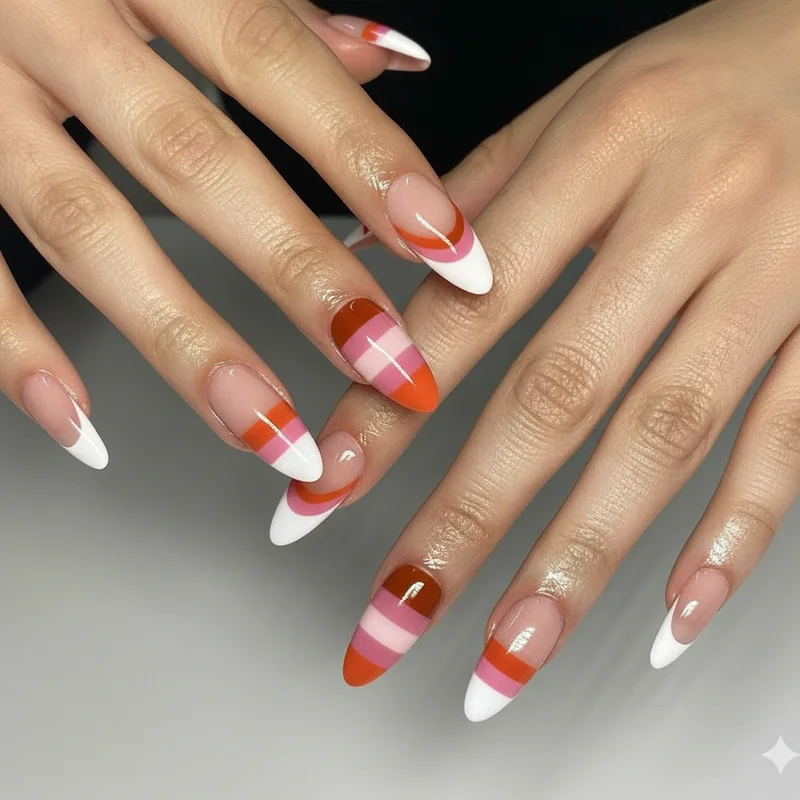
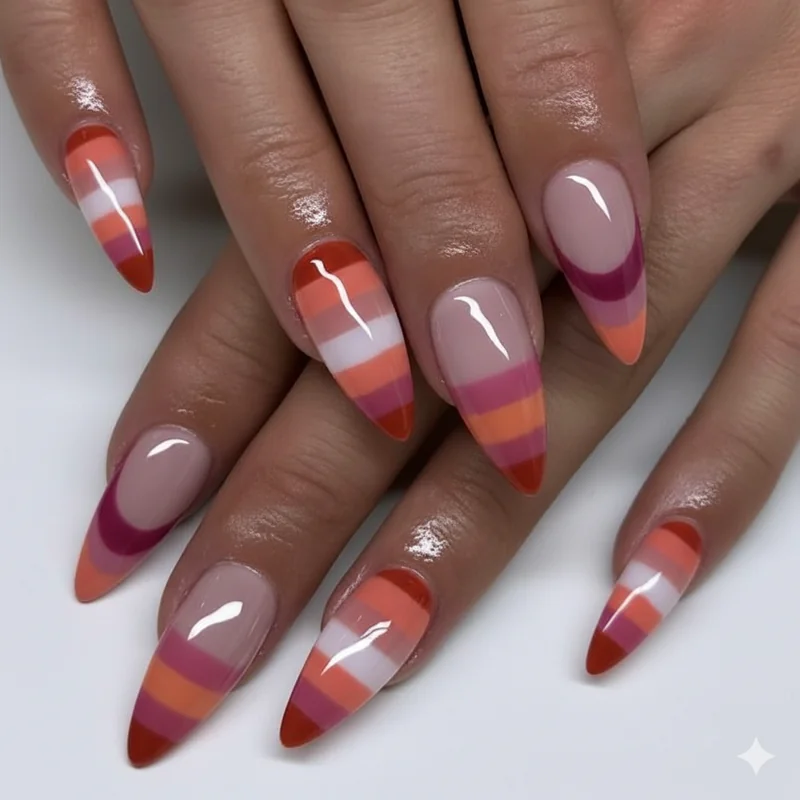
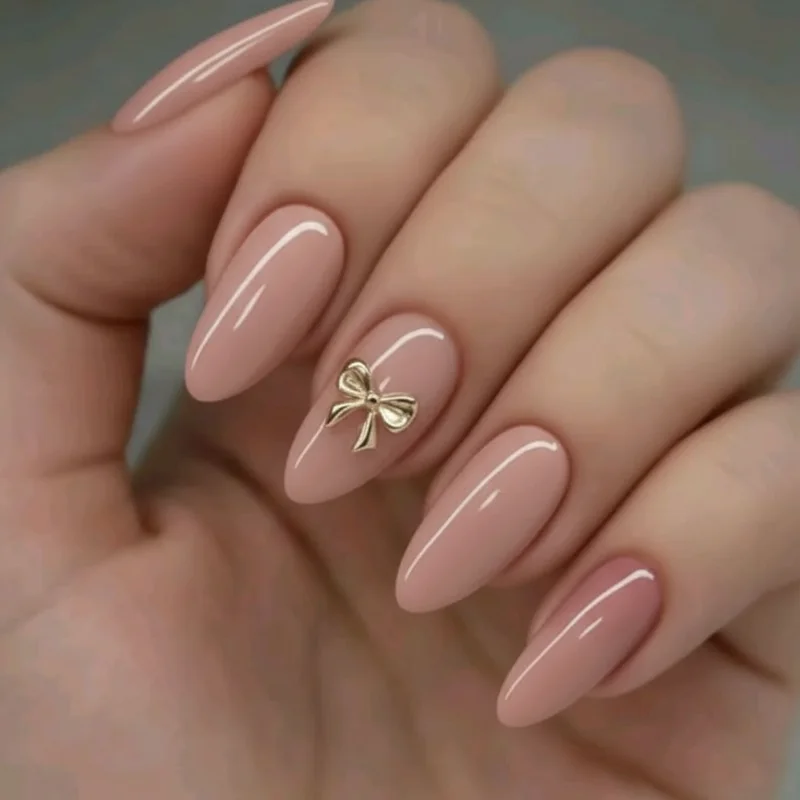
The femmicure, also called the queer manicure or lesbian manicure, is the style that solved the binary the short-nails tradition created. It keeps the index and middle fingers short (the party fingers) while letting the remaining nails be as long, shaped, and decorated as the wearer wants. Long coffin nails on the ring and pinky fingers. Almond tips. Gel extensions. Nail art. All of it. The two short fingers are simply filed down and often decorated to match the rest of the set rather than left plain.
What changed with the femmicure was not the technique. Femme WLW had been quietly doing versions of this for years. What changed was the naming of it, the communal claiming of it as a legitimate style, and the visible celebration of it on social media and in queer nail art spaces. Giving the style a name gave femme lesbians a way to ask for it at the salon, talk about it online, and wear it with intention rather than apology.
Nail artists within the WLW community describe the most recognised version as having the index and middle fingers short, with the precise length and shape of the remaining nails entirely up to the wearer. Some keep them at a medium almond. Some go full stiletto. The short fingers do not dictate the rest of the set. They simply define the functional part of it. Read more about the femmicure and queer nail functionality from community voices who helped name and define it.
Is It a Stereotype? The Nuance the Internet Misses
Most explanations of the two-short-nails style treat it as a curiosity, a fact to be noted and moved past. The community nuance underneath it gets flattened.
Here is what the flattened version misses: the expectation that all lesbians must have short nails is not neutral. For femme lesbians in particular, it has functioned as a form of identity policing. Long nails = straight has been weaponised, sometimes casually, sometimes deliberately, to question femme women's queerness. That is femmephobia: the dismissal of feminine presentation as somehow less authentically queer. The fact that it can live inside the community as well as outside it makes it harder to name and easier to absorb as truth.
The femmicure was a direct response to that. A refusal of the binary. A way to say: my femininity is not a disclaimer on my queerness.
It is also worth naming the cultural specificity that often gets erased in these conversations. For many Black lesbians, long nails, acrylics in particular, have a deep connection to Black feminine identity and style. The expectation to shorten them to signal queerness asks Black femme WLW to trade one form of identity expression for another. Long acrylics within Black lesbian culture have their own name, "strap grabbers," claimed with the same community wit that gave us party fingers. The nuance of how nail length intersects with race, class, and femininity deserves more than a footnote. For a thoughtful first-person account of navigating long nails as a lesbian, the piece on navigating long nails as a lesbian from Fashion Magazine goes there honestly. For the broader cultural question, Dazed's piece on whether the short-nails stereotype is outdated is still the sharpest treatment of it.
Do You Have to Have Short Nails to Be a Lesbian?
No.
Nail length does not define queerness. It never did. The association between short nails and lesbian identity is real, culturally significant, historically grounded, and genuinely meaningful to many WLW, but it is a signal, not a requirement. A lesbian with long nails is still a lesbian. A bisexual woman with an immaculate set of stiletto acrylics is not less bisexual because of them.
The conflation of nail length with sexual identity has done real harm, particularly to femme WLW who internalised the message that long nails put their queerness in question. It caused some women to stop getting their nails done entirely after coming out. It pushed others to perform a version of queer identity that felt alien to them. Neither of those outcomes reflects anything good about community culture.
The femmicure offers one solution. But so does simply wearing whatever nail length you want and letting your identity speak for itself in every other way it already does. The subtle lesbian nails guide covers the full range of low-key ways to signal without committing to a specific nail length, worth reading if you want options that feel genuinely yours.