The Best Plaid and Argyle Nail Colour Palettes for Every Season and Mood
Colour is the thing that separates a plaid nail that looks expensive from one that looks costume-y. The palette determines the aesthetic entirely the same argyle grid reads as dark academia or Easter brunch depending entirely on what colours you choose.
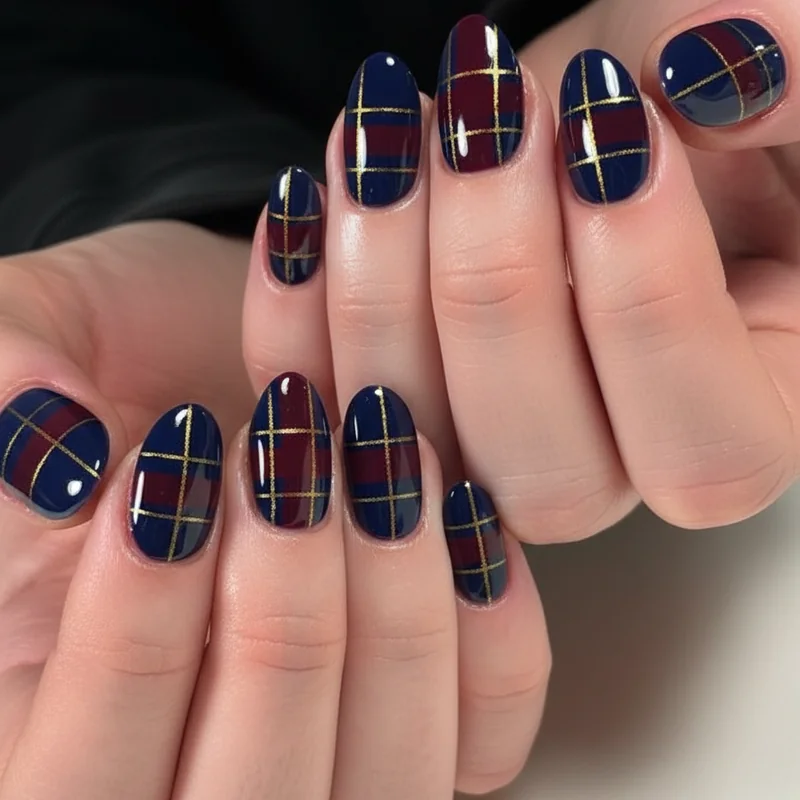
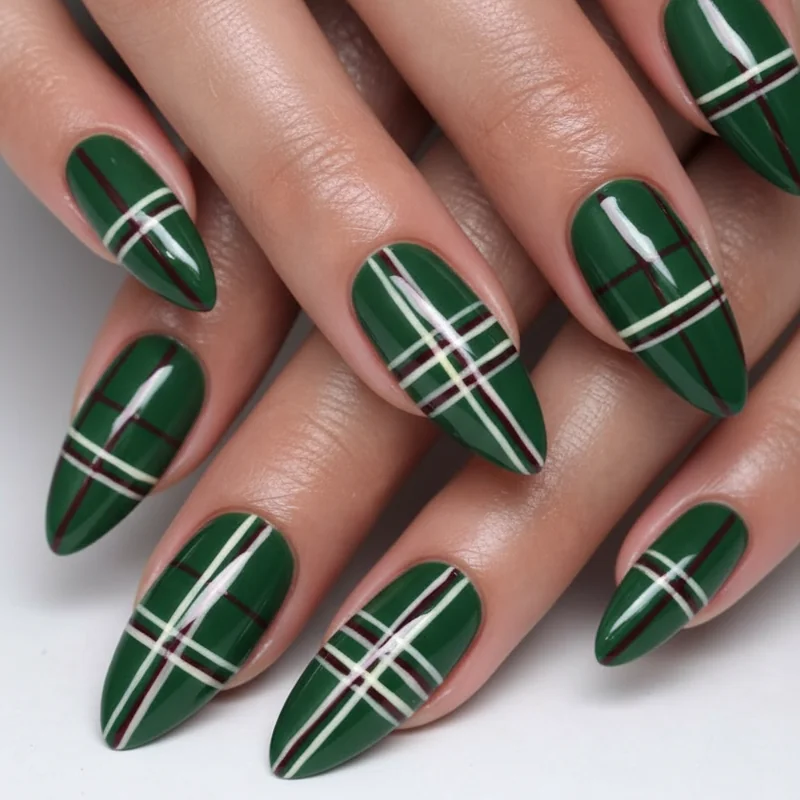
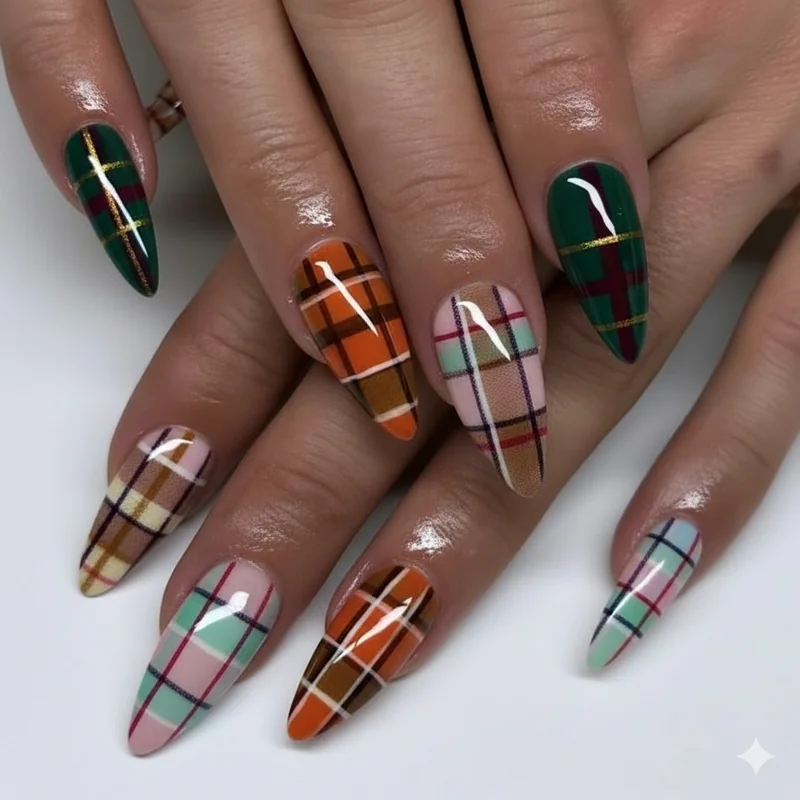
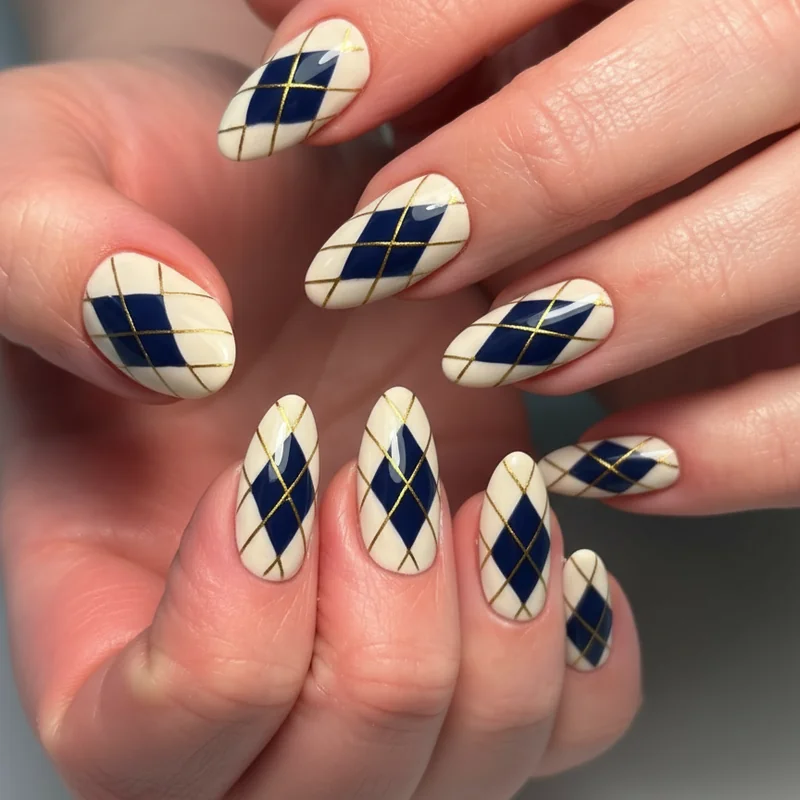
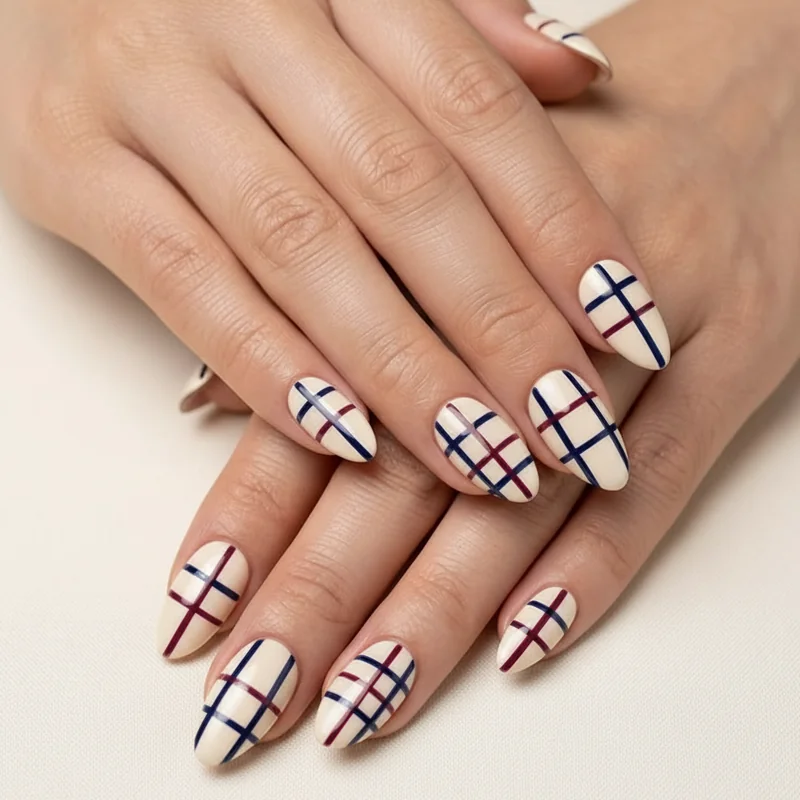
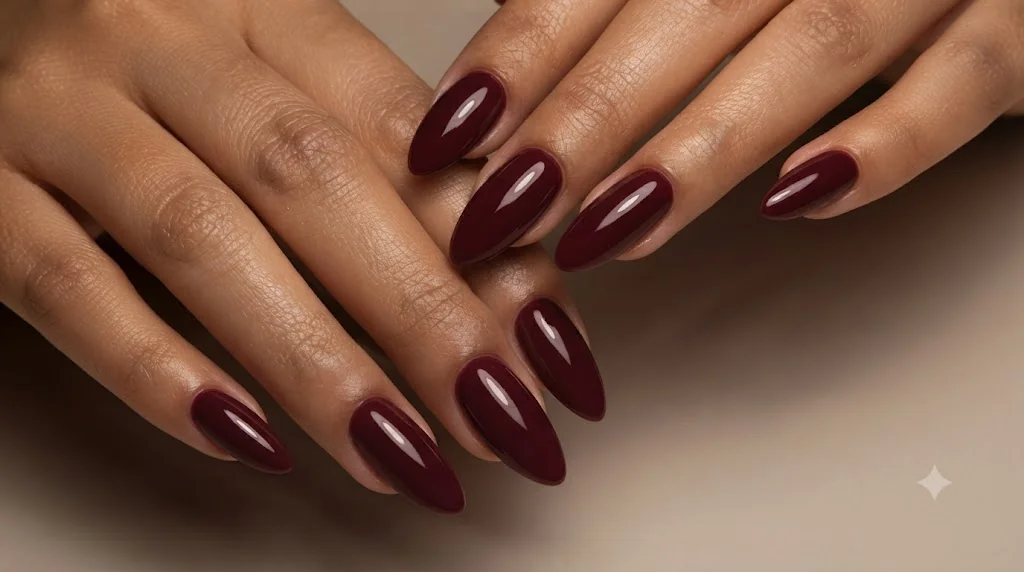
Autumn and winter: jewel tones. Navy and burgundy with a cream or ivory accent line is the most wearable combination it references heritage tailoring without feeling literal. Forest green and caramel with gold stripe detail sits at the warmer, cosier end. Deep plum and black with a silver intersecting line is the most dramatic, and leans punk rather than preppy. These palettes photograph beautifully against darker clothing and hold up over multiple weeks without the pattern feeling dated.
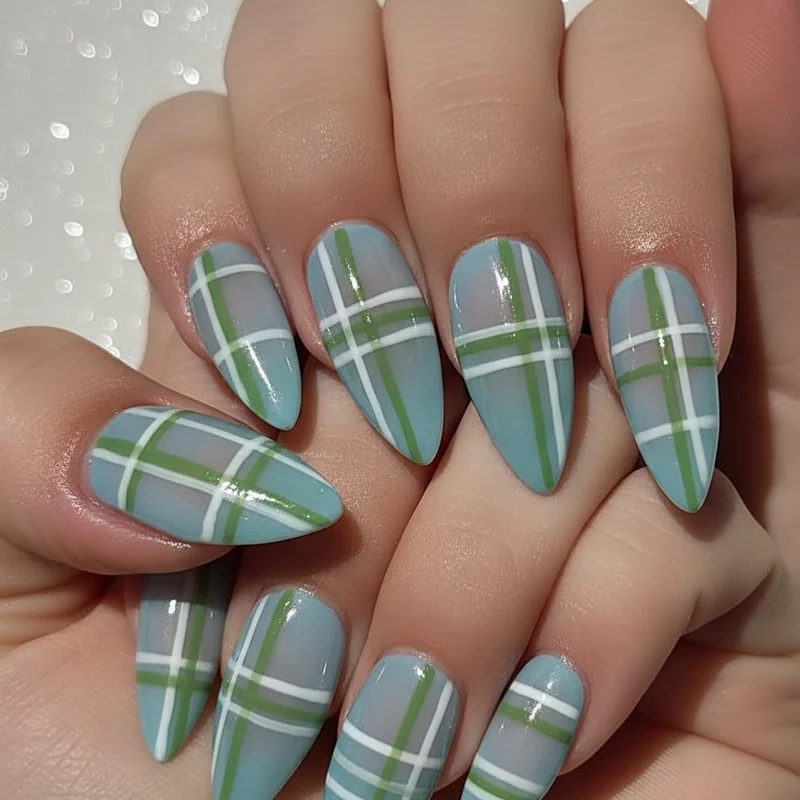
Spring and summer: pastels with contrast. The 2026 evolution that Zola Ganzorigt demonstrated on herself after Kylie Jenner's original set was a pastel jelly plaid baby blues and soft sage greens with a barely-there cream stripe that made the pattern feel fresh rather than wintry. Lavender and soft yellow with a white line reads as spring-specific. For something with more energy, try coral and mint, which is unexpected enough to look intentional rather than chaotic. For full context on where plaid sits within spring's broader nail picture, see Spring Nail Trends 2026.
The rule for any palette: one neutral anchor (cream, ivory, soft grey, or a sheer jelly base), two accent colours, one thin contrasting line. Four colours total. More than that and the pattern loses legibility on a small nail canvas. For the summer palette pivot, Summer Nail Trends 2026 covers exactly how to carry pattern nail art through the warmer months.
Do Plaid Nails Work on Short Nails? (Yes Here's Proof)
Every inspo shot you have ever saved probably features long almond or coffin extensions. This is a photography problem, not a design problem.
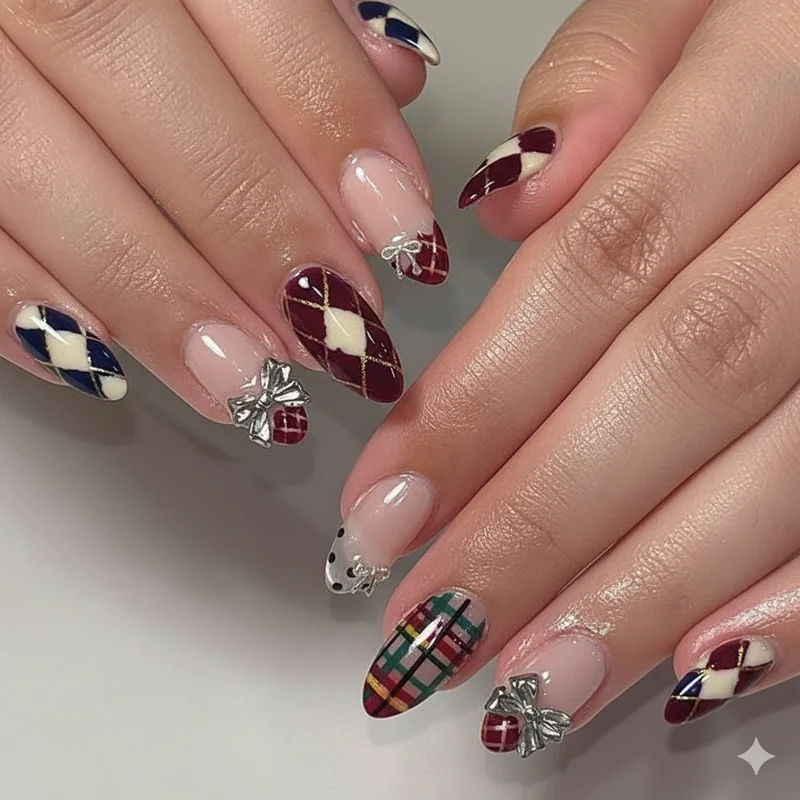
Short nails square, rounded square, or oval are actually well-suited to plaid and argyle nail art. The reason is containment. A short nail gives you a defined, small canvas, and the pattern does not need length to read. Two horizontal and two vertical stripe lines on a short square nail produces a clear, recognisable plaid grid. An argyle diamond on a short rounded square looks clean and intentional, especially in a two-colour palette.
What adjusts on short nails is the scale and the complexity. All-over argyle with five colours and detailed contrast lines is harder to pull off cleanly on a very short nail it can look crowded. The solution is one of three approaches: simplify the palette to two colours and one contrast line; use plaid French tips rather than all-over pattern (the tip section gives you a contained canvas for the design); or use one or two accent nails with the plaid pattern and keep the remaining nails in a solid matching shade.
Short nail plaid press-ons are also widely available if you want zero DIY risk. They are worth considering specifically for argyle, which requires the most precision.
How to Do Plaid Nails at Home: Tools, Technique, and Honest Difficulty Ratings
Patience is the skill. The tools are straightforward it is the willingness to go slowly that determines the result.
What you need:
- A nail striping brush (long, thin bristles this is non-negotiable for straight lines)
- A fine detail brush for any argyle diamond interiors or intersection dots
- Base coat
- Your chosen palette: one base colour and two to three stripe colours
- Acetone and a small cleanup brush for any line that drifts outside the nail edge
- High-gloss topcoat
Plaid nail art at home step by step:
- Apply base coat. Let it dry completely.
- Apply two coats of your base colour. Let each coat dry fully. This is where most people rush a tacky base means your stripe lines will drag and blur.
- Load your striping brush with your first stripe colour. Wipe off excess so the brush tip is fine, not loaded. Draw two horizontal lines across the nail, evenly spaced.
- Repeat with vertical lines in the same colour. You now have a basic grid.
- Using your second stripe colour, add one thinner horizontal and one thinner vertical line between the first set, offset so they run through the gaps.
- Where lines intersect, you can deepen the colour slightly with the detail brush one small touch at each crossing point adds authenticity.
- Cleanup brush dipped in acetone around the edges. Then topcoat.
Difficulty, honestly: A basic two-colour plaid is a 6 out of 10 for someone who has never used a striping brush before. It is not beginner-level. The lines require a steady hand and the confidence to move in a single stroke rather than dragging slowly. Practice on a piece of paper or a nail wheel first three practice runs is the difference between acceptable and genuinely good. A full argyle design with diamond shapes is a 7.5 out of 10.
Can you do plaid nails with regular nail polish? Yes. Gel is not required. Standard polish with a striping brush works well; you simply need to ensure each layer is dry before adding the next. For easy nail designs for beginners to build your brush confidence before attempting plaid, start there first.
The Easiest Plaid Nail Style to Start With if You're a Beginner
A plaid French tip is the honest answer.
The French tip format does two things for a beginner: it contains the pattern to a small section of the nail, and it uses the tip's natural boundary as a guide. You are not trying to cover an entire nail canvas with intersecting lines you are working in a strip, which is far more forgiving.
How to do it: apply a neutral base (sheer pink, cream, or a soft jelly nude). Once dry, paint a standard French tip line in your first stripe colour navy, burgundy, or forest green are the strongest choices. Then add two thin intersecting lines over the tip in a second and third colour using your striping brush. The effect is a plaid pattern contained to the tip with a clean, neutral nail beneath it.
This is the version most likely to get shared, most likely to work on short nails, and most likely to succeed on a first attempt. The plaid French tip is also the style closest to nail trends 2026 editorial selections it is being worn by nail artists, editors, and clients in equal measure.
The 2026 Evolutions: Jelly Plaid, Velvet Plaid, and Cat Eye Plaid
Plaid nails are not retro. They have three active evolutions in 2026 that move the pattern away from its heritage references and into something distinctly current.
Jelly plaid is the one that started it all, technically. Ganzorigt's technique for Jenner's set involved mixing standard polish with topcoat to create a sheer, translucent colour applied over the plaid grid to create a jelly-like softness over the pattern. The result is a plaid that reads as delicate rather than bold, with a glass-like quality that photographs like nothing else. The technique works with regular polish: just mix a small amount of any coloured polish with clear topcoat before applying, then stripe as normal. For the technical detail on the syrup-meets-plaid hybrid that professional nail artists are currently executing, the guide on jelly plaid technique from Professional Beauty is worth reading.
Velvet plaid applies the velvet powder finish rubbed onto a still-tacky gel layer to create a suede-like texture over a plaid base. The result is a matte, tactile plaid with visual depth that looks almost woven. It requires gel and a lamp, which makes it a salon job rather than a DIY option for most people.
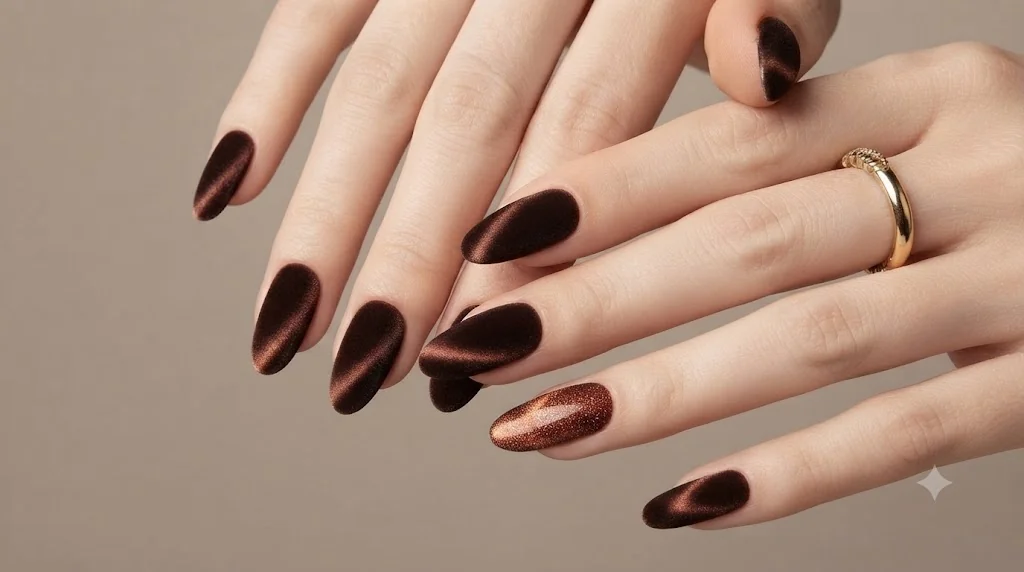
Cat eye plaid layers the magnetic cat eye effect beneath or over a plaid grid. The metallic particle shift of a cat eye polish adds a dimension to the flat plaid pattern that makes it look three-dimensional. Celebrity manicurist Michelle Humphrey has noted this specifically as one of her favourite current executions: plaid over a cat eye or jelly finish, giving the pattern maximum versatility in terms of finish.