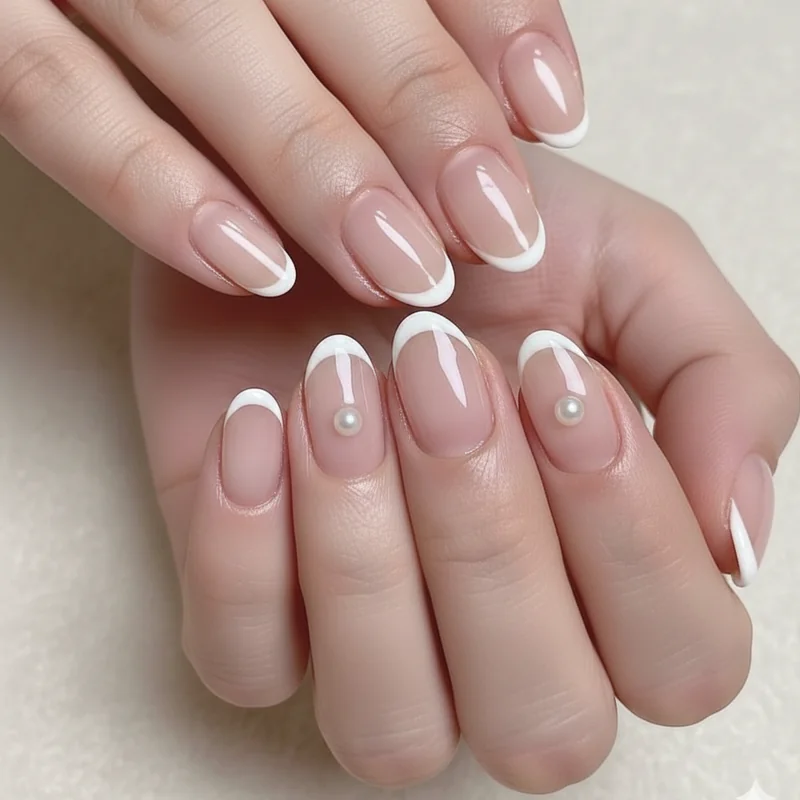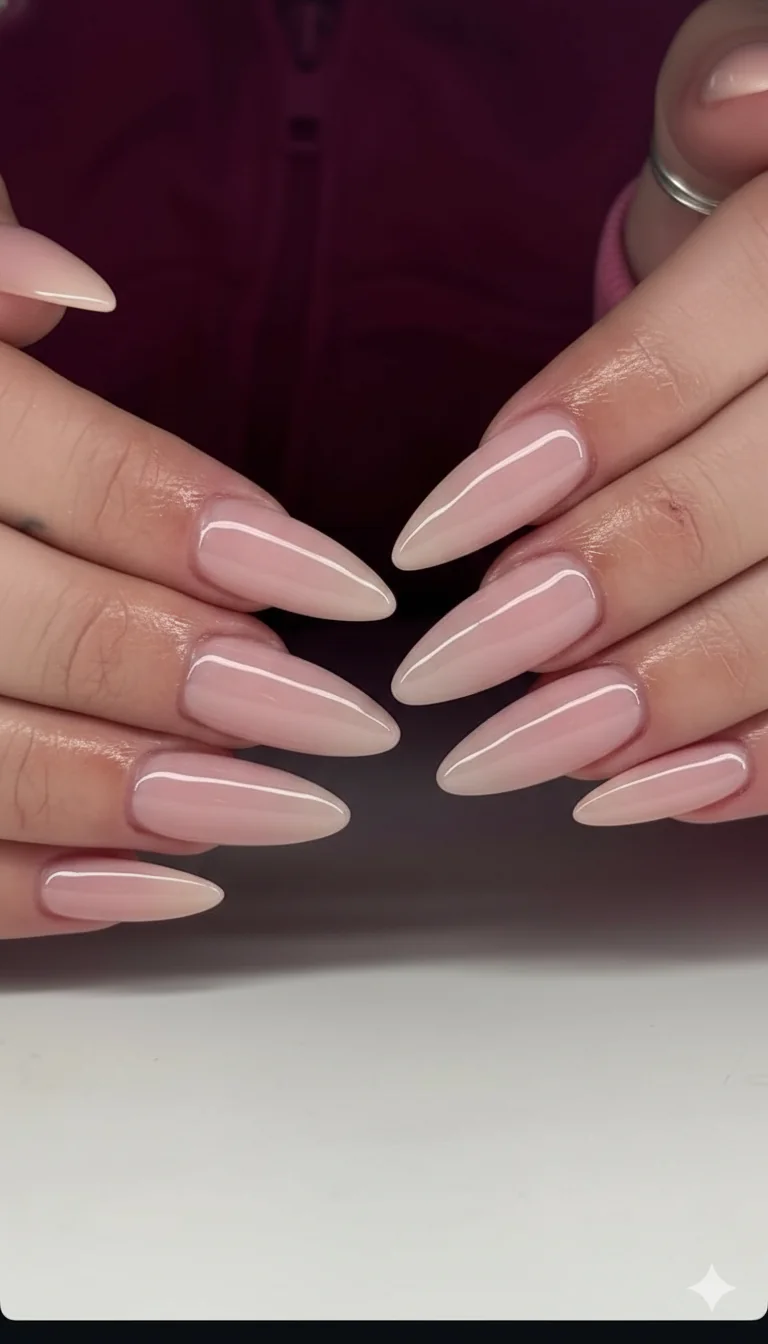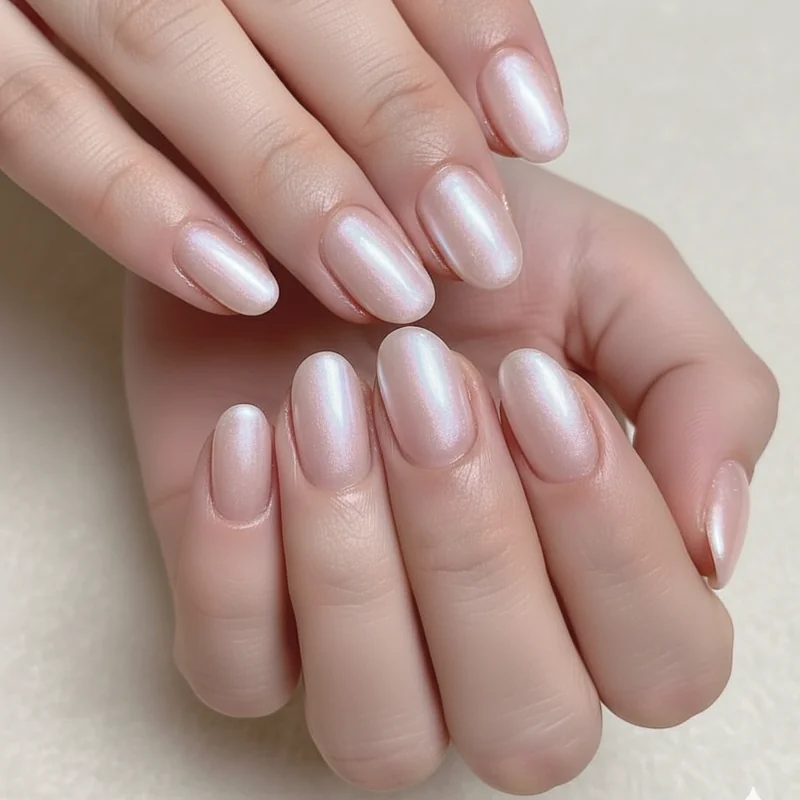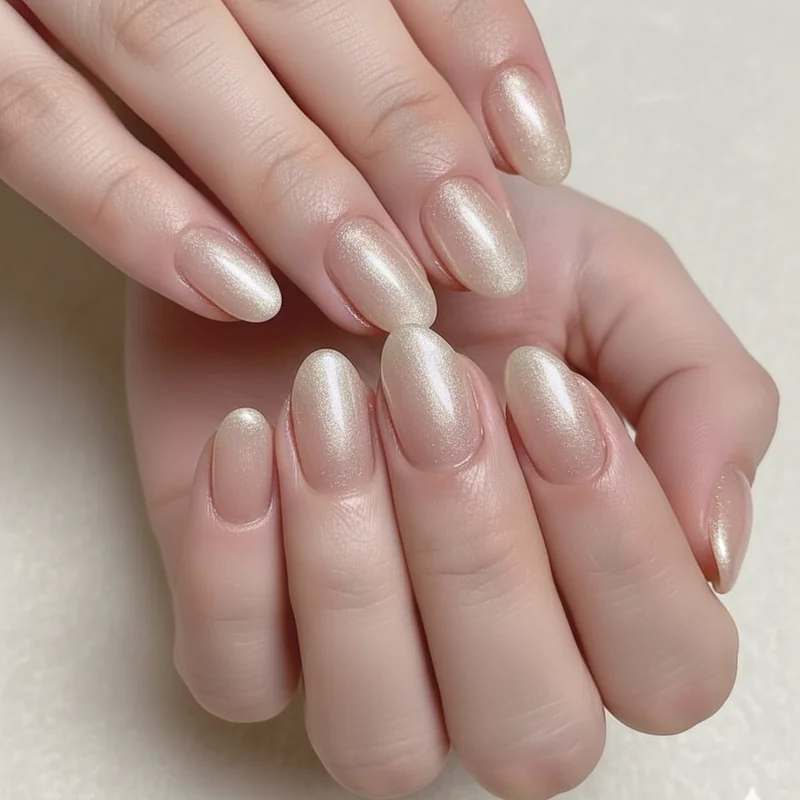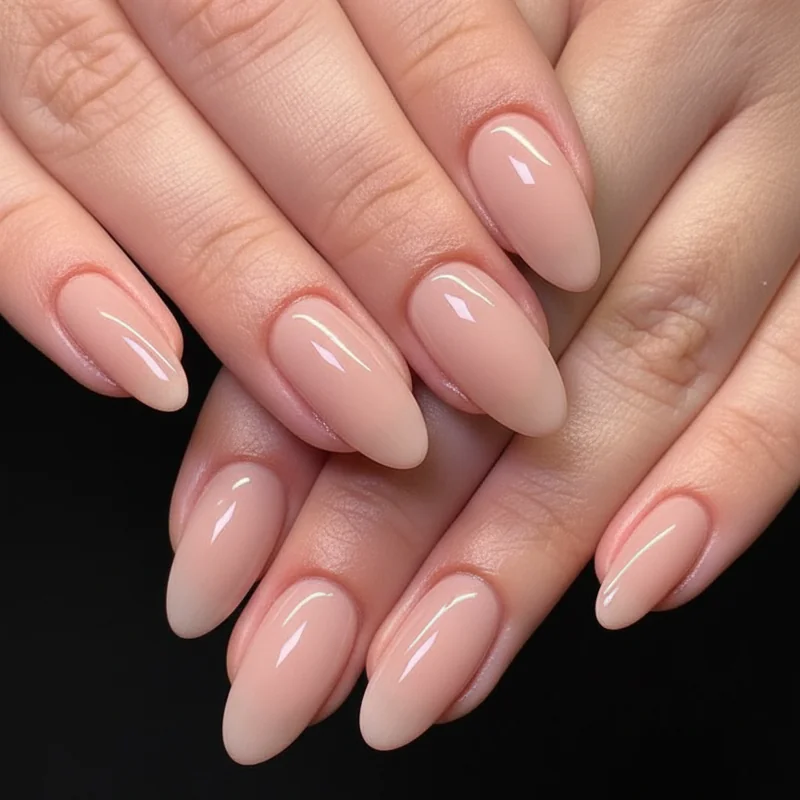
Nobody warns you that choosing your wedding nails involves more competing opinions than choosing your actual venue. Ask three people whether to get gel vs acrylic wedding nails and you will get three different answers, two horror stories about nail damage, and at least one person who insists dip is the only option. Here is the honest comparison.
The short version of the gel vs acrylic wedding nails debate: the right answer depends on four things, whether you need length, what your honeymoon looks like, how your nails photograph, and how much you care about what happens to your nails afterwards. This post goes through all of it. By the end, you will have a clear recommendation for your specific situation, not a list of options with "talk to your technician" at the bottom.
This covers gel, acrylic, dip powder, and structured gel (the type your technician is most likely recommending in 2026 that most bridal guides still do not mention). It also covers the questions that actually worry brides: what happens if a nail breaks on the day, which finish photographs best, and how long before the wedding you should actually book.
What Actually Matters When Choosing Your Wedding Nails (Not What Most Guides Tell You)
Most comparison guides tell you that gel lasts two to three weeks, acrylics are more durable, and dip is better for your nails. All of that is technically true and almost entirely unhelpful for a bride.
What actually determines the right choice comes down to five things, and none of them is "which one is safest in general."
Length goals. If your natural nails are where you want them and you just need a strong, polished overlay, gel and dip both work. If you want to add meaningful length, more than a few millimetres, you need either acrylic extensions or hard gel extensions, and your technician's recommendation here matters.
Honeymoon activity. A week on a beach in the Maldives is not the same as a city break in Rome. Acrylics and hard gel hold up through sustained water exposure. Soft gel can lift at the free edges if your hands are submerged regularly.
Photography. Specifically: ring shots. The finish of your nails reads very differently on camera depending on what product is underneath your top coat. More on this later.
First-timer status. If you have never had any kind of nail enhancement before, that changes the recommendation significantly. Your nail plate's reaction to product, your technician's ability to assess your nail health, and the removal process all look different for someone who has never had gel or acrylics before.
Removal timeline. This is the one most guides skip. Are you keeping the nails after the honeymoon? Are you removing them yourself? The removal method for each type is genuinely different, and choosing the wrong one because nobody told you can result in weeks of nail damage.
Gel Nails for Weddings: What Brides Need to Know Before Booking
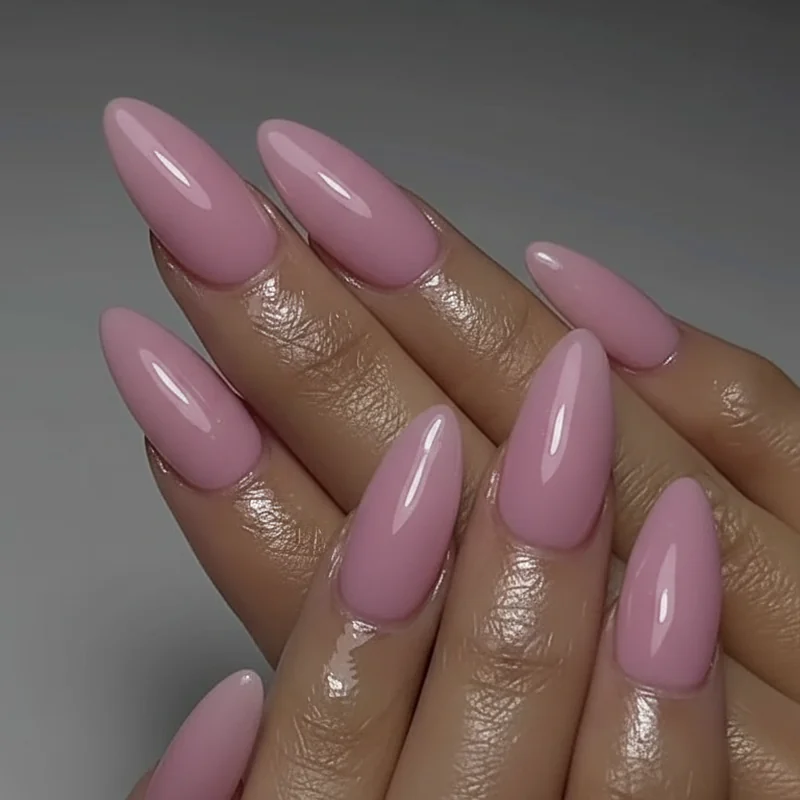
Soft gel, the kind most people mean when they say "gel nails", is a UV or LED-cured polish that sits on the natural nail as an overlay. It does not add structural thickness. What it does is give you a chip-resistant, high-gloss finish that lasts two to three weeks without the rigidity or weight of acrylics.
For weddings, regular gel polish is a solid choice if your natural nails are in good shape and you are not trying to add length. The finish is genuinely beautiful: a depth and shine that regular polish cannot replicate, and it holds through a full day of events, hugging, dancing, and hand-wringing without issue.
The two things to know before booking standard gel for your wedding:
First, gel does not add structural strength to fragile or naturally thin nails. If your nails tend to peel or break, a gel overlay alone will not prevent that. You may snap through the gel if a nail is weak underneath. This is where structured gel becomes relevant, which the next section covers.
Second, removal matters. Soak-off gel, the most common type, is removed by soaking in acetone. Done correctly by a professional, this causes minimal damage. Done incorrectly at home, or done too aggressively, it can thin the nail plate significantly. If you are a first-timer and planning to remove gel at home after the honeymoon, factor that into your decision. A salon removal appointment costs very little and protects your nails.
How to Do Wedding Nails at Home: DIY Bridal Manicure Guide covers the at-home approach in full if you are considering a DIY option instead.
How long do gel nails last for a wedding? Standard soft gel lasts two to three weeks with proper application and prep. For a wedding, that means booking two to three days before the ceremony, not the morning of, gives you a fresh, pristine finish with enough buffer to fix anything before the day itself.

Acrylic Nails for Weddings: When They're the Right Choice, and When They're Not
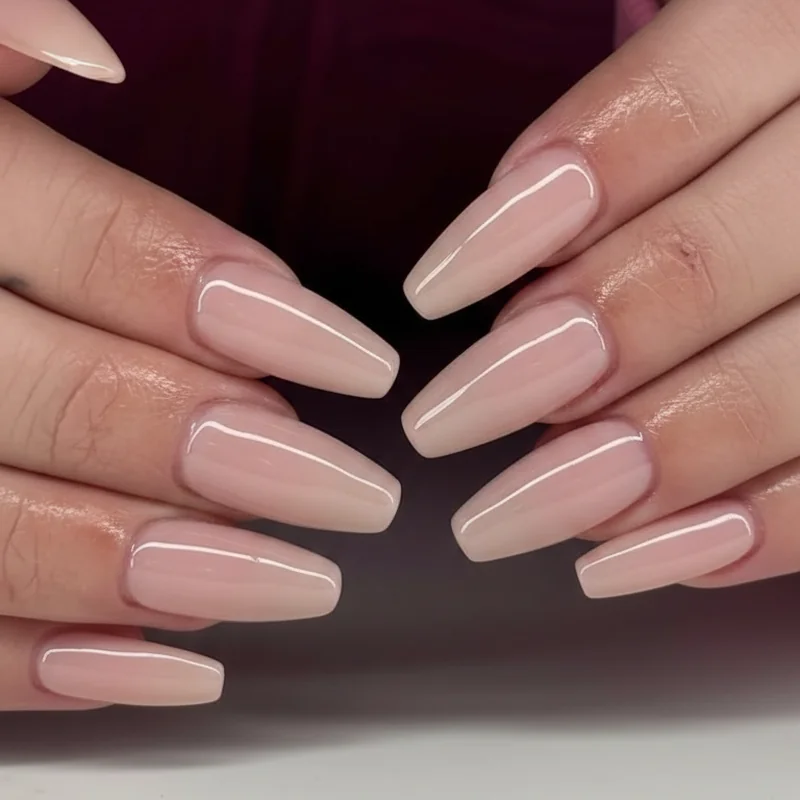
Three things acrylics do better than anything else: length, rigidity, and longevity. If your goal is nails that are significantly longer than your natural nail, with a strong, hard finish that can handle whatever the next three weeks throws at them, acrylics are the technically superior choice.
The acrylic system works by combining a liquid monomer and a powder polymer. When mixed and applied, the product begins curing immediately in air, no lamp required, and sets into a hard overlay or extension that can be shaped into any length or form. It is the most customisable system in terms of sculpting. Do acrylics actually destroy your nails, or is that a myth? The honest answer is: it depends entirely on the technician and the removal. Acrylics applied correctly on healthy nail plates, with proper prep, cause minimal damage. The problems come from drilling too aggressively during prep, or from picking and peeling the product off rather than soaking it. Neither of those is inherent to acrylics as a system, they are application and removal errors.
What is genuinely worth considering for a bride: the chemical smell. Acrylic application produces a distinctive monomer odour that dissipates after the appointment but can linger in hair and clothing for a few hours. If you are having nails done the morning of your wedding, in a room with your bridal party, this is worth knowing about. Many brides schedule acrylics two to three days before for exactly this reason.
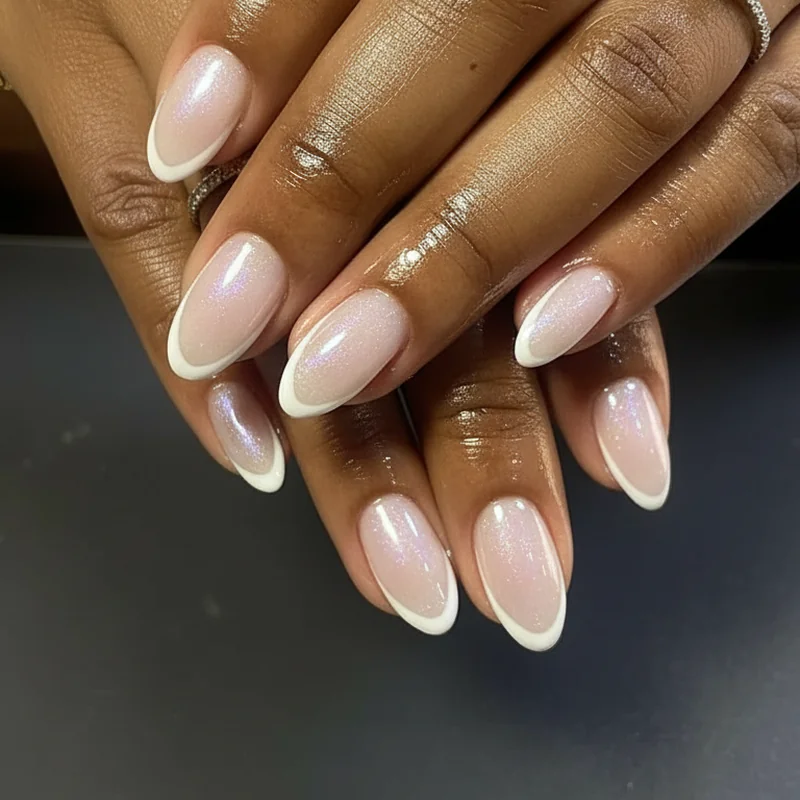
For design compatibility: acrylics support almost everything. Chrome powders, intricate nail art, and French tips all work well over an acrylic base. French Tip Wedding Nails: Classic & Modern Ideas for Brides has design ideas if that is the direction you are going, and French tips sit particularly well on acrylic because the hard structure holds the line cleanly.
You can also find design inspiration in Spring Acrylic Nails 2026: Best Sets & Kits for current finish ideas that work on an acrylic base.
Dip Powder for Wedding Nails: The Option Nobody Talks About Enough
Dip powder is not a gel and not an acrylic, though it borrows something from both. The system works by applying a bonding liquid to the nail, dipping into coloured powder, sealing, and filing to shape, no lamp, no mixing. The result is a hard, lightweight overlay with excellent colour saturation and a finish that falls somewhere between regular gel and acrylics in terms of durability.
Is dip powder good for wedding nails? For colour-focused brides who want strong, long-lasting results without the acrylic system, yes. Dip lasts three to four weeks on most people, is odourless during application, and does not require UV exposure. If you have a sensitivity to the chemicals in either gel or acrylic, dip is often better tolerated.
The genuine limitation for brides: design capability. Can you get nail art with dip powder? The answer is technically yes, but with significant constraints. Dip does not support chrome powders as well as gel, the powder surface is slightly more porous, and chrome tends to apply less cleanly. Detailed nail art is also harder to execute over dip because of the texture. If you want minimal, one-colour nails, dip is excellent. If you want chrome, gradient, or detailed art, gel wins.
Does dip look thick on short nails? It can, yes. Because dip builds layers of powder and sealant, on very short nail beds it can read as slightly heavy around the free edge. A skilled technician can minimise this, but if your nails are short and you are self-conscious about thickness, gel is a lighter-feeling option.
What About Structured Gel, Builder Gel, and BIAB? (The Type Your Technician Might Recommend)
What is structured gel, and is it better than regular gel for weddings? This is the question most guides miss entirely, and it is increasingly the most important one to ask your technician.
Structured gel is the umbrella term for thicker, brush-on gel formulas designed to add structural support to the nail rather than just sitting on its surface. Builder in a Bottle, commonly called BIAB, is the most widely known product in this category. Hard gel extensions fall under a related category: harder formulas that can create length over nail forms, cured under an LED lamp.
The difference from regular gel polish is structural. Where standard gel sits on the nail plate as a flexible coating, structured gel is built up in layers to create an apex, the slight peak at the stress point of the nail that gives it strength. This makes it significantly more resistant to breaks and lifts than regular gel, without the weight or rigidity of acrylics.
For brides in 2026, structured gel is what many technicians are recommending as the default. Professional guidance for bridal nail technicians from Elite Beauty Society confirms this directly: structured gel offers flexibility and comfort for brides who do not need dramatic length, while acrylics remain the recommendation for those who do.
Which nail type is safest for first-time nail enhancement users? Structured gel and BIAB are the answer. No chemical smell. No aggressive drilling required. No mixing systems. The product sits over your natural nail, adds strength and a beautiful gloss finish, and is removed by soaking, gently, with acetone, at a salon. If you have never had any kind of enhancement before and are doing this specifically for your wedding, structured gel is the place to start.
Which Nail Type Photographs Best for Your Ring Shot?
High-shine gel reflects light cleanly. That is the short answer, and it matters more than people expect.
In a close-up ring shot, the photograph your photographer will take of your left hand, usually within the first hour of the day, the finish of your nails is directly next to the surface of your ring. A well-applied gel top coat produces a mirror-like shine that echoes and complements the ring's metal. It reads beautifully on camera because the light source reflects as a clean, defined highlight rather than a diffuse glow.
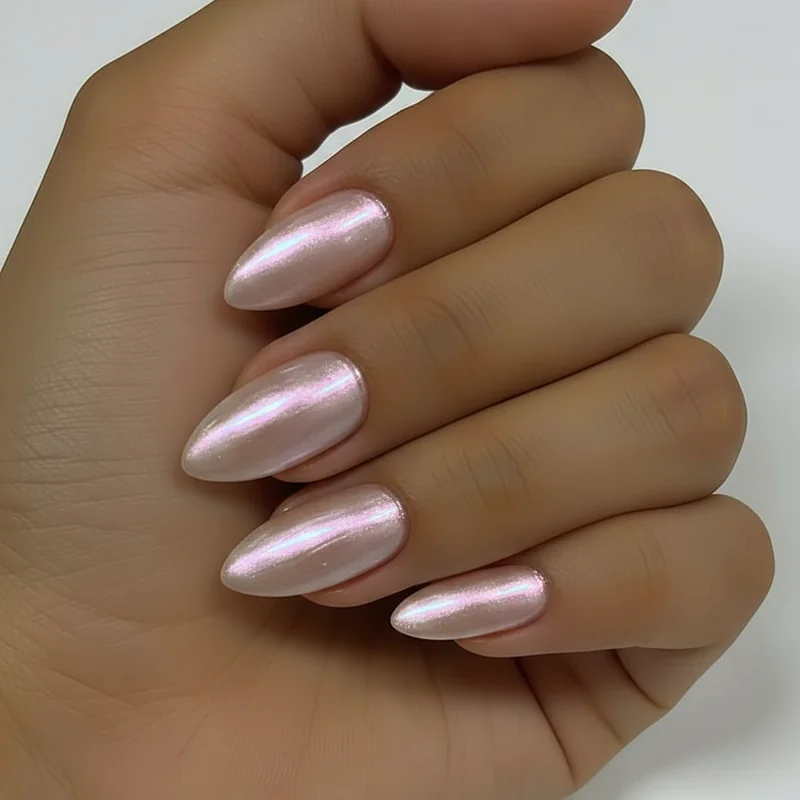
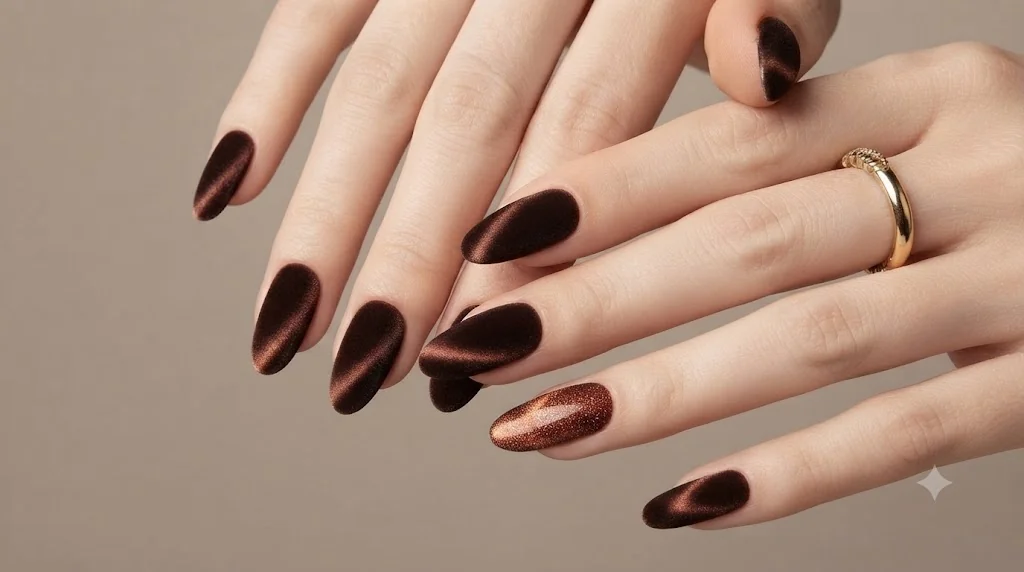
Chrome powder applied over a gel base is the most photogenic option, full stop. The metallic sheen reads with real depth in both natural and studio light, and it works with silver, gold, and rose gold settings. It is worth noting that chrome over gel gives a much cleaner result than chrome over dip or acrylic, the gel surface is smoother and allows the chrome powder to adhere more evenly.
Matte acrylics absorb light rather than reflecting it, which can make nails look flat in ring shots. If you choose acrylics, a high-gloss top coat is worth adding for photography purposes, you can always shift to a matte finish for everyday wear afterwards.
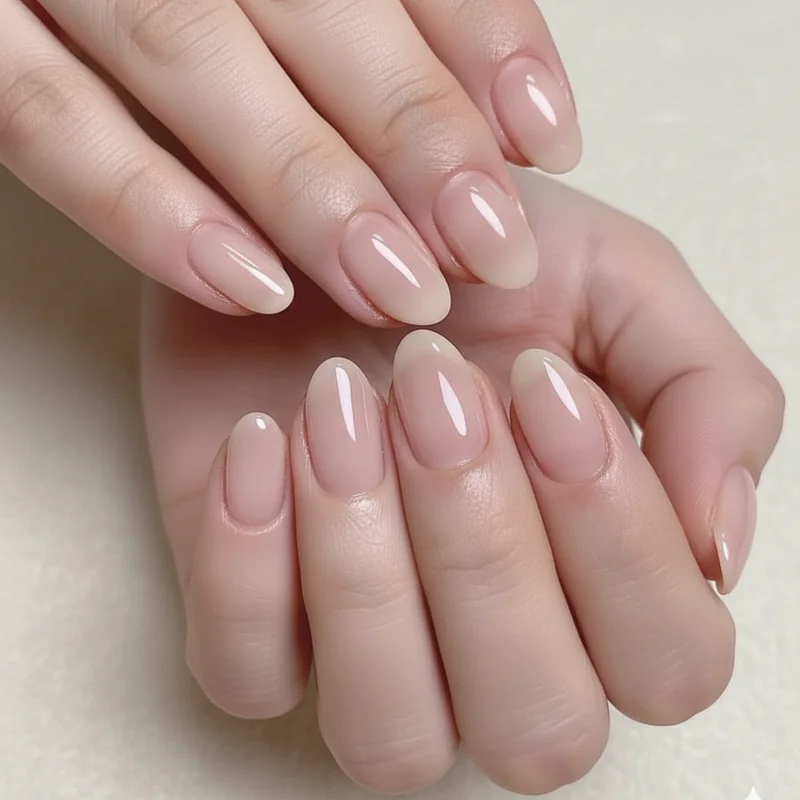
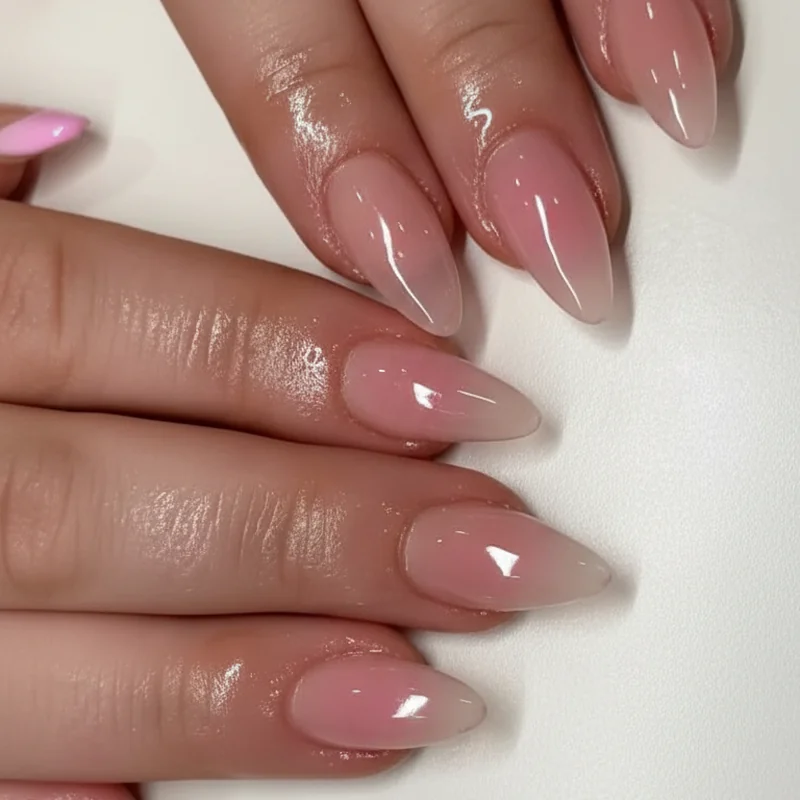
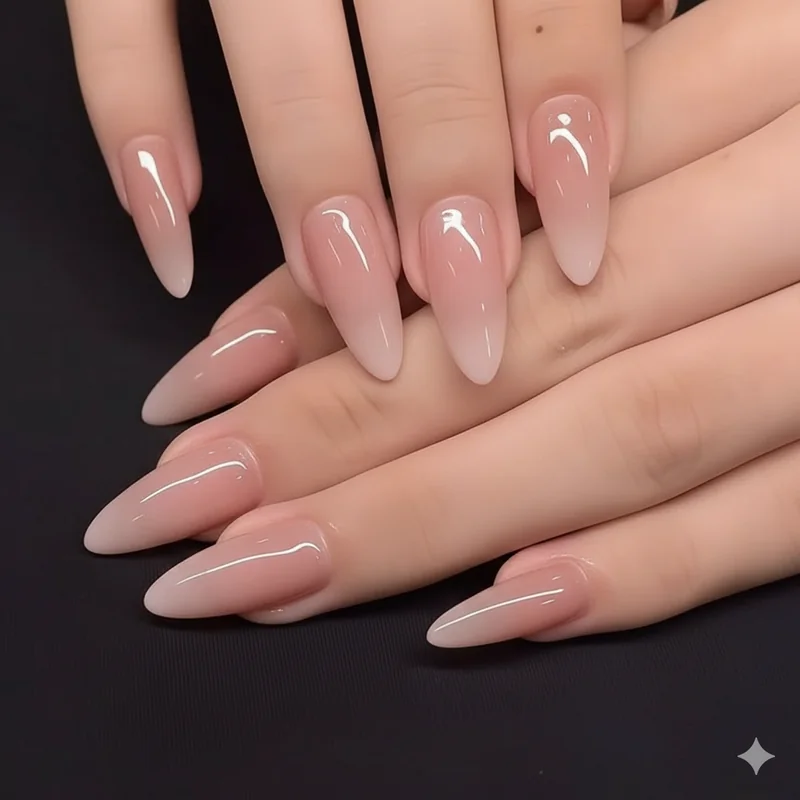
Which nail finish photographs best in ring shots? Glossy structured gel or gel with chrome, in a soft neutral, sheer pink, or metallic shade. Keep the shape relatively clean, a rounded oval or soft almond reads most elegantly up close.
Which Lasts Through the Honeymoon?
What nail type is best for a beach honeymoon? Acrylics or hard gel extensions, and the answer comes down to what happens when nails are repeatedly submerged.
Soft gel has a known weak point: the free edge. When nails spend sustained time in water (swimming pools, sea, baths), the gel can begin to lift from the tip inward. This is not a failure of application; it is the nature of a flexible, soak-off product. For a couple of days at the beach, this probably will not affect you. For a ten-day tropical honeymoon with daily swimming, it is a real consideration.
Acrylics are more resistant because the product is harder and adheres with a stronger bond across the full nail surface. Hard gel extensions work similarly. Both hold up better through saltwater, chlorine, and humidity. The trade-off: they are more rigid, and any impact to the nail (a door frame, suitcase, coral) puts more stress on the nail plate because there is less flex in the product.
Is gel or dip better for brides who are rough on their hands? Dip for rigidity on a budget; structured gel as the balanced middle ground for most situations.
Practical advice: apply cuticle oil daily during your honeymoon. It keeps the seal around the nail edge healthy and significantly extends how long any nail type looks fresh.
What Happens If a Nail Lifts or Breaks on the Wedding Day?
This is the question that comes up in every bridal forum, and most guides wave it away. Here is the honest answer.
Gel is the easiest to emergency-repair. A good nail technician can patch a lifted or broken gel nail with builder gel, re-cure it under a lamp, and refinish the top coat in under fifteen minutes. The repair is almost invisible. If you are wearing gel and something goes wrong, a salon that handles walk-ins can fix it quickly, even on the morning of the wedding.
Acrylics can also be repaired, but the process requires more materials and some skill to blend the repair invisibly with the existing product. Still very doable at a professional salon, and worth knowing that most acrylic technicians can do this quickly.
Dip is the hardest to repair invisibly. Patching dip requires re-dipping the entire nail in most cases, and colour matching can be tricky if you have a custom or specific shade. It is not impossible, but it is the least straightforward emergency fix.
What if a nail breaks on my wedding day? Save your nail technician's number in your phone before the day. Identify the nearest salon to your venue that takes walk-ins. If you are having nails done two to three days before (as recommended), any pre-existing issues will surface before the day, not during it. The morning-of booking is where emergencies happen most often.