You have spent months deciding on the dress, the venue, and the flowers. The nail shape feels like the small decision — and then suddenly it is not, because your hands are going to be in more photographs on your wedding day than almost any other part of you.
Nail shape for wedding planning is one of those decisions that carries more visual weight than its size suggests. The right shape can lengthen fingers, complement your ring, and photograph cleanly in every light. The wrong one can snag on your dress during the zip-up, look mismatched beside your stone, or simply feel like someone else's hands at the end of the aisle. This guide covers every shape that matters for brides in 2026 — with clear guidance on what works for your specific hand type, your ring cut, and the full reality of a wedding day, including the dancing.
Once you know your shape, the design decisions get much easier — and there is no shortage of inspiration in the Wedding Nail Designs guide covering timing and expert ideas alongside your shape choice.
Why Nail Shape Matters More Than Most Brides Realise
Nail shape affects three things that matter on a wedding day: how your hands look in photographs, how comfortable you feel wearing the shape for eight-plus hours, and how well the nail silhouette works alongside your ring. Most style decisions affect how you look from a distance. Nail shape affects how you look in close-up photographs — the ring shot, the bouquet hold, the hand-on-shoulder moment during the first dance.
A shape that is too wide makes fingers look shorter. A shape that is too sharp creates a focal point that competes with the ring. A shape that is structurally fragile means you spend part of your reception anxious about breakage rather than present in the moment. None of these are catastrophic — but all of them are avoidable with a little advance thought.
The other thing worth understanding: nail shape and nail length are separate decisions. You can wear almond short. You can wear squoval long. Choosing a shape does not commit you to a particular length, and the two should be decided together based on your hand type, not one after the other.
The 2026 Bridal Shape Shift: What Nail Artists Are Actually Recommending Right Now
Sharp square is out. That is the clearest signal coming from nail artists working with brides in 2026, and it is not a trend prediction — it is expert consensus. Celebrity manicurist Alexandra Jachno advises brides directly against sharp square tips for practical reasons: you are zipping dresses, exchanging rings, clutching bouquets, and dancing for hours. A sharp corner catches on everything and stress-points exactly where the free edge meets fabric.
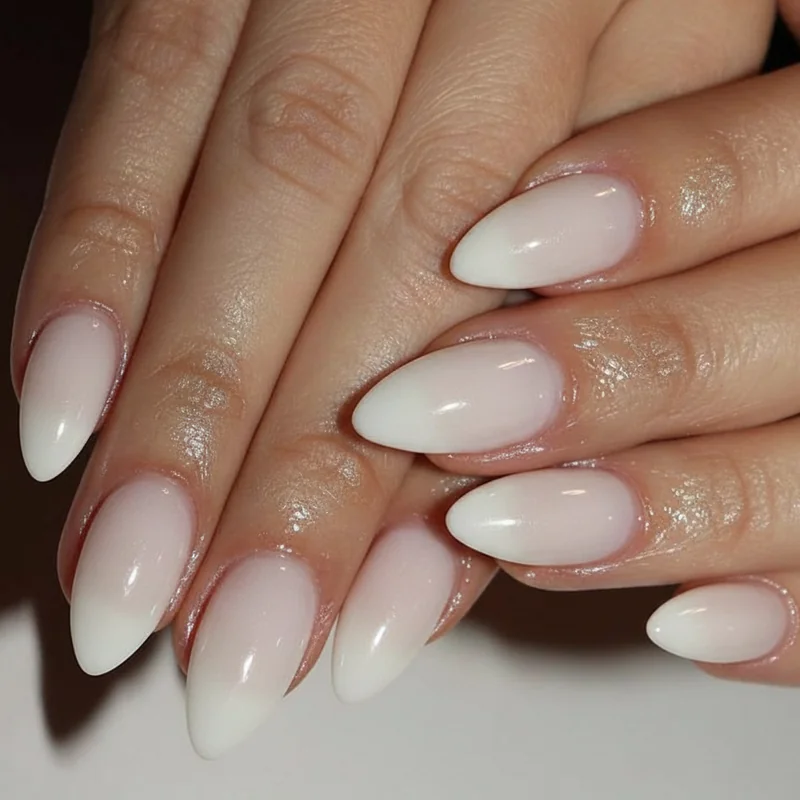
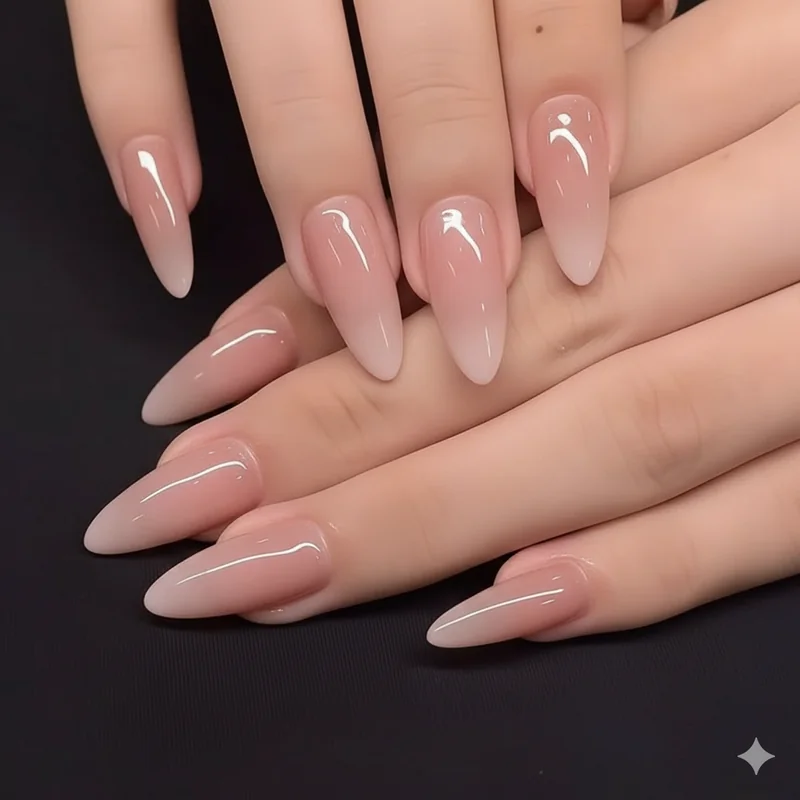
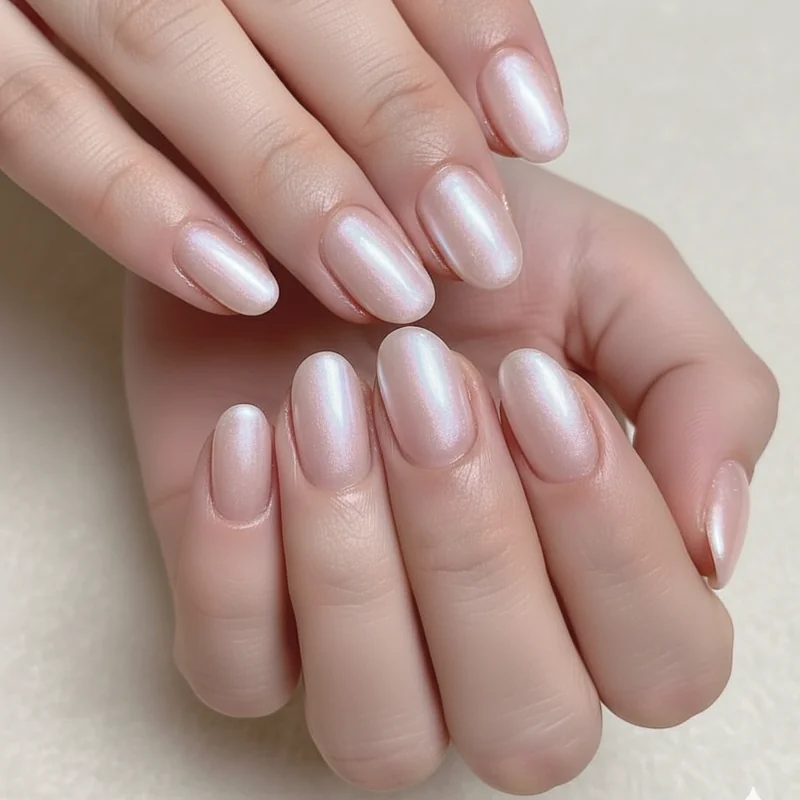
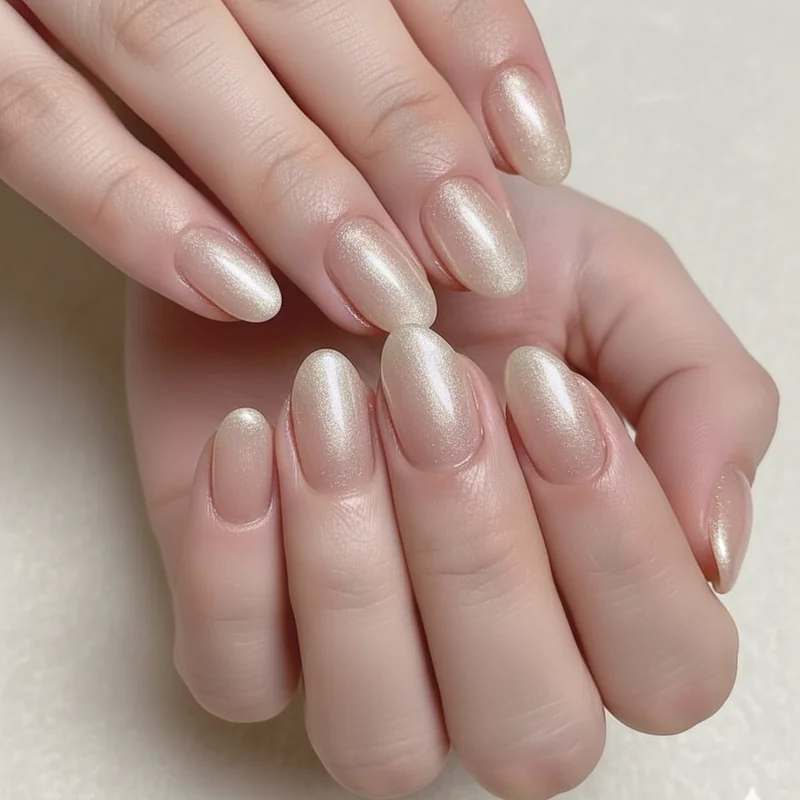
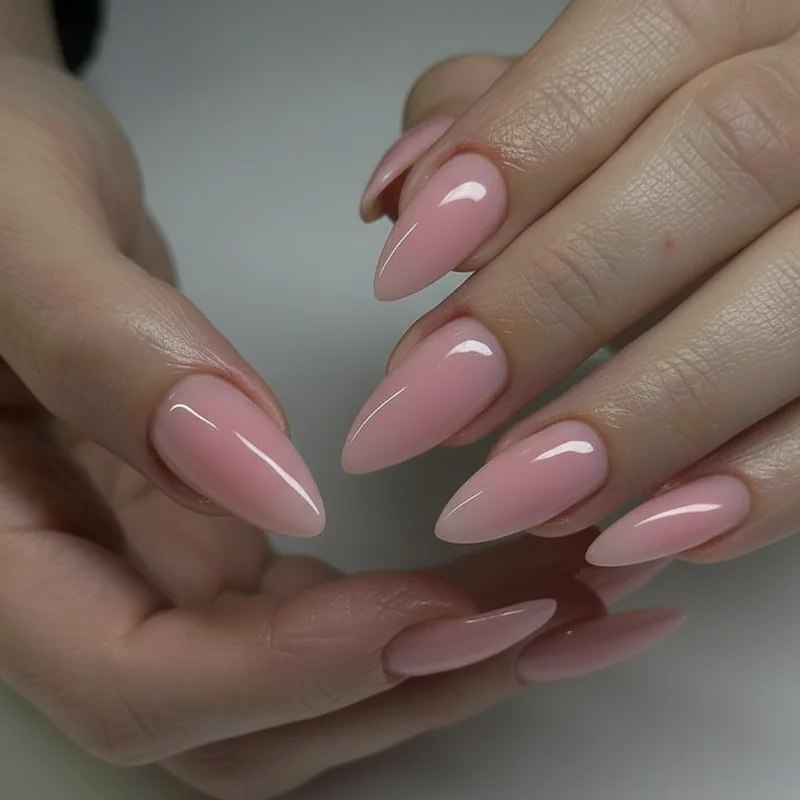
What nail artists are recommending instead is a move toward softer shapes at shorter-to-medium lengths. Almond and squoval are the two shapes getting the most expert endorsement for 2026 bridal manicures — almond for its elongating effect and photography performance, squoval for its durability and adaptability to wider nail beds. Oval is holding its position as the quietly elegant, works-on-nearly-everyone shape.
The broader shift is away from drama and toward what the industry is calling "quiet luxury" nails — shapes and finishes that look expensive, not loud. That context matters when choosing shape: the goal in 2026 is not a nail that gets noticed on its own, but a nail that makes everything else look better. For more on what brides are wearing this year, the Wedding Nail Trends 2026 post covers the full picture.
Almond Nails: Why This Is the Go-To Bridal Shape — and When It's Not Right for You
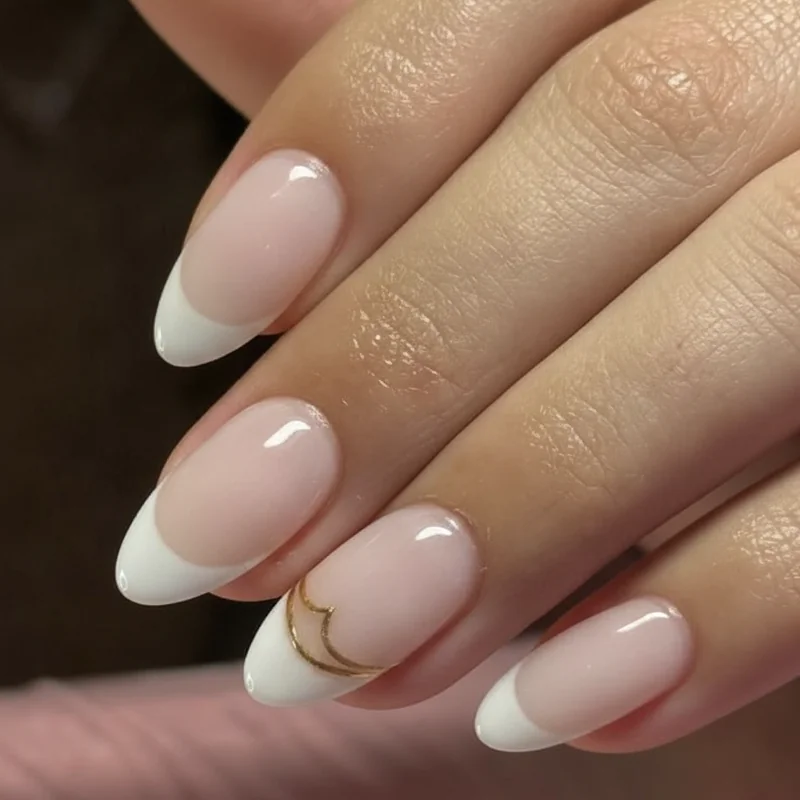
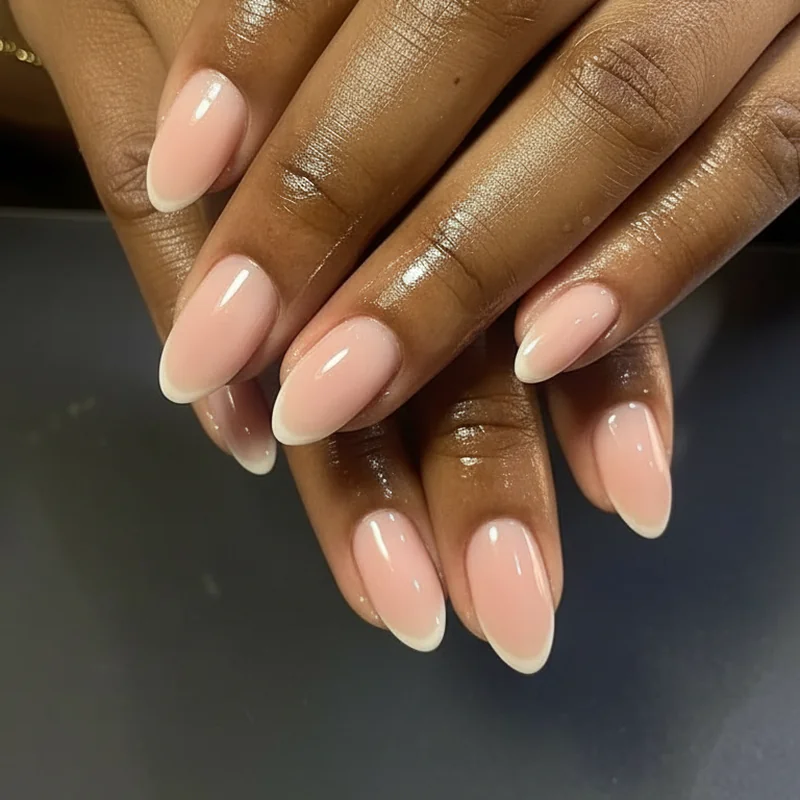
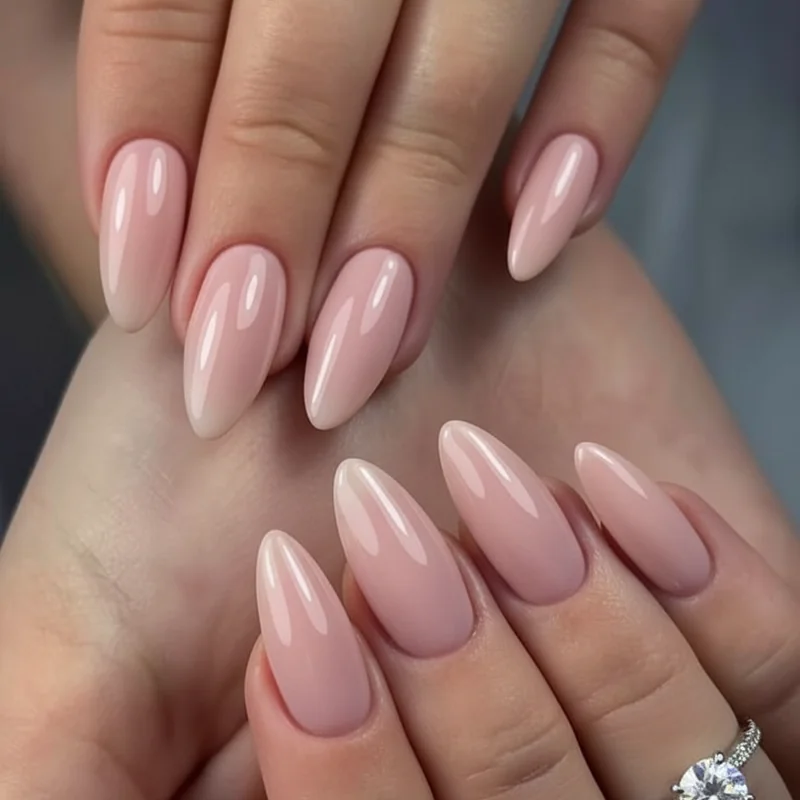
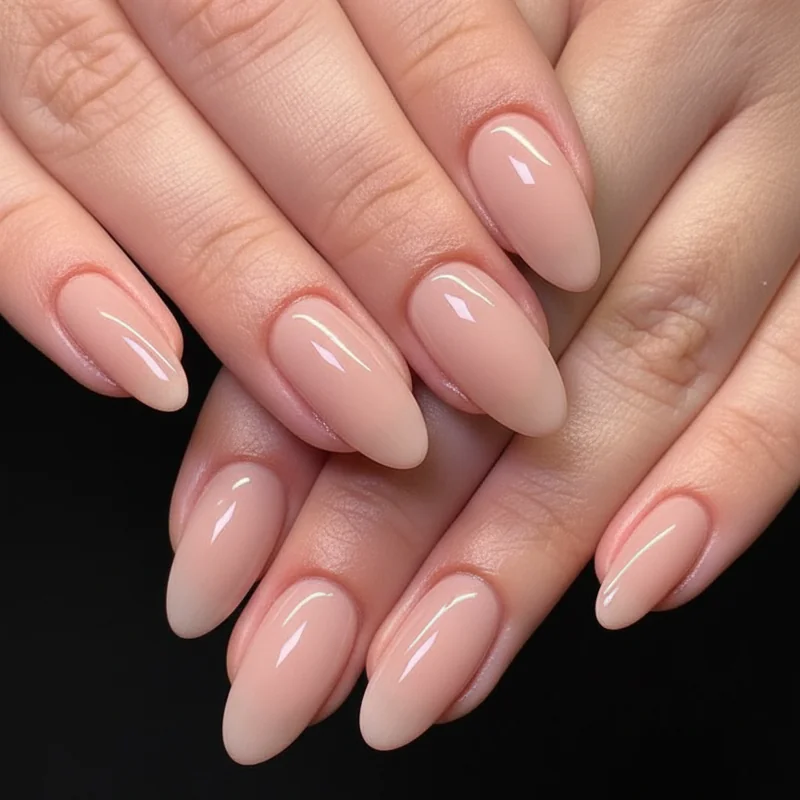
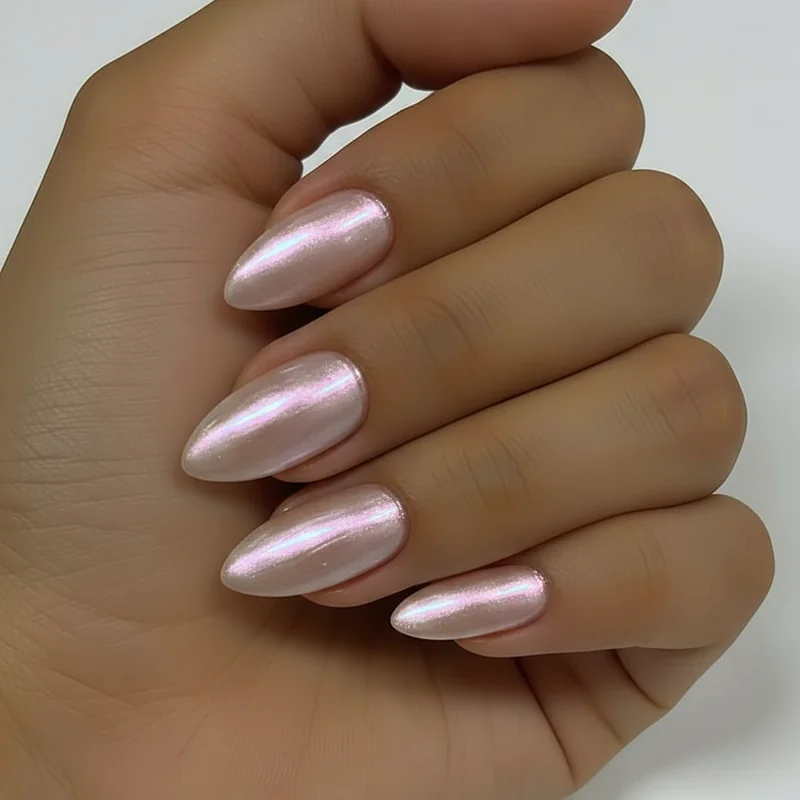
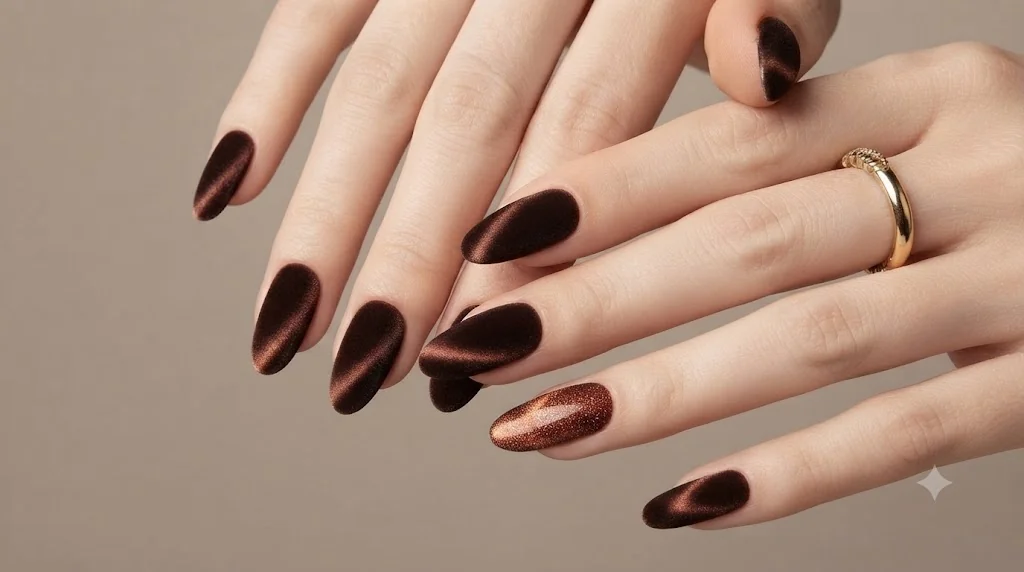
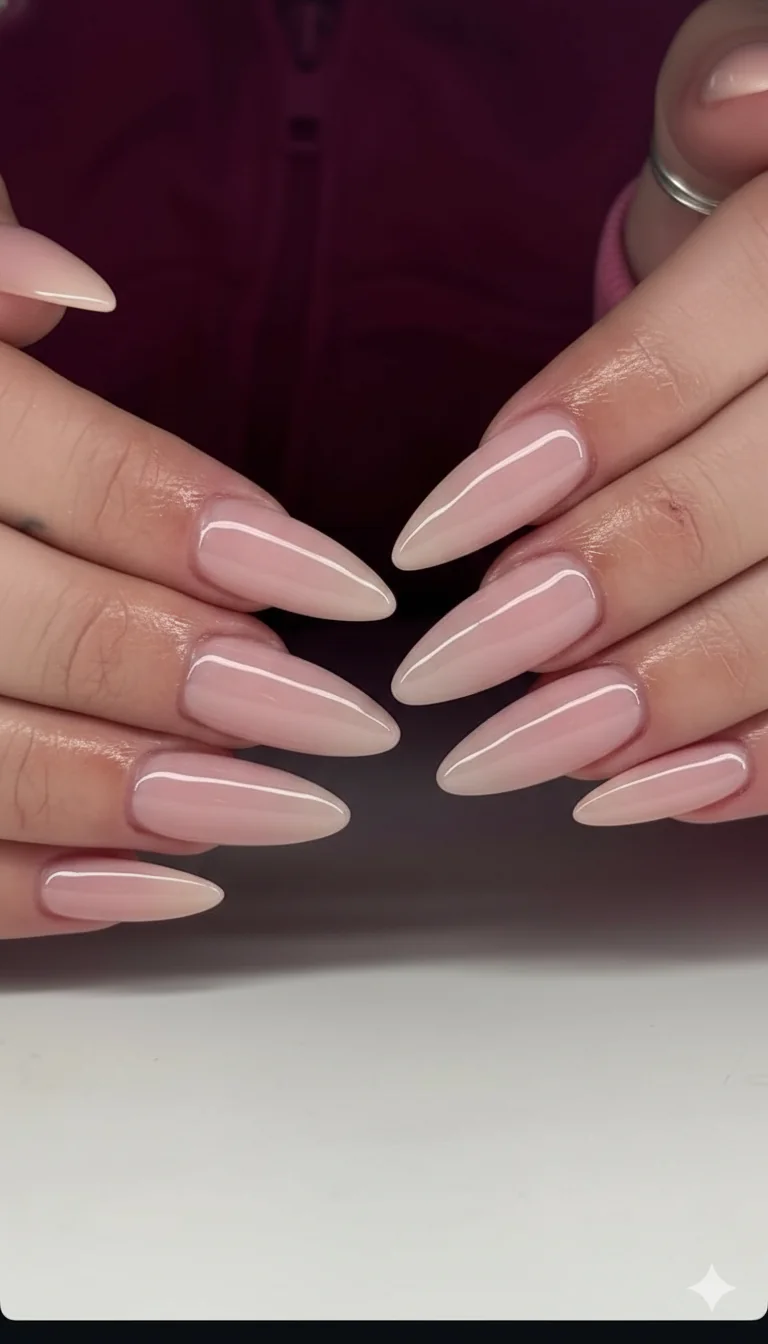
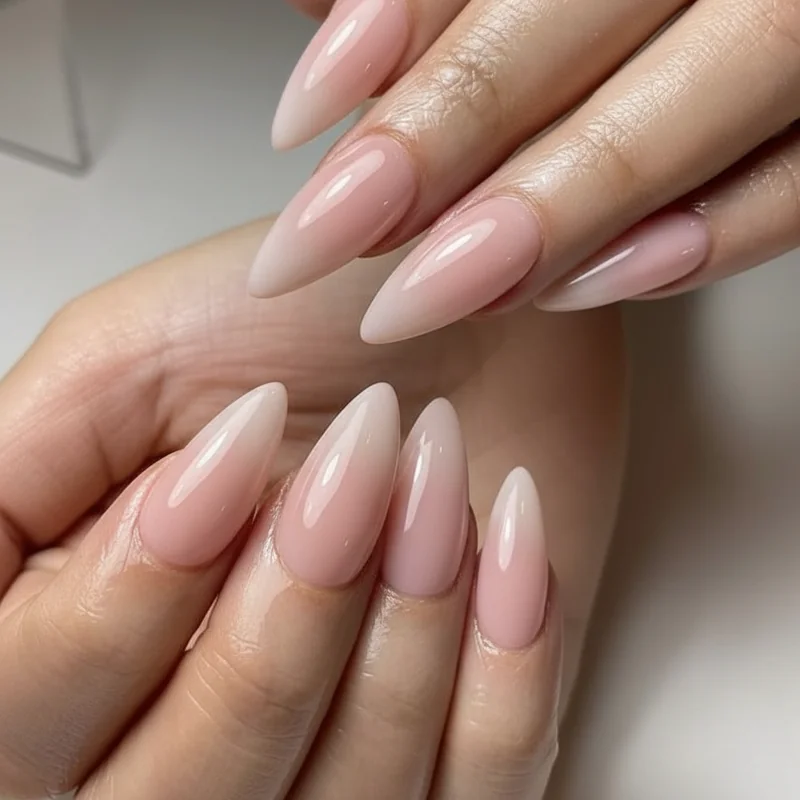
Most guides say almond is universally flattering and leave it there. The fuller picture is more useful. Almond is the most forgiving shape for a wide range of hand types — it tapers toward a slightly rounded point, which visually elongates the finger regardless of starting width or length. That taper is why nail artists reach for it as a default bridal recommendation: it creates a leaner, more elegant line from cuticle to tip without requiring dramatic length to do so.
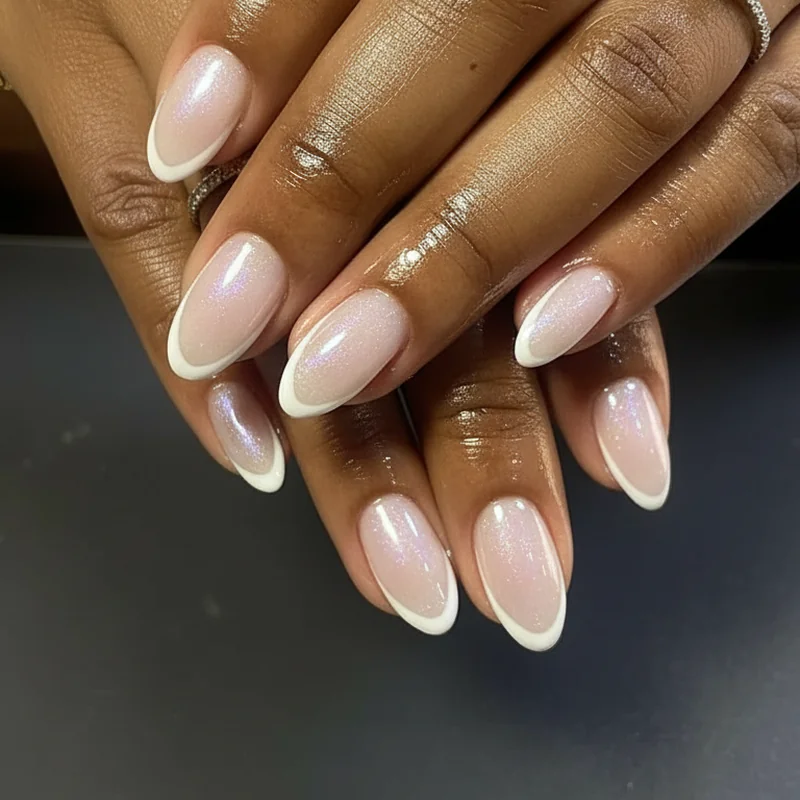
The shape also works exceptionally well for French tips — the tapered silhouette gives the white edge a refined, intentional quality rather than the abrupt ledge you can get on a flat square. If a French tip is in your plan, French Tip Wedding Nails has a full breakdown of how the design reads across different shapes. Spring and summer brides in particular are leaning into almond this year — it has become the shape reference point for 2026's most-shared bridal nail images across spring nail looks.
When almond is not the right call: if you have a very wide nail bed, a pronounced almond taper can exaggerate the width at the base rather than visually reduce it. In that case, oval is usually a better fit — it has a similar elongating effect with a rounder tip that works more harmoniously with broader nail plates. And if your natural nails are very short right now, almond needs enough free edge to create the taper — around 3–4mm minimum. Gel extensions or BIAB can bridge that gap with 6–8 weeks of lead time.
Oval Nails: The Quietly Elegant Option That Works on Almost Every Hand
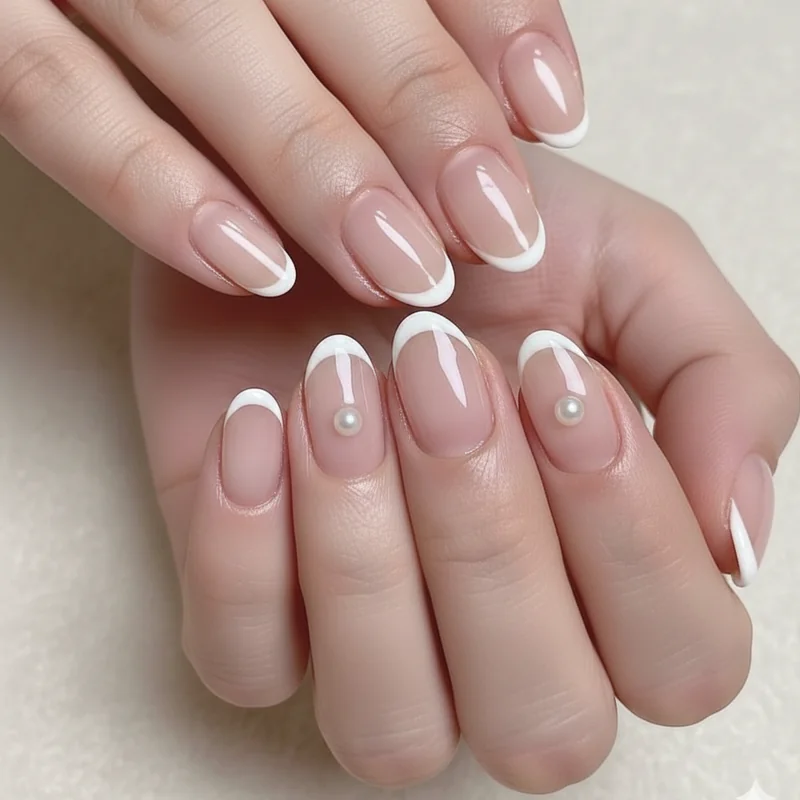
If you have never worn a shaped nail before, oval is where to start. Not because it is the safe or boring option — but because it is the shape most likely to feel like a better version of your natural nail rather than a statement you are making for one day. Oval follows the natural curve of the fingertip and extends it, which is why it suits almost every hand type and feels comfortable to wear even if you are not used to length.
For brides with wider nail beds, oval is often a stronger choice than almond precisely because the rounder tip does not draw attention to the width at the base. The shape sits quietly beside the ring without competing for the eye's attention, which is — particularly for large or statement engagement rings — exactly the right call.
Oval also photographs well across almost every lighting condition, which is worth considering when you are thinking about how your hands will look in a mix of indoor reception light and outdoor ceremony shots. French tip nail designs read beautifully on oval, as does sheer or milky colour.
The one caveat: oval is not a shape that does much elongating work on fingers that are already short and wide. In those cases, almond's additional taper gives you more visual length to work with.
Squoval and Soft Square: The Most Practical Shapes for a Long Wedding Day
The stress point — the area on the free edge most likely to break under impact — sits differently on a square nail than on a rounded one. On a traditional square, the corners are the weak spots. A squoval rounds those corners just enough to distribute pressure more evenly across the free edge, which is why it holds up better across a full day of the kind of activity a wedding involves.
Squoval (in case this is the first time you have encountered the term): a shape with a flat, squared-off free edge and gently rounded corners. Not fully square, not fully oval — directly between them. It gives you the structured look of square without the sharp edges that catch on fabric, snag on veils, or create leverage during a ring exchange.
Soft square follows the same logic from a different direction: a square shape with the corners bevelled slightly rather than filed to a hard 90-degree angle. The distinction is subtle, but it is the difference between a shape that reads modern and intentional and one that reads sharp and dated. For brides who want the clean horizontal line of a square tip, soft square delivers it without the practicality issues.
Both shapes suit wide nail beds particularly well — the flat edge works with a broader nail plate rather than against it. The Short Wedding Nails guide covers squoval and soft square in detail for brides keeping their length natural. And if you want to see how short, practical shapes can be just as polished as longer ones, the same logic applies across occasions — simple elegant shapes for special days show exactly that.
Coffin and Round: When These Shapes Make Sense (and When They Don't)
Two shapes. Both have a place in a bridal context. Neither is the automatic choice it might appear to be.
Coffin (also called ballerina) is a long, tapered shape with a flat, squared-off tip. It reads dramatic and modern — the shape most associated with a fashion-forward bridal aesthetic, long gel extensions, and nails that are genuinely intended to be noticed. For a bride who has worn coffin shape regularly, it is a completely valid choice. For a bride who has never worn it before: your wedding day is not the day to discover that you find long, flat-tipped nails uncomfortable. The length also interacts with a ring exchange in a way worth thinking through — a very long coffin nail can make it awkward to slide a ring over the knuckle cleanly.
Round is the opposite end of the spectrum: a short, fully curved shape that closely mirrors the natural nail. It is currently having a genuine bridal moment in 2026, partly because short nails overall are trending toward the elevated end rather than the afterthought end. Round works particularly well on wider nail beds because the curve softens the width without requiring the taper of almond. It is also the most practical shape of all for a physically active wedding day — nothing to snag, nothing to break, nothing to manage.
How to Choose the Right Shape for Your Hand Type
Brides with short fingers should lean toward shapes that create vertical line rather than horizontal: almond and oval are the clearest wins here. Both taper toward the tip, which draws the eye along the finger rather than across it. Avoid wide, flat-tipped shapes — traditional square and wide coffin work against you here. Medium length in almond will do more for short fingers than any long dramatic shape.
Brides with wide nail beds have a different set of priorities. Squoval and oval tend to work best because both shapes echo the width of the nail bed without fighting it. Almond can work well too, but the pronounced taper at the tip can create a contrast that draws attention to the wider base rather than reducing it. Round is also worth considering — the full curve creates a neat, self-contained shape.
Brides with long, narrow fingers have the most shape flexibility of anyone. Almost every shape works well on a lean finger. The question is stylistic preference rather than flattery. If you have long, narrow fingers and want a grounding shape, soft square and squoval give the hand a bit more visual weight. If you want to lean into the length, almond or coffin extends it further.
Brides with short, wide fingers (the combination most brides worry about) have a clear best option: almond at a medium length. The taper works against the width, the length works against the shortness, and the shape is forgiving enough to look good across a range of nail bed proportions. Consult OPI's nail shape guide for a thorough visual breakdown of shape-to-hand-type pairing.
What Nail Shape Photographs Best in Ring Shots?
Ring shot photography — the close-up of the rings on the hand — is the one photograph every wedding has, and it is the one where nail shape does the most visible work. Two things are happening in a ring shot: the ring is the hero, and the nail is the frame. The frame either makes the hero look better or it competes with it.
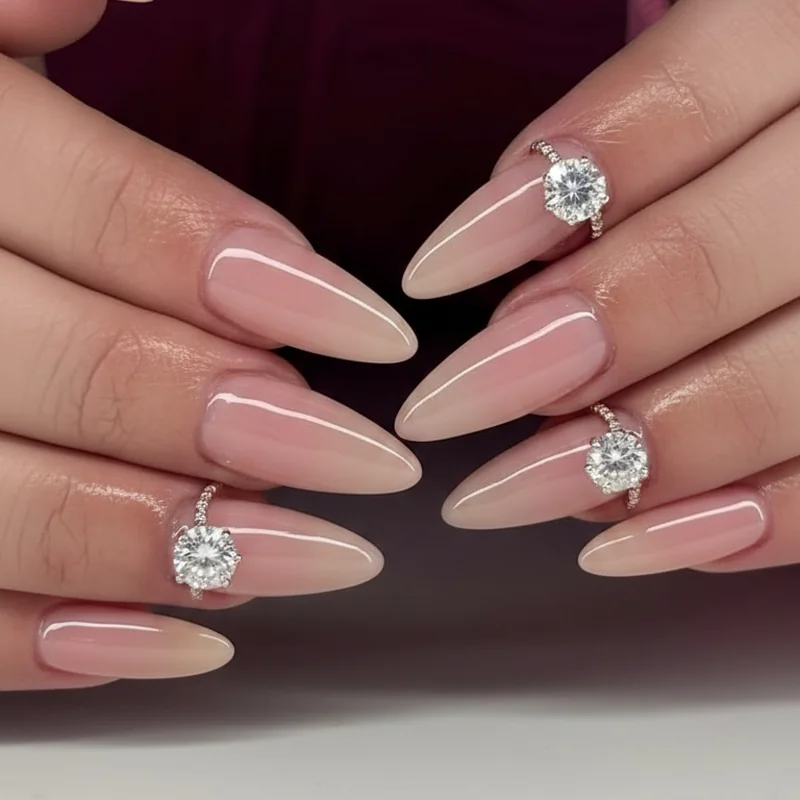
Almond and oval consistently perform best in ring shots for a specific reason: the tapered silhouette draws the eye toward the ring rather than across the nail. Squoval is also strong for the same reason as it is in life — the structure reads cleanly without sharp edges creating a secondary focal point. The one shape that photographers and nail artists both flag as problematic in ring shots is very long coffin: the flat tip and length can pull the eye away from the ring and make the hand look wider in frame.
Colour matters alongside shape here. Shape and colour work together to create the overall photography result — the Best Bridal Nail Colors guide covers exactly which shades photograph most beautifully and why. The short version: sheers, nudes, and milky finishes keep the ring as the focal point regardless of shape.