The interview is over. You got the job. And now, almost immediately, a different, quieter anxiety sets in: what do I do about my nails?
It is a more specific question than it looks. New job nails occupy their own territory, distinct from interview nails and entirely different from what you will be wearing once you have settled in and read the room. If you have come here from our guide to nails for a job interview, you already know the interview logic. This post is about what happens after: the moment you actually walk in and start paying attention.
For ongoing office nail decisions beyond your first weeks, the full Work Nails: The Complete Guide to Office-Appropriate Manicures has everything you need. But right now, let us focus on the specific, slightly nerve-wracking territory of day one.
Why Your First-Day Nails Are Not the Same as Your Interview Nails
The interview was a performance with one goal: get the job. Your first day is something else. It is the beginning of a longer relationship, and the rules that applied in a forty-five-minute panel do not automatically carry over.
Interview nails skew conservative almost universally because the stakes of that single impression are high and the context is compressed. Your first day has more breathing room. You are not being evaluated on your nails the same way, and the people around you, your future colleagues, are the actual audience now, not a hiring panel.
That said, "more breathing room" does not mean much more. The first day is still an observation day, and the smartest thing you can do is arrive in something neutral and spend the time watching rather than being watched. Think of it less as a style choice and more as a strategic one: you are gathering data.
What to Wear on Day One (Before You Know Anything)
When you genuinely do not know what the office culture looks like, the answer is a manicure that reads as deliberate without announcing itself. Not bare nails (that can look unfinished rather than minimal) and not anything you will spend mental energy justifying to yourself in the bathroom mirror.
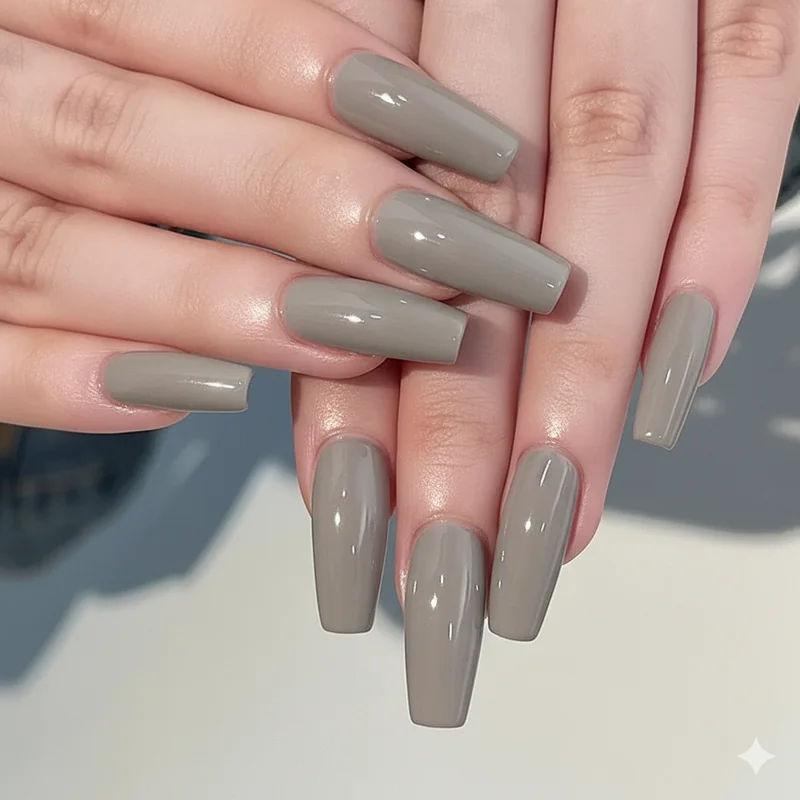
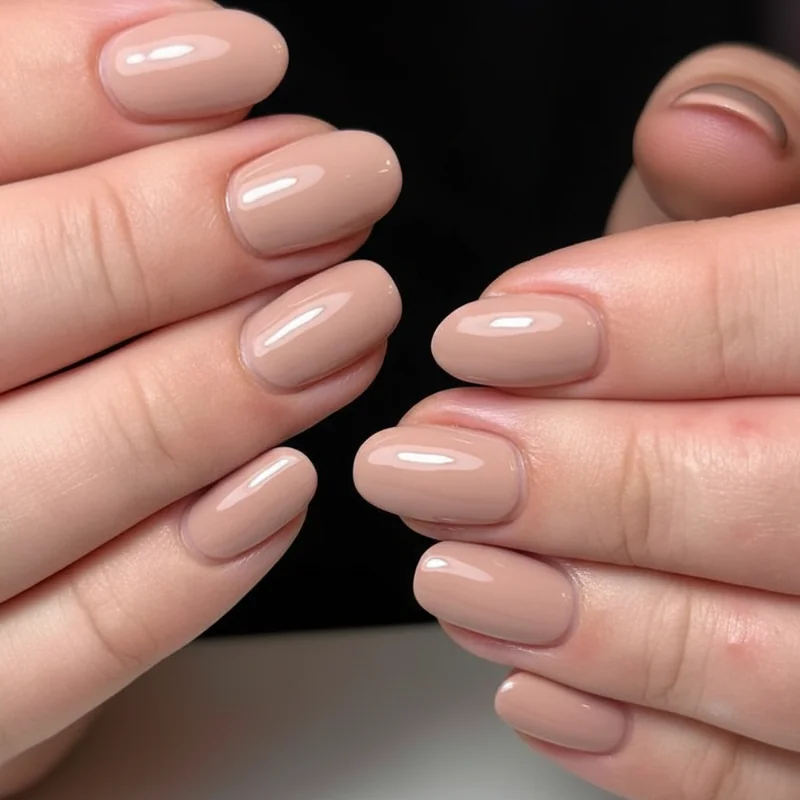
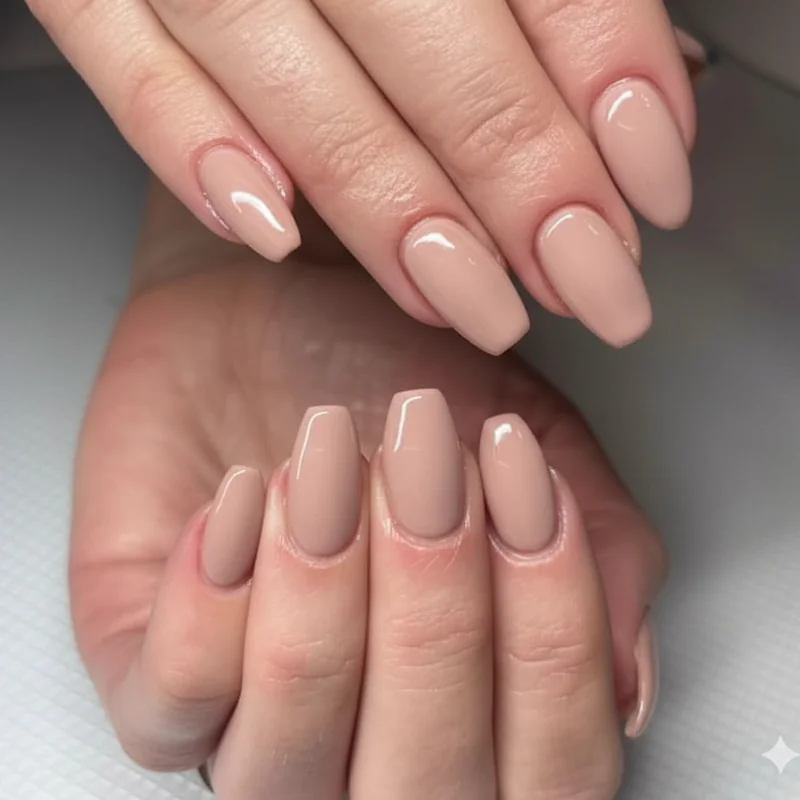
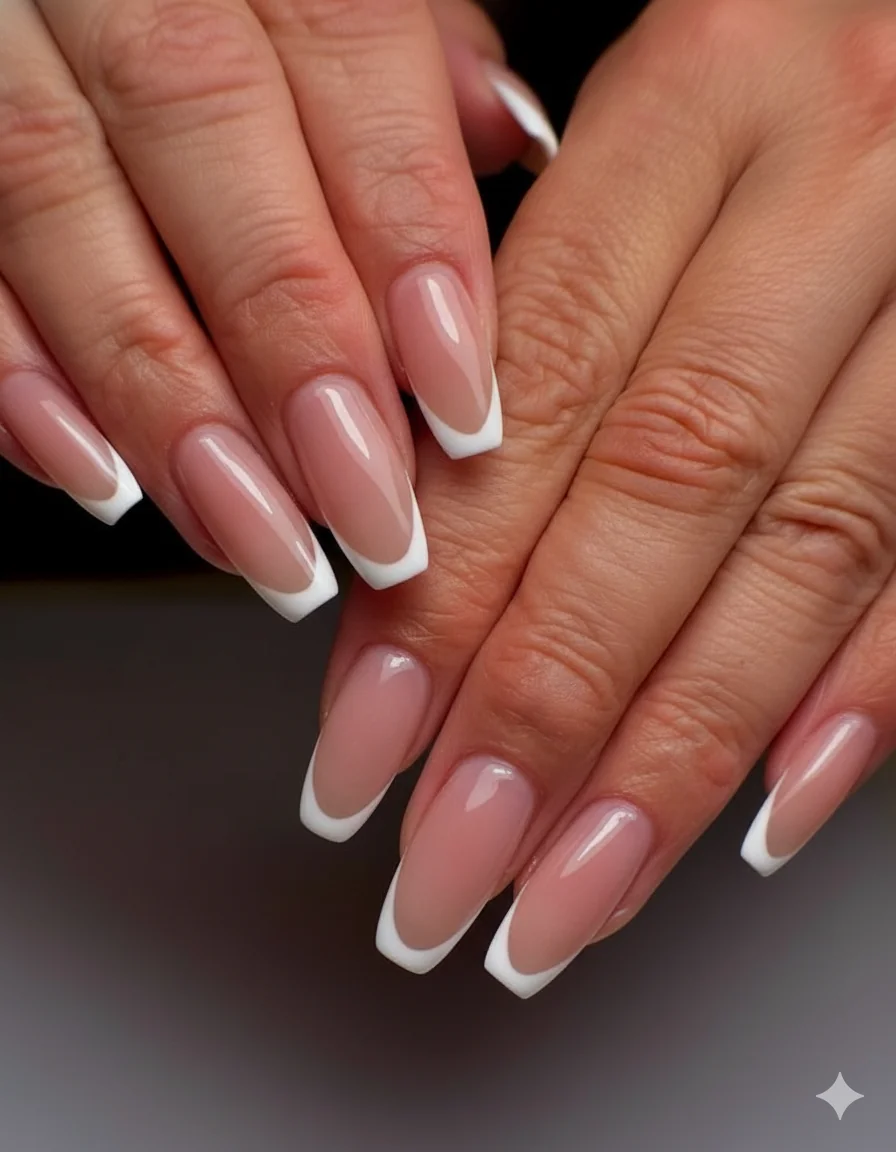
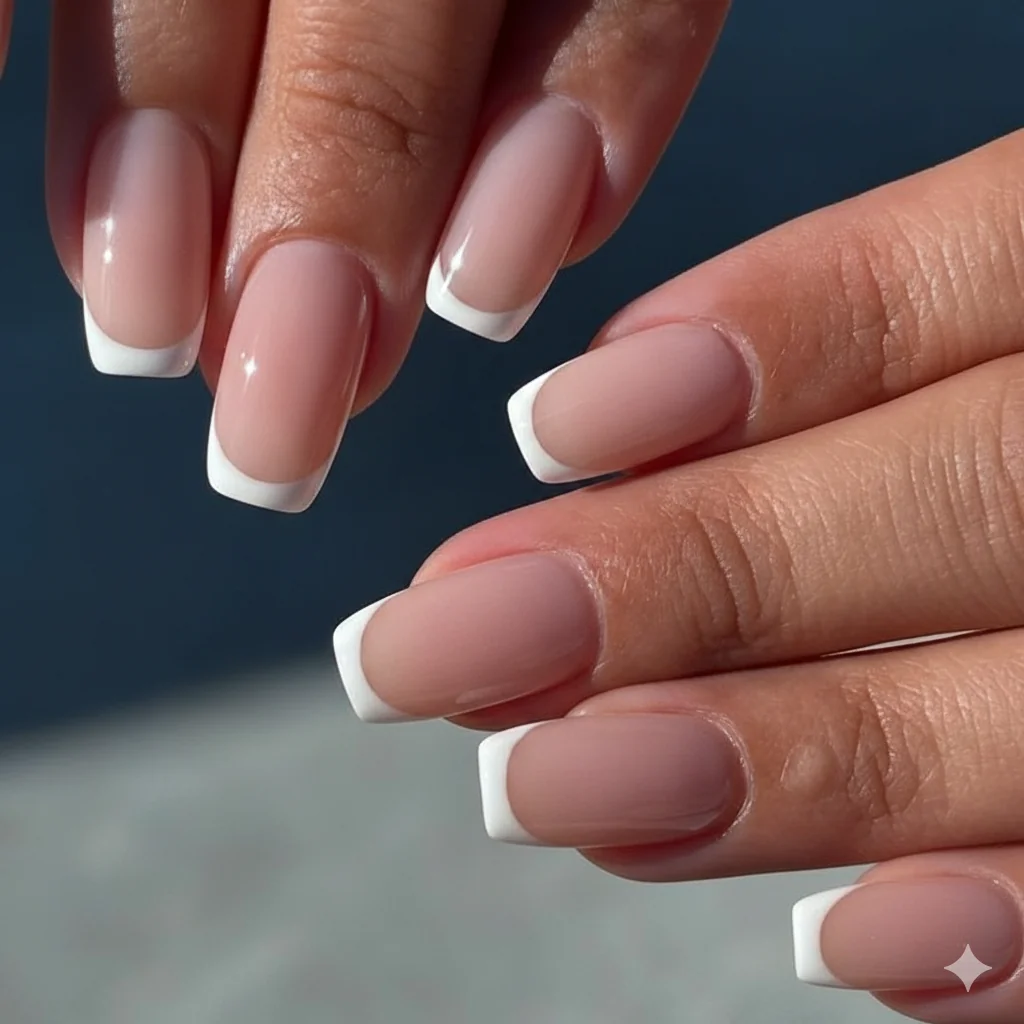
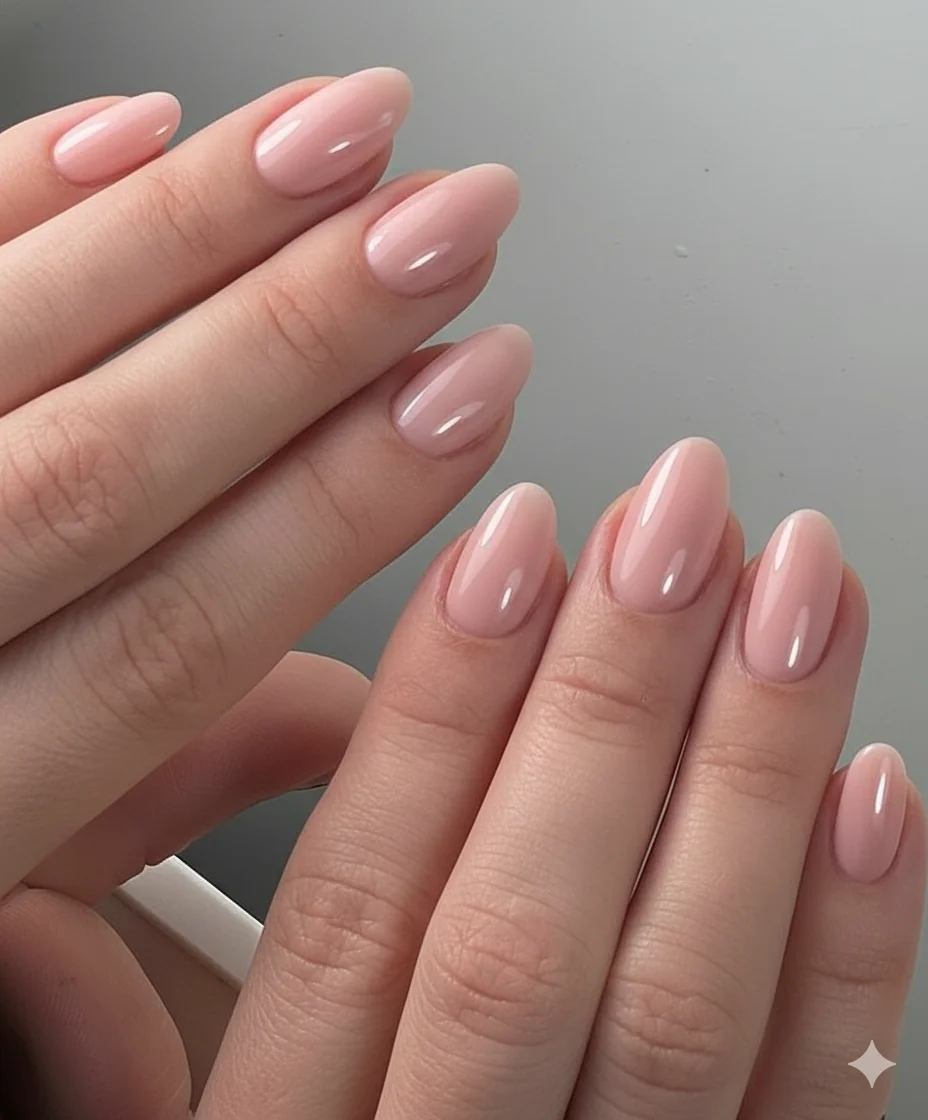
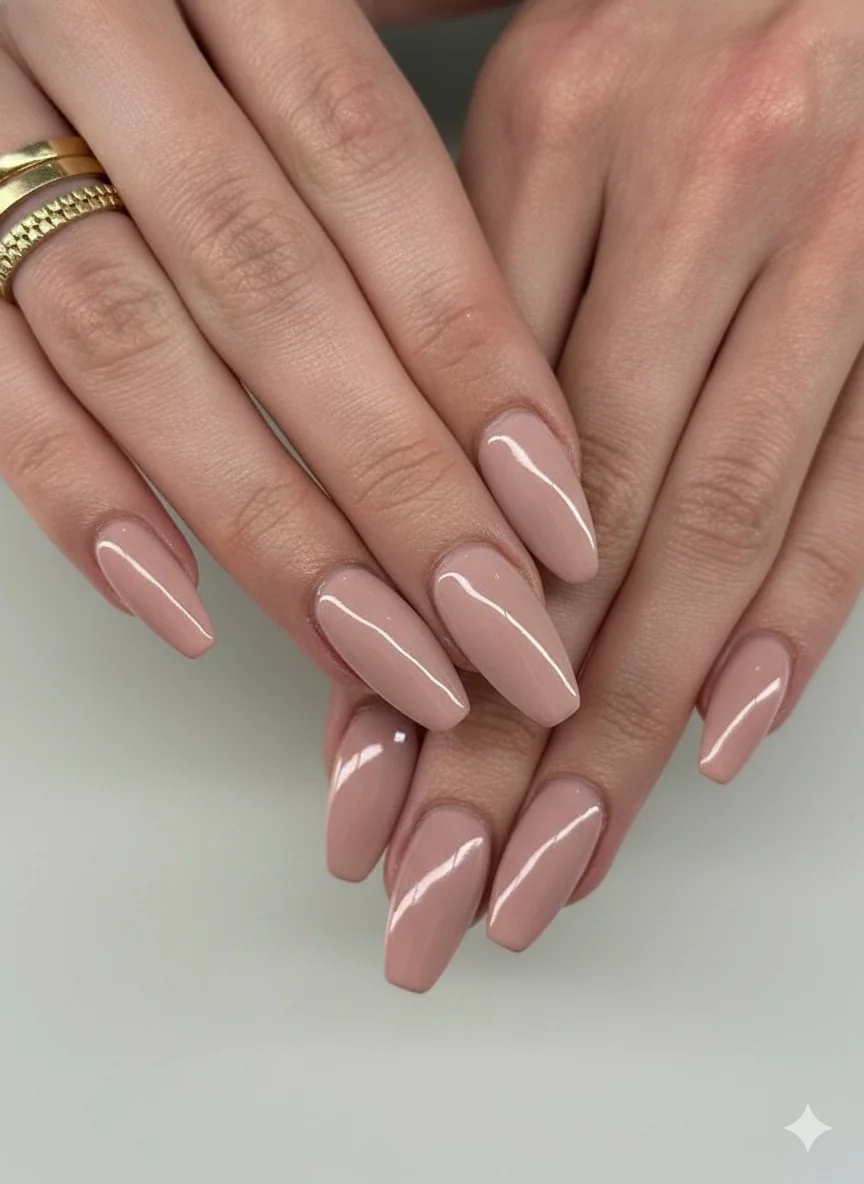
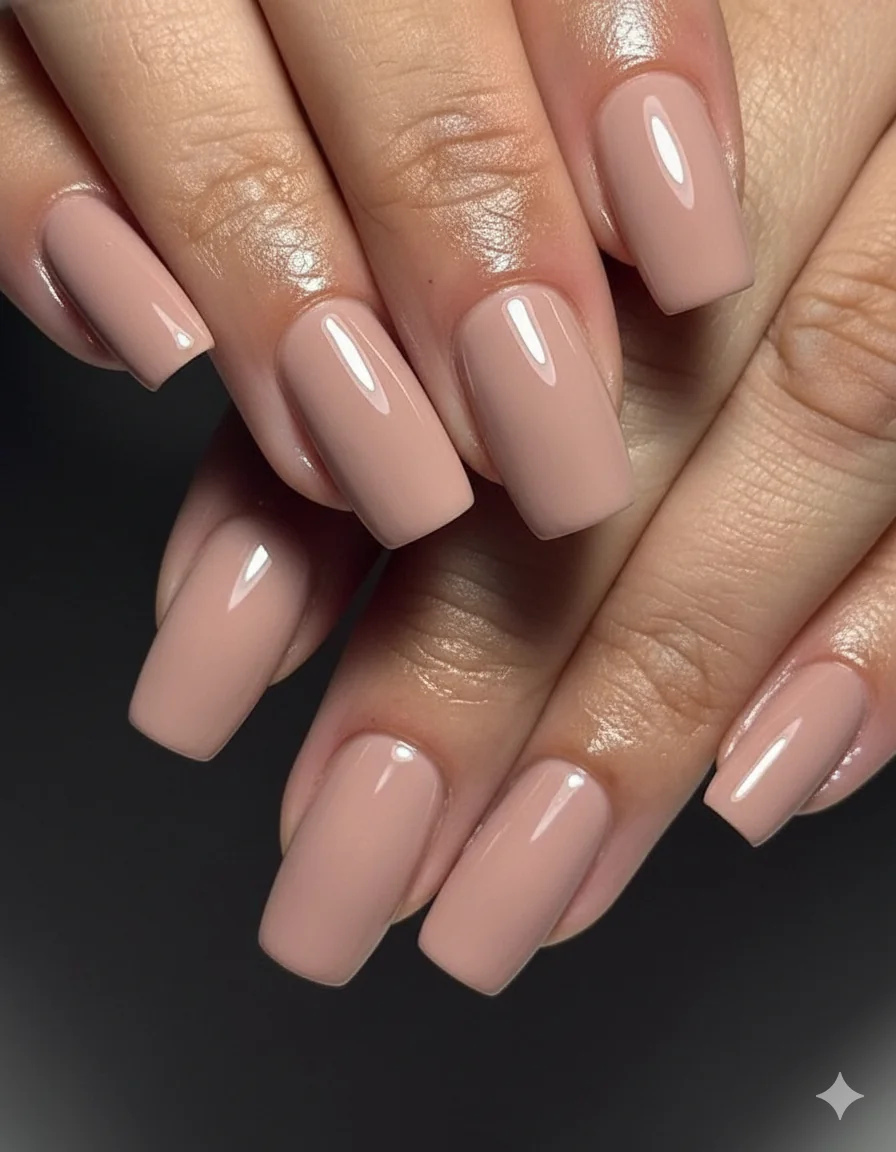
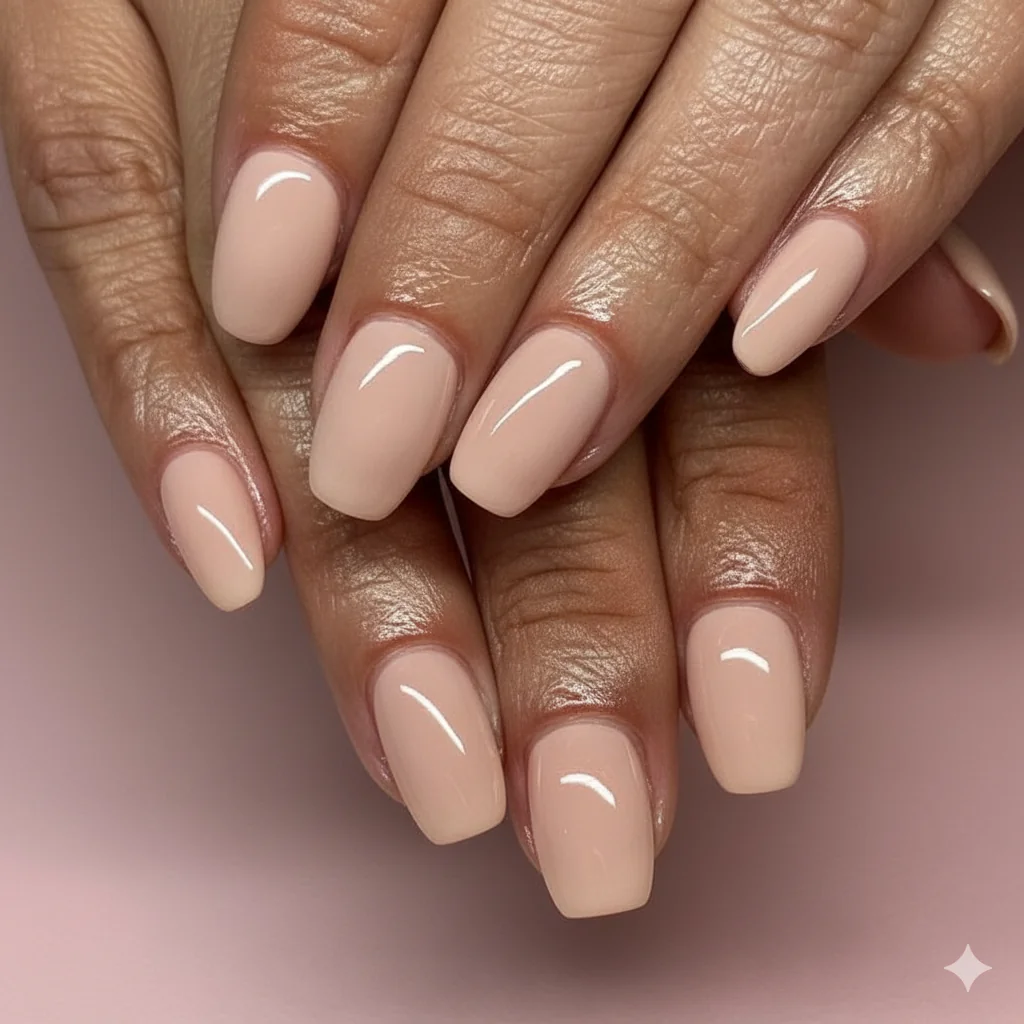
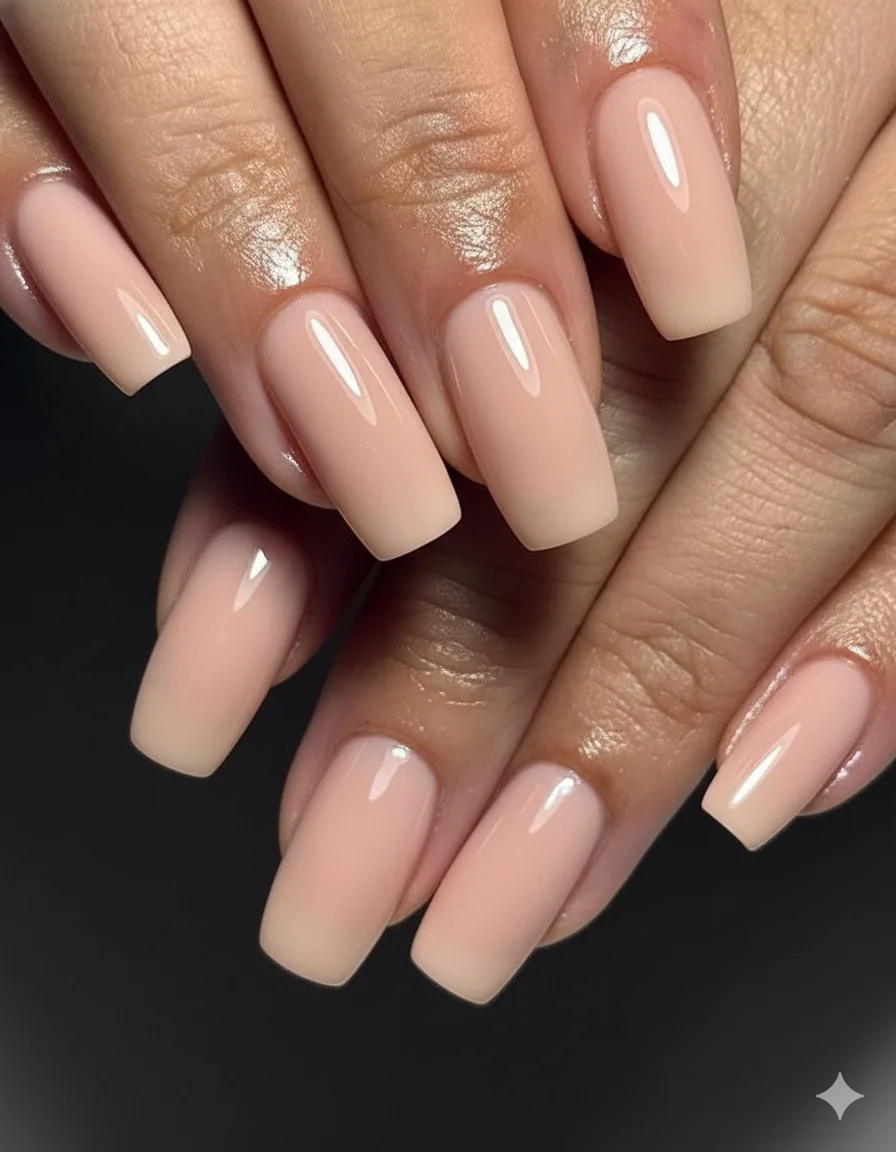
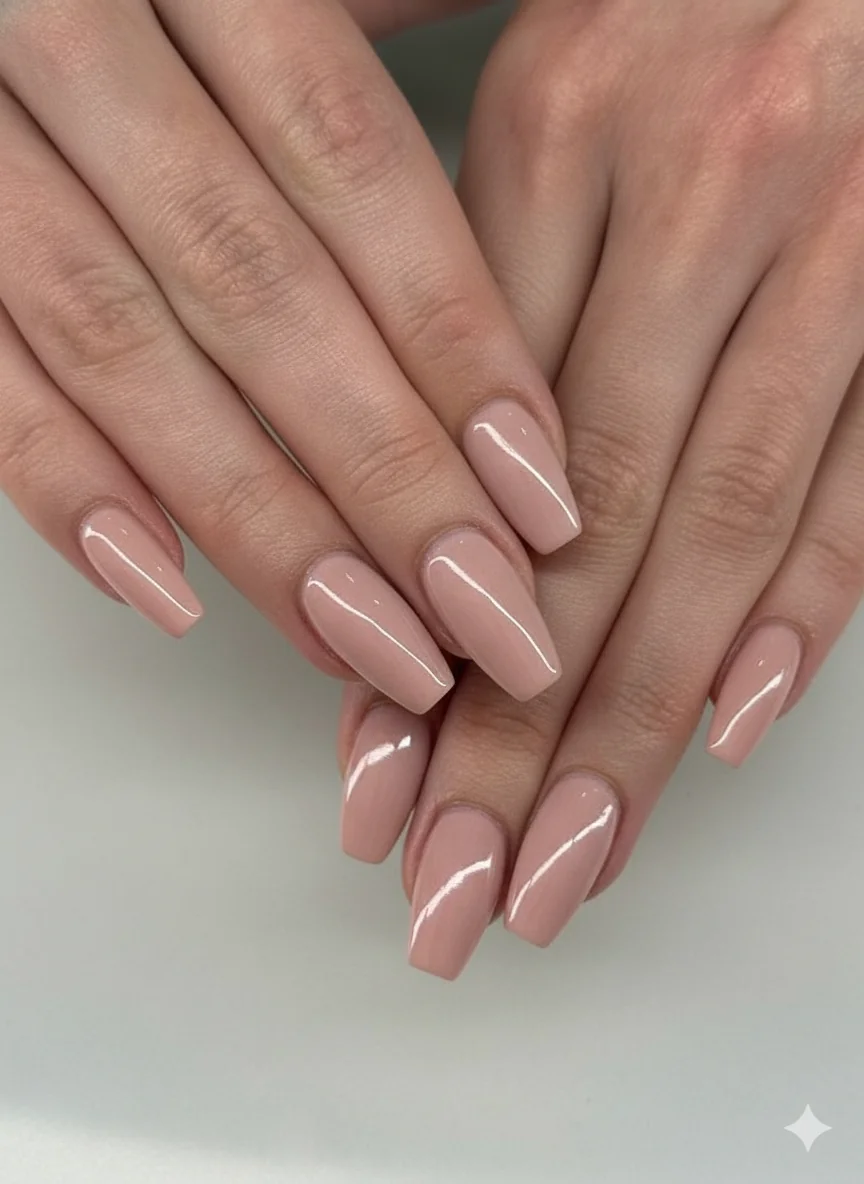
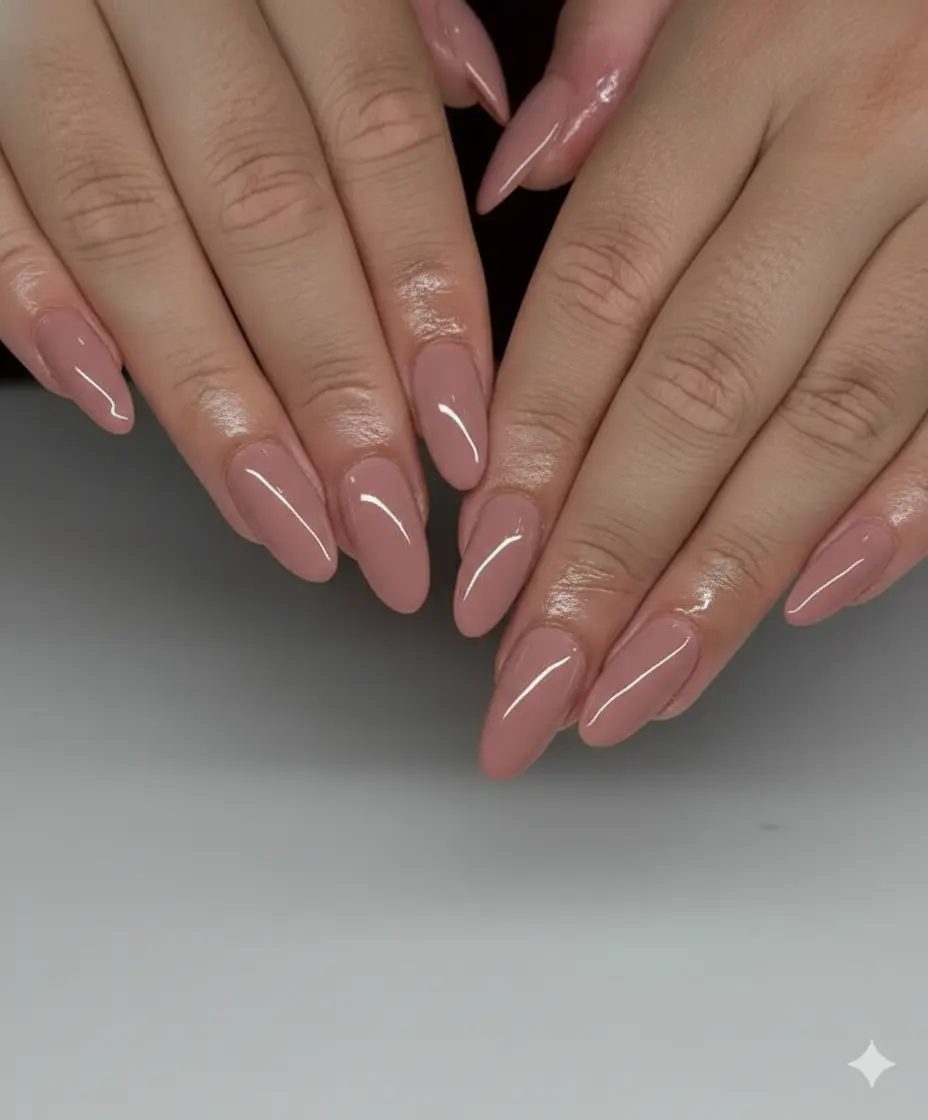
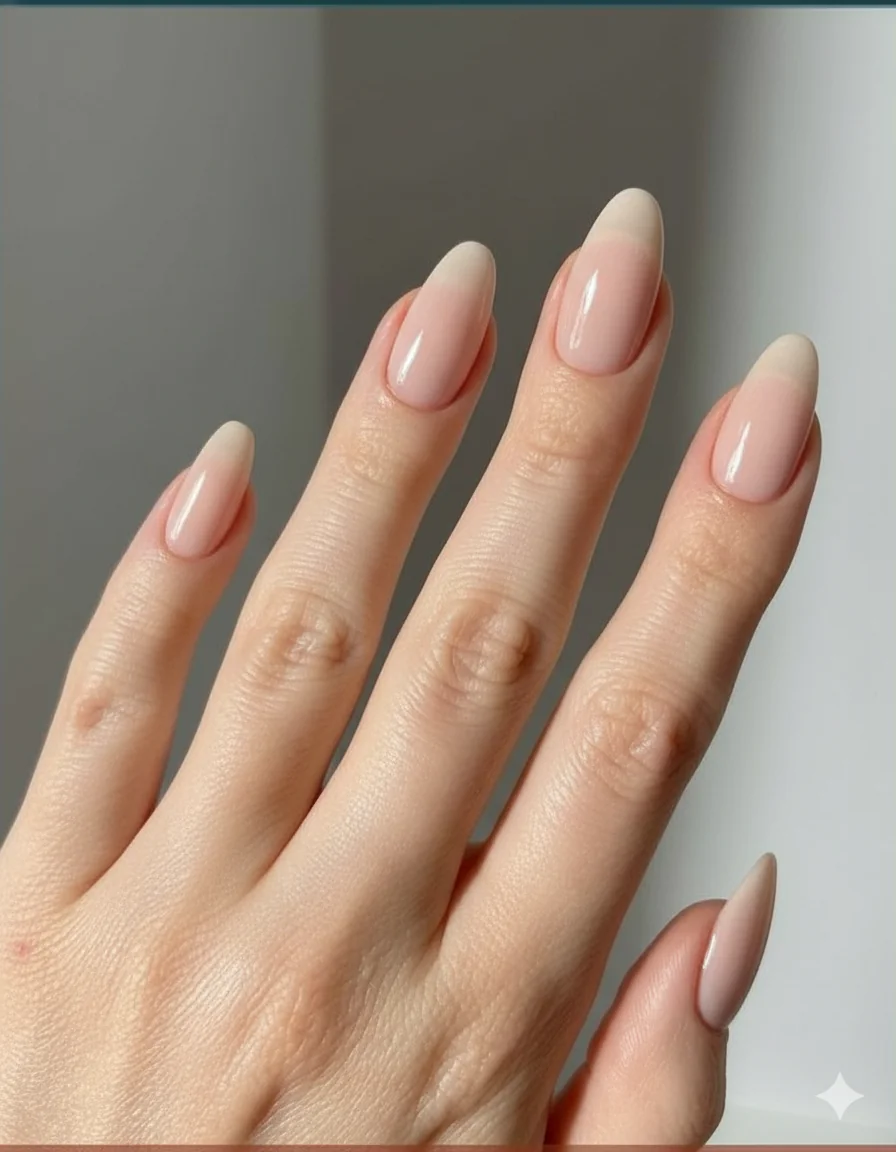
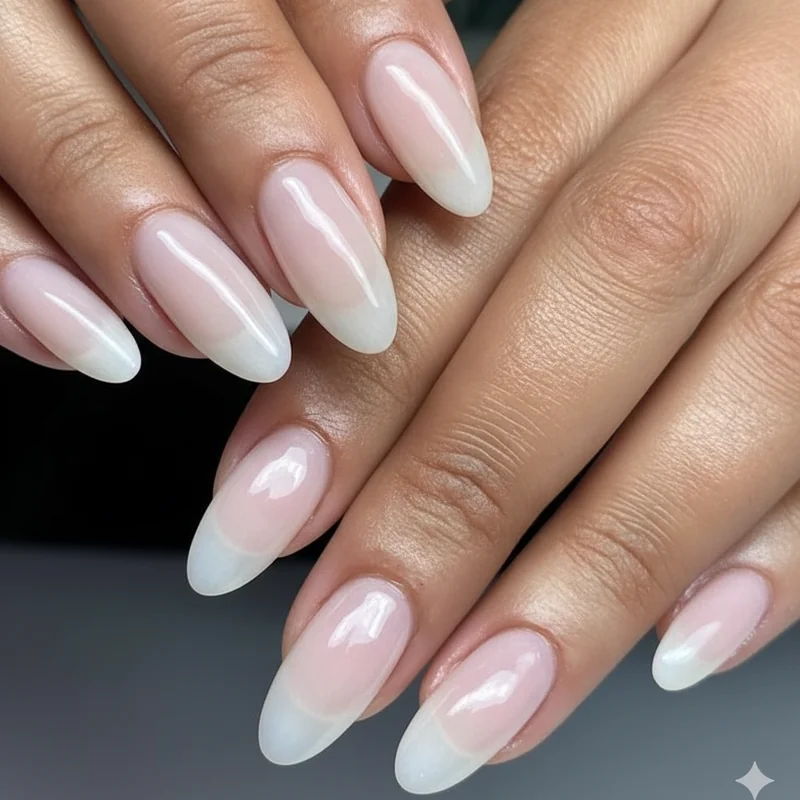
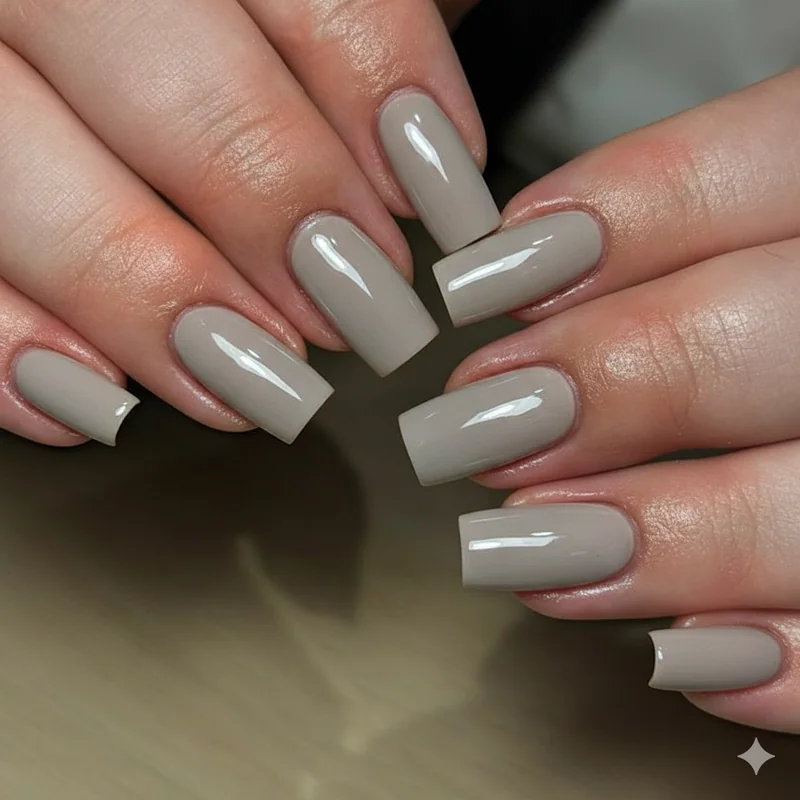
What to book before your first day: a milky or sheer overlay, a soft greige, a warm nude matched to your skin tone, or a micro-French tip. All of these satisfy the same brief: polished, current, and impossible to get wrong. They are the "you cannot go wrong with this" category, and that is precisely their value right now.
Are press-on nails fine for a first day? Yes, if they are the right shape and length. The finish matters less than the fit: a well-applied press-on in a neutral shade is indistinguishable from gel in a meeting room.
The Safest First-Day Nail Colours in 2026: Polished Without Being Boring
"Just wear nude" is the advice everyone gives and no one finds helpful, because nude is not one colour. It is a decision that depends on your skin tone, the specific finish, and what reads as polished versus washed out.
The clearest answer to "what nail colour should I wear on my first day of work" in 2026: reach for the quiet luxury end of the neutral spectrum. Greige, that grey-beige crossover, is particularly strong right now because it reads as tasteful rather than safe. A milky sheer with the faintest pink or lavender undertone works for most skin tones and has the added benefit of making hands look clean and well-cared-for at a glance. Micro-French tips, particularly in the modern iteration with a thinner, more tapered line than the classic, are genuinely office-appropriate across most industries.
For finding the exact shade of nude that works against your complexion specifically, the Nail Colors for Every Skin Tone: The 2026 Matching Guide will take the guesswork out.
What to avoid on day one: anything gel-chrome, anything with obvious art (florals, abstract shapes, foils), and anything in a saturated jewel tone. Not because these are inherently unprofessional: they may be perfectly fine in your specific office — but because you do not know that yet.

How Long Should Your Nails Be When You Start a New Job?
Short to medium length is the right call for most new starters, and the reasoning is practical as well as aesthetic. Extremely long nails, anything significantly past the fingertip, draw attention in the same way a bold colour does, and on day one you want your nails to do their job quietly.
The most universally appropriate shapes when you are new to a corporate environment: squoval (square with softened corners) and soft almond. Both read as considered rather than casual. They suggest you have thought about your hands without making your nails the thing people notice first.
What nail length is appropriate when starting a new corporate job? A length where the nail extends no more than a few millimetres past the fingertip is universally safe. Longer is not inherently wrong, and nail tech expert guidance consistently notes that length and colour work in balance, but if you are going longer, neutralise the colour. Both at once is where it tips into "noticeable."
How to Read Your New Office's Nail Culture in the First Week
This is where most nail guides fall short. The real intelligence is not in the dress code PDF. It is in the hands of the women sitting around you.
Spend your first week paying low-key attention. Look at the colleagues whose roles most closely resemble yours: what length are they wearing? Is there colour? Is it muted or saturated? Are there any obvious patterns? Everyone in neutrals, a few people in bold reds, one person with elaborate art who seems completely unbothered? That spread tells you almost everything you need to know about the range of what is tolerated versus what is celebrated in this specific office.
The Professional Nails for the Modern Woman: Navigating 2026 guide puts it clearly: your first weeks at a new job are observation time, not expression time. Use them. The professional women's community consensus on Corporette echoes this: "know your office" is the most consistently repeated piece of advice across years of real workplace conversations.

The Observation Window: When Is It Safe to Go Back to Your Usual Nails?
Two to four weeks is the realistic answer for most office environments. That is enough time to have seen what people wear on regular days, on meeting-heavy days, and on Fridays, which are often the most revealing, since dress codes loosen at the end of the week.
How long should you wait before wearing bold nails to a new job? The honest framework: wait until you have something to offset the boldness. Once you have done good work, had a few visible wins, or simply established yourself as someone capable and reliable, a set of rich burgundy nails or a graphic French tip reads very differently to the same nails on your first day. You are no longer unknown. That changes what your appearance signals.
If you are moving from a conservative environment into a more creative one — or vice versa, give yourself the same two-to-four-week window regardless. The direction of travel does not change the intelligence-gathering logic.
What If Your Current Nails Are Too Bold, Too Long, or Too Decorated?
This comes up more often than people admit. You booked a nail appointment before accepting the offer, or your usual set simply does not fit what you now know the office looks like.
If your nails are bold but well-maintained, wear them on day one and make your next appointment a calibration. One day in the wrong direction is recoverable; arriving with a rushed home removal job is not.
If they are significantly too long or too decorated for what you now expect of the environment, a soak-off and a clean gel in a neutral is always an option. A BIAB (Builder In A Bottle) overlay in a sheer or milky finish can go straight over natural nails in under an hour and will last the first two weeks without drama.
Should you change your nails before starting a new job? Only if you have the time and the appointment, and only if the gap between your current nails and the expected culture feels significant. Do not chip at them the night before and arrive with ragged edges. That reads worse than a bold colour worn confidently.
First-Day Nails by Industry: What Changes Based on Where You Work
Industry context genuinely moves the needle here, and the full breakdown of nails for conservative offices versus creative workplaces covers the specifics in depth. But the short version for new starters:
Finance, law, and corporate consulting: The tightest parameters. Nudes, blush, soft rose, micro-French. Lengths on the shorter side. Nothing that would be visible across a boardroom table and prompt a second glance. OPI's professional nail shade guide skews to exactly this palette for a reason: it is the accepted industry language.
Tech and media: More latitude than most people expect. Colour is generally fine, length is less scrutinised, and a tasteful nail art detail on week two will go entirely unremarked in most teams.
Healthcare and education: Hygiene and practicality drive the brief more than aesthetics. Shorter, clean, and chip-free matters more than the specific colour.
Creative industries: The observation window still applies, but what you are observing for is different. You are looking for the ceiling, not the floor. Bolder is often welcome.

Remote and Hybrid Starters: Does Any of This Still Apply?
Mostly yes, with one adjustment. If your first week is partly or fully remote, your nails are still visible: hands appear constantly in video calls, and first impressions happen on screen as much as in person.
The same logic applies: arrive (virtually) in something polished and neutral, use the observation window to read what colleagues wear when their hands are visible, and calibrate from there. If your team is camera-off by default and you are working remotely long-term, the parameters loosen considerably, but that is context you will gather in your first weeks, not something you can assume on day one.
Your First-Week Nail Plan: A Simple Framework
A practical answer to "what nails should I wear on my first day at a new job" always comes down to the same three moves:
Before day one: Book a gel or BIAB appointment in a milky, nude, or micro-French finish. Keep the length short to medium. Squoval or soft almond shape. If you already have nails on that work, check them against this brief: if they pass, leave them.
Week one: Observe. Look at the colleagues closest to your level in similar roles. Note the range. Note what reads as normal versus what reads as a personal statement.
Weeks two to four: Once you have built a picture of the culture and done some visible work, you have earned the right to introduce more of your usual nail personality, incrementally. Start with a colour upgrade before you move to art or length.
The anxiety around first-day nails is real, but it is also finite. A few weeks in, you will know your office well enough to make exactly the choice you would have made anyway.
The Only Rule That Actually Holds
There is no universal answer to how quickly you can go back to your usual nails — it depends on the office, the team, and how quickly you establish yourself. The underlying principle does not change: nail personality is earned in a new workplace the same way trust is. Slowly, through presence and good work, until one day your cobalt blue set is simply part of who you are in that building.