
The question used to be simple: what colour is safe for the office? Nude. Done. But work nails in 2026 are more nuanced than that, and the rules your predecessors followed have quietly shifted. Dress codes have relaxed. Hybrid work has blurred the lines. The definition of professional varies by industry, generation, and geography. What has not changed is that your hands are visible in almost every interaction you have, meetings, presentations, video calls, handshakes. Work nails still matter. The logic behind them just needs updating.
This guide gives you the actual framework: what professional really means now, how to read your specific office, and how to make confident decisions across colour, length, shape, and style without second-guessing yourself every time you book an appointment.
What "Professional Nails" Actually Means in 2026 (It's Not What You Think)
The old model was straightforward: neutral polish, short length, nothing that distracts. That model still works. It is just no longer the only model that works.
What has genuinely shifted in 2026 is where the line sits, and more importantly, what defines it. The defining signal is no longer colour. It is condition. A perfectly maintained burgundy nail reads as more professional than a chipped nude one. A well-groomed bare nail outperforms a carelessly applied sheer polish every time. The obsession with specific shades being "safe" or "risky" misses the point that most workplaces have been quietly moving past.
This matters because it hands control back to you. The framework is not "stick to pink and beige", it is "keep your nails immaculate and calibrate to your context." That is a more useful standard, and it is the one this guide is built around.
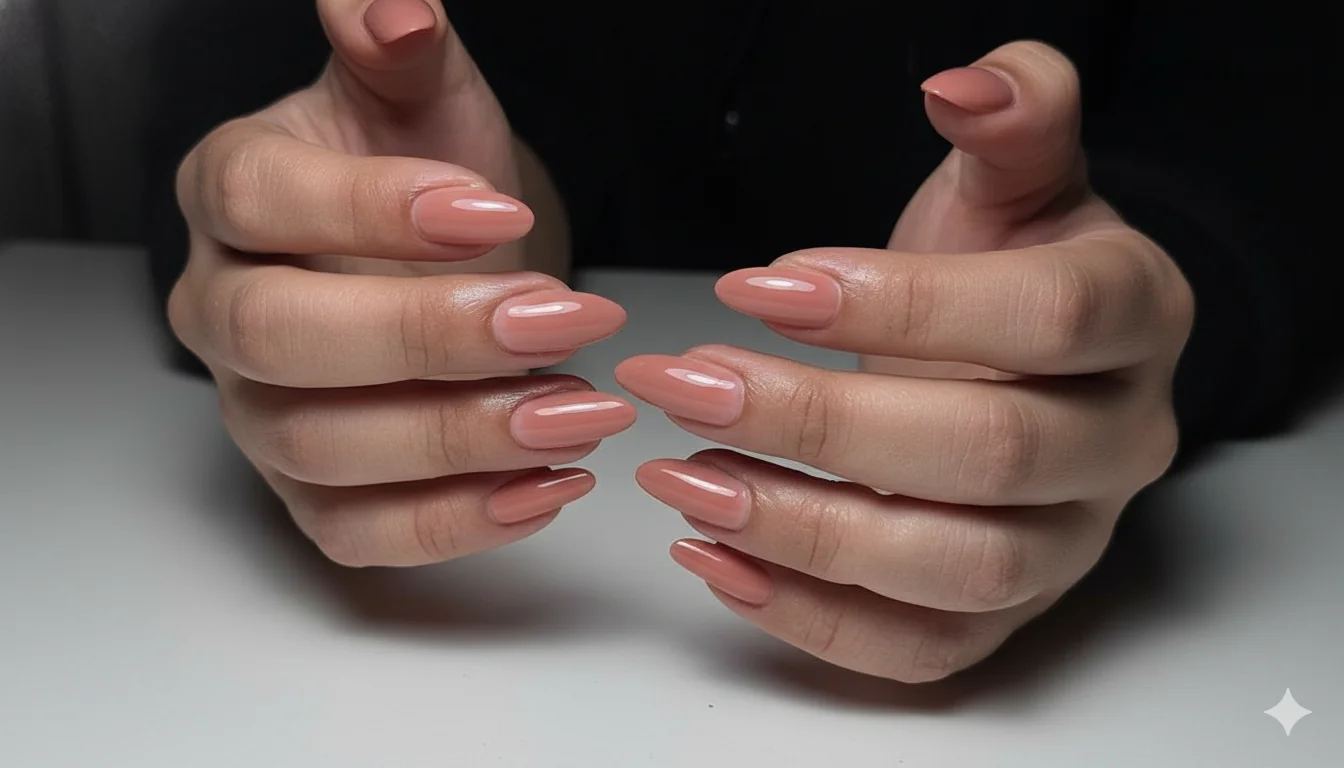
The One Rule That Overrides Everything: Condition Over Colour
Chip-free, shaped, with tidy cuticles. That is the minimum. Not a specific shade. Not a particular length. Condition.
This is the answer to the anxiety that most professional women carry quietly: "are my nails good enough?" The answer is almost always about maintenance, not choice of colour. A chipped manicure signals that something was not attended to, and in a professional context, small signals of inattention accumulate in ways that feel disproportionate to the cause. It is not that one chipped nail costs you a promotion. It is that grooming details contribute to the overall impression of someone who is organised and thorough.
The practical implication is chip resistance as a professional necessity, not a preference. Regular polish without a strong top coat can start lifting within 48 hours of a salon visit. For anyone with a demanding week, that is a real problem. The Complete Nail Care Guide covers the full maintenance routine, cuticle care, nail plate prep, and between-appointment upkeep, which is the real foundation of professional-looking nails regardless of what colour sits on top of them.
What Nail Length Is Actually Appropriate for Work?
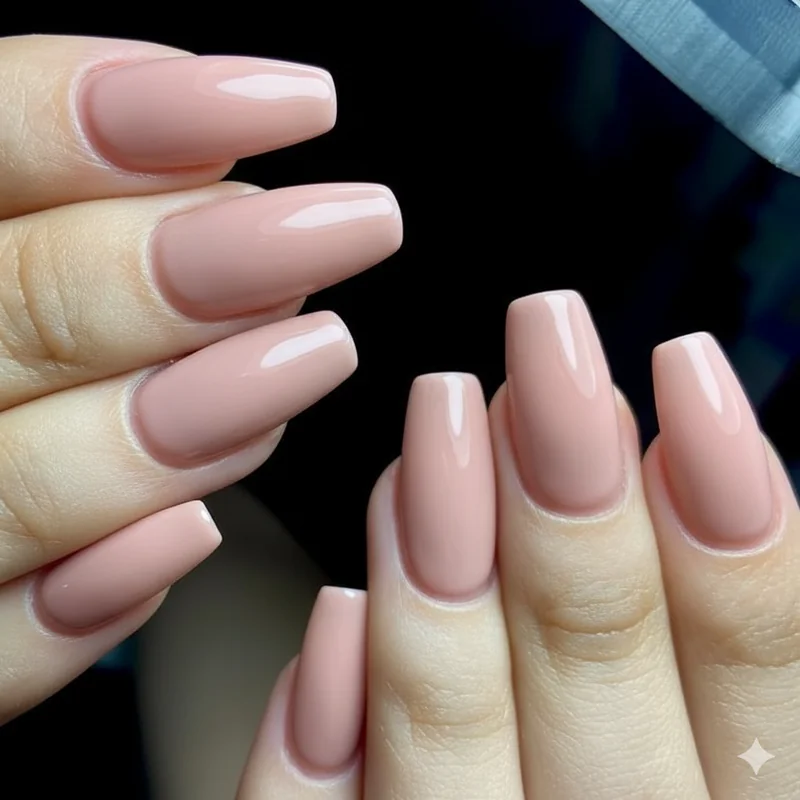
The professional standard is 2–4mm beyond the fingertip. Specific enough to be useful, flexible enough to accommodate natural variation in nail beds and growth rates.
At that length, you can type without compensating, handle documents, shake hands without your nails entering the room before you do. As Corporette's practical length rule puts it: if it interferes with typing, it is too long. That test is worth running honestly. Sit at your keyboard and type a paragraph. If you are tilting your fingers or hitting keys with your nail rather than your fingertip, the length is working against the impression you are making.
Extensions and gel overlays are not inherently unprofessional at 2–4mm. The issue is when length extends well beyond that range; nails visibly long enough to be impractical raise questions about functionality regardless of how well maintained they are. For the full breakdown, professional nail length for work covers every office type in detail.
Short-to-medium nails grow out more gracefully too. At 2–4mm, two weeks of growth does not dramatically alter the look. Longer lengths require more frequent maintenance cycles, which is a real consideration for a busy schedule. Short nails for work are genuinely the most practical option, not the most limiting one.
Which Nail Shapes Read as Professional, and Which Don't
Shape is the element most women underestimate. You can have the perfect nude polish on a stiletto nail and it will read as fashion-forward rather than office-appropriate in most professional settings. The shape carries its own signal.
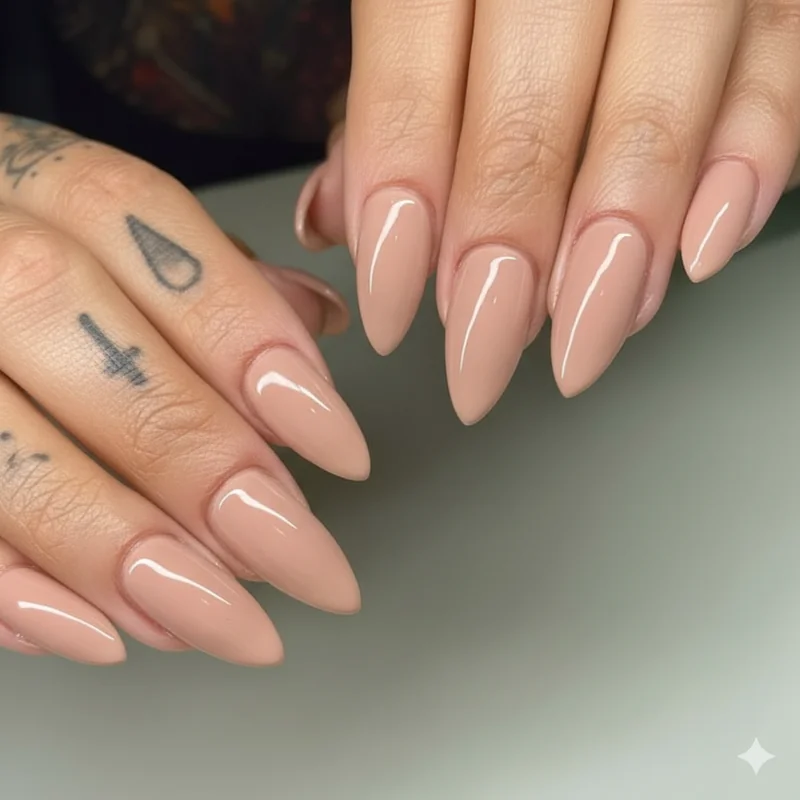
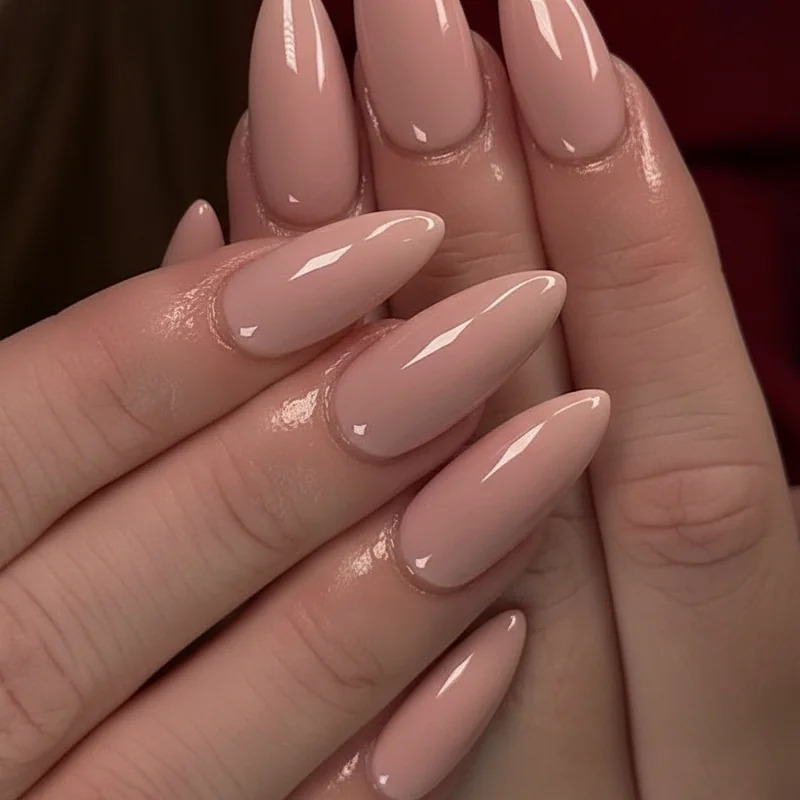
Squoval, the square-oval hybrid, is the professional benchmark. Oval and rounded are equally appropriate. All three elongate the finger, support natural nail strength, and read as deliberate without being conspicuous. Soft almond is borderline: appropriate in most environments, slightly more fashion-coded in conservative ones.
Stiletto and extreme coffin shapes read as impractical in the majority of corporate and office settings. Not because they are inherently inappropriate, but because they signal a priority on aesthetics over function, and in most professional contexts, that signal lands before anything else does. For a detailed breakdown of which shapes work across specific industries, nail shapes for work covers the full spectrum including when almond and soft coffin are acceptable.
The Safest Colours for Every Office (and Where There's More Latitude Than You Think)
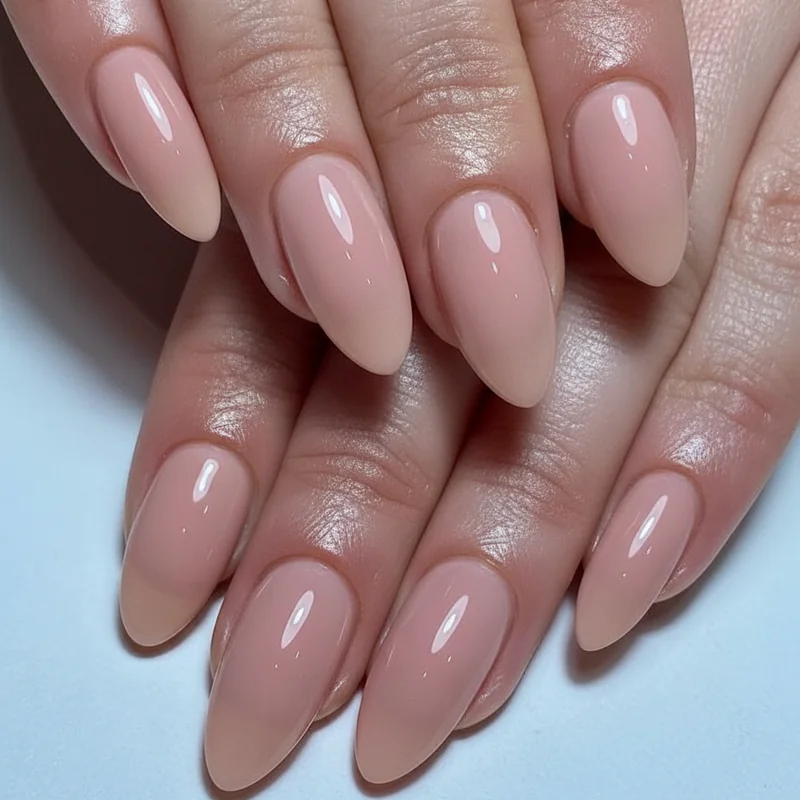
Neutrals are the always-safe baseline. Nude, blush pink, soft beige, sheer white, milky ivory, these work in every environment, at every seniority level, in every industry. They are the professional equivalent of a white shirt: not boring, just reliable.
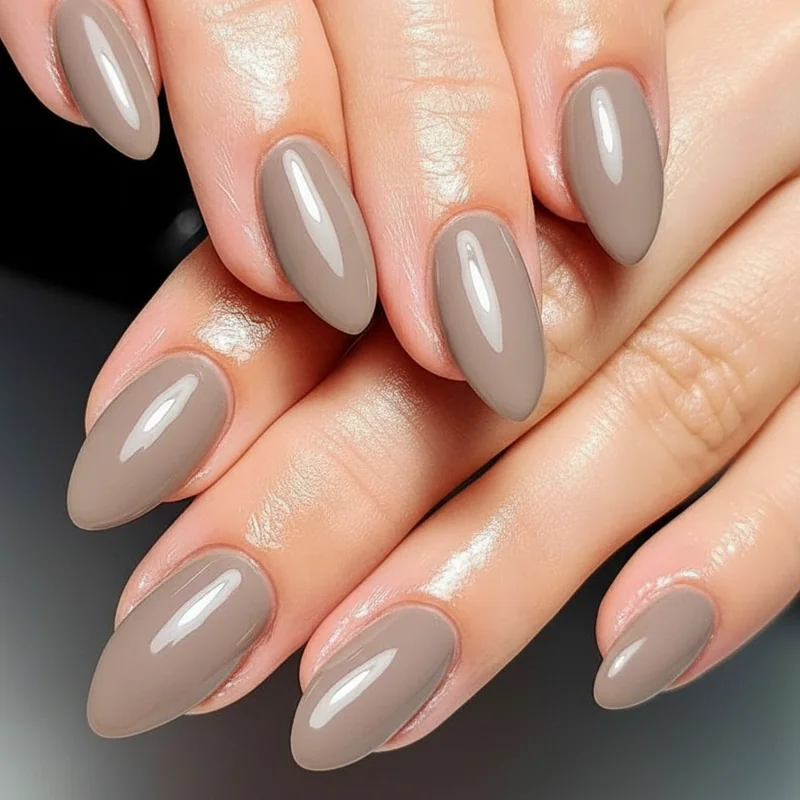
The 2026 expansion is real. Warm mocha and chocolate brown have moved firmly into professional territory, and the 2026 office-ready manicure styles confirm that warm neutral finishes are consistent with corporate dressing. Soft burgundy is similarly acceptable when the finish is precise. What changes the read is not the depth of the colour, it is the quality of the application.
For the full shade breakdown, work-appropriate nail colours covers exactly what to wear and what to avoid. Since the right neutral for your hand is not the same as the right neutral for someone else's, choosing nail colours by skin tone is worth reading before defaulting to the same beige you have been wearing for years. And the 2026 trending nail calendar is useful for seasonal rotations: soft burgundy in autumn, milky shades in spring.
The colours that remain genuinely office-limiting are neon, high-saturation bright (electric blue, hot pink), and heavily embellished finishes. Neutral nails for work covers the nude and milky palette in detail, including which shades photograph best on video calls.
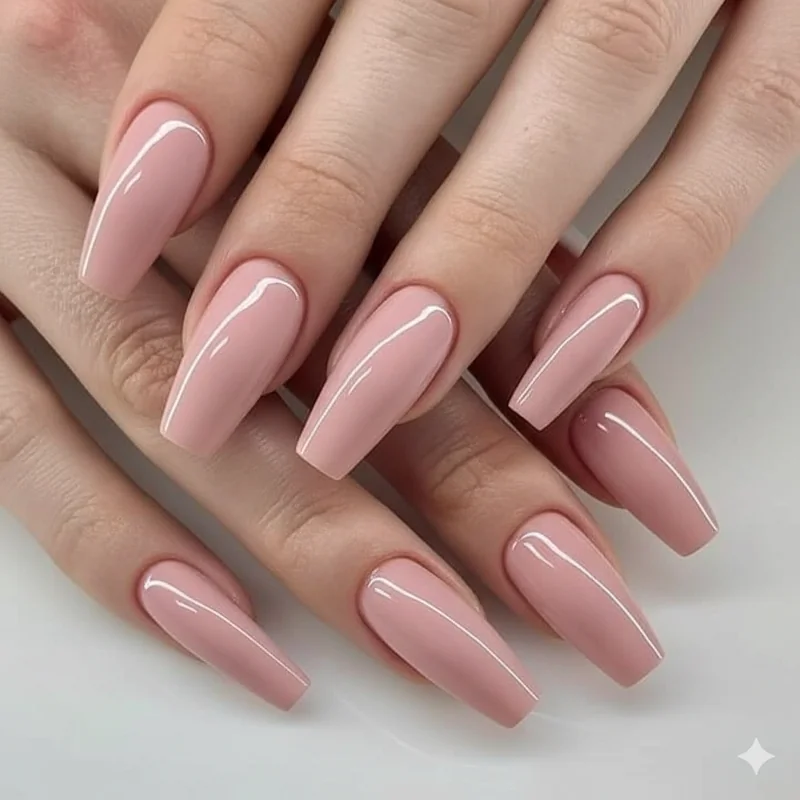
Can You Wear Nail Art to Work? Here's the Actual Answer
Yes, with calibration. Nail art at work is not a binary question. It is a spectrum, and where you sit on it depends entirely on the specifics of what you are wearing and where you are wearing it.
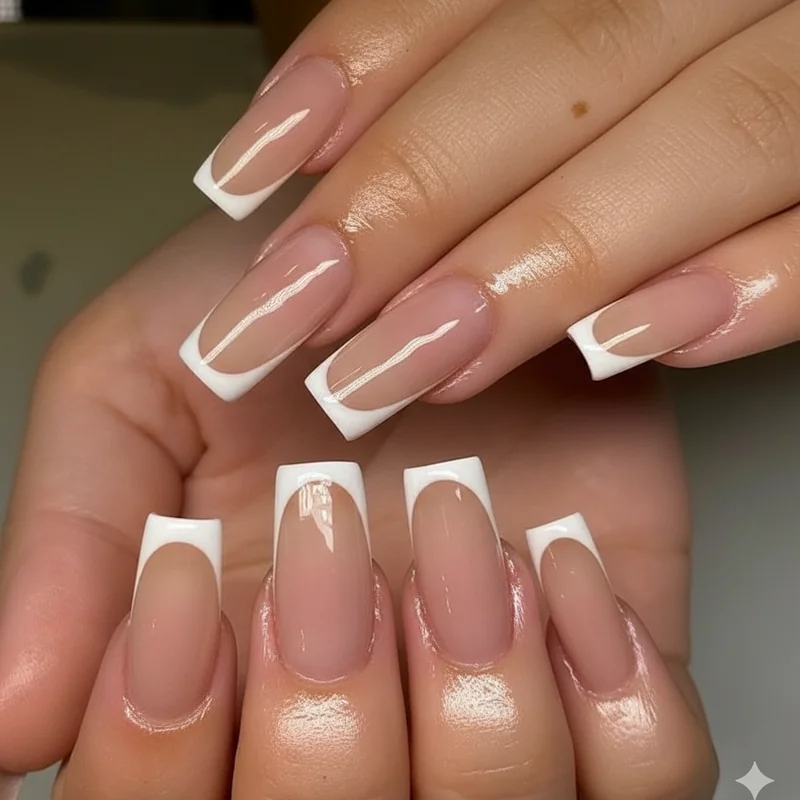
The always-acceptable end: micro French tips, thin coloured tips on a neutral base, negative space designs, single fine-line accents, subtle shimmer. These read as precise and intentional. The design is visible if you look for it, but does not announce itself across the room.
The context-dependent middle: tonal geometric patterns, subtle florals, understated foil accents. These work in hybrid offices and creative-leaning environments. Less reliable in very conservative settings, not because they are wrong, but because the risk of misreading is higher.
The avoid-at-work category: 3D embellishments, rhinestones, bold graphic art, and maximalist designs. Not wrong, just not designed for environments where the visual language is restraint.
For the full breakdown on where each design type lands, work-appropriate nail art covers every scenario. For the women who want personality without professional risk, fun but professional nails shows exactly where the latitude exists.
How to Read Your Office's Nail Culture (The Actual Method)
"Know your office" is advice that everyone gives and no one explains. Here is the method.
Observe the most senior women, not your peers. The most senior women in your environment are the most reliable signal for what is acceptable at the top. Their choices have passed through years of professional calibration. Your peers are navigating the same uncertainty you are.
Distinguish client-facing from internal. Many offices operate on a split standard: stricter on the days and roles with external visibility, looser internally. The standard that matters is the one your clients implicitly hold, not the one your internal colleagues happen to practise.
Use your first two weeks as an observation window. If you are new to a role, default to neutrals during this period. Not because bold nails are wrong, but because you do not yet have enough data. After two weeks you will know whether your manager's idea of professional includes or excludes your personal nail preferences.
The industry default sets the floor, not the ceiling. Knowing your sector's baseline tells you the minimum, not the maximum that is tolerated. Most offices are more permissive than their industry's reputation suggests. The conservative reputation of law and finance is largely about colour depth and nail art, not bare nails or restricted style.
Industry Rules: What Banking, Law, Healthcare, and Creative Fields Expect
Different industries carry different default standards, and understanding them gives you a starting point before you have had time to observe.
Banking and finance: The conservative anchor. Neutrals, French, sheer, these are the safe defaults. In 2026, well-maintained deep neutrals (mocha, soft burgundy) are increasingly accepted in larger institutions, but anything that reads as fashion-forward rather than groomed is still a risk in client-facing roles.
Law: Similar to finance, with regional variation. City law firms tend toward a stricter read than regional practices. Professional women's community discussion on Corporette consistently notes that what is "appropriate" is highly regional.
Healthcare: Infection control standards in clinical settings require short, natural nails without polish in many roles. For non-clinical healthcare professionals, administration, management, private practice, the standard is much closer to general corporate. For a profession-specific breakdown, nails for different professions covers healthcare, education, hospitality, and more.
Creative industries: The widest latitude of any sector. Design, advertising, media, and fashion environments often read nail art and bold colour as markers of professional identity. The full spectrum is in nails for conservative offices versus creative workplaces.
High-Stakes Moments: What to Wear for Interviews and First Days
Two moments when the default changes: job interviews and first days. At both points, you are being read before you have had a chance to establish context, which means the margin for misinterpretation is higher.
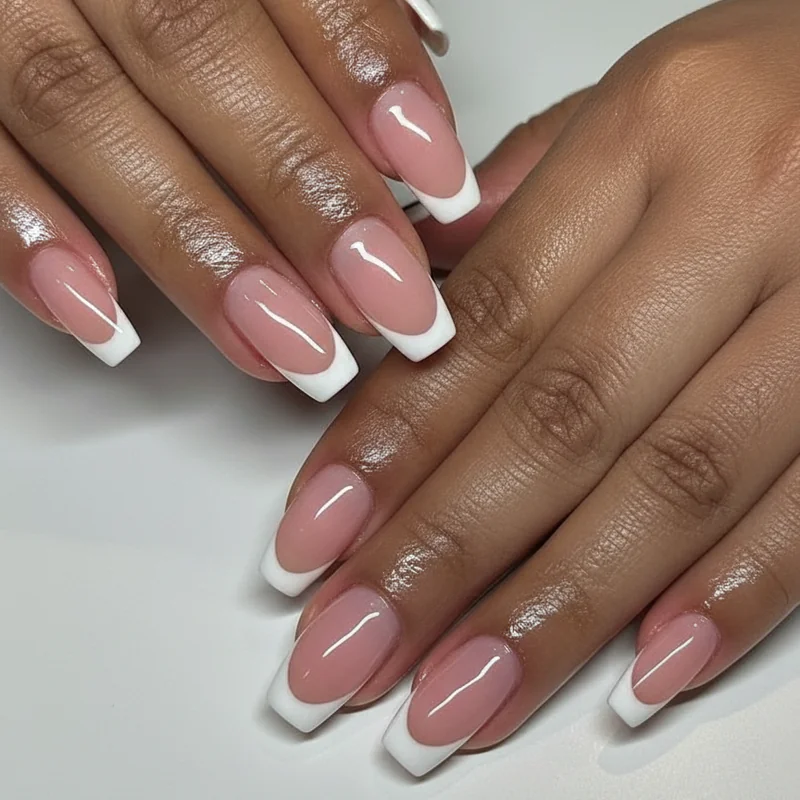
The default for both is classic neutrals or a soft French tip. These choices communicate attention to detail without communicating anything else, which is exactly what you want when every signal matters and you do not yet know what the reader values.
Soft pink, blush nude, sheer white, and milky finishes are all appropriate. A micro French tip in white or soft beige is the safest possible choice: it reads as groomed and intentional across every industry. What to avoid: chipped nails of any colour, bold art, and very long extensions.
After the first two weeks, once you have read the culture, your choices can expand. The first-day restriction is temporary. For full guidance on both moments, nails for a job interview and new job nails cover every scenario including how to transition once you know the room.
Gel, Acrylic, or Regular Polish, Which Is Best for Work?
For most professional women, gel or BIAB (Builder in a Bottle) is the practical answer. Both last 2–3 weeks without chipping, which is the single most important quality criterion for work nails. Regular polish, even with a quality top coat, begins lifting at the tips within days of application. For anyone with back-to-back meetings and limited time to rebook, that is not a sustainable choice.
The manicure system types explained by Who What Wear cover the full range, from gel overlays to structured gel, BIAB, and traditional acrylics, which helps clarify which system suits your nail health, budget, and maintenance schedule. For a direct comparison on longevity and office suitability, gel versus acrylic nails for work covers the decision thoroughly.
Gel nail polish for work and the best nail polish for working women cover specific product recommendations across budget points. And for anyone who needs a professional option between appointments, press-on nails for work addresses whether they hold up in a professional setting in 2026, the answer is more nuanced than it used to be.
Work Nails for Remote and Hybrid Workers: Do They Still Matter?
Yes. For any call with clients, stakeholders, or people you have not yet met, your hands are on screen, and they are more visible than you probably assume. Screen-sharing puts hands in the frame. Gesturing during a presentation puts hands in the frame. The video call is a professional setting, and the standards that apply in person apply on camera.
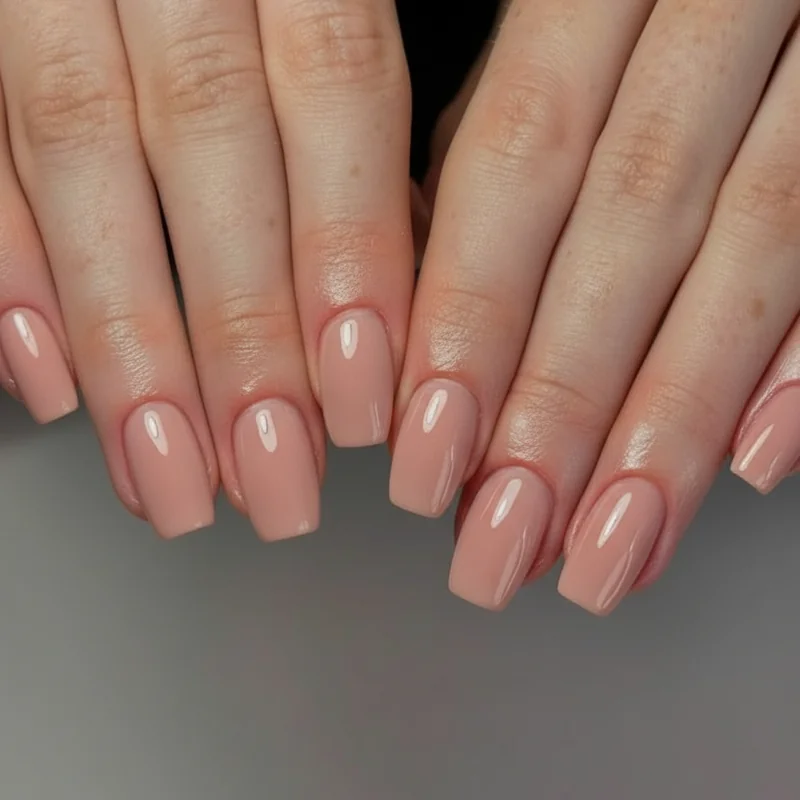
What reads well on a screen: lighter neutrals and milky finishes, which photograph cleanly without picking up light flare. Soft chrome and glass nail finishes, which add dimension without being distracting. Short-to-medium length, which does not draw attention when typing. What reads poorly on screen: chips (even small ones are visible in close framing), very long nails that tap audibly on keyboards during calls, and high-contrast art that the camera catches before your face does.
For the full aesthetic guide to remote and hybrid work nails, corporate girl nails covers the inspo side in detail, including how to build a professional nail wardrobe that works for both in-person and video-call contexts. The nail professional guidance on work-appropriate shapes and lengths also addresses what reads best across different professional settings.
The 2026 Professional Nail Styles Worth Knowing
The quiet luxury aesthetic has settled firmly into office-appropriate territory, and it has brought several previously fashion-only trends with it.
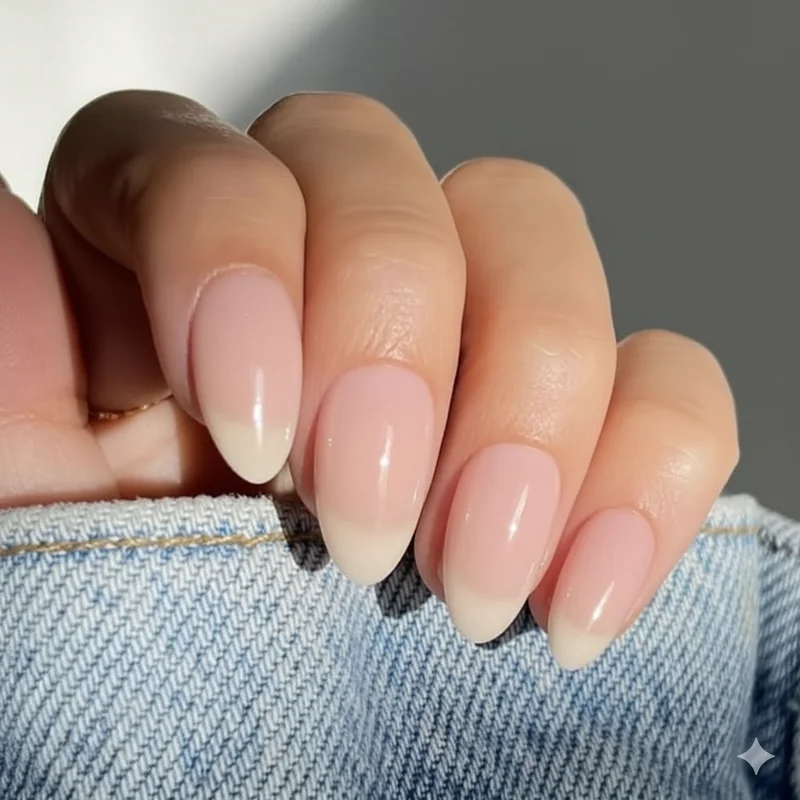
Milky and soap nails remain the standout professional trend of 2026. The translucent, pearl-like finish reads as fresh and precisely groomed. It photographs cleanly, works on any length from very short to medium, and grows out gradually enough that maintenance cycles are more forgiving.
Soft chrome and glass nails, the subtler interpretation of last year's mirror chrome, add quiet dimension over a neutral base without reading as metallic or flashy. Applied over nude or milky bases, these sit firmly in professional territory. The effect catches light in a way that reads as polished rather than decorative.
Micro French updates in soft mocha, dusty rose, or sheer burgundy rather than traditional white have moved into mainstream professional acceptance. The structure reads as classic; the colour update makes it feel considered rather than dated. French tip nails for work covers the full range of modern variations with context on where each sits.
Subtle matte neutrals over soft beige or milky bases carry a deliberate quality that holds up through a full working week without the shine flagging wear.
For the full style breakdown, professional nail designs for work in 2026 covers each trend in detail. Short nails for work shows how every 2026 trend translates to shorter lengths without losing impact.
The Framework, Not the Formula
The professional nail conversation in 2026 is not about a list of acceptable colours. It is about understanding the logic, maintenance first, context second, personal preference within those parameters. Once you have that framework, the specific decisions become much easier: what to wear for an interview, how to calibrate after starting a new role, where your particular office sits on the conservative-to-permissive spectrum, and what 2026's best trends actually look like in a professional context.