You have been sold a nude that made your hands look washed out, chalky, or — worst of all — like you were not wearing anything at all. That is not bad luck. That is a shade mismatch, and it happens to almost everyone the first few times.
Nude nail color for skin tone is one of those categories that sounds straightforward until you are standing in front of a shelf of forty near-identical bottles, wondering why the one that looked so good on the display nail looks nothing like that on you. The answer is undertone — but it is also finish, depth, and a simple test that most guides skip entirely.
This is the post that fixes all of that. By the end, you will know exactly which nude to reach for, what to avoid, and how to check in sixty seconds whether a shade is actually working before you leave the salon or checkout page. For a look at every colour family beyond nude, our complete guide to nail colors for every skin tone covers the full spectrum.
Why Most Nude Nails Go Wrong — And How to Avoid It
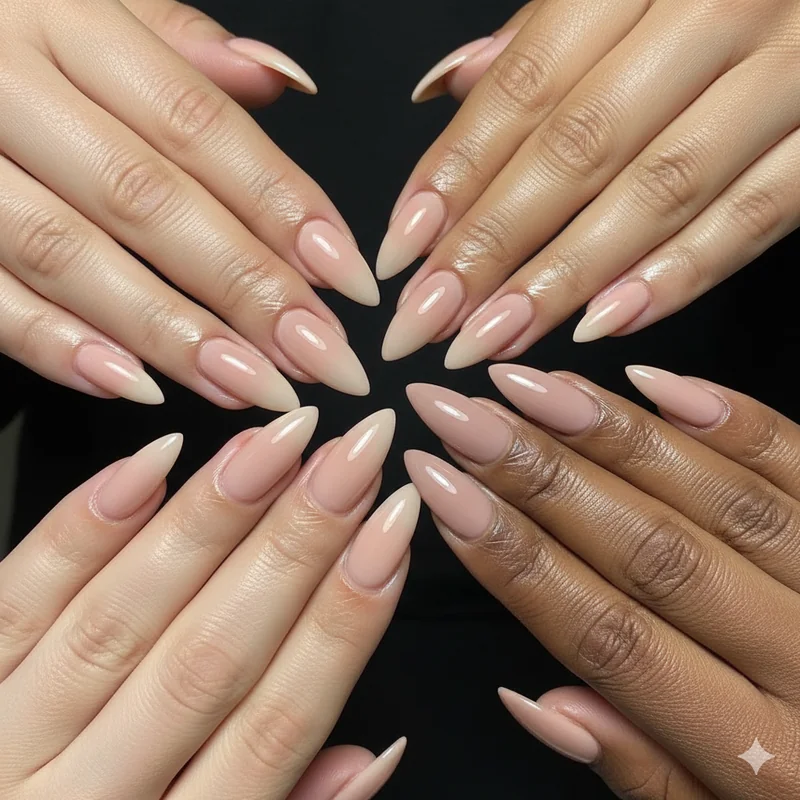
If your last nude made your nails disappear into your hand entirely, the problem was not that you chose the wrong brand. It was that you chose a shade with the wrong undertone relationship to your skin — and almost certainly the wrong finish for your tone depth.
There are three specific failure modes, and once you can name them, you will never repeat them.
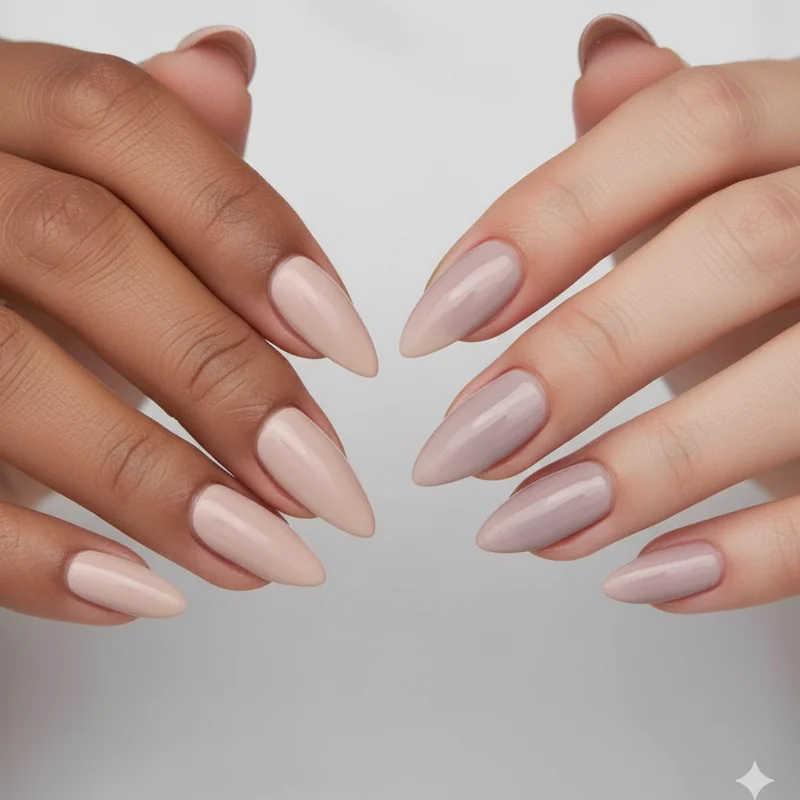
The first is mannequin hands — where the polish blends so completely into your skin that your nails effectively vanish. This happens when the nude is too close to your exact skin colour without enough variation in undertone direction. The fix is not to go darker. It is to go in a slightly different undertone direction — if your skin is warm, choose a nude with a cooler pink pull; if your skin is cool, a warmer hint of peach separates the nail from the hand just enough.
The second failure is the washed-out effect: the shade looks fine on its own but drains colour from your hands in the way a wrong foundation shade does to a face. This almost always means the nude has too much white or grey base for your depth. Sheers on very deep skin tones, and stark white-based nudes on fair skin with pink undertones, are the usual culprits.
The third is the dirty cuticle effect — where the nail itself looks acceptable but the cuticle area looks oddly dark or reddish. Nail artist Deborah Lippmann noted that the cuticle is actually your most accurate indicator: if it looks irritated or pronounced after you apply a polish, the shade's undertone is fighting your natural skin tone. We will come back to this — it is the test that changes everything.
How to Find Your Undertone in Under 60 Seconds
Most guides treat undertone as a chapter. It is actually a single question with a fast answer.
Look at the inside of your wrist in natural light. If your veins read green, your undertone is warm. Blue or purple means cool. If you genuinely cannot decide — both seem plausible, or the veins look colourless — you have neutral undertones, which is actually the easiest result to shop for.
If that feels uncertain, add a second test: hold a white sheet of paper next to your face. Skin that looks slightly yellow against the white is warm-toned. Skin that reads pink or rosy is cool. If neither description feels quite right, neutral again.
The jewellery test as a tiebreaker: if you reach for gold and it looks better on you than silver, you lean warm. If silver flatters and gold looks heavy, you are cool. Both look equally good? Neutral.
Warm undertones — yellow, peachy, golden — call for nudes with peach, honey, or golden-pink pulls. Cool undertones — pink, blue, rosy — call for nudes with mauve, blush, or taupe-pink bases. Neutral undertones have the widest range; most nudes with a clean pink-beige base will work. For a deeper look at the undertone system and how it maps across every colour family, our skin undertone nail colour guide covers the full method.
The Best Nude Nail Colours for Fair Skin
Three coats of a white-base nude on pale skin is the fastest way to look like you have no nails at all.
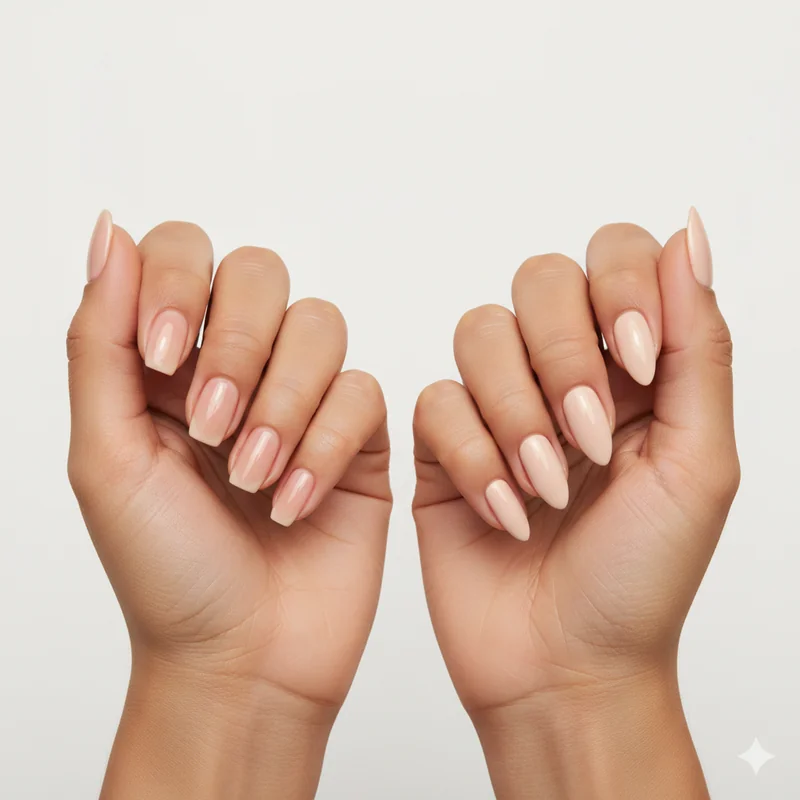
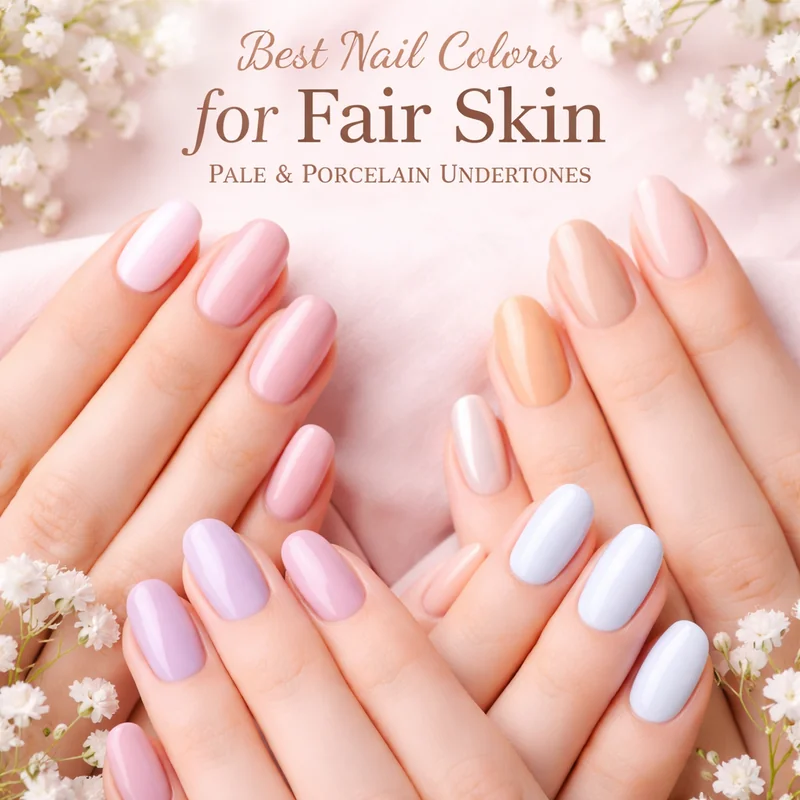
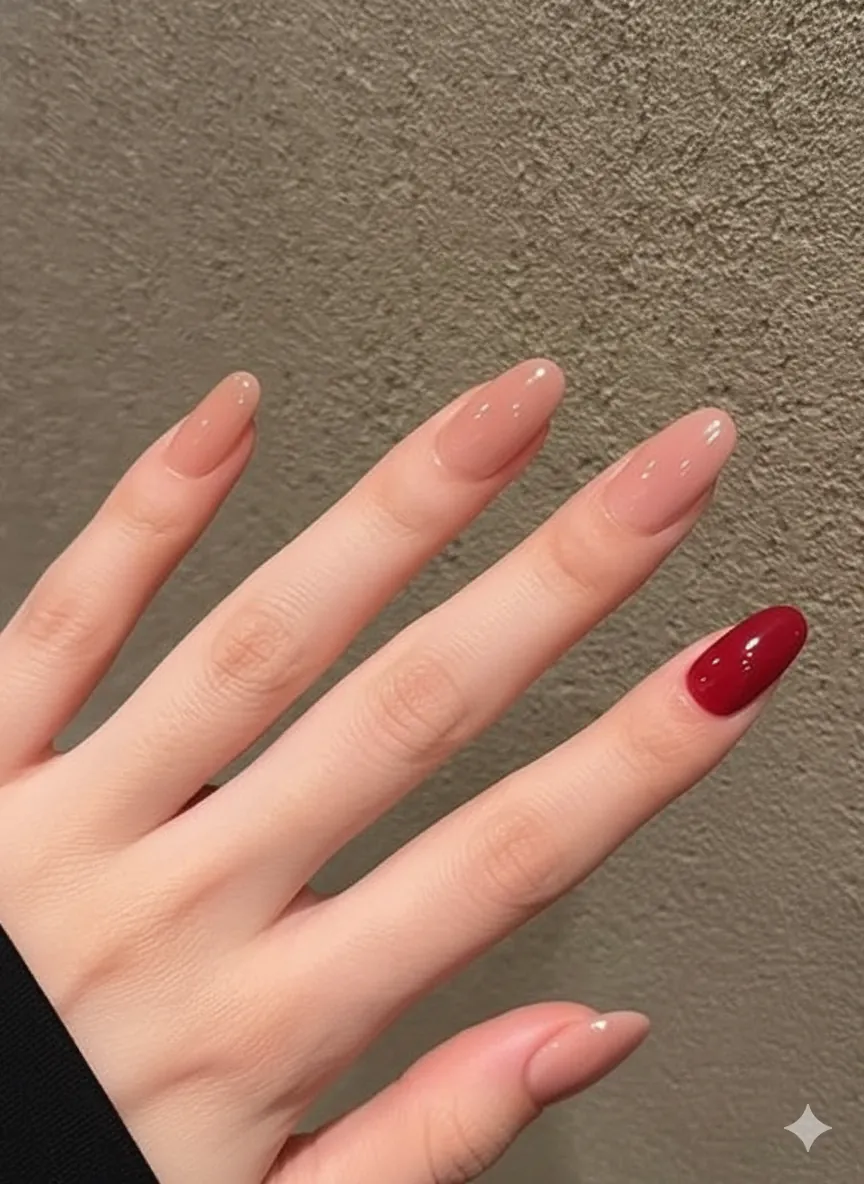
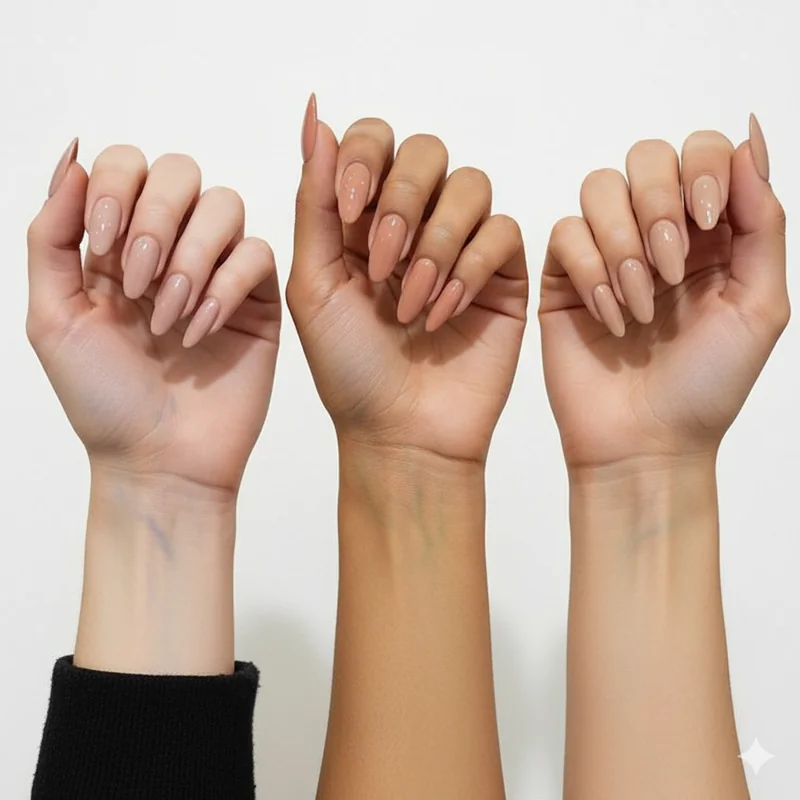
Fair skin — ranging from porcelain to light with pink, peach, or blue-toned undertones — needs a nude that provides visible contrast against the hand. The key is a sheer-to-medium coverage pink-nude, not a beige or ivory. Beige reads chalky. Ivory disappears. Pink-nudes create the separation that makes the nail visible and the hand look alive.
Cool fair skin (pink or blue undertones): Reach for soft blush-pinks with a faint mauve direction. Essie Ballet Slippers remains the benchmark for a reason — it has enough pink warmth to show up on light skin without crossing into full pink territory. OPI's Bubble Bath sits in similar territory. For a modern update, anything in the "milky sheer" category with a slight rose cast works beautifully.
Warm fair skin (peachy or golden undertones): A warm ivory-pink rather than a pure blush. OPI's Put It in Neutral and Essie's Topless and Barefoot have that peach-leaning warmth that complements fair skin with yellow undertones without looking orange.
Avoid: pure white nudes, stark beige with no pink, anything described as "linen" or "sand" on very light skin — these create the washed-out effect almost universally. For the full colour range that works on fair and light skin, our fair skin nail colour guide has everything beyond neutrals.
The Best Nude Nail Colours for Medium Skin
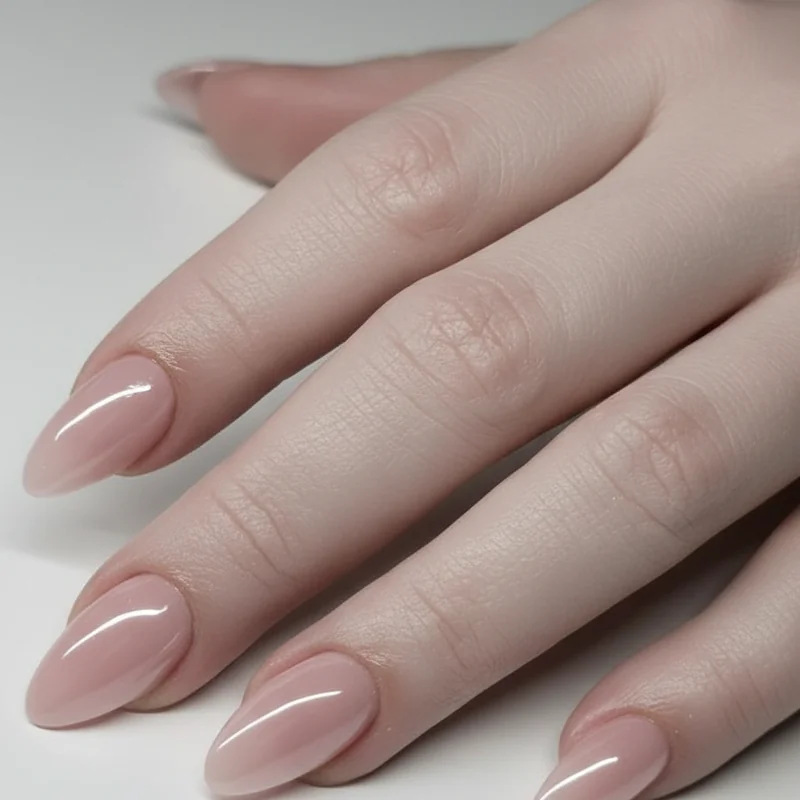
"Medium skin" covers a wider range than any other category — from light-medium with golden warmth to deeper medium with bronze or olive leanings — and what works at one end does not work at the other.
The shared principle across medium skin is this: sheer nudes that read as "barely there" on fair skin will read as invisible on medium tones. You need more pigment in the base. A creamy, slightly opaque nude with a warm or neutral undertone reads beautifully on medium skin; a sheer-only finish at this depth just makes nails look unstained rather than polished.
Warm medium skin (golden, honey, amber undertones): Peachy-beige is your strongest territory. OPI's Dulce de Leche — a warm, creamy peachy-nude — is consistently cited by manicurists as one of the most universally flattering shades for warm medium skin. Essie's Merino Cool and Paintbox's Like Mystery (a sandy, slightly pink milky shade) work in a similar register.
Cool medium skin (rosy or neutral-pink undertones): A dusty rose-nude or taupe-pink works better than pure beige. Essie's Lady Like and its cooler-leaning creamy nudes hit this correctly. Avoid warm-leaning nudes with strong yellow bases on cool medium skin — they can read sallow.
Neutral medium skin: This is where café au lait and warm taupe genuinely shine. Essie's Talk to the Sand and OPI's Tickle My France-y work across the medium neutral range. For everything beyond neutral on medium skin, the medium skin nail colour guide covers it fully.
The Best Nude Nail Colours for Olive Skin
Olive skin is the most difficult skin tone to match for nude. That is not an opinion — it is what every professional manicurist who works across skin tones will tell you.
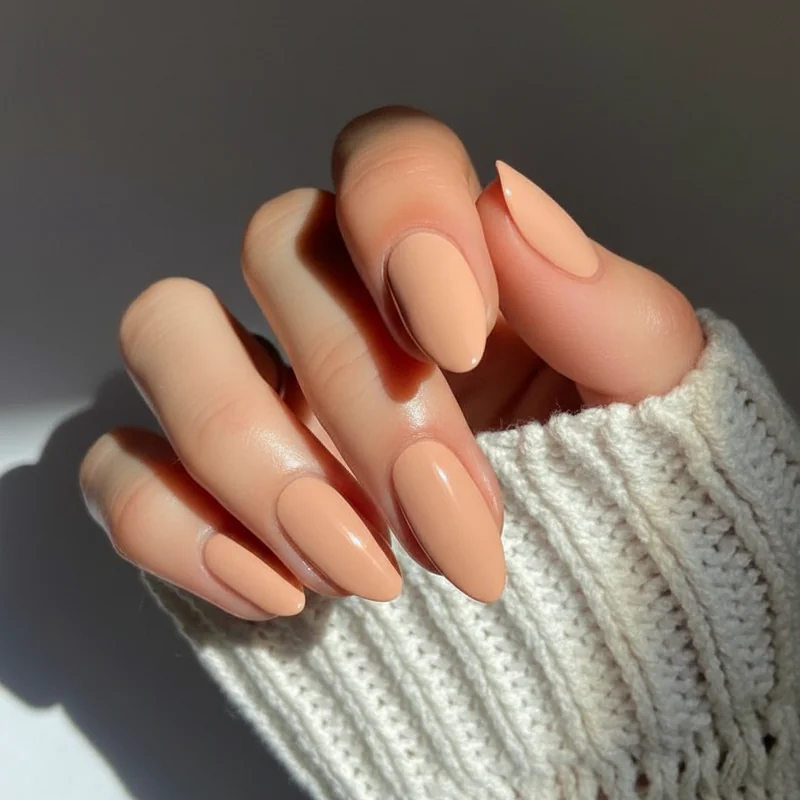
The difficulty comes from olive skin's dual nature: it has green-yellow undertones beneath the surface but reads as golden-brown at skin level. This means that yellow-based nudes — which seem logical — actually amplify the green in the undertone and make skin look sallow. The same goes for deeply warm amber nudes. The surprising solution is a dusty rose or mauve-nude with neutral-cool leanings, which provides contrast against the skin's natural warmth without fighting the undertone.
Olive with warm leanings (the most common): Dazzle Dry's Alluring Charm and OPI's Samoan Sand work because they carry a rosy warmth that sits against olive skin rather than merging with it. A nude with a faint mauve direction is consistently more flattering on olive skin than a golden-beige.
Olive with deeper depth (tan to medium-olive): Sandy rose and dusty champagne nudes work well here. Avoid: greige — the grey-beige hybrid that is heavily marketed as "universally flattering." On olive skin, greige almost always reads as grey and flat. Avoid yellow-based nudes entirely.
The finish matters more on olive skin than any other tone: a satin or cream finish reflects light in a way that makes the nail look polished and warm. A matte nude on olive skin tends to look dull. For the full colour palette beyond nudes on olive skin, the olive skin nail colour guide goes deep.
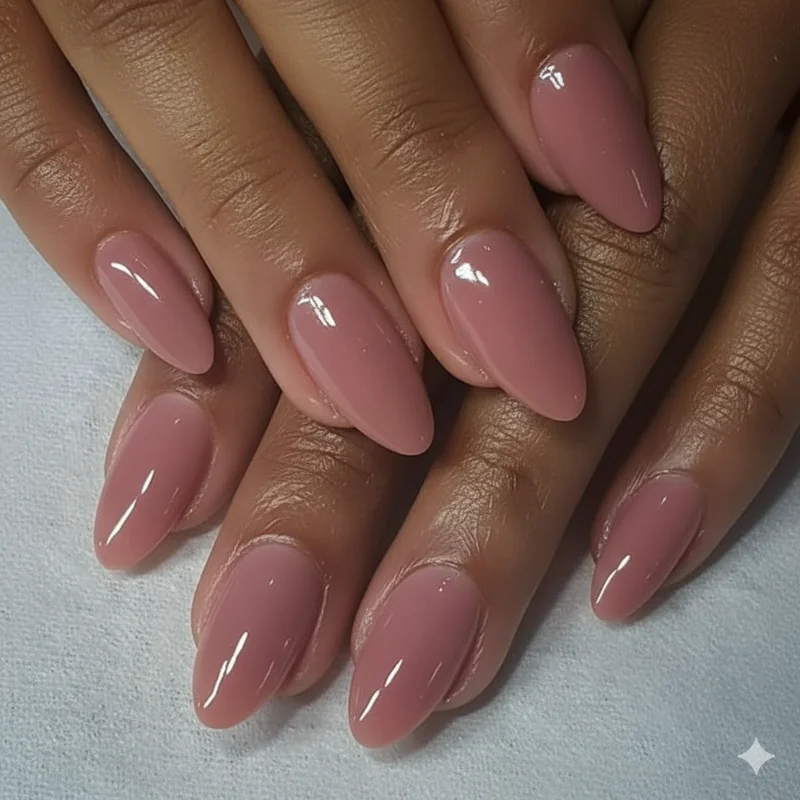
The Best Nude Nail Colours for Dark Skin
Beige is not nude on deep skin. Full stop.
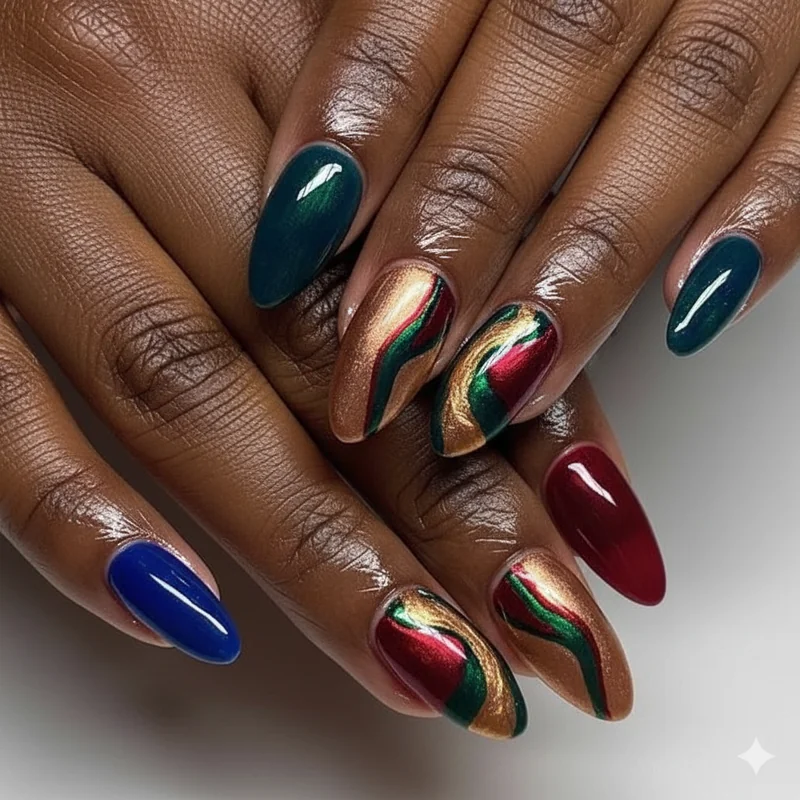
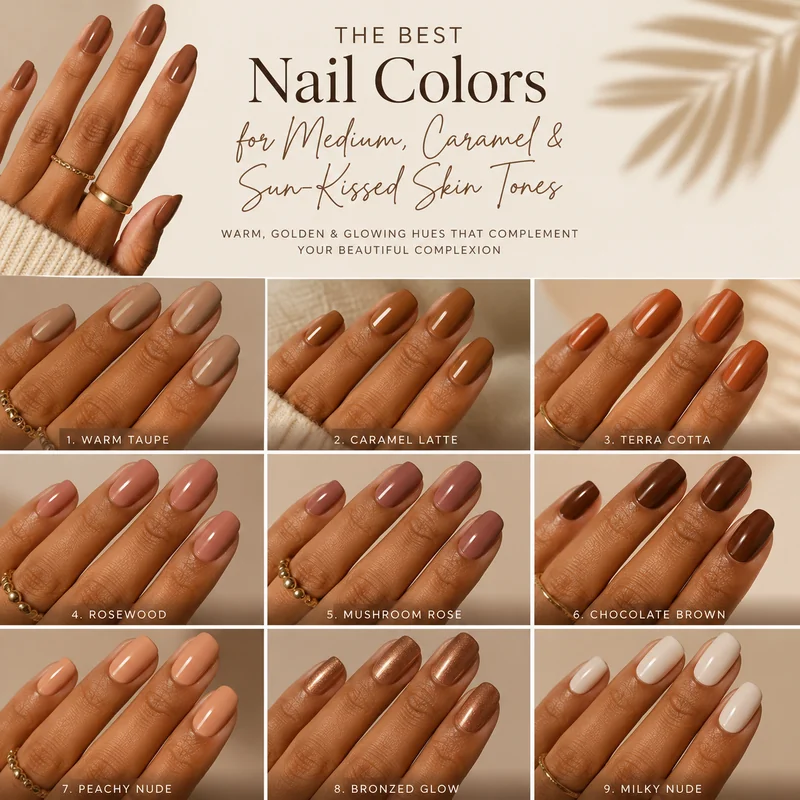
This is the single biggest error in the nude nail conversation, and it has been repeated so many times that it has become background noise. A beige polish on deep, rich, or ebony skin reads as an entirely different colour — usually a flat, ashy grey-beige that looks nothing like a nude and everything like a mistake. The equivalent of "nude" on deep skin is a rich caramel, deep taupe, warm chocolate, or berry-adjacent brown. These are the shades that sit at or slightly below the depth of deep skin and create that "your nails, but better" effect.
Deep skin with warm undertones (the majority of deep and ebony skin): Rich caramel and warm chocolate are your strongest nudes. Essie's Eternal Optimist (a spiced rose), NYX's Choco-Taupe, and anything in the deep taupe family with warm undertone. OPI's Tickle My France-y reads beautifully as a nude on warm-deep skin where it functions as a rosy neutral.
Deep skin with cool undertones: A berry-nude — something with a plum or cool-rose direction — reads as a proper nude on cool-toned deep skin. Avoid anything with a grey undertone; on cool-deep skin, grey-based nudes read as ashen and flat.
Finish matters enormously here: cream and satin finishes reflect light and give depth skin a luminous, polished result. Sheer finishes often become invisible. For the full range of colours that work beautifully on deep skin beyond neutrals, the dark skin nail colour guide is the complete reference.
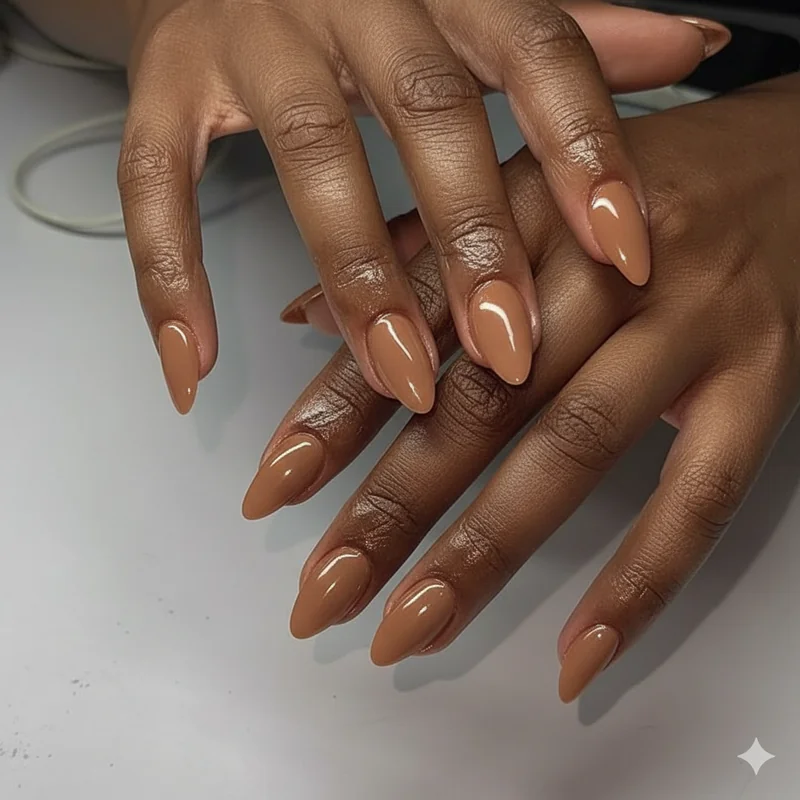
Does Finish Matter? Sheer vs Cream vs Satin vs Jelly
The finish of a nude polish changes what it does on your skin just as much as the shade itself — and almost no guide covers this.
Here is what each finish actually does.
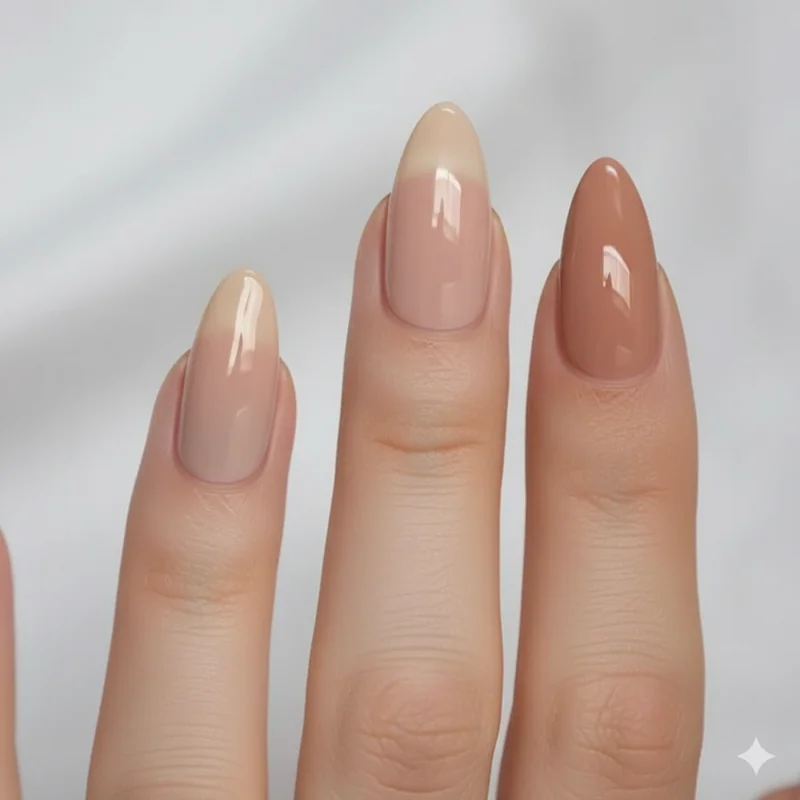
Sheer: Allows your natural nail colour to show through. On fair skin, a sheer nude is the most flattering option — it enhances rather than covers. On medium or deep skin, sheer nudes often become invisible, because the nail's natural pigment absorbs the colour. If you have medium or deeper skin and your nudes always look "like nothing," this is probably why.
Cream (opaque): Full coverage, no translucency. The most reliable finish across all skin tones because you control exactly how the colour reads. For medium and dark skin especially, a cream nude in the right shade is far more effective than a sheer in the "correct" shade.
Satin: Sits between cream and matte — a soft, low-shine finish that looks expensive without the full gloss of a standard top coat. Flattering across all tones, particularly good on olive and medium skin where it adds warmth without high shine.
Jelly: A newer finish — translucent, high-gloss, almost gel-like in its depth. Works beautifully on fair and light-medium skin as a modern take on the "your nails but better" look. On deep skin, the translucency issue applies: unless the jelly base is deeply pigmented, it tends to disappear.
The practical rule: if you want certainty, choose cream. If you want a barely-there effect, choose sheer if you are fair, cream in a lighter depth if you are medium or darker.
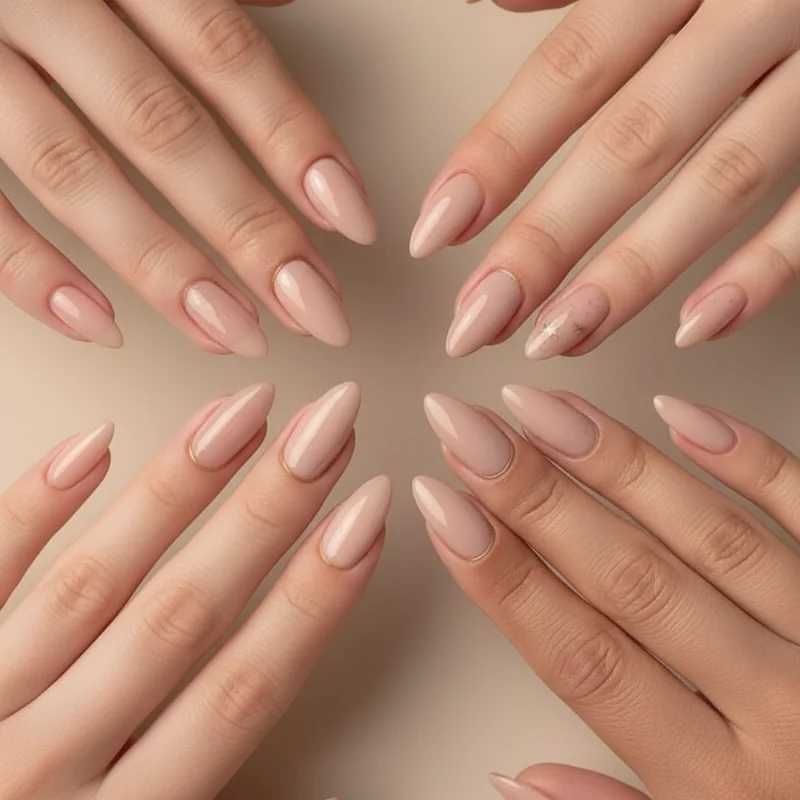
The Cuticle Test — The Fastest Way to Know If a Nude Actually Works
One coat. That is all the test requires.
Apply a single coat of the nude you are considering and look immediately at the cuticle area — not the centre of the nail. The cuticle is the most accurate indicator of whether a shade is compatible with your skin tone, because the skin is thin and the undertone relationship between polish and skin is most visible there.
If the cuticle looks reddish or irritated, the polish has too much blue in its base for your skin's undertone. If it looks dark or pronounced — like it is drawing attention to the cuticle line — the shade is too pink for your tone. If the cuticle looks like your skin — continuous, uninterrupted — the nude is working.
This test comes directly from professional manicurists including Deborah Lippmann and was referenced in Gelish's undertone test guide. It works in a salon, it works at home, and it works before you buy if you are able to swatch at a counter.
The other useful check: look at your hands a metre away from a mirror. A nude that is working should make your hands look quietly polished — the nails visible but unremarkable in the best possible way. If your hands look grey, sallow, or like the nails have disappeared, the shade is not right.