The Science of Opacity Control
Jelly gel nails Valentine applications succeed through understanding opacity progression principles. Standard nail polish contains opaque pigments suspended in clear base, designed for full coverage in two coats. Jelly formulations intentionally reduce pigment concentration, creating semi-transparent result where nail bed shows through colored veil. The science involves pigment particle size, suspension density, and refractive properties determining light interaction.
Layering mechanics govern final appearance predictably. Single coat application produces barely-there tint color registers as suggestion rather than presence. Nail bed color significantly influences perception. Pink undertones enhance milky pink jelly; yellow undertones can muddy sheer cranberry. Two coats create balanced translucency most users recognize as jelly aesthetic sufficient color presence without eliminating see-through quality. Three coats generate buildable depth approaching opacity while maintaining luminous quality distinguishing jelly from standard polish. Four or more coats typically cross threshold into near-opacity, losing translucent characteristic essential to jelly identity.

Light refraction through multiple thin layers creates dimensional depth impossible with single opaque coat. Each jelly layer catches and bends light slightly, producing visual complexity that appears to exist within nail structure. This effect intensifies with layer addition three thin coats create richer dimensional quality than single thick coat despite similar final opacity. The technique prioritizes multiple whisper-thin applications over fewer heavy coats.
Thin application proves critical for streak prevention in translucent finishes. Opaque polish conceals application marks beneath solid color. Translucent nail art reveals every brush stroke and pooling irregularity. The transparency demands careful technique even polish distribution, minimal brush pressure, quick application before polish begins setting. These requirements separate successful glass-like results from streaky attempts appearing unfinished rather than intentionally sheer.
Cure time intervals matter significantly for gel jelly applications. Each layer requires complete sixty-second cure before next application. Insufficient curing allows layers blending unpredictably, creating muddy appearance rather than discrete dimensional stacking. The patience to fully cure between coats determines whether final result achieves clean glass effect or appears clouded and indistinct.
Valentine Color Palettes for Jelly Effect
Jelly Valentine nails succeed through strategic color selection within translucent formulation requirements. Not all Valentine shades work effectively in sheer applications some colors muddy rather than beautify when semi-transparent, while others showcase dimensional depth perfectly.
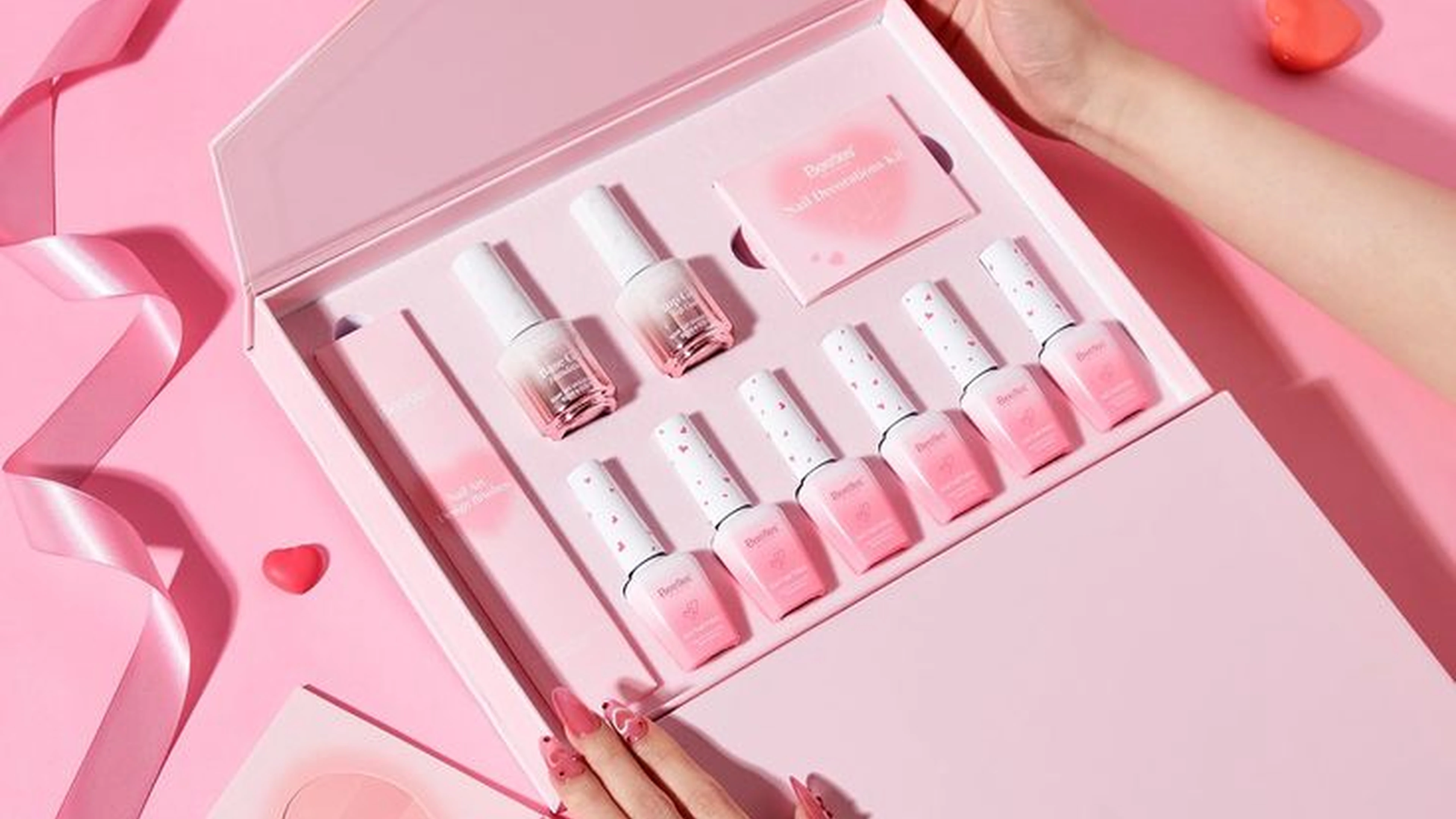
Milky pink represents quintessential jelly Valentine shade. The color spans blush through dusty rose spectrum, all sharing softness that appears intentionally delicate when sheer. Light pink undertones prevent muddiness even at higher translucency levels. The shade coordinates naturally with most skin tones cool undertones complement rose-leaning milky pinks, warm undertones suit peachy-pink variations. Two coats typically achieve ideal balance between visible color and maintained transparency.

Sheer cranberry red offers bolder Valentine reference while maintaining jelly capability. The warm translucent red reads unmistakably Valentine-appropriate without requiring opacity. Three coats generally provide sufficient color presence for cranberry to register clearly while preserving see-through quality. Cool cranberry with slight purple undertones suits users wanting sophisticated edge. Warm cranberry approaching orange-red creates playful energy appropriate for casual Valentine celebrations.
See-through Valentine nails can employ nearly clear base with minimal pink tint for ultra-subtle approach. This option suits users wanting barely-there Valentine acknowledgment or professional contexts requiring conservative nail presentation. The technique layers clear jelly gel with single drop of pink or red pigment, creating tinted clarity that appears nude from distance but reveals romantic intention upon close inspection.
Glass-clear jelly serves as base for encased Valentine embellishments. The transparent foundation allows hearts, glitter, or metallic accents suspending within layers to show maximum visibility. This approach maintains jelly aesthetic while incorporating obvious Valentine reference through embedded details. The clear base creates aquarium-like effect where decorative elements float within transparent depth.
Avoid burgundy and wine shades for jelly applications these colors contain dark pigments that appear muddy rather than dimensional when translucent. The depth reads as incomplete coverage attempting opacity rather than intentional glass effect. Similarly, neon pinks clash with jelly's refined aesthetic. The artificial brightness conflicts with gossamer quality defining successful translucent Valentine designs. Choose colors existing naturally in glass or stained window contexts rather than synthetic-appearing shades.
Four Application Approaches for Valentine Occasions
Korean jelly nails adapt to multiple Valentine contexts through opacity variation and embellishment strategies. The following approaches address different occasion formality levels and personal style preferences.
Sheer single-tone application employs one to two coats creating ultra-translucent finish. This minimalist approach suits first dates or occasions requiring understated elegance. The barely-there color communicates Valentine acknowledgment without bold commitment. Application technique: apply single thin coat of milky pink jelly gel, cure completely, assess opacity. Add second coat only if first appears too sheer for desired effect. The restraint positions this approach as confident sophistication rather than unfinished application.

Buildable gradient creates nail-to-nail opacity variation across single hand. This playful approach suits Galentine's celebrations or casual Valentine activities. Technique: apply single coat across all nails, cure. Apply second coat on four nails only, cure. Apply third coat on two nails only, cure. The result produces visible opacity gradient from sheer thumb through buildable pinky, creating intentional asymmetry that appears artistic rather than accidental.
Translucent nail art incorporating jelly French tips marries structure with transparency. The technique applies sheer colored tips over nude or clear base, creating subtle Valentine reference through precision tip work. This approach suits professional contexts requiring workplace-appropriate Valentine expression. Application: apply clear or nude jelly base across entire nail, cure. Use striping brush to create thin sheer pink or cranberry tips following smile line curve, cure. The translucent tips read as refined detail rather than obvious decoration.
Encased embellishment approach suspends Valentine details within jelly layers for dimensional interest. The technique applies thin jelly coat, adds hearts or glitter while wet, applies second jelly coat sealing embellishments, cures to create aquarium effect. This maximalist variation suits users wanting obvious Valentine reference while maintaining glass-like aesthetic. The suspended elements create dimensional presence without surface texture, preserving smooth glossy finish characteristic of jelly nails.
Technical Execution Achieving Glass-Like Finish
Jelly Valentine nails demand specific technical considerations for optimal translucent results. Preparation significantly impacts final appearance given transparency reveals nail bed imperfections standard polish conceals.
Nail bed preparation requires thorough buffing eliminating ridges and texture irregularities. The translucency makes every surface flaw visible beneath colored layers. Buff natural nails smooth using fine-grit buffer, creating even canvas. Apply ridge-filling base coat if natural nails show pronounced texture the base creates smooth foundation preventing jelly layers from pooling in grooves. Clean nails with alcohol wipe removing oils that prevent proper jelly adhesion.
Thin coat discipline separates successful glass finish from streaky attempts. Load brush minimally excess polish pools and streaks during application. Apply jelly polish in single smooth stroke from cuticle to tip, maintaining light even pressure. Avoid multiple passes over same area jelly polish's transparency means every brush mark remains visible. The first pass determines final appearance. Practice on single nail achieving acceptable result before proceeding to full set.
Cure time intervals for gel applications prevent shrinkage compromising glass effect. Allow full sixty seconds under LED lamp between coats. Gel polish formulation chemistry requires complete cure for dimensional layering. Rushed intervals cause layers melting together rather than stacking discretely. The resulting appearance reads muddy rather than dimensional. Similarly, regular polish jelly applications require minimum two to three minutes drying between coats rushing produces smudged streaky finish.
Top coat selection dramatically influences final glass quality. Ultra-glossy top coat amplifies stained glass aesthetic through maximum light refraction. Apply thin even layer avoiding flooding that obscures dimensional depth carefully built through jelly layering. Matte top coat destroys glass effect entirely reserve for non-jelly Valentine designs. The glossiness proves essential to translucent nail success.