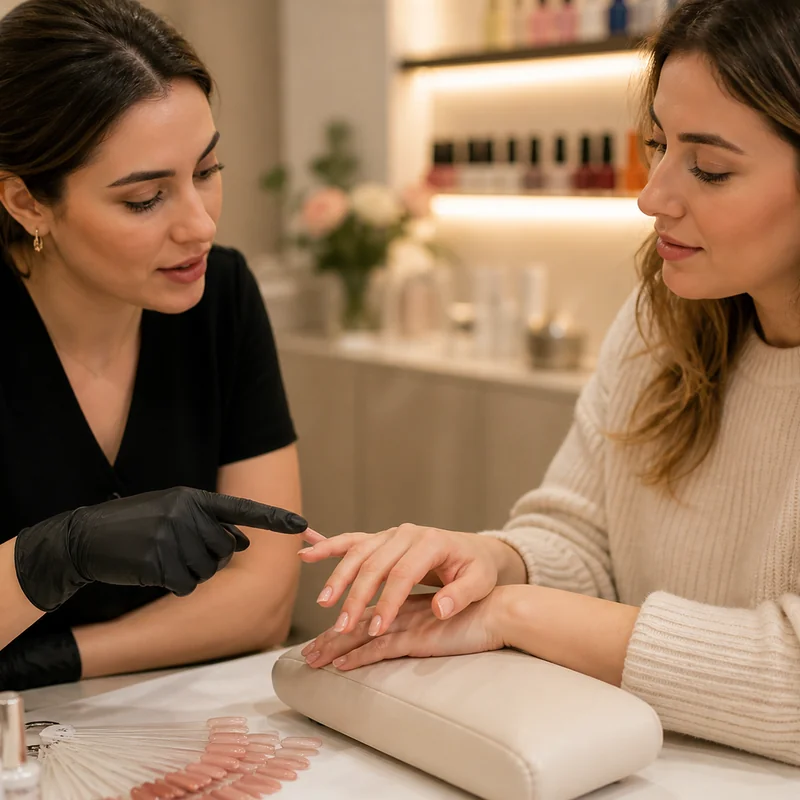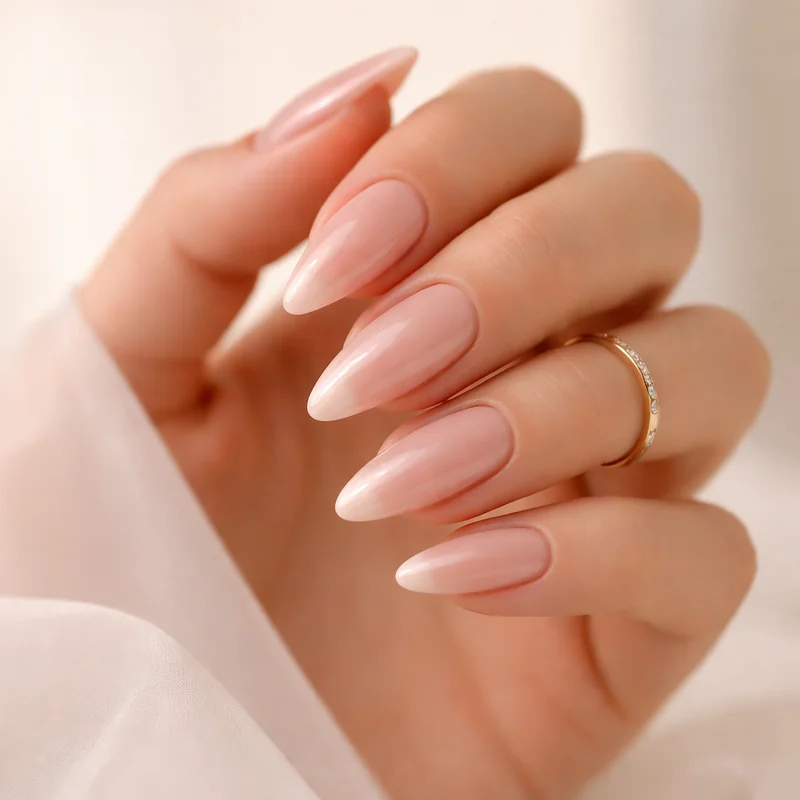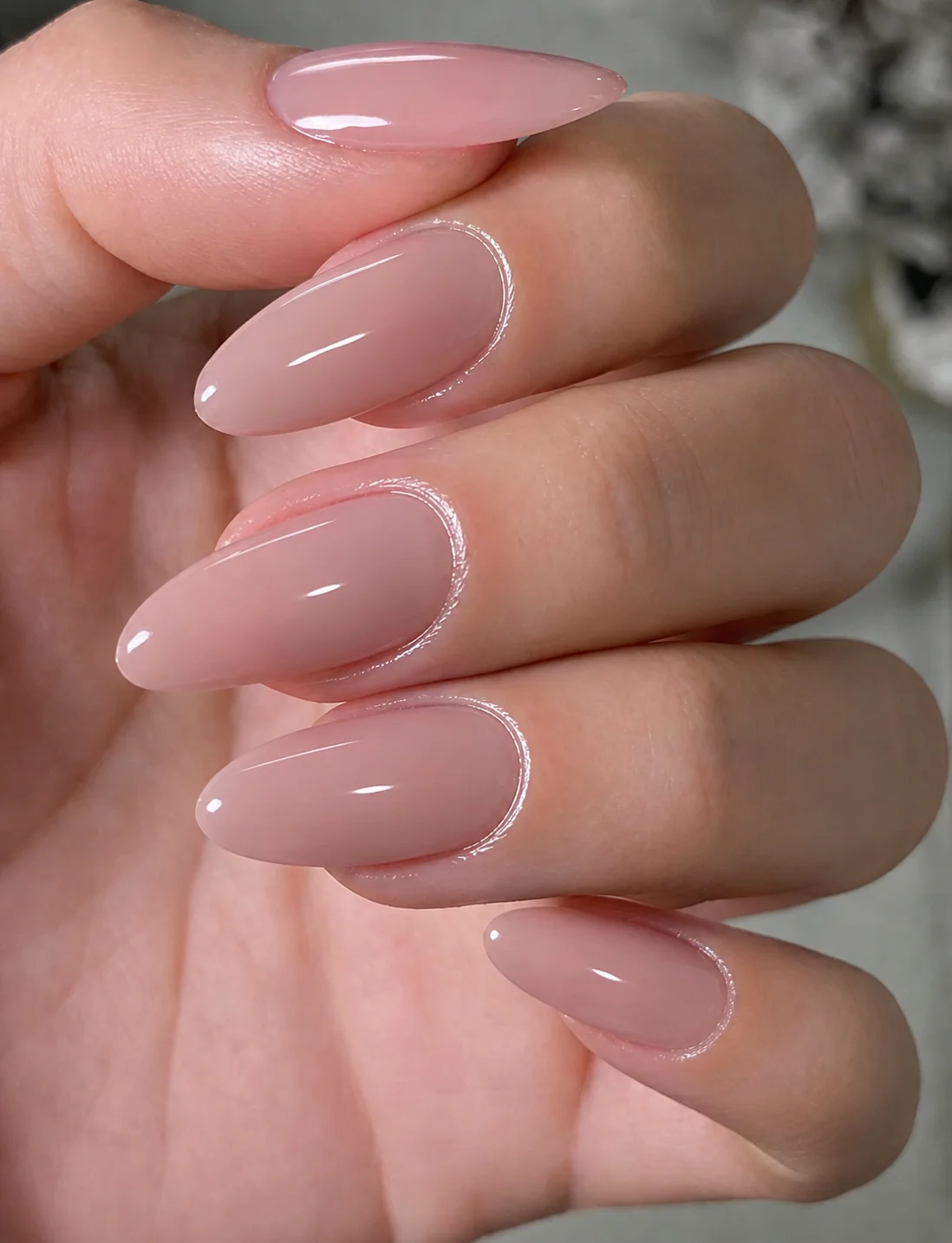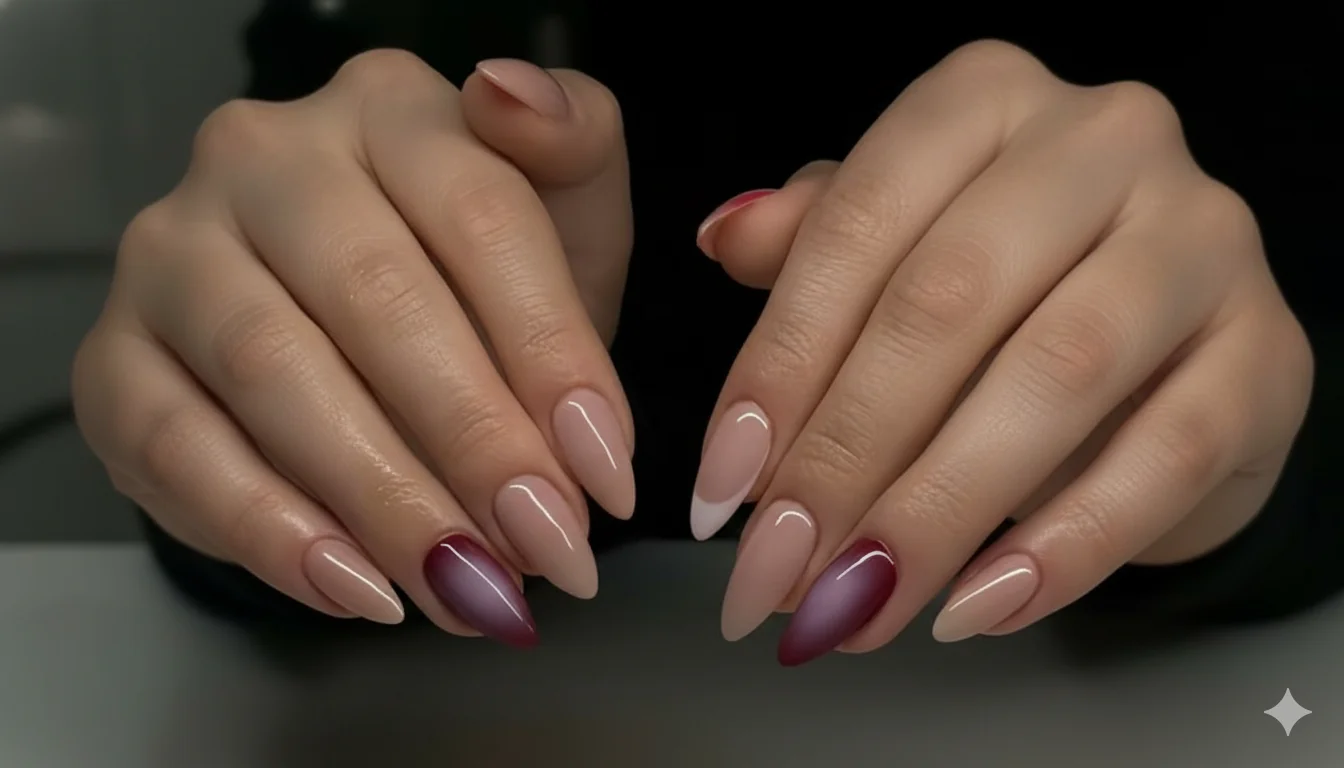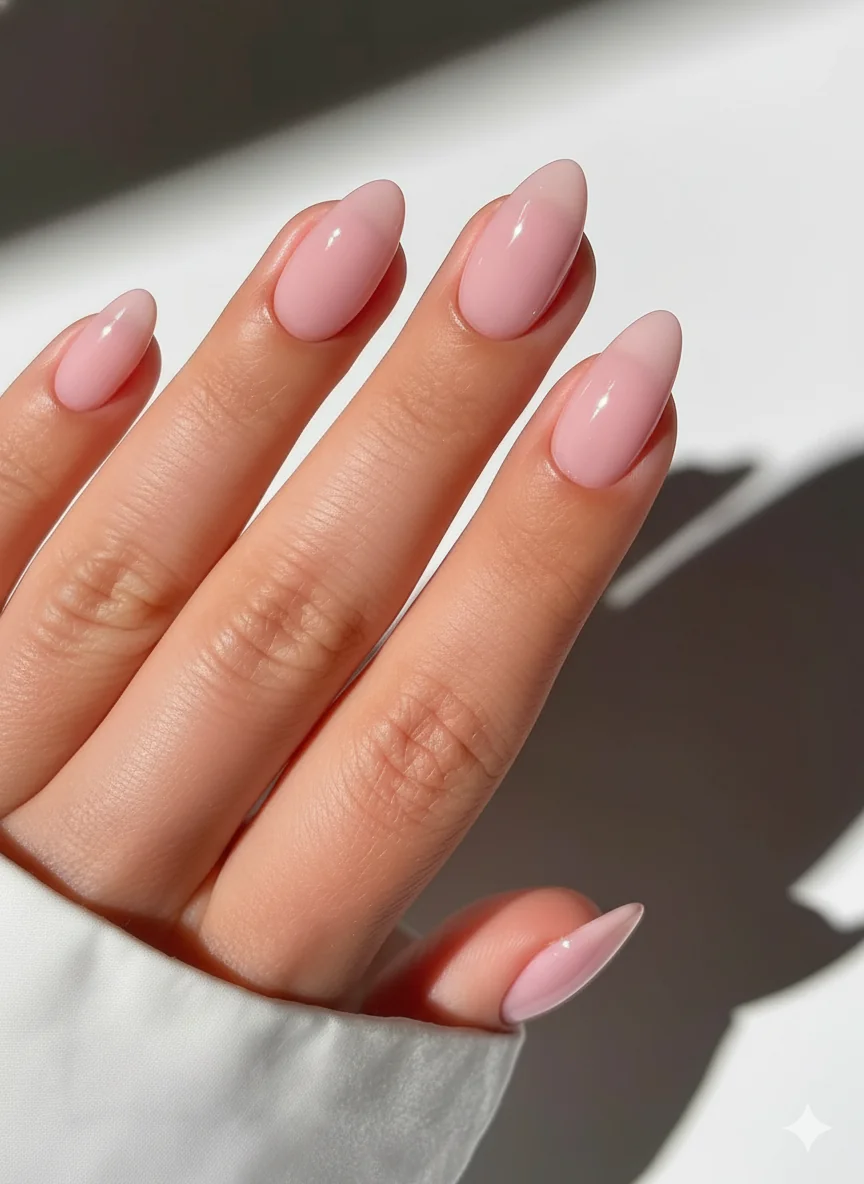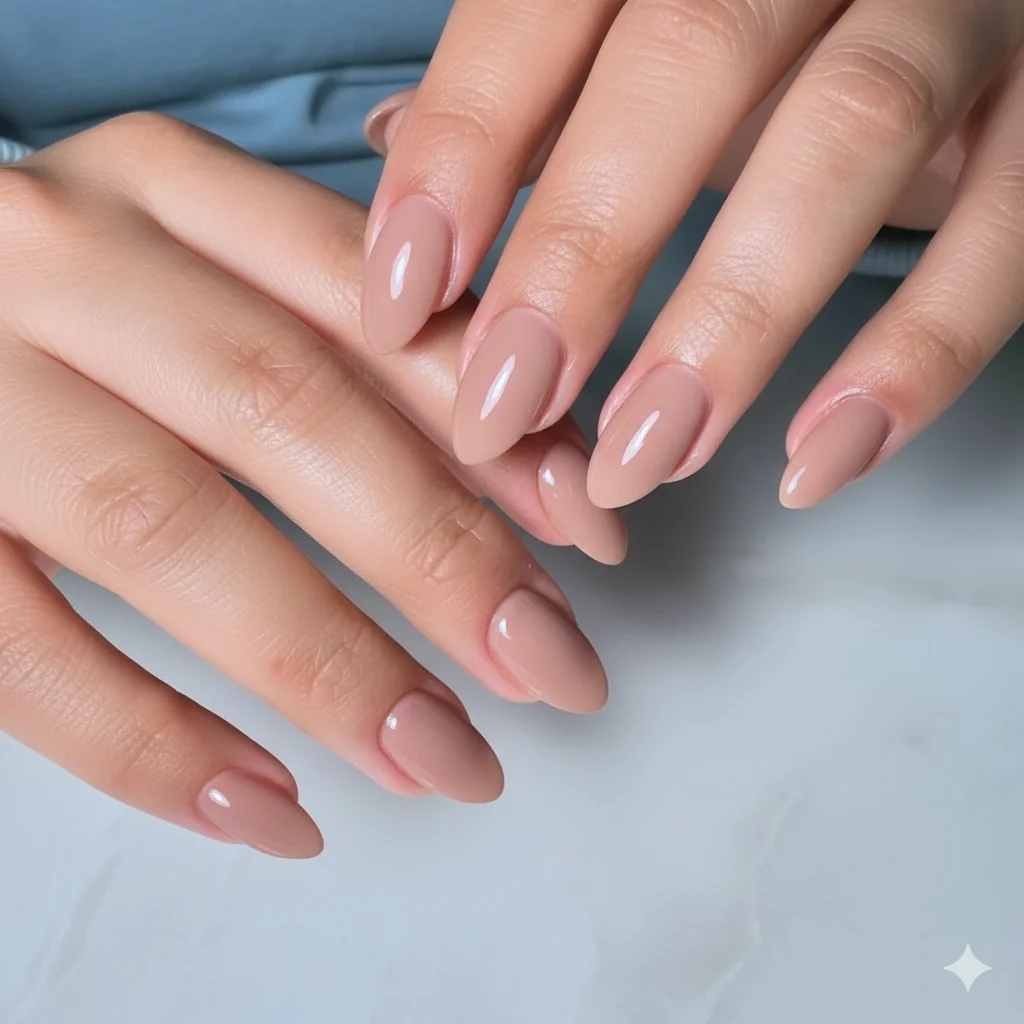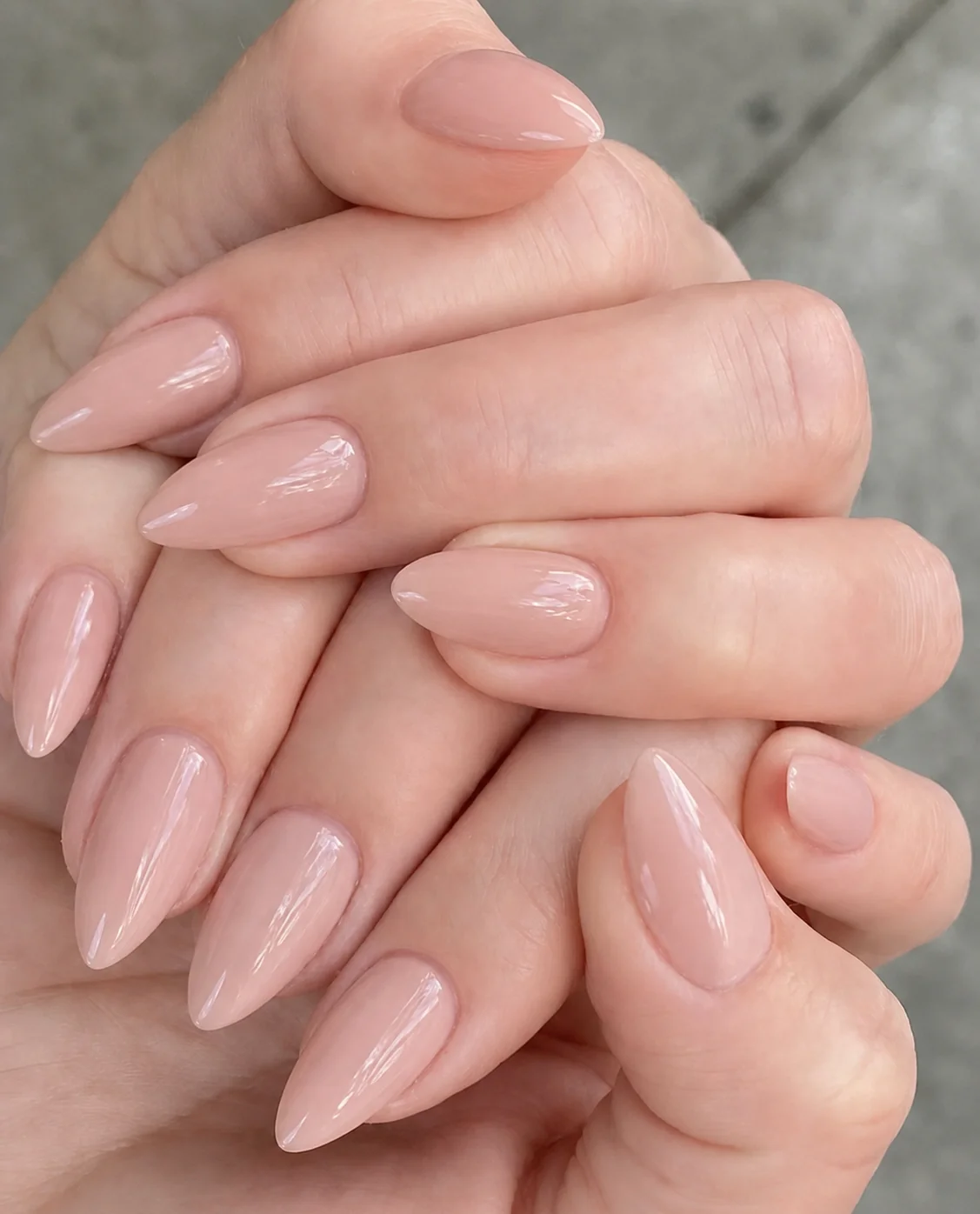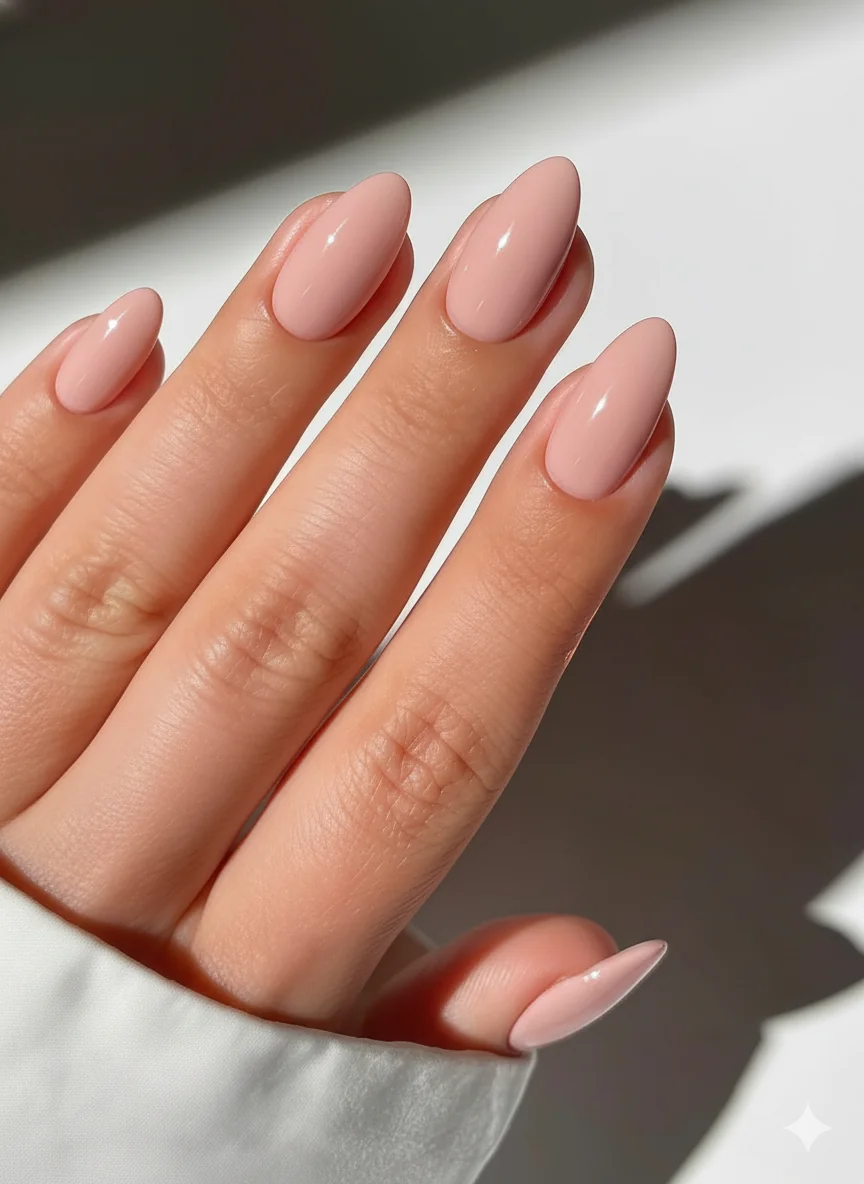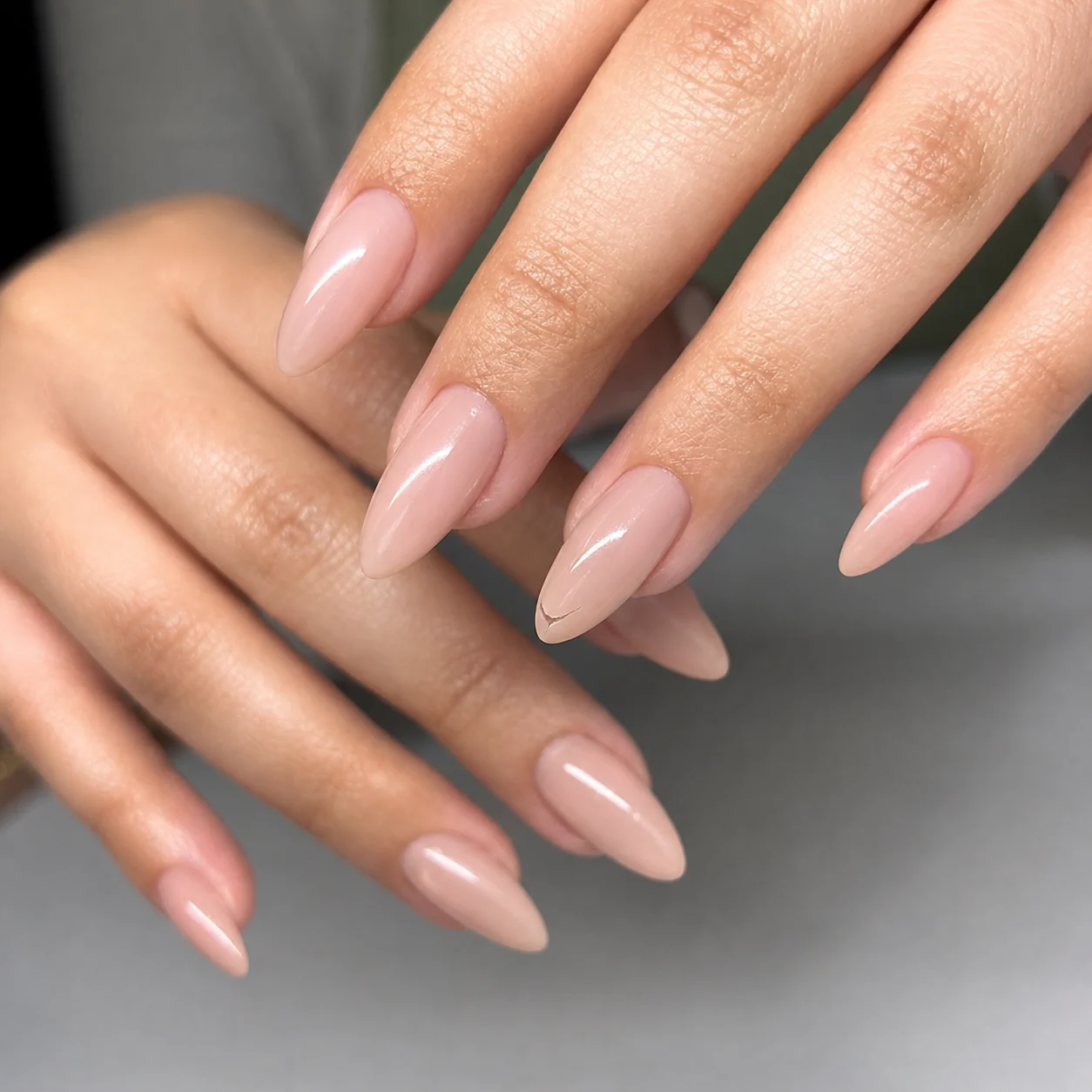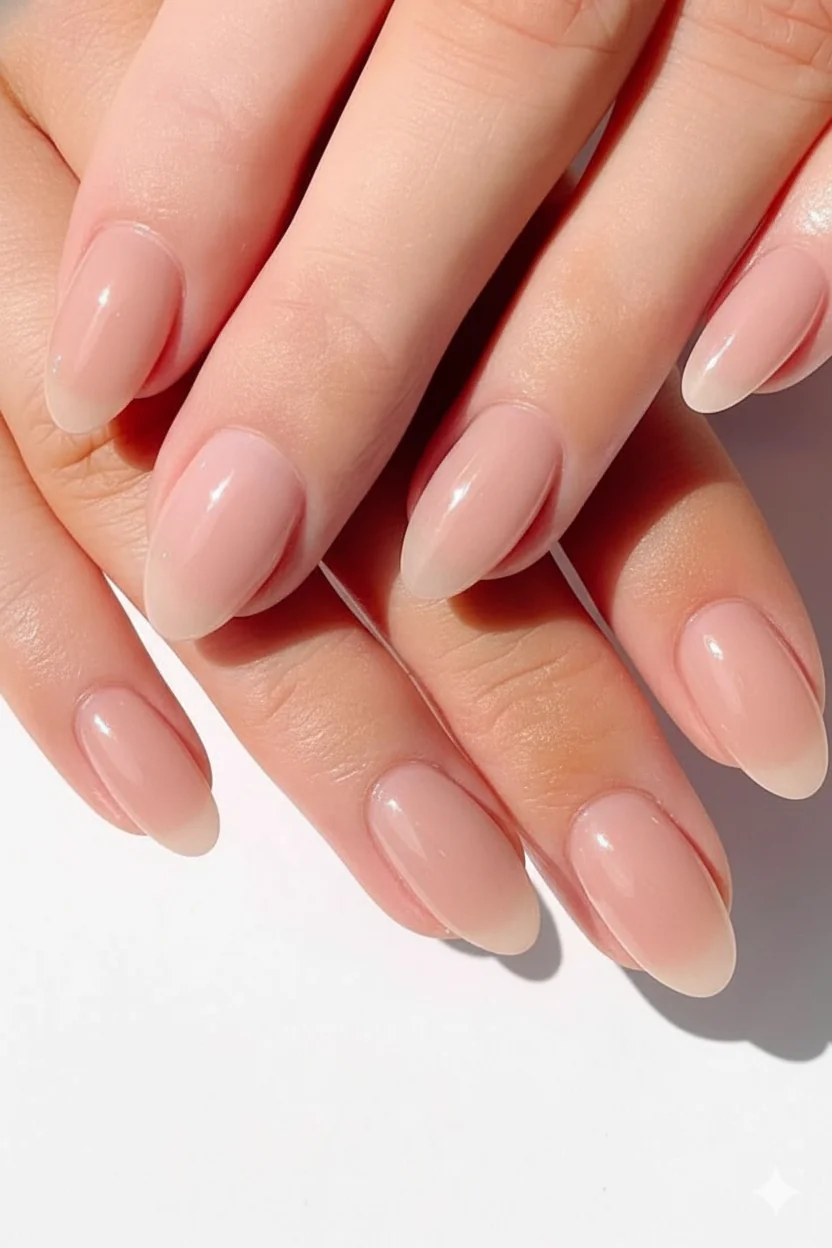
The question lands in every first-timer's head the moment they sit down at the salon: gel vs acrylic almond nails — which one? The tech asks, you hesitate, and then you say whatever feels least embarrassing to say out loud. Most people spend more time choosing a nail colour than they do choosing the system that determines how their nails feel, look, and hold up for the next three weeks.
This post gives you the answer before you walk in. We have broken down gel vs acrylic almond nails across every factor that actually matters — durability, cost, nail health, finish, and your specific situation — so you leave here knowing exactly what to ask for. If you are still deciding whether almond is even the right shape for you, start with our full almond nails beginner guide first.
The Short Answer: Gel or Acrylic for Almond Nails?
Before anything else — the verdict. Scan this and you will know where you stand.
| Your situation | Go with |
|---|---|
| First-time nail extension wearer | Gel (softer, easier to adjust to) |
| You want maximum durability | Acrylic |
| Your natural nails are weak or thin | Gel-X or builder gel |
| Long almond length (over 3cm) | Acrylic |
| Medium almond length | Either |
| Wedding or high-stakes event | Acrylic |
| Nail health is your priority | Gel (with correct removal) |
| Tight budget | Acrylic |
| You hate chemical smells | Gel |
| Active lifestyle / works with hands | Acrylic |
That is not a hedge — those are real verdicts. The rest of this post explains why, scenario by scenario.
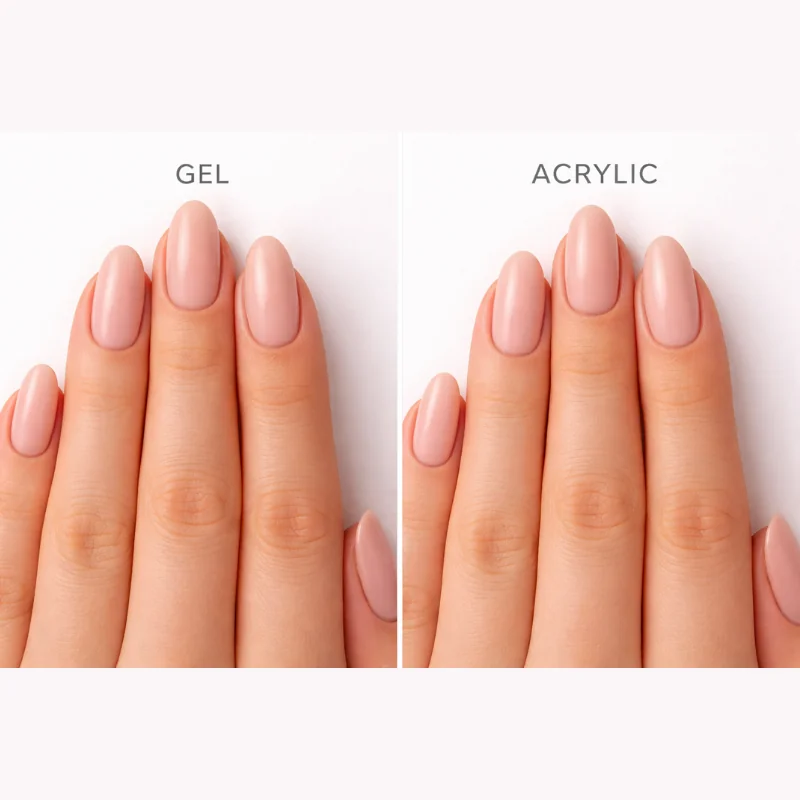
What Actually Makes Them Different When You Want the Almond Shape
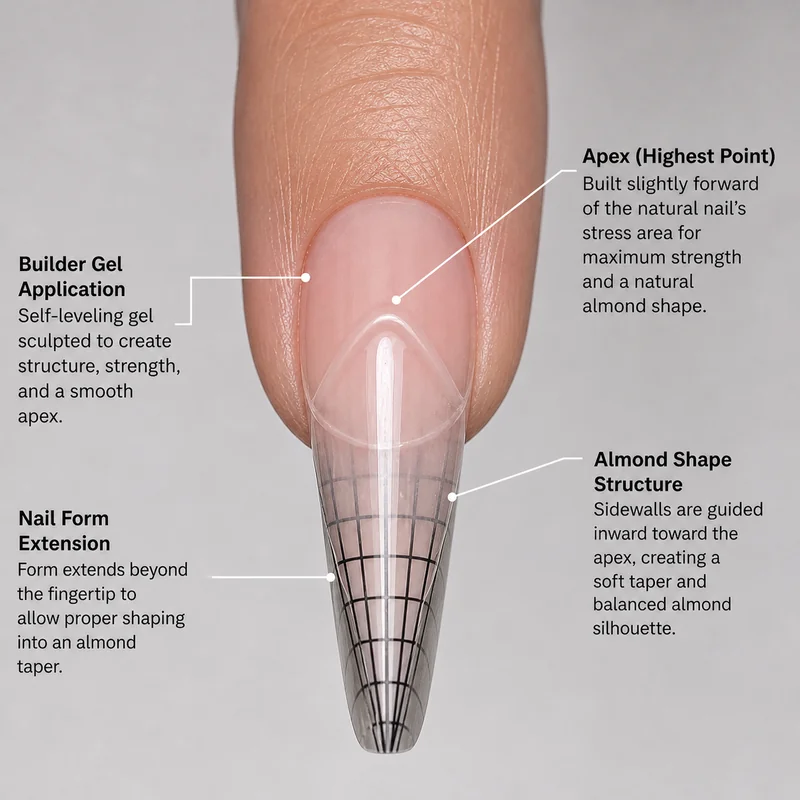
The almond shape has a narrow, tapered tip and a gently rounded sidewall. That geometry puts stress at the tip — which is the most vulnerable point on any extension. The system you choose affects how that stress is distributed.
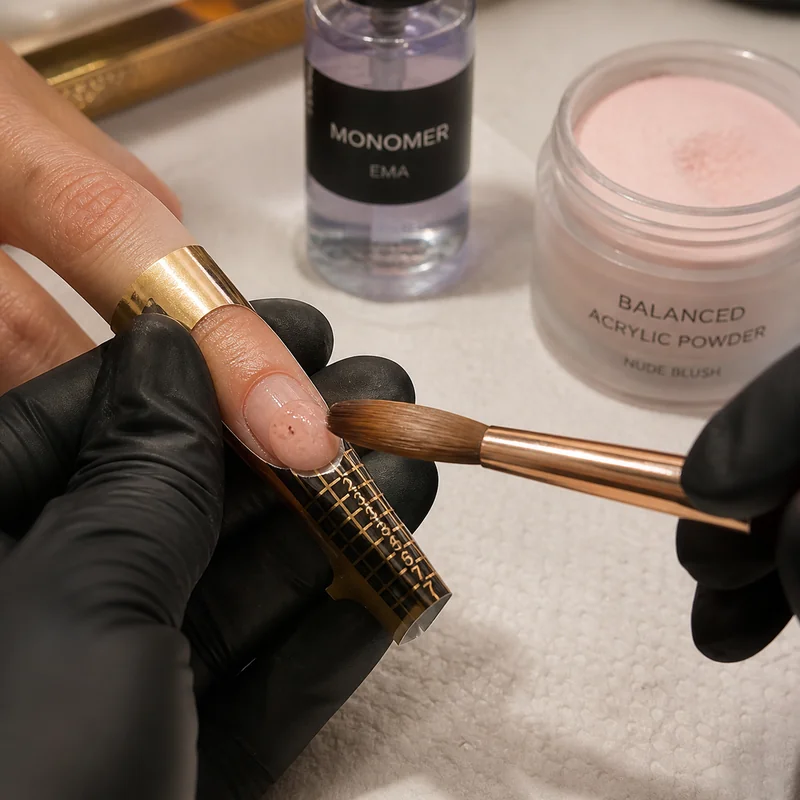
Acrylic is made from polymer powder and monomer liquid. Mixed together, they cure at room temperature into a hard, rigid structure. A skilled tech sculpts the apex — the thickest reinforcement point — to sit just above where the natural nail ends, giving the almond tip something to lean on. Rigid systems handle lateral stress well. They resist the kind of sideways knocking that snaps tips.
Gel comes in a few forms that matter here. Gel-X uses pre-shaped soft gel tips, bonded with a gel adhesive and cured under a UV/LED lamp. Builder gel (or hard gel) is sculpted directly on nail forms, much like acrylic, and cured in layers. Soft gel is more flexible than acrylic — it absorbs impact differently. Hard gel sits between soft gel and acrylic on the rigidity scale.
For the almond shape specifically: acrylic gives a tech more structural control over longer lengths. Gel-X is the smarter choice for shorter-to-medium almonds, especially on naturally weak nail plates.
Which Lasts Longer Without Breaking — Gel or Acrylic Almond Nails?
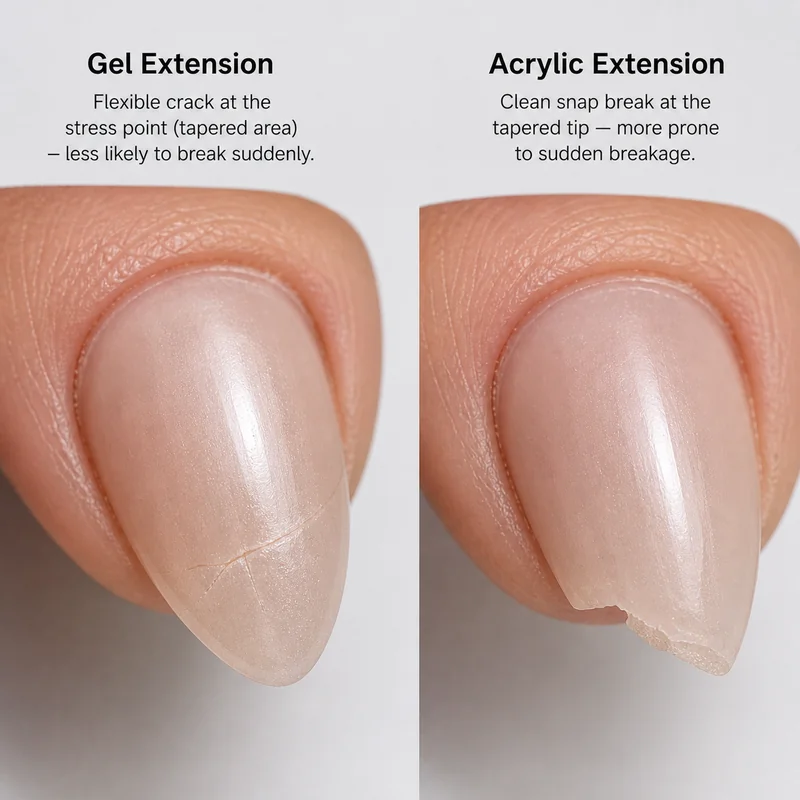
Acrylic wins on raw wear time. Expect 3–4 weeks before a fill appointment on a well-applied acrylic almond set. Gel averages 2–3 weeks, with soft gel (Gel-X) typically on the shorter end of that range. Builder gel edges closer to acrylic's timeline.
The more important question is not how long until you need a fill — it is how the set behaves when it starts to lift or get knocked. Acrylic tends to crack or break cleanly at the tip. Gel tends to lift from the sidewalls first. Neither is ideal, but breaks are easier to diagnose and fix than lifting, which can trap moisture and create problems for the natural nail underneath.
If your last set kept popping off or snapping unexpectedly, product choice is only one variable. Prep, application, and aftercare all play a role — which is why understanding why almond nails keep breaking is worth reading alongside this comparison.
How Much Do Gel vs Acrylic Almond Nails Cost at a Salon?
Acrylic is the more budget-friendly system. A full acrylic almond set typically runs £35–£65 in the UK, $45–$80 in the US. Gel — particularly Gel-X or builder gel — comes in slightly higher: £50–£90 in the UK, $60–$110 in the US. Those ranges shift significantly by city and salon tier.
Fills are where the real cost calculation happens. Both systems need a fill every 2–3 weeks as your natural nail grows. Acrylic fills are generally £20–£35 / $25–$45. Gel fills sit in a similar range, though some salons charge a premium for builder gel rebalancing.
Over three months, the gap between gel and acrylic is smaller than the initial price difference suggests. If you are on a strict budget, acrylic makes the most sense for a full almond extension — but do not sacrifice salon quality to save £10. A cheap application costs more to fix.
Do Gel Almond Nails Look as Natural as Acrylic — Or More?
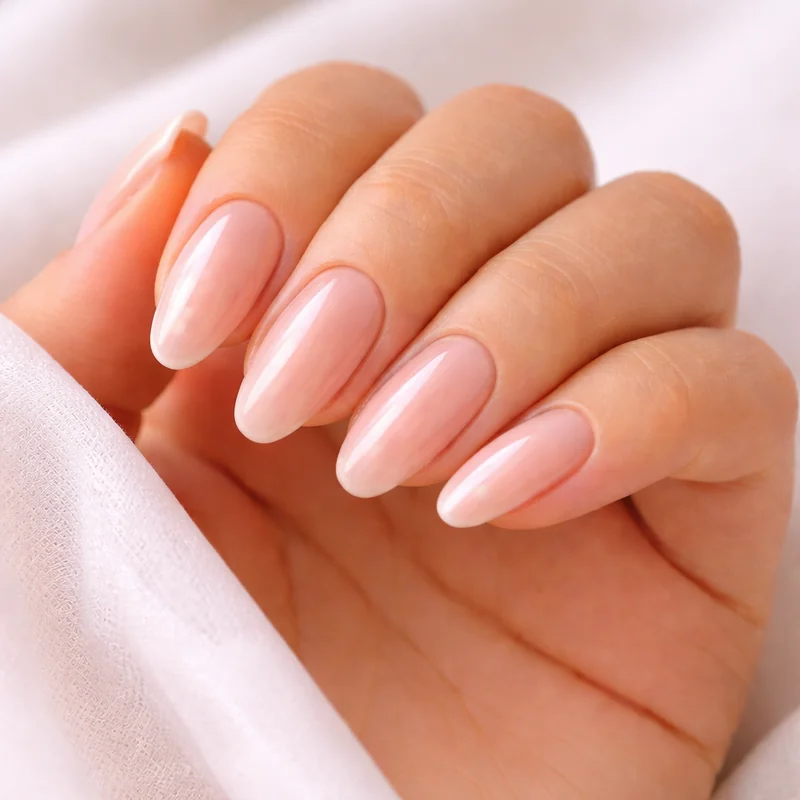
Gel, and here is where it consistently edges ahead on aesthetics. Soft gel has a clarity and translucency that sits closer to the look of a natural nail plate. It catches light differently — less opaque, more alive. Gel-X tips, in particular, have a clean finish straight from the lamp that requires minimal buffing.
Acrylic can look just as polished under a skilled tech, but its natural finish is slightly more matte and opaque before topcoat. For sheer or "your nails but better" looks — milky nudes, sheer pinks, glazed finishes — gel reads as more natural. For full-coverage colour, nail art, or ombre, the difference disappears entirely under the top coat.
If you want the glass-skin nail aesthetic that is everywhere right now, gel is the system that delivers it most effortlessly.
Which One Does Less Damage to Your Natural Nails Underneath?
Both systems require nail prep — dehydration, priming, and light buffing of the nail plate surface. That prep removes some of the outermost nail layer. Neither gel nor acrylic is without impact. The honest answer is: the application matters less than the removal.
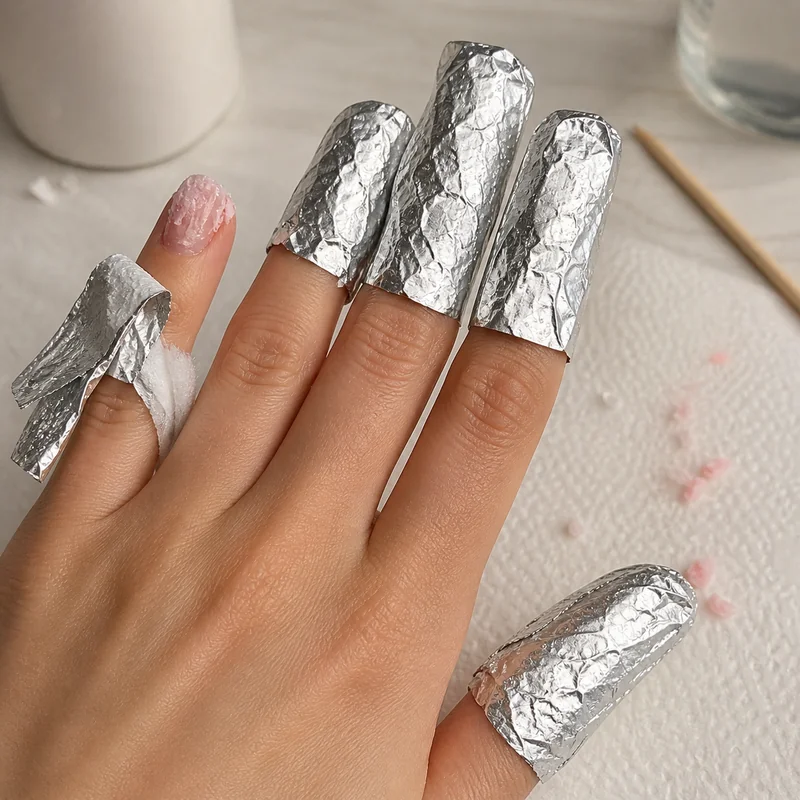
Picking off or peeling either system is where real nail bed damage and nail plate thinning happen. Acetone soak removal, done correctly, is the only safe way to remove gel or acrylic. The American Academy of Dermatology nail care advice is consistent on this — mechanical removal (picking, prying) is the primary cause of nail plate damage from extensions, not the product itself.
That said: gel is generally considered the gentler system for long-term wearers, for two reasons. First, soak-off gel dissolves more readily in acetone than hard acrylic, so removal time is shorter and the nail plate is exposed to acetone for less time. Second, gel's flexibility reduces the micro-stress on the natural nail throughout wear. Acrylic's rigidity means any flex travels to the nail plate — over repeated sets, that matters. The FDA nail product safety guidelines also flag MMA-based acrylics (older, cheaper formulas) as higher-risk — always check your salon uses EMA-based products.
How Often Do You Need a Fill — Gel vs Acrylic Almond Nails?
Acrylic: every 2–3 weeks. Gel: every 2–3 weeks, with soft gel sometimes nudging closer to the 2-week mark on fast-growing nails.
In practice, the fill schedule is nearly identical. What differs is what happens at each appointment. An acrylic fill involves filing back the grown-out area and re-applying product to restore the apex structure. A gel fill — especially builder gel — is a similar rebalancing process. Gel-X refills often involve removing the existing tips and applying a fresh set, which some techs will do as a standard part of the appointment.
The fill gap is where most nail health problems quietly develop. Lifting that is ignored, moisture trapped under product, a nail that has grown out significantly without rebalancing — these compound over time regardless of system. Staying on schedule matters more than which product is on your nails. For more on keeping your set in good condition between appointments, these are the maintenance habits that actually make the difference.
Is Gel or Acrylic Better for Almond Nails if Your Natural Nails Are Weak or Short?
Gel, specifically. If your natural nails are thin, flexible, or prone to peeling, acrylic's rigidity can work against you — the stiff product on a flexible nail plate creates tension at the bond line, which is a setup for premature lifting. Gel-X or builder gel flex with the nail rather than against it.
For very short natural nails, both systems can achieve almond length using nail tips or forms. Builder gel sculpted on a form gives the most control over shape and apex placement — the result is structurally close to acrylic in strength, with gel's gentler touch underneath. If your tech recommends Gel-X for short nails and you want serious length, ask specifically about hard gel or builder gel on forms instead.
The Mayo Clinic nail health guidance recommends keeping the area around the cuticle moisturised and avoiding cuts to the cuticle during application — worth confirming your salon follows this regardless of which system you choose.