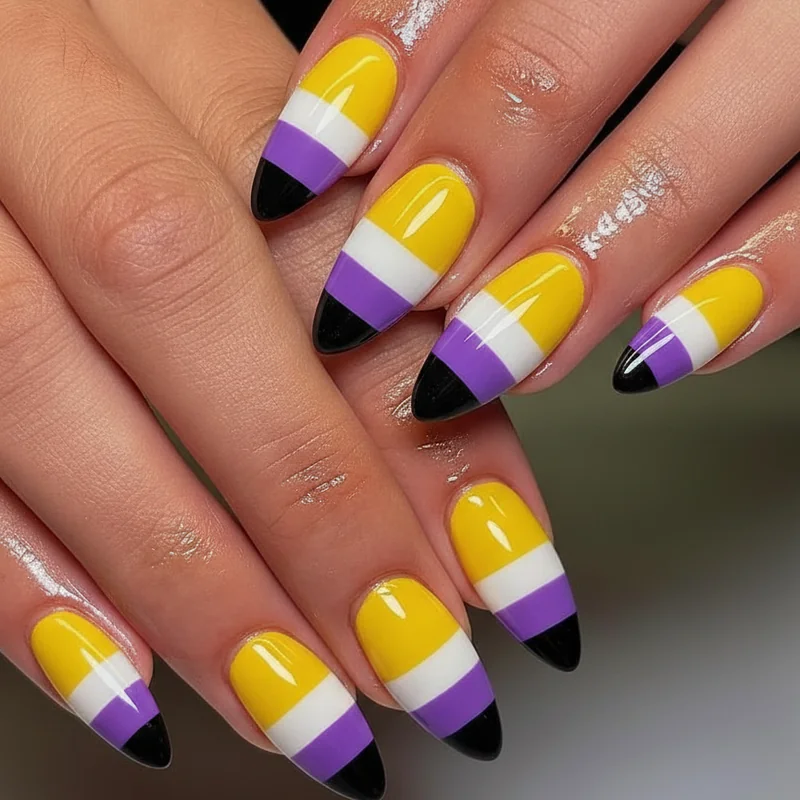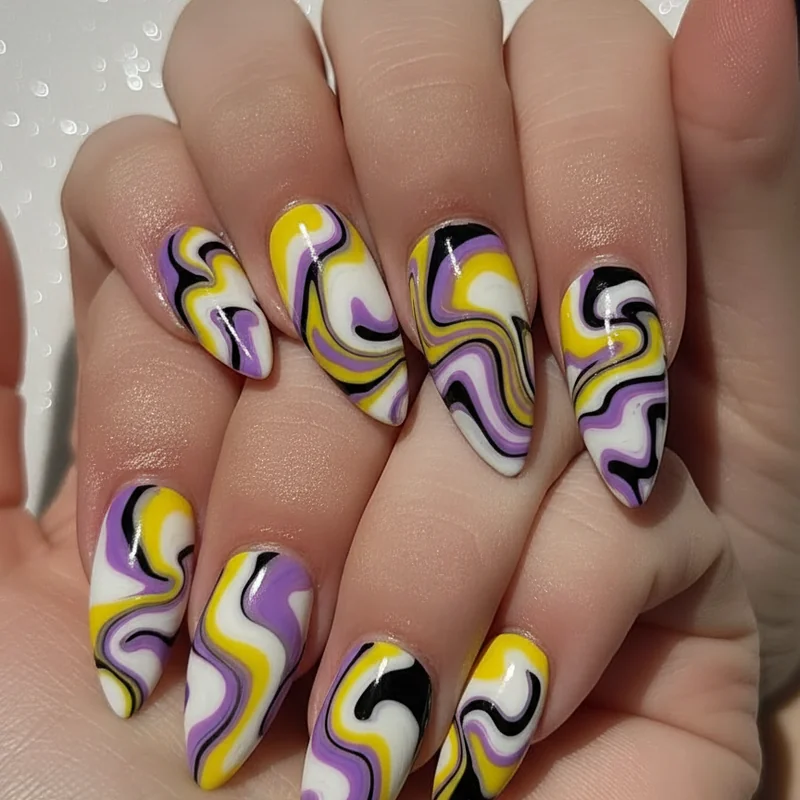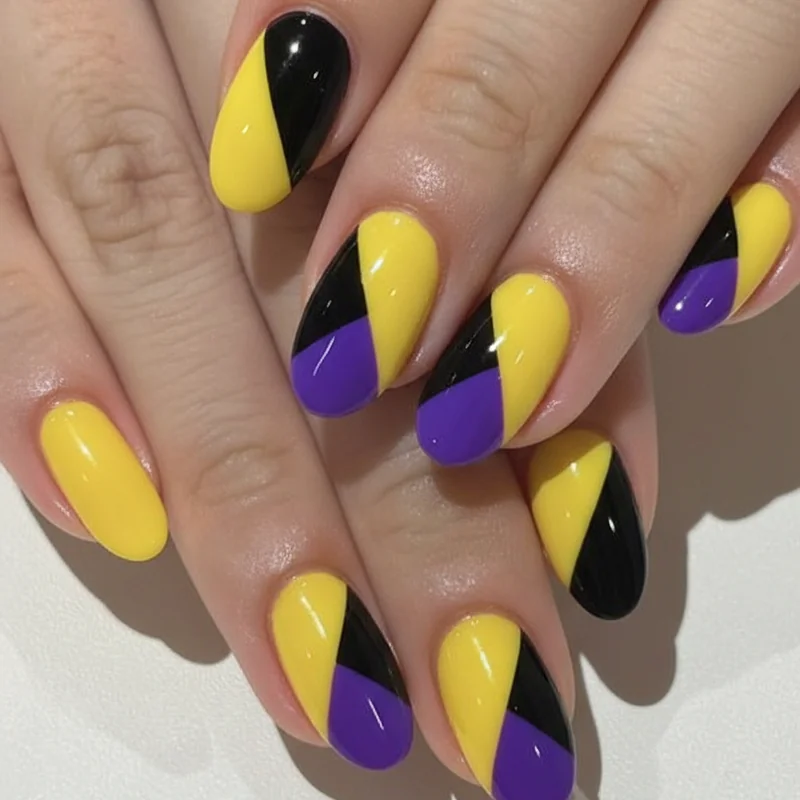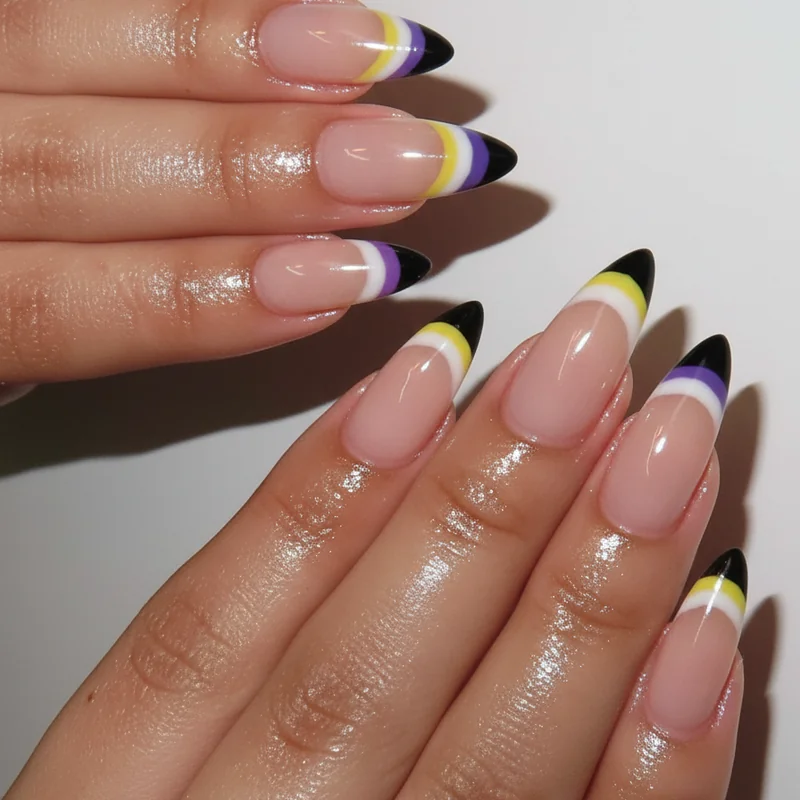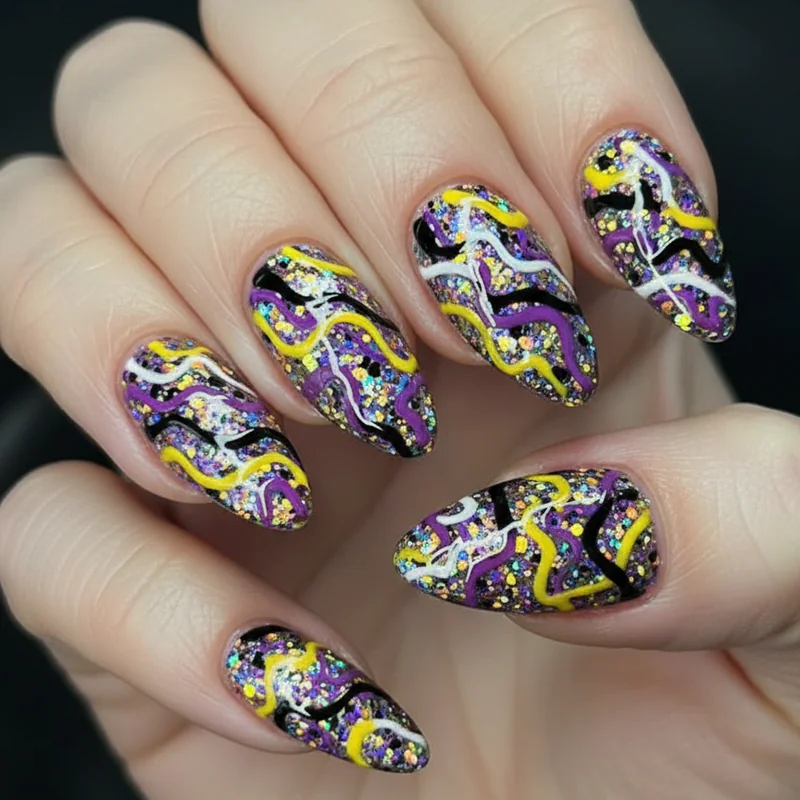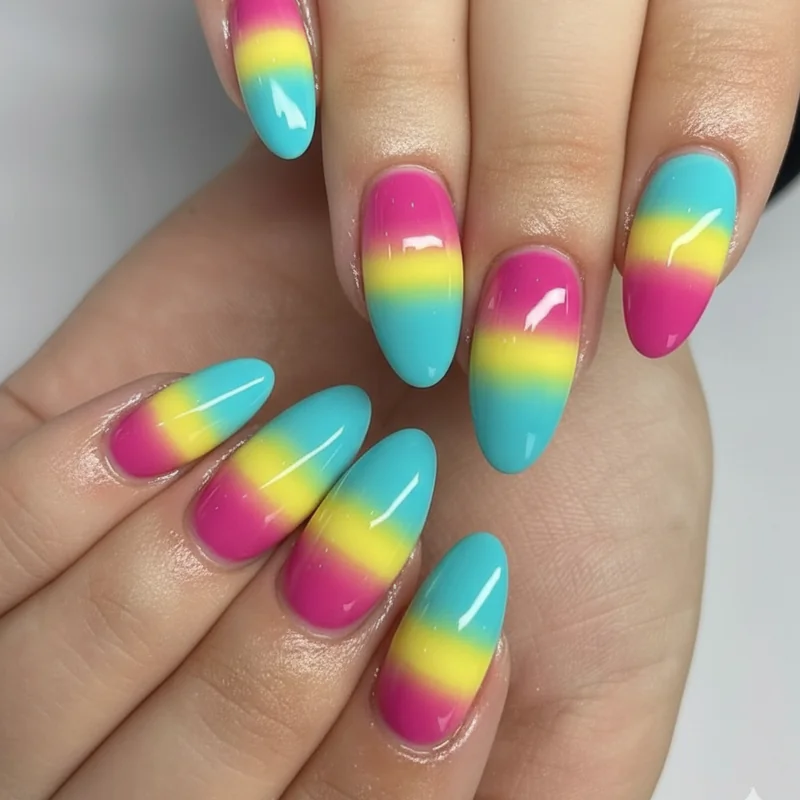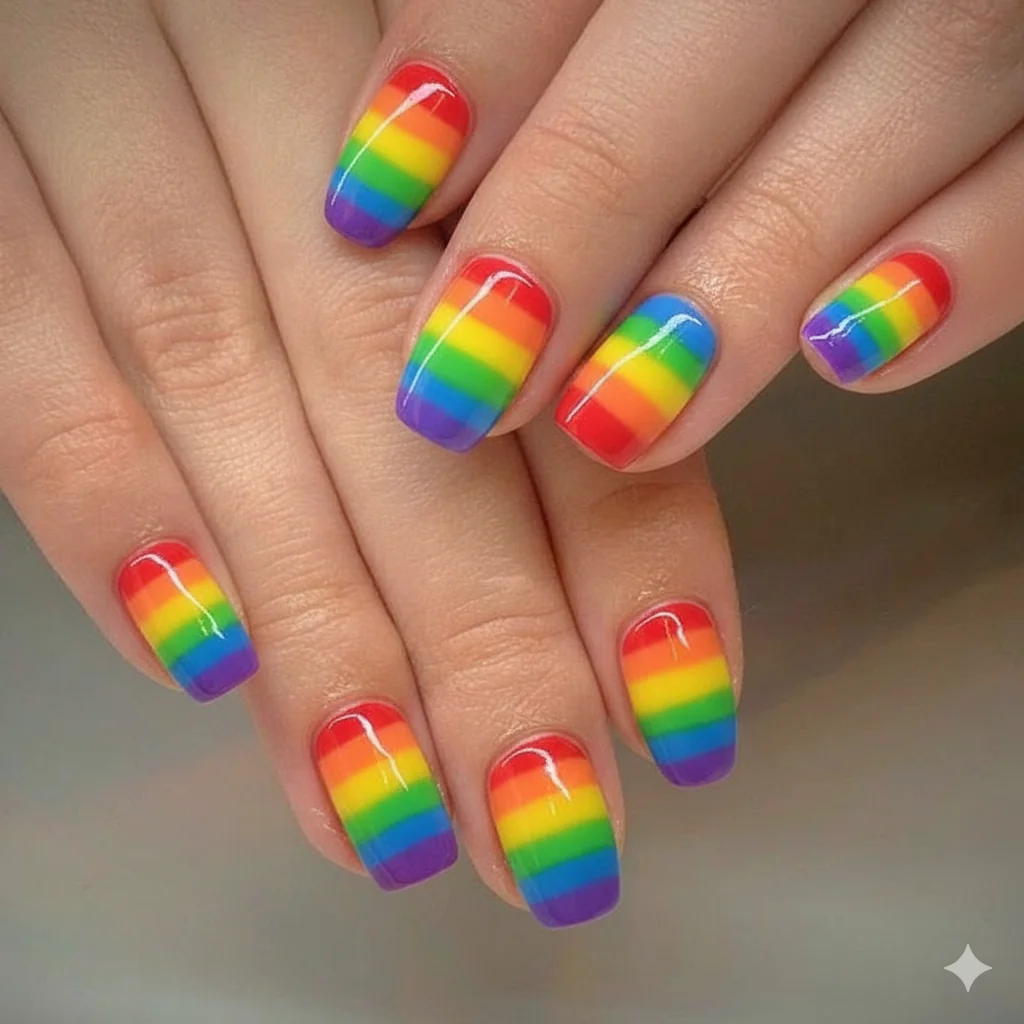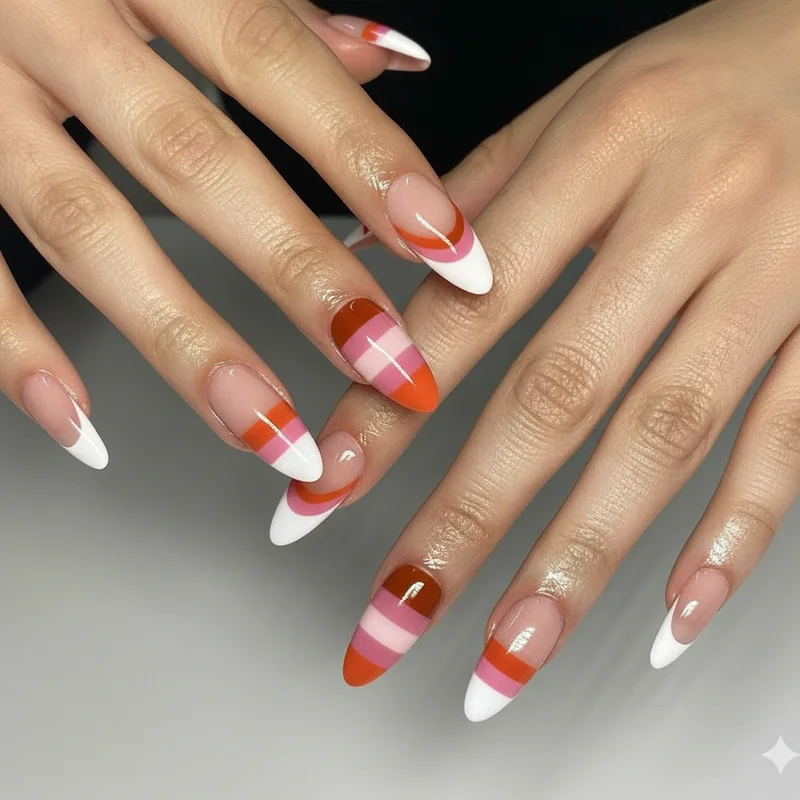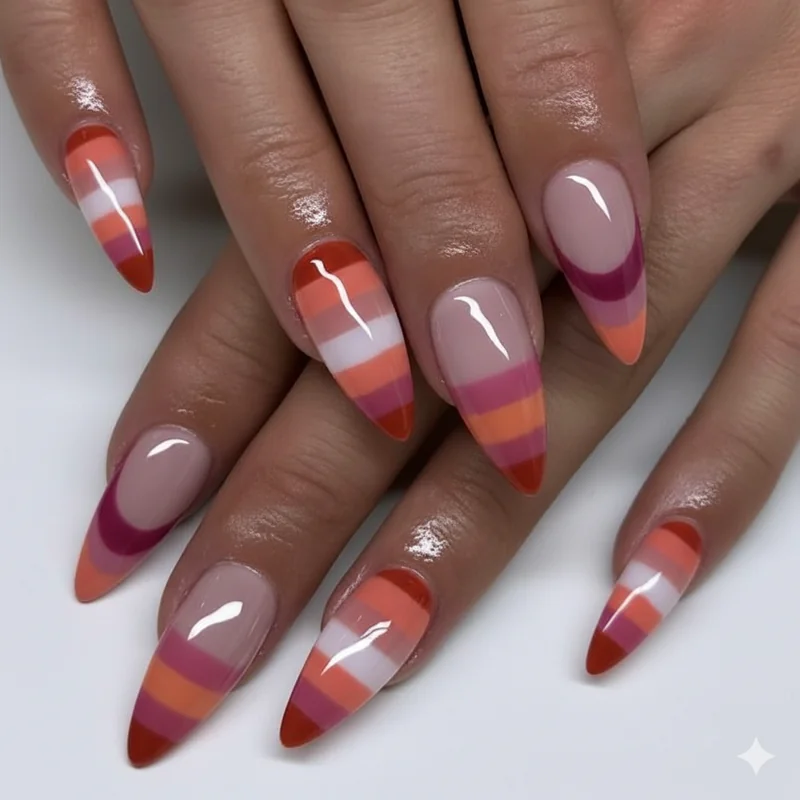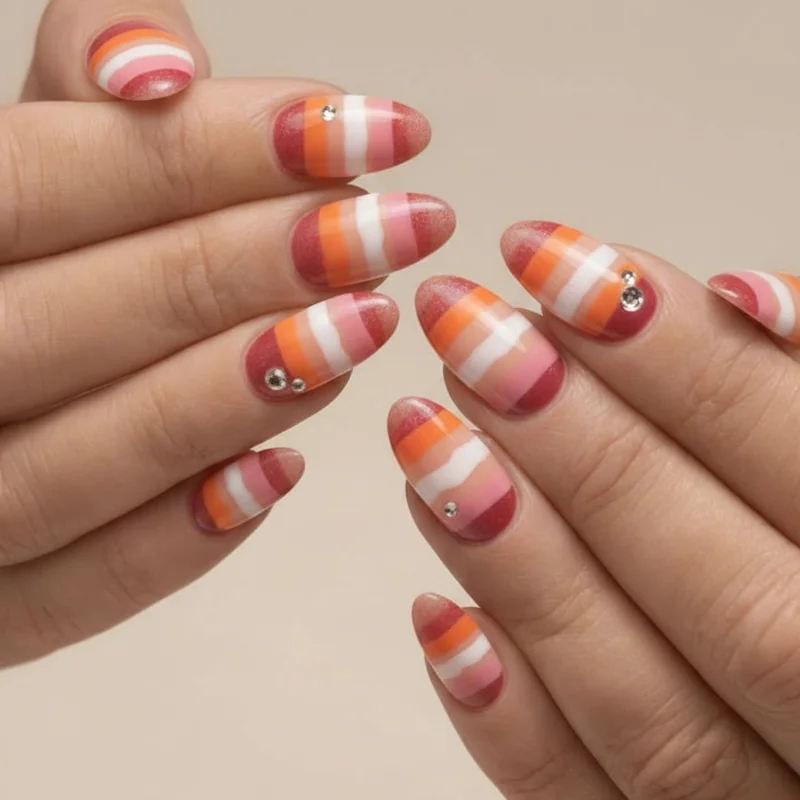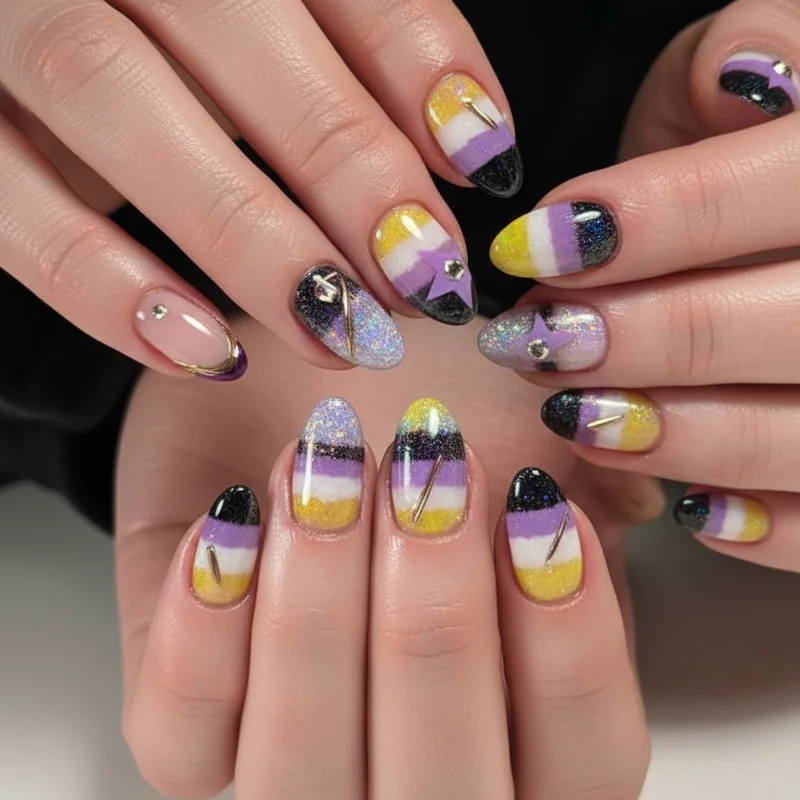
The four colours of the nonbinary flag are not decoration. They are a vocabulary and nonbinary nails are one of the most direct ways to speak it. Yellow for existing outside the binary entirely. White for those who hold multiple genders. Purple for the blend of masculine and feminine. Black for the agender community. Four stripes, four distinct identities, one flag. If you are heading into Pride Month 2026, this is the design language that belongs to you and there is far more to it than the classic horizontal stripe you have seen everywhere.
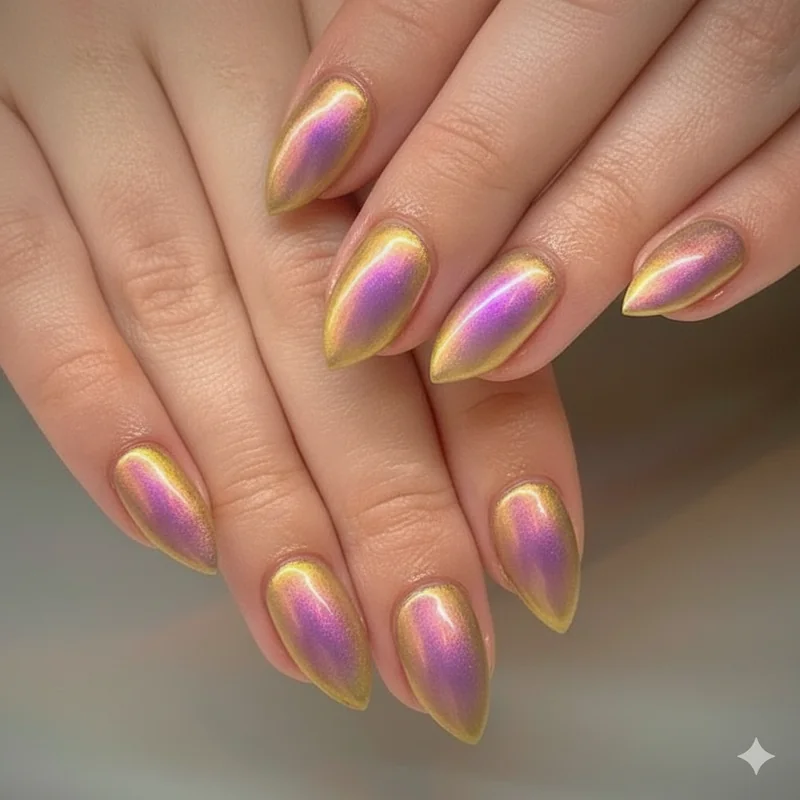
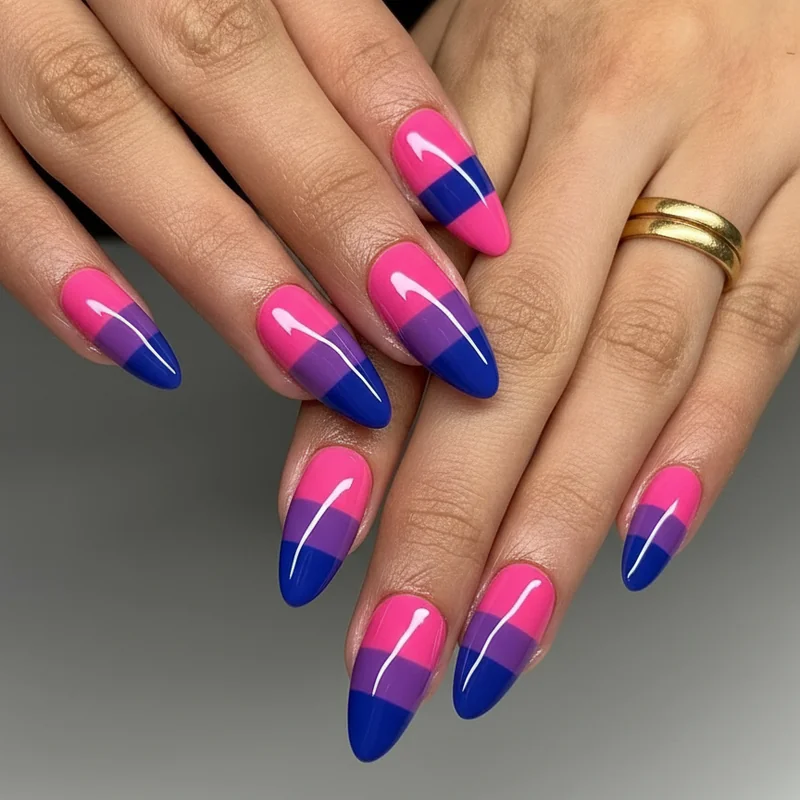
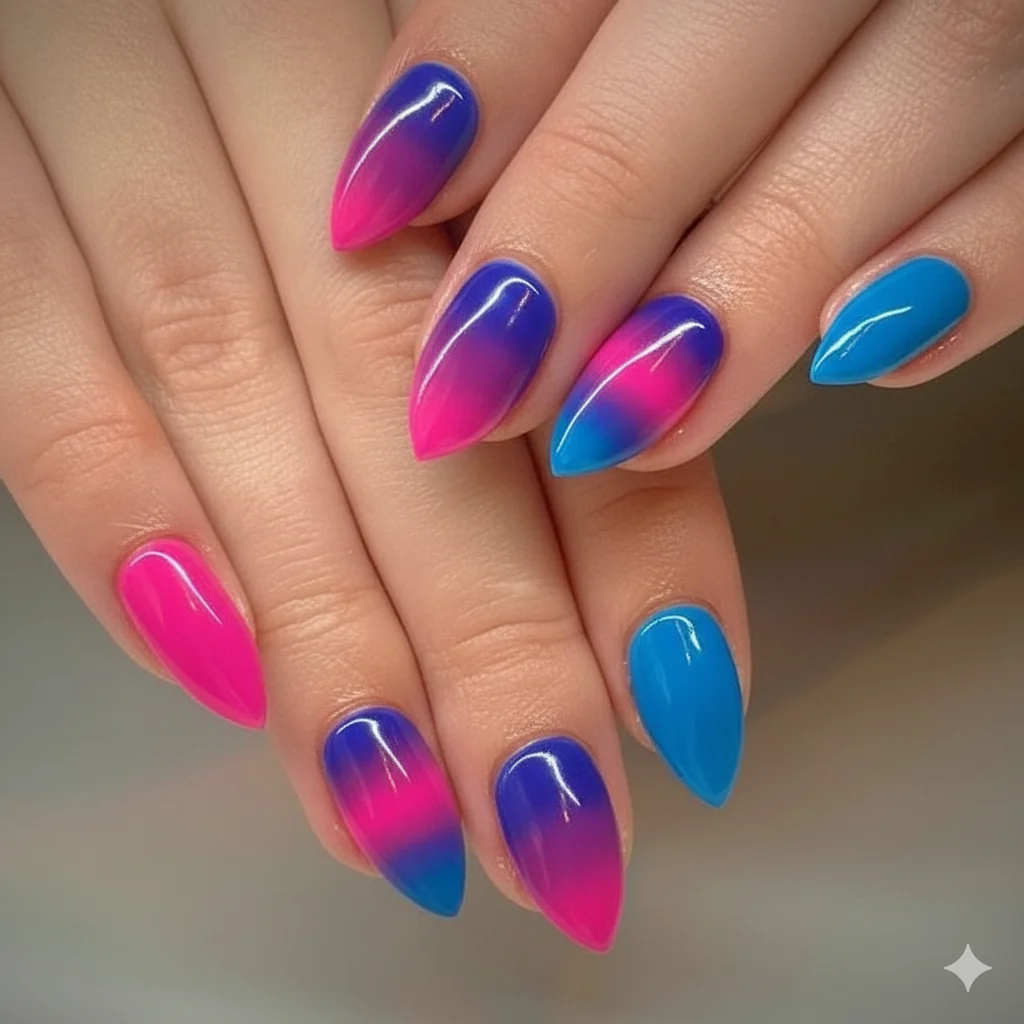
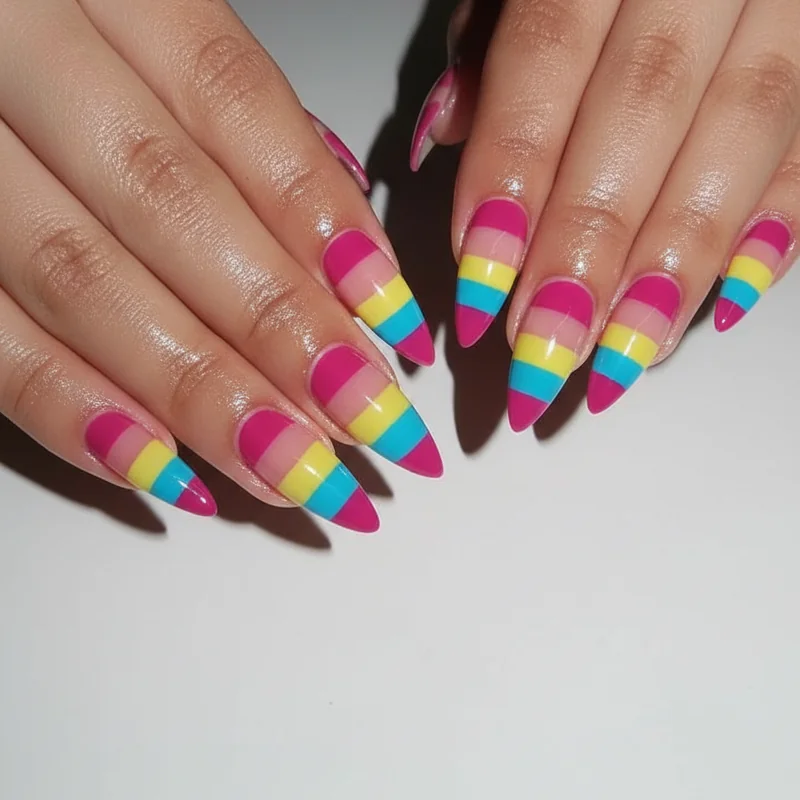
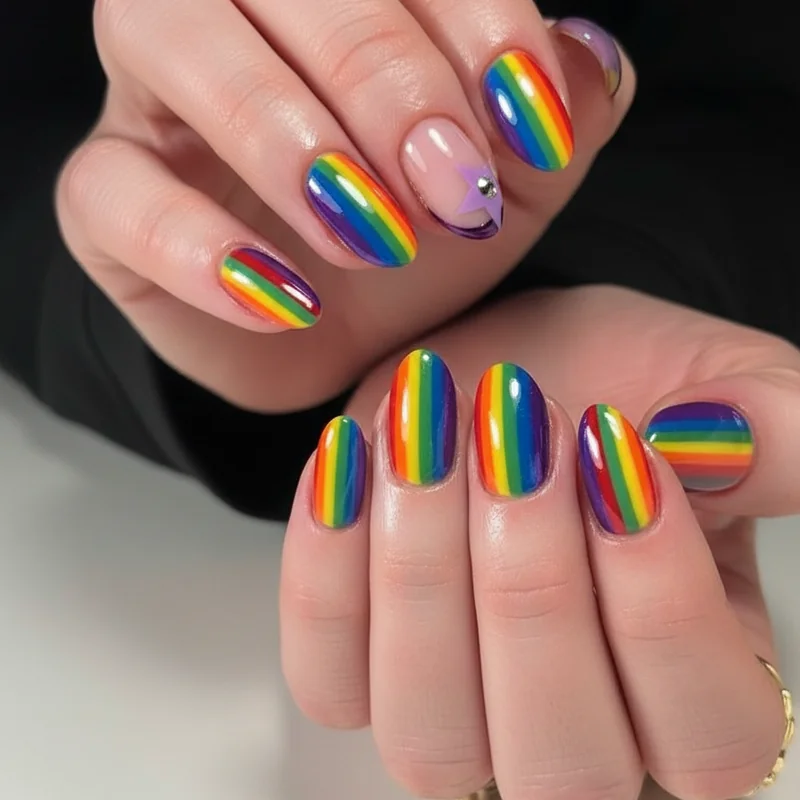
This post covers the full spectrum: enby flag designs in every format, a dedicated section for pansexual nails (because they are their own thing, full stop), genderfluid and gender-neutral aesthetics, short nail options for masc presentations, and how to make all of it look genuinely elevated. Spring nail trends in 2026 have been generous to this palette chrome finishes, micro French tips, and aura-style colour bleeding all translate beautifully into the enby colour story. Whatever your identity and however you wear it, your nails should feel like you.
What Do Nonbinary Nails Actually Look Like? (The Flag, the Colours, and What Each One Means)
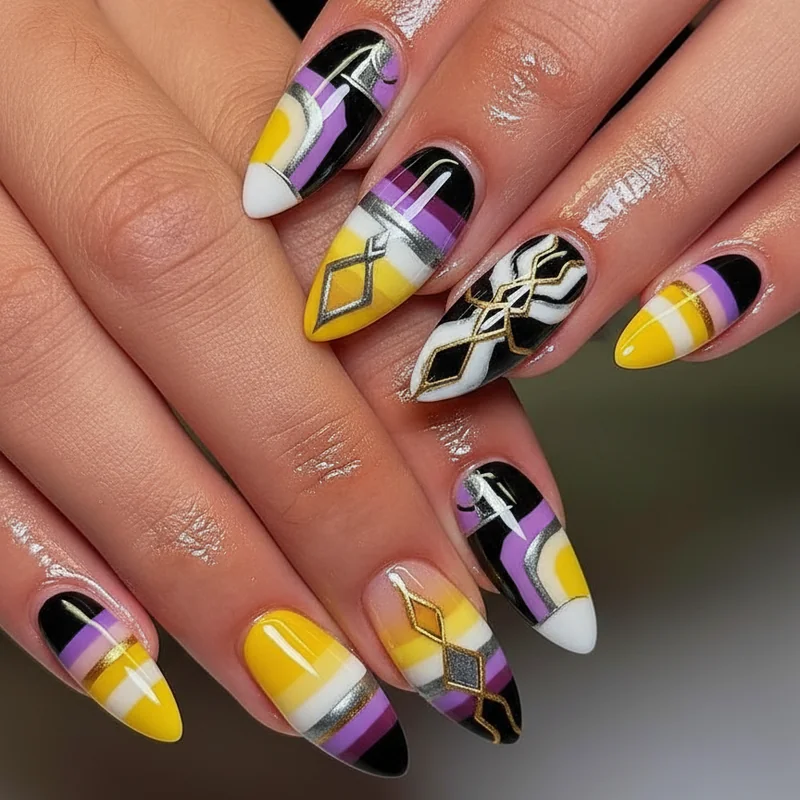
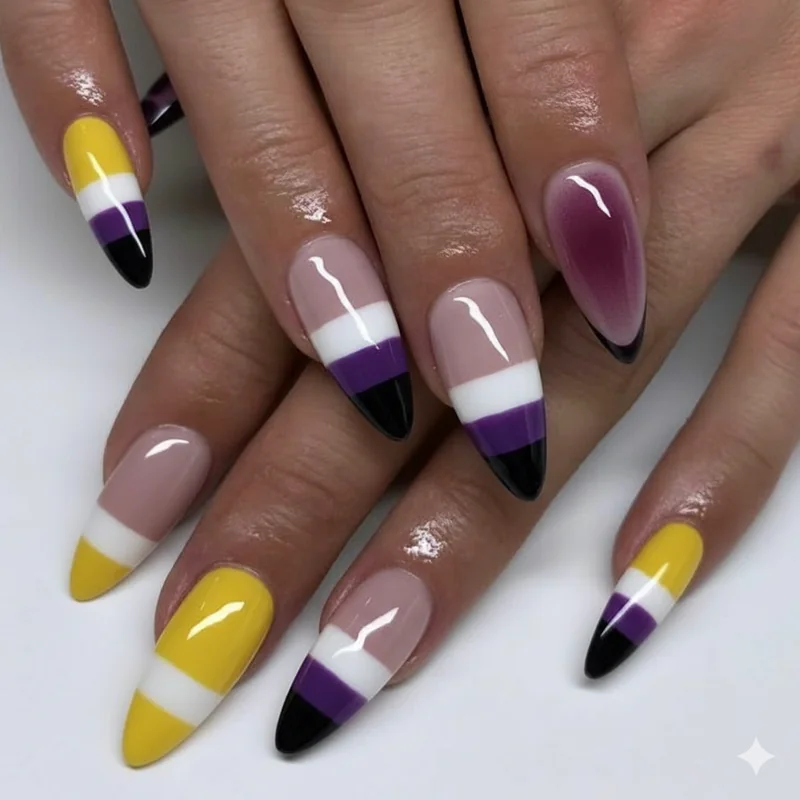
Colour is never just colour in this context. The nonbinary pride flag, created by Kye Rowan in 2014, runs four horizontal stripes from top to bottom: yellow, white, purple, black. Each one represents a distinct experience within the nonbinary umbrella. Yellow is for those whose gender exists entirely outside the binary no reference point to male or female at all. White holds every gender at once, representing multi-gendered and polygender identities. Purple sits at the blend of masculine and feminine, the mix rather than the absence. Black is for agender people: those without a gender.
What makes this palette so strong for nail art is the contrast. Yellow and black are inherently graphic. White gives the set a crispness that reads modern rather than craft-project. Purple carries the historical weight of queer visibility lavender has been a community colour for decades. When you wear these four shades together, you are wearing a flag that has meaning at every stripe.
For nail art, the order matters: yellow closest to the cuticle, white next, then purple, then black at the free edge. That is the flag as designed. You can play with format stripe width, finish, shape but the sequence is the foundation. To go deeper into every flag design variation, the dedicated nonbinary flag nails guide has every option covered.
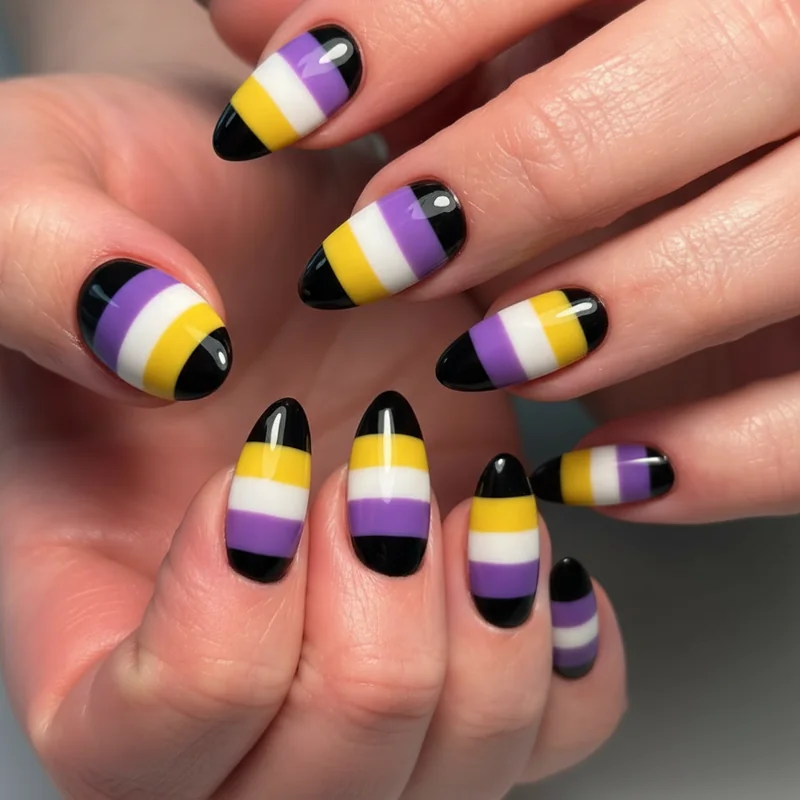
Classic Enby Flag Designs: Four Stripes, Four Identities
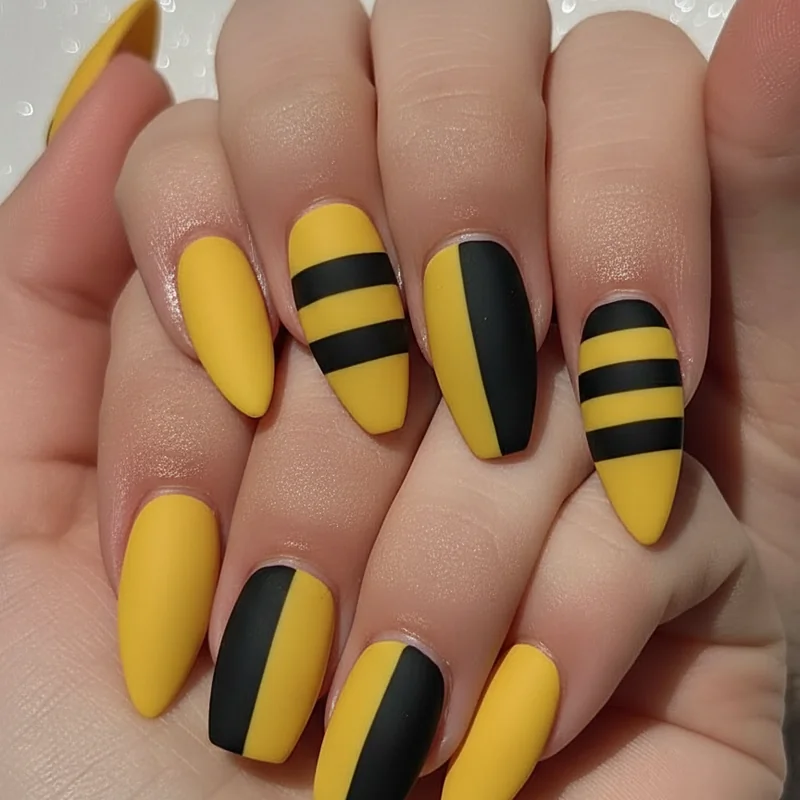
Stripes done well are never simple. The classic four-stripe enby design is the most searched, the most recognisable, and when executed with the right tools one of the sharpest looks in pride nail art. The key is clean lines. Striping tape is your best tool here: press it firmly between each section while the colour below is still slightly tacky, paint the next stripe, peel the tape back immediately. Repeat. The result is the kind of edge that looks professional rather than freehand-approximate.
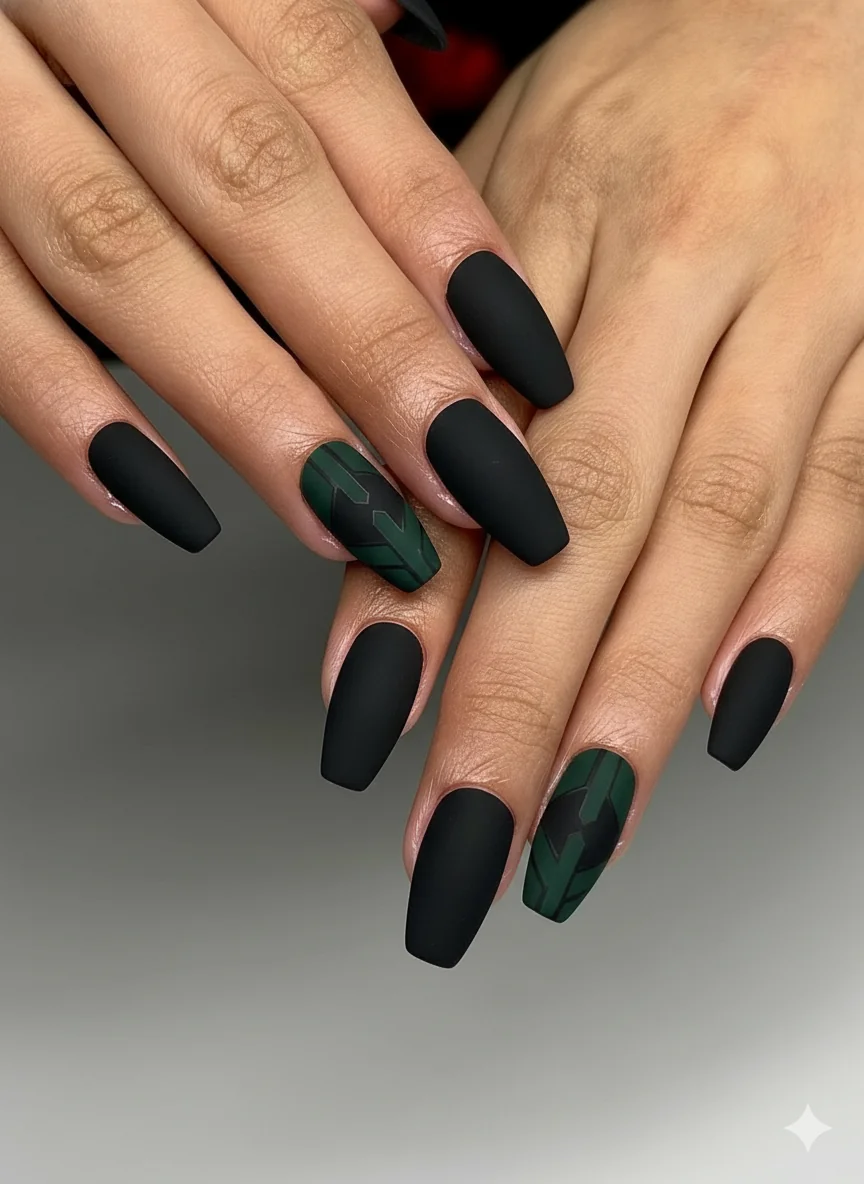
Finish choice changes everything at this stage. A matte top coat on the yellow and black stripes with a glossy finish on white and purple creates a tactile contrast that elevates the whole set. A full high-shine gel top coat across all four makes the colours pop with the depth you only get from gel. On longer nails almond or coffin the stripes read as deliberate. On short square nails, they are bold and clean.
Worth knowing: you do not need all four stripes on every finger. An accent nail approach three fingers in a coordinating solid with one or two feature nails carrying the full four-stripe flag reads just as clearly and is significantly easier to execute cleanly.