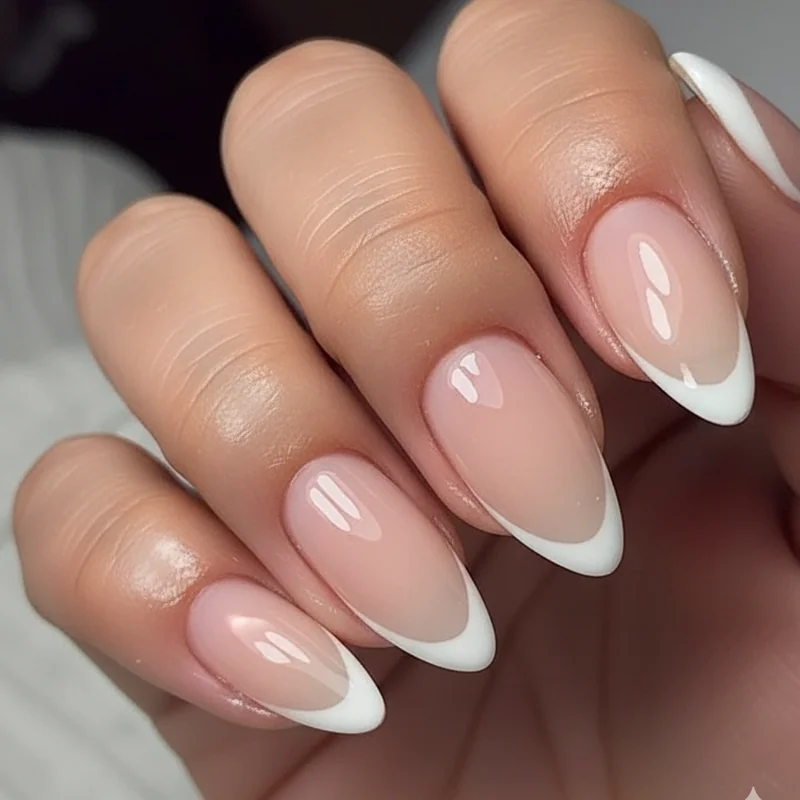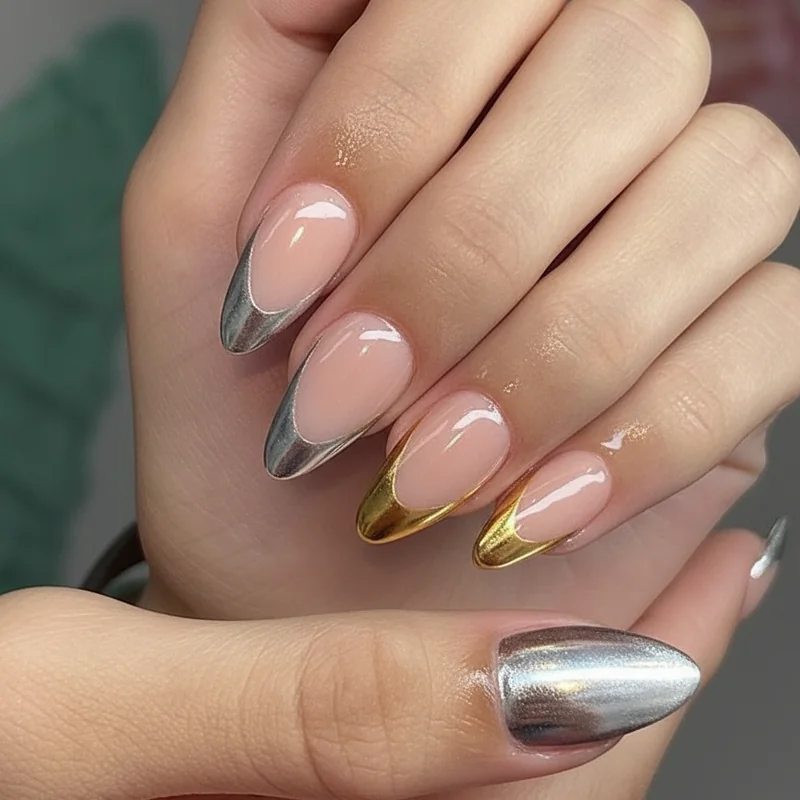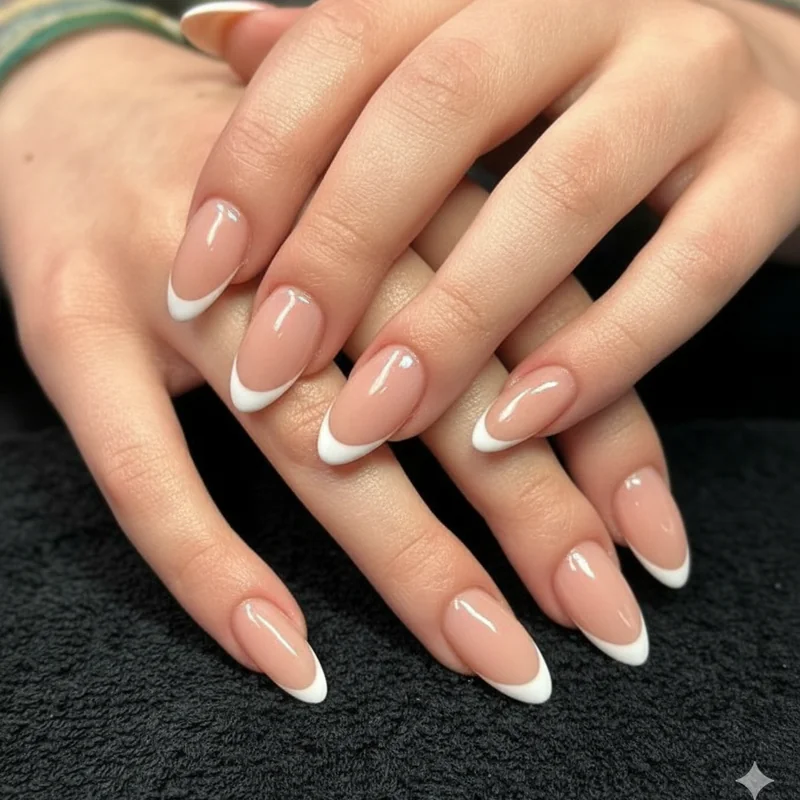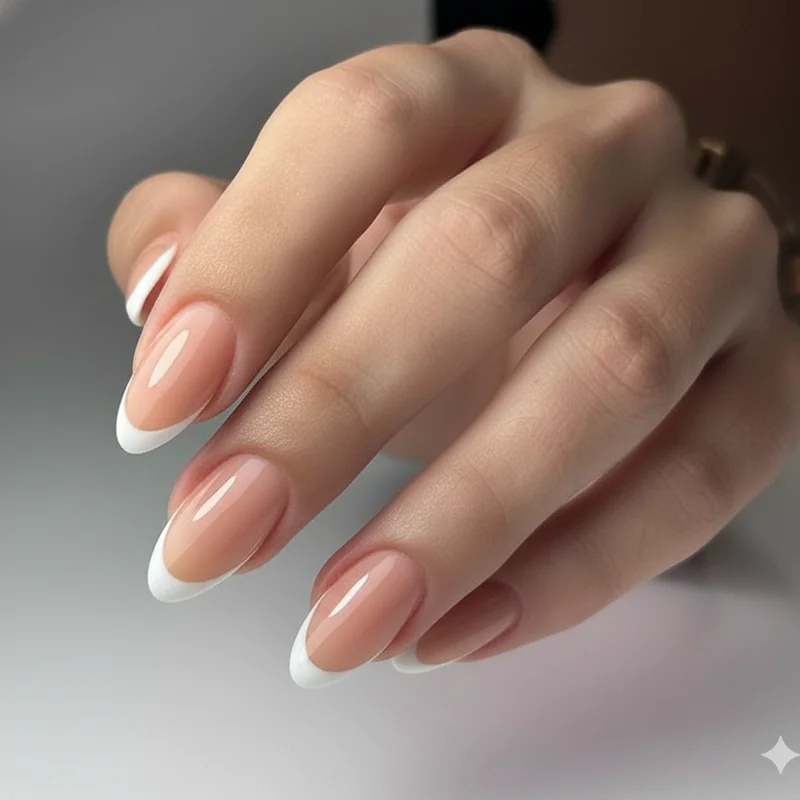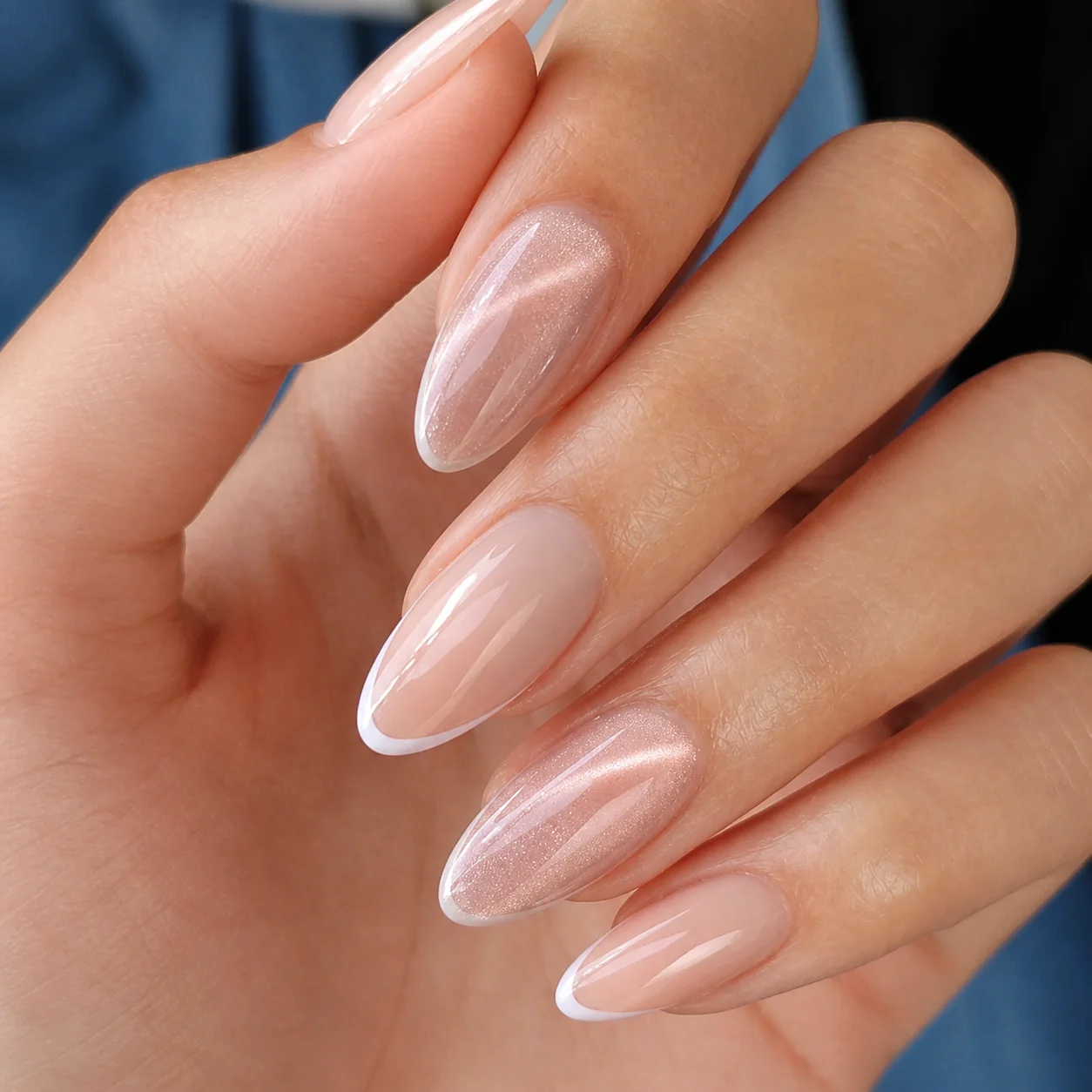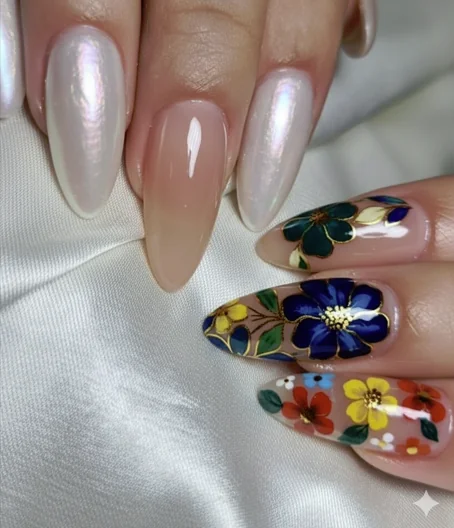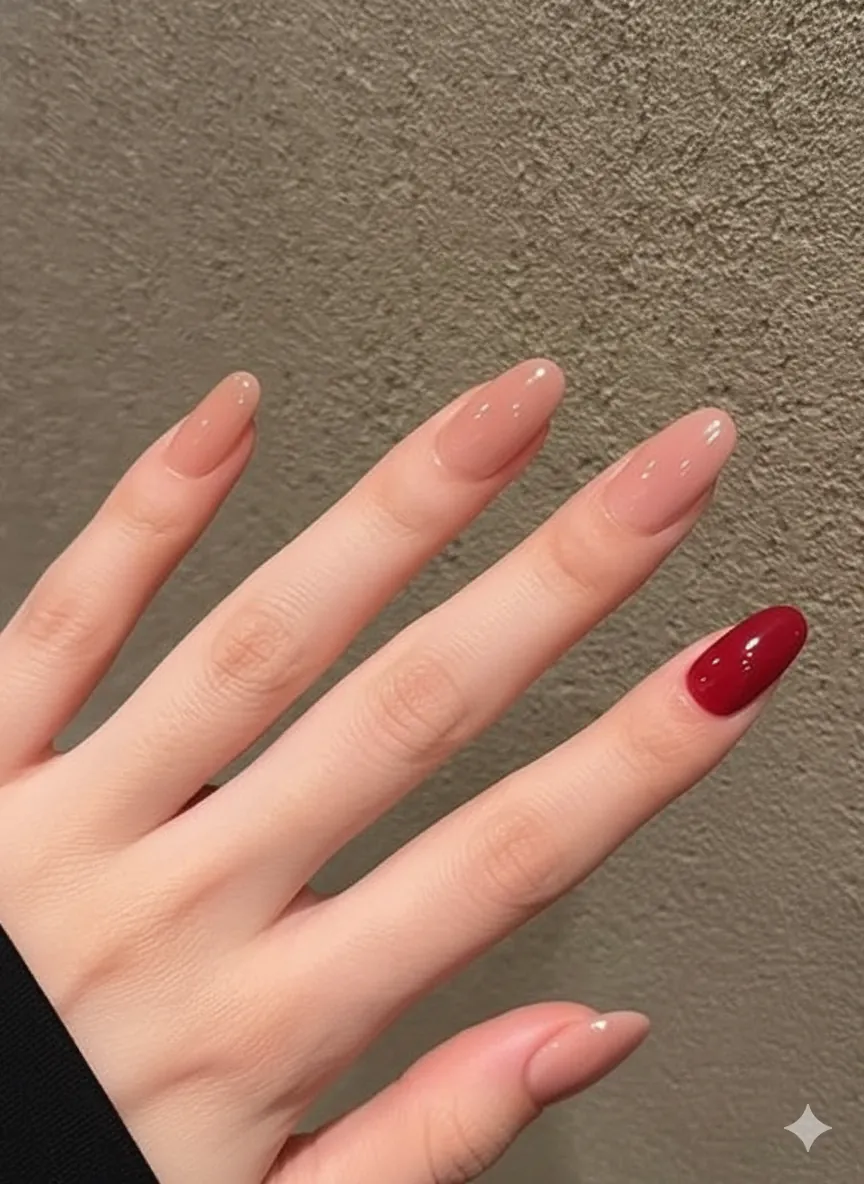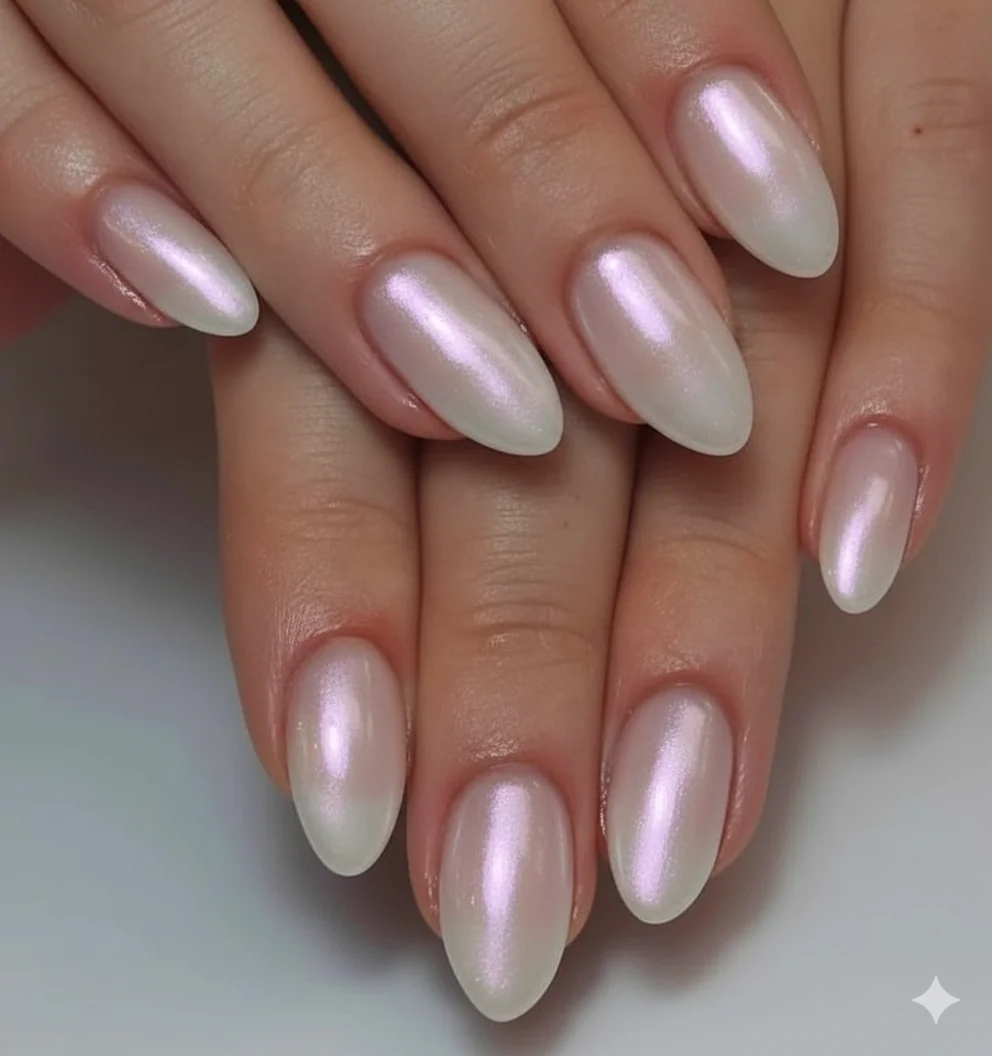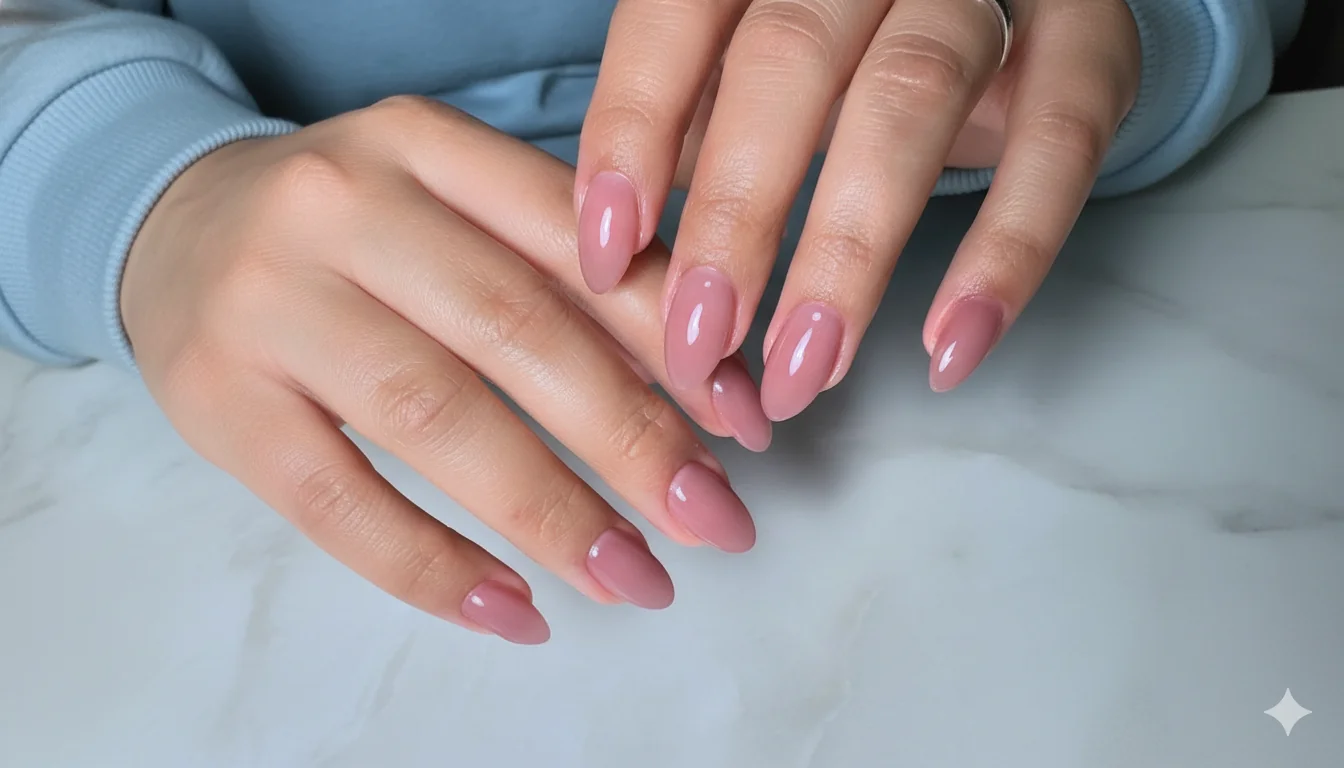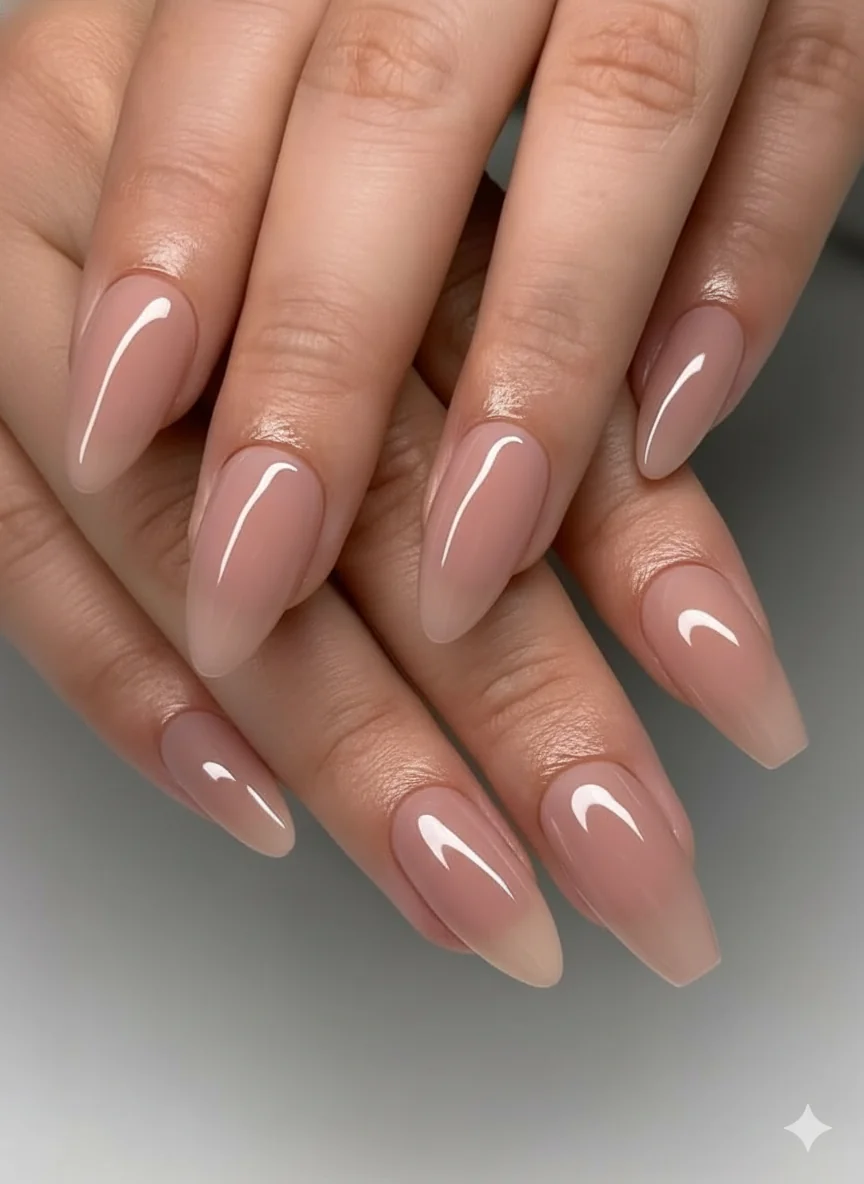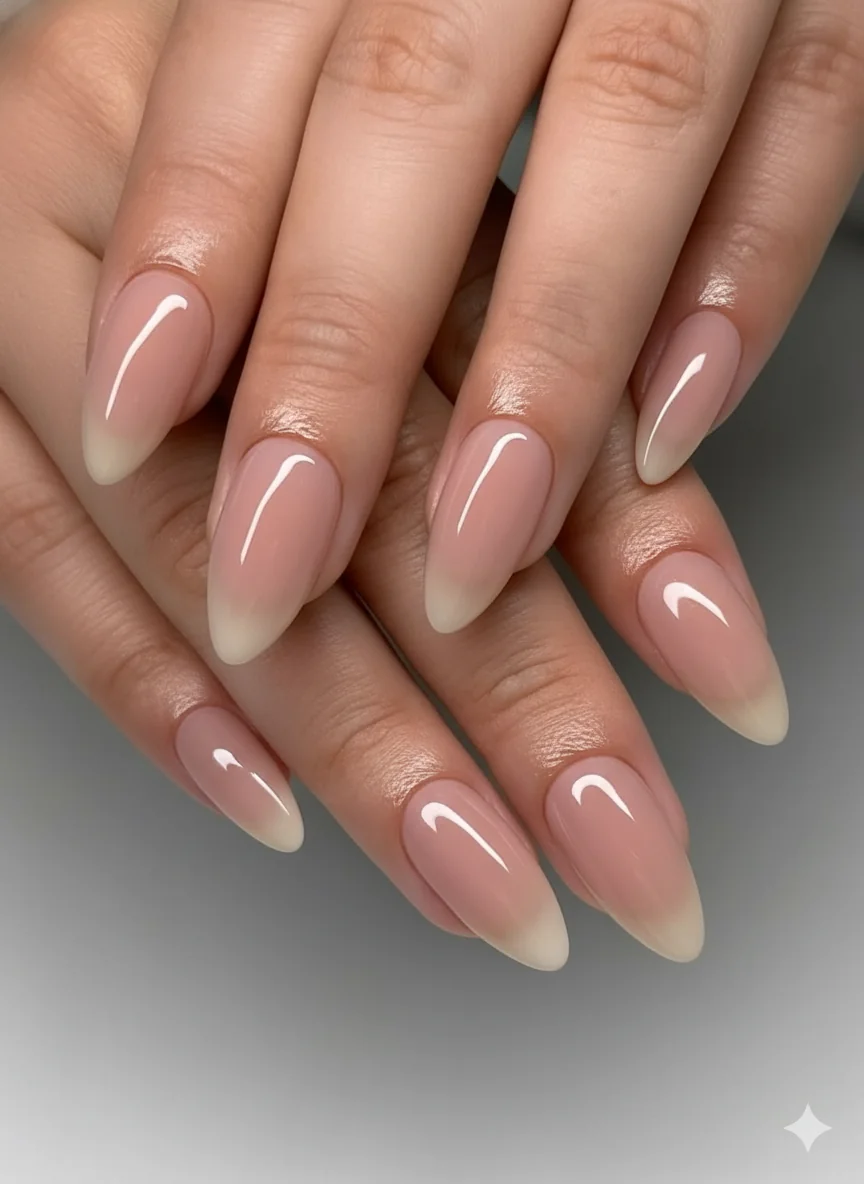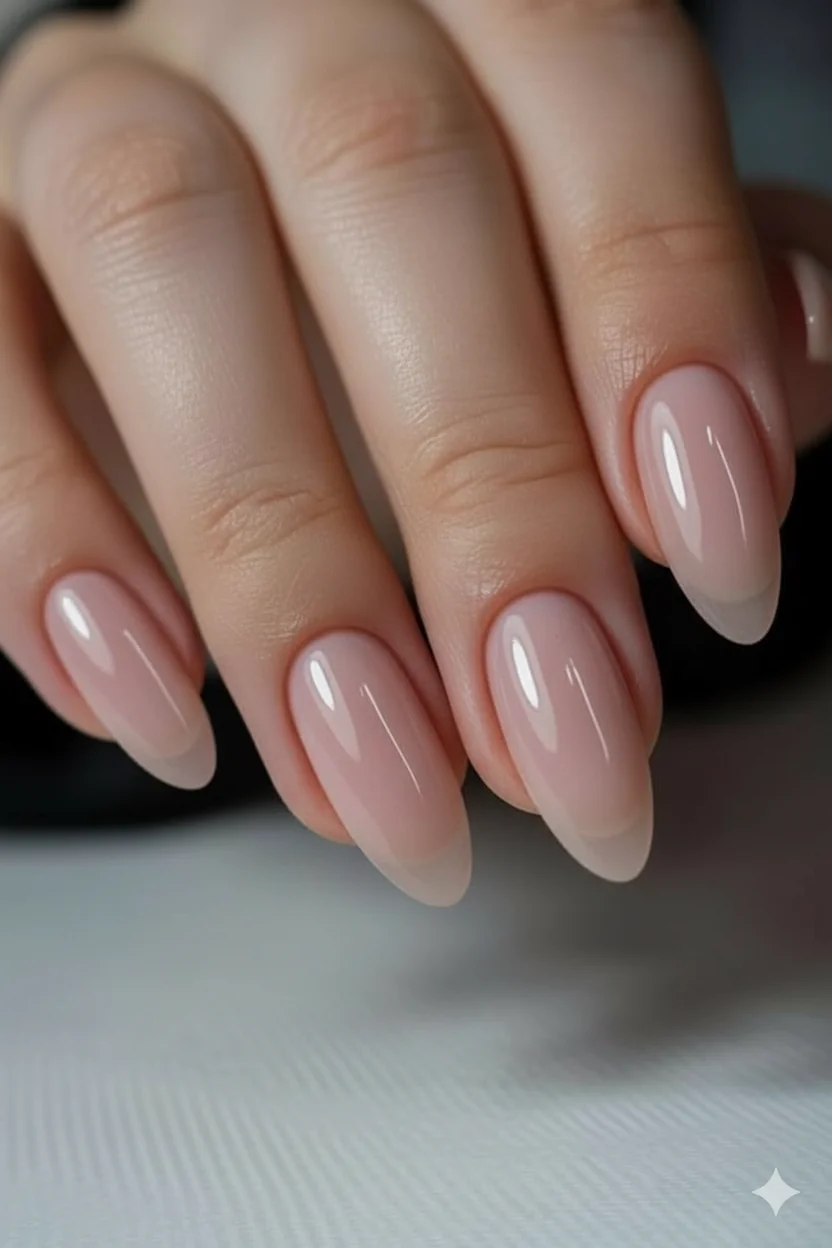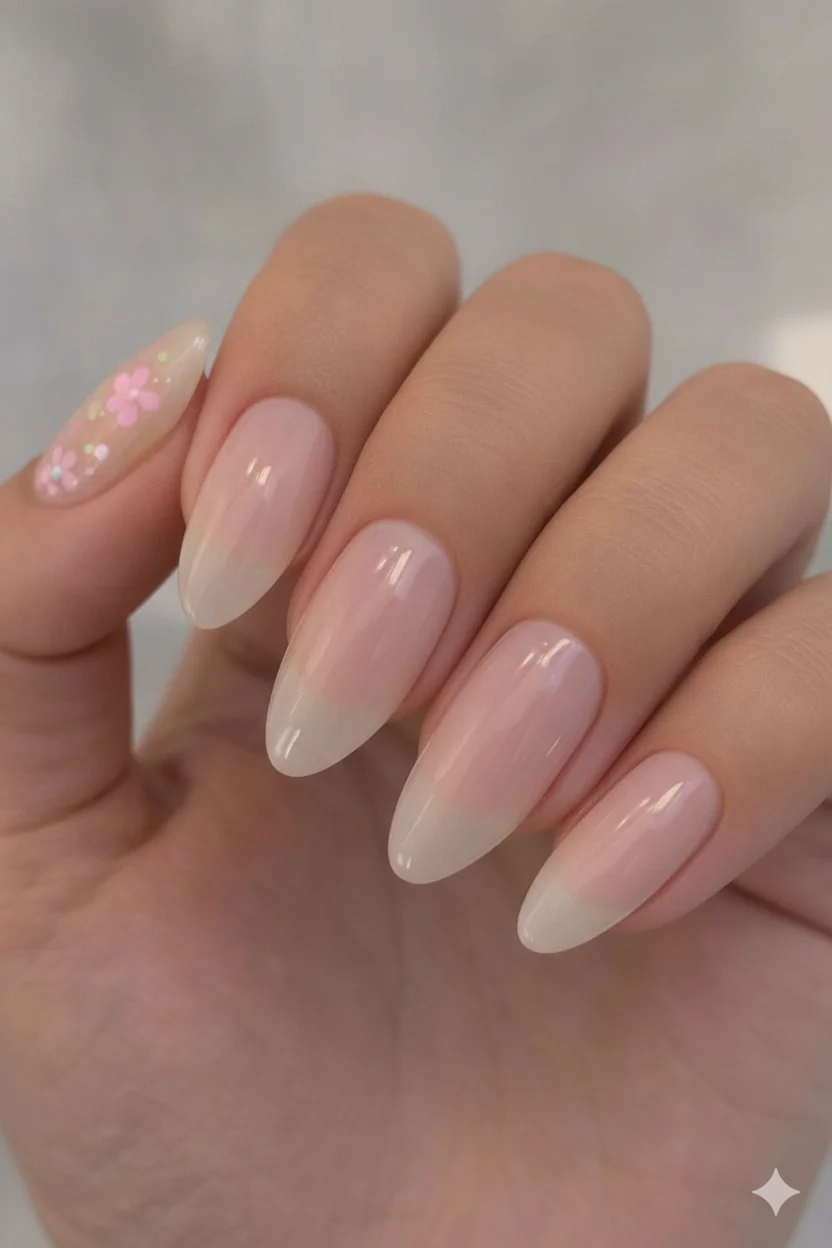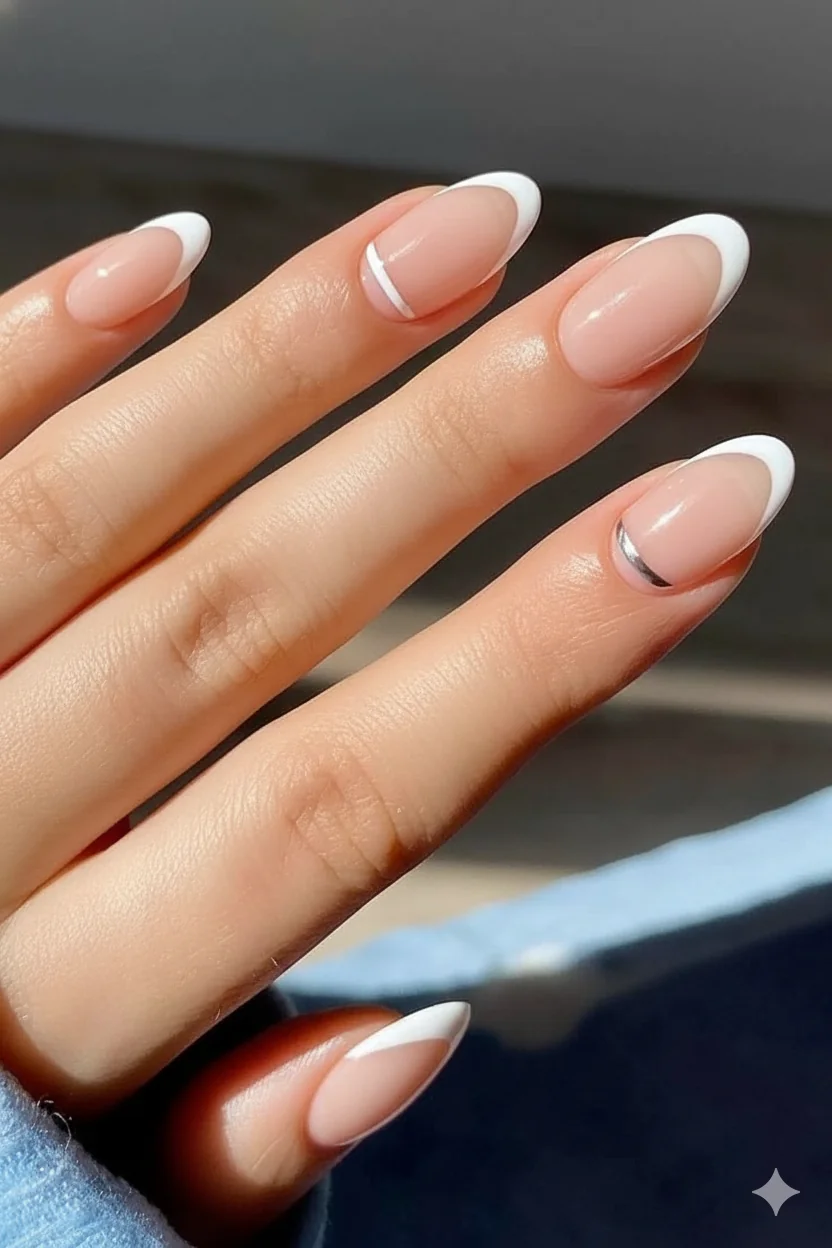
The french tip almond nail is not a trend. It is a format one that has absorbed every aesthetic shift from the quiet luxury wave to the chrome obsession and come out looking more relevant each time. What makes it endure is the combination itself: the almond shape's curved free edge mirrors the natural arc of a smile line in a way no other shape does quite as cleanly. The result always looks considered, even when it is not.
This is not a post about whether to get a french tip. You already know you want one. What it is, is a guide to every variation worth considering from the slim micro tip that barely registers to the chrome finish that stops a scroll so you leave knowing exactly what to ask for. Read more about the almond shape itself and who it suits in our guide to almond nails.
Why Does the French Tip Look So Good on Almond Nails Specifically?
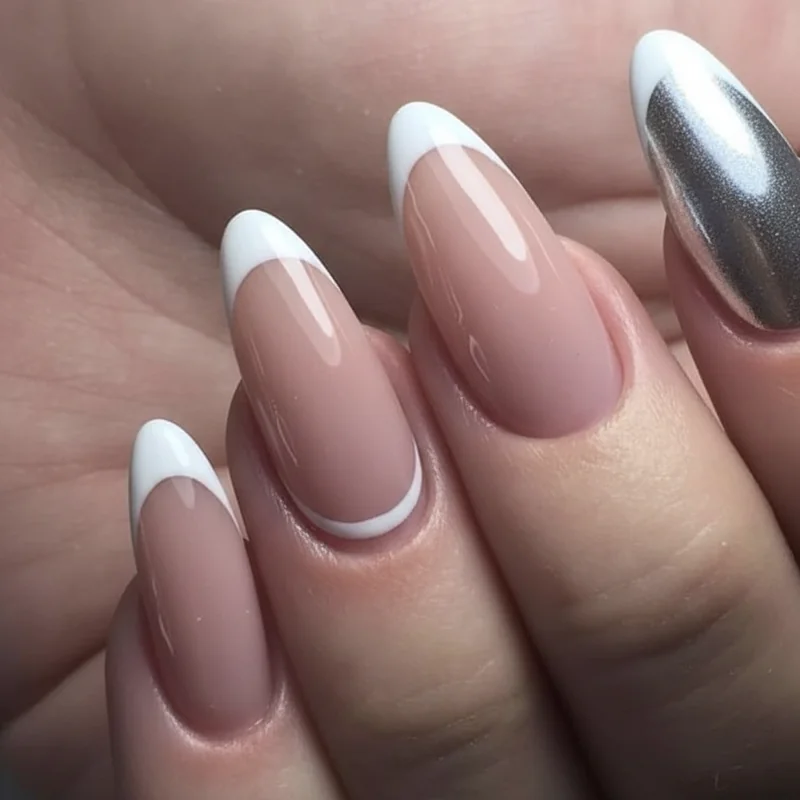
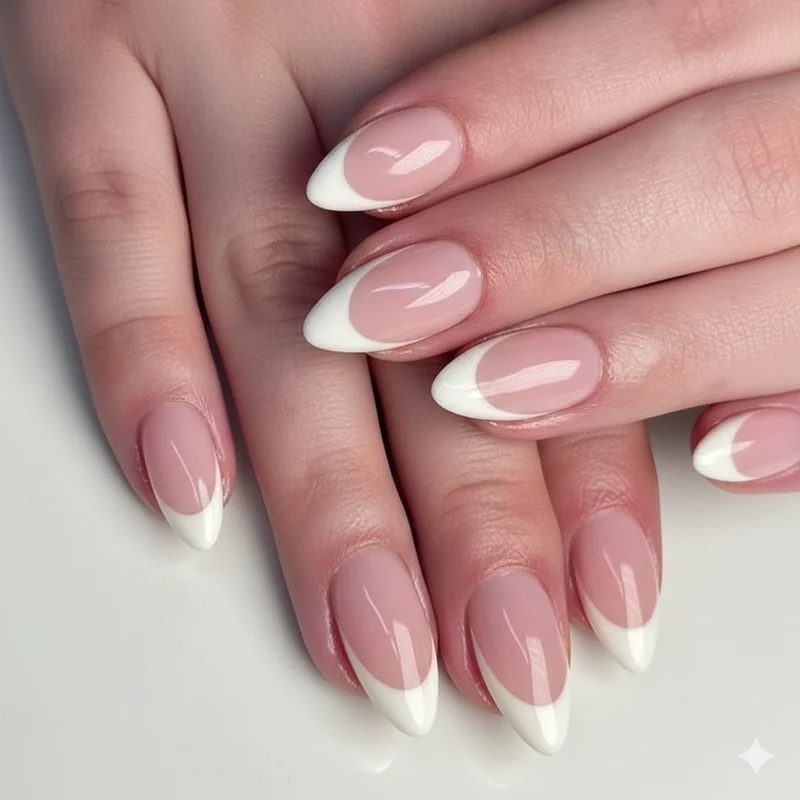
The geometry is the answer. An almond nail tapers toward a softly rounded point, which means the free edge naturally follows a curved arc precisely the shape a well-applied smile line traces. On a square or coffin nail, the french tip sits across a flat edge; on an almond, it follows the nail's own contour. The effect is seamless rather than applied.
There is also the elongation factor. A sheer or nude base on an almond shape already creates the illusion of a longer, slimmer finger. Add a tip even a micro one and the eye travels all the way to the point of the nail. The nail appears longer than it is. That is not an accident; it is the geometry doing exactly what it is supposed to do.
Tip proportion matters more on almond than on any other shape. Too thick and it looks dated, overwhelming the taper. Too thin and it disappears on a shorter nail bed. The sweet spot depends on your nail length and which variation you choose which is exactly what the rest of this post is for.
Classic White French Tip Almond Nails Is the Original Still the Best?
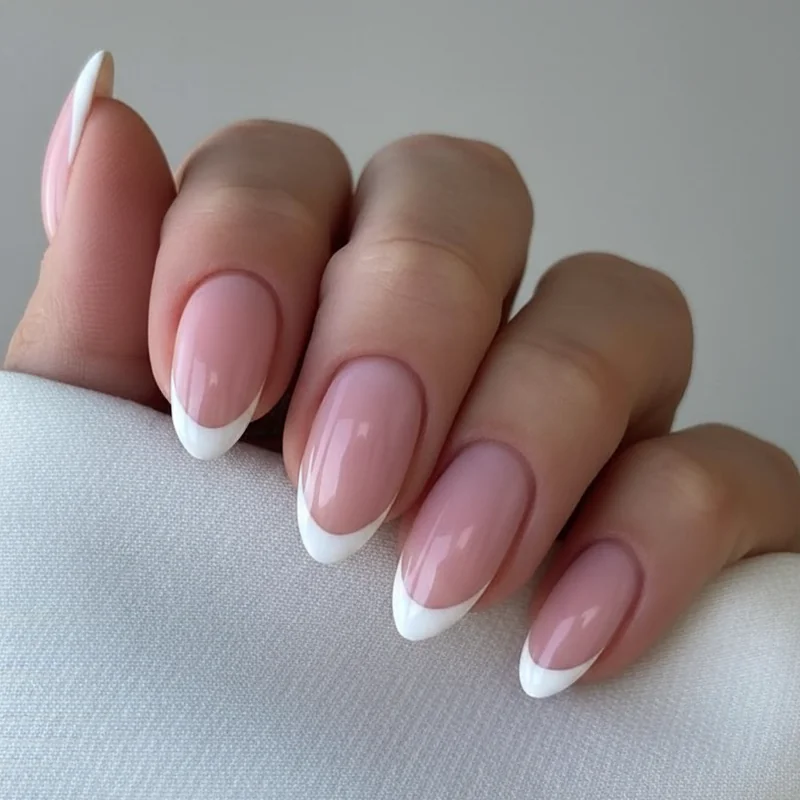
It depends entirely on how you wear it. The stark, opaque white tip over a bubblegum pink base the version that defined salon appointments in the early 2000s reads dated now. But the idea of it? That is very much alive.
The 2026 version of the classic white tip is softer. Off-white rather than correction-fluid white. Ivory, vanilla, cloud dancer. The base has shifted too: sheer nude or milky pink rather than the flat opaque pink of before. The contrast is still there, just quieter. What nail artists are calling the modern French manicure in 2026 is less about the classic formula and more about updating every element of it the base tone, the tip shade, and especially the line width.
The tip thickness debate is worth settling: for almond nails specifically, a 1.5–2mm tip reads as modern. Anything wider starts to look heavy against the taper. The smile line should curve with the nail, not cut across it.
Micro French Tip Almond Nails the Quiet Luxury Version Everyone Is Wearing
If there is one variation dominating 2026, it is this one. The micro french tip sometimes called a floating tip or whisper tip is an ultra-thin line of contrast at the very edge of the nail. Barely a millimetre. The kind you notice on someone else's hands before you can articulate why they look so polished.
On almond nails, the micro tip works particularly well because the tapered shape draws attention to the free edge anyway. You do not need a thick arc to communicate the french manicure. The slim line is enough, and the restraint is the point.
The grow-out advantage is real. A thick classic tip becomes obviously grown out within two weeks. A micro tip blends into the nail's natural free edge far more gracefully, extending the life of the look between appointments. For daily wearers, this is not a small consideration.