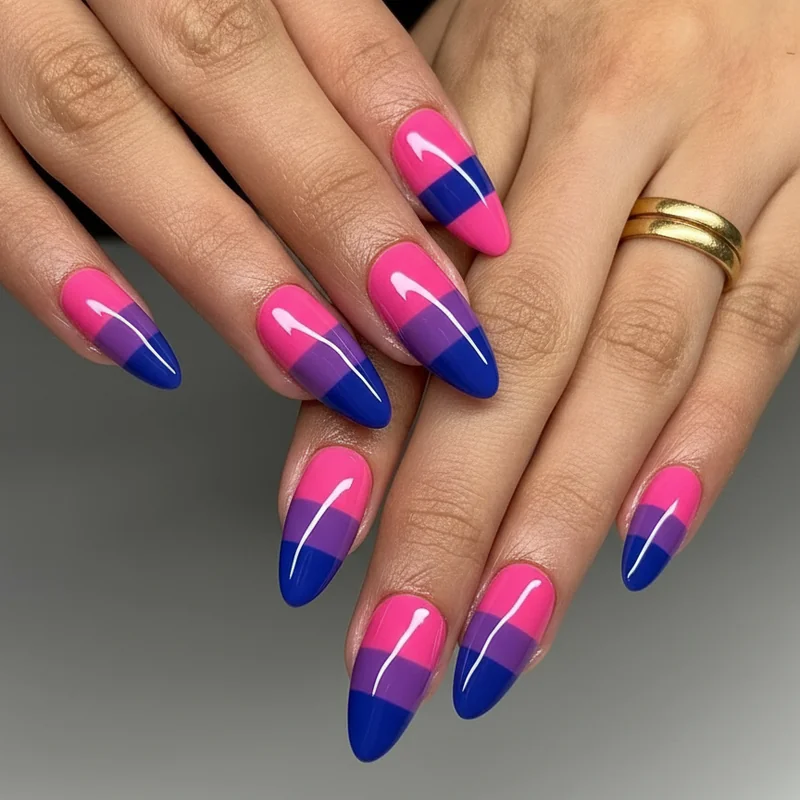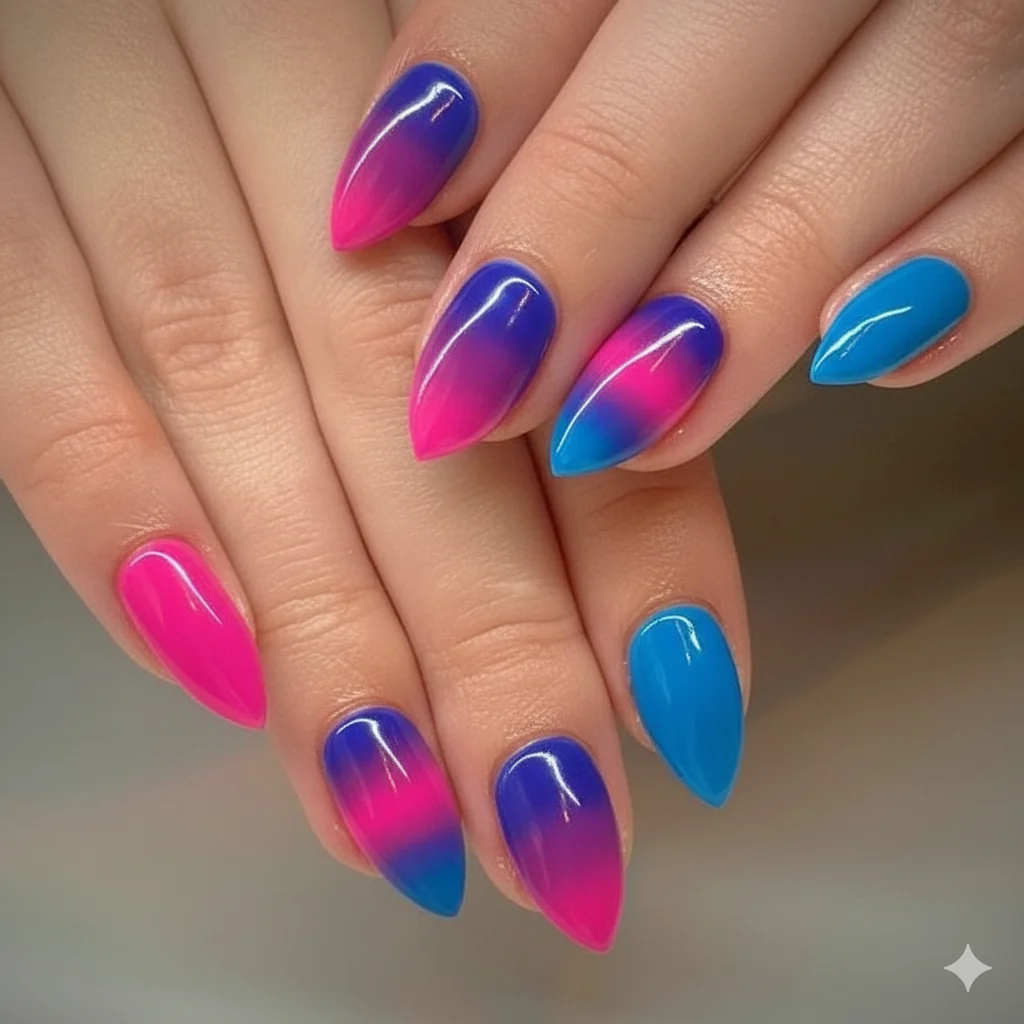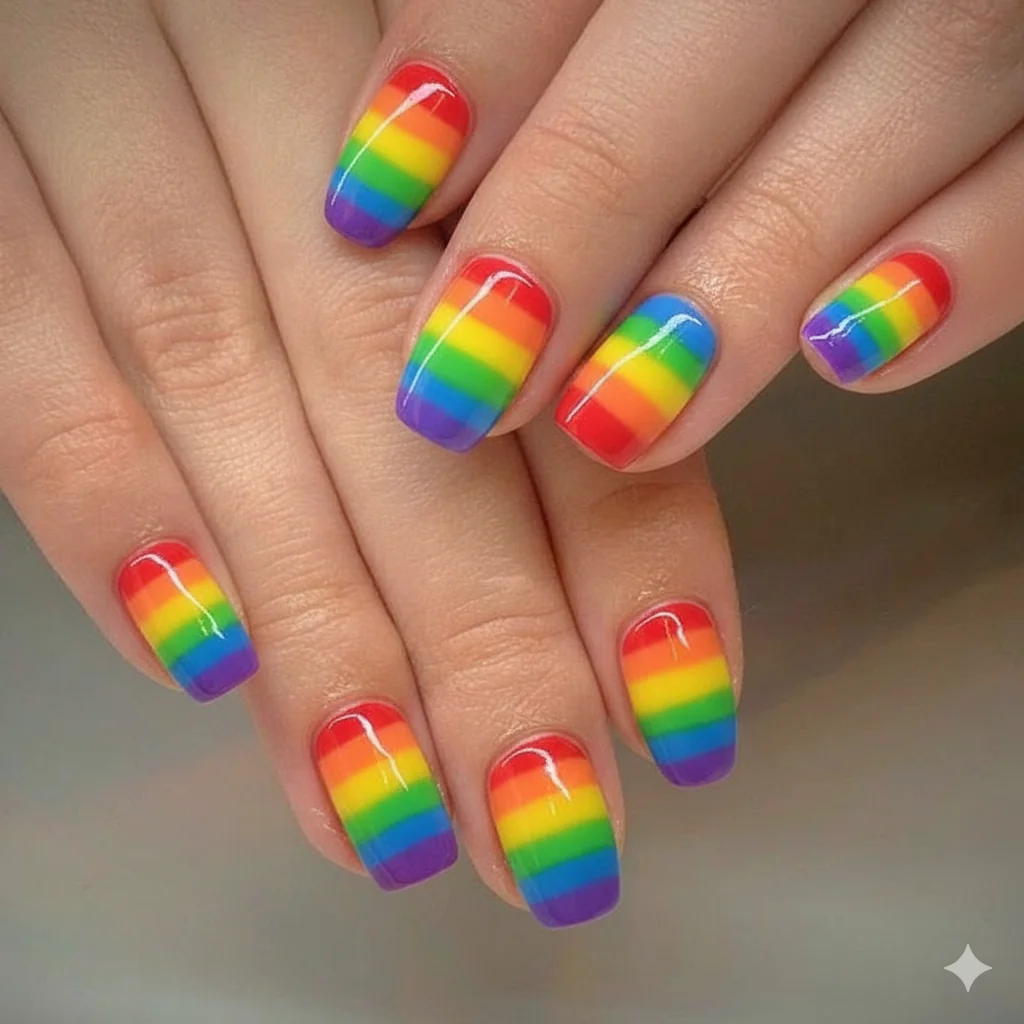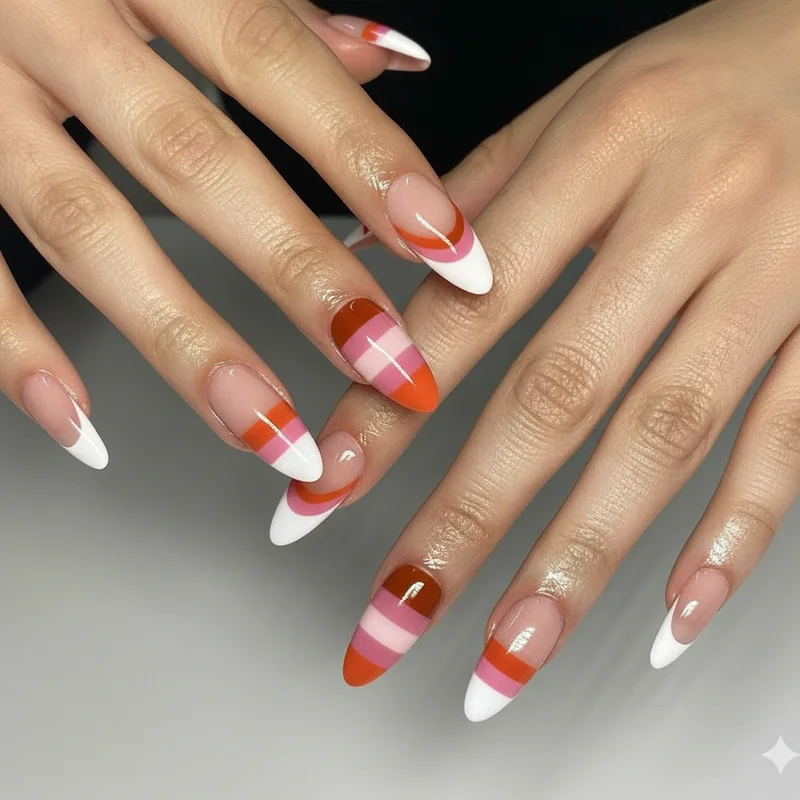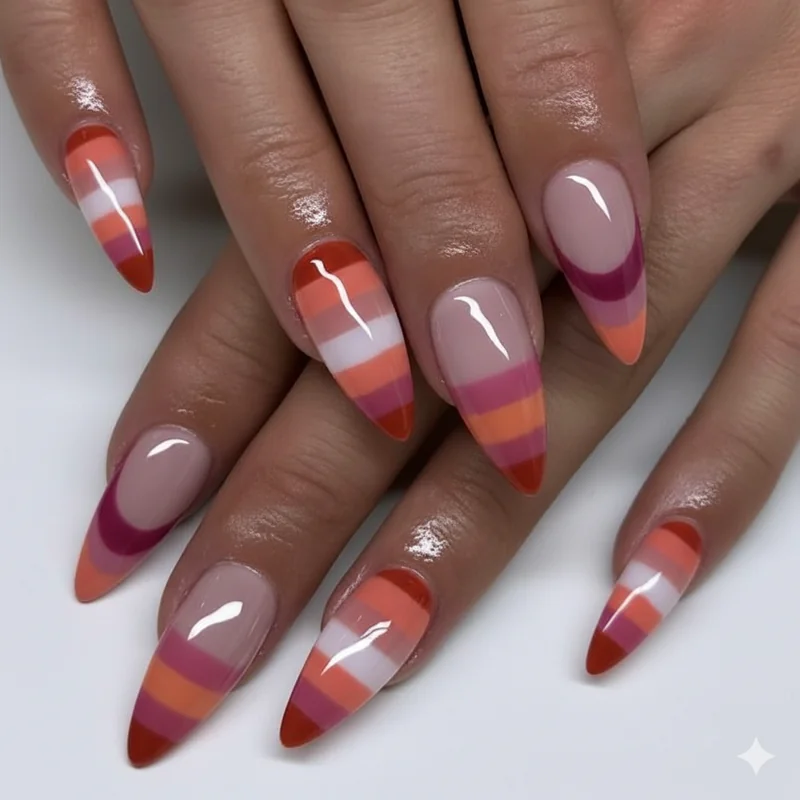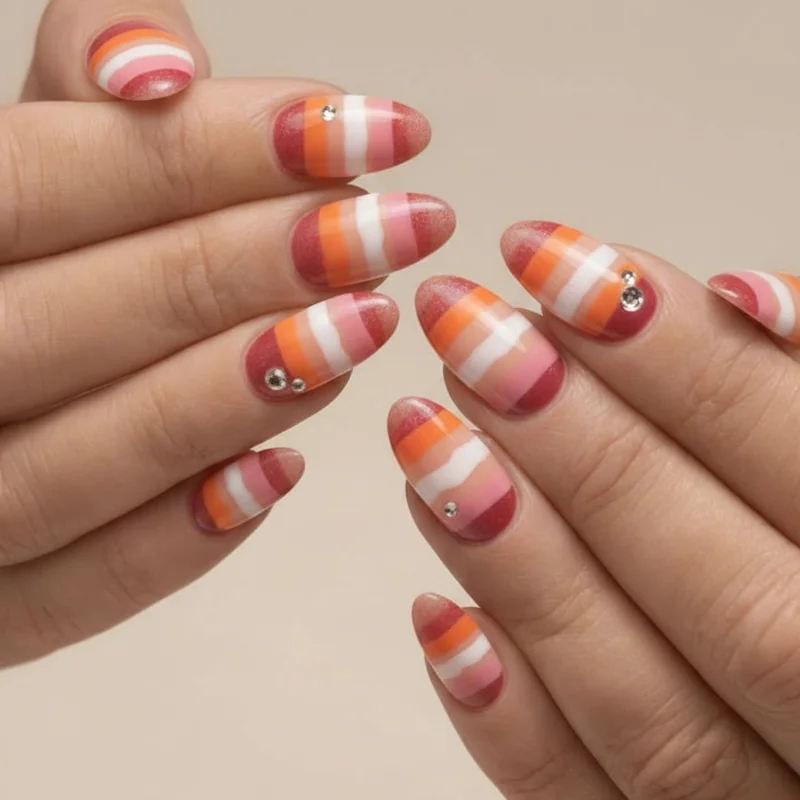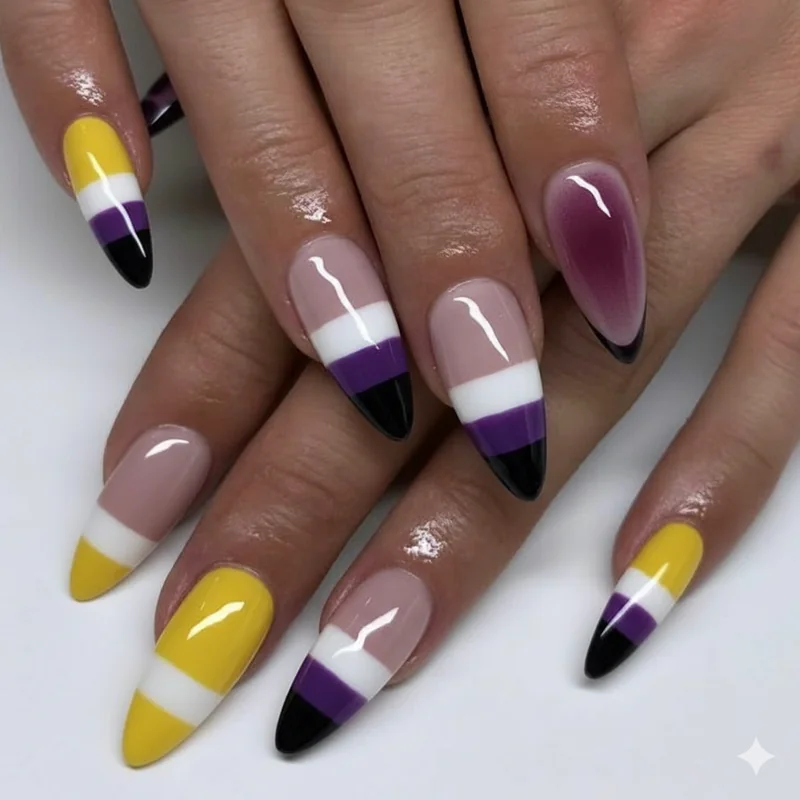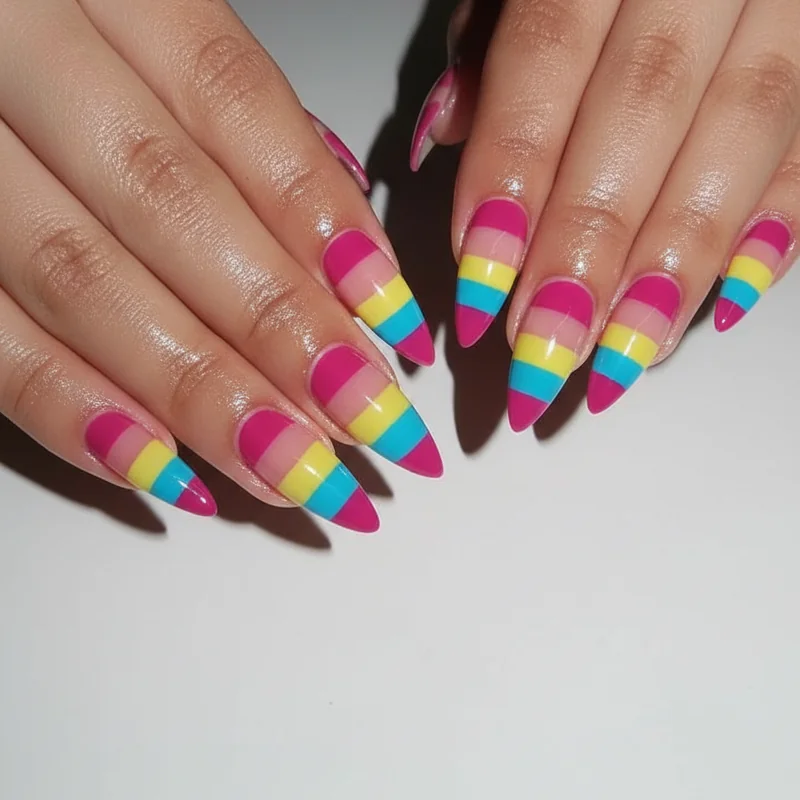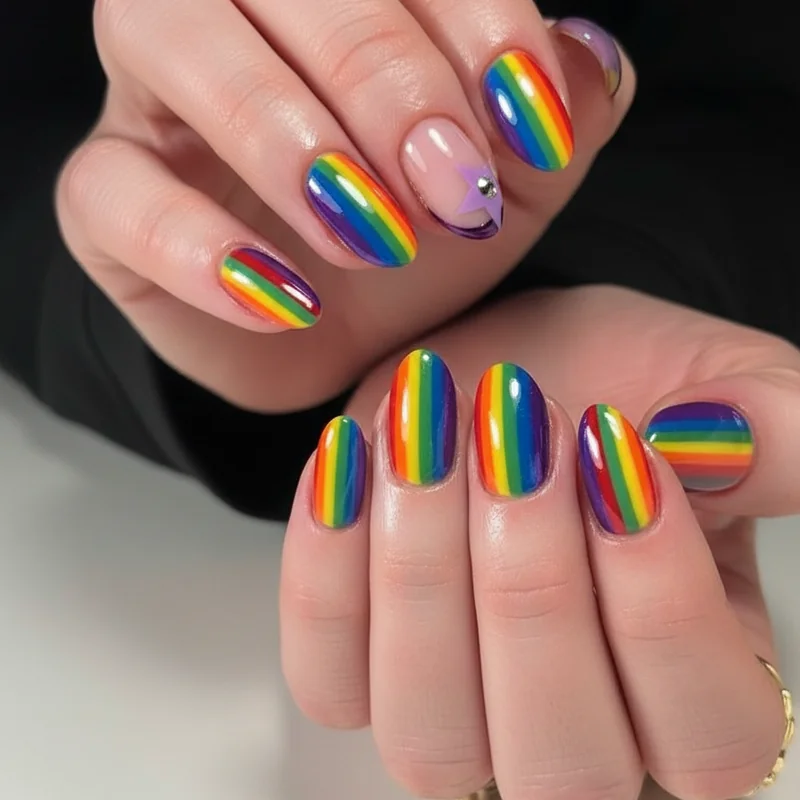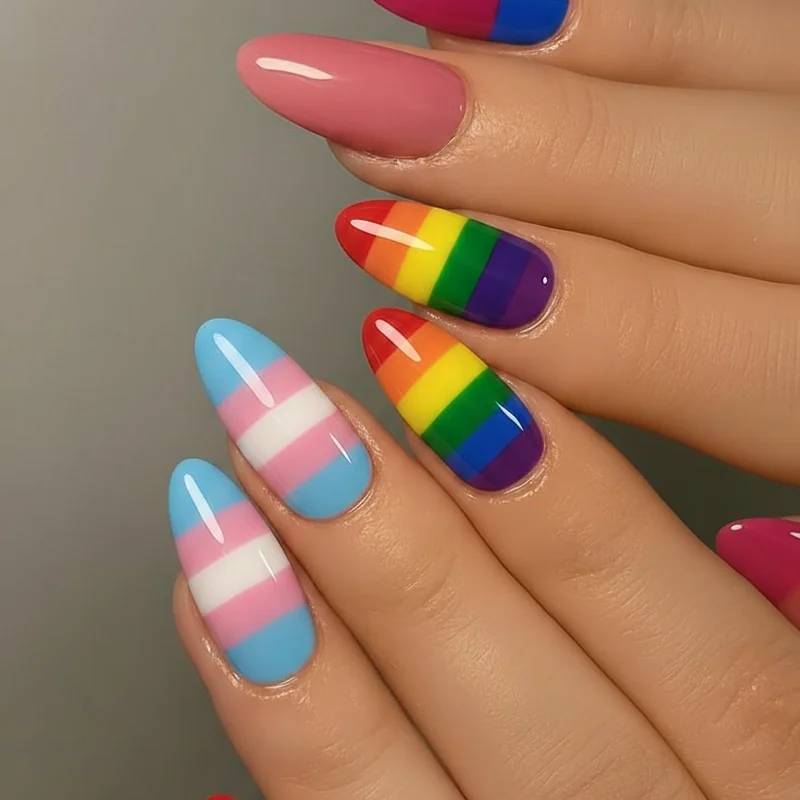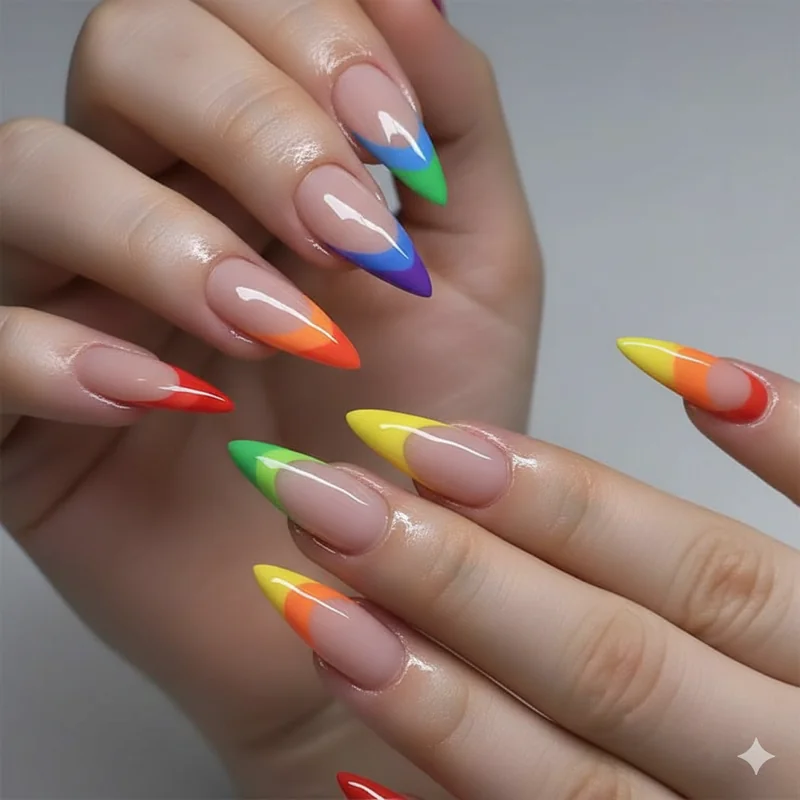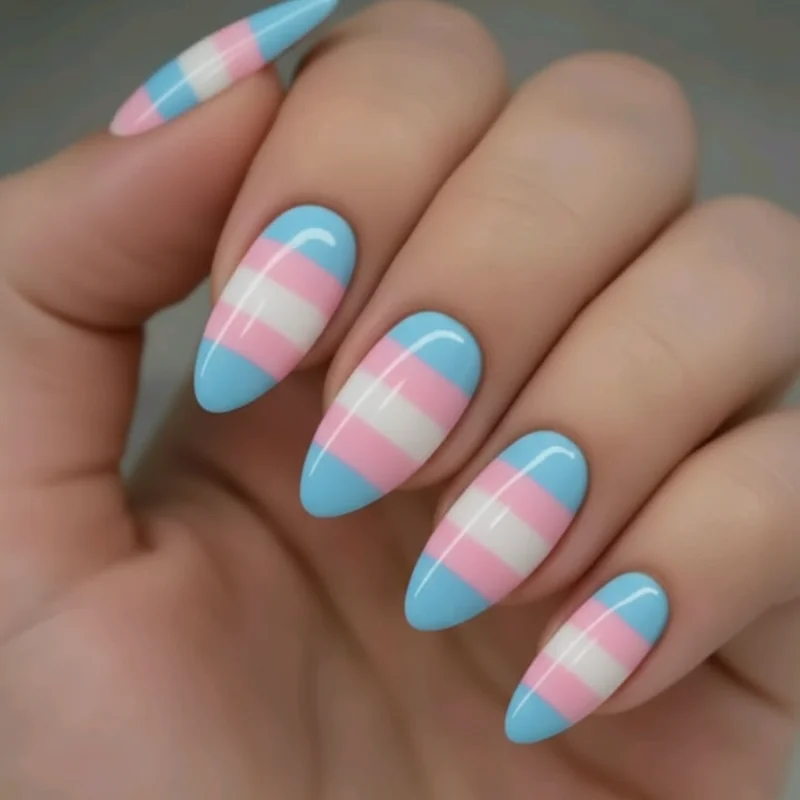
Trans flag nails are not a trend. They are an identity worn on ten fingers, and there is a difference. The designs here (stripe, ombre, glitter, French tip, graphic, and shape-specific variations) are all built from the same three colours that Monica Helms put on a flag in 1999: light blue, light pink, and white. This post covers every way to wear them beautifully, whether you are heading to a pride month event or just want a set that means something on an ordinary Tuesday. If you want to go deeper into the full world of trans pride nail art, that post covers the broader landscape, but if it is the blue, the pink, and the white you are here for, you are in exactly the right place. These are the nail trends of 2026 reinterpreted through a palette that has never gone out of style.
What Do Trans Flag Nails Actually Look Like? (Colours, Order, and What Each One Means)
Five stripes. That is the whole design, and the precision of it is the point.
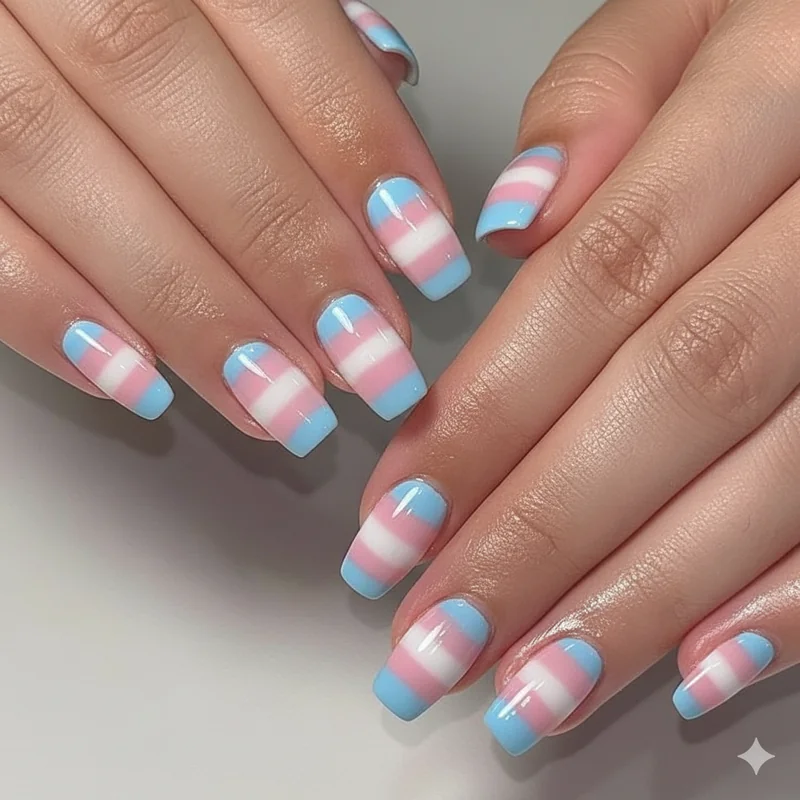
The transgender flag, designed by Monica Helms in 1999, runs light blue, light pink, white, light pink, light blue from top to bottom. On nails, that translates to five nails carrying one colour each, or a single nail representing all five stripes in miniature. The colours are not arbitrary: light blue for boys, light pink for girls, white for those who are transitioning, intersex, or who exist outside the binary. Helms designed the flag to be symmetrical so that it reads correctly no matter which way it is held. That same logic applies on your hands.
What colours do you need for trans flag nails? For the truest match to the flag, reach for a soft powder blue (not navy, not periwinkle), a dusty baby pink (not hot pink, not coral), and a clean opaque white. The exact shades matter more than most people realise. A blue that reads too purple or a pink that leans too warm shifts the whole identity of the design. For a precise colour reference, OPI's Faint For You (baby pink) and Alpine Snow (white) alongside a soft powder blue from your preferred gel range are reliable starting points. Any gel collection with a true pastel blue and a genuinely dusty pink will serve the flag correctly.
What does the white stripe mean on trans flag nails? It represents people who are transitioning, intersex, or who identify outside the gender binary, a stripe that holds space for everyone who does not fit the two poles on either side of it. For designs covering every pride flag, there is a dedicated guide to explore.
The Classic Stripe Design: Simple, Symbolic, and Always Right
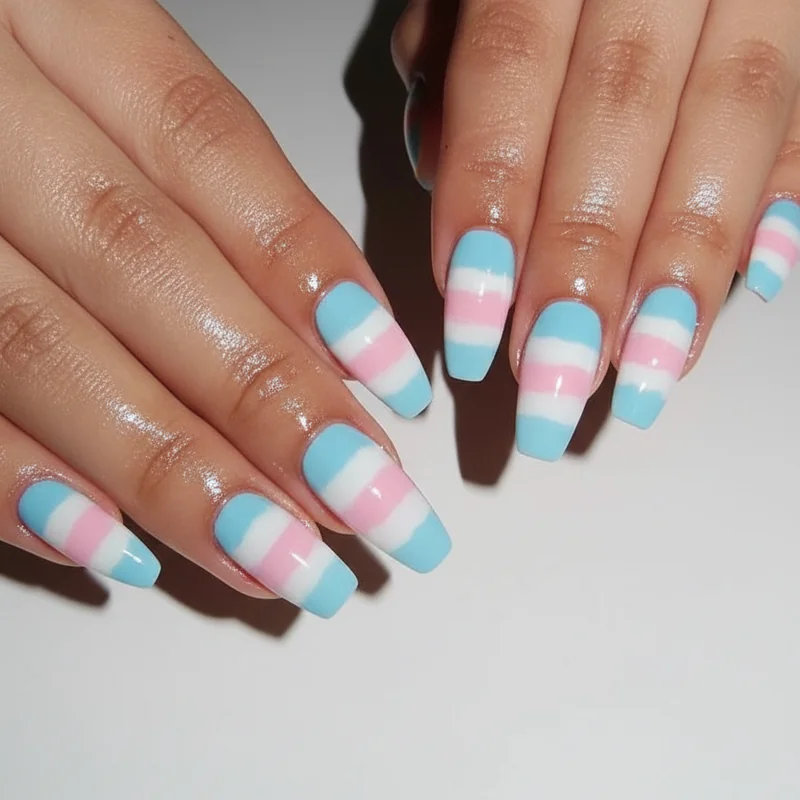
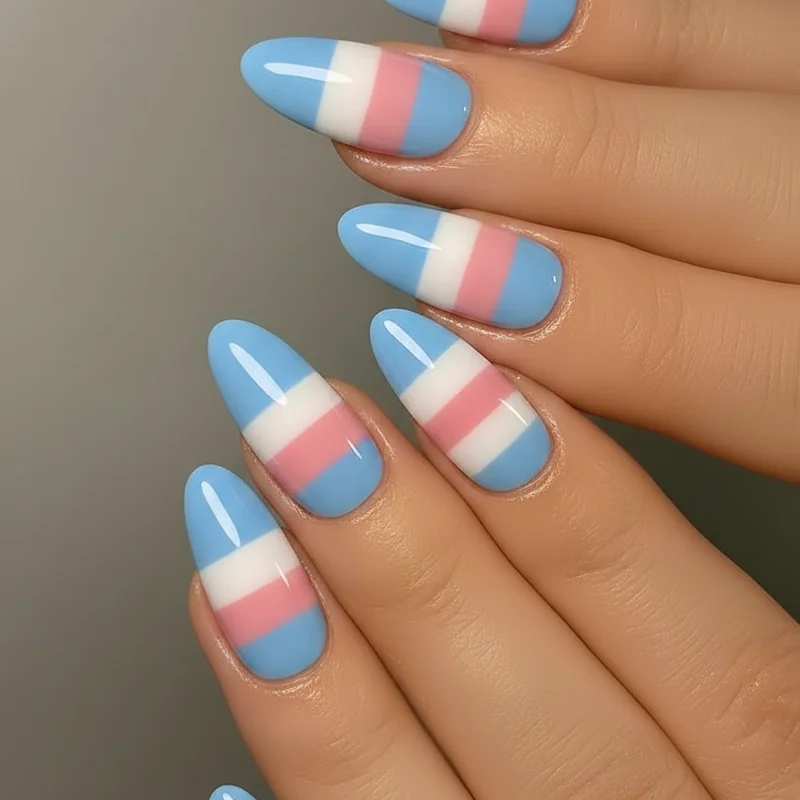
Simplicity is not the same as easy. The five-stripe set, one colour per nail in the order light blue, pink, white, pink, light blue, is the most recognisable version of trans flag nails, and it is also the one where colour choice and finish make or break everything.
The stripe design works because it is immediately legible. Anyone who knows the flag reads it in a glance. For the DIY approach at home, no striping brush or special tools are required. Just five polishes and clean application. The single technical note worth knowing: apply white last, not first. White over pink or blue bleeds at the edges. Pink and blue over white disappears into it. Paint your coloured nails first, let them cure fully, then do the white nail as its own clean step with two coats minimum.
For the most polished result on a stripe set, a glossy top coat pulls the whole hand together visually. A matte top coat transforms the same design into something more understated, a flat, velvety blue-pink-white set reads as a considered aesthetic choice rather than an event look. That matters for the reader who wants to wear the flag every day, not only during pride season.
Trans Flag Ombre Nails: When the Gradient Does the Talking
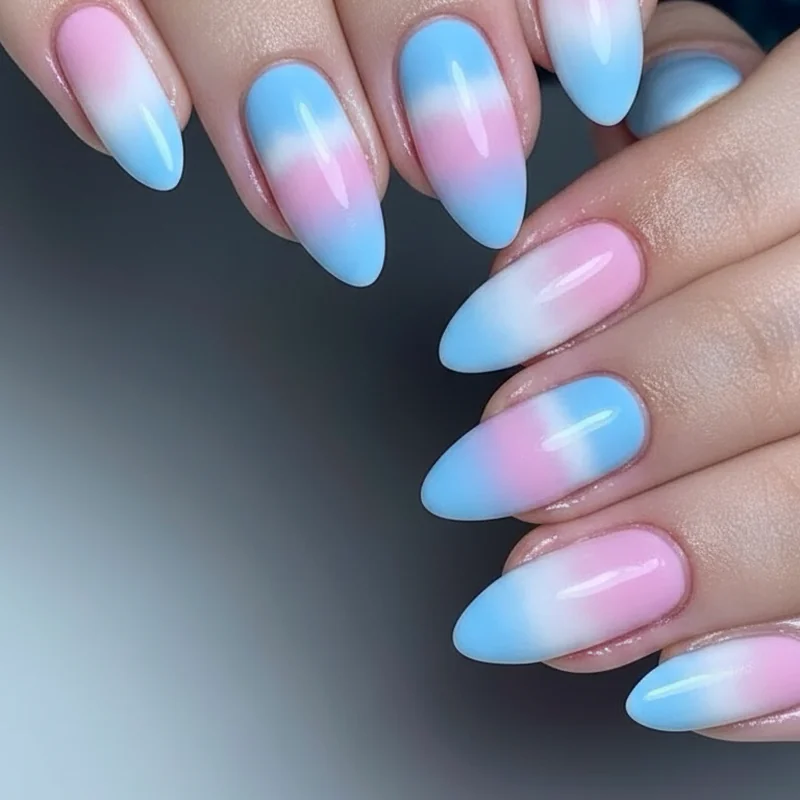
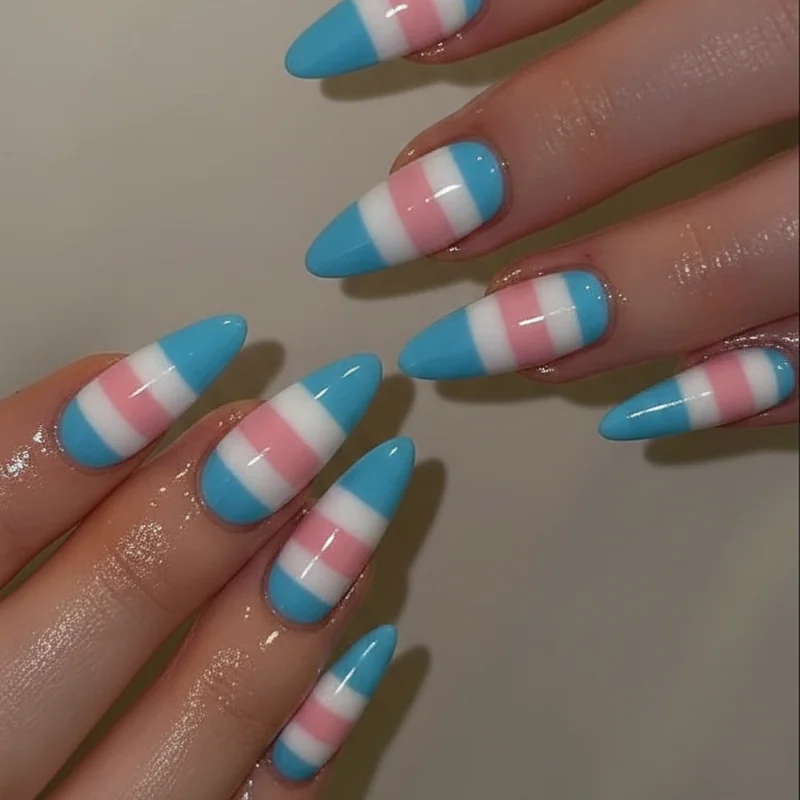
The ombre version of trans flag nails is what the stripe design looks like when it stops being literal and starts being art. Instead of five separate colours across five separate nails, the gradient bleeds blue into pink into white into pink into blue across the full hand, or across a single nail, if that is the canvas you are working with.
For a full-hand gradient, the most reliable technique uses a makeup sponge. Dab light blue and dusty pink side by side onto the sponge, press it gently onto the nail, lift away, and repeat until the blend builds to an even fade. The white nail sits at the centre of the hand and benefits from its own clean coat first, so it anchors the gradient on either side rather than absorbing it. In gel, cure between each application. The result, when the blend reads evenly, is one of the most wearable versions of the trans flag palette. It reads as colour rather than costume, which means it travels everywhere with you.
How do you do a trans flag ombre at home? Sponge technique, two colours at a time, light pressure, multiple thin passes. Do not rush the blend. Do not try to finish it in one application. The gradient earns its softness from repetition, not from a single heavy dab.
Trans Flag French Tip Nails: Subtle Enough for Every Day, Bold Enough to Mean It
The French tip version lives between two worlds: wearable enough for work or a first date, meaningful enough that the person who knows, knows.
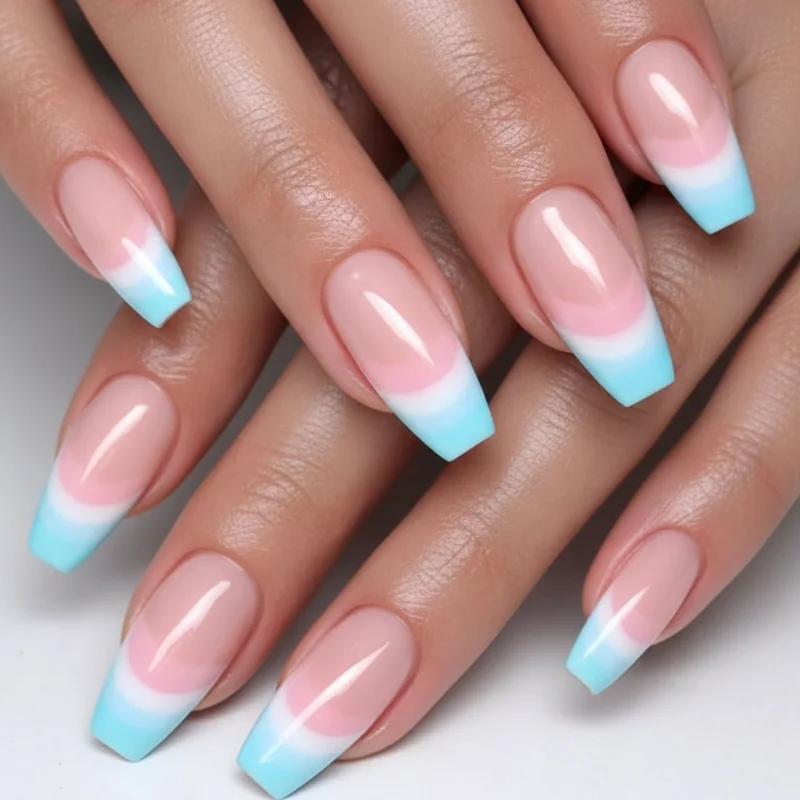
There are two strong interpretations. The first applies the trans flag colours as tips only: light blue on the pinky, pink on the ring, white on the middle, pink on the index, light blue on the thumb, all over a sheer or nude base. Clean, graphic, immediately legible to the community. The second takes the traditional white French tip and repaints the free edge as a gradient: blue fading through pink into white, contained entirely to the tip line. That second version is the more elevated of the two. It reads as considered nail art first, pride second, which is exactly what makes it genuinely wearable beyond June.
For painting colour arches cleanly at the free edge, Scratch Magazine's pride flag nail tutorial covers the technique in useful detail. The practical note: tape the smile line before applying colour if your freehand arch is not consistent. Peel the tape while the colour is still wet, cure, then seal with a top coat. A full crossover of French tip and almond variations is covered in French tip almond nails, and the full French tip pride guide lives at pride French tip nails.
Trans Flag Glitter Nails: Full Glam for Pride Season
Glitter does not just add sparkle to trans flag nails. It changes the emotional register of the entire set.
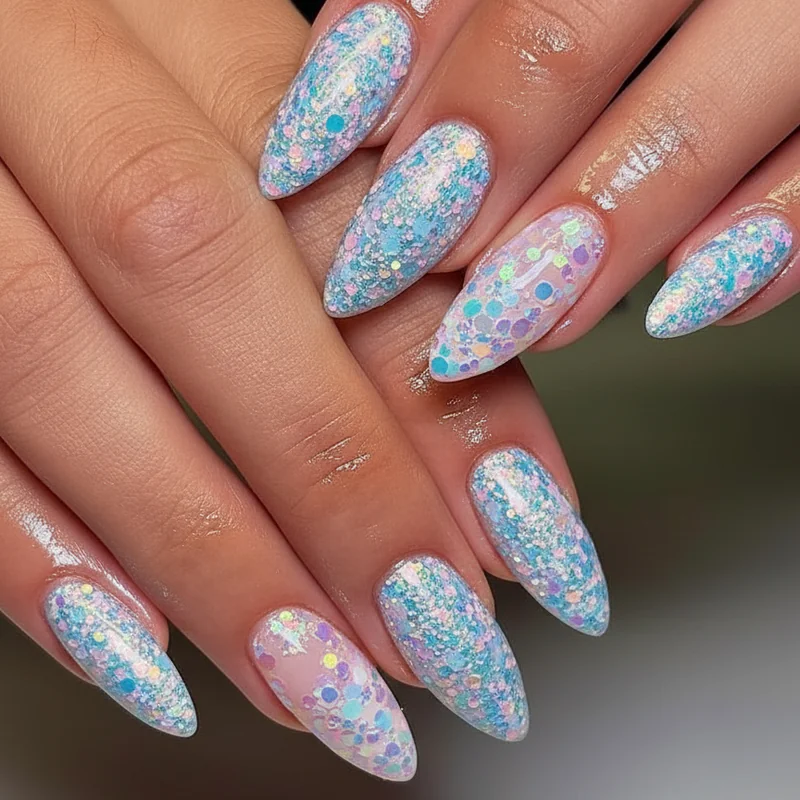
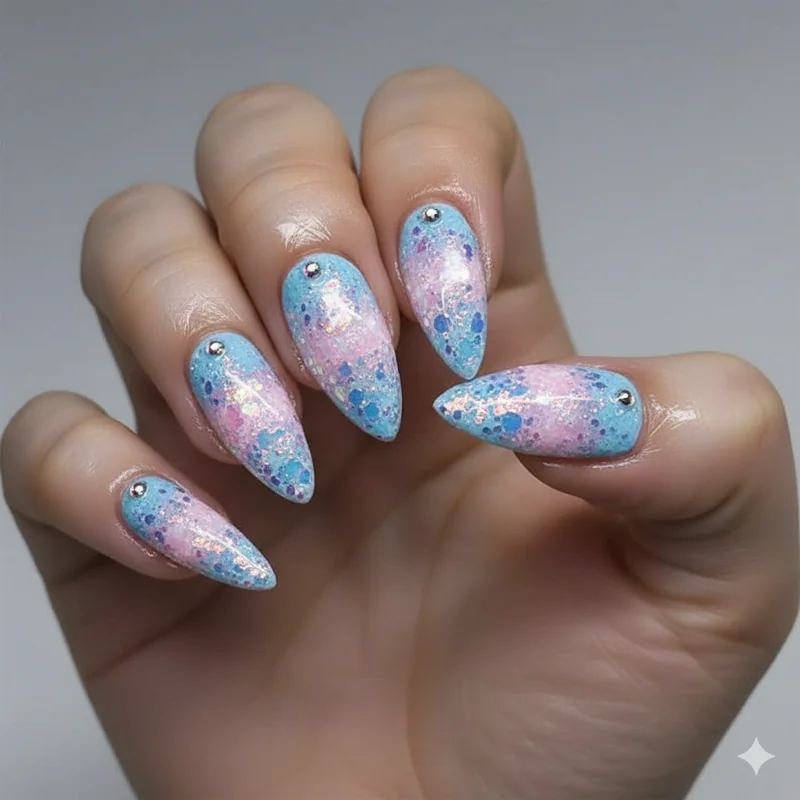
The most effective glitter interpretation keeps the underlying structure intact: a five-stripe or ombre base in the correct colour order, with a chunky holographic glitter top coat applied across the whole hand. The glitter catches across all three colours simultaneously and produces a prismatic shift where the blue and pink move with the light. For glitter that reads clearly across a pastel base, chunky iridescent or holographic silver is the right choice. It amplifies without muddying. Fine glitter risks blending the blue and pink into a single pale shimmer, which loses the distinction between them.
The more considered alternative applies glitter selectively on the white nail only. A white base with heavy iridescent glitter on the centre nail of each hand, surrounded by clean matte or satin blue and pink on either side, creates the kind of contrast that looks deliberate rather than maximalist. It also photographs extremely well, which matters for this audience.
What is the difference between trans flag nails and general pride nails? The palette is specific: light blue, dusty pink, and white in Monica Helms' symmetrical order. General pride nails pull from the full rainbow. Trans flag nails are their own distinct identity within that broader celebration. The GelBottle's pride nail guide puts the trans flag palette in the broader pride nail context if you want to see how it sits.
Trans Flag Swirl and Graphic Designs: The Elevated Version
This is where trans flag nails move from recognisable symbol to genuine nail art, and it is the category that competitors consistently overlook.
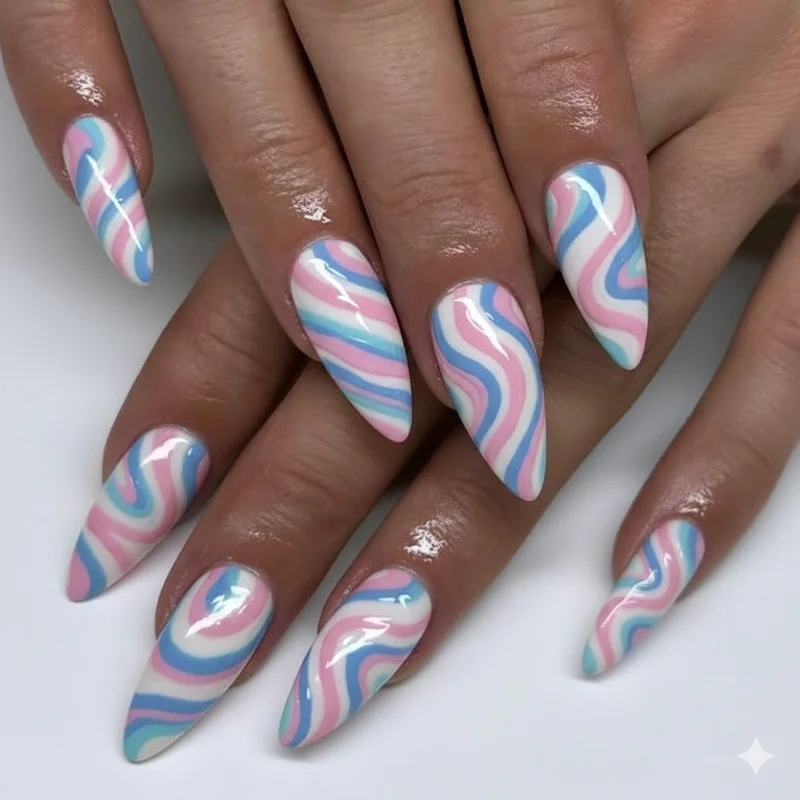
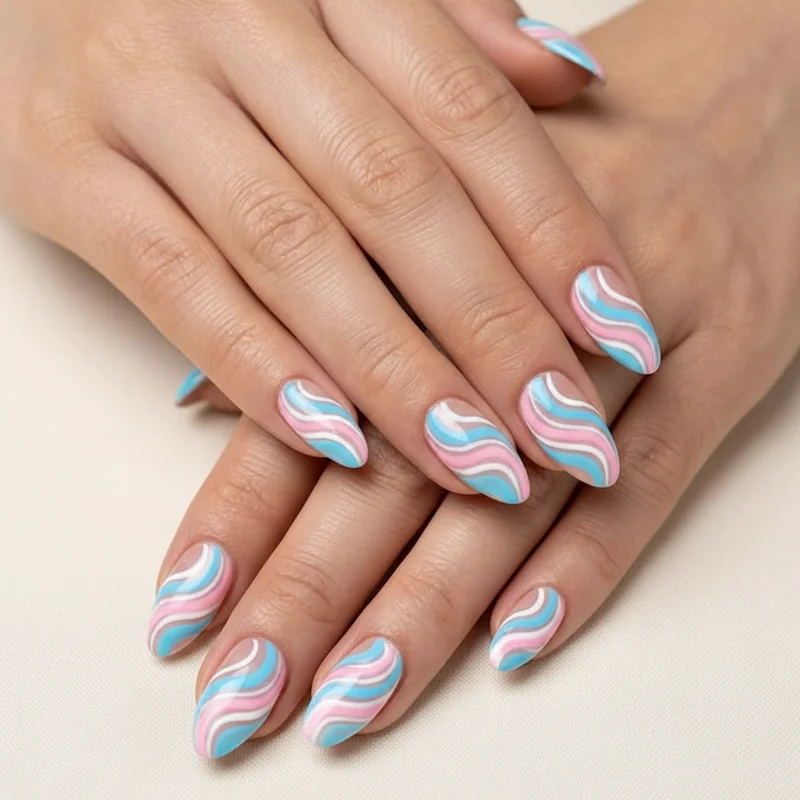
A swirl design takes the blue, pink, and white and lets them move across the nail in curved, organic lines rather than stripes or gradients. A graphic version uses hand-painted arcs, thin lines, or geometric blocks to abstract the flag's colour order into something that looks like it came from a nail artist's editorial shoot, not a pride tutorial. Both carry the same palette. Neither sacrifices the symbolism. The swirl works particularly well alongside 2026's broader nail trend toward fluid, painterly designs: thin striping brushwork in blue and pink over a white base, lines overlapping slightly and curling toward the free edge.
The tools needed for swirl designs at home: a fine striping brush, a dotting tool for any circular elements, and patience. The curves are painted wet, do not cure between individual lines or the edges will harden before they can blend where you want them to. For context on where the graphic stripe nail art trend sits right now, Spring Nail Trends 2026 maps the full landscape.
Trans Flag Nails for Short Nails: Designs That Work on Every Length
Short nails carry this palette. That needs saying plainly, because the hesitation is not warranted here.
The trans flag is a colour story, not a canvas requirement. On short square or squoval nails, the five-stripe set works exactly as it does on longer lengths, five nails, five colours, clean application. The stripe reads proportionally correct at any length because the colour fills the full nail rather than sitting on a fraction of it. Where short nails benefit most: the accent nail approach and the ombre set. A soft gradient on a shorter nail reads as intentional colour rather than a design that outgrew its canvas.
Can you do trans flag designs on short nails? Every design in this post translates to short length. The ombre and accent nail are the most flattering specifically at short square. The stripe set needs no adjustment at all. For readers who want to add length for a more statement look, trans nails acrylic covers the long-wear options worth knowing.
Trans Flag Nails by Shape: Almond, Coffin, and Squoval
The shape changes the design more than most people expect.
On almond nails, the tapering tip makes stripe designs look elongated and intentional, the colours read as a proper colour-block set rather than five separate polishes applied at random. Swirl and graphic designs suit almond best of any shape: the curve of the nail echoes the curve of the painted lines, and the longer canvas gives a striping brush room to move with intention. If you are going to a nail tech with trans flag inspo, almond is the shape to request if you want the design to feel elevated.
Coffin nails give the French tip version its maximum impact. The flat tip is a natural frame for a gradient free edge, and the width of a coffin nail means the colour transition reads from a distance. A coffin-length trans flag glitter set, stripe base with full-nail iridescent glitter on the white nails, is as close to full glamour as this palette gets.
Squoval, being the most neutral shape, suits stripe and ombre best. Nothing competes with the colour. What nail shapes work best for trans flag designs? Almond for graphic and swirl art. Coffin for French tips and glitter sets. Squoval for stripe and ombre. For almond-specific inspo across the pride palette, pride nails almond shape has the full picture. And for almond design range across 2026, Almond Nails 2026 is the reference.