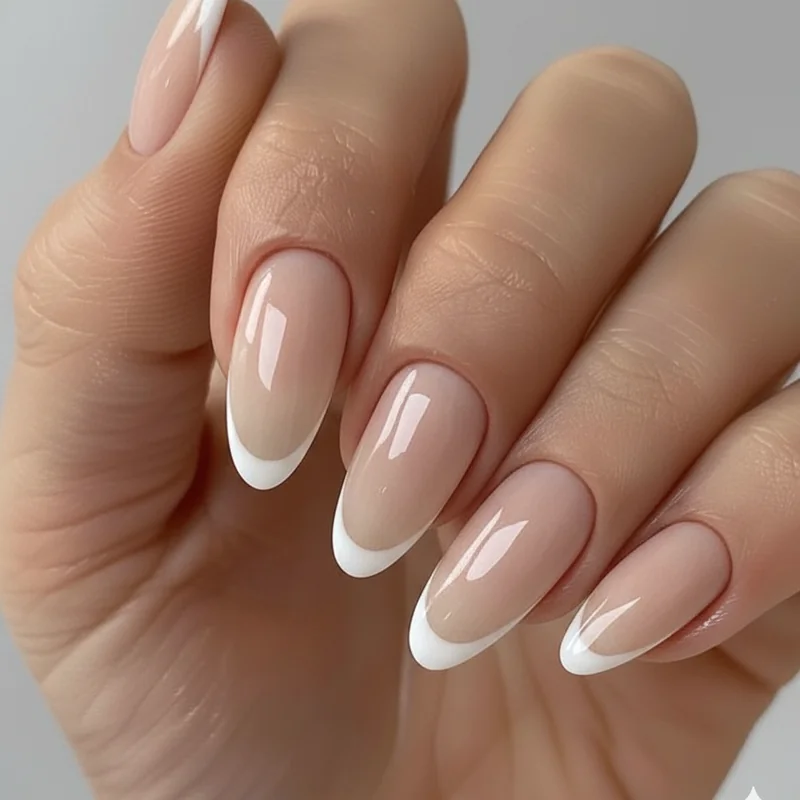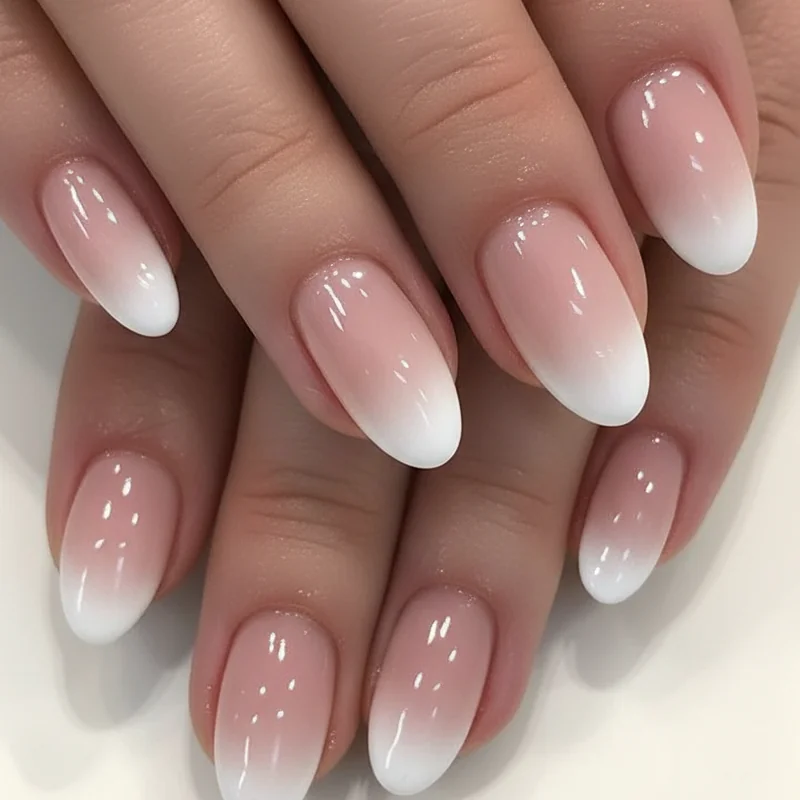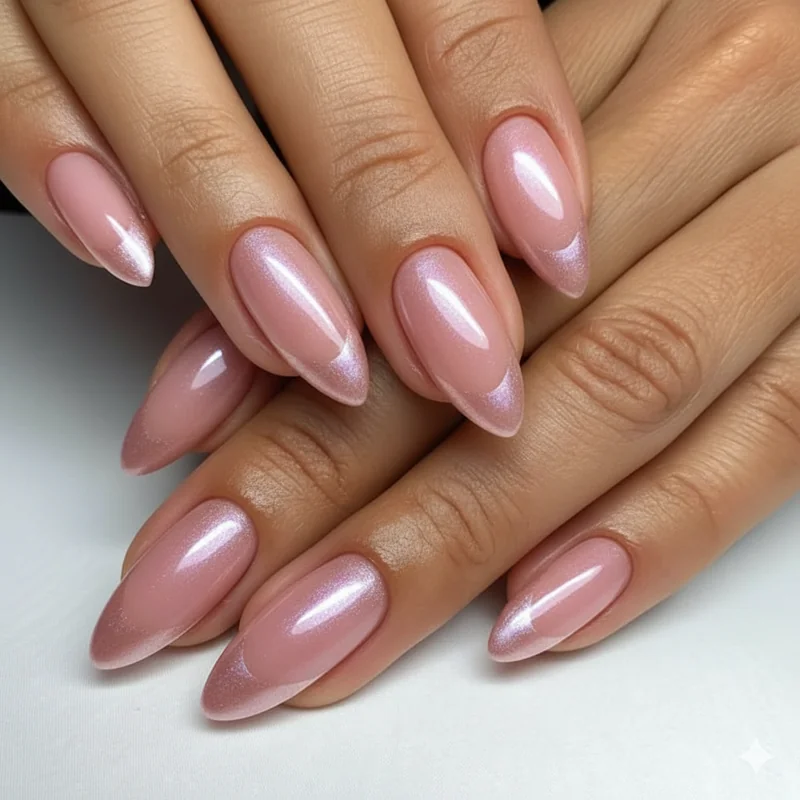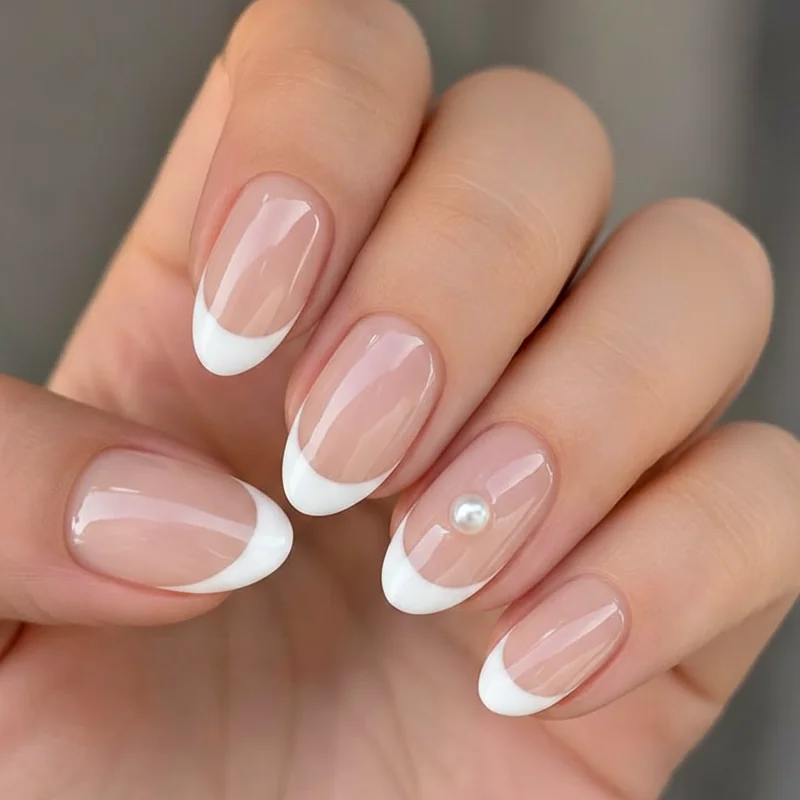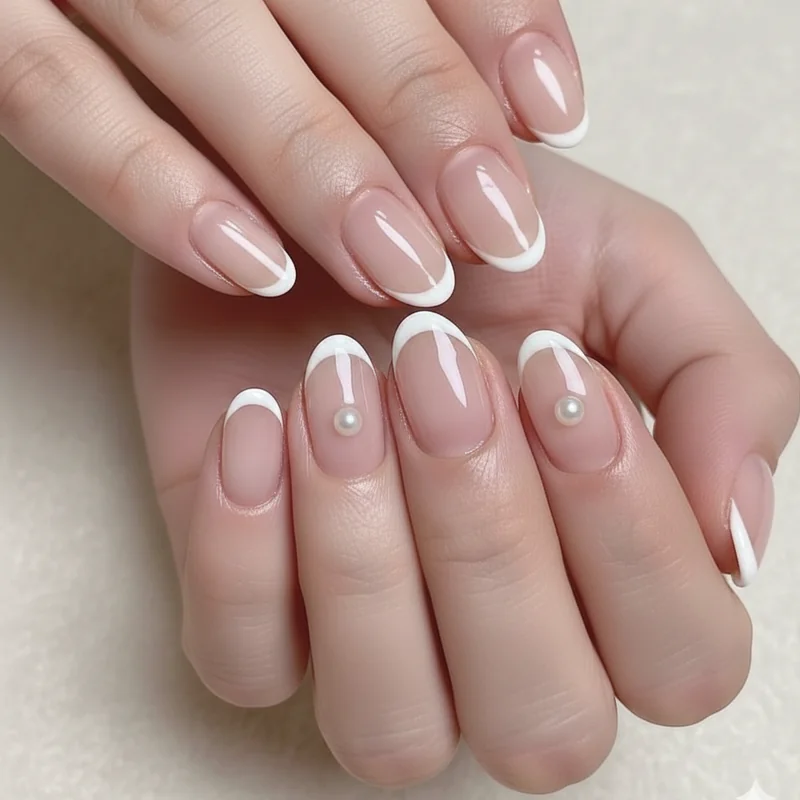
The French tip did not go out of style. The thick white band did. Those are two completely different things, and confusing them is the reason so many brides talk themselves out of a choice they actually love.
French tip wedding nails are among the most-pinned bridal looks of 2026, not despite being classic, but because of it. The version has evolved, the formula has improved, and the result is a manicure that photographs beautifully, suits every dress colour and skin tone, and works on any nail length from short squoval to long almond. If you came here half-committed to a French tip and needing someone to tell you it's the right call, consider this that conversation.
For a wider look at bridal nail inspiration beyond French, Wedding Nail Ideas: 60+ Designs for Every Bridal Style covers every direction a bride might take.
Is a French Tip Still a Good Wedding Nail Choice in 2026?
Whoever told you French tips are dated was describing one specific version. That version was already being phased out a decade ago. The thick, stark white band that defined the early 2000s French manicure belongs to a particular era of nail aesthetics. What replaced it is not a different style. It is the same style, done with current proportions, formulas, and an entirely different visual result.
The question brides should be asking is not "are French tip wedding nails still in style?" They unambiguously are. The question is which version matches 2026. A micro-French tip, a diffused baby boomer fade, a chrome-kissed smile line: these are the formats that top nail artists are doing on brides right now, and none of them look anything like the French manicure you are trying to avoid.
The anxiety usually comes from one of two places. Either someone in your life, a nail tech, a bridesmaid, a well-meaning forum post, made a generalisation, or you scrolled past a reference image from the wrong era. Neither is a verdict on the style itself. The French manicure has had a genuine renaissance across the past three years, driven precisely by the fact that brides want something polished, timeless, and photogenic without looking overdone. That is exactly what the current iterations deliver.
Are French tip nails still popular for weddings in 2026? Yes, and the data is clear: they are among the most-booked bridal looks this year. The version is what matters.
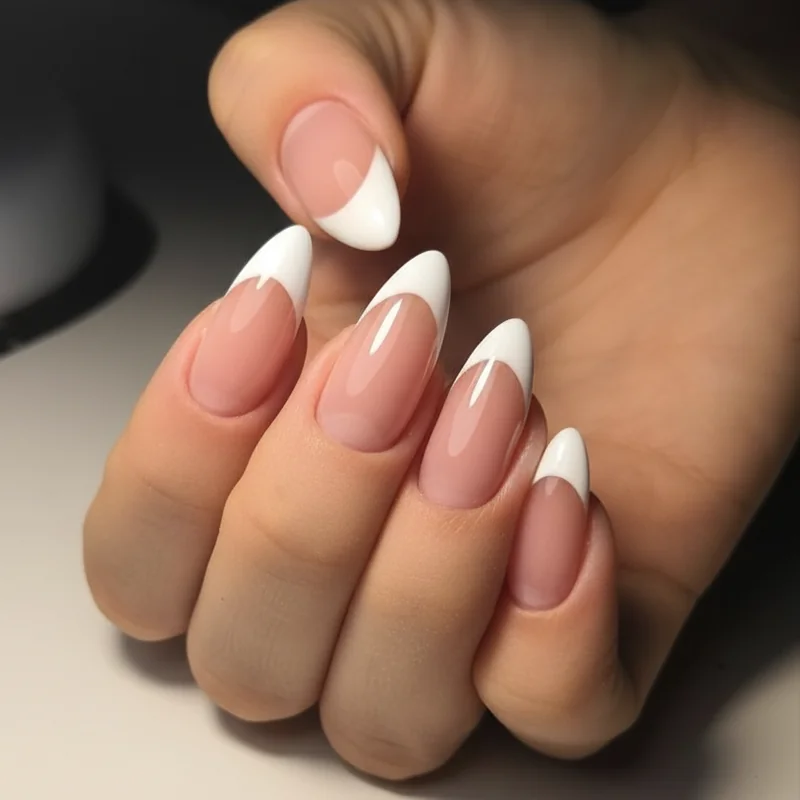
The 2026 French Tip: What Changed and What Stayed the Same
Three things shifted the French manicure from its peak-2005 format to where it is now: tip width, base tone, and edge definition.
The thick, bright white band, typically 3 to 5mm with a hard smile line, gave way to something narrower and softer. Celebrity manicurist Betina Goldstein, who coined the term "micro-French," describes the technique as an ultra-thin white line at the tip that reads as delicate and modern, outlined in full in Joyee Nails' 2026 bridal nail guide. The shift is not just about width, it is about the relationship between the tip and the base. A close-toned base (milky pink, warm beige, sheer blush) paired with a soft tip creates continuity rather than contrast, and that continuity is what reads as current.
The second shift is edge definition. A hard, clean smile line is a choice, a valid one for a classic look, but the diffused fade (what manicurist Georgia Rae describes as a "diffused and soft" modern French, covered in Who What Wear's 2026 bridal nail guide) removes the line entirely in favour of a gradient. That is the baby boomer. That is the ombré French. Both are direct descendants of the classic format, and both are entirely distinct from it visually.
What stayed the same: the fundamental logic. Pale base, lighter tip, clean finish. The architecture is identical. The proportions changed.
For the broader 2026 nail context, Spring Nail Trends 2026: What's In and What's Out covers the wider shift toward evolved French and micro-tip formats this year.
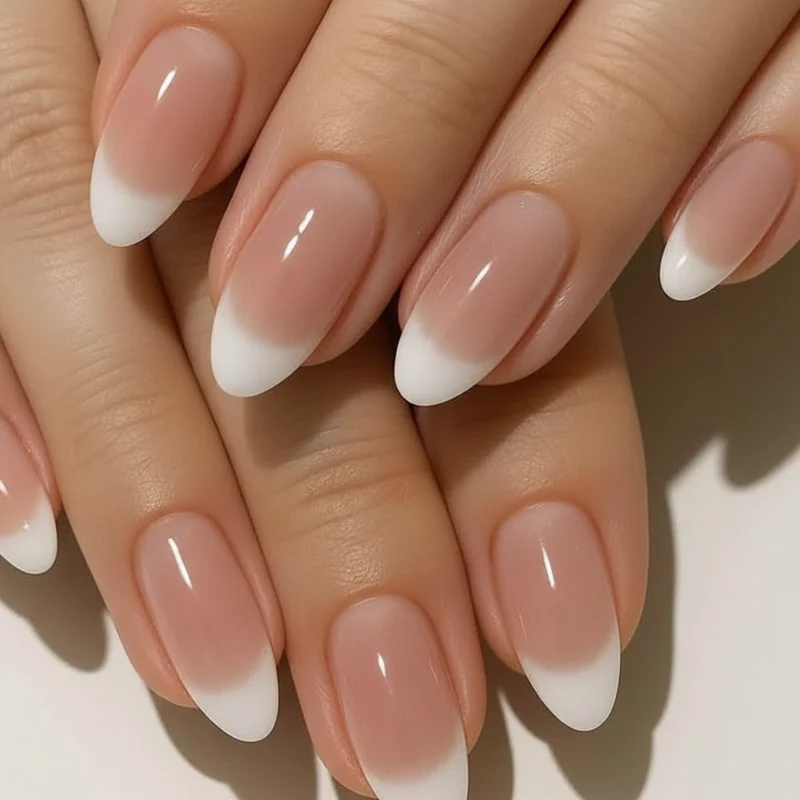
Classic French Tip Wedding Nails: When to Choose Them
A clean pink base and a defined white tip is not the wrong choice. It is the choice that requires the right proportions.
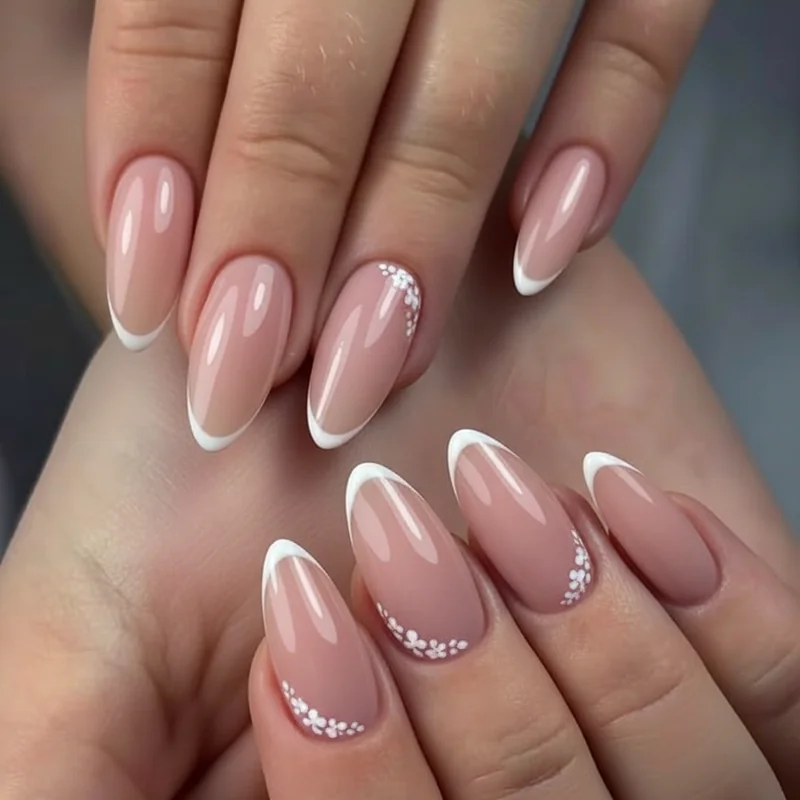
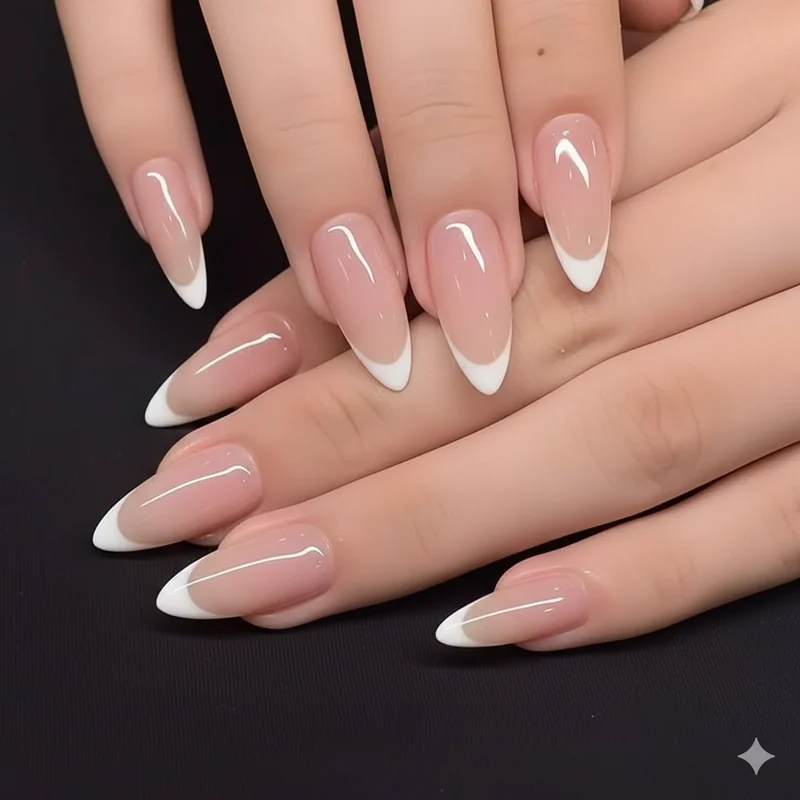
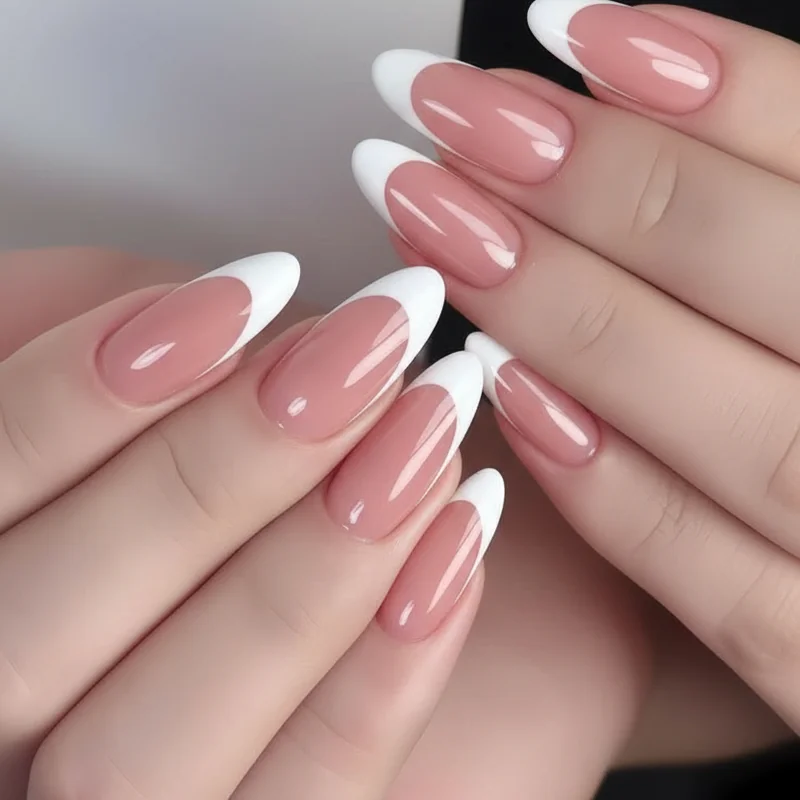
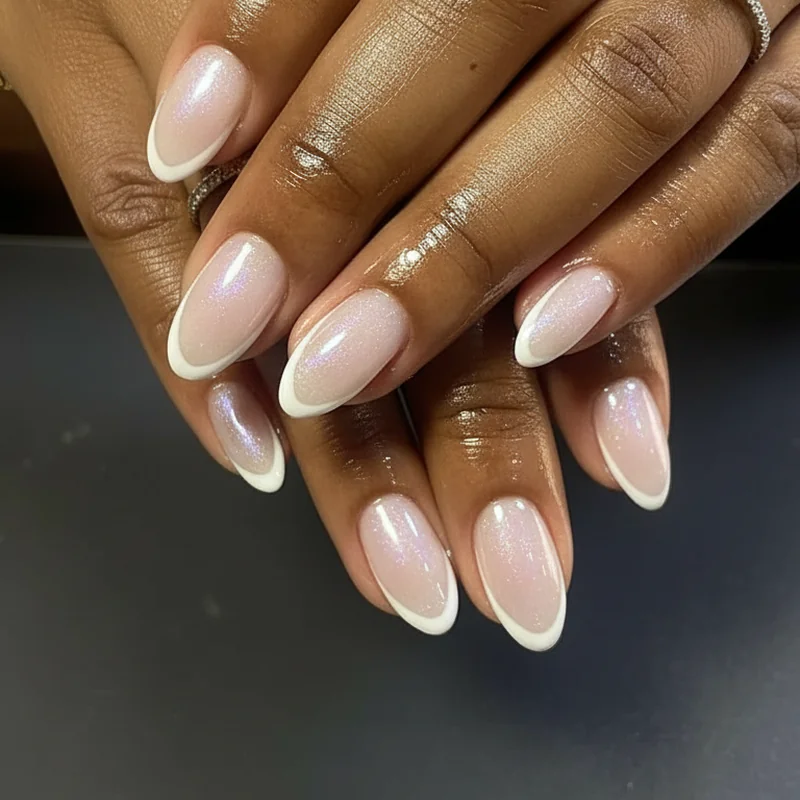
The classic french tip wedding nails format, sheer pink base with a crisp smile line, reads as timeless rather than dated when the tip width is kept to 1.5–2mm and the base is warm rather than stark. That is a small adjustment with a significant visual impact. Ask your nail tech specifically for a "soft pink base with a 2mm smile line" and the result looks nothing like the blocky white manicures that gave classic French a bad reputation.
The dress colour question is real here. If you have a cool-white gown, a true white tip is a match. If your dress is ivory, champagne, or off-white, a bright cool-white tip will read as slightly discordant in photographs. Not dramatically, but noticeably. The fix is straightforward: ask for a cream or vanilla tip that matches the warmth of your gown. For a full guide to matching nail colours to your skin tone and dress, Nail Colors That Look Good on Every Skin Tone covers every combination worth considering.
Classic French suits the bride who wants something structured and recognisably elegant. It photographs cleanly, it works on any shape from oval to squoval, and it is the easiest of all French variations to execute precisely in gel.
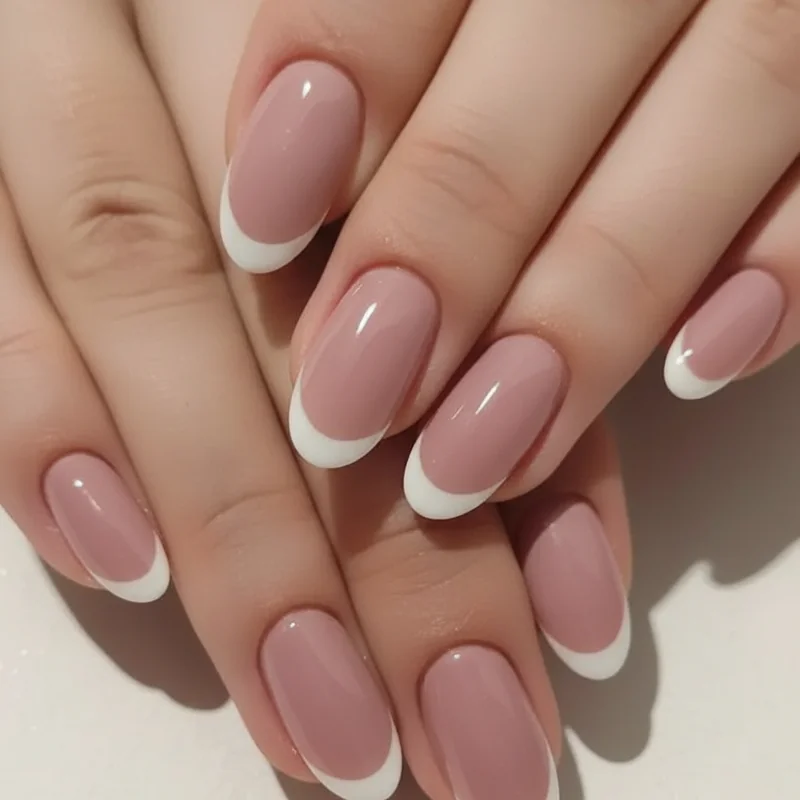
Micro French Tip Wedding Nails: The Modern Default
Barely-there tips are the answer to almost every bridal nail brief. A hairline of white, sometimes 0.5mm and never more than 1mm, sitting at the free edge of a milky or sheer-pink base is the version of the French manicure that is genuinely having a moment, and it is not hard to understand why.
The micro-French works on every nail length. That is not a generalisation. It is one of the specific reasons nail artists recommend it to brides who want the French format but are working with natural nail length or shorter tips. There is no minimum length required because the technique follows the existing free edge rather than creating a dramatic visual extension of it. On shorter nails it looks intentional, modern, and completely bridal. On longer nails it looks equally elegant.
Photography performance is exceptional. The micro-French does not compete with the dress, the flowers, or the ring. In close-up ring shots it adds definition and polish without drawing the eye away from what matters. It reads as "done" without reading as "designed."
What to ask your nail tech: "Micro-French, tip width under 1mm, milky or sheer pink base, gel finish." Bring a reference image. The difference between a micro-French and a classic French depends entirely on the person applying it, and clear briefing is the variable in your control.
Baby Boomer and Ombré French Wedding Nails
There is no defined edge. That is the whole point.
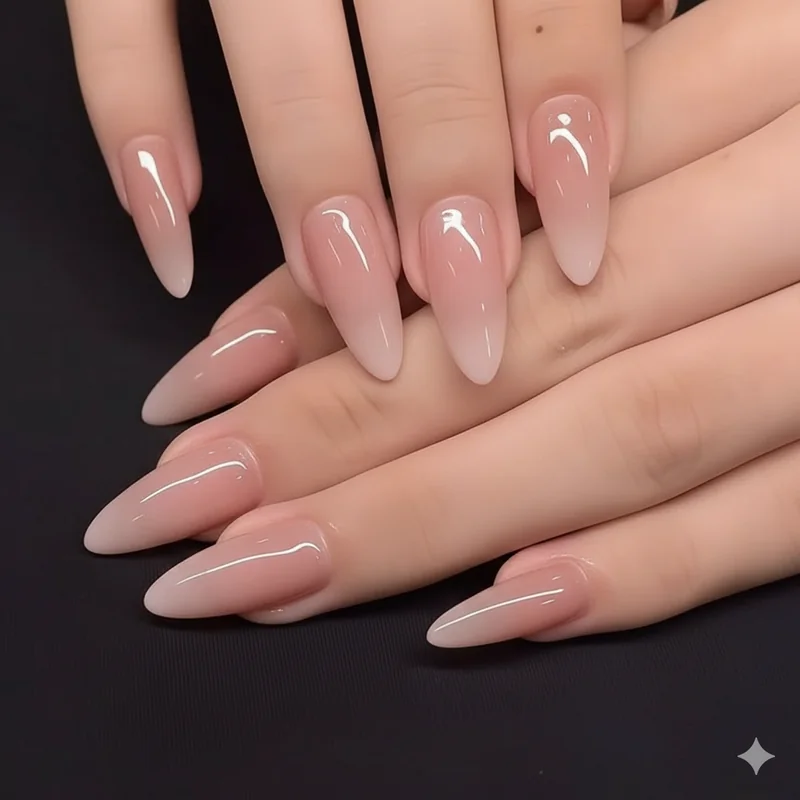
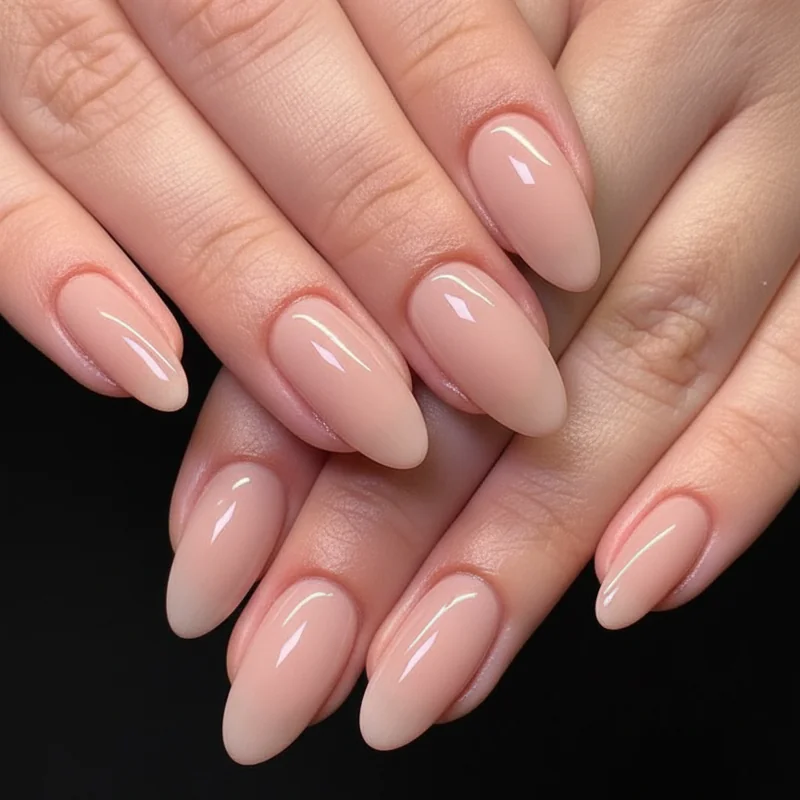
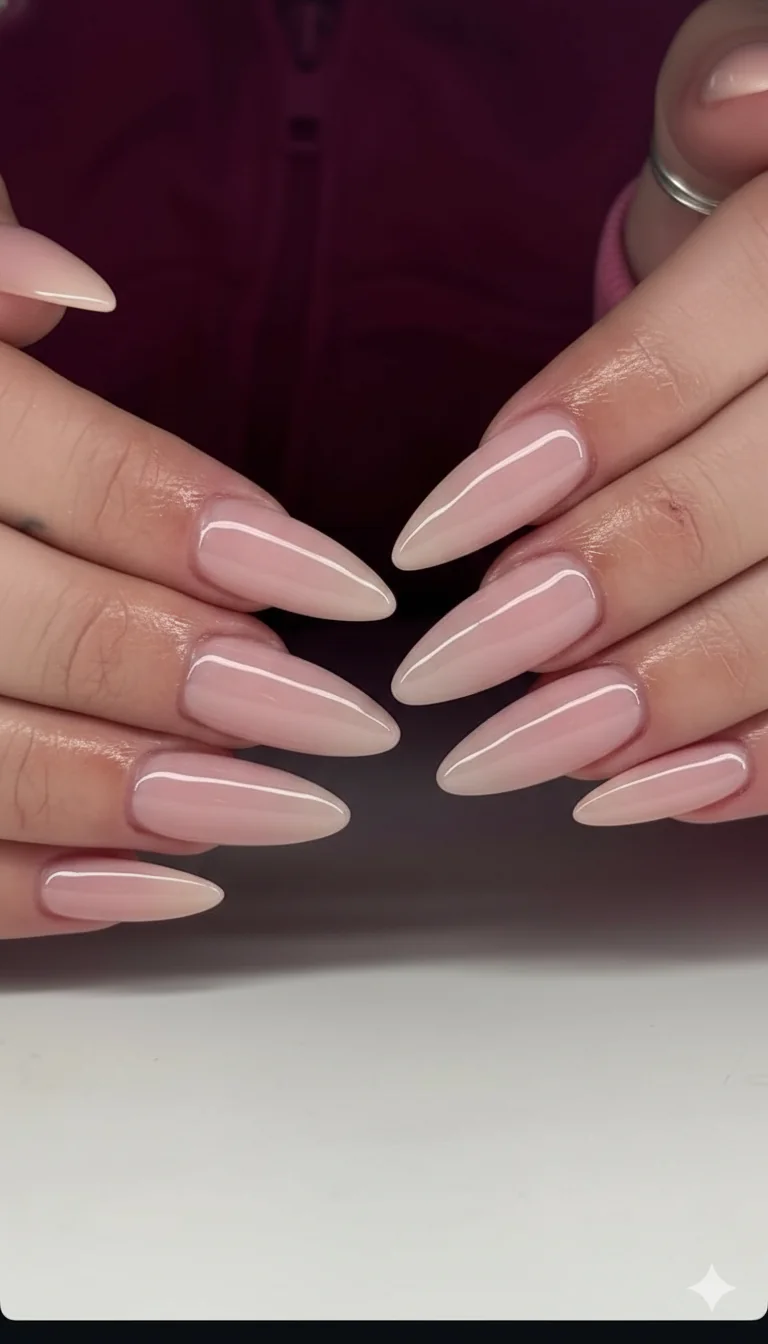
The baby boomer manicure, a soft gradient fade from sheer pink at the base to white at the tip, is the version of the French manicure that most consistently outperforms every other format in ring photography. The reason is technical: soft gradients catch light differently across the nail surface, creating a dimensional, glass-like effect that a flat finish cannot replicate. In close-up shots under natural light or soft flash, baby boomer nails have a warmth and depth that reads as genuinely luxurious.
What is the difference between a micro French and a baby boomer? The micro-French has a defined (if very thin) line at the tip. The baby boomer has no line at all; the colour transitions gradually from the base tone into the tip, blending completely. It is sometimes called a "diffused French" or a "soft fade." The technique requires more skill to blend evenly, so choose a nail tech with specific experience in the finish.
Baby boomer fades suit every length, including short nails, because the lack of a defined smile line removes any visual "cut off" at the free edge. The nail looks longer and softer than it actually is. For brides with shorter nails who want French tip wedding nails that genuinely flatter, this is the strongest option available.
Chrome French Tip Wedding Nails
The glazed donut nail went bridal, and it looks nothing like what you are imagining.
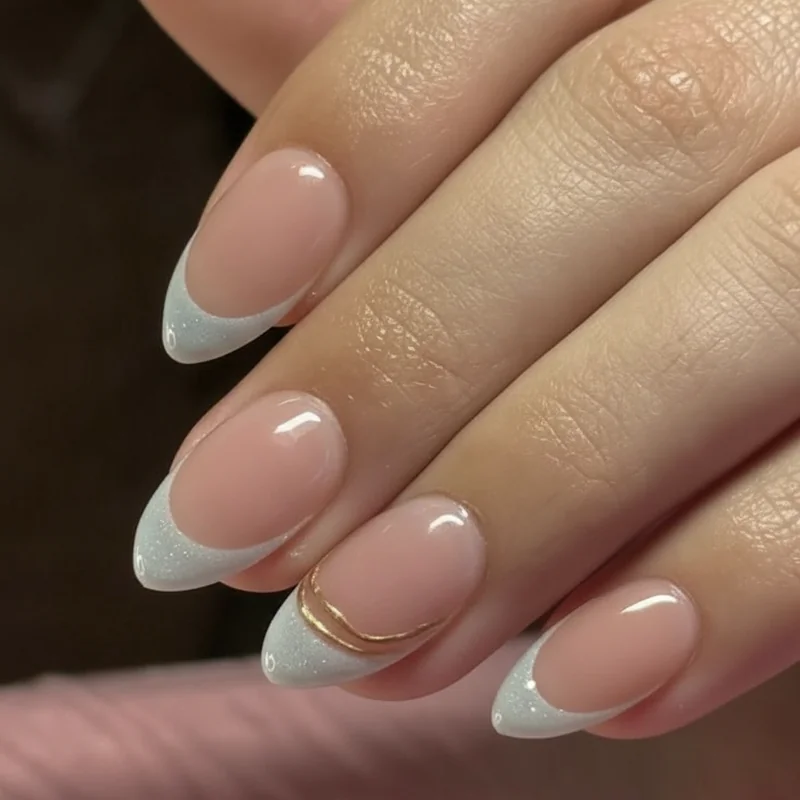
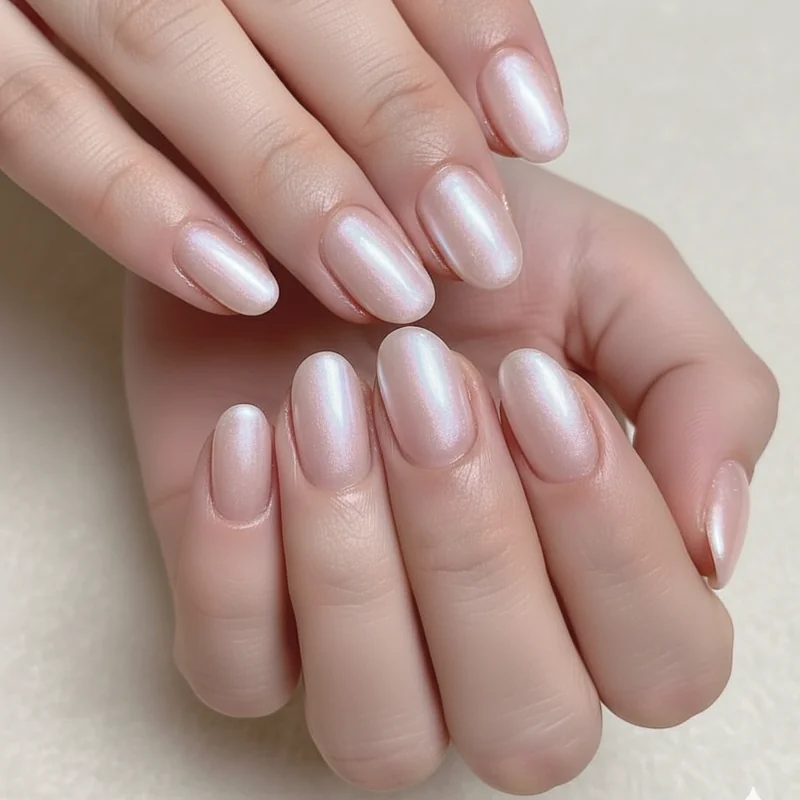
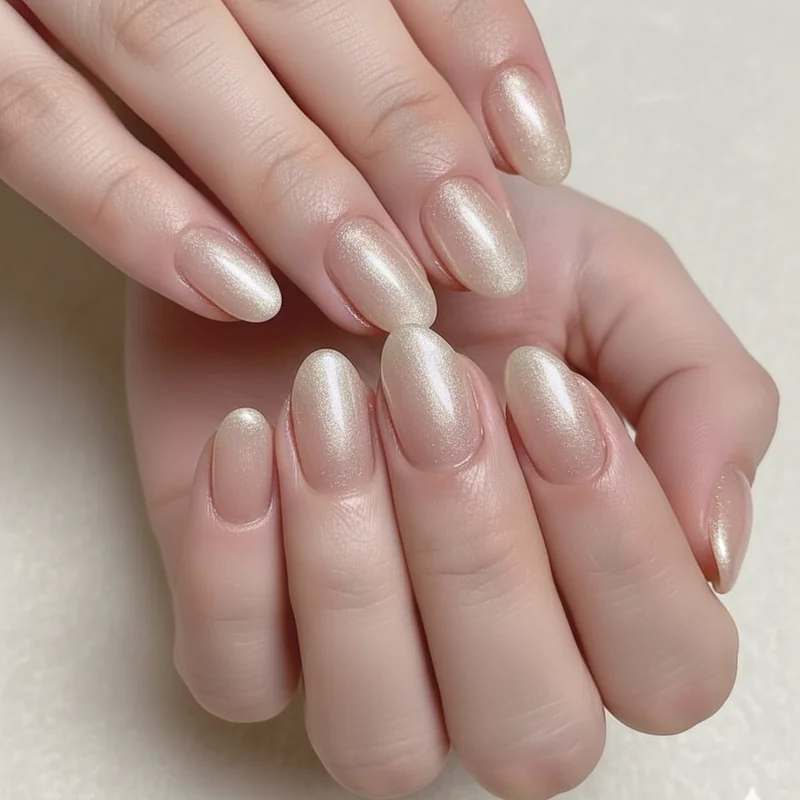
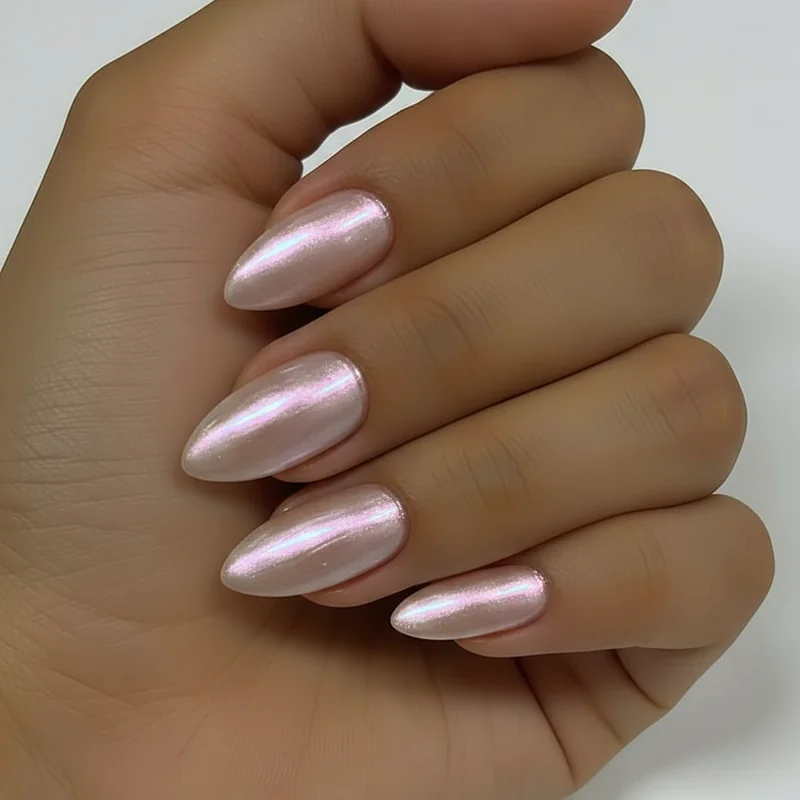
Chrome French tip wedding nails in 2026 means pearl chrome: a soft, opalescent shimmer applied over the tip rather than a full-nail mirror chrome. The effect shifts between a warm pearl and a soft silver-pink depending on the light source. It catches candlelight, photographs with depth under flash, and in natural daylight looks like a gentle gleam rather than a hard metallic surface.
The technique requires a no-wipe top coat before the chrome powder is applied, and the powder is burnished over the tip only, either over a micro-French line or over a baby boomer fade for a hybrid chrome-ombré effect. Both look entirely bridal. Neither is loud.
For formula questions about whether gel, BIAB, or acrylic is the better base for a chrome French, the technical breakdown in Gel vs. Acrylic vs. Dip for Wedding Nails explains exactly what each formula delivers and why gel or BIAB is typically preferred for precise chrome application on bridal nails.
Is chrome French appropriate for a wedding? Unambiguously yes. The current pearl and soft metallic iterations are among the most requested bridal nail looks of 2026.
Pearl and Rhinestone French Tip Wedding Nails
One detail. That is the instruction, and it applies whether you are adding a pearl to the smile line, a rhinestone at the cuticle, or a single accent gem to the ring finger.
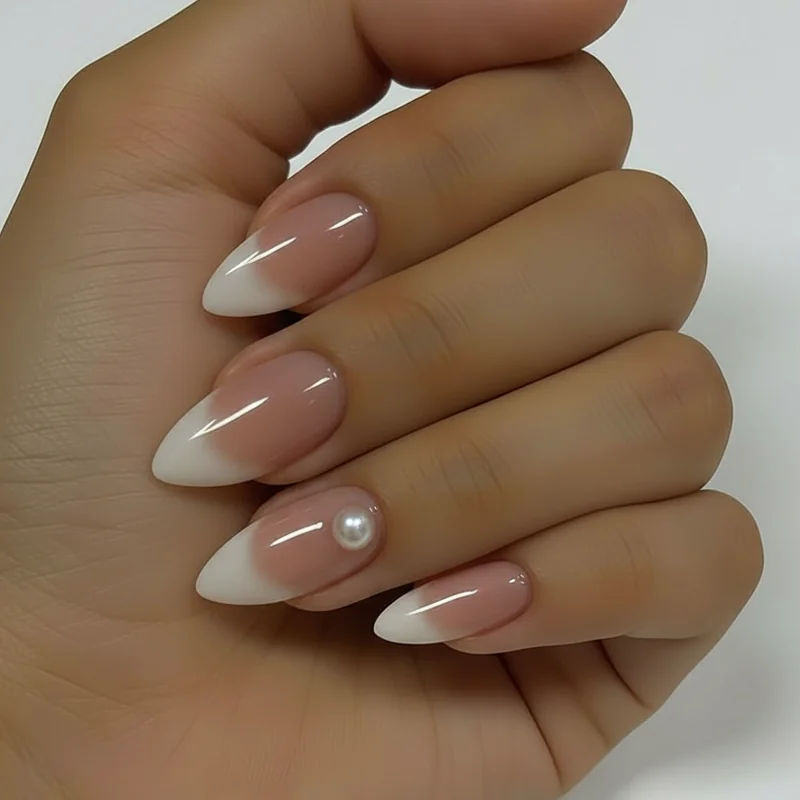
Pearl French tip wedding nails work because pearl exists in the same visual register as white. They are tonal siblings, not contrasts. A pearl placed at the tip echoes the tip colour, and the result looks considered and complete without looking decorated. Rhinestones placed along the smile line have a similar logic: the sparkle follows the line rather than interrupting it. Both additions keep the architecture of the French manicure intact while adding the personalised detail that makes a manicure feel designed rather than default.
The ring finger rule is worth stating clearly. One detail on the accent nail, whether a single pearl at the cuticle, a line of micro rhinestones, or a chrome finish on the smile line alone, is the editorial move. It creates a focal point for ring photography, adds visual interest without symmetry fatigue across all ten nails, and photographs as intentional rather than overdone.
What makes pearl feel editorial rather than costumey: scale and restraint. A 2mm pearl at the cuticle of the ring finger on a micro-French set is finished and luxurious. Fourteen pearls across five nails is a different conversation.
Coloured French Tips for Brides Who Want Something Different
A coloured tip on a French manicure is bridal. That sentence needed saying.
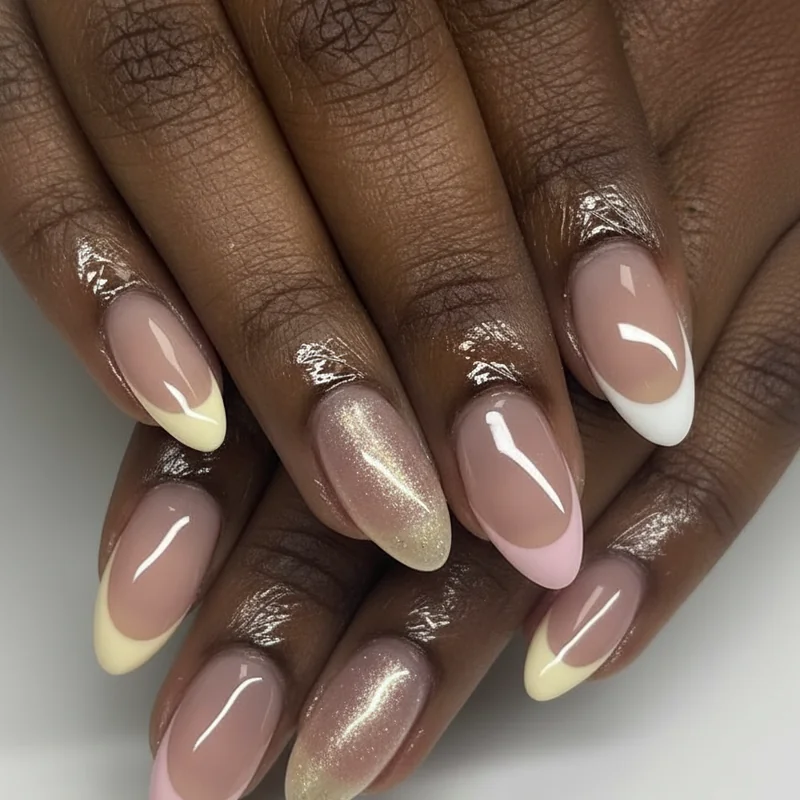
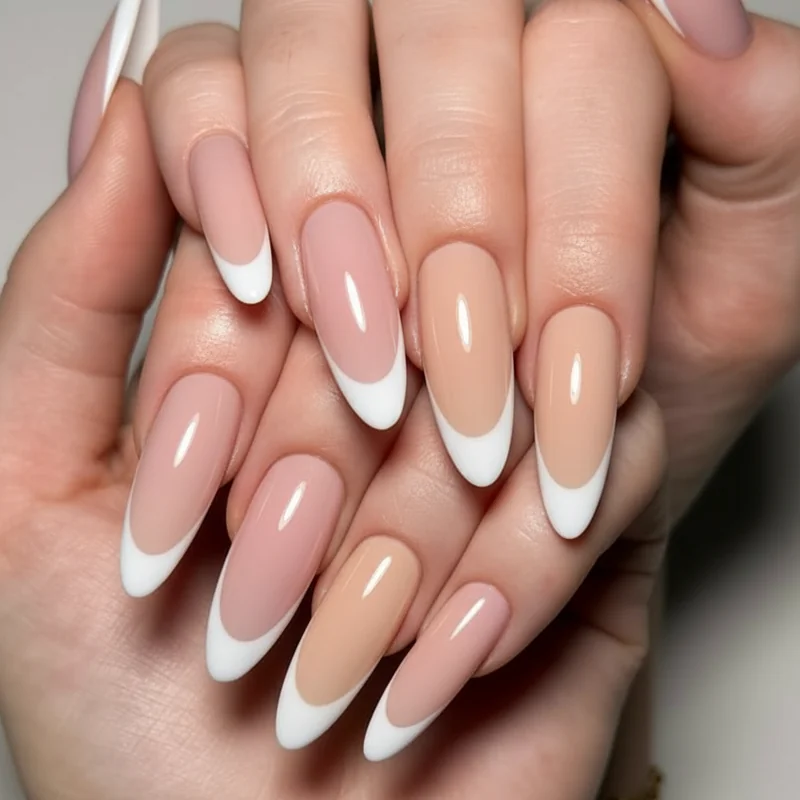
Buttercream, champagne, blush, dusty rose, soft lavender: none of these are compromises on the French format. They are the French format, done in a different register. The architecture is identical: pale base, lighter or tonal tip. The variation is in which tones sit at each position, and for brides with ivory or warm-toned gowns, a buttercream or champagne tip is not just acceptable, it is the better technical choice.
The decision framework by dress colour: cool white gown, consider a true-white or pale lavender tip. Ivory gown, buttercream or vanilla. Champagne gown, a champagne or soft gold tip. Blush gown, a pale rose or dusty pink tip. In every case the goal is tonal continuity between the hands and the dress in photographs, and the coloured tip achieves that in a way a bright white tip often cannot.
For brides who want colour but not conventional colour, the double French, two thin lines in slightly different tones, is one of the more photographed bridal nail formats of 2026. A cream base line and a slightly warmer vanilla outer line, both under 1mm, is a detail you can explain in ten words to a nail tech and that will look distinctive in every shot.