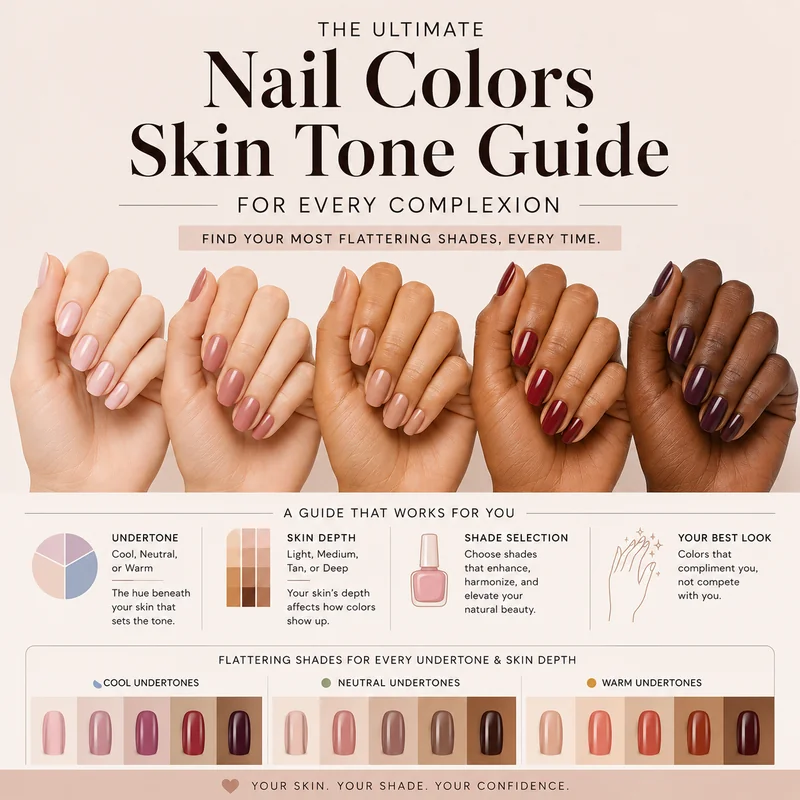
Nail colors that look good on every skin tone do exist and you don't need to know your undertone to find them. Not a hex code quiz, not a vein test, not three minutes of holding your wrist up to a window. Just a shortlist of shades that have been worn beautifully across fair, medium, tan, olive, and deep complexions and the clear reasons why they work.
This is the post for everyone who has saved a colour on Pinterest, bought it, and watched it look completely different on their own hands. The frustration is real, and the fix is simpler than the beauty industry tends to admit. Certain shades have a quality that makes them work regardless of where you fall on the complexion spectrum and once you understand what that quality is, you'll never second-guess a polish choice the same way again. The Complete Guide to Nail Colors for Every Skin Tone breaks down the full colour system if you want the detail. This post gives you the answer directly.
Why Some Nail Colors Genuinely Work on Everyone (And What Makes Them Different)
Three things determine whether a nail colour is truly universal: saturation level, chromatic neutrality, and contrast logic. Most guides skip this entirely and jump straight to the list which is why readers end up back on Google a week later, holding a bottle that looked nothing like the Instagram post.
A nail color that looks good on every skin tone tends to sit in one of two zones. It either has enough pigment depth to create complementary contrast against any complexion (classic red, deep burgundy, chocolate brown) or it has a balanced, chromatic neutrality that doesn't pull too warm or too cool, so it doesn't fight with the skin underneath it (mauve, greige, French white). Finish matters here too. A sheer, glossy formula reflects light off the nail in a way that adds warmth to the hand regardless of complexion. A flat matte finish can look stark against lighter skin and muted against deeper tones. This is the reason the same shade in two different finishes can land completely differently on the same person.
OPI's colour theory guide confirms what manicurists have known for years: certain shade families transcend skin tone precisely because they're built on this principle of visual harmony rather than colour matching. The shades below all pass that test. And if you want a deeper dive into how finish and warmth affect how your hands look overall, that piece is worth a read.

Classic Red: The One Shade That Has Never Failed a Single Skin Tone
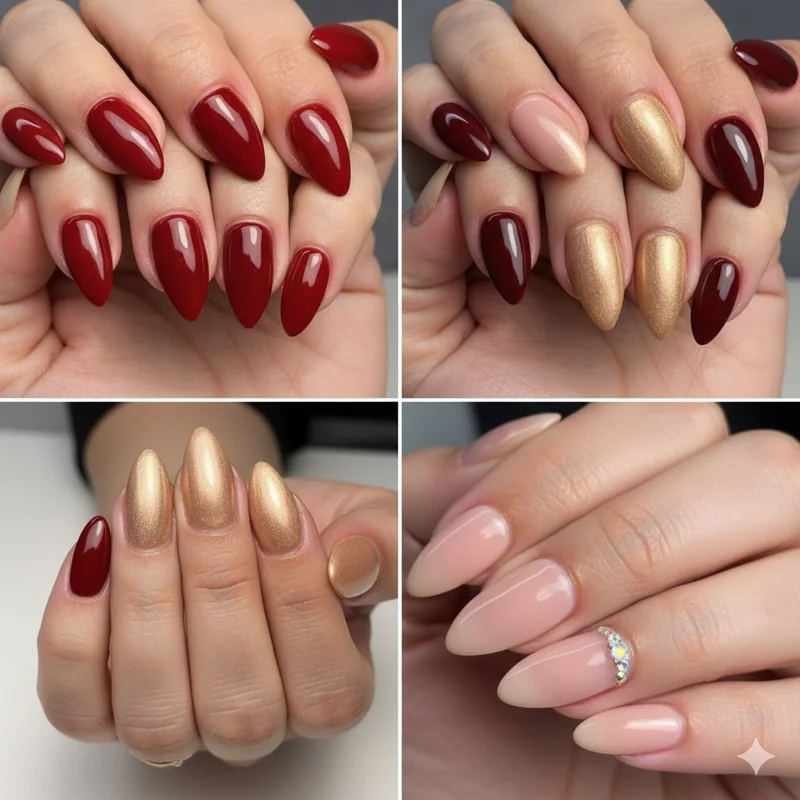
There is no undertone conversation to be had with a true classic red. It is the single most universally wearable nail colour in existence not because it matches every complexion, but because it contrasts beautifully with all of them. On fair skin, it pops with a sharp, graphic energy. On medium and tan complexions, it deepens into something rich and warm. On deep skin, it is simply extraordinary the contrast is so clean it looks intentional in a way that paler shades rarely achieve.
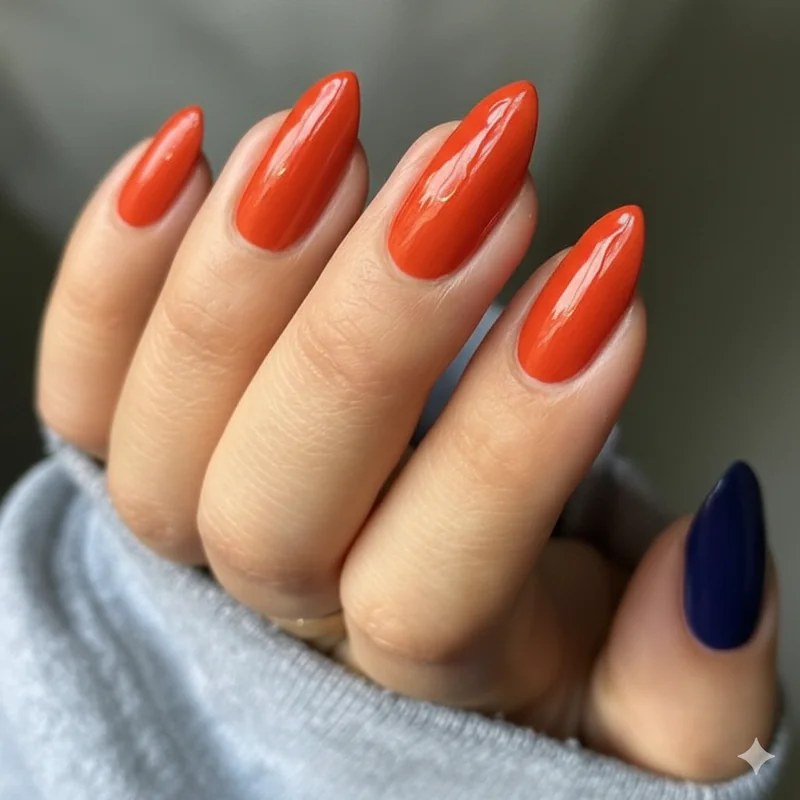
The caveat: not every red is the same red. A blue-based red (think Chanel Rouge Noir territory, or OPI's Big Apple Red) is the universal formula it reads as "classic red" across every complexion without pulling orange against warm undertones or clashing with cool ones. An orange-red, by contrast, is doing something different; beautiful, but not the same no-fail guarantee. When in doubt, go blue-based. It is the no-fail nail color that has earned that status for a reason.
Fair complexions see it as a statement. Deep skin tones see it as a power move. Everyone in between sees it as the answer when they can't decide.

Deep Burgundy: The Most Effortless Way to Look Expensive on Any Complexion
Pick up any bottle of deep burgundy and the first thing you notice is that it looks expensive before it even touches the nail. That quality rich, saturated, unmistakably intentional is exactly what makes it one of the most universally flattering nail colours available.
Burgundy works because it sits at the intersection of red and brown, two shade families that independently have excellent universality credentials. It is deep enough to create genuine contrast against lighter complexions without overwhelming them, and warm enough to echo and amplify the richness of deeper skin tones rather than fight against them. On olive and medium complexions, specifically, it does something almost architectural it defines the hand in a way that sheerer shades simply cannot. Merlot and wine red sit in this same family; all three are go-to nail shades for a reason.
On fairer skin, burgundy reads striking and sophisticated. On deep complexions, it is one of the few shades that reads as both bold and grounded a rare combination. For medium skin tones, and olive complexions, the warm-cool balance of a true burgundy is exactly why manicurists keep reaching for it.