
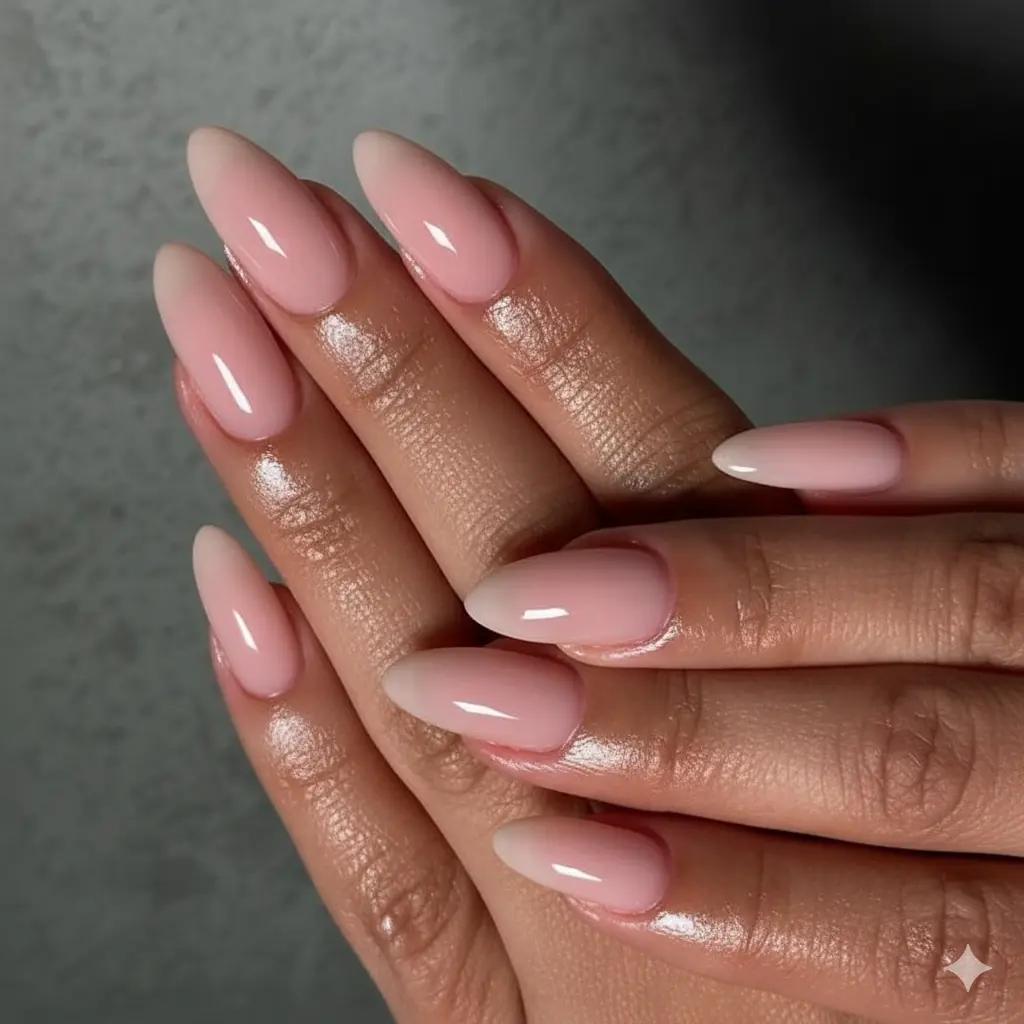
Gel nail polish for work is the only manicure system that survives a Monday client meeting and a Friday afternoon keyboard sprint without looking like you've been living in it. The gap between regular polish and gel is not a matter of preference — it is a matter of whether your nails look polished at 9am on day one and still read as intentional on day fourteen.
This guide covers the gel systems that actually hold up for professional women — not a list of sixteen brands with vague longevity claims, but a clear shortlist tied to your job type, your daily enemies (hand sanitiser, antibacterial soap, constant typing), and your budget. For the broader picture of office-appropriate manicures, the Work Nails complete guide is where to start.
Why Gel Polish Is the Professional Woman's Answer to Chip Anxiety
Regular polish gives you three days — four if you are careful and never wash your hands, which is not an option. Gel nail polish for work gives you two to three weeks of wear that holds its gloss, resists the tips chipping, and survives the specific daily abuse that office and remote hands take: typing friction, hand sanitiser, antibacterial soap, coffee cups, and the constant micro-stress of hands that are always in use.
The chemistry is the reason. Gel is cured under an LED lamp, which triggers a photochemical reaction that hardens the formula into a continuous, flexible film across the nail. Regular polish air-dries; gel cross-links at a molecular level. That cross-linking is why gel resists the physical impact of a keyboard and the chemical assault of alcohol-based sanitiser in a way that lacquer simply cannot.
For professional women managing a full working week, gel is not a luxury — it is the practical choice. As confirmed in sustained-wear scenarios like travel manicures, gel is the system that holds through high-activity, high-contact use across two to three weeks. The same logic applies directly to working hands.
Gel, BIAB, or Shellac — Which System Is Right for Your Working Life?
Three systems dominate the professional market, and they are not interchangeable. Choosing the wrong one for your job type is the most common reason gel underperforms.
CND Shellac is a hybrid — thinner than standard gel, it contains solvents that allow acetone to break through without filing, meaning five-minute removal with zero nail damage. It is the best choice for women with thinner or more sensitive nails, or anyone who prioritises healthy nails over maximum durability. Wear time runs two to three weeks with proper prep. For detailed specs, see the official CND Shellac system overview.
Standard soak-off gel (OPI GelColor, Gelish, and similar) is harder and more chip-resistant than Shellac. It requires light filing to break the seal before removal, which adds five minutes but increases wear durability. For most office and remote workers, this is the sweet spot — strong enough to survive the standard working fortnight, straightforward enough to apply at home with practice. If you have ever debated whether to commit to gel or switch to something with more structure, the gel vs acrylic nails for work comparison addresses that decision cleanly.
BIAB (Builder in a Bottle) is structured gel applied as an overlay over the natural nail. The GelBottle Inc version is the industry benchmark. It adds thickness, strength, and a sculptural finish that resists edge lifting even under serious daily stress. Healthcare admin, teachers, anyone typing on a mechanical keyboard for eight hours — BIAB is your upgrade. Wear time commonly exceeds four weeks. The Shellac vs gel vs BIAB breakdown by Kirsty Meakin is the clearest independent durability comparison available.
For gel performance on shorter nail lengths — which read as more professional and hold gel better — see professional nail length for work for length-specific guidance.
The Best Gel Nail Polishes for Work in 2026: Our Top Picks
These are HEMA-free, plant-based gel polishes from MelodySusie's Fleurwee line — formulated specifically for DIY professional use, with consistent wear and clean ingredient profiles that meet current EU compliance standards. Each pick is selected for office-appropriate finish and proven wear performance for working hands.
1. Fleurwee Sunshine Peony Pink — The Polish for the Monday Meeting
Milky, warm, and unmistakably polished. Peony pink reads as professional on every skin tone that suits a neutral — it is neither too sheer to read on camera nor too saturated to raise an eyebrow in a boardroom. Two coats deliver full, even coverage.

Best for: Office workers and remote workers who want a polished neutral with warmth. Excellent on video calls. Wear time: 2–3 weeks with correct prep. Shop Sunshine Peony Pink →
2. Fleurwee Sunshine Rose — The Quiet Confidence Pick
Rose without the sweetness. This shade sits at the midpoint between nude and pink — precise enough to look intentional, subtle enough to work across every professional context from finance to creative. It photographs beautifully and ages gracefully across two weeks of wear.

Best for: Women in client-facing roles who want a shade that reads polished without broadcasting effort. Wear time: 2–3 weeks. Shop Sunshine Rose →
3. #431 Neutral Nude — The Desk-Job Essential
A true neutral nude — neither pink nor beige, just clean. This is the shade professional women reach for when they want nails that look groomed rather than decorated. Ideal for conservative office environments, client presentations, and any industry where hands are on camera.

Best for: Finance, legal, corporate environments where colour is minimal and grooming reads loudest. Wear time: 2–3 weeks. HEMA-free. Shop Neutral Nude #431 →
4. #175 Peach Nude — The Warm-Handed Pick
Peach nude is underrated in professional manicure conversations. It adds warmth where a straight nude can look flat on hands, and it suits a wider range of skin tones than a cool-based pink. On medium and deeper skin tones particularly, it delivers the "done" look that neutral-seekers are actually after.

Best for: Women who find straight nudes look washed out — warmer skin tones and deeper complexions in particular. Wear time: 2–3 weeks. HEMA-free. Shop Peach Nude #175 →
5. #110 Sand Nude — The One That Looks Like You But Better
Sand nude is the shade that makes people ask if your nails are natural. It is warm, slightly muted, and requires no decision-making — it simply works every day of the week, in every professional context. The go-to for remote workers on constant video calls who want clean hands without thinking about it.

Best for: Remote workers, frequent video callers, anyone who wants nails that look immaculate without registering as a choice. Wear time: 2–3 weeks. HEMA-free. Shop Sand Nude #110 →
6. HEMA-Free 24-Colour Professional Set — For the DIY Planner
If you want to commit to at-home gel properly, this set covers the full professional spectrum — nudes, milky pinks, sheer roses, and clean neutrals — in a single purchase. The formulas are HEMA-free, which matters for daily professional use. For the modern professional woman building a home gel system, this is the starter kit that makes Sunday night nail prep genuinely efficient.

Best for: Women building a home gel system who want range across professional neutrals without buying shade by shade. Wear time: 2–3 weeks per application. HEMA-free. Shop the 24-Colour HEMA-Free Set →
Why Your Gel Chips at Work — and the Four Prep Mistakes That Cause It
Gel does not fail randomly. When it chips within a week of a working fortnight, one of four things went wrong.
Skipping the dehydrator. Nail plates contain natural oils. Gel does not bond to oil — it bonds to a clean, dry surface. A nail dehydrator removes those oils in thirty seconds. Skip it and you are applying gel to a surface it will eventually reject. According to gel polish longevity research, capping the free edge and proper prep can add up to a full week of wear.
Not capping the free edge. The free edge is the very tip of the nail — the part that hits the keyboard, the desk, the coffee cup. Run each coat of gel (base, colour, and top coat) over the tip to seal it. This single step is the difference between two weeks of intact wear and tips that start lifting by day five.
System incompatibility. Mixing base coats and top coats from different brands is the hidden cause of unexplained lifting. Different gel systems use different monomer compositions. They do not always cross-link cleanly. Stick to one system end to end.
Under-curing. If the lamp is underpowered or the nail is held too far from the light, the gel never fully polymerises. The surface cures but the inner layer stays tacky and weak. Position nails flat and centred under the lamp, and cure for the full time specified for the formula.
How to Make Your Gel Manicure Last Two Full Weeks at Your Desk
The product does most of the work. Your daily habits do the rest.
Cuticle oil, daily. This is not a spa step — it is a mechanical one. Gel is a flexible film. Hands that are constantly in hot water, sanitiser, and air conditioning lose moisture, which causes the skin around the nail to contract and lift the gel edge. A drop of cuticle oil on each nail after washing keeps the gel's border intact. For a complete daily nail care routine that extends gel wear, The Complete Nail Care Guide covers the full maintenance protocol.
Apply cuticle oil after hand sanitiser. Alcohol strips the gel surface. A drop of oil immediately after sanitising neutralises the drying effect before it compounds. It takes three seconds.
Wear gloves for cleaning. Prolonged exposure to hot water and cleaning products is the fastest way to break down gel adhesion. Rubber gloves are not glamorous. Neither is redoing your nails every Sunday.
Avoid peeling skin around the nails. It pulls the gel edge with it. Every time.
Salon Gel vs At-Home Gel: What Actually Works Before a Big Week
The honest answer: a good at-home application with correct prep often outlasts a rushed salon appointment with inadequate prep. The nail technician controls the product quality; you control the prep quality. Get both right and the system performs identically.
Where the salon wins is in the application of BIAB and hard gel — these require more skill and a properly calibrated professional lamp to cure correctly. For standard soak-off gel, a well-practised DIY application is entirely reliable for professional results.
If you are not confident in your at-home technique before an important week, the alternative is not necessarily a full salon appointment. Press-on nails for the week — applied correctly — are a faster, lower-commitment option covered in the press-on nails for work guide. They have genuinely improved, and for a single high-stakes week, they are worth considering.
For ongoing at-home gel use, a UV/LED lamp, a nail dehydrator, and a system-matched base and top coat are the three non-negotiables. As board-certified dermatologist sources confirm, proper UV lamp use and correct removal technique are what protect nail health over long-term gel use — see nail health and gel safety for the full guidance.
The Standard Has Changed. So Should Your Manicure System.
Gel polish is no longer the salon-only, high-maintenance category it used to be. HEMA-free formulas, accessible at-home kits, and systems designed specifically for working hands have made a chip-free fortnight the realistic baseline, not the optimistic one.
The right system for most professional women is a soak-off gel in a professional neutral — applied with correct prep, capped at the free edge, and maintained with daily cuticle oil. That combination covers ninety percent of working-week scenarios without a trip to the salon, a Sunday evening panic, or the particular demoralisation of spotting a chip before a 9am call.
Choose your system. Prep correctly. Stop thinking about your nails until the fortnight is up.