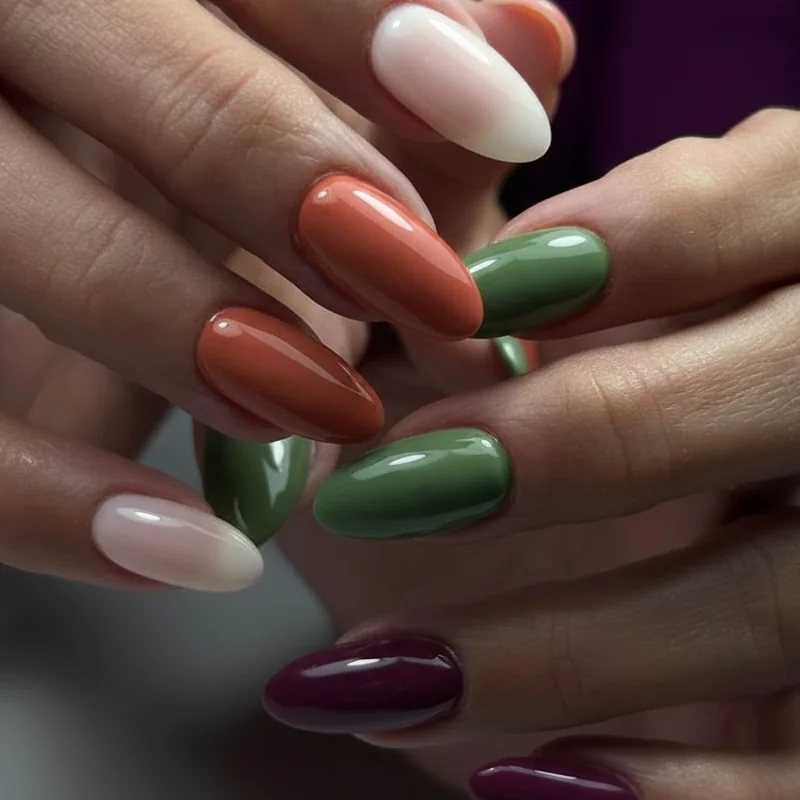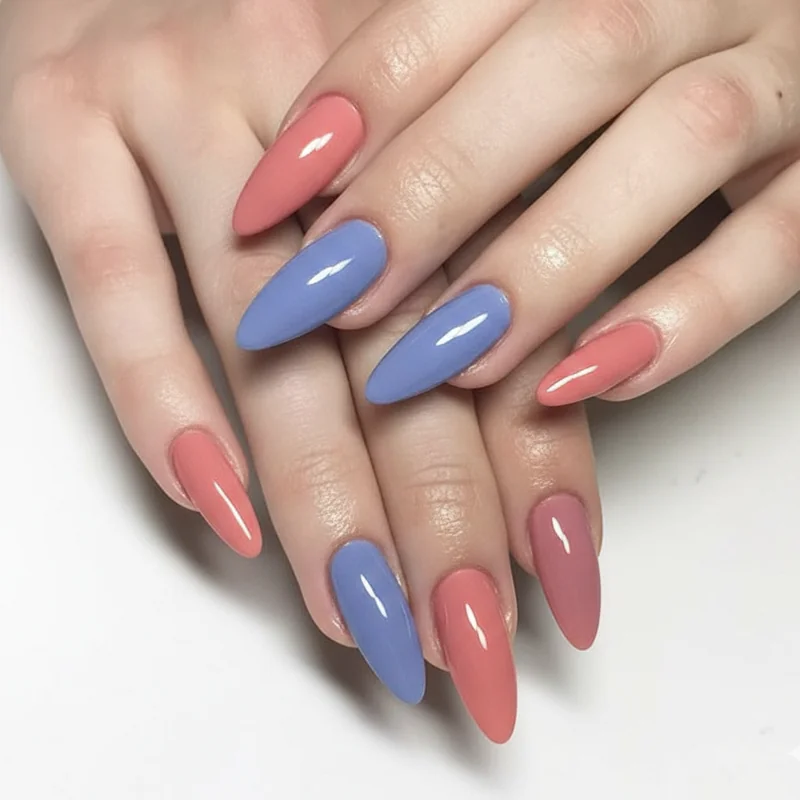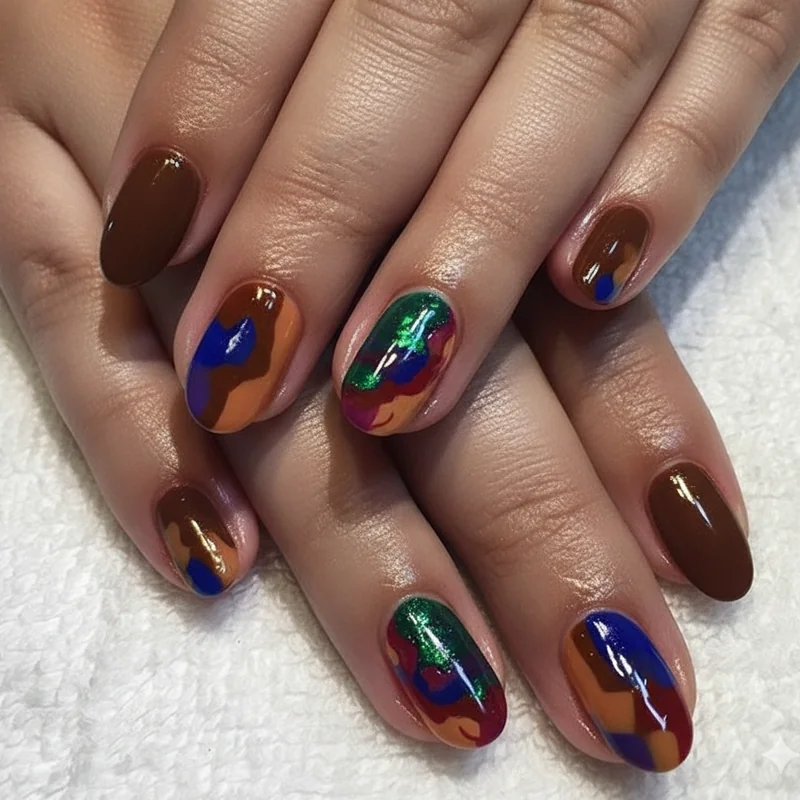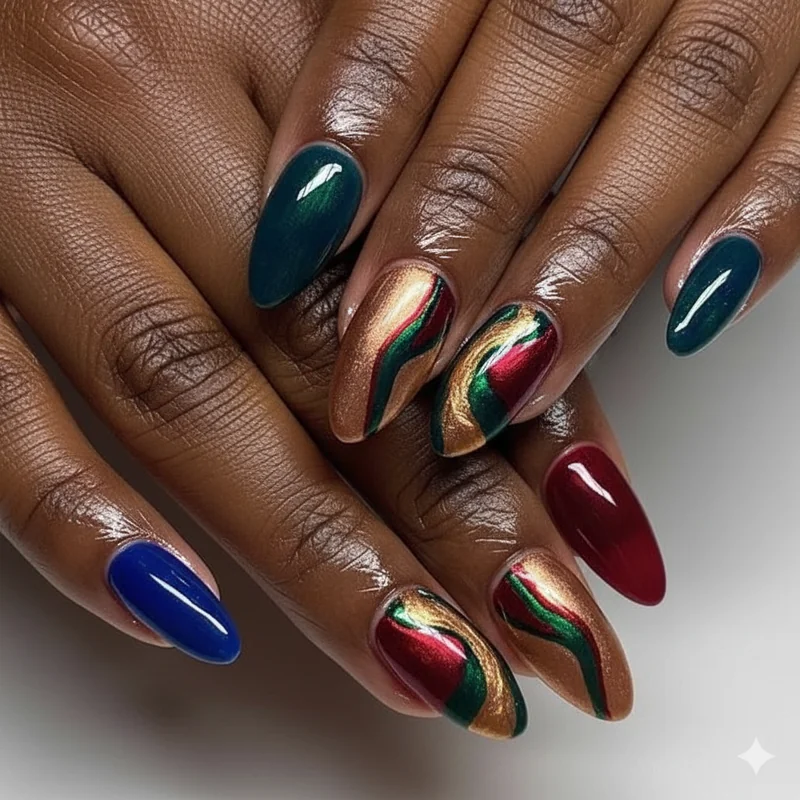
Nail colors that look good on every skin tone do exist — and you don't need to know your undertone to find them. Not a hex code quiz, not a vein test, not three minutes of holding your wrist up to a window. Just a shortlist of shades that have been worn beautifully across fair, medium, tan, olive, and deep complexions — and the clear reasons why they work.
This is the post for everyone who has saved a colour on Pinterest, bought it, and watched it look completely different on their own hands. The frustration is real, and the fix is simpler than the beauty industry tends to admit. Certain shades have a quality that makes them work regardless of where you fall on the complexion spectrum — and once you understand what that quality is, you'll never second-guess a polish choice the same way again. The Complete Guide to Nail Colors for Every Skin Tone breaks down the full colour system if you want the detail. This post gives you the answer directly.
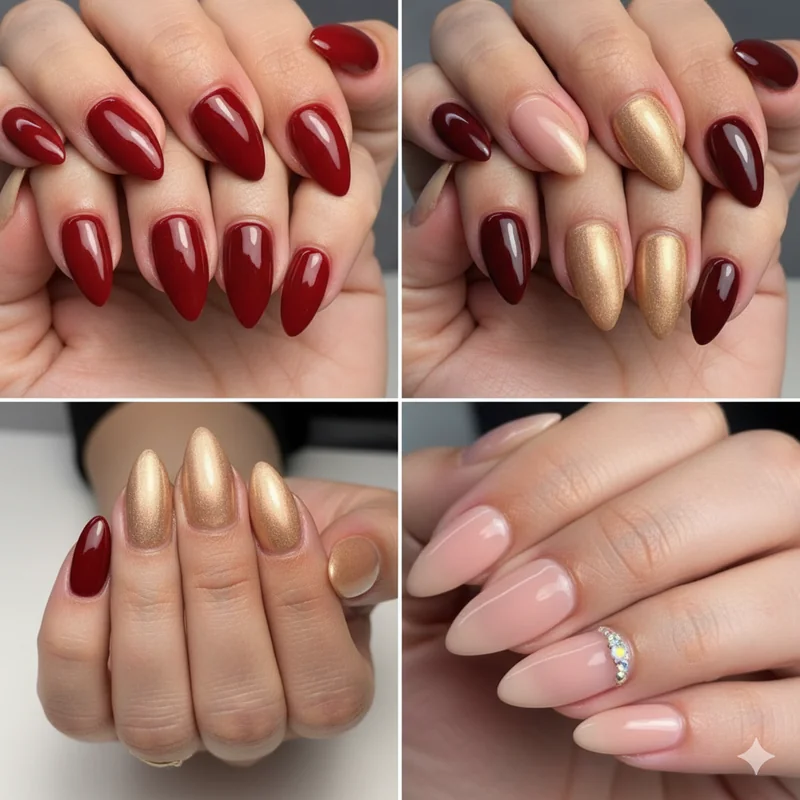
Why Some Nail Colors Genuinely Work on Everyone (And What Makes Them Different)
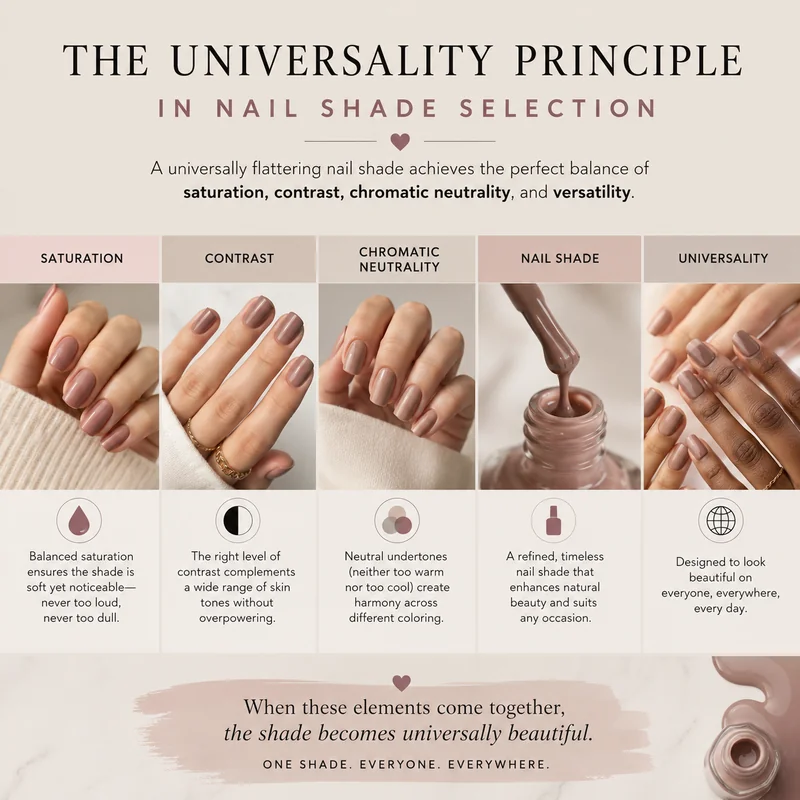
Three things determine whether a nail colour is truly universal: saturation level, chromatic neutrality, and contrast logic. Most guides skip this entirely and jump straight to the list — which is why readers end up back on Google a week later, holding a bottle that looked nothing like the Instagram post.
A nail color that looks good on every skin tone tends to sit in one of two zones. It either has enough pigment depth to create complementary contrast against any complexion (classic red, deep burgundy, chocolate brown) — or it has a balanced, chromatic neutrality that doesn't pull too warm or too cool, so it doesn't fight with the skin underneath it (mauve, greige, French white). Finish matters here too. A sheer, glossy formula reflects light off the nail in a way that adds warmth to the hand regardless of complexion. A flat matte finish can look stark against lighter skin and muted against deeper tones. This is the reason the same shade in two different finishes can land completely differently on the same person.
OPI's colour theory guide confirms what manicurists have known for years: certain shade families transcend skin tone precisely because they're built on this principle of visual harmony rather than colour matching. The shades below all pass that test. And if you want a deeper dive into how finish and warmth affect how your hands look overall, that piece is worth a read.
Classic Red: The One Shade That Has Never Failed a Single Skin Tone
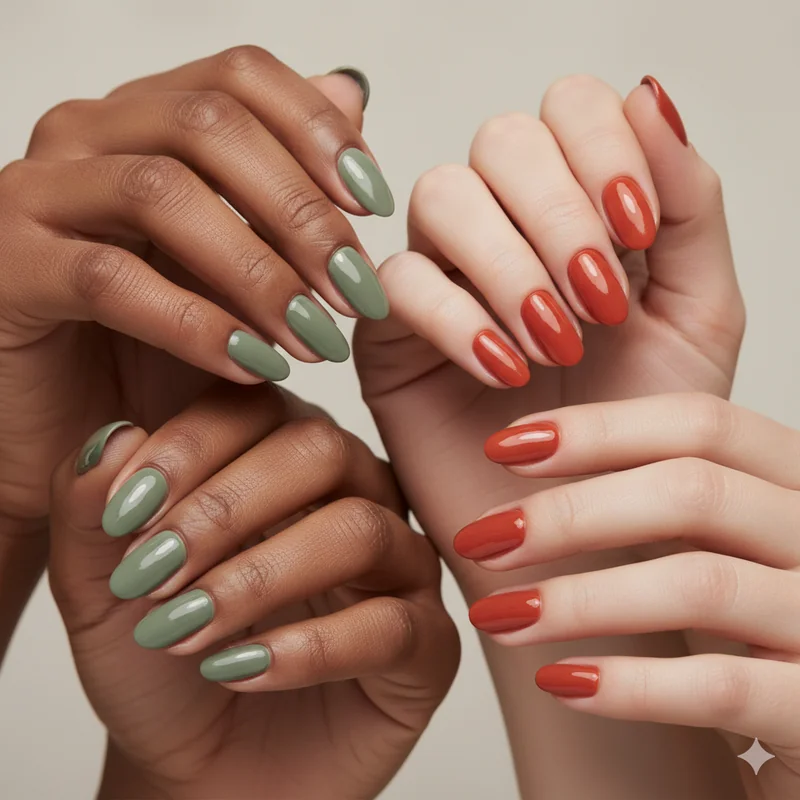
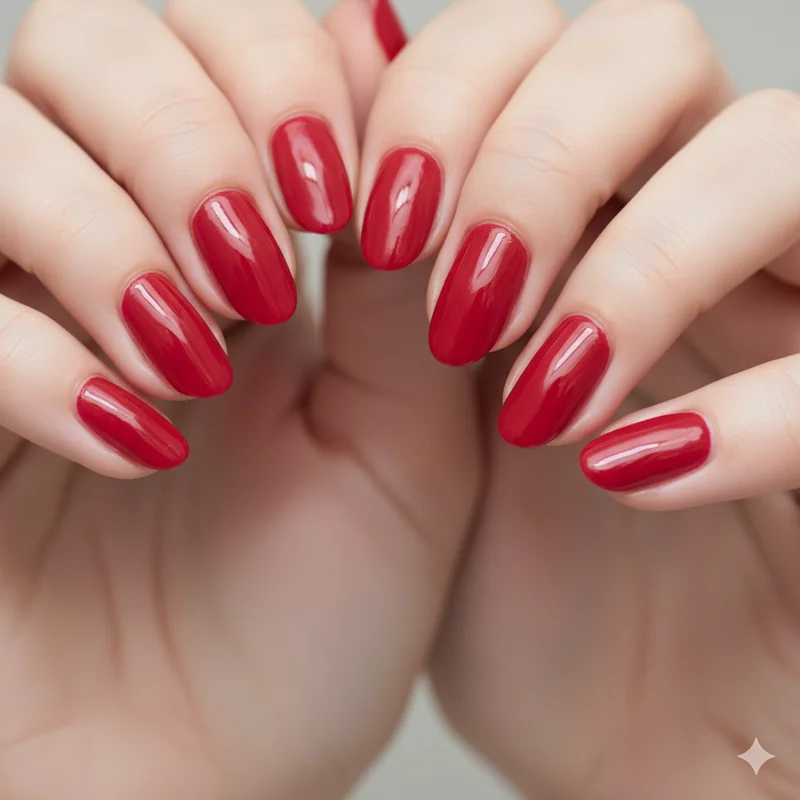
There is no undertone conversation to be had with a true classic red. It is the single most universally wearable nail colour in existence — not because it matches every complexion, but because it contrasts beautifully with all of them. On fair skin, it pops with a sharp, graphic energy. On medium and tan complexions, it deepens into something rich and warm. On deep skin, it is simply extraordinary — the contrast is so clean it looks intentional in a way that paler shades rarely achieve.
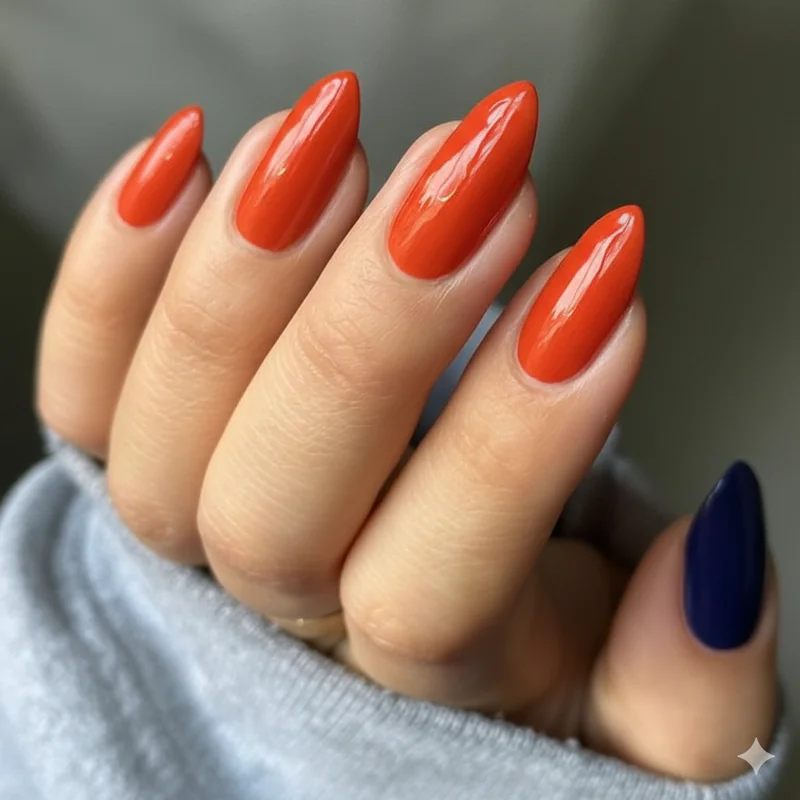
The caveat: not every red is the same red. A blue-based red (think Chanel Rouge Noir territory, or OPI's Big Apple Red) is the universal formula — it reads as "classic red" across every complexion without pulling orange against warm undertones or clashing with cool ones. An orange-red, by contrast, is doing something different; beautiful, but not the same no-fail guarantee. When in doubt, go blue-based. It is the no-fail nail color that has earned that status for a reason.
Fair complexions see it as a statement. Deep skin tones see it as a power move. Everyone in between sees it as the answer when they can't decide.
Deep Burgundy: The Most Effortless Way to Look Expensive on Any Complexion
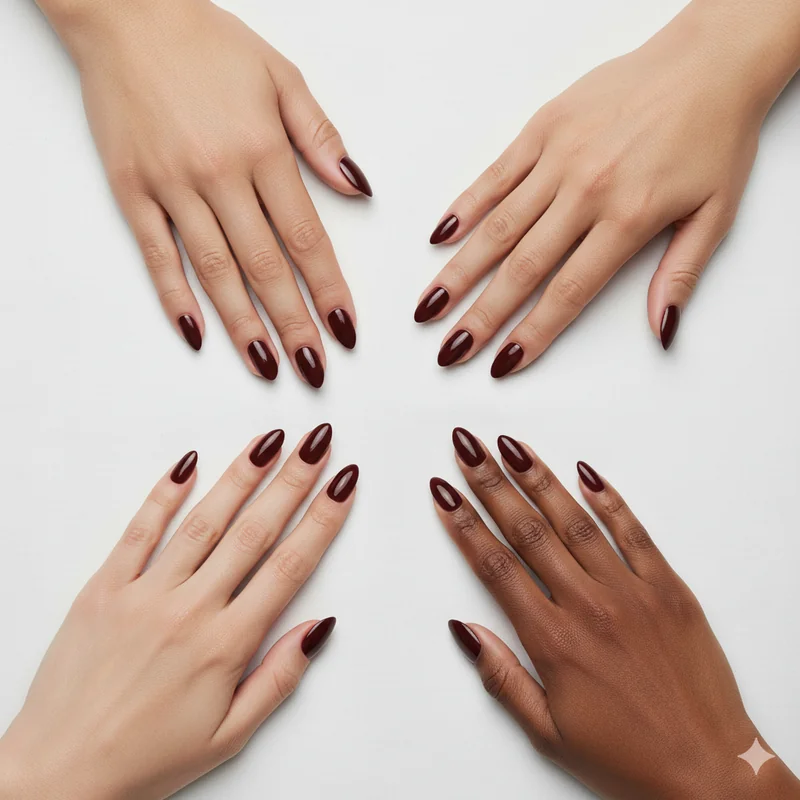
Pick up any bottle of deep burgundy and the first thing you notice is that it looks expensive before it even touches the nail. That quality — rich, saturated, unmistakably intentional — is exactly what makes it one of the most universally flattering nail colours available.
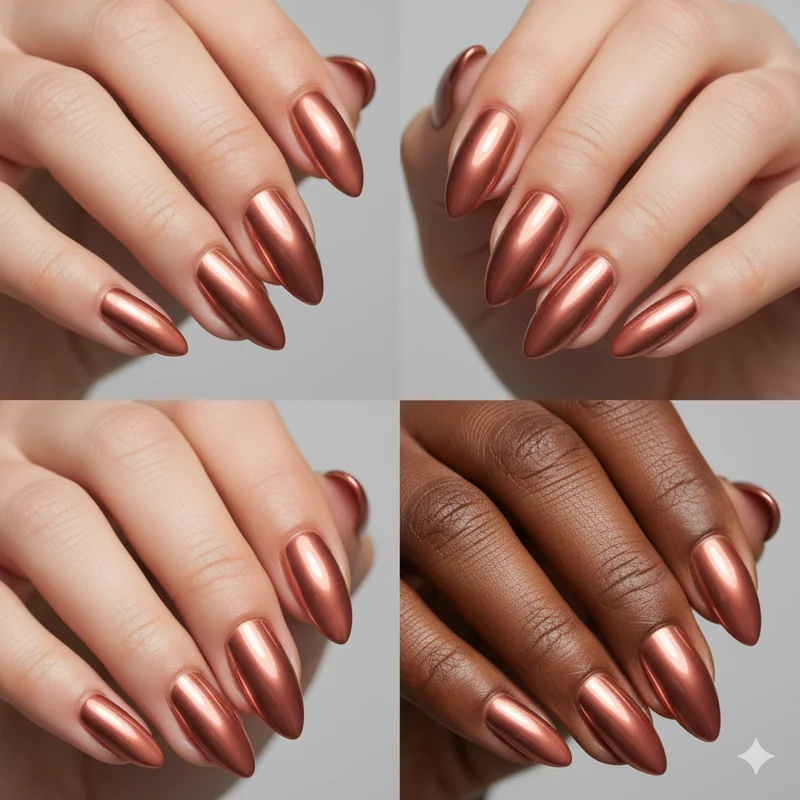
Burgundy works because it sits at the intersection of red and brown, two shade families that independently have excellent universality credentials. It is deep enough to create genuine contrast against lighter complexions without overwhelming them, and warm enough to echo and amplify the richness of deeper skin tones rather than fight against them. On olive and medium complexions, specifically, it does something almost architectural — it defines the hand in a way that sheerer shades simply cannot. Merlot and wine red sit in this same family; all three are go-to nail shades for a reason.
On fairer skin, burgundy reads striking and sophisticated. On deep complexions, it is one of the few shades that reads as both bold and grounded — a rare combination. For medium skin tones, and olive complexions, the warm-cool balance of a true burgundy is exactly why manicurists keep reaching for it.
Sheer Nude and Blush Pink: The "Your Nails But Better" Shades That Actually Work for Everyone
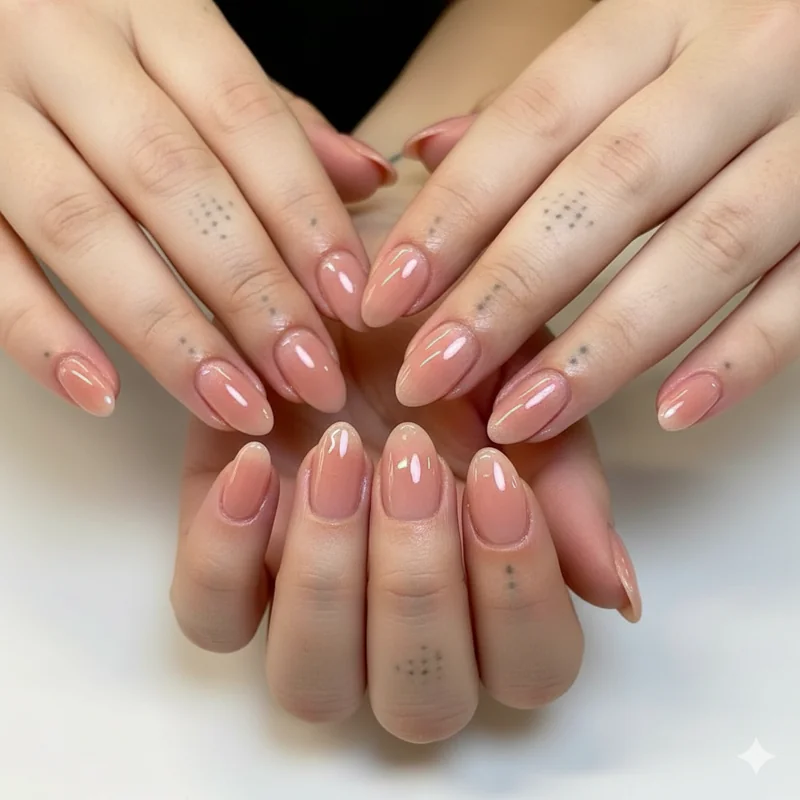
Here is the honest version of the nude conversation: a single beige nude does not suit every skin tone. The beauty industry's habit of calling one pale beige "universally nude" is exactly why so many women — particularly those with deeper complexions — have written off the whole category. But sheer nude and blush pink are a different proposition entirely.
The reason sheer nudes and soft blush pinks qualify as genuinely universal is opacity. A sheer formula doesn't sit on top of the nail as a flat colour — it works with the nail's natural tone, giving the impression of polished, healthy nails rather than a painted surface. On lighter complexions, a sheer blush pink is the "your nails but better" effect perfected. On deeper skin tones, a warm sheer nude — think champagne, warm rose, or the palest terracotta — creates the same clean, luminous effect. The key is choosing a sheer with some warmth in it; cool, stark sheers can look grey and flat on deeper skin. Essie's nail colour guide maps specific shade names to different complexions, which is useful if you want to match the sheer family more precisely.
Mauve and Greige: The Colours Nobody Talks About Enough (But Every Manicurist Reaches For)
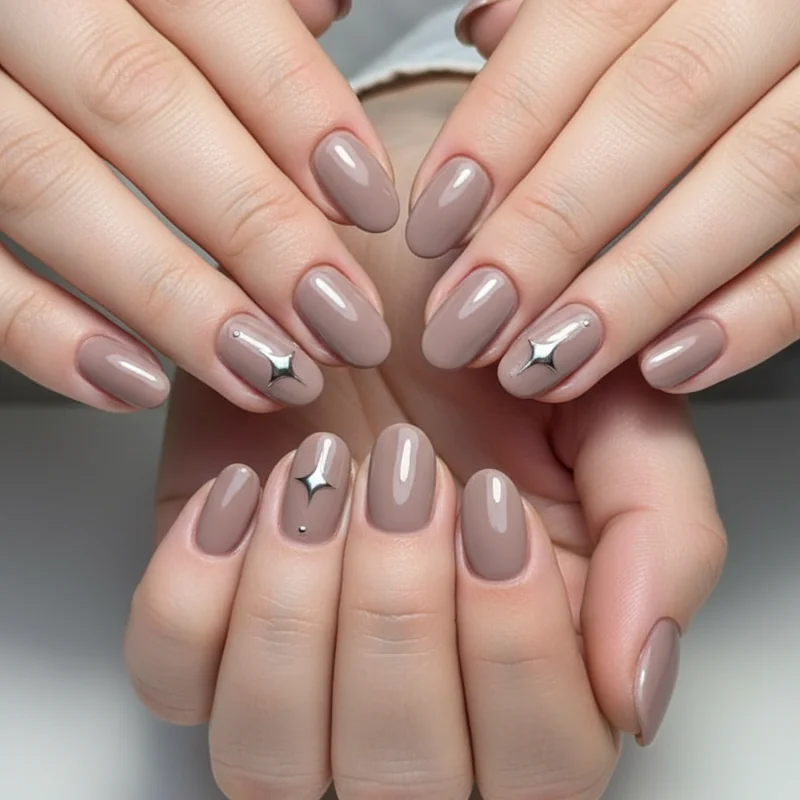
Ask a professional nail artist what they actually wear on their own hands. Nine times out of ten, the answer is somewhere in the mauve-greige family. Not because it is safe. Because it is genuinely brilliant.
Mauve sits at the meeting point of pink, purple, and brown — a balance that gives it an unusual quality: it is warm enough to flatter deeper complexions, cool enough to complement fair and cool-toned skin, and muted enough to feel sophisticated rather than sweet. Greige (grey-beige, for the uninitiated) operates on the same principle from the neutral end. Neither shade shouts. Both have a way of making hands look clean, polished, and expensive without any effort.
What makes this shade family particularly smart for anyone who has been burned by bad colour choices before is that it photographs beautifully across complexions. If you want a colour that looks as good in a photo as it does in person — on your skin, in your lighting — mauve or greige is the answer. Manicurist-endorsed universals from major nail artists consistently include this family as a top pick for exactly that reason.
White: Does It Actually Look Good on All Skin Tones? (Yes — Here's Why)
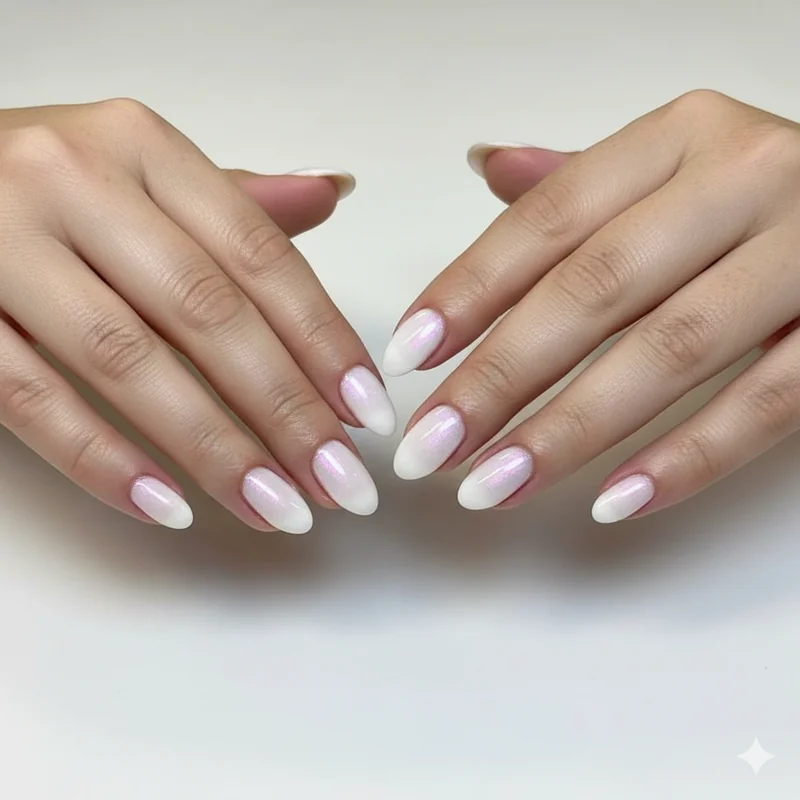
White nails divide people. And the hesitation is understandable — a flat, opaque white can look clinical and stark, and on certain complexions it creates such a high-contrast situation that it reads almost theatrical. But that is a finish problem, not a colour problem.
A milky white, a cloud white, or a sheer white with a slightly warm base? That is a different story entirely. The finish is everything. Milky whites — the kind with a semi-sheer, almost luminous quality — do something interesting: they catch and diffuse light rather than reflecting it harshly. On fair skin, the result is soft and clean. On medium and tan complexions, a warm milky white looks almost glazed, like healthy, well-hydrated nails. On deep skin, white creates the kind of graphic contrast that is genuinely arresting — the same principle that makes red work so well, but quieter. Pantone's Cloud Dancer, named Colour of the Year for 2026, is the specific shade that manicurists keep citing as the finish that resolves the "does white work for me" question. Milky, not chalk. Warm-soft, not surgical.
Chocolate Brown and Berry: The 2026 Shades That Happen to Be Universally Flattering
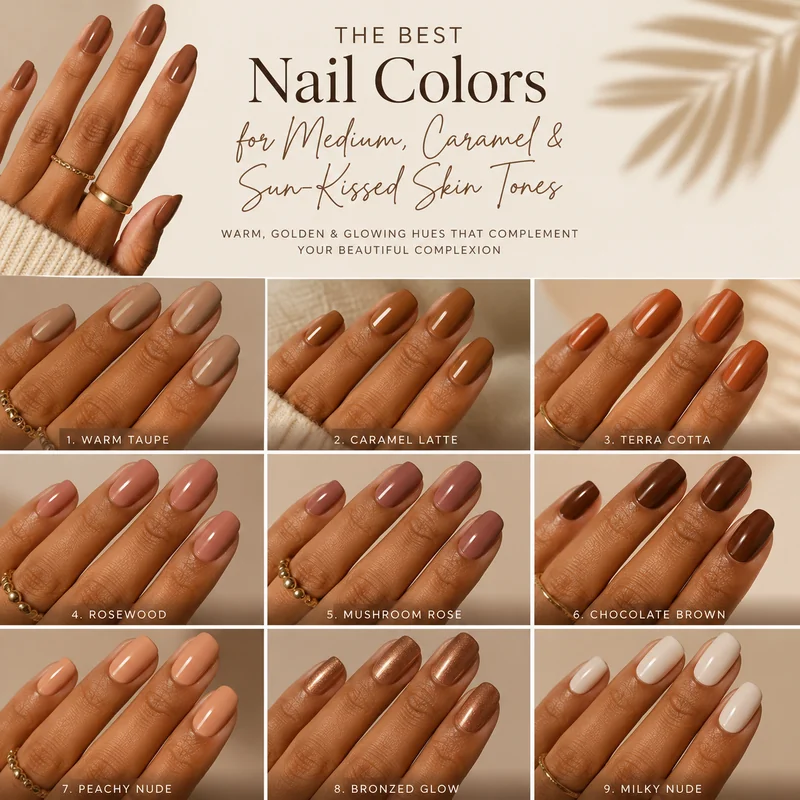
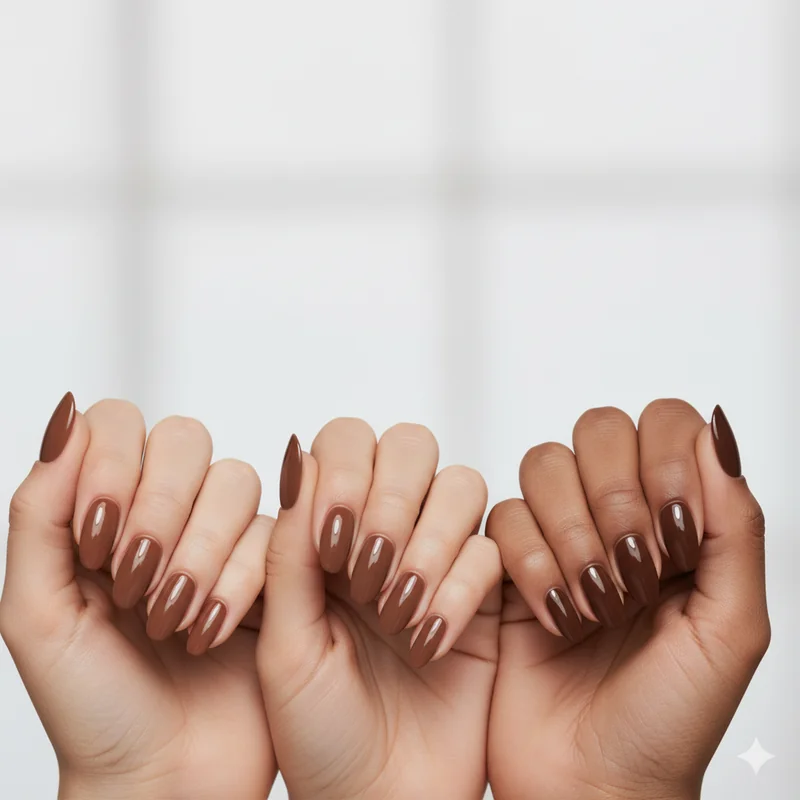
Celebrity manicurist Kandalec put it plainly: chocolate brown in a range of milky to espresso tones is the sophisticated alternative to black — "chic, elegant, and not as dramatic." She is right, and the reason it belongs on this list is that brown is one of the most skin-tone-versatile colours in the entire spectrum.
Brown works universally because it echoes natural tones present in virtually every complexion. Lighter caramels complement the warm undertones in fair and medium skin. Deeper espresso browns create stunning, tonal richness against deeper complexions without the starkness of black. And every mocha and latte in between lands beautifully on olive and tan skin — it's one of the rare shade families where warmer choices are almost universally flattering across the board. Berry sits in the same conversation: a true berry — reddish-purple, saturated without being dark — carries the same universality credentials as burgundy, but with more of a modern energy. Both shades transition across the year seamlessly. The 2026 Seasonal Nail Calendar maps exactly how these shades hold from winter through to summer, which is useful if you're committing to gel.
The French Manicure: Why It Is the Most Universally Safe Look, Not Just Colour
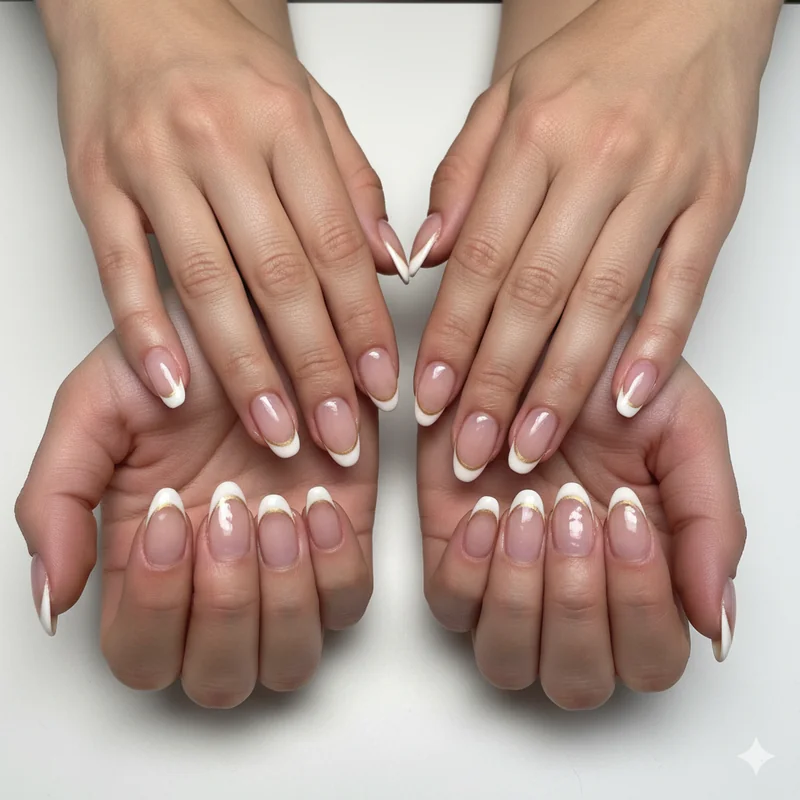
The French manicure is not a colour. It is a ratio — and that distinction is exactly what makes it the most universally flattering nail look rather than just a safe shade choice.
What makes a French work on every skin tone is the contrast relationship between the base and the tip, not the specific shades used. A classic sheer-pink-and-white French creates a clean, elongated effect that reads as polished on every complexion because it uses the natural nail as part of the design. The base doesn't need to "match" the skin — it needs to be close enough to the nail's natural tone to feel cohesive, and the white tip provides the definition. The 2026 evolution of the French, with champagne tips instead of pure white and a barely-there pink base with a milky sheen, is arguably even more universal — the softer contrast works across a wider range of skin tones without losing the clean, elongated effect. For anyone who wants to explore how nail shape interacts with this look, almond nails in particular carry the French manicure in a way that genuinely flatters every hand.