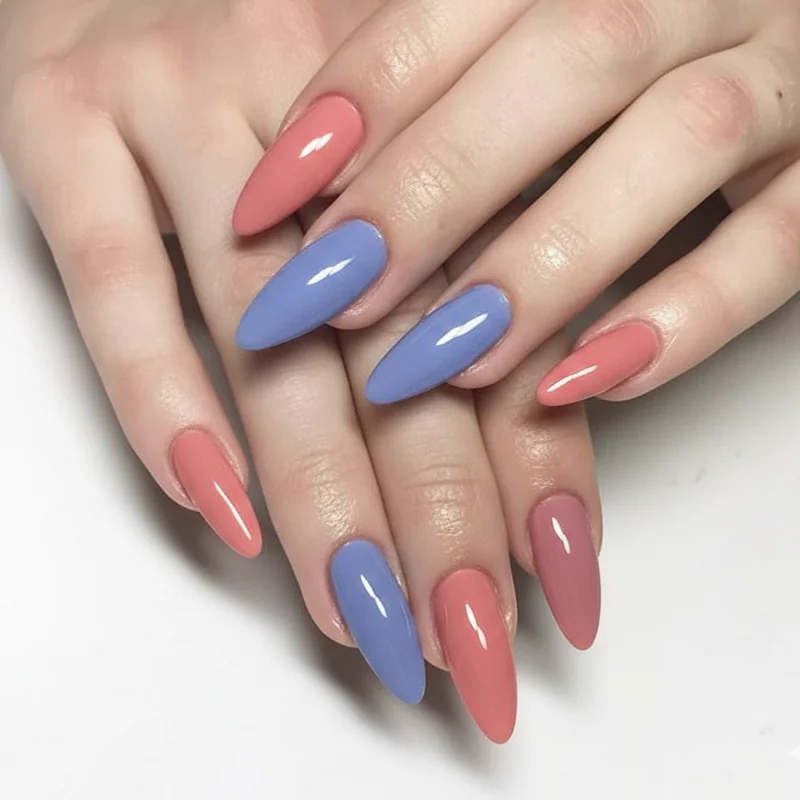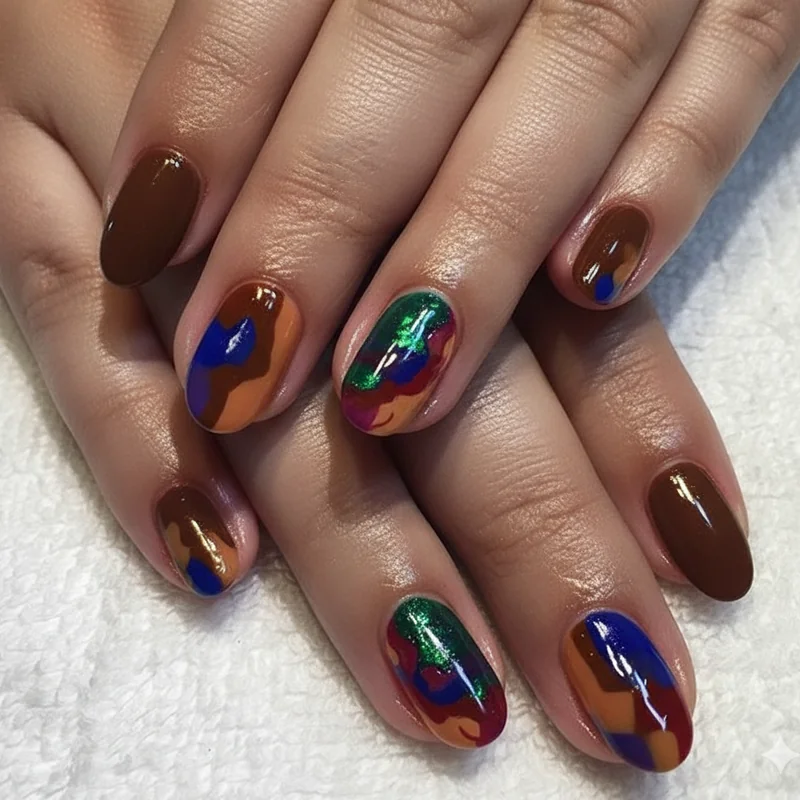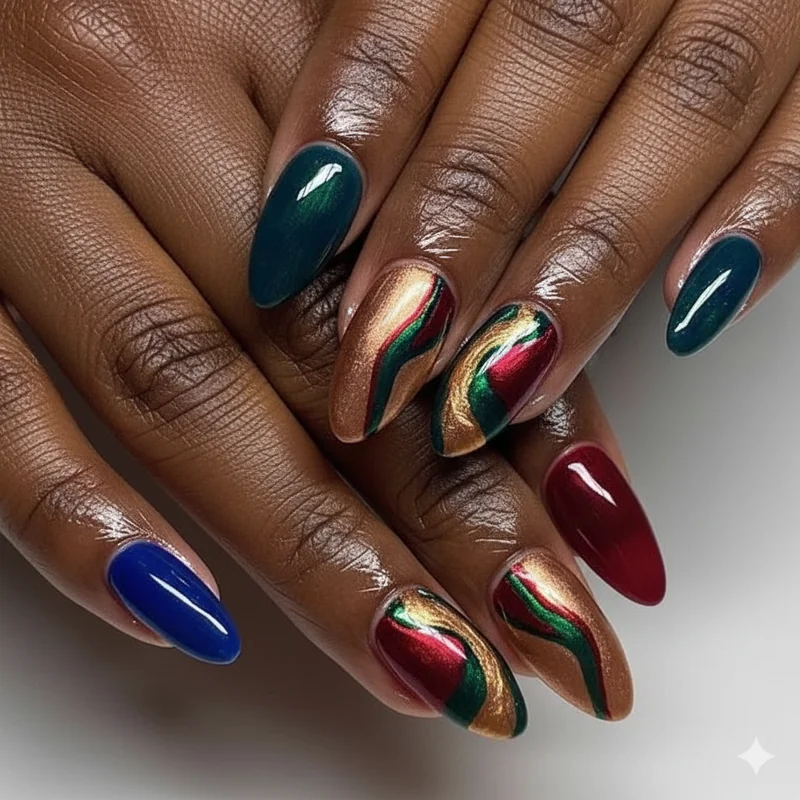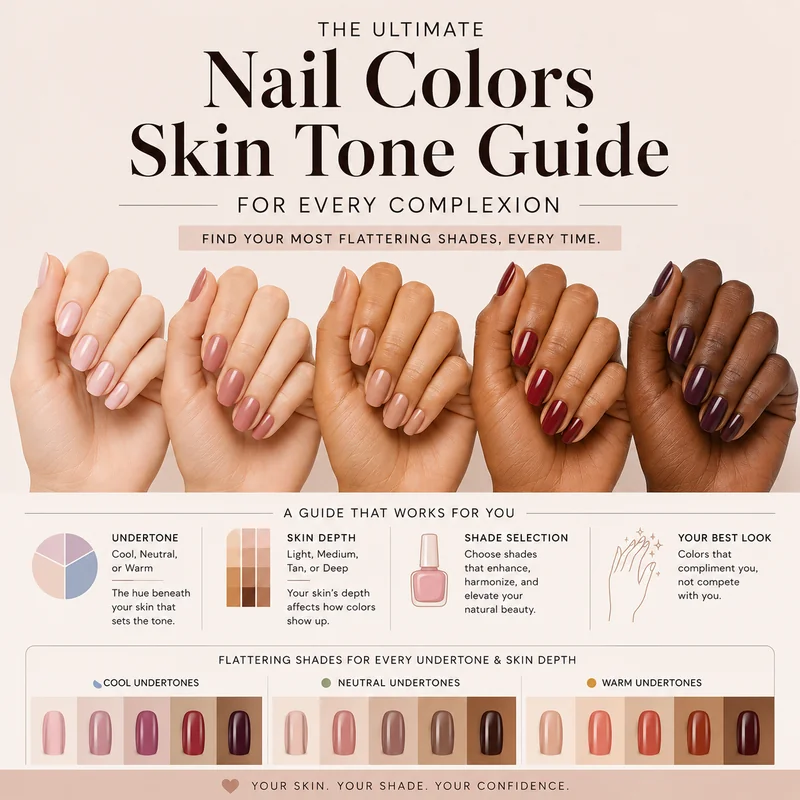
Nail colors for fair skin are not about playing it safe. They are about knowing which rules actually apply to you, and which ones were never written with you in mind. Fair skin is not a single canvas. It is porcelain with pink veins, it is cream with golden freckles, it is pale with warm peachy undertones that every generic nail guide treats as an afterthought. Choosing nail colors for fair skin well means understanding two things before you pick up a single bottle: your undertone, and your finish. Get those right, and the shade families almost choose themselves. Get them wrong, and even a beautiful colour will sit flat, washed-out, or oddly orangey on your hand.
This guide covers the full picture — from the undertone question that most pale-skin content glosses over, to the real mechanics behind why your last red looked nothing like the swatch. If you want the wider context on how skin tone shapes every shade decision, The Complete Guide to Nail Colors for Every Skin Tone is the place to start. But if your specific question is fair skin — this is the post.
Why Fair Skin Needs a Different Approach to Nail Colour
Most nail colour advice is written for medium skin. Fair skin gets a brief section at the top that says something like "you can wear anything!" and then a list of pastels. That is not guidance. That is dismissal.
The reality is more interesting. Fair skin interacts with colour differently than any other skin tone for a specific reason: low contrast between the nail bed and the skin around it means that shade selection, finish, and even lighting conditions change what a colour actually looks like on your hand. A pastel that reads soft and pretty in a swatch looks invisible on very pale skin. A dark burgundy that looks harsh in the bottle looks dramatic and intentional against a pale hand. The rules that apply to medium or dark skin do not automatically apply here.
There is also the undertone variable that most fair-skin guides either ignore or flatten. Cool-toned fair skin and warm-toned fair skin are not close enough to be treated as one category. They need different shade families, different red choices, different nude strategies. If you have ever read a pale-skin nail guide and felt like it wasn't quite written for you — this is usually why. It was written for cool-toned pale skin, and warm undertones were quietly assumed away.
The other factor nobody talks about is finish. Matte polish on very fair skin can visually pull forward the veining beneath the skin, giving an almost translucent, uneven appearance. Gloss bounces light off the nail surface and adds vibrancy to whatever colour is underneath. Jelly and glazed finishes give a lit-from-within glow that works particularly well on pale hands. These are not aesthetic preferences — they are decisions that change whether your polish reads alive or flat.
You can explore all of this in depth through the Nail Colors for Every Skin Tone topic hub, but the specific decisions start here.
First, Find Out Whether Your Fair Skin Runs Cool or Warm
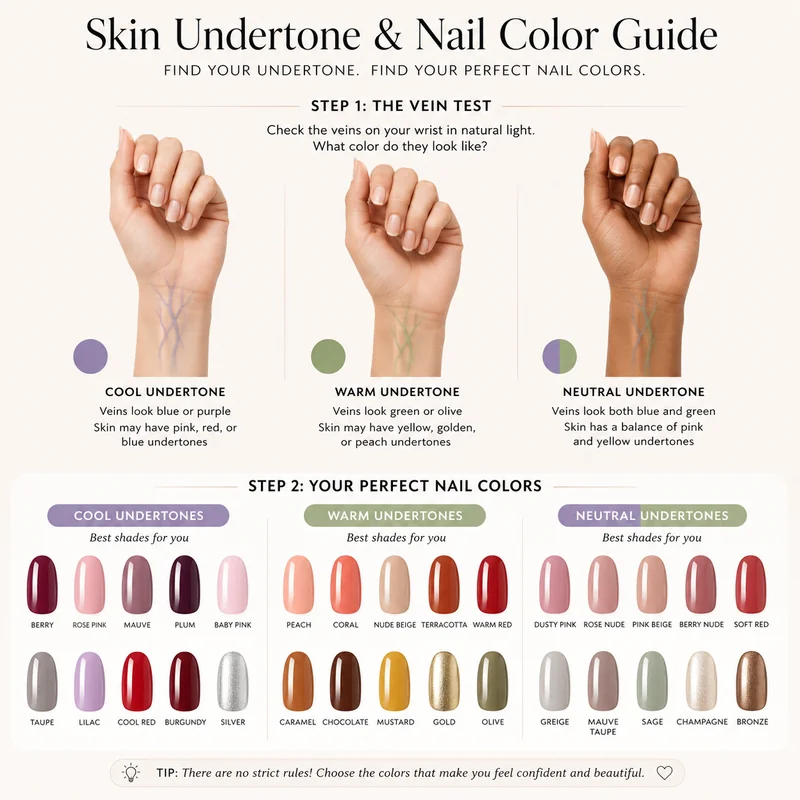
The vein test is imperfect, but it is fast and surprisingly reliable. Look at the inside of your wrist in natural light. Blue or purple veins point toward cool undertones. Green-ish veins — or veins that look olive — point toward warm undertones. Veins that shift between both suggest neutral undertones, which means you have the most flexibility in either direction.
If you are still unsure, look at how your skin responds to sun exposure. Cool-toned fair skin tends to burn and then fade back to pale. Warm-toned fair skin often develops a slight golden tint before burning, or stays consistently cream-peach rather than pink-white. This distinction matters because warm undertone fair skin is consistently underserved by nail content. If you have ever described your skin as "pale but not pink" or if you have freckles and a peachy undertone, you are warm-toned. You are also the reader most nail guides forget to write for.
For a full breakdown of how to read your undertone and translate it into colour choices across every finish and shade family, How to Find Your Skin Undertone covers every method in detail. But for now: cool or warm is the only call you need to make, and the vein test gets you there in thirty seconds.
The Shades That Always Work on Cool-Toned Fair Skin
Blue-pink, not yellow-pink. That single distinction covers most of what you need to know about cool undertone shade selection for fair skin.
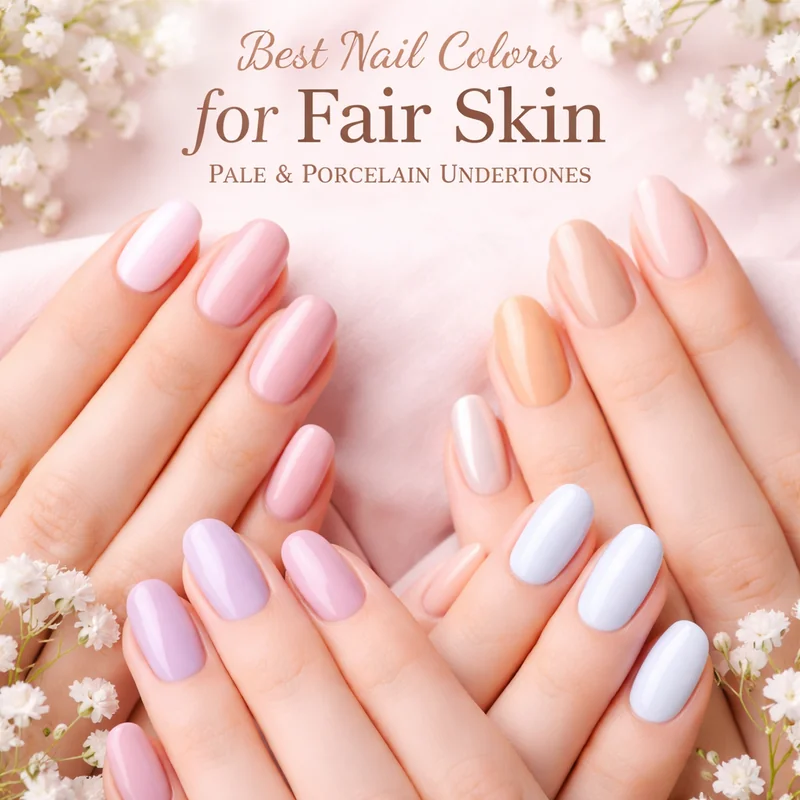
Soft pinks with a cool, blue-leaning base — think ballet pink, dusty rose, muted mauve — sit against cool-toned pale skin without the contrast dipping into "washed out." They match the skin's natural undertone without blending into it, because there is just enough pigment depth to define the nail. Lavender is similarly reliable: it adds colour without warmth, which means it does not clash with cool-toned skin's natural blue-pink cast. Baby blue works for the same reason — it pulls from the cool end of the spectrum and creates a clean, crisp finish against pale hands.
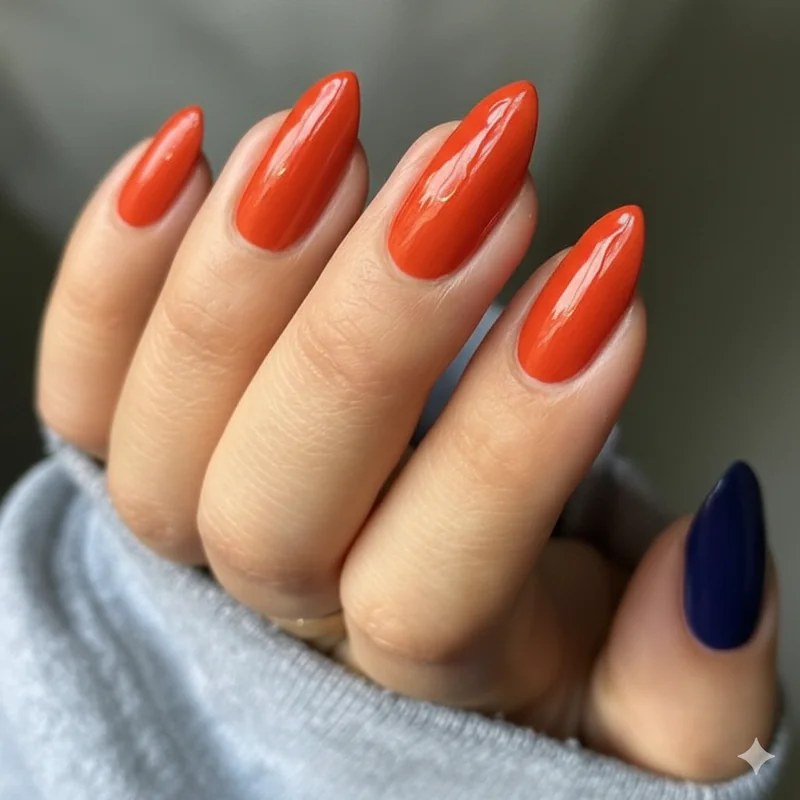
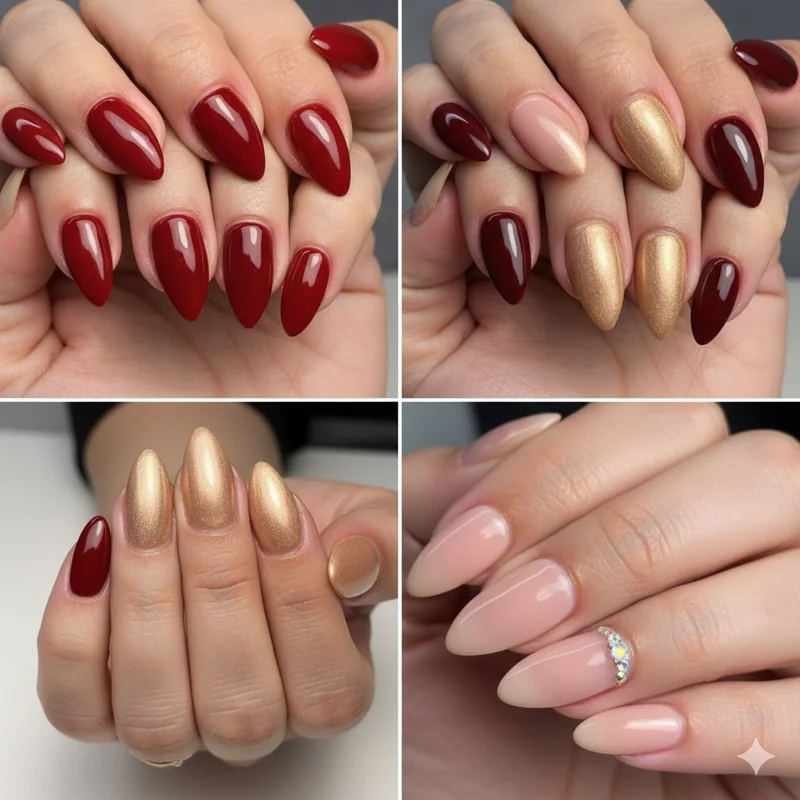
Berry shades and cool reds are where it gets genuinely exciting for cool-toned fair skin. A blue-based red, deep berry, or plummy burgundy against a pale hand creates the kind of contrast that photographs beautifully and reads intentional rather than harsh. Navy is another consistent performer — the depth of the colour against pale skin is graphic in the best way.
Blonde hair paired with cool-toned fair skin opens up a particularly clean palette of icy pinks, lavenders, and cool nudes that work together without competition. If that combination sounds familiar, Best Nail Colors for Blondes covers the specific shade families that work when hair and skin both sit in the cool-light range.
Finish note: glossy and creamy finishes consistently perform well here. Frosted finishes can amplify redness in cool-toned pale skin — worth avoiding if your skin runs pink.
The Shades That Always Work on Warm-Toned Fair Skin
Warm undertone fair skin does not need cool shades to look good. It needs warmth matched to warmth — and most nail guides have this completely backwards for this skin type.
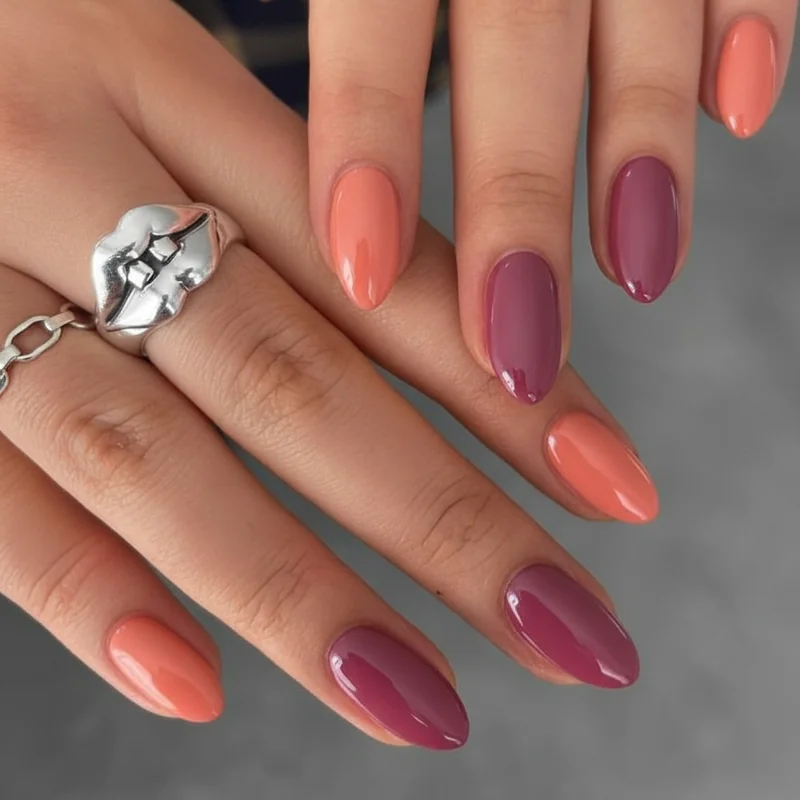
A peachy nude on warm-toned pale skin looks healthy, natural, and intentional in a way that a cool pink never quite manages. Warm rose — not blue-pink but yellow-pink, slightly peachy — sits naturally against skin that has a golden or cream undertone. Coral is another strong performer: it adds vibrancy and warmth without reading orange, because the skin's undertone absorbs the warmth rather than competing with it. Terracotta is worth trying if you want something deeper — it has become a consistent autumn and spring performer for warm-toned fair skin.
The warm red question is covered in more depth later, but briefly: if your skin runs warm, you want a red that has brick, copper, or tomato notes — not a blue-based cherry or raspberry. The blue-based red that works so well for cool skin tends to look slightly muddy on warm undertones.
Fair skin with red hair or visible freckles generally sits in the warm-to-neutral range. The shade families that work here overlap significantly with warm undertone recommendations — peachy nudes, warm roses, coral, and terracotta all read beautifully against that specific combination of pale skin and warm colouring. Best Nail Colors for Redheads goes deep on the specific shade direction for this combination.
How to Actually Choose a Nude That Won't Disappear on You
"Nude nails on me just look like I have no nails." This is the most common complaint from fair-skin women about nail colour, and it has a specific mechanical cause — not a style problem, a physics problem.
When a nude polish is the same tone as your skin, the nail bed and the surrounding skin blend into one continuous surface. Your nails disappear. This is the "mannequin hands" effect, and it happens because most nudes are formulated for medium skin. On fair skin, those medium-nude shades sit close enough to your natural nail bed tone that they add almost no definition.
The fix is not to avoid nudes — it is to choose nudes that are either slightly lighter than your skin (creating a clean, defined edge) or that have enough of a pink or peach undertone to sit above your skin tone rather than into it. A pink-toned nude on cool-fair skin reads like healthy skin, only better. A peachy nude on warm-fair skin does the same. What to avoid is the straight beige or taupe — those are the shades that disappear.
Sheer formulas are a particular problem because they simply do not have enough pigment depth to create contrast. A sheer nude on very pale skin can look like you have nothing on at all. If you love the sheer look, layer it. Three coats of a sheer pink-nude will build more definition than one coat of an opaque beige.
For a complete guide to the best specific nude shades across every fair-skin undertone, Best Nude Nail Polish for Every Skin Tone has the full breakdown with shade recommendations across both cool and warm fair skin types.
Red Nails and Fair Skin: Why the Undertone of the Red Matters More Than the Red Itself
The bottle lied to you. That is the short version of why the red looked orange — or strangely purple — on your hand when it looked perfect in the shop.
Red nail polish exists on a spectrum between warm (orange-leaning, brick, tomato) and cool (blue-based, cherry, raspberry). What looks like a universal "red" in the bottle looks completely different against your skin, because your skin's undertone interacts with the undertone of the polish. On cool-toned fair skin, a warm brick-red pulls the warmth in the polish forward and reads orange. On warm-toned fair skin, a cool blue-red can look oddly cold or slightly purple.
A blue-based red is a red that has been mixed with blue pigment rather than yellow. In the bottle, it often looks like a deep, saturated cherry or classic scarlet. On the nail, it reads as a true red — clean, vibrant, without orange. This is the red that cool-toned fair skin needs. The way to spot one: it will look slightly dark or cool in the bottle compared to a warm red. OPI's Big Apple Red and Essie's Really Red are classic examples of blue-based reds that perform consistently on pale skin.
For warm-toned fair skin, you want the opposite: a red with golden or orange notes that harmonises with your skin's warmth rather than clashing with it. Think burnt sienna moving toward red, or a tomato red rather than a cherry red.
The Best Red Nail Polish for Your Skin Tone guide covers this in full, with specific shade recommendations across both undertone directions and several finish options. The short version: stop buying the red that looks good in the bottle. Buy the red that matches your undertone.
Can Fair Skin Actually Pull Off Dark Nails? (The Honest Answer)
Yes. With one condition: you need to choose the right shade within the dark family, and you need to commit to the contrast.
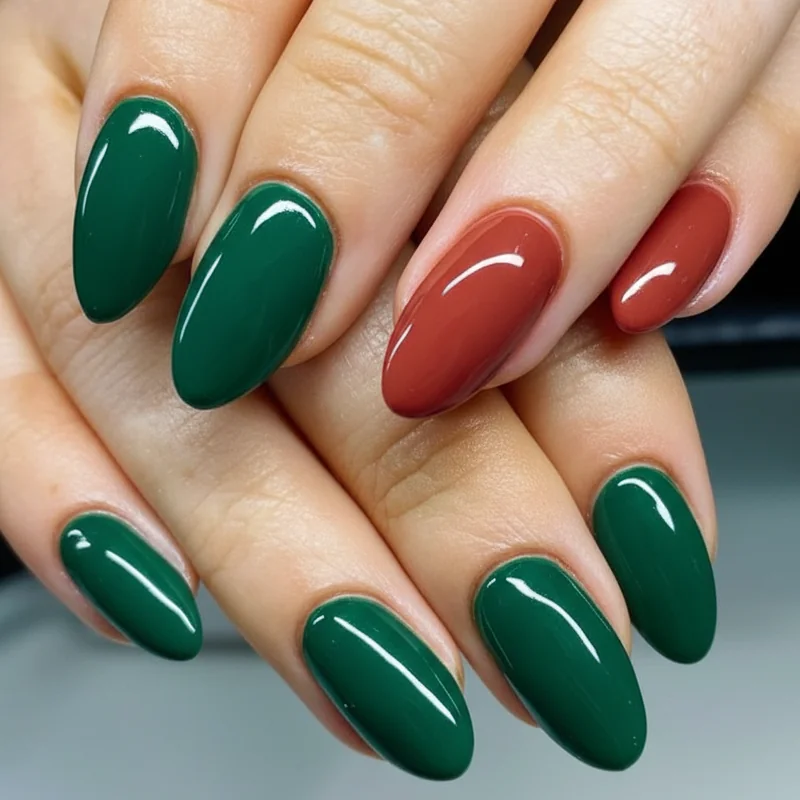
The "avoid dark colours" advice that appears in almost every fair-skin nail guide is well-meaning but incomplete. Dark shades on pale skin create high contrast. Whether that reads as dramatic and intentional or as harsh and costume-y depends entirely on which dark shade you choose and what finish you use. Burgundy on pale skin, in a gloss finish, is one of the most flattering combinations in nail colour. Navy in a creamy finish reads sophisticated rather than gothic. Deep plum adds richness without harshness if the formula is pigmented and the finish is satin or gloss.
The shades that tend to tip toward harsh on very fair skin are blue-blacks, very cool-dark greys, and extremely saturated black-reds. These have almost no warmth or depth variation — they sit as flat, high-contrast blocks against pale skin. The solution is not to avoid dark altogether but to choose darks with dimension: a burgundy that has warm red notes, an emerald that reads jewel-toned rather than flat, a navy that has slight blue-purple depth.
High contrast fair skin — dark hair with pale skin — can handle darker shades with more confidence than low contrast fair skin (blonde with pale skin), where the same shade can look heavier. If your colouring is high contrast, dark nails are genuinely one of your strongest moves. According to CND's pale skin guide, pigment depth and polish quality are the determining factors for whether a dark shade flatters or overwhelms on fair skin.
Does Finish Change Everything? Matte vs Gloss on Pale Skin
Nobody talks about this. It is the most underexplored variable in fair-skin nail colour advice, and it explains a significant number of the "why didn't this work?" moments.
Gloss finish adds luminosity to whatever colour is underneath. On pale skin, that luminosity reads as vibrancy and health — the nails look alive, defined against the skin, and the colour appears richer than it would in matte. Gloss is almost always the safer finish choice for fair skin across the board, whether the colour is light or dark.
Matte finish on very fair skin can expose the venous structure beneath the skin. Without the reflective surface of gloss, the eye travels further into the nail and surrounding skin, and the slight blueness of veins close to the surface becomes more visible. This is particularly noticeable on light and pastel shades in matte. On deeper shades — burgundy, navy, dark plum — matte can work beautifully because the pigment depth is strong enough to hold attention. But on anything in the pale-to-medium range, matte tends to flatten and dull.
Jelly finishes and glazed finishes are consistently the most flattering for fair skin across any shade family. The semi-translucent quality of a jelly formula gives a "lit from within" glow that suits pale skin particularly well — it adds depth without opacity, vibrancy without heaviness. A glazed finish (the "glazed doughnut" effect) bounces light in a way that makes the nail look polished and healthy regardless of the colour underneath. OPI's colour theory guide explains the mechanics of how finish interacts with skin tone and light reflection in more detail. The short version: for fair skin, choose your finish as carefully as you choose your colour.