Spring floral nails are the season's defining manicure but what they look like in 2026 is a different conversation from previous years. The flat, all-over petal repeat that dominated spring feeds for years has given way to something more considered: a single sculpted rose on one nail, a precise cluster of micro daisies at the tip, cherry blossom sketched onto a nude base with the lightness of an ink brushstroke. Spring floral nails in 2026 are about placement, dimension, and restraint as much as they are about flowers themselves.
That shift makes the design landscape both more exciting and, admittedly, more confusing. Cherry blossom or 3D peony? Pressed botanicals or painted micro daisies? Almond or coffin? The answer depends on three things your skill level, your nail shape, and how much you want your nails to do the talking. This guide maps every major floral nail family for 2026, from the simplest beginner options to the salon statements worth the investment. For a broader look at what's landing this season, explore the full spring nail gallery.
Why Spring 2026 Florals Feel Different This Year
Flat nail art had a good run. An all-over ditsy print, petals on every finger, colour on colour there was a moment for that, and it was cheerful. What's replaced it isn't minimalism exactly. It's intention. The florals getting saved and shared in 2026 share a specific quality: you can see the decision-making in them. One sculpted bloom on a ring finger. A daisy placed exactly at the smile line of a French tip. Cherry blossom rendered in three brushstrokes, not fifteen.
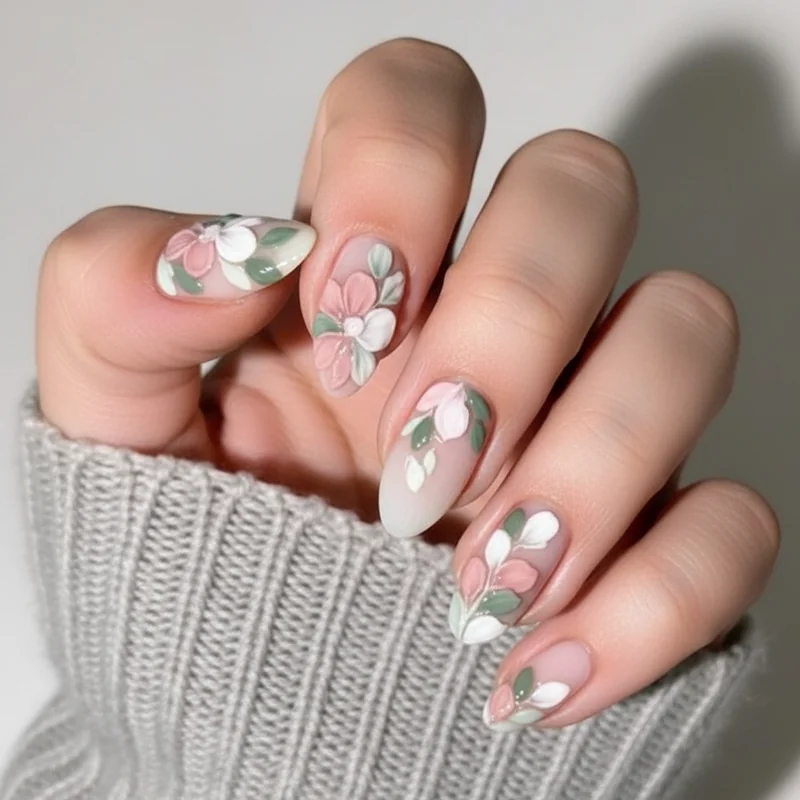
Dimensionality is part of it. The viral corner of nail TikTok this spring is 3D sculpted flowers roses and peonies built up from builder gel or acrylic, sitting above the nail surface like something you'd press in a book. Alongside that, pressed flower nails have seen Pinterest saves climb sharply year on year, real botanicals under hard gel with a translucency that photography loves. Both are a response to the same appetite: nails that look handmade, not printed.
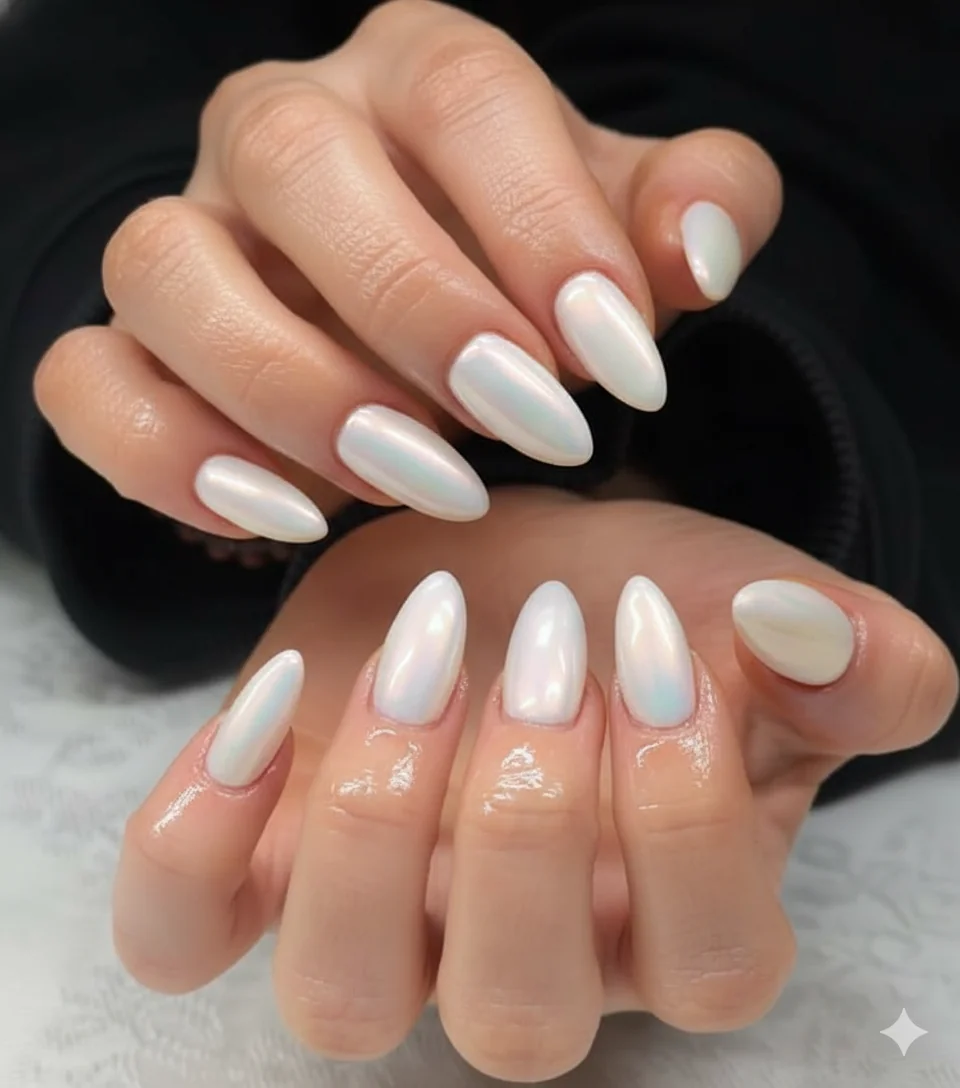
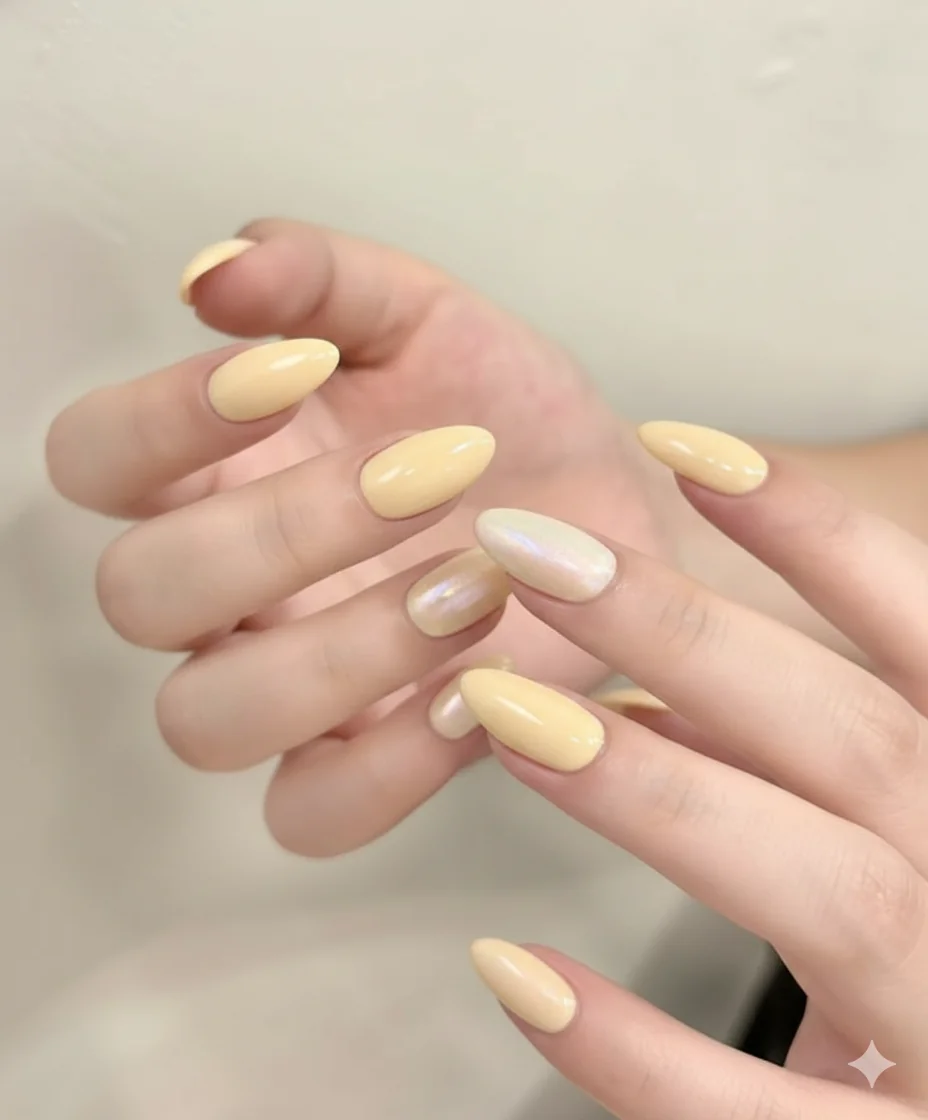
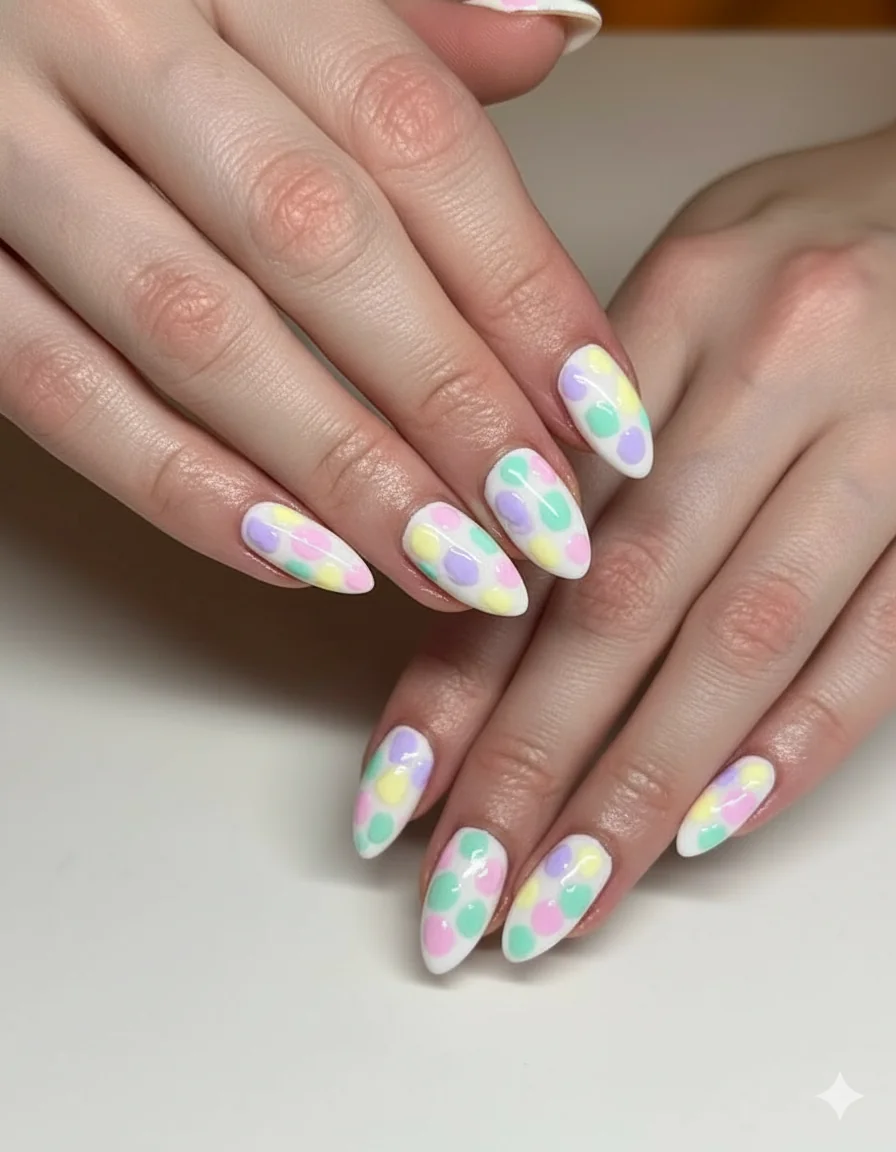
The colour story has shifted too. The pastels are still here they never leave but the bases that are doing the most work are soft and neutral: milky white, nude, blush, butter yellow, sage green. They let the florals read clearly without competing with them. Glazed high-gloss topcoat seals almost everything. The glazed finish amplifies translucency on pressed botanicals and gives 3D blooms the kind of surface quality you'd expect from a piece of jewellery.
Cherry Blossom Nails The Minimalist Signature Look
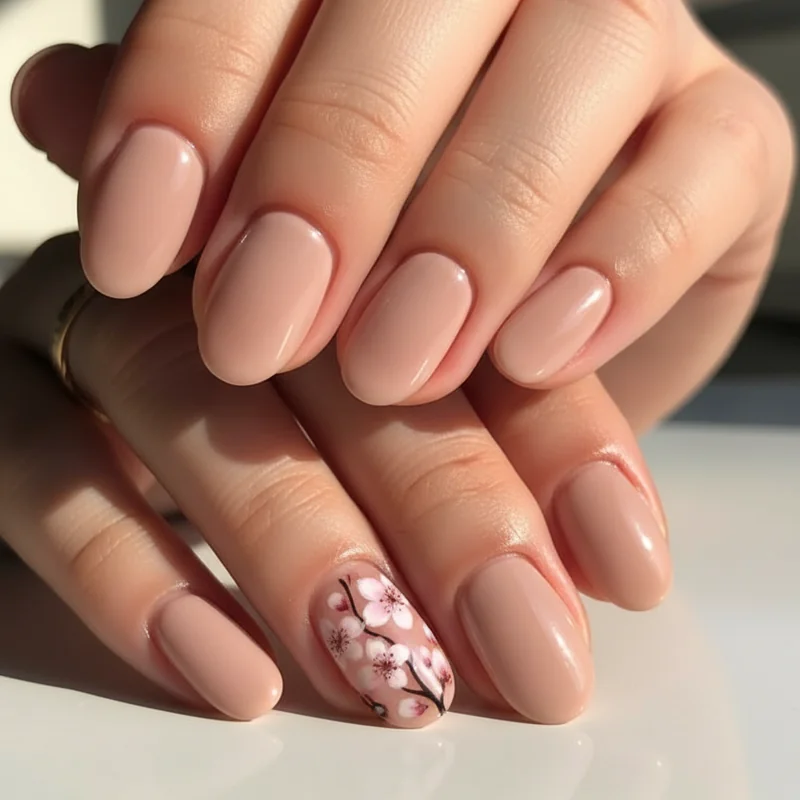
The most-searched spring floral nail design this season is also the most forgiving to execute. Cherry blossom works because it suits every nail length, looks deliberate even when it's imperfect, and photographs exceptionally well against a milky or nude base.
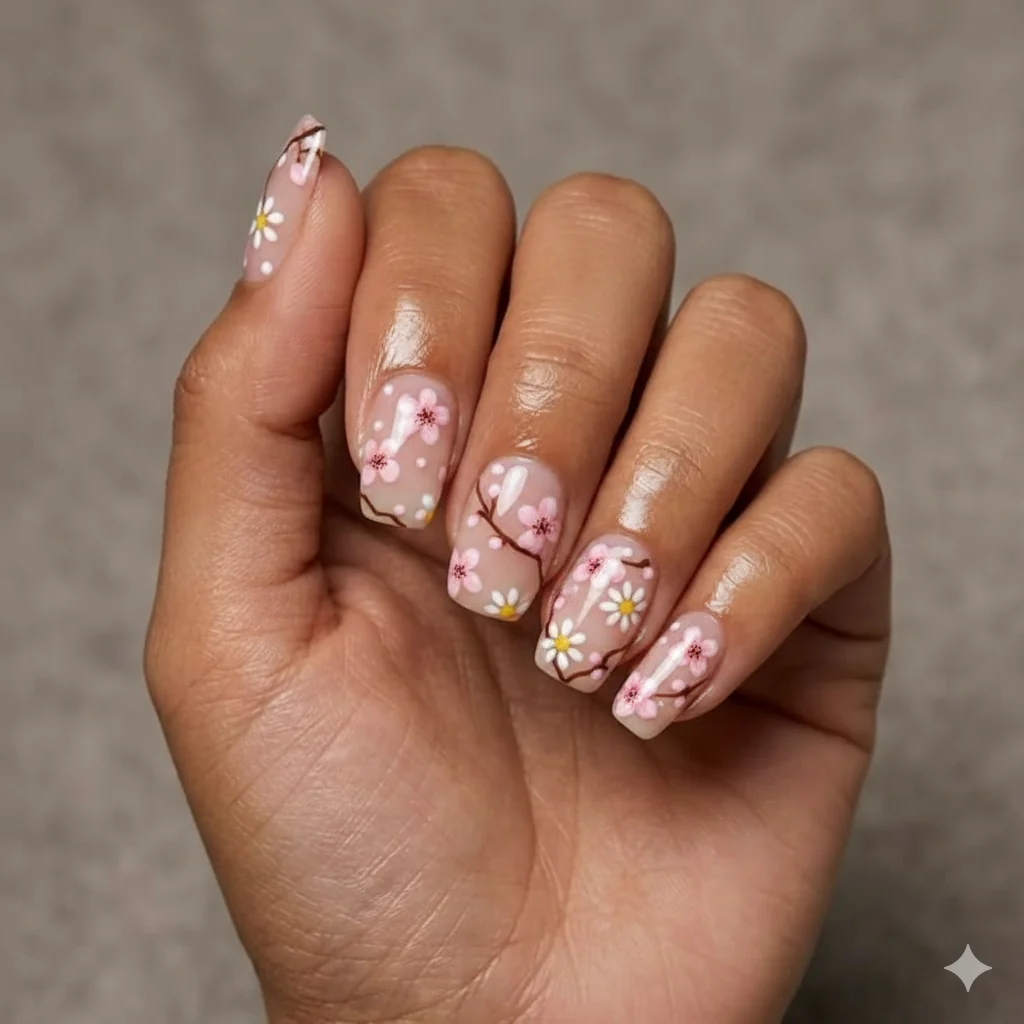
The standard execution: a sheer or milky base (two to three coats), then five-petal blossoms built up in soft pink and white using a size 000 nail art liner brush, with a pale yellow dot at the centre. The petals don't need to be anatomically precise the irregular, slightly pressed quality of real cherry blossom is exactly what you're going for. Thin, spare, with visible negative space between clusters. Apply to an accent nail or two at most; the impact comes from restraint, not coverage.
For a beginner version, a dotting tool with small, overlapping dots in blush pink gives a simplified blossom that reads clearly and takes around 20 minutes on two accent nails. The cherry blossom French tip white tip with blossom clusters painted along the smile line is the elevated variation. It combines the clean geometry of a classic French with the softness of the floral, and it has been one of the most saved nail looks of the season.
Micro Daisy Nails and Daisy French Tips
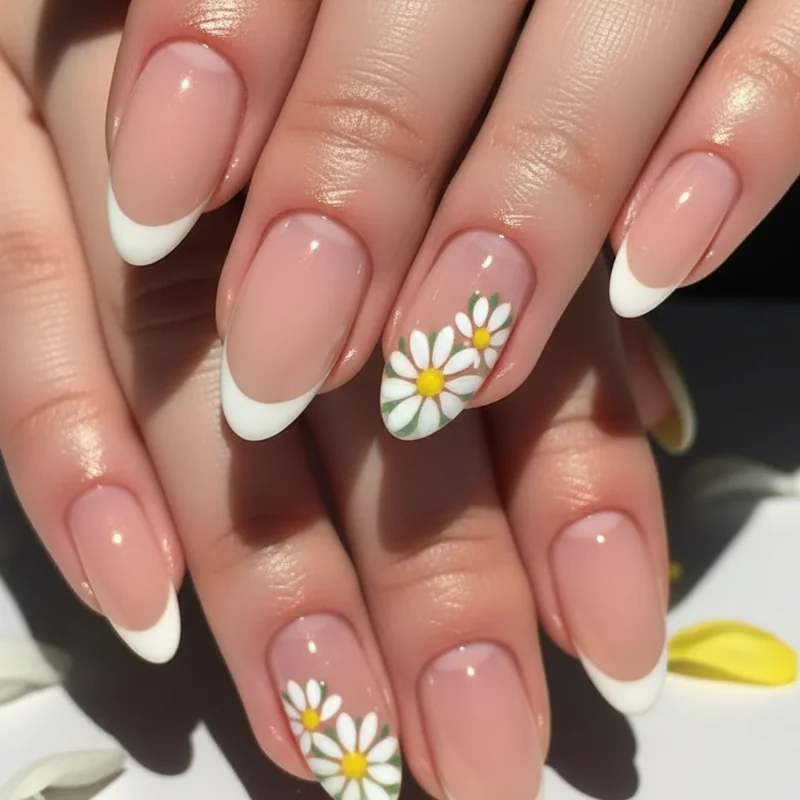
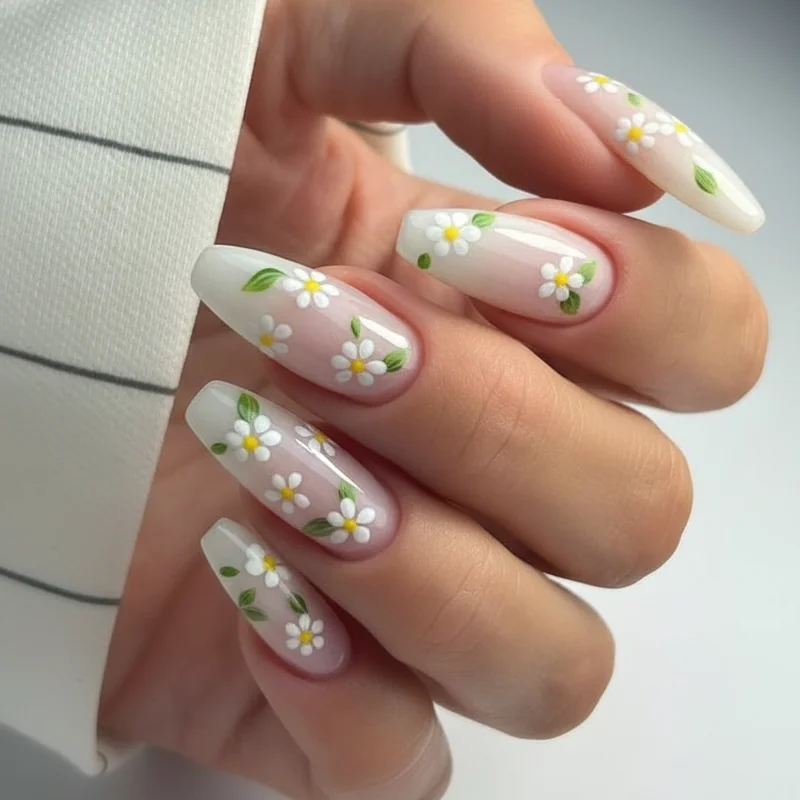
There is something satisfying about the daisy as a nail motif. It's graphic enough to be legible at small scale, cheerful without being cloying, and it works in two completely different registers scattered across a nude base for a cottagecore softness, or placed precisely on a French tip for something that leans editorial.
Micro daisy nails are the more approachable execution. The dotting tool version requires no brush skill: a small white dot for each petal (five around a centre), a yellow dot in the middle, and you're done. Scale them down for fingertip or cuticle placement, or scatter three or four across a sheer base in irregular positions for the intentional-imperfect look that's been consistent across the season's most-saved sets.
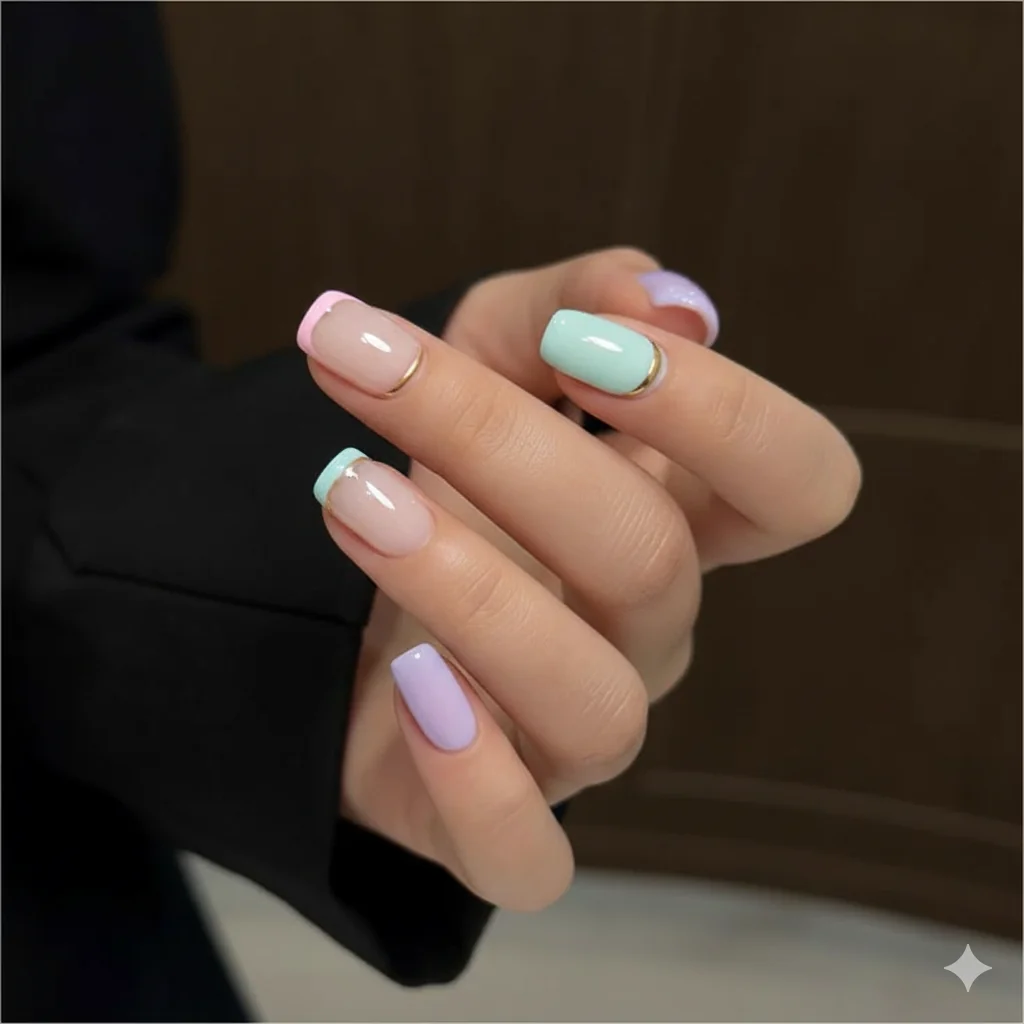
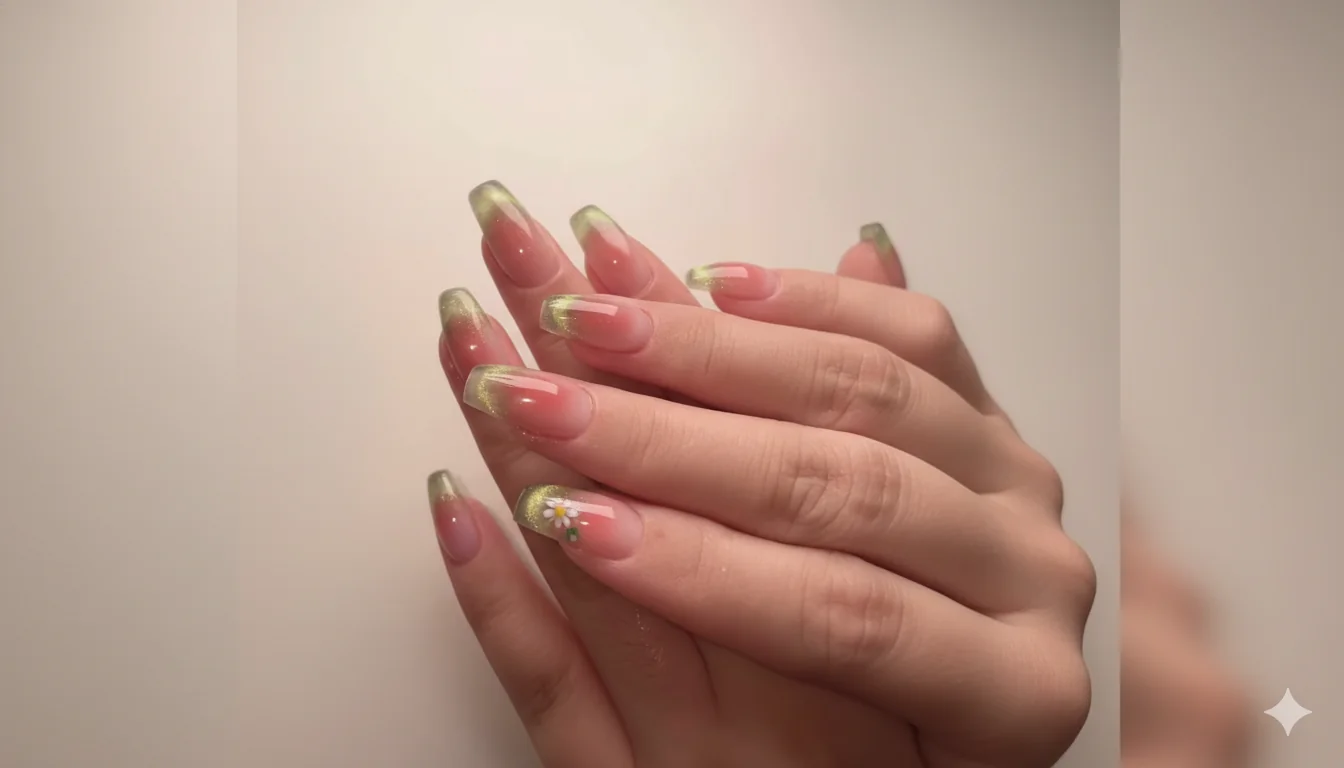
The daisy French tip is more precise. Sage green as the tip colour, butter yellow as an alternative, with white daisy details worked over and around the tip line. The combination of the clean architectural line of the French tip and the organic quality of the daisy detail creates that contrast that makes people stop scrolling. For a full breakdown of French tip variations worth knowing this season, see our guide to spring French tip nails the micro and floral executions are all there.
3D Sculpted Flower Nails The Salon Statement
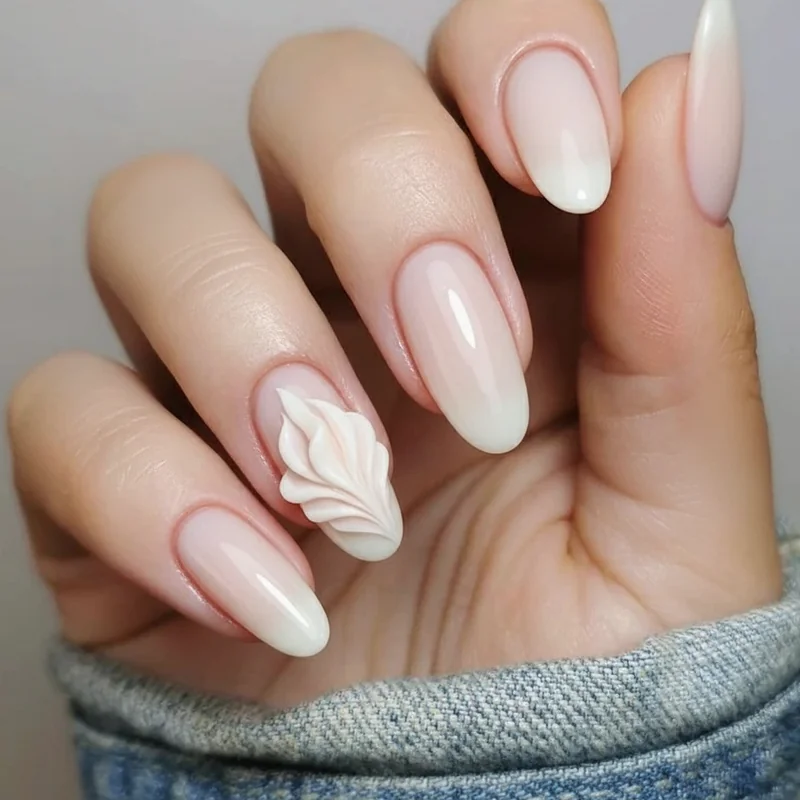
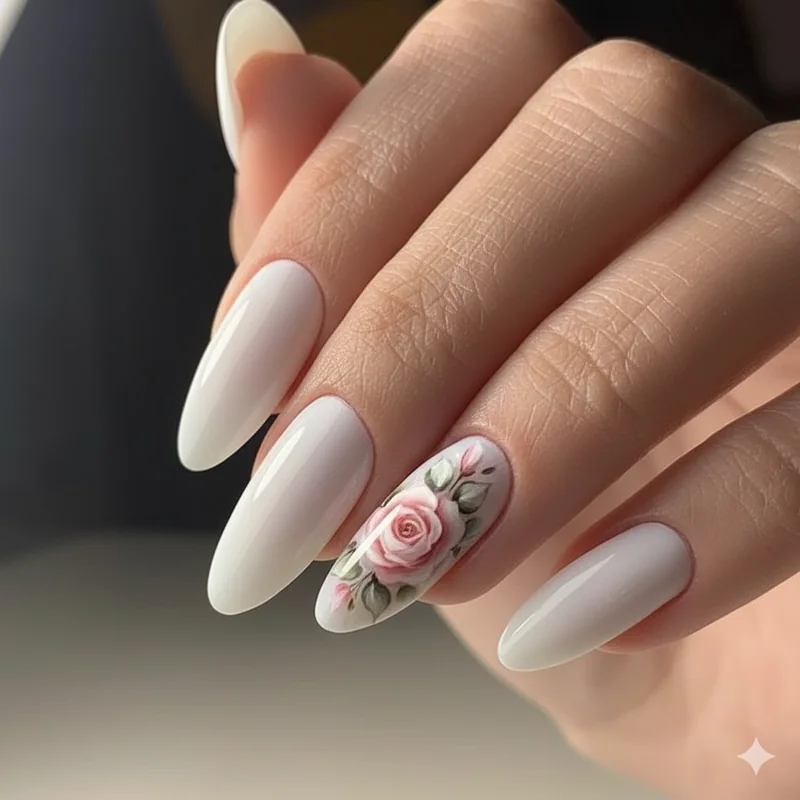
This is where spring floral nail art becomes sculpture. Roses, peonies, ranunculus built layer by layer from builder gel or acrylic monomer, sitting above the nail surface with actual physical dimension. The category has accumulated 4.2 million plays on sculpted flower tutorials on TikTok, which gives you a sense of the appetite for it, and also the ambition gap between watching and doing.
The honest reality: this is salon work. A set of sculpted 3D flower nails runs between £80–£120 (or $80–$120 USD) and takes 90 to 120 minutes. Nail technicians with experience in 3D gel work build each bloom petal by petal, curing between layers, and the precision required isn't something that translates easily to a home attempt without significant practice. For safety guidance on gel and acrylic products specifically, the FDA guidance on nail cosmetic safety is worth reading if you're considering any home experimentation with these materials.
The placement rule for 3D florals is consistent: ring finger, or ring and middle finger on the dominant hand, on a long almond or coffin shape. The bloom becomes a focal point rather than a repeated motif. A nude or blush milky base on the other nails lets the sculptural work breathe. If you're adventurous and have UV lamp access, single-layer builder gel blooms (flatter, more like a thick gel painting than true 3D) are achievable at home but lower the expectations appropriately.
Pressed Flower Nails Real Botanicals Under Gel
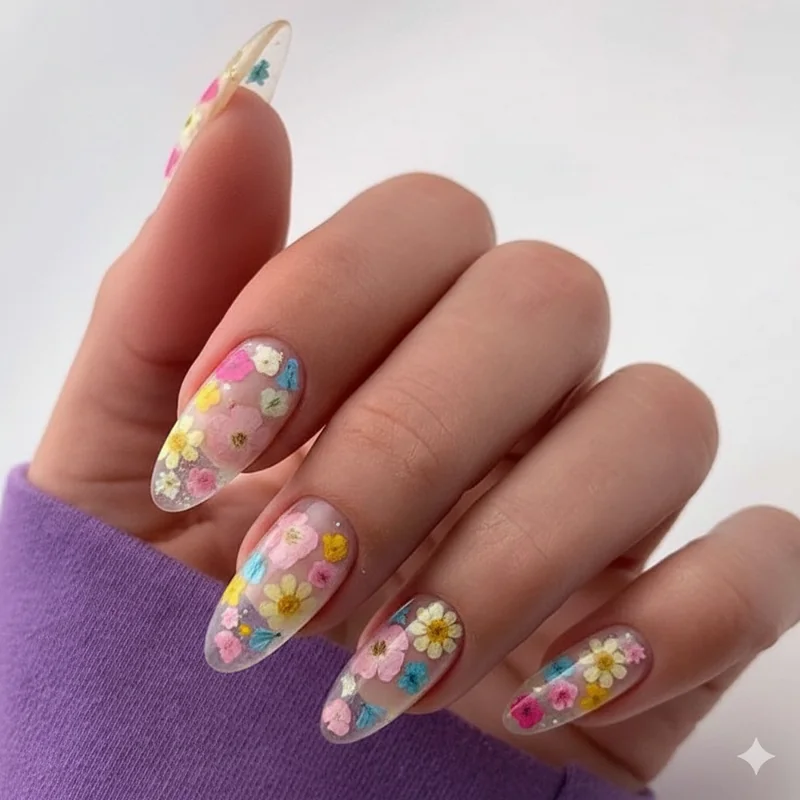
The premise is exactly what it sounds like: real dried flowers, encapsulated beneath a layer of hard gel, worn on the nail. Violets, baby's breath, forget-me-nots small, flat botanicals that press cleanly and remain legible at nail scale. Pinterest saves for this category have climbed significantly year on year, and the appeal is straightforward: they look like something that could only have been made by hand.
Longevity is good. Properly applied pressed flower nails last 2–3 weeks under hard gel, comparable to a standard gel set. The technique sits at an intermediate level you need a UV lamp, nail dehydrator and primer for adhesion prep, the pressed flowers themselves (fully dried, which takes 1–2 weeks in a flower press or 24–48 hours with silica gel), and a no-wipe topcoat to seal. The detail that most beginners miss: flowers must be completely dried before application. Any residual moisture will cause the petals to brown under the gel as it cures, and there's no fixing that after the fact.
NAILSAMI's spring flower nail guide covers the pressed flower application process in detail if you want to attempt this at home. The jelly finish base sheer, translucent, with a slight depth to it is the most flattering foundation for pressed botanicals. It gives the nails a quality closer to stained glass than a standard polish.
Wildflower Meadow Nails and Abstract Florals
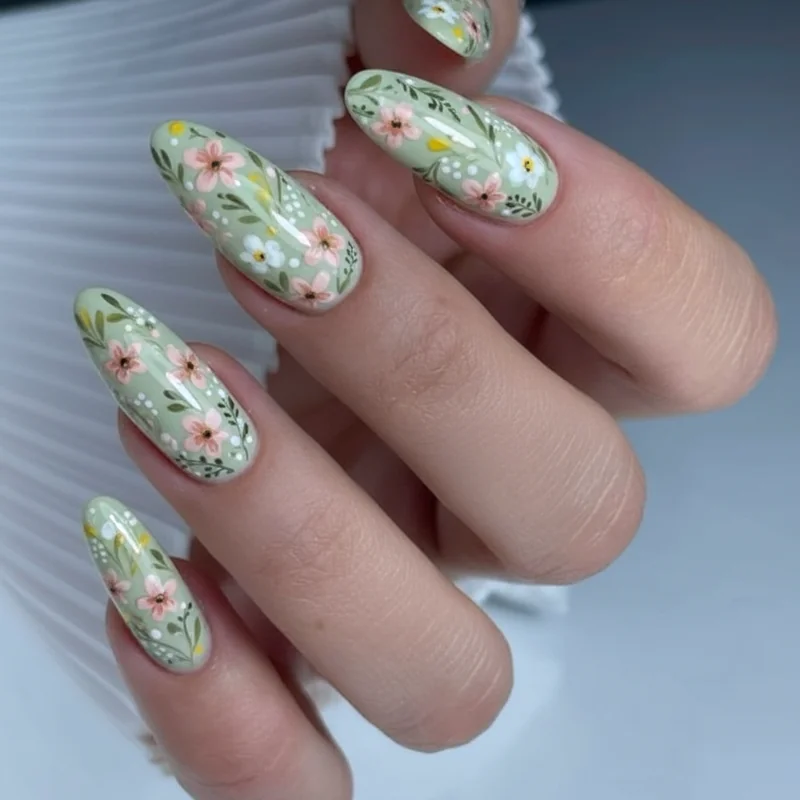
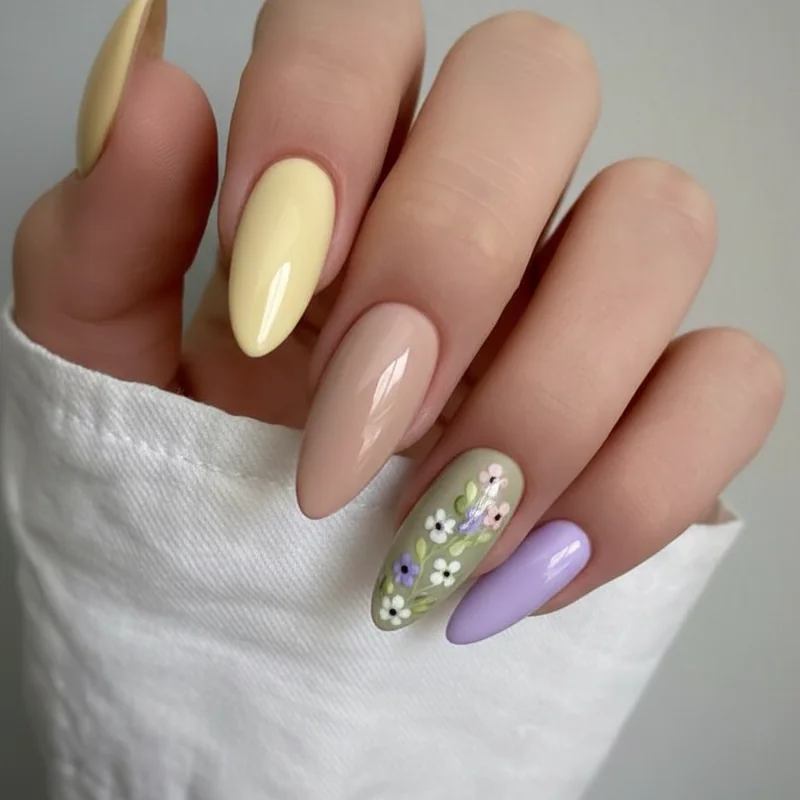
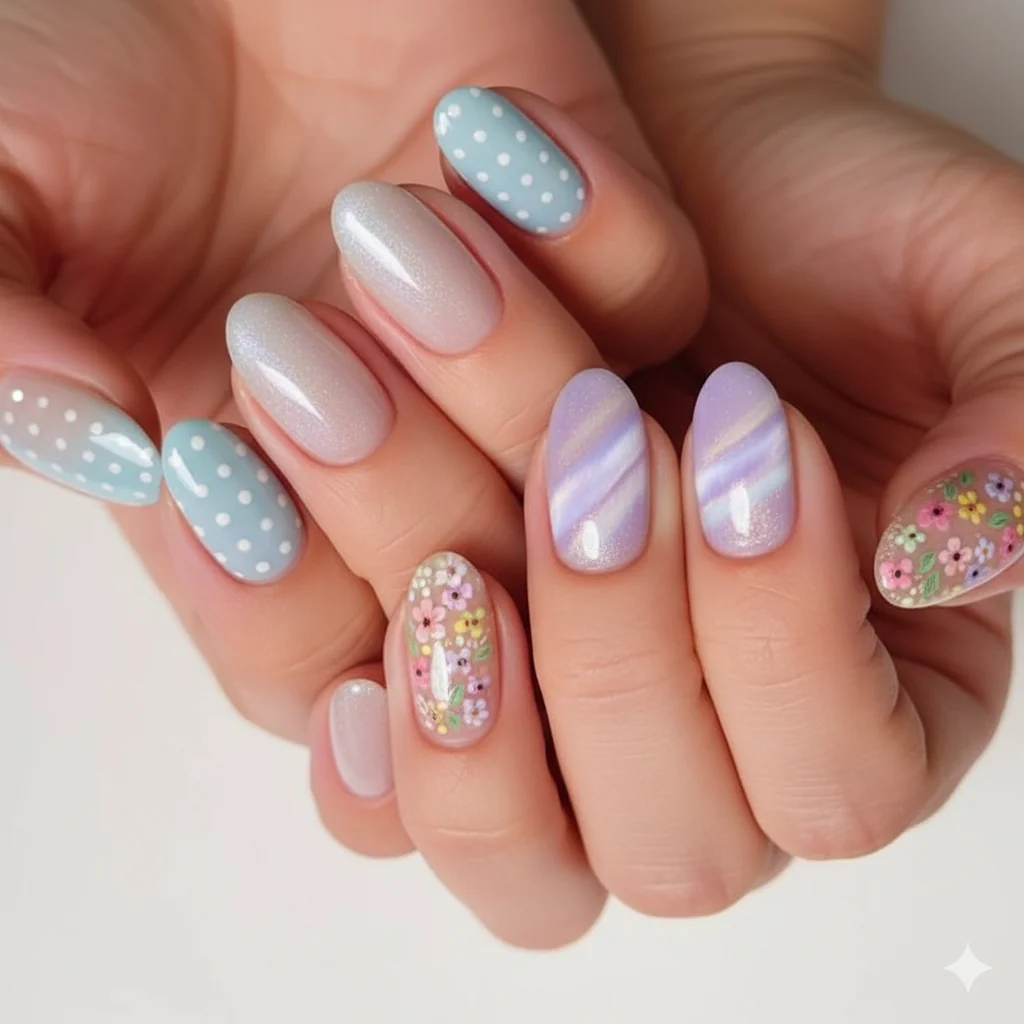
At the maximalist end of the spring floral nail spectrum, wildflower meadow nails abandon the precision of cherry blossom and micro daisy for deliberate scatter. Daisies, forget-me-nots, tiny blossoms, leafy sprigs multiple botanical shapes across every nail, on a soft white, pale sage, or nude base, placed with an intentional irregularity that mimics the randomness of an actual meadow.
The execution ranges widely. For intermediate-to-advanced nail artists, the result is genuinely impressive botanical illustration scaled to ten fingertips. For beginners, floral nail stickers are not a compromise; they're a reasonable tool. The designs that emerge from quality sticker applications on a thoughtfully chosen base are indistinguishable at most social media distances from hand-painted work, and they take 30 minutes rather than 90.
Abstract florals occupy a slightly different register. This is where blooming gel comes in a slow-curing medium that allows drops of gel colour to spread and bleed into each other before UV curing, creating soft watercolour movement rather than literal flower shapes. Pairs well with the palest bases; the diffused petal shapes that emerge have a spontaneous quality that feels editorial rather than craft-fair. Bustle's 2026 floral nail designs showcase several of the abstract floral executions that have been running through editorial shoots this season. Marie Claire's floral nail edit is worth bookmarking for the abstract watercolour examples in particular.
Which Nail Shape Works Best for Spring Florals?
Shape and design aren't independent decisions. The wrong combination undermines both a 3D sculpted rose on a bitten square nail doesn't land the same way, and micro daisies on a very long coffin can read cluttered where they'd feel elegant on a shorter oval.
Almond and oval are the most versatile shapes for floral nail art this season. The tapered tip of the almond creates proportion that works with everything from a spare cherry blossom accent to a detailed pressed flower set. Enough surface area for detail work, elegant enough in silhouette to let the floral design breathe. For anyone uncertain about which shape to book, almond is the answer almond is the season's top shape for good reason, and it earns that position partly because it suits this category of design so well.
Coffin (ballerina) is the shape for 3D sculpted florals and maximalist wildflower sets. The flat apex gives sculptural blooms a stable platform and creates a canvas-like quality for detailed hand-painted botanicals. Short squoval flat tip, rounded corners works particularly well for micro florals and pressed botanicals, where the design is small-scale and the square format provides a clean frame rather than competing with the art. Round tips on shorter lengths are underrated for pressed flowers; the organic shape mirrors the botanical quality of the design.