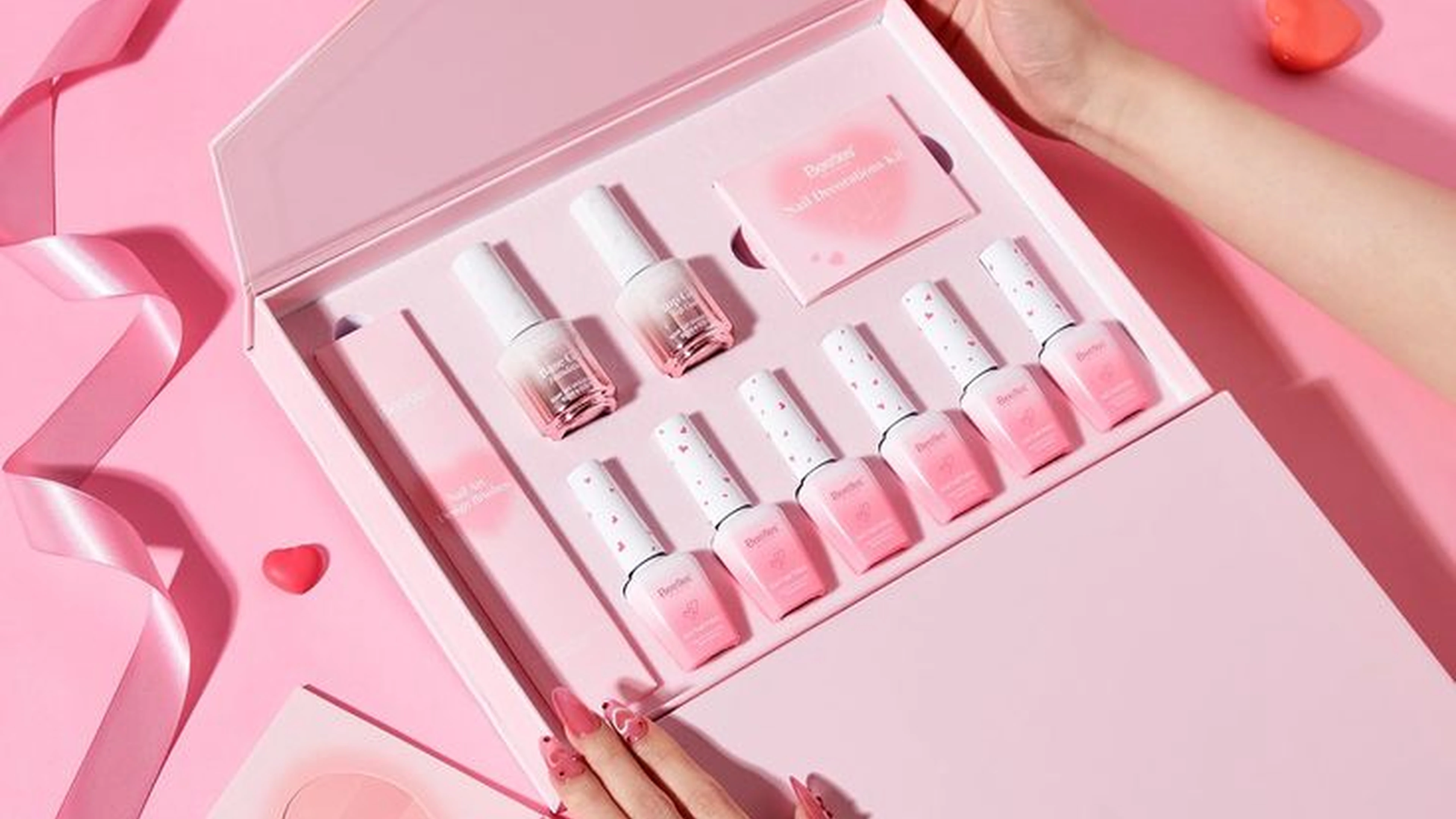
Lace Valentine nails demand pattern precision. The aesthetic centers on intricate overlay designs that create negative space artistry rather than solid color application. Lace Valentine nails distinguish themselves through delicate lattice work—filigree patterns, ornamental details, Victorian-inspired motifs that transform nails into miniature textiles. Three primary techniques achieve this effect: stamping, foil transfer, hand-painting. Each method produces lace Valentine nails with distinct characteristics requiring different skill thresholds.
The appeal lies in romantic subtlety. Valentine's Day invites ornamental precision without bold color statements. Valentine nail designs expand beyond solid reds into nuanced territory where white lace overlays on sheer pink bases communicate understated elegance. Pattern inspiration draws from bridal aesthetics but adapts for seasonal romantic context rather than formal ceremony requirements.
Technical execution determines success. Pattern transfer failures—incomplete designs, smudged details, foil adhesion issues—frustrate users seeking salon-quality results. The following framework compares methods objectively, then details stamping technique as most accessible entry point for achieving intricate lace pattern nails.
What Are Lace Valentine Nails
Doily nails replicate textile lace patterns through various transfer techniques. The designs feature intricate lattice work, floral filigree, geometric lace motifs that create dimensional overlay effects on nail surfaces. Negative space plays critical role—sheer areas between pattern lines allow base color visibility, producing delicate rather than dense aesthetic.
Valentine-specific application distinguishes itself from bridal lace through color palette selection and pattern density. Bridal executions favor pure white on nude bases with maximum coverage. Valentine iterations incorporate soft blush, pearl, ivory tones with strategic negative space that maintains romantic femininity without ceremonial formality.
The technique gained momentum through nail art communities exploring texture alternatives to flat polish application. Social platforms demonstrate user preference for overlay nail design that adds dimensional interest without three-dimensional embellishments. Pattern precision appeals to those seeking sophisticated Valentine aesthetics over trend-driven approaches.
Stamping offers fastest execution with beginner-friendly learning curve. The process: transfer engraved patterns from metal plates to nails via silicone stamper. Produces consistent, repeatable designs requiring minimal artistic skill. Pattern pickup demands practice but achieves professional results within several attempts. Time investment: twenty to thirty minutes for full manicure after initial learning phase.
Limitations include pattern restriction—designs limited to available stamping plates. Custom lace patterns require purchasing specific plates. Transfer can produce incomplete coverage on curved nail surfaces without proper stamper technique. Best for users wanting reliable, repeatable lace effects without freehand painting skills.
Foil transfer creates dimensional shine and metallic lace effects impossible through standard polish. The process: apply foil adhesive gel to nails, press metallic foil against tacky surface, pattern transfers upon removal. Produces reflective lace with unique light-play characteristics. Moderate skill requirement—timing adhesive tackiness proves critical for clean transfers.
Challenges include foil adhesion inconsistency and top coat compatibility. Foil can crinkle under certain top coat formulas, destroying delicate patterns. Requires specific quick-dry sealers that prevent shrinkage. Best for users seeking dimensional Valentine lace with metallic elements complementing chrome finishes on other nails.
Hand-painting allows complete customization but demands advanced brush control. The process: freehand lace pattern application using fine detail brushes. Produces bespoke designs tailored to individual preferences and nail shapes. Highest skill threshold—steady hand and artistic confidence required. Time investment: forty-five to ninety minutes depending on pattern complexity.
Best for experienced nail artists wanting unique Valentine lace designs unavailable through stamping plates. Not recommended for beginners—frustration outweighs results during learning phase. Consider starting with simpler methods before attempting hand-painted intricate lace.

Essential Tools by Method
Stamping supplies include: metal stamping plates with lace patterns, silicone stamper, metal scraper, stamping polish (higher pigmentation than standard polish), lint roller for stamper cleaning between transfers. Valentine color palette: white stamping polish for primary patterns, pearl or ivory for subtle variations, black for accent lace details.
Base coat selection matters—sheer pink, milky nude, soft blush bases allow lace pattern visibility while maintaining Valentine color association. Avoid opaque bases that reduce negative space artistry. Top coat requires quick-dry formula that seals without smudging delicate patterns.
Foil transfer kit includes: foil adhesive gel (tacky when ready for transfer), metallic foil sheets in white/pearl/silver, silicone applicator or wooden stick for pressing foil, foil-safe top coat specifically formulated to prevent shrinkage. Test top coat compatibility on practice nail before applying to full manicure—incompatible formulas destroy hours of work.
Hand-painting brushes include: fine liner brush (000 or 0000 size), detail brush for thicker lace lines, dotting tool for pattern accents. White nail art polish or acrylic paint provides opacity for pattern visibility. Steady surface—hand brace or armrest—essential for fine line control. Technique fundamentals recommend practicing lace patterns on paper before nail application.
Step-by-Step Lace Stamping Tutorial
Step One: Prepare Base Surface. Apply sheer pink or nude base coat to all nails. Complete drying critical—minimum thirty minutes or use quick-dry drops. Clean nail surface with alcohol wipe to remove natural oils that prevent pattern adhesion. Oils create barrier causing stamped patterns to smudge or transfer incompletely.
Step Two: Load Stamping Plate. Apply thick layer of white stamping polish to selected lace pattern on plate. Coverage should completely fill engraved design. Use metal scraper at forty-five degree angle, pull across pattern in single swift motion to remove excess polish. Polish remains only in engraved areas. Speed matters—work quickly before polish dries on plate surface.
Step Three: Pattern Pickup. Roll silicone stamper across engraved pattern with firm, consistent pressure. Pattern transfers to stamper surface immediately. Check coverage—complete pattern should appear on stamper. Incomplete pickup indicates insufficient pressure or dried polish on plate. Clean stamper with lint roller between each transfer to prevent pattern mixing.
Step Four: Transfer to Nail. Position stamper at desired angle on nail surface. Roll from cuticle edge to free edge with same firm pressure used during pickup. Pattern releases onto nail. Work quickly—stamping polish begins drying on stamper within seconds. Alignment determines final placement—practice positioning before rolling to prevent crooked transfers.
Step Five: Seal Design. Wait minimum five minutes for pattern to cure on nail surface. Premature top coat application smudges intricate details. Apply thin layer of quick-dry top coat using gentle brush strokes that avoid dragging through pattern. Flood-free application prevents cuticle lifting. Second thin coat after ten minutes ensures pattern preservation and adds dimensional depth to delicate nail patterns.
Accent nail approach concentrates intricate lace on ring fingers while remaining nails carry simple bases. Execution: apply white lace nail art to both ring fingers, sheer pink to all other nails. This balanced asymmetry prevents visual overwhelm while maintaining Valentine romantic elements. Works for date settings where subtlety outweighs statement designs.
Negative space design positions lace patterns at nail tips or cuticle areas, leaving center bare. Creates airy aesthetic appropriate for minimal Valentine styling. Execution: stamp lace pattern at free edge only, similar to French tip variations but with ornamental overlay replacing solid color tips. Base remains sheer throughout center section.
Full coverage lace applies pattern across entire nail surface for maximum ornamental impact. Best suited for shorter nail lengths where pattern density doesn't overwhelm proportions. Longer nails risk appearing costume-like rather than refined when fully covered. Execution: stamp single large lace motif centered on nail, or apply repeating small patterns in gradient density—dense at cuticle, sparse toward tip.
French overlay variation combines nude base with white lace concentrated at smile line area. Merges classic French technique with ornamental detail. Execution: apply nude base, stamp white lace pattern positioning primary design elements at tip third of nail. Creates bridal-adjacent aesthetic without full ceremonial formality. Appropriate for formal Valentine occasions.
Achieving Pattern Precision
Clean transfers require proper stamper pressure and timing. Press stamper firmly against plate—insufficient pressure produces incomplete pattern pickup. Roll motion rather than stamp-and-lift prevents air pockets that create gaps in transferred design. Practice on paper or disposable surface until rolling motion becomes fluid.
Alignment technique determines professional versus amateur appearance. Position stamper above nail before contact, visualize final placement. Commit to angle—hesitation causes double-stamping that blurs pattern edges. For curved nails, roll from center outward rather than straight line motion. This follows natural nail curve preventing pattern distortion at sides.
Opacity control affects overlay nail design delicacy. Single stamp produces sheer lace. Double stamping same pattern increases opacity for bolder effect. For Valentine subtlety, prefer single transfer that maintains negative space artistry. Multiple transfers risk heavy-handed appearance contradicting lace's inherent delicacy.
Maintaining intricate detail during sealing requires specific top coat application. Thin layers prevent pattern flooding. Brush strokes should follow nail length rather than side-to-side motion that drags through fine lines. Allow first coat to dry completely before second application. Two thin coats outperform single thick coat for pattern preservation.