Most nail guides treat dark skin like a footnote. A brief paragraph at the end, a few safe suggestions, and then back to the universal advice that was never really universal at all. This one starts where it should have always started — with your complexion as the canvas, and everything else built around it.
Nail colors for dark skin are not a niche. They are the main event. Deep, dark, and ebony skin tones are genuinely the most dynamic base for nail colour that exists — the pigmentation amplifies bold shades, metallics develop actual depth rather than lying flat, and even the lightest contrast colours land with intention rather than disappearing. The problem has never been what works. It has been finding the content that tells you so, specifically, with the shade names and the visual proof to back it up.
This post does that. Shade by shade, mood by mood, season by season — for dark skin, full stop. For the broader picture of how complexion and colour interact across the spectrum, The Complete Guide to Nail Colors for Every Skin Tone is where to go next.
Why Dark Skin Is the Best Canvas for Nail Colour (and Most Guides Get It Wrong)
The guides get it wrong because they start from the wrong premise. They assume dark skin is a limiting factor — something to work around, to handle carefully, to add caveats about. The opposite is true.
Deep pigmentation means that colour behaves differently on dark skin than it does on lighter complexions — and that difference is almost always an advantage. A cobalt blue that reads interesting on pale skin looks genuinely electric on deep skin. A gold metallic that glints on medium skin glows on an ebony complexion. The contrast dynamic works in both directions: deep shades create luxurious richness, light shades create striking definition, and everything in between has room to breathe.
What dark skin is not suited to is chalky, sheer, or grey-based formulas. A sheer blush pink on a deep complexion does not disappear — it turns ashy. A grey-based nude does not read as skin-like — it reads flat and cold. That distinction matters, and understanding it is the entire difference between a manicure that makes someone stop and ask what colour you're wearing, and one that just sits there.
The other thing most guides get wrong is the browsing experience. If you have deep skin and you search for nail inspiration, roughly eighty percent of what you find is photographed on lighter hands. The colours look different. The finish reads differently. You are constantly translating, mentally adjusting, and guessing whether the result will actually translate. This post does not ask you to do that.
Do You Have Warm or Cool Undertones? (The 30-Second Answer That Changes Everything)
Undertone on dark skin is subtle — and it matters more, not less, than it does on lighter complexions. Two women with identically deep skin can look completely different in the same shade of nude or metallic, purely because one has warm golden undertones and the other has cool blue-violet ones.
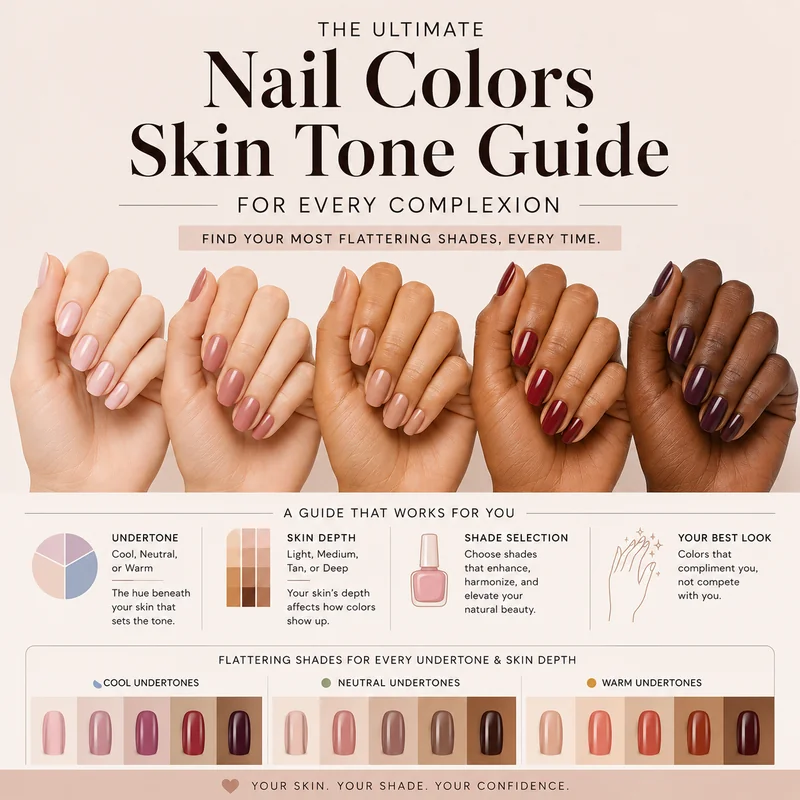
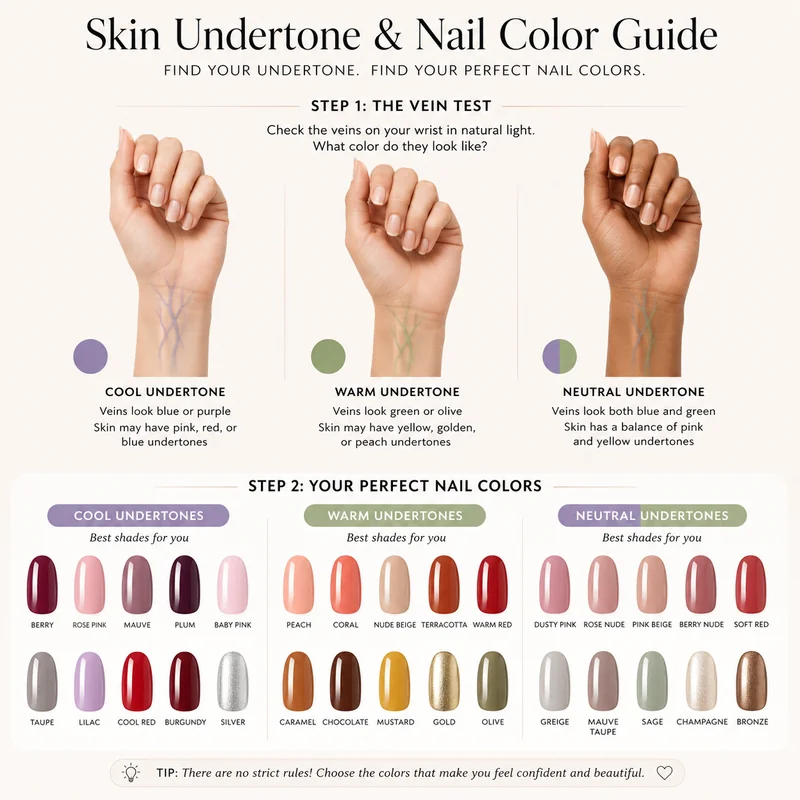
The quick method: look at the inside of your wrist in natural light. Veins that read green suggest warm undertones — your skin has a golden, amber, or bronze cast to it. Veins that read blue or purple suggest cool undertones — your skin leans towards deeper blue-violet or ebony richness. If you genuinely cannot tell, you likely have neutral undertones and the widest flexibility of all three.
For warm dark skin: gold metallics, cognac nudes, orange-leaning reds, and earthy terracotta tones are your natural territory. They harmonise with the warmth in your complexion rather than competing with it. For cool dark skin: silver and chrome metallics, cobalt blue, blue-based reds and berries, and deep plum tones create a crisp, striking contrast that plays directly into the cool richness of your skin. How to Find Your Skin Undertone goes deeper if you want the full method, and the Mirellé skin tone and shade matching guide pairs undertone intelligence with specific colour families in detail.
The Everyday Glow: Neutrals and Nudes That Actually Work on Dark Skin
Here is the problem with "nude" as a category: it was named by and for people with light skin, and the industry never fully corrected for that. A nude that looks skin-like on a fair complexion looks grey, washed-out, or invisible on deep skin. Knowing what to ask for — and what to look for at the display — is everything.
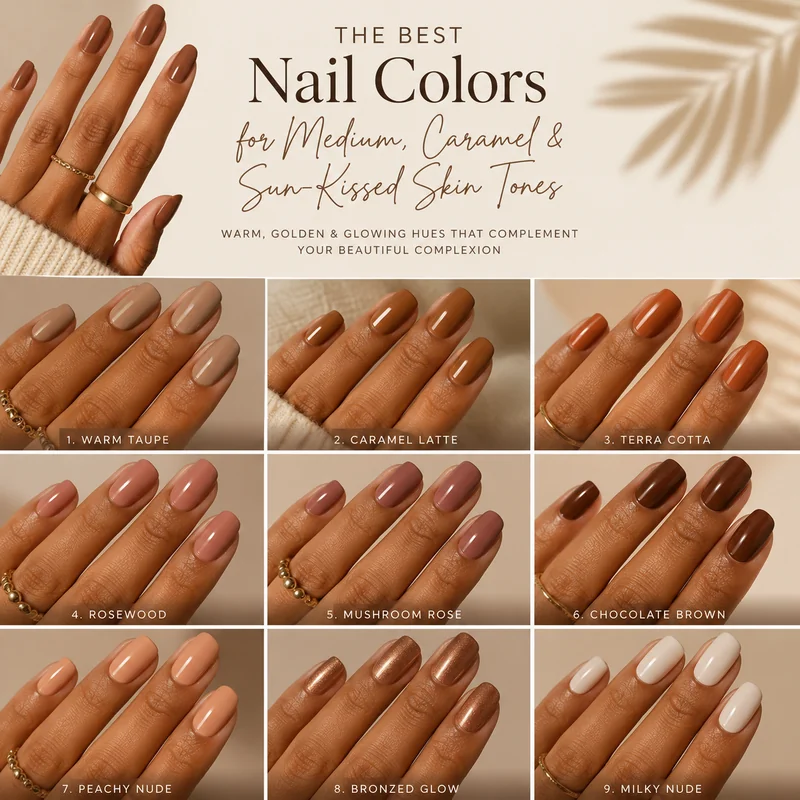
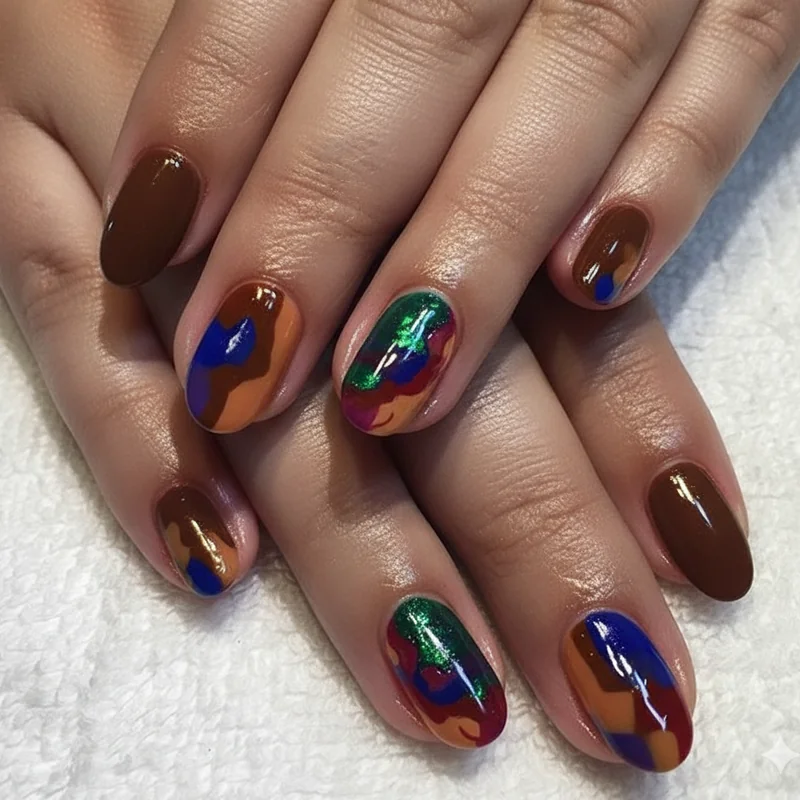
The shades that genuinely work as neutrals on dark skin are not pale at all. Think caramel, a warm beige with golden depth. Cognac, which carries the red-brown warmth of the spirit it is named after. Chocolate, which reads as a deep, genuine neutral on ebony skin rather than as a "dark colour." Mocha and toffee tones sit in the sweet spot between neutral and statement, polished enough for work but interesting enough that you will get asked about them.
What actually satisfies the desire for a "my skin but better" nail: look for formulas described as caramel, honey, warm beige, or nude with golden undertones. Avoid anything described as "nude pink," "blush," or "porcelain" — these have cool bases that run cold against deep skin. Best Nude Nail Polish for Every Skin Tone has a comprehensive breakdown across complexions if you want to go further.
For a deep nude that gives genuine polish without effort: chocolate brown with a high-gloss finish. On deep skin it reads the way a classic nude reads on lighter skin — intentional, refined, and endlessly wearable. Darker than the skin, but harmonising with it rather than contrasting.
Bold and Brilliant: The Colours That Were Made for Melanin
Saturated colour on deep skin is not a risk. It is the whole point.
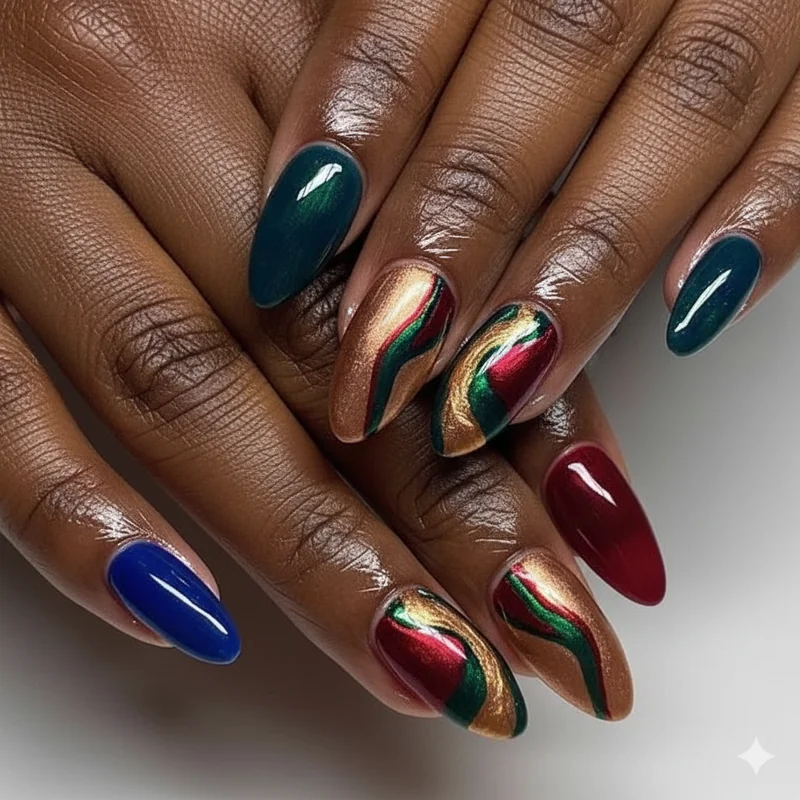
The pigmentation in darker complexions acts as an amplifier. A colour that reads bold on light skin reads striking on dark skin — the depth of the canvas gives the colour something to push against, and the result is a contrast dynamic that simply does not exist on lighter complexions. Fuchsia on deep skin stops conversations. Cobalt blue looks confident and sharp, not costume-y. Emerald green has genuine jewel-like quality rather than just reading as "a green."
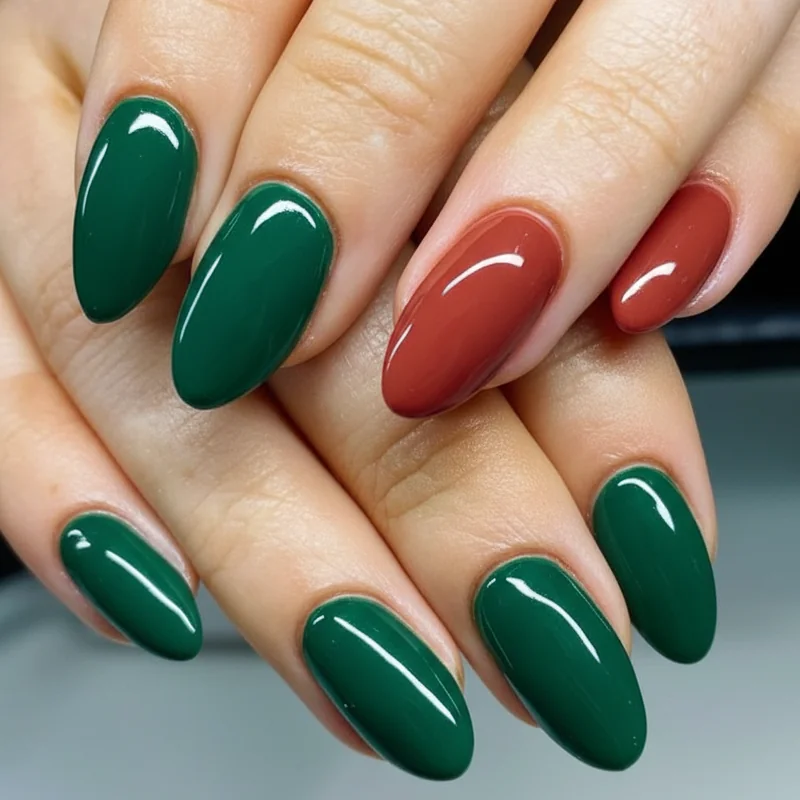
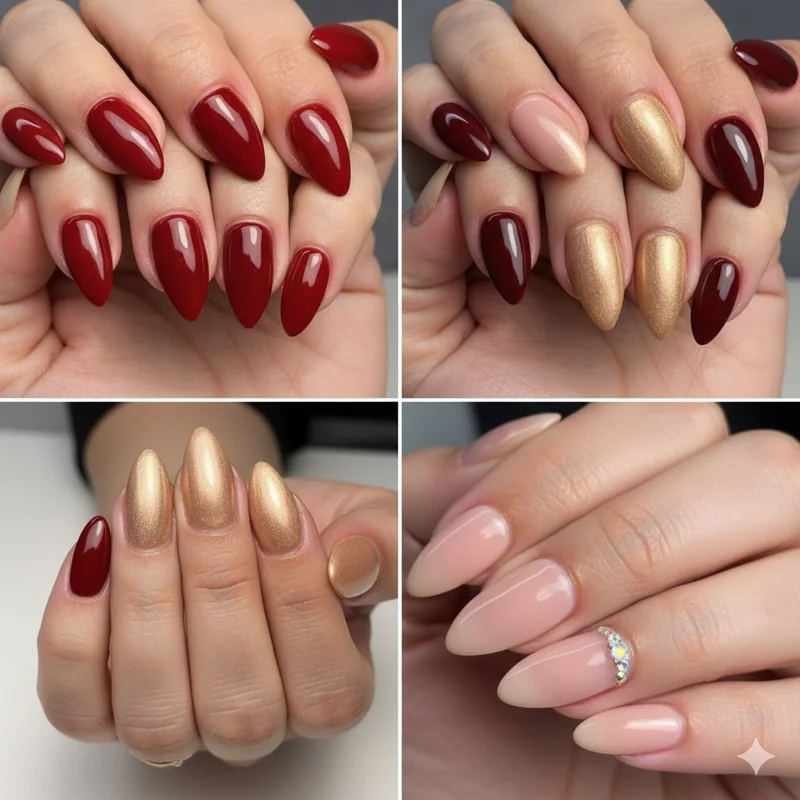
The shades in this category that consistently perform best on dark skin: jewel tones across the board — cobalt blue, emerald, deep sapphire, and amethyst. These have the pigment depth to hold their own. Fuchsia and hot pink, which dark skin handles with a richness that lighter skin cannot match. Cherry red — not blue-based, not orange-based, true cherry — which sits right at the intersection of contrast and warmth. And oxblood, which functions as both a bold colour and a deep neutral depending on the formula and finish.
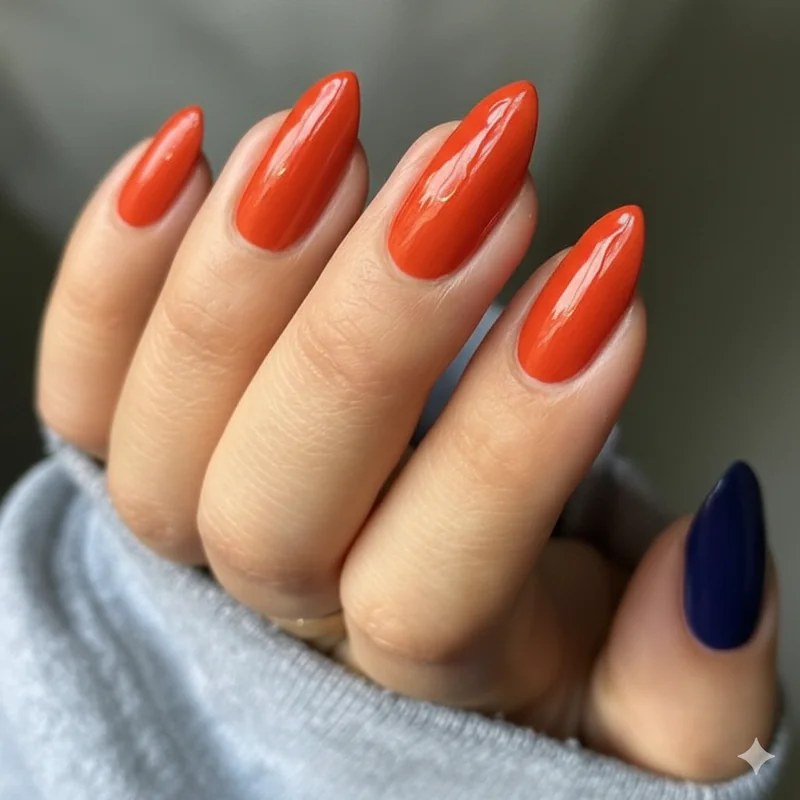
The nuance within this category: for warm dark skin, lean into the red-orange-gold range of brights. Persimmon, burnt orange, and terracotta-adjacent bold shades work with the warmth of the complexion rather than against it. For cool dark skin, the blue-purple-fuchsia range is the natural home. These shades echo the cool richness in the complexion and make everything feel coordinated without being matchy. When covering warm vs cool red distinctions, Best Red Nail Polish for Your Skin Tone breaks this down by undertone precisely.
Can You Wear White Nails If You Have Dark Skin?
Yes. And the contrast is one of the most striking things you can do with a manicure.
White nails on dark skin are not a trend. They are a statement — crisp, intentional, and impossible to ignore. The reason this question gets asked at all is that most white nail inspiration is photographed on fair hands, and the effect looks completely different. On deep skin, white does not look subtle. It lands with the kind of visual weight that makes the nails the first thing anyone notices.
The formula matters significantly here. A sheer or jelly white on deep skin turns muddy — the translucency mixes with the skin's deeper pigment and the result is grey-beige, not white. What you want is an opaque, high-pigment formula. Crisp, pure white with a glossy finish is the version that works best on dark skin — the gloss amplifies the contrast and keeps the colour from looking chalky. A matte white can work, but it requires a flawless application and perfectly prepped nails, because every imperfection shows. Glossy forgives more and rewards dark skin with an almost porcelain quality that photographs beautifully.
Do Pastels Work on Dark Skin? (The Honest Answer)
They can — with one non-negotiable condition.
The chalky, sheer, milky pastels that have dominated TikTok over the last two years — butter yellow, baby blue, cloud white — are almost universally photographed on light to medium skin. On deep skin, sheer pastels either disappear or turn ashy. This is not a skin issue; it is a formula issue. Sheer pigmentation over deep skin mixes optically rather than sitting on top, and the result is rarely what you saw on screen.
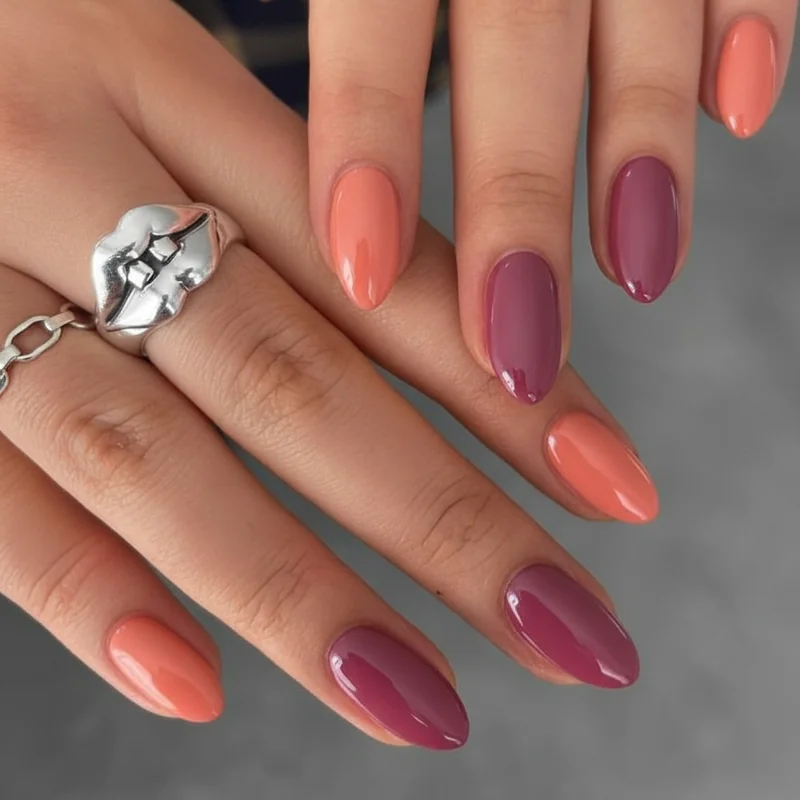
Saturated pastels are a different story entirely. A lilac with genuine pigment depth — not a sheer wash of lavender, but a real, opaque lilac — looks extraordinary on dark skin. The contrast between the lightness of the colour and the richness of the complexion creates something softer than white but more interesting than a jewel tone. The same applies to mint green, coral (warm enough to have orange in it, not pale enough to read pink), and periwinkle. These shades work because they have the opacity to sit on top of deep pigmentation rather than blending into it.
The practical test: hold the bottle up to light. If it is sheer enough to see through, it will not deliver on deep skin. If it reads as a real, opaque colour in the bottle, it will land.
Metallics: Why Gold and Silver Read Completely Differently on Deep Skin
Two women side by side, one with warm dark skin and one with cool dark skin. Both wear gold metallic nails. The one with warm undertones looks like the colour was made for her — it harmonises with the golden cast in her complexion, and everything feels cohesive and glowing. The one with cool undertones looks great too, but it is the contrast doing the work — gold against cool deep skin creates something more graphic, more deliberate.
Switch them to silver and the dynamic reverses. Silver on cool dark skin harmonises, picking up the blue-violet richness and giving it an icy, editorial quality. Silver on warm dark skin contrasts — striking, but it is the gap between the tones that makes it work rather than the harmony.
Neither approach is wrong. The distinction is in what you want the nails to do. Gold metallics on warm dark skin: the nails feel like part of the look, a continuation of the complexion's natural warmth. Gold metallics on cool dark skin: the nails are the statement, a deliberate counterpoint. Silver on cool dark skin: sophisticated and coordinated. Silver on warm dark skin: bold and intentional.
Gold, bronze, and champagne metallics generally suit warm dark skin most naturally, while silver, chrome, and platinum lean towards cool dark skin. But the real answer — the one that matters more than colour theory — is which one makes you feel how you want to feel. Metallics on deep skin are genuinely transformative in a way they rarely are on lighter complexions, because the depth of the canvas gives the metallic finish something to reflect against.
The Best Nail Colors for Dark Skin by Season
Dark skin does not have a "safe season" for nail colour — every season has its moment. The shifts are less about what works and more about what reads as current.
Spring calls for shades that feel fresh without going sheer. Coral with enough orange warmth to read on dark skin, a saturated periwinkle, fuchsia for the maximalist spring moment, or a glossy white if the season's nail trend is the clean, striking kind. The 2026 trend towards sheer pink on lighter skin translates to a pigmented warm rose on deep skin — same mood, different formula requirement. For a comprehensive look at what is trending this season specifically for deeper complexions, Summer Nail Trends 2026 notes persimmon and earthy greens as shades that perform "extraordinarily" on deeper skin — and the editorial is right.
Summer is where deep skin and nail colour reach their peak. The warmth of the season, the gold jewellery, the skin on display — everything amplifies. Persimmon, terracotta, warm coral, gold chrome, and electric fuchsia are all at their best in summer. Cobalt blue feels seasonal and striking. Bright neon nails are genuinely flattering on dark skin in summer in a way they rarely are in other seasons — the natural light does the work.
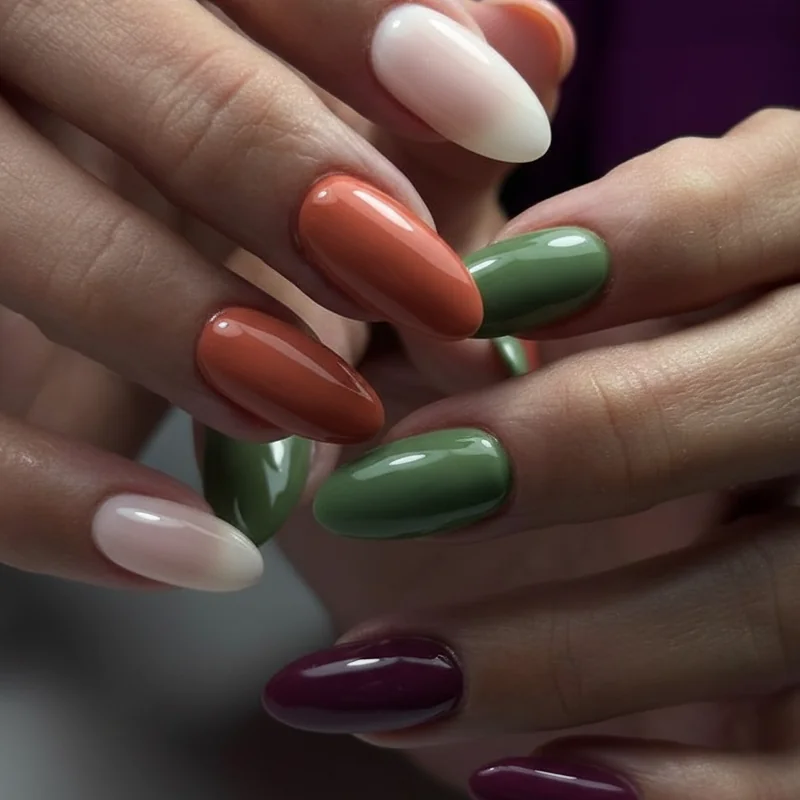
Autumn is deep skin's richest moment. Burgundy, oxblood, plum, deep forest green, chocolate brown, and burnt sienna are all peak performers. These shades mirror and enhance the richness of deep complexions in a way that feels genuinely seasonal, not just trend-compliant. Burgundy in particular — with enough depth to avoid looking purple, and enough red to avoid looking black — is one of the most consistently flattering shades for dark skin across all autumn palettes.
Winter is where cool dark skin specifically gets its moment. Deep jewel tones, midnight navy, emerald with a glossy or chrome finish, and silver metallics all read beautifully against the deeper wardrobe tones of the season. Oxblood carries from autumn into winter without feeling dated.