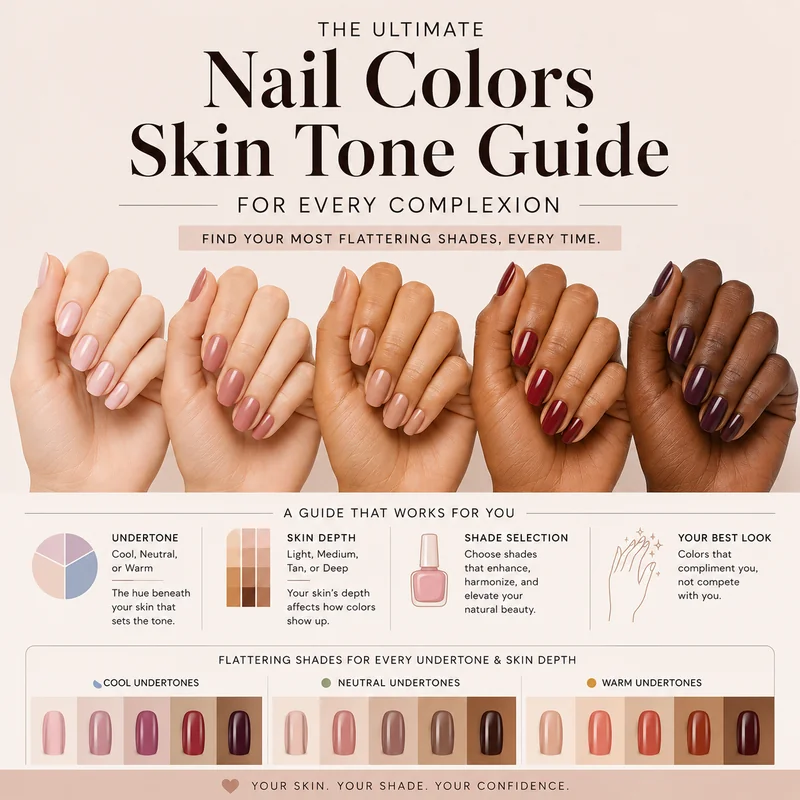
Most nail colour guides fail you before you have even picked up the bottle. They give you a list of shades and call it done. This one takes a different position: lists expire with every collection, but the logic behind nail colors for skin tone does not.
The reason people end up with a colour that looked brilliant on someone else and flat on their own hands is not bad taste. It is an incomplete method. Understanding undertone and depth, separately and in relation to each other, is the fix. This guide covers every skin tone: fair, medium, olive, dark, and Indian and South Asian. It covers the finish question, the seasonal shift question, and ends with a cheat sheet to take into any salon.
Skin Tone vs Undertone: Why Most People Are Solving the Wrong Problem
Skin tone and undertone are not the same thing. Most guides treat them as if they are, which is where the advice starts going wrong.
Skin tone is your surface colour, what you see in the mirror: fair, light, medium, olive, deep, or anywhere along that spectrum. It changes. Summer sun deepens it; winter brings it back.
Undertone is the fixed temperature beneath your skin: warm (yellow, golden, peachy), cool (pink, rosy, bluish), or neutral (a balanced mix). Your undertone does not shift with a tan, a season, or a decade. It is the constant.
Here is where generic guides fall apart: they treat skin tone as the only variable. They give you a shade list for "medium skin" without accounting for the fact that medium skin can be warm, cool, or neutral, and each responds to completely different palettes. A warm medium complexion and a cool medium complexion are not looking for the same colour at all.
The logic that works: identify undertone first, then factor in depth. Those two pieces together predict whether a colour will look flattering or fall completely flat.
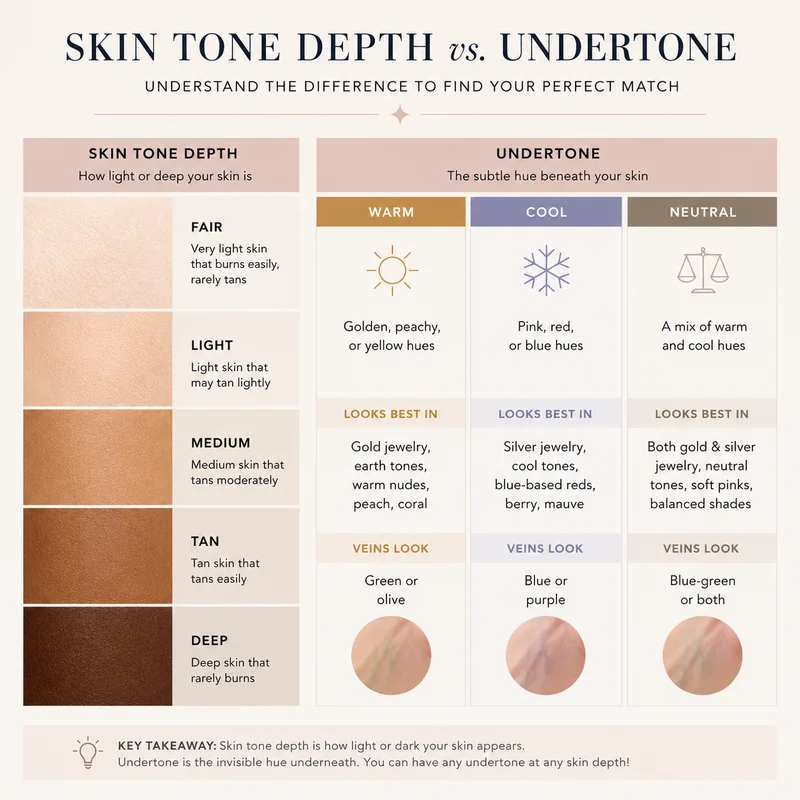
How to Find Your Skin Undertone in 60 Seconds — No Guesswork
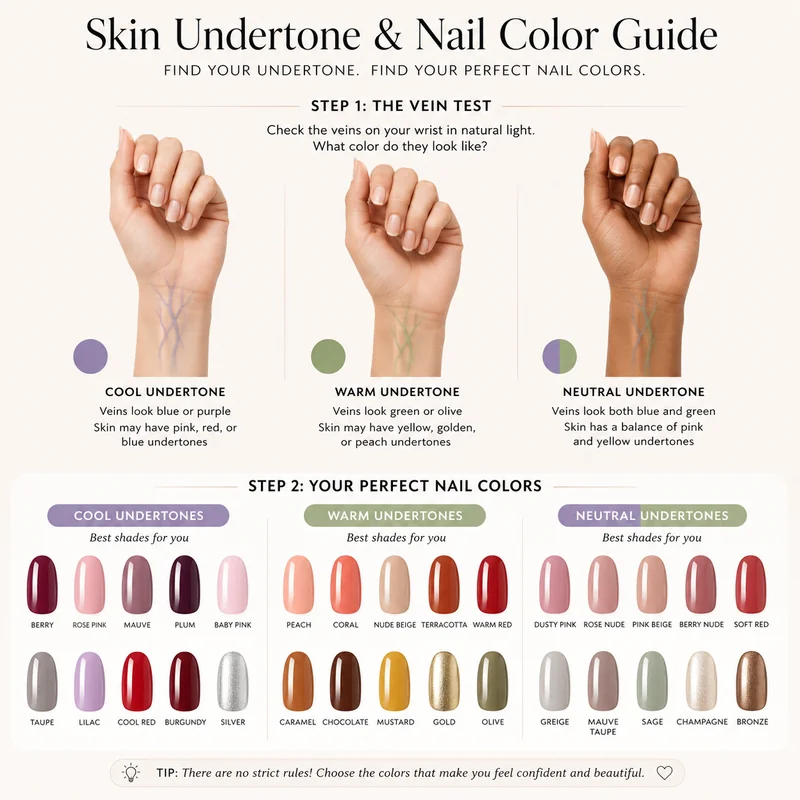
The vein test is the standard starting point, and for good reason. Look at the inner wrist in natural daylight, not under a bulb or phone torch. Three possible results:
Green veins indicate warm undertones. The green appearance is caused by yellow pigment in your skin filtering the blue of the vein.
Blue or purple veins indicate cool undertones. You are seeing the vein's actual colour with minimal warm pigment in the way.
Blue-green veins, where you genuinely cannot place them in either category, indicate neutral undertones.
The jewelry test adds a second check: gold flatters warm undertones, silver flatters cool, and if both look equally good on you, neutral is likely. The sun-reaction test adds a third signal: warm undertones tend to tan easily rather than burn; cool undertones tend to burn before they brown at all.
If the vein test gives you an ambiguous result, that ambiguity is itself the answer. It usually indicates neutral. Many neutral-toned people spend years convinced they have no undertone, when in fact they have the most flexible of the three.
For a full breakdown of undertone identification and how to apply the result to shade selection, the How to Find Your Skin Undertone guide covers the full method.
Why the Wrong Nail Color Makes Your Hands Look Washed Out (The Logic Behind It)
"Washed out" is not a vague feeling. It is a specific optical failure caused by one of two things.
Undertone clash. When the base temperature of a polish fights the base temperature of your skin, both look worse. A distinctly cool, pink-toned nude on warm olive skin makes the polish read slightly grey and the skin read slightly muddy. Neither is flattered.
Contrast collapse. This is the "mannequin hands" problem. A nude chosen too close to your exact skin depth, without enough warmth or saturation to create visual definition, does not read as elegant neutrality. The nail disappears into the hand. The result is an unnerving continuity of skin tone with no edge.
The fix in both cases is not simply to add more contrast. It is to choose a shade whose undertone aligns with yours, and whose depth either harmonises or deliberately contrasts with enough saturation to hold its ground. As NAILS Magazine's skin tone guide notes, the relationship between polish pigment and skin depth is considerably more nuanced than a simple light-on-dark or dark-on-light rule.
Best Nail Colors for Fair Skin — and What to Avoid
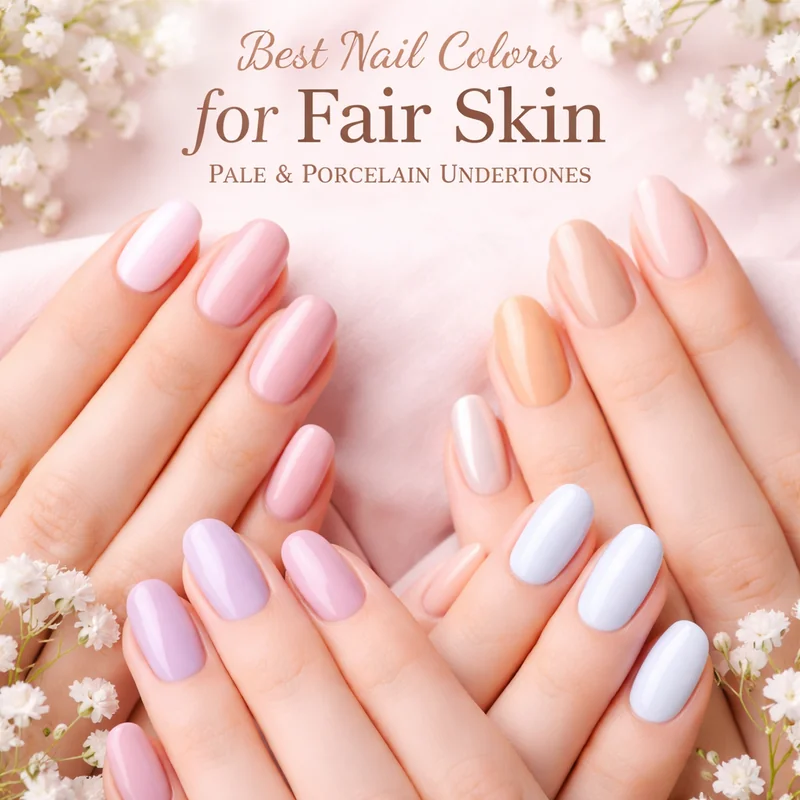
Fair skin is not the easiest canvas. It is the most exacting one. Very light skin shows undertone mismatches sharply: a cool-based pink on warm fair skin reads slightly purple. A peachy nude on cool fair skin reads slightly brassy. The margin for error is narrower here than at any other depth.
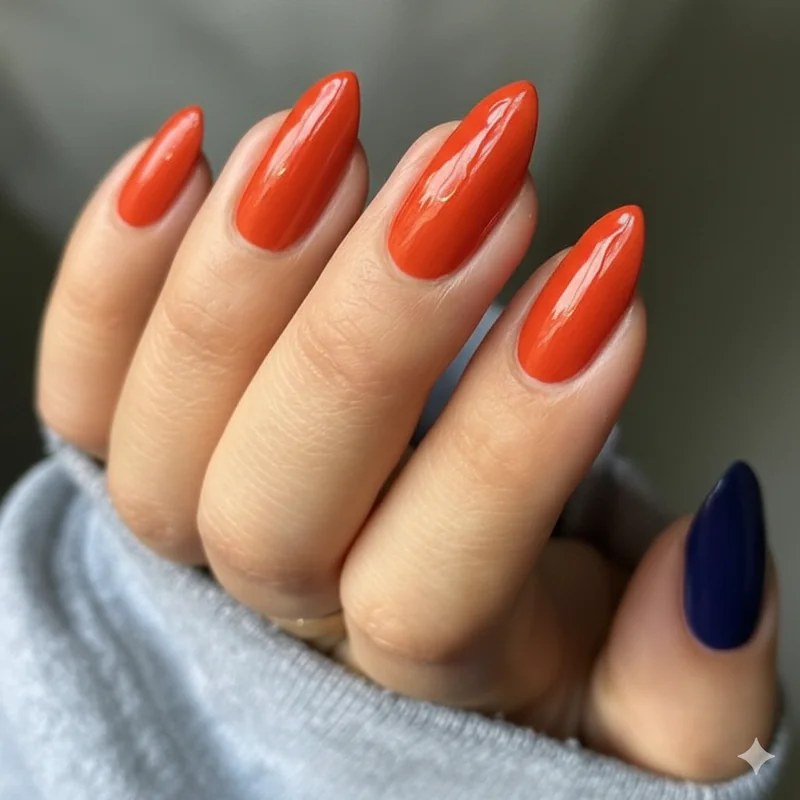
Warm fair skin (golden, peachy, ivory base): warm pinks, peach nudes with a hint of yellow, coral reds, and terracotta all work well. Classic red, the warm tomato-adjacent red rather than a cold cherry, is reliably flattering. Deep navy and burgundy create clean contrast that functions on fair skin regardless of undertone temperature.
Cool fair skin (pink, rosy, slightly blue-pink base): cherry red, true berry, deep plum, and icy lavender are all strong choices. The cool-based reds, more blue-red than orange-red, are where cool fair skin looks genuinely striking.
Avoid on fair skin: pale yellows, which can read sickly; very dark muted browns, which often look ashy; and orange, which clashes with both the delicacy of warm fair skin and the pink base of cool fair skin with equal reliability.
For a complete edit of fair skin shades with specific product examples, the Best Nail Colors for Fair Skin guide covers this in depth.
Best Nail Colors for Medium and Tan Skin
Medium skin is where the palette genuinely opens up. "Anything goes" is technically true and practically useless. More options means more ways to get it subtly right and more ways to get it subtly wrong.
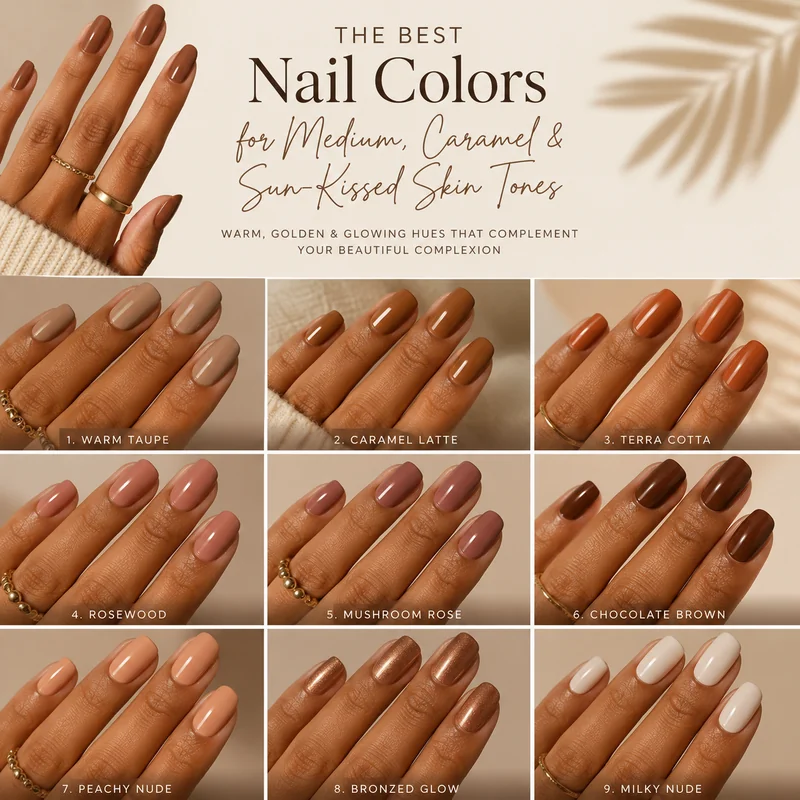
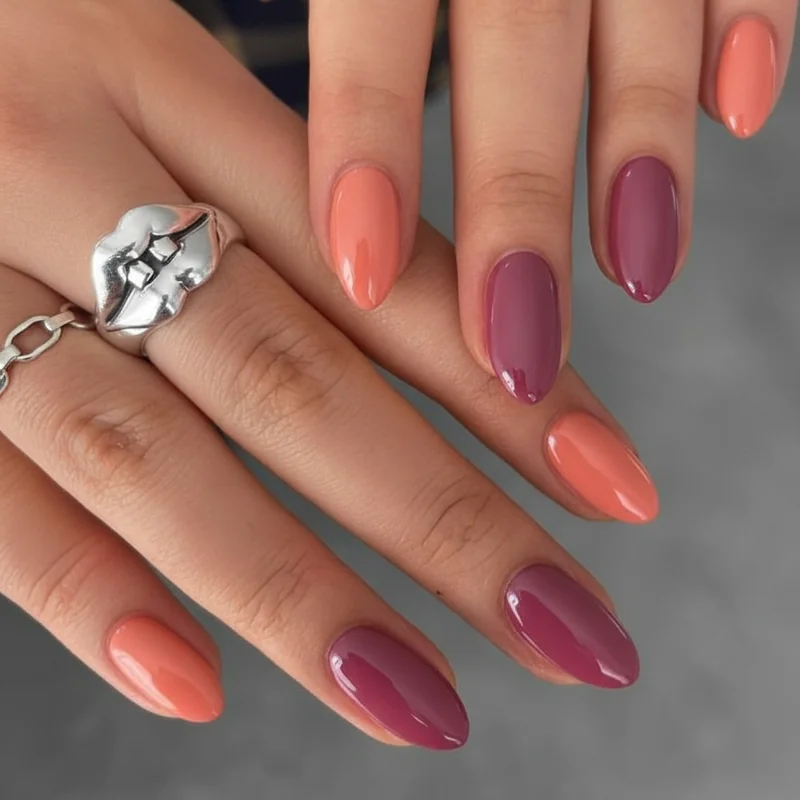
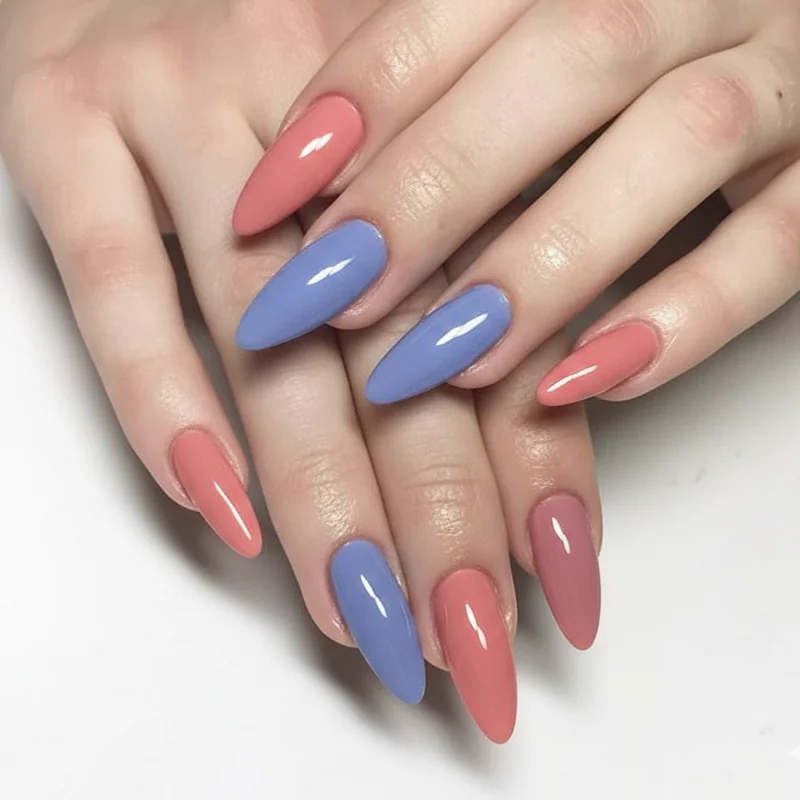
The most flattering shades for medium skin tend to sit in the mid-saturation zone: dusty rose, warm mauve, peachy coral, muted terracotta, warm brick red. These create definition without harsh contrast, and their warmth echoes the golden quality that medium skin, whether warm or cool, often carries.
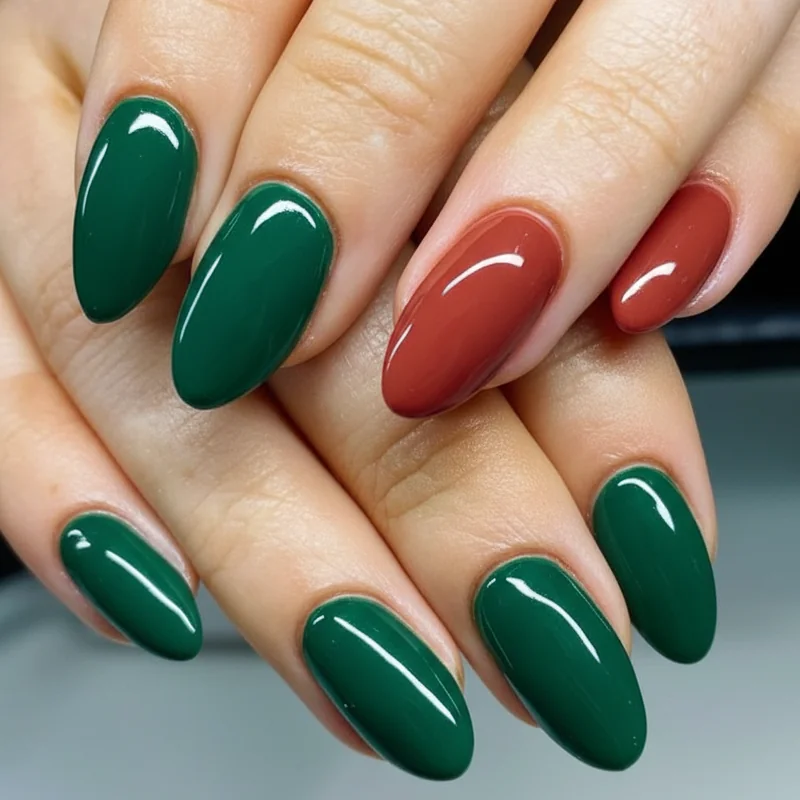
Warm medium skin: corals, peach-toned nudes, burnt orange, terracotta, warm brick red. Rich earthy tones bring out the golden quality in this depth range without competing with it.
Cool medium skin: dusty lilac, cool berry, raspberry, deep navy, and blue-reds. Cool contrast sharpens and brightens where warm contrast sometimes flattens.
Where medium skin tends to go wrong: very pale pastels. They lack depth to create contrast, and on medium skin they read faded rather than delicate. A peachy pastel has enough saturation to work; a purely pale lavender or baby pink usually does not.
The full breakdown is in the Best Nail Colors for Medium Skin Tone guide.
Best Nail Colors for Olive Skin
Olive skin has a yellow-green cast at its base. That specificity is what makes it distinct from plain warm-medium skin, and it is what most guides miss entirely.
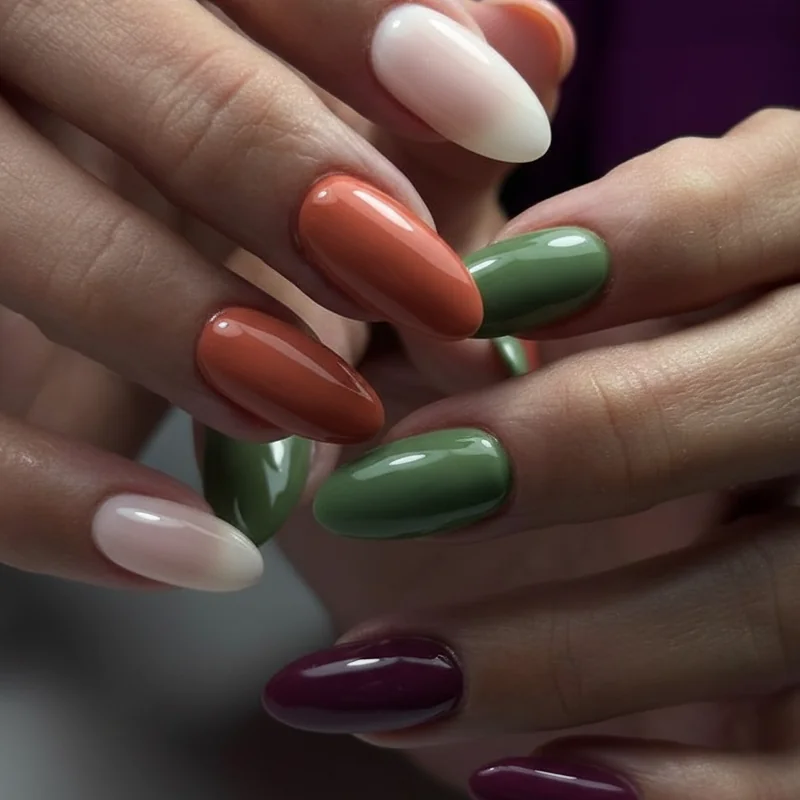
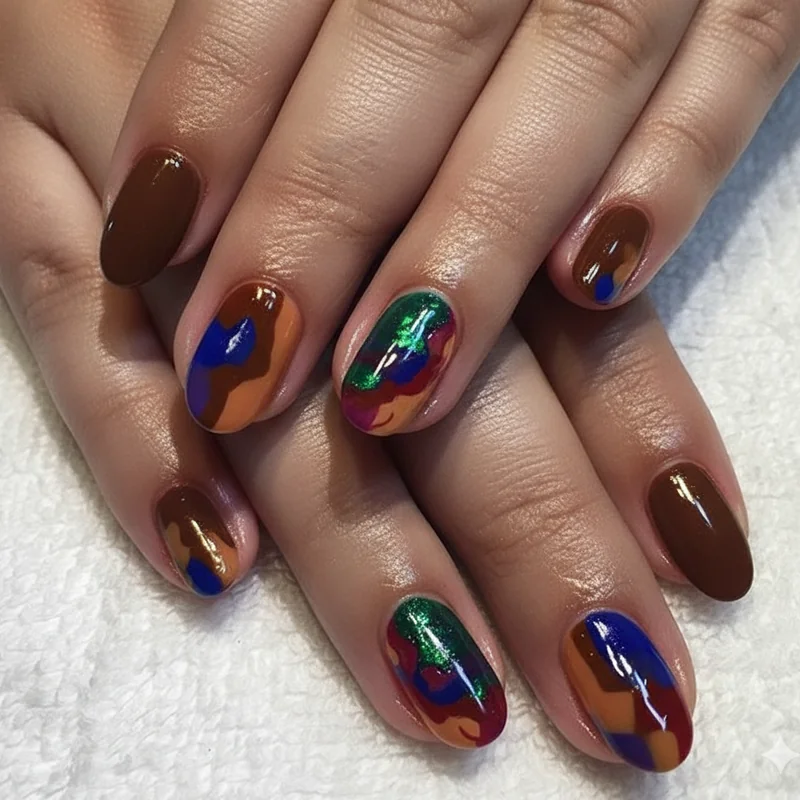
The shades that perform best on olive skin lean into the earthiness rather than against it. Terracotta, warm bronze, deep coral, forest green, warm brown, burgundy, and rich berry all thrive here. The yellow-green cast of olive skin creates real harmony with colours that carry an earthy, slightly muted quality.
Avoid cool pastels. Icy lavender, baby blue, pale lilac, and cool-toned pink all fight the olive base. The result looks muddy rather than soft. This is undertone-on-undertone conflict: the cool pink base of the pastel versus the warm yellow-green of the skin.
Jewel tones are an underused olive-skin category. Emerald green creates genuine resonance with olive skin's natural green cast, harmonising rather than contrasting. Deep plum and sapphire blue also work because their saturation level is high enough to hold against olive's warmth without the clash you get from lighter, cooler options.
The full shade breakdown, including the shades olive skin can carry that other tones cannot, is in the Best Nail Colors for Olive Skin guide.
Best Nail Colors for Dark and Deep Skin
Deep skin is not a limiting canvas. It is the most powerful one. The saturation capacity of dark and deep skin tones means colours show their truest pigmentation here. A deep cobalt blue on fair skin reads as slightly subdued. On deep skin, the same shade is electric.
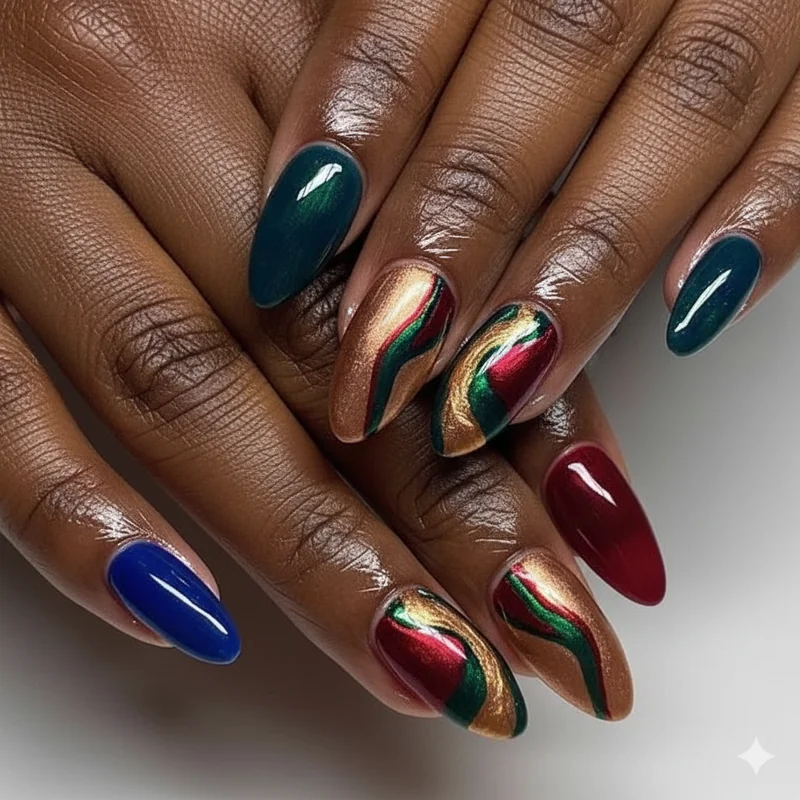
Bold, saturated shades are where deep skin excels: rich reds, cobalt and royal blue, vivid fuchsia, deep emerald, bright coral, and warm orange all look dramatically better on deep skin than on lighter tones. Metallics are exceptional here, particularly gold, copper, and bronze. The warm-metal contrast against deep skin creates a luminosity that is genuinely hard to achieve on any other complexion depth.
The one shade category to approach with care: very sheer or pastel formulas. These are low-pigment by design, and low pigment on deep skin means the colour barely registers. A sheer pink nude that reads as beautifully translucent on fair skin looks nearly invisible on deep skin.
A shade many people with deep skin overlook: a deeply pigmented burgundy or wine. Against rich brown skin, the contrast is jewel-like rather than harsh.
The full guide, including specific formula types and product picks, is the Best Nail Colors for Dark Skin Tone resource.
Best Nail Colors for Indian and South Asian Skin (Wheatish, Dusky, Golden-Brown)
This is the section that most nail colour guides do not write. The standard Western framework of fair, medium, olive, and dark does not map cleanly onto Indian and South Asian complexions, and the result is that a significant portion of the global beauty audience has been receiving advice that was never calibrated for them.
Indian skin spans a wide range from fair to very deep, but several specific categories are underserved by generic guides: wheatish skin (warm golden-beige, sitting between light medium and medium), dusky skin (warm medium-deep with rich brown warmth), and golden-brown skin (warm-leaning medium-to-deep with visible golden luminosity).
The consistent characteristic across most Indian complexions is a warm undertone: yellow, golden, or golden-olive. This changes the shade logic significantly.
Cool-based nudes, any nude with a pink-grey or lavender base, tend to look ashy and lifeless on warm Indian skin. The undertone clash is immediate and flat.
Warm peachy nudes are the functional nude for most Indian complexions. They carry enough warmth to align with the golden base without disappearing. For wheatish skin specifically, a peachy nude with a slight golden cast reads as polished rather than blending away.
Coral and warm red are reliably excellent on Indian skin at every depth level. The orange-warmth of coral resonates with warm undertones rather than fighting them.
Terracotta and earthy brown are underused and exceptionally flattering on dusky and golden-brown skin: rich, warm, grounded.
Gold metallic is not just an occasional choice. It is practically calibrated for warm Indian undertones, and the resonance between gold and golden-warm skin is the most immediate pairing in the guide.
Shades to approach carefully: icy pinks, cool lilacs, pale baby blues, and grey-based nudes. These are designed for cool undertones and read flat or ashy against the warmth of most Indian complexions.
For the full breakdown, Best Nail Colors for Indian Skin Tone covers wheatish, dusky, and golden-brown in detail.
Nail Colors That Flatter Every Skin Tone — The Universally Safe Picks
Universal shades exist, but they are cross-tonal for a specific reason, not because "anything goes."
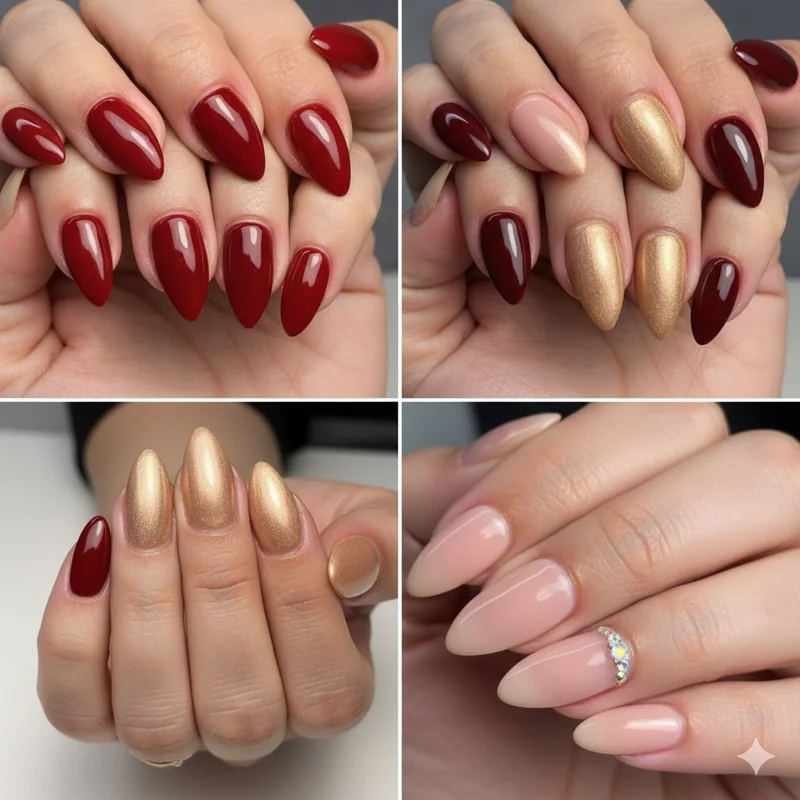
True red is the most reliably cross-tonal shade in existence. Not too orange, not too blue-pink. It sits in the centre of the red spectrum: pure, saturated, balanced. As Essie's skin tone guide notes, red creates flattering contrast across all complexion depths because its saturation level is high enough to read on deep skin and its warmth is balanced enough not to clash with cool complexions.
Warm terracotta works universally because it sits in a mid-warmth temperature range that suits warm, neutral, and even many cool undertones without strong conflict.
Deep berry and wine create contrast at every depth level. The richness of the pigment does the work regardless of the skin beneath.
Warm metallic gold resonates with warm and neutral undertones and creates a sharp, graphic contrast on cool ones.
Clean white, a pure white without an obvious yellow or grey cast, is cross-tonal through high contrast alone. It creates a clean edge against every skin tone.
For a curated deep-dive into this category, Nail Colors That Look Good on Every Skin Tone and the Best Nude Nail Polish for Every Skin Tone guide are the natural next stops. And for the warm-red versus cool-red distinction in full, Best Red Nail Polish for Your Skin Tone is the specific resource.