Most people have picked up a nail polish that looked perfect on someone else, then put it on their own hands and found it completely wrong. The colour was identical. The finish was the same. And yet.
Skin undertone nail color matching is the variable no one explains properly. Not "what depth is your skin." That matters too, but less than most guides suggest. The real question is what sits beneath the surface: the fixed, unchanging undertone that determines whether a shade makes your hands look alive or washed out, warm or cold, radiant or flat.
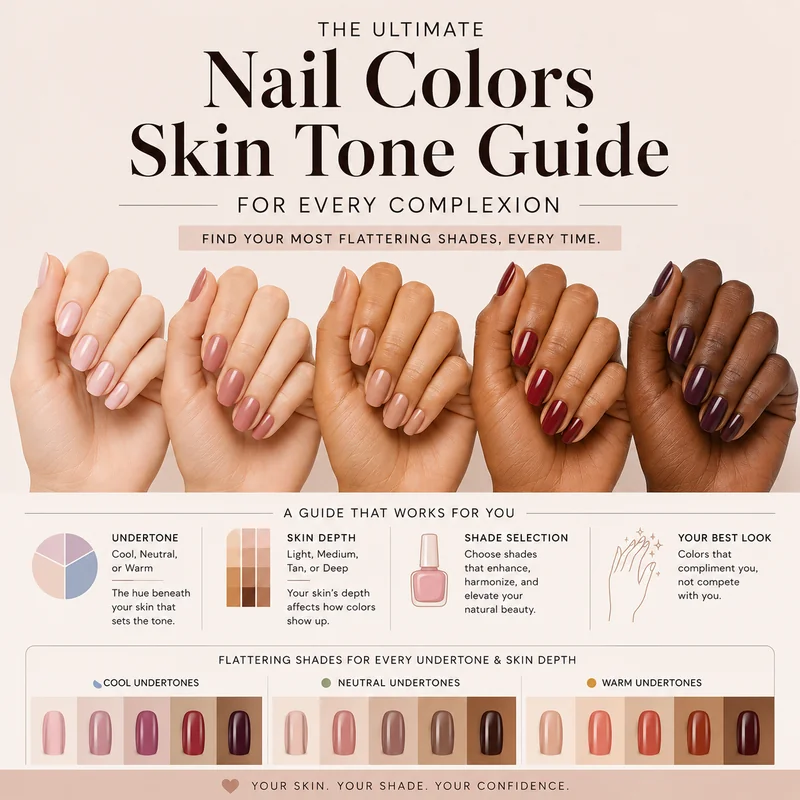
This guide gives you four reliable ways to find yours, handles the situations where tests conflict, and maps each undertone category (including olive, which deserves its own logic) to the nail colour directions that actually belong to you. For the full tone-by-tone shade edit once you know your category, The Complete Guide to Nail Colors for Every Skin Tone is where to go next. And for a broader look at how surface tone and undertone interact across complexions, the Nail Colors for Every Skin Tone: The Ultimate 2026 Matching Guide covers the full picture.
Why Undertone Matters More Than Your Skin Tone for Nail Colour
Surface skin tone is the shade you see in the mirror: fair, light, medium, tan, deep. It shifts across seasons, with sun exposure, with age. Undertone is something else entirely. It is the chromatic hue that lives beneath the surface, produced by the ratio of melanin, haemoglobin, and carotene in the skin. And it does not change. Not in summer. Not after a fortnight in Ibiza. Not ever.
This distinction matters practically. Two people can have identical surface skin tones and completely opposite undertones. A medium-depth skin can run warm-golden or cool-pink. The nail shade that looks extraordinary on one of them will look muddy on the other. Think of undertone as the lighting in the room. The furniture (surface tone) is fixed, but it reads completely differently depending on whether the light is warm or cool.
That is why the standard advice, "fair skin, wear pastels; dark skin, wear jewel tones," gets you only halfway there. Pastels exist in warm and cool versions. Jewel tones do too. The surface tone tells you how much contrast you can handle. The undertone tells you which direction that contrast should go.
The Four Tests You Can Do Right Now (And How to Read Them)
No single test is definitive. The most confident undertone reads come from running at least two or three and looking for patterns. A unanimous verdict is not guaranteed, and that is fine.
The Vein Test
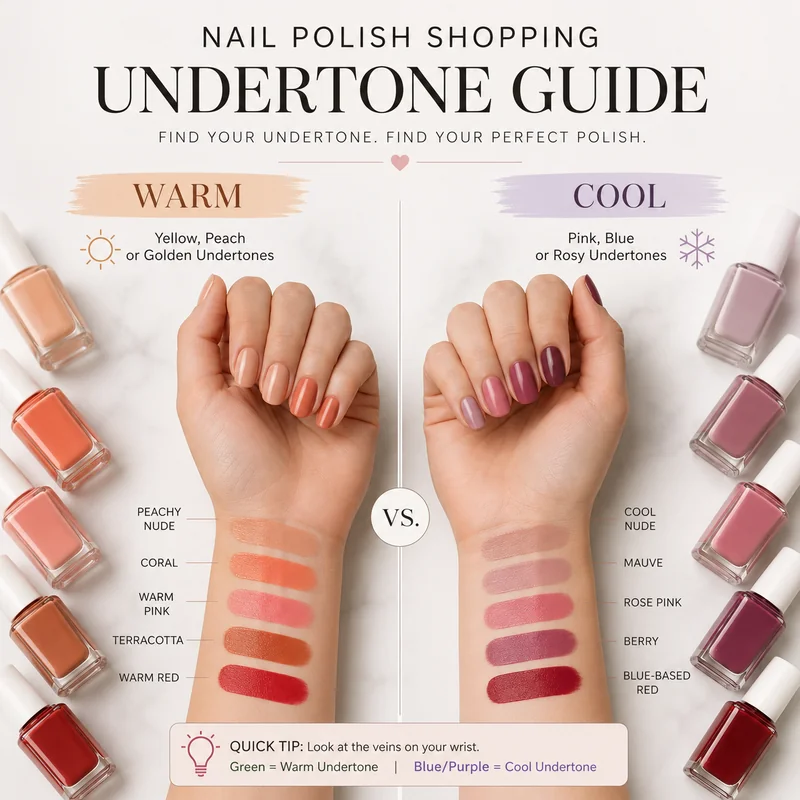
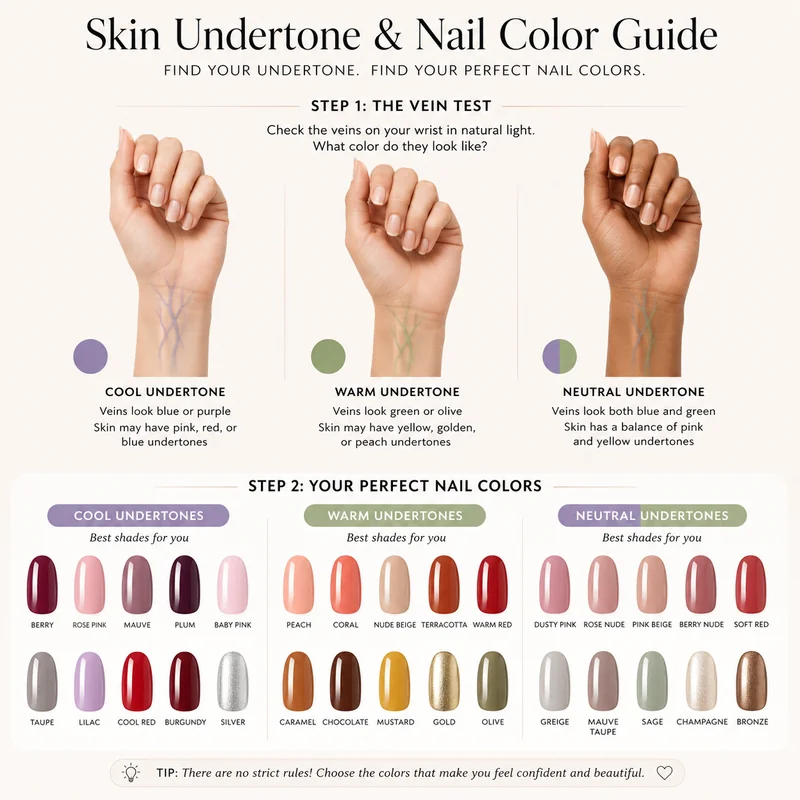
Look at the inside of your wrist in natural daylight. Artificial light shifts colour perception significantly. Blue or blue-purple veins point to a cool undertone. Green veins point to warm. If you can see both, or the colour sits somewhere between the two and genuinely cannot be categorised, that is a neutral signal.
One important caveat: the vein test is less reliable on deeper skin tones, where the veins can be difficult to distinguish clearly. If you cannot read your vein colour confidently, skip to the jewellery test.
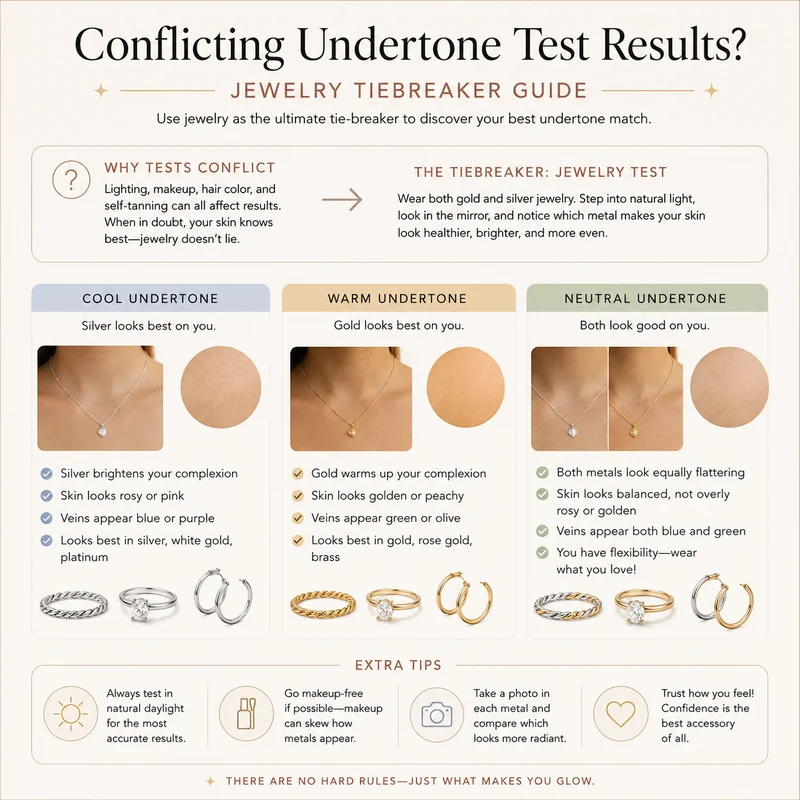
The Jewellery Test
Hold a piece of silver jewellery next to your face or wrist, then swap it for gold. Which one makes your skin look brighter, more alive? Silver flattering you suggests cool undertone. Gold suggesting warm. If both look equally good, genuinely equally and not just acceptable, you are likely neutral.
This is the most consistent tiebreaker of the four tests, particularly when other results are mixed.
The White Paper Test
As how the white vs cream clothing test works demonstrates, holding a clean white sheet of paper against your bare face in daylight reveals a lot. If your skin looks rosy or pinkish beside pure white, that is a cool signal. If it looks yellowish or golden, that is warm. If the paper just looks white and your skin reads as neutral in comparison, you are likely neutral-to-olive.
The Sun Reaction Test
How does your skin respond to prolonged sun exposure? Cool undertones tend to burn before they tan, or burn and peel without developing much depth. Warm undertones usually tan quickly and evenly. Neutral undertones do a bit of both: some burning, then some tanning. This test is useful as a confirmation, less useful as a standalone.

What If Your Tests Give Different Results?
This is the question most undertone guides refuse to answer. They run you through the vein test and leave you there. That is precisely useless for the significant portion of readers whose vein colour sits firmly in "I genuinely cannot tell" territory.
Mixed results are normal. They happen for two reasons. First, many people are genuinely neutral, balanced between warm and cool, with no strong lean in either direction. Second, some tests are more sensitive to surface tone than undertone. The vein test, for example, is partly influenced by how translucent your skin is. On deeper or olive skin, it can read ambiguously regardless of the true underlying tone.
The practical approach: when tests conflict, weight the jewellery test most heavily. It is the most consistent across all skin depths because it asks a simple perceptual question: which of these two makes you look better, rather than asking you to categorise a colour you may be struggling to read. If gold jewellery makes your skin glow and silver makes it look slightly dull or cold, you are warm. The reverse points to cool. If the answer is genuinely equal, move forward as neutral.
One more thing: if you come out as neutral, that is not a non-answer. It is its own category with its own logic, covered in full below.
Cool Undertone — What It Looks Like and Which Nail Colours Belong to You
Blue-purple veins. Silver jewellery that makes your skin look cleaner and brighter. Skin that burns before it tans, or carries a pink-rosy quality at the surface.
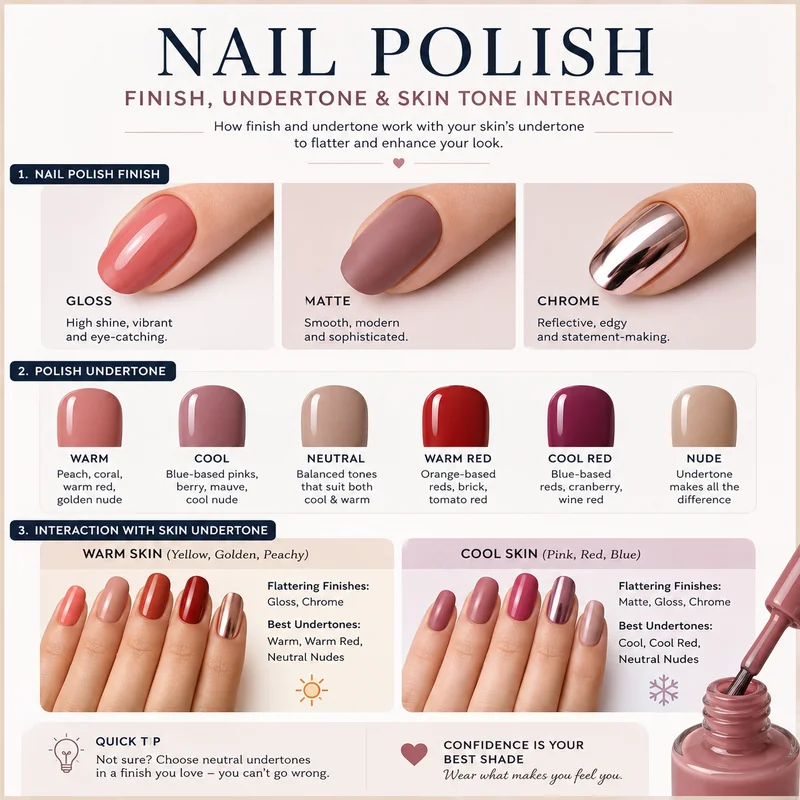
Cool undertones exist across every skin depth: fair, medium, deep, and everything between. And the same red polish reading differently by undertone is exactly the kind of thing cool-toned readers notice when they pick up a warm-based red that was meant to look classic and instead looks orange or muddy on their hands.
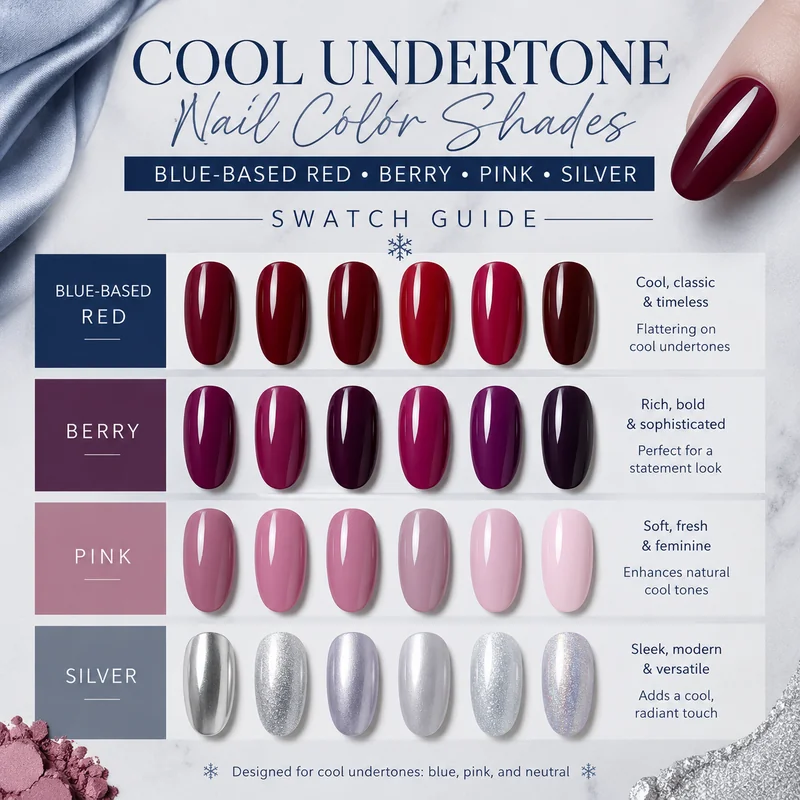
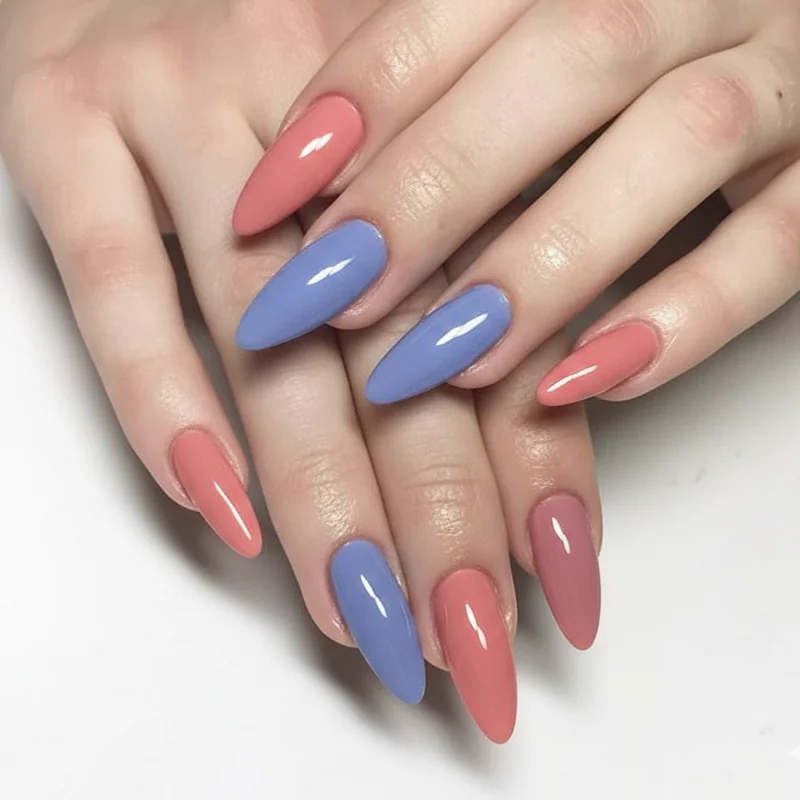
The shades that work for cool undertones share a base: they lean blue, pink, or silver rather than yellow or orange. Blue-based reds (think cherry, raspberry, or deep cranberry) are the cool undertone's red. Not orange-red, not tomato. The blue base is the variable. Dusty roses, lilacs, cool mauves, navy, icy lavender, and silver metallics all sit comfortably in this territory. Deep plum and blue-toned burgundy read particularly well on cool skin with depth.
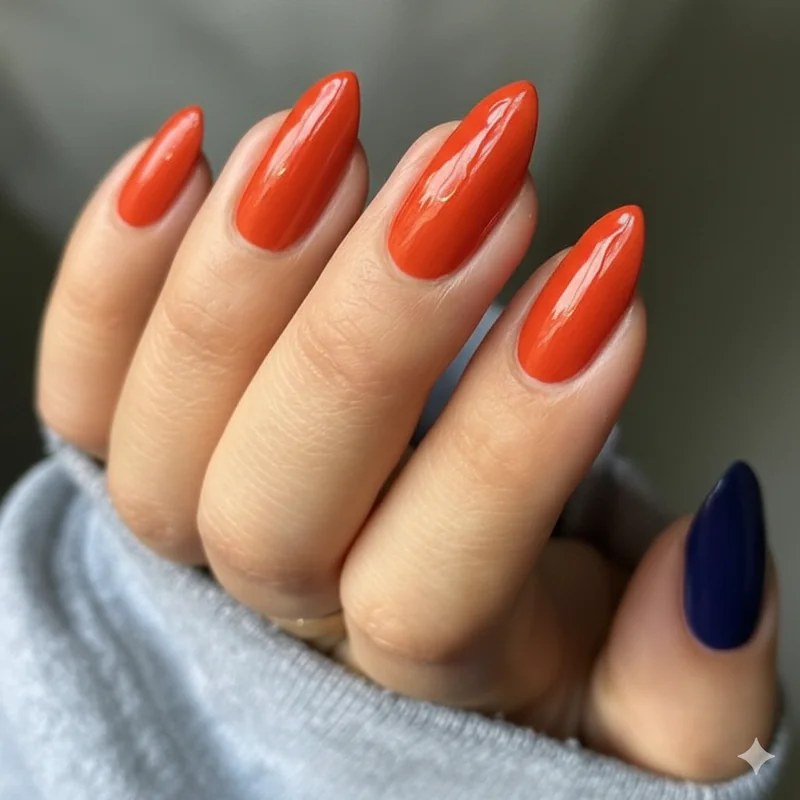
What tends to flattten cool skin: orange-adjacent shades, warm terracottas, golden bronze, or any red with a pronounced yellow base. They do not "clash" in an obvious way. They just make the hands look duller than they should, slightly washed.
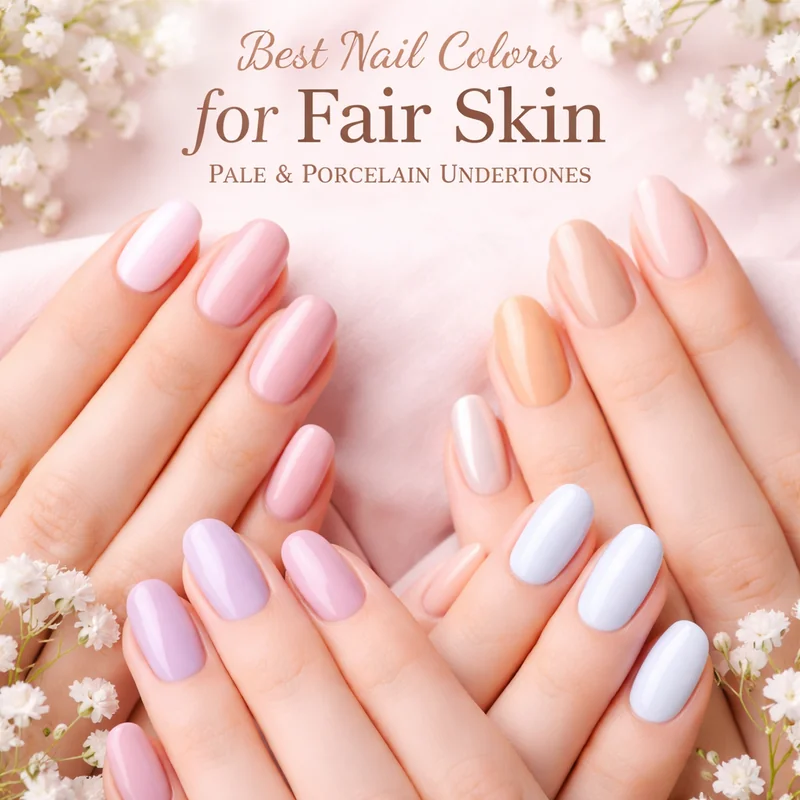
For fair skin with cool undertones, the full shade direction is in the Best Nail Colors for Fair Skin edit. For cool undertones on deeper complexions, Best Nail Colors for Dark Skin Tone covers that range in full.
Warm Undertone — What It Looks Like and Which Nail Colours Belong to You
Green veins. Gold jewellery that makes your skin look richer and more luminous. A tendency to tan fairly easily. Skin that carries golden, peachy, or honey-yellow warmth at the surface.
Warm undertones also span every depth. Many readers with warm undertones already know they are warm from foundation or lipstick shopping but have never mapped that information across to nail colour, because the two categories seem separate. They are not. The same logic that makes a warm-based foundation sit naturally on golden skin makes a warm-based coral or terracotta nail polish do the same.
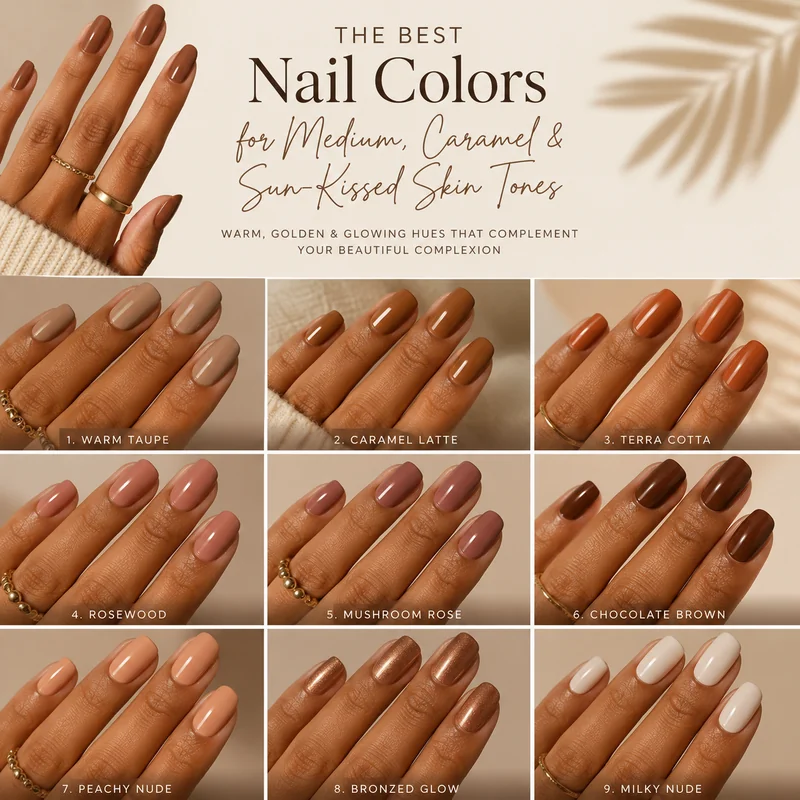
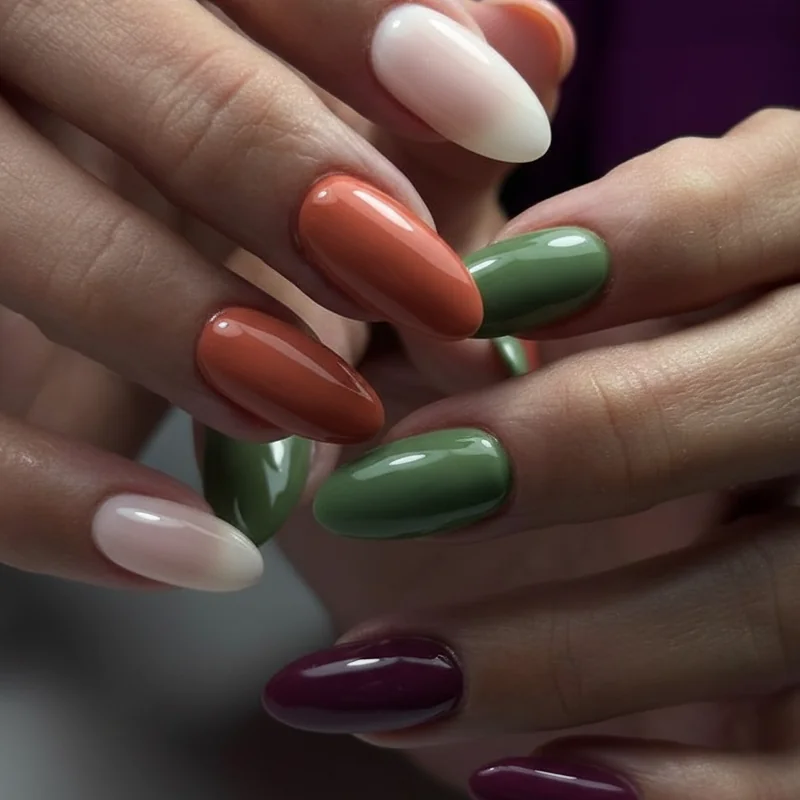
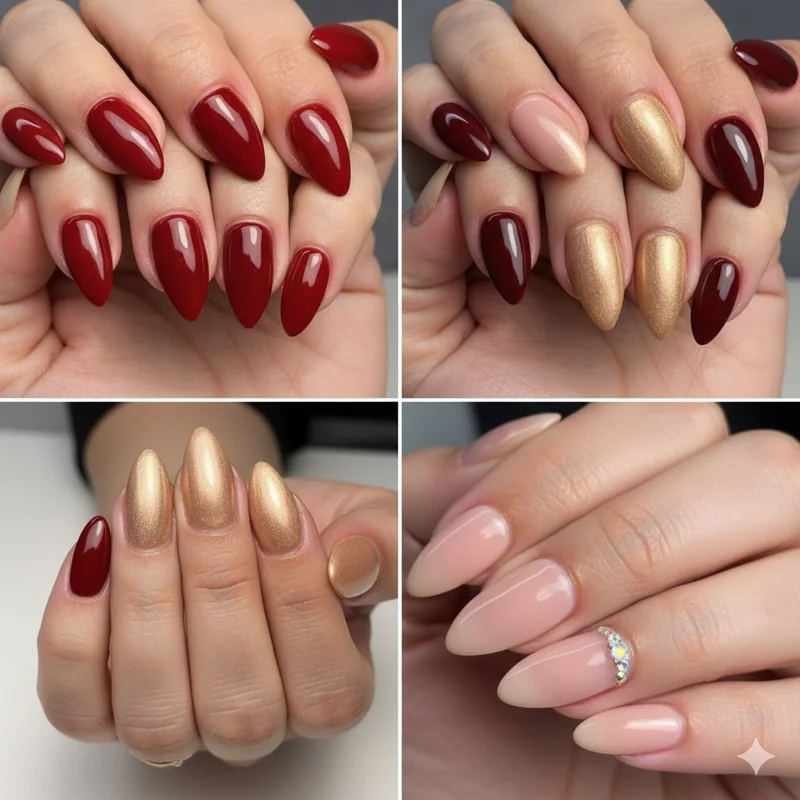
The warm undertone's palette runs through corals, peaches, warm reds, brick and terracotta, earthy oranges, warm nudes with yellow or golden bases, and bronze metallics. A warm red, one with orange or golden lean, looks extraordinary where a blue-based red would look cold and a little wrong. The warm nude that disappears beautifully into warm skin looks ashy and grey on cool skin.
For medium and tan skin with warm undertones, the full shade edit lives at Best Nail Colors for Medium Skin Tone. For South Asian skin tones, wheatish and dusky complexions that often carry warm undertones and are frequently misread as neutral, Best Nail Colors for Indian Skin Tone gives the specific direction.
Neutral Undertone — What It Means and Why It Doesn't Mean You Can Wear Everything
Neutral undertone has a reputation problem. It gets presented as the best outcome, "lucky you, everything works!" when the reality is more useful and more specific than that.
Neutral undertones have a balance of warm and cool pigment beneath the surface, with neither dominating. That balance does provide more range than a strongly directional undertone. But it does not mean every shade is equally flattering. It means the shade boundaries are softer, and that you sit somewhere between the cool and warm poles rather than at either end.
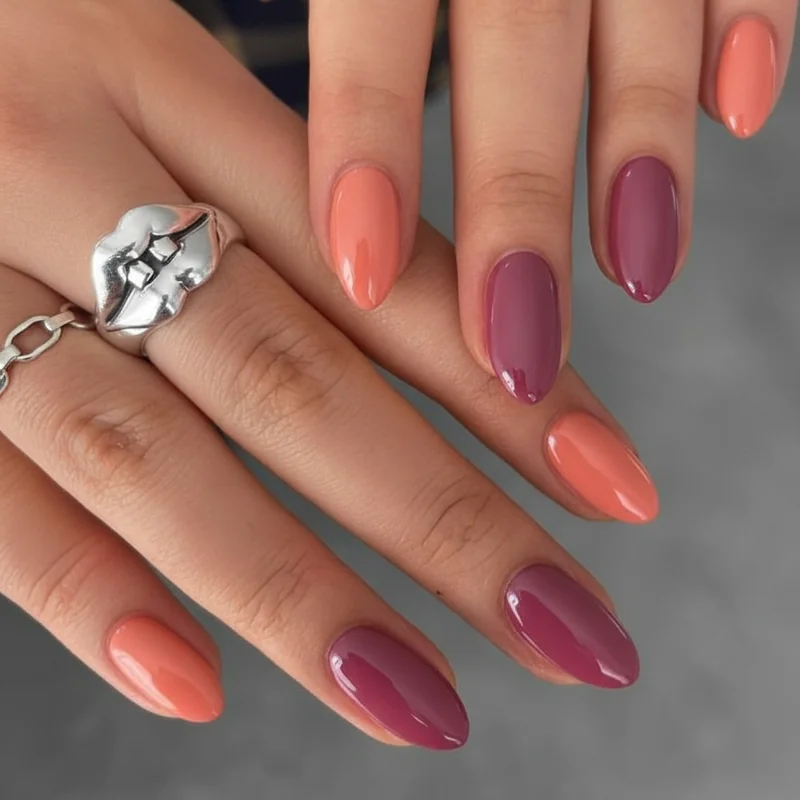
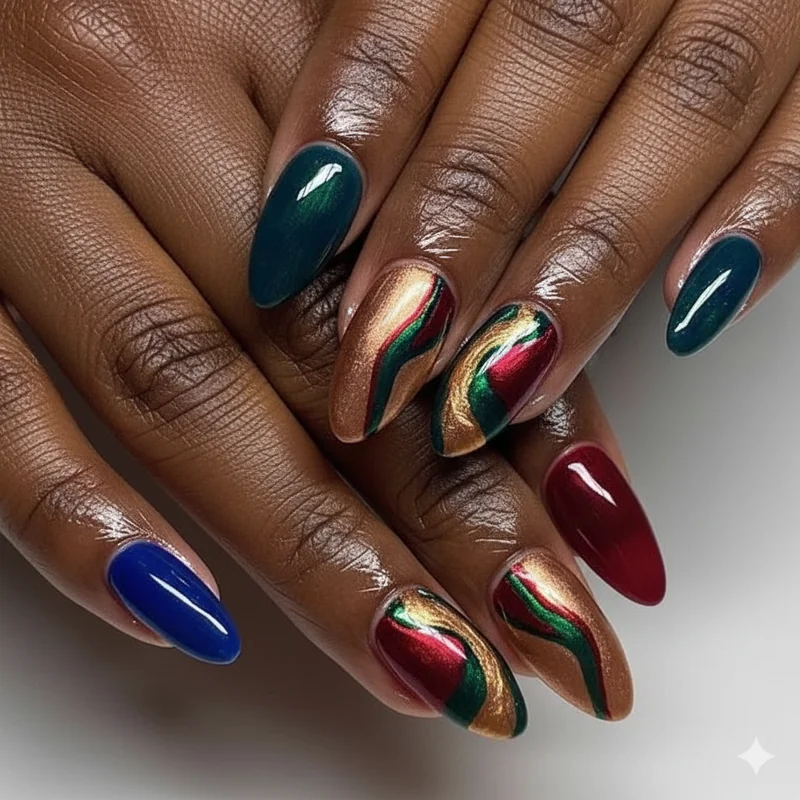
In practice: neutral undertones do well with true reds: neither blue-based nor orange-based, but a balanced classic red. Warm and cool nudes both read well, which is genuinely useful when shopping. Rose-toned pinks and peachy pinks both tend to work. Jewel tones such as emerald, amethyst, and deep teal often look strong on neutral undertones because they carry internal complexity rather than a single temperature.
Where neutral undertones do find limits: extremely cool or icy shades can look a little cold, and very warm-heavy terracottas or orange-adjacent shades can sometimes overpower. The range is wide, but it is not infinite. Knowing your neutral lean, whether you sit slightly warm-neutral or slightly cool-neutral, narrows this further and makes shopping considerably easier.
Olive Skin — Its Own Undertone Logic (And Why It's Routinely Misread)
Olive skin is consistently one of the most misidentified categories in undertone guides. It gets folded into "neutral" because it does not read clearly warm or cool, and then the resulting shade advice is wrong for it. Olive is not simply a balance of warm and cool. It has its own pigment quality.
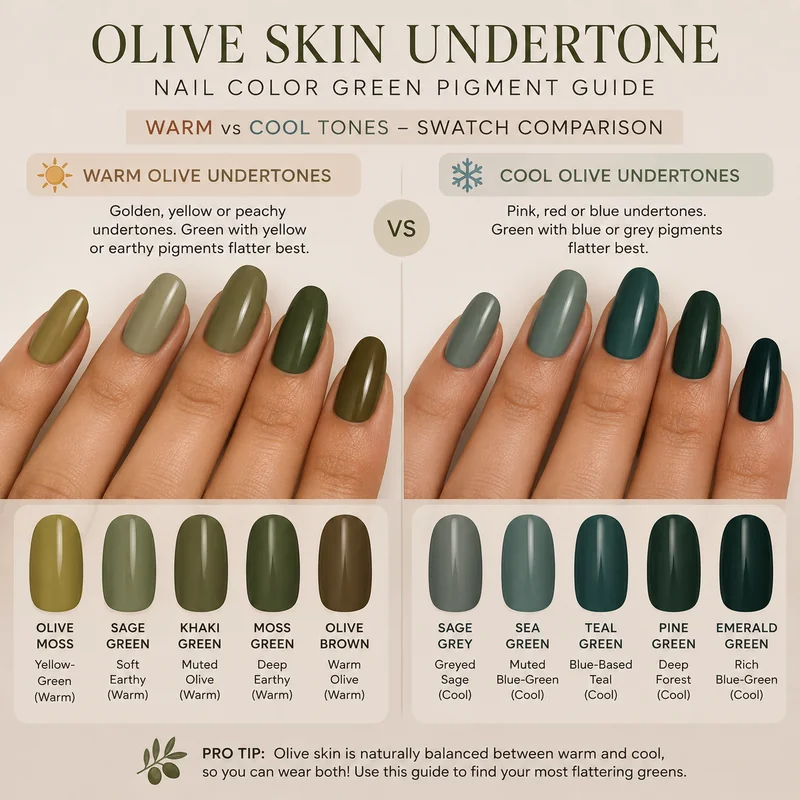
Olive skin has a green-leaning cast produced by a higher carotene and haemoglobin ratio beneath the surface. It often tests as warm because of this (green veins, better in gold), but it does not behave like a straightforwardly warm undertone in practice. The shades that look best on warm skin without an olive quality can sometimes read too orange or too yellow on olive skin.
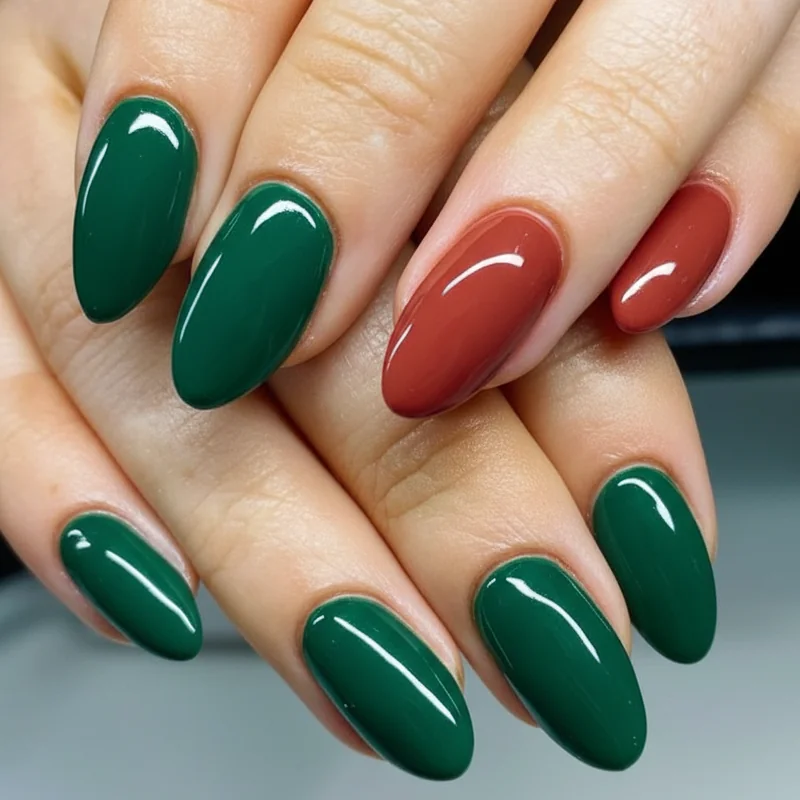
The olive-specific palette tends to favour warmer shades that are earthier and deeper rather than bright or peachy: terracotta, warm nudes with golden bases, deep warm reds, dusty rose (which sits in interesting tension with the olive's green quality), warm greens, and bronze metallics. Certain colours that might look risky on a straightforward warm undertone, such as rich khaki or earthy olive green, can look extraordinary specifically on olive skin.
The most important distinction: olive skin does not respond well to very muted or greyed-out cool tones, which tend to amplify the green cast rather than complement it. And very warm-peachy shades without enough depth can occasionally look too light and flat.
For the full olive shade guide, Best Nail Colors for Olive Skin covers the complete palette with specific shade direction.