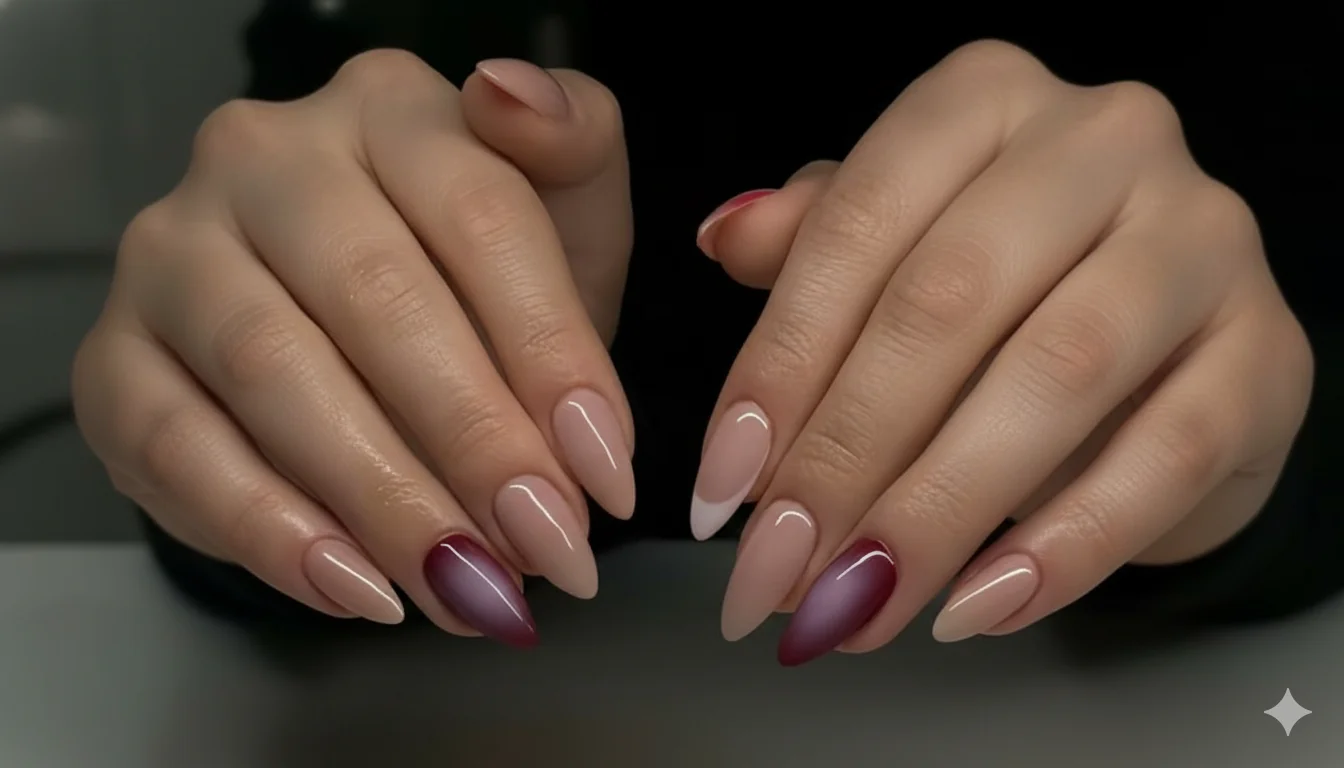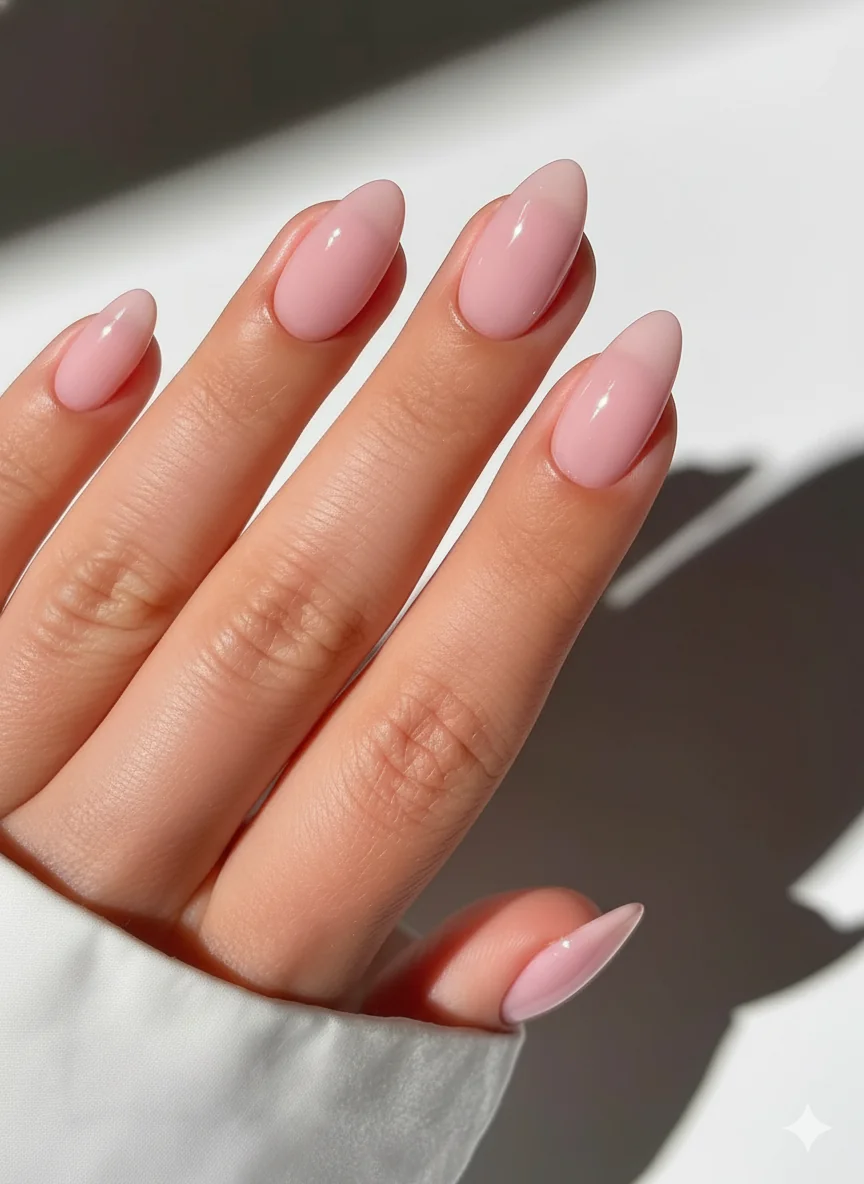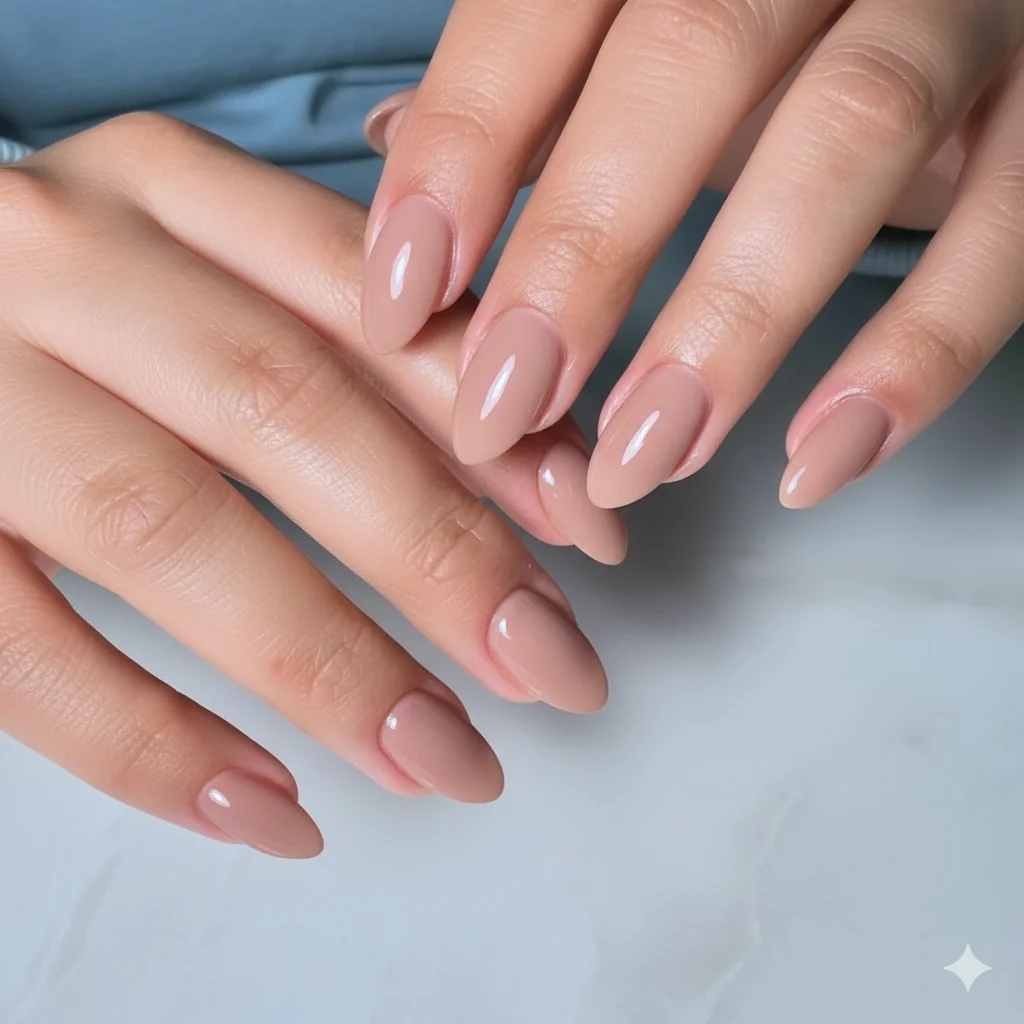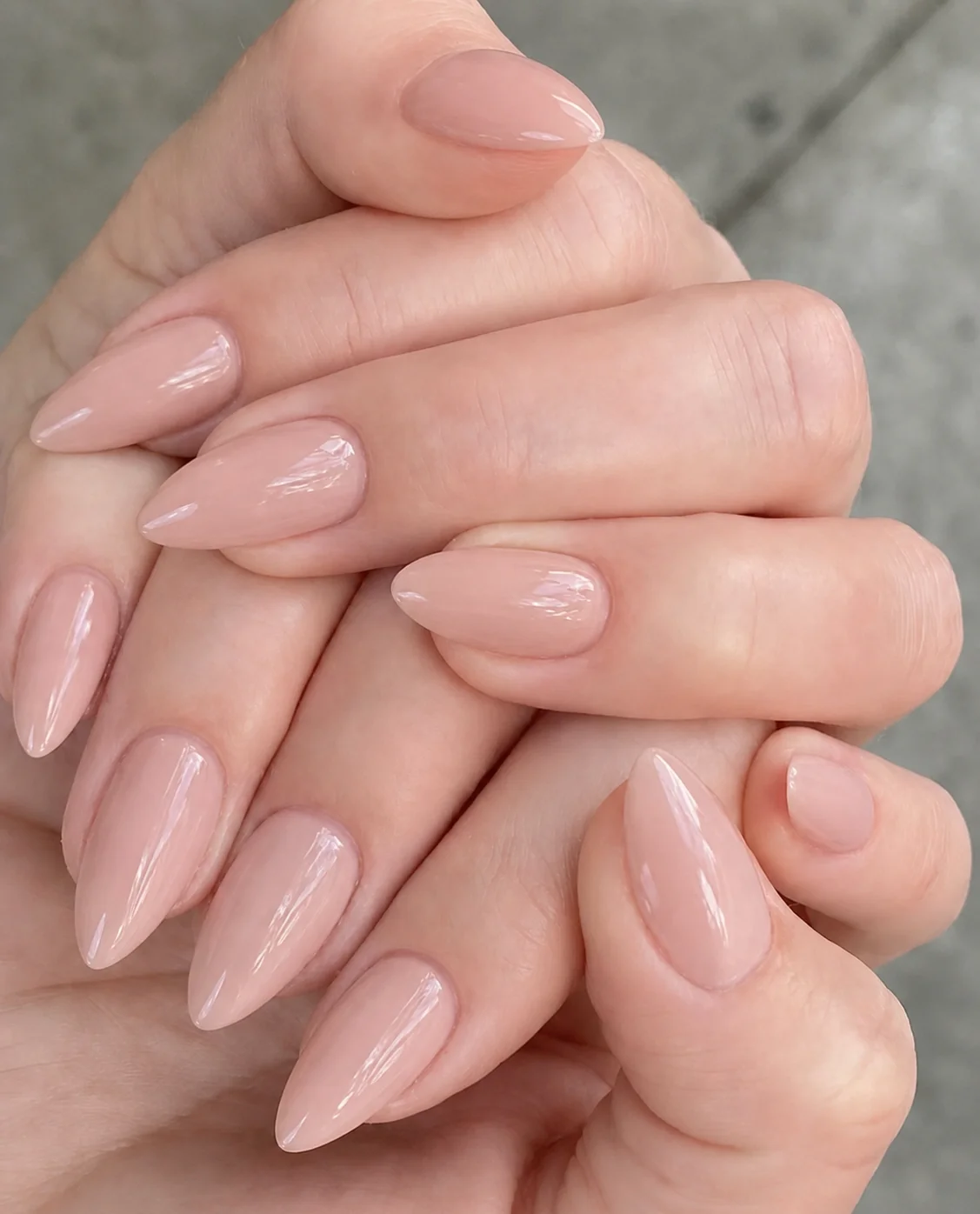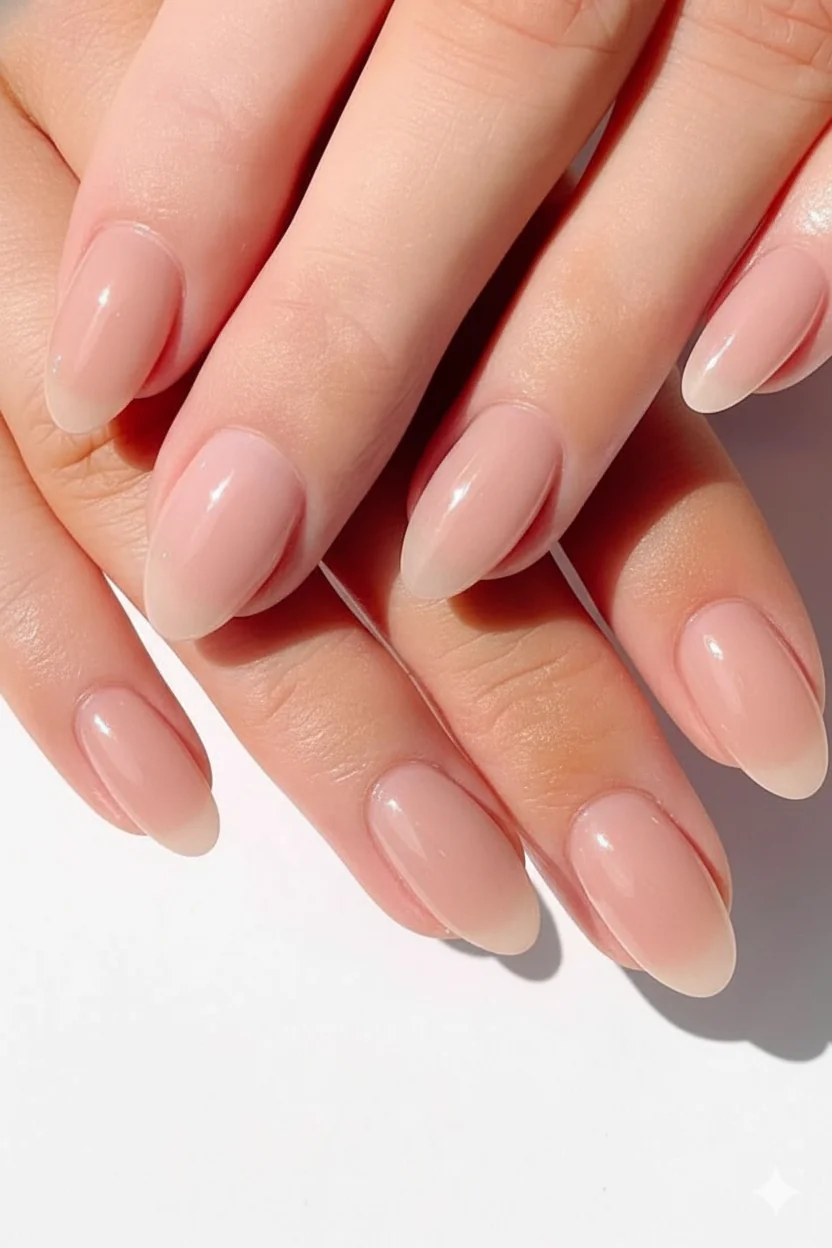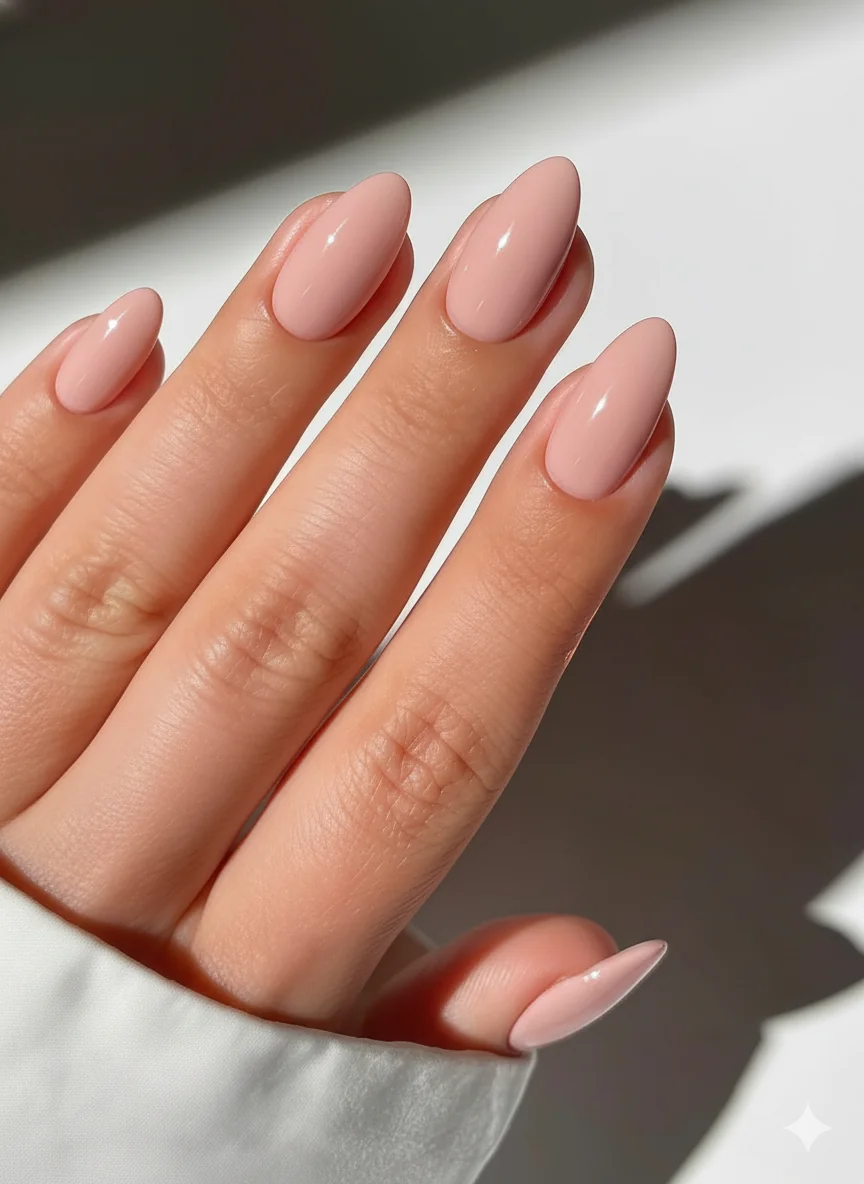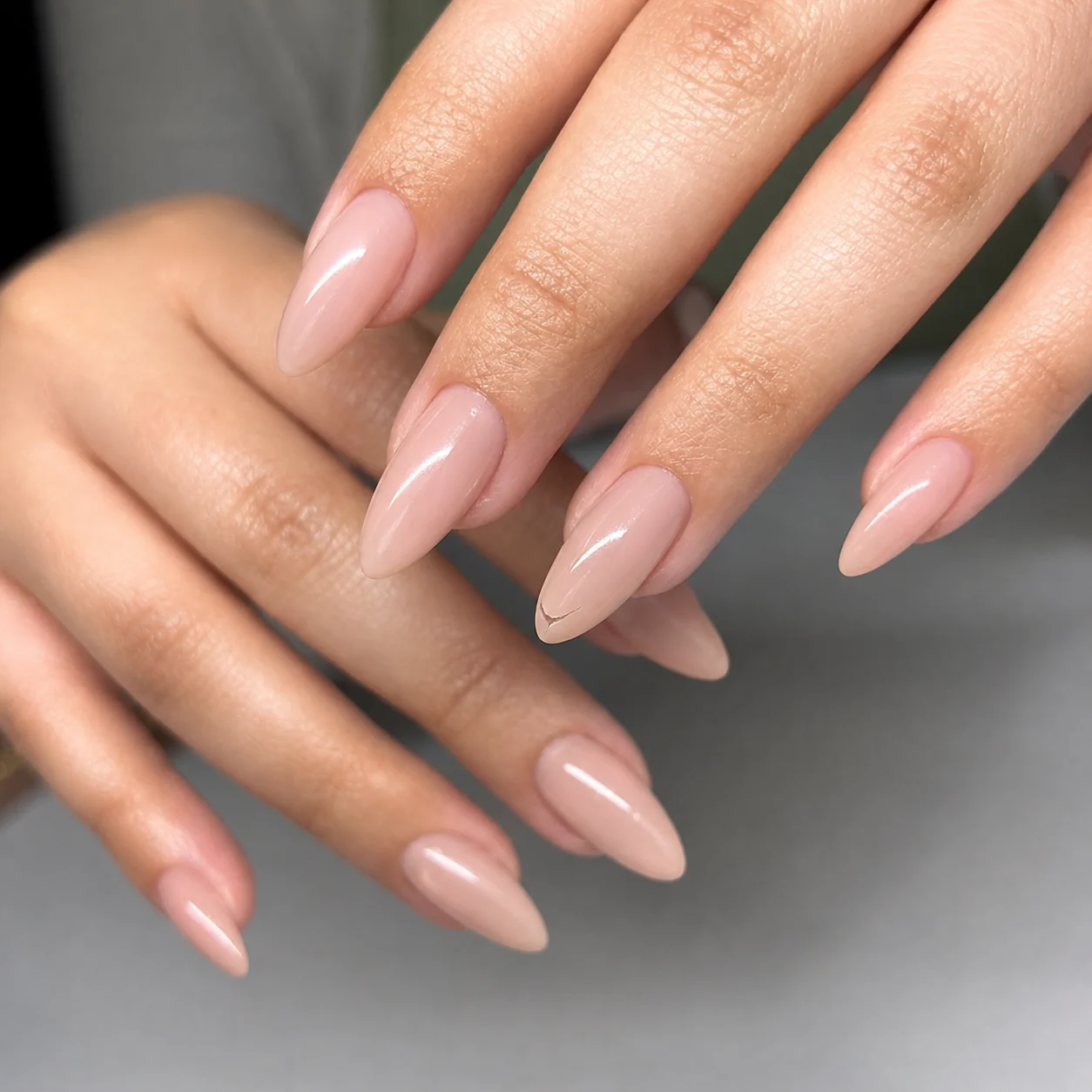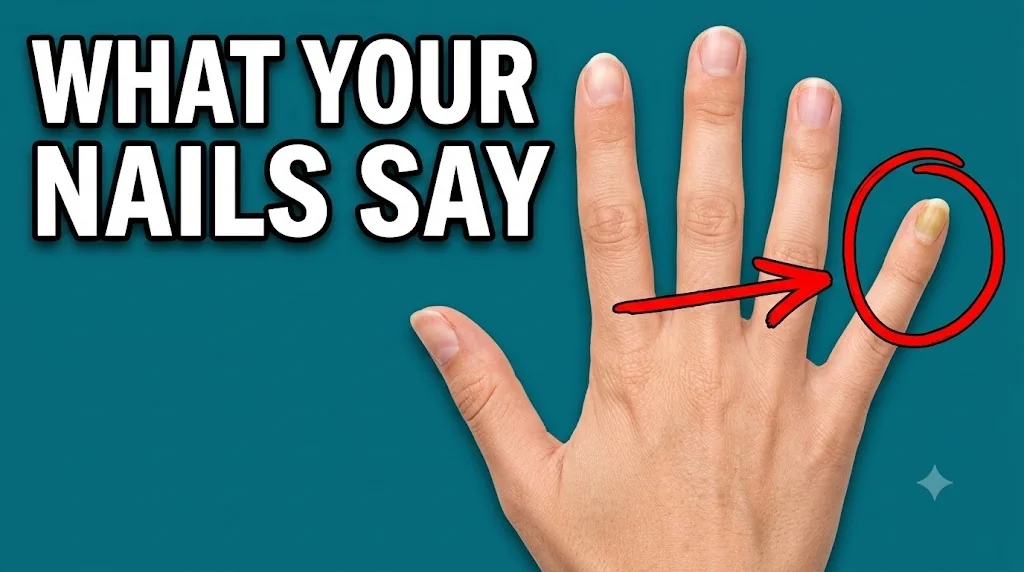
Most salons hand you a card. A laminated square with five bullet points you will lose before you reach your car. What nobody gives you is a real routine — one that accounts for the specific pressures of an almond set and the particular anxieties of wearing one for the first time.
Almond nail aftercare is not complicated, but it is specific. The tapered tip of an almond is the most structurally vulnerable point of any nail shape. The lateral side walls, which are filed more aggressively than any other shape to create that elegant taper, are where lifting starts first. Generic advice about "keeping nails dry" does not explain any of this. It also does not tell you what to do when your cuticles look ashy the next morning, or what it means when one nail starts pulling away at the side on day four. For a fuller picture of everything you should have known before your appointment, the almond nails beginners guide covers all of it.
This post does something different. It gives you the routine — by hour, by day, by week — so you know exactly what you are doing and why.
What Nobody Tells You When You Leave the Salon (And Why Almond Shape Needs Specific Care)
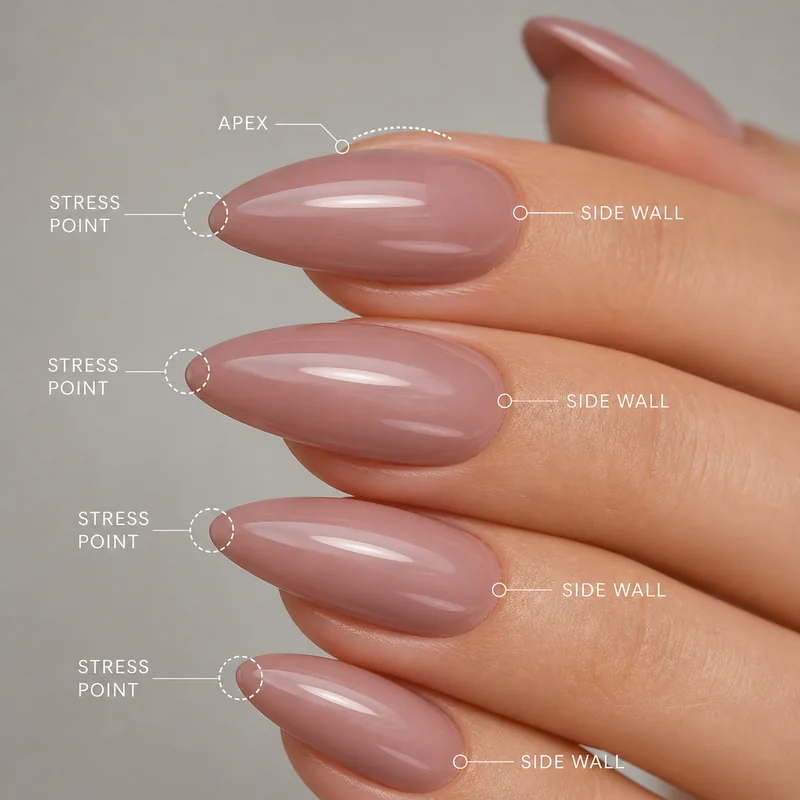
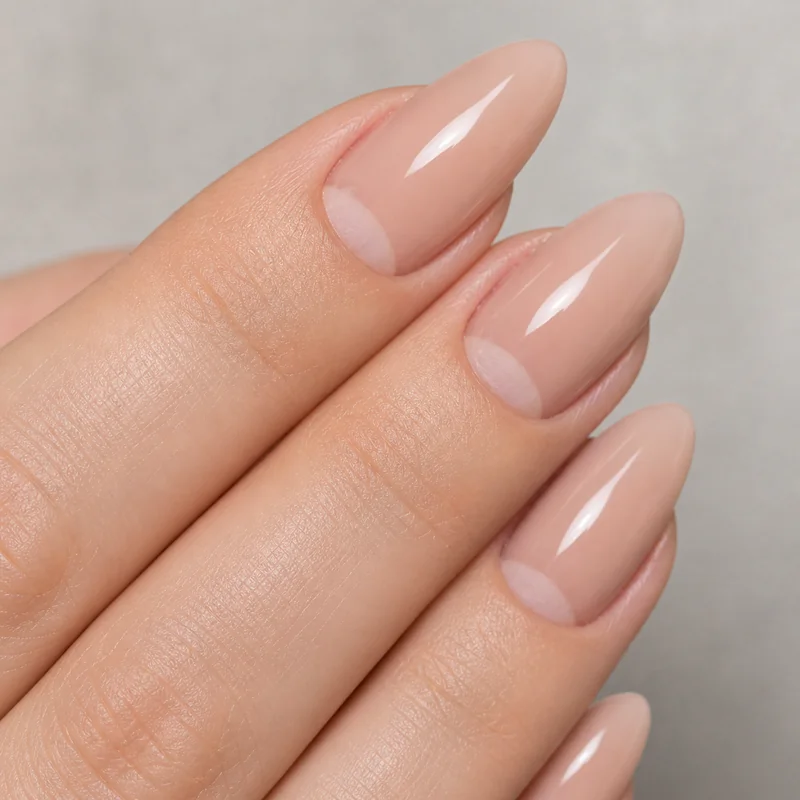
The tip of an almond nail is a point. Not the flat edge of a square, not the soft curve of an oval — a point. Which means all the mechanical force of daily life concentrates in a very small area. Opening a can, typing, pulling on a jumper. Every one of those actions lands at the tip.
The lateral side walls tell a similar story. To create the almond's characteristic taper, your nail tech filed the sides back. That filing removes not just product but the natural oils around the proximal nail fold — the oils that keep the bond between your nail plate and the enhancement flexible. Without them, the side walls are where lifting begins, usually before any other part of the nail shows a problem.
Generic aftercare exists for nails as a category. This routine exists for almond nails specifically.
The First 24 Hours: What to Avoid Right After Getting Almond Nails Done
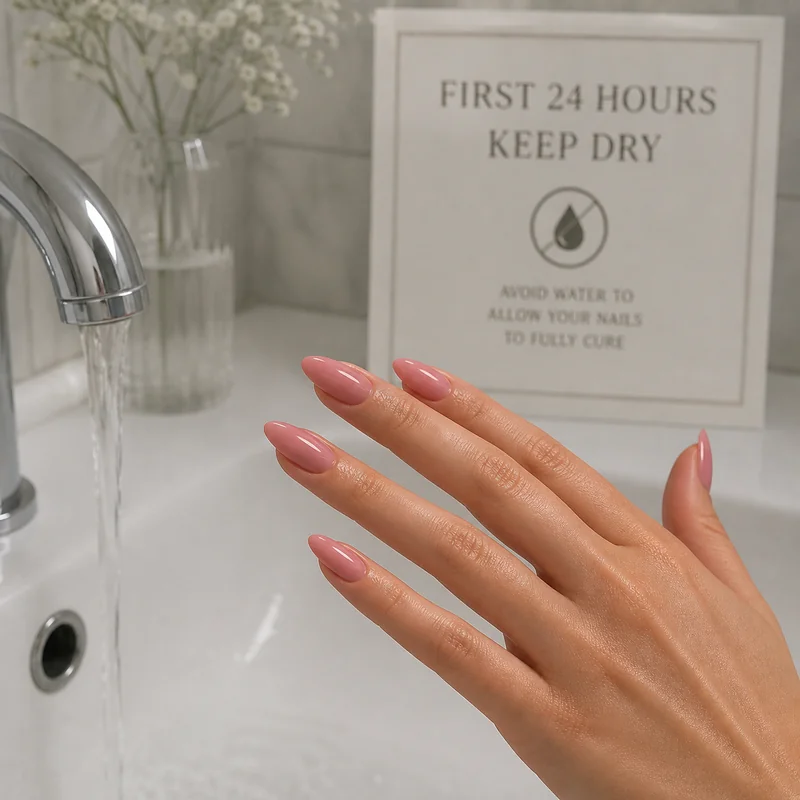
The bond between your nail plate and the enhancement is not fully set when you walk out of the salon. Gel continues curing for several hours after lamp exposure. Acrylics are still completing their polymerisation process. What this means in practice: the first 24 hours are the window when the bond is most vulnerable, and water is the main threat.
Avoid prolonged water exposure — long showers, washing up without gloves, swimming, or soaking in a bath. A quick rinse of your hands is fine. Forty minutes with your hands in hot soapy water is not. Avoid intense heat as well: saunas, steam rooms, and very hot showers can soften the product before it has fully hardened.
Skip the hand sanitiser for the first day if you can. Alcohol is dehydrating and can interfere with the top coat seal. Use soap and water where possible, and dry your hands thoroughly afterwards — moisture sitting around the cuticle area is often what starts lifting.
This 24-hour rule applies whether you have gel or acrylic. The chemistry is different; the result of ignoring this window is the same.
Why Do My Cuticles Look Dry and Ashy the Day After Getting My Nails Done?
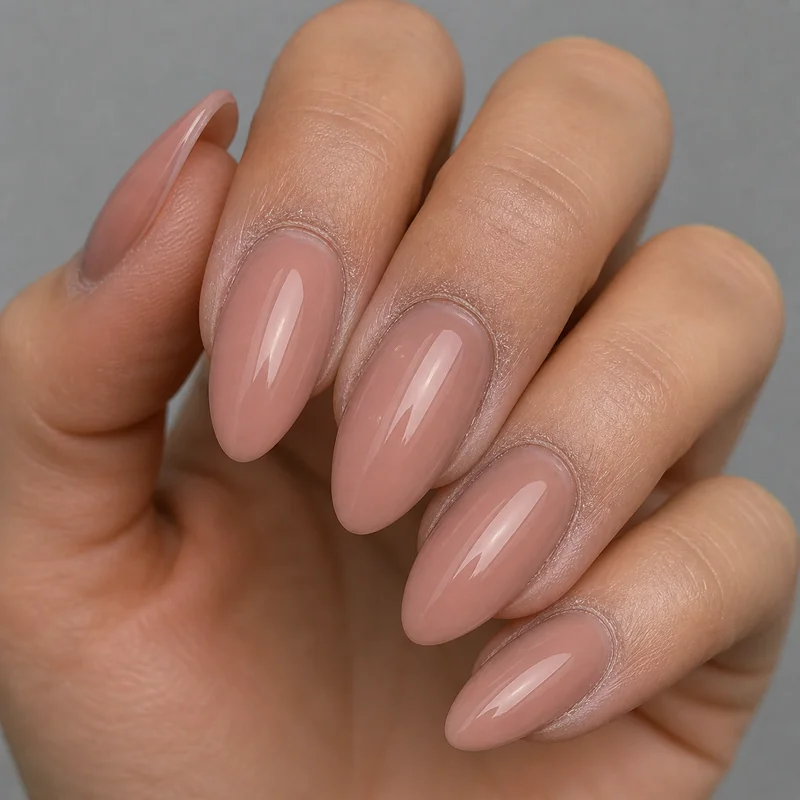
Nothing went wrong. The filing, buffing, and chemical exposure involved in nail application strip the cuticle area of its natural oils — that is a normal consequence of the process, not a product failure or a technician error. The skin around the nail fold looks ashy because it is dehydrated. Almost everyone notices this the morning after a fresh set.
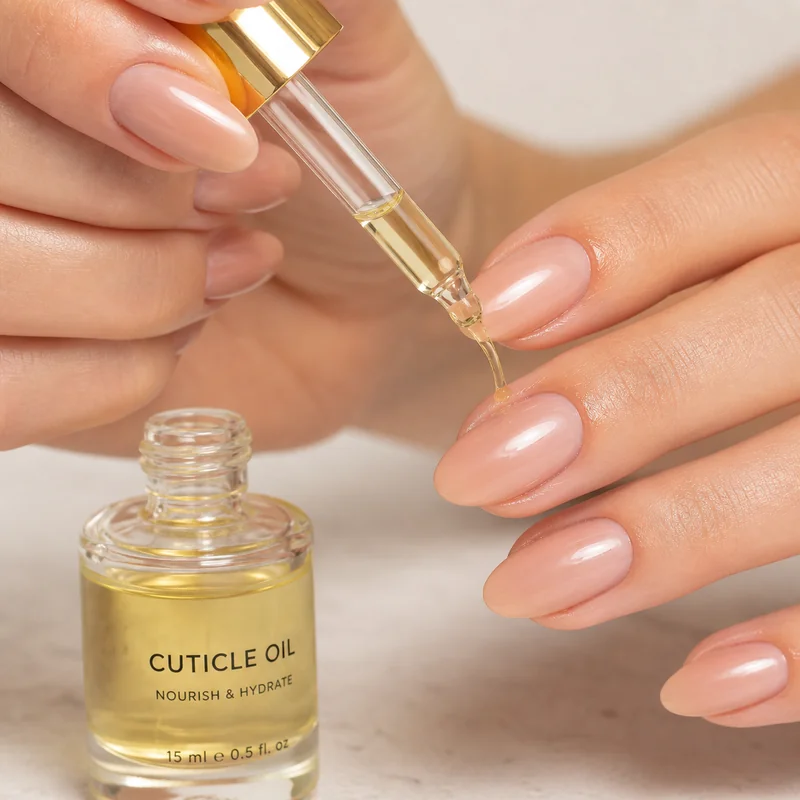
The fix is cuticle oil, applied immediately and consistently. Timing matters here: for the first 24 hours, focus hydration around the cuticle and skin rather than directly on the product surface, since the enhancement is still finishing its cure. After that window, oil goes directly onto the nail and surrounding skin.
Your natural nail health underneath the enhancement matters more than most people realise — the connection between what is happening below the product and how long a set lasts is something worth understanding before your next appointment. The guide to growing nails long enough for almond shape goes into this in depth.

How Often Should You Apply Cuticle Oil to Almond Nails — And Does It Actually Work?
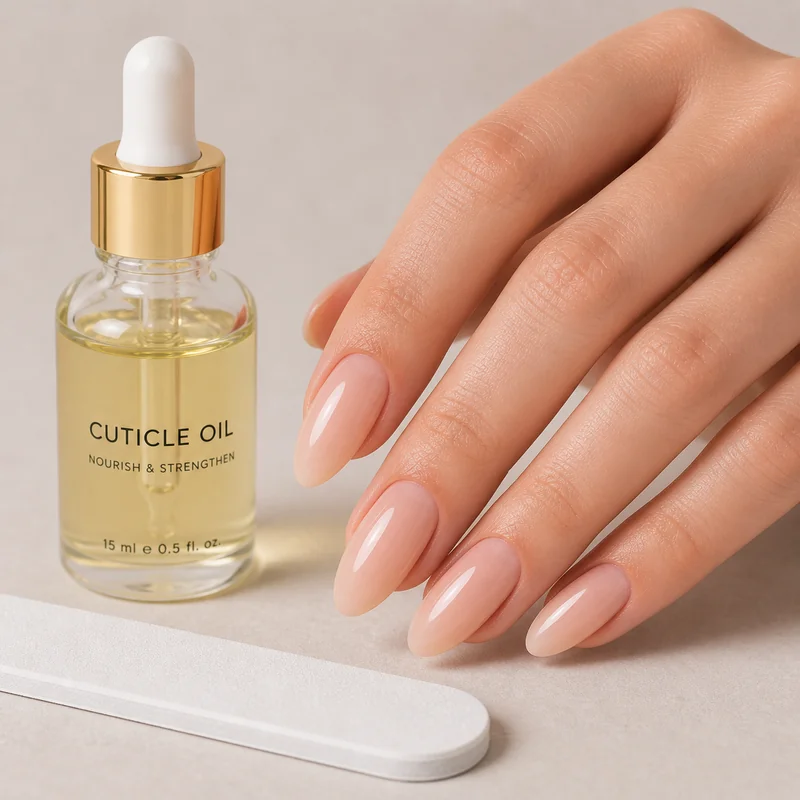
Twice a day, minimum. Morning and evening — treat it the same way you think about a skincare step. If you wash your hands frequently through the day, add a third application after your midday wash. For almond nails specifically, apply oil to the lateral side walls as well as the cuticle area. Those filed edges need it most.
Cuticle oil works because it penetrates the nail plate and surrounding skin, restoring the plasticising effect that filing removes. A jojoba- or vitamin E-based formula absorbs quickly and does not leave a greasy residue. Avoid mineral oil or lanolin-based formulas — the nail aftercare guidelines from NailKnowledge note that these can cause lifting at the product edges over time.
The difference in wear between someone who oils twice daily and someone who oils sporadically is real and measurable — up to an additional week before the first signs of lifting or dullness appear. That is not a product claim. That is what consistent hydration does to a nail plate that has been through a chemical process.
Do You Really Need Gloves to Protect Your Almond Nails? (Yes — Here Is Why)
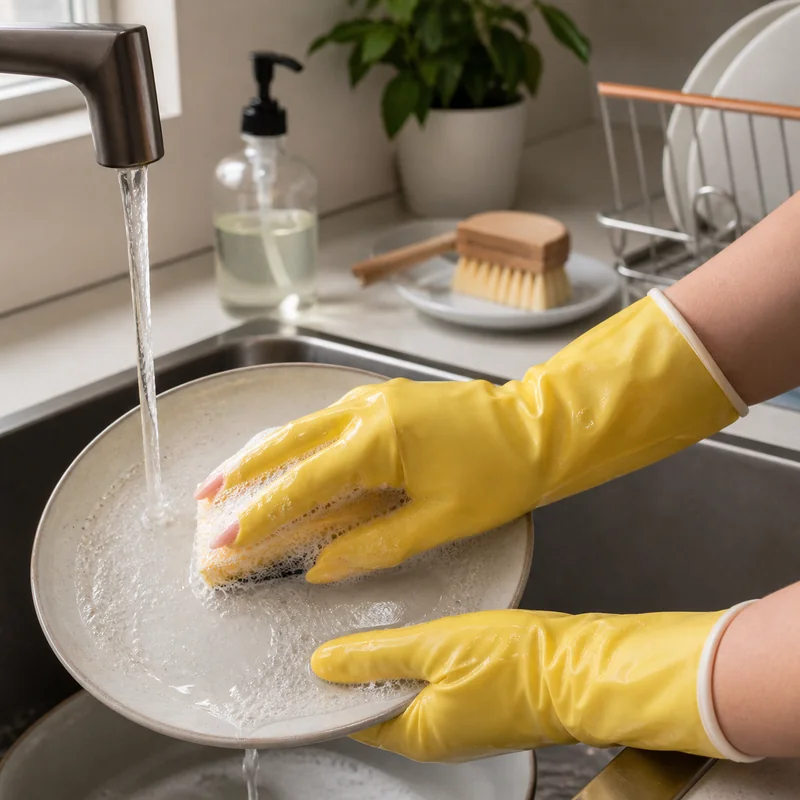
Dishwashing detergent, bleach-based cleaning products, and even prolonged contact with warm water all dehydrate the nail plate. They break down the top coat seal, accelerate dullness, and weaken the bond at the side walls through repeated exposure. For an almond nail, this shows up faster than it would on a shorter, sturdier shape — the tip has less reinforcement, so any structural weakening reaches the surface quickly.
Rubber gloves for washing up and cleaning are practical, not precious. For more detail on protecting a set from daily wear patterns, protecting nails from daily wear is a useful and recent resource.
The other version of this: stop using your nails as tools. Pressing a fingernail under a label, levering open a tin lid, peeling a sticker — all of these apply lateral force directly to the tip. For an almond nail, that force lands on the thinnest part of the structure. One sharp flex is enough to start a crack.
How to Keep Almond Nails Looking Fresh Between Salon Visits
The dullness that appears after three or four days is not a sign something has gone wrong. It is a normal result of hand-washing, hand sanitiser, and environmental exposure dulling the surface of the top coat. The enhancement underneath is fine. The finish just needs refreshing.
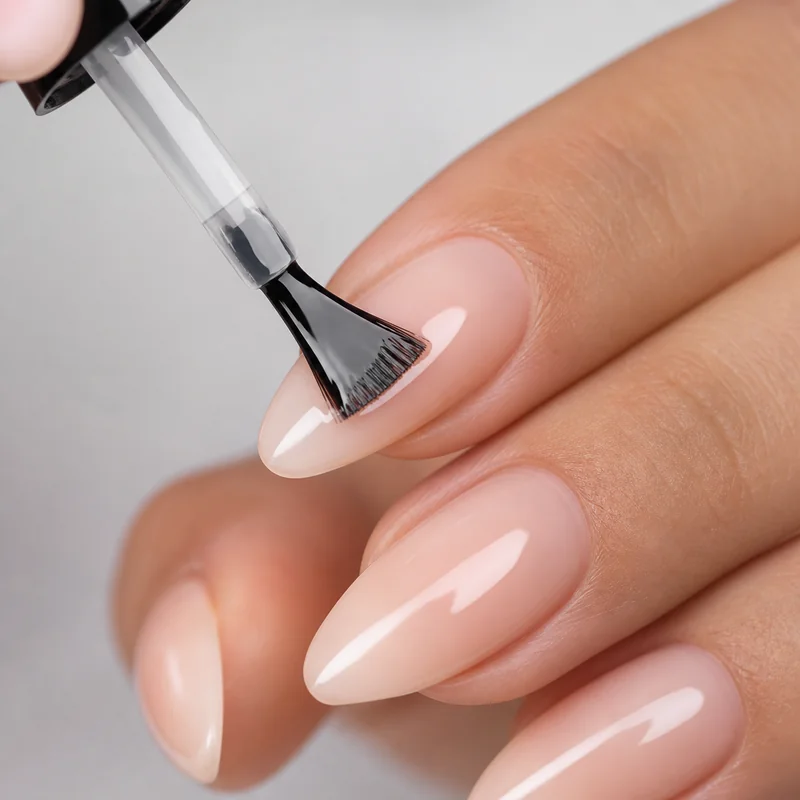
A thin layer of clear top coat every three to four days restores the gloss and lays a fresh seal over any micro-abrasions that have built up. Use a formula that air-dries — a standard no-wipe top coat works on both gel and acrylic surfaces for this purpose. Apply it thin; a thick application can bubble or peel at the edges.
Beyond top coat: hand cream after every wash. Dry, tight skin around the cuticle makes even a fresh set look older than it is. Keep a small hand cream at the kitchen and bathroom sink so it happens automatically. The combination of daily cuticle oil and consistent hand cream is what keeps a two-week-old set looking like it was done yesterday.
My Almond Nail Is Lifting at the Side — What Should I Do?
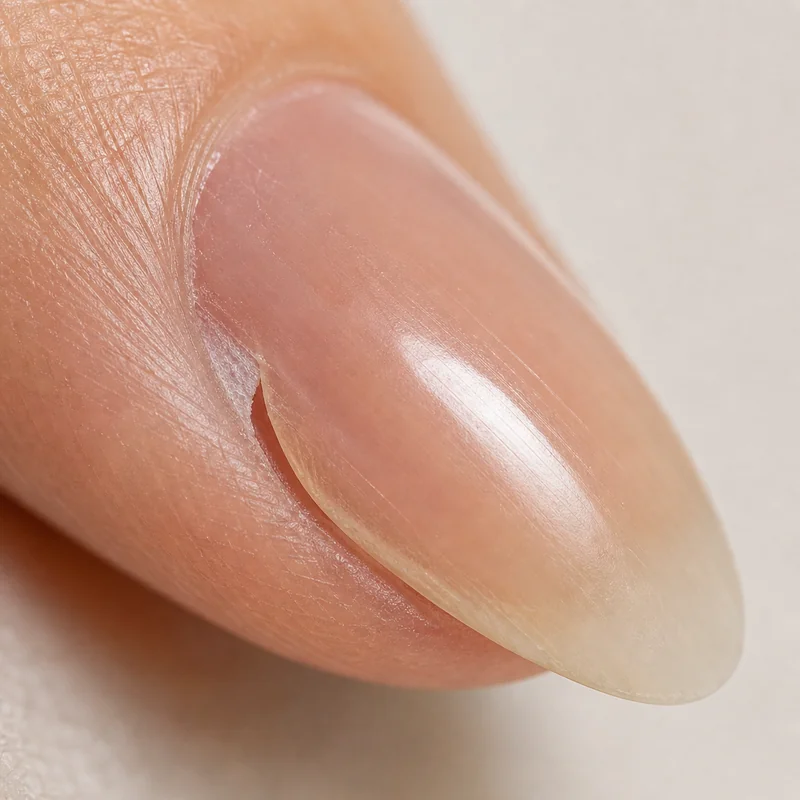
Lifting at the lateral wall is the most common almond-specific problem, and it comes down to one of three things: not enough cuticle oil in the days after application, prolonged water exposure, or an issue with product-to-nail-plate prep at the salon. The almond shape demands more aggressive side filing than any other, which leaves those edges more exposed and more prone to separating.
Do not peel it. That is the single most important instruction here. Peeling pulls layers of the actual nail plate away with the product — the damage to the nail bed can take months to grow out. The urge to tidy up the edge is understandable. Resist it entirely.
Book a repair appointment within 48 hours. Keep the nail dry in the meantime. Moisture getting under the lifted section creates exactly the warm, enclosed environment that paronychia — a bacterial or fungal infection around the nail fold — needs to take hold. If your nails are breaking or lifting repeatedly rather than as a one-off, the causes are usually specific and fixable. Why almond nails keep breaking covers the most common reasons.
How to Spot the Early Warning Signs That Something Is Wrong with Your Set
Most problems with nail enhancements announce themselves early. The difficulty is knowing which signs are normal and which are not.
Normal: mild tenderness in the first 24–48 hours, particularly if your nails were short before the appointment. Some tightness as you adjust to the added length. A little dryness around the cuticle. These all settle within a few days.
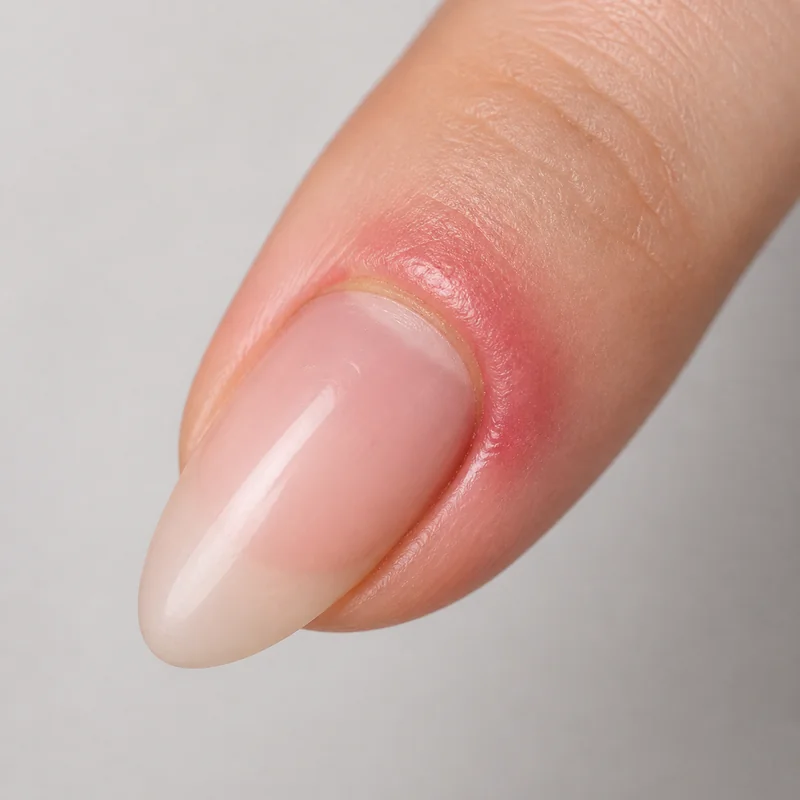
Not normal: a greenish or yellowing tinge under the enhancement, which can signal a bacterial infection — specifically a Pseudomonas species, common when moisture becomes trapped between the product and nail plate. Pain or swelling around the nail fold. A nail that feels noticeably warm. Significant separation from the nail plate across more than a hairline edge.
The American Academy of Dermatology nail warning signs and nail abnormality guidance from Mount Sinai are both clear on this: discolouration under an enhancement warrants professional attention. If you see anything green, remove the nail — at a salon if possible — and allow the nail plate to breathe before any product goes back on.