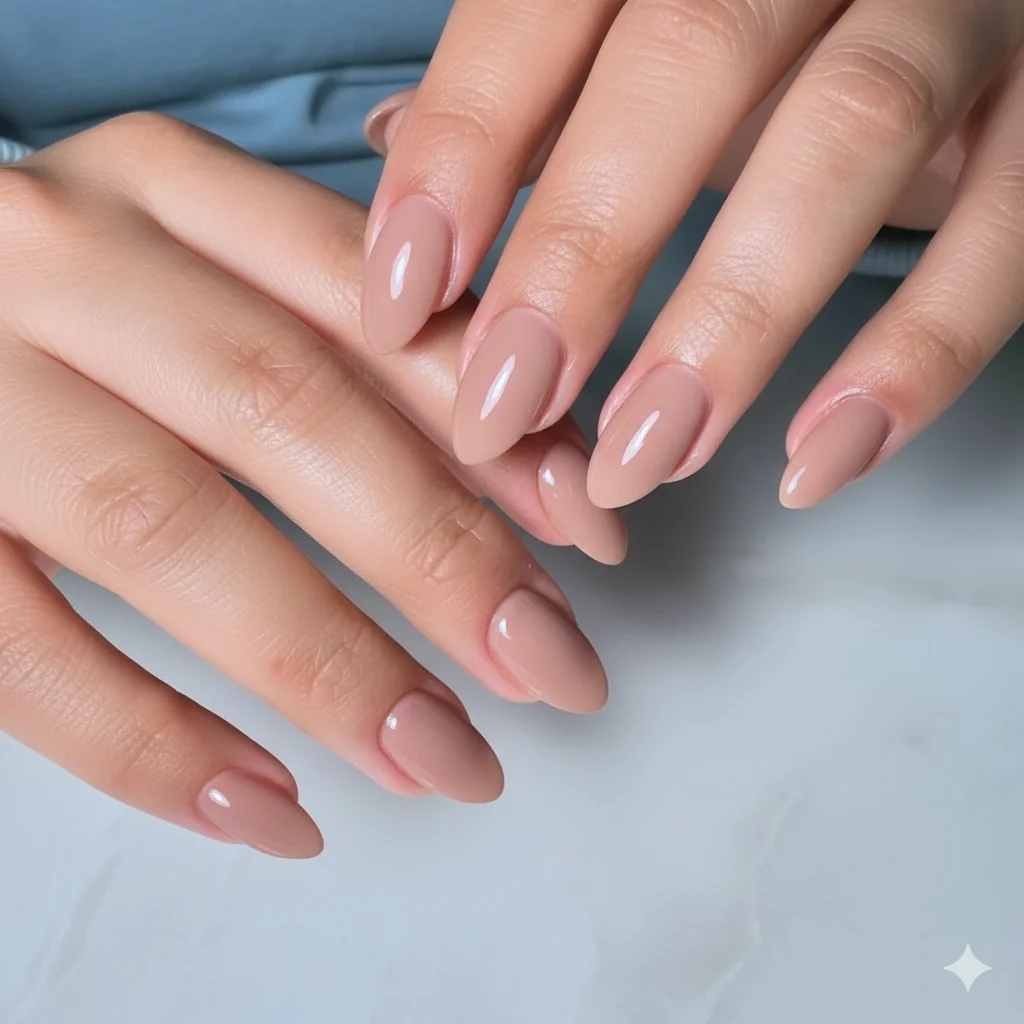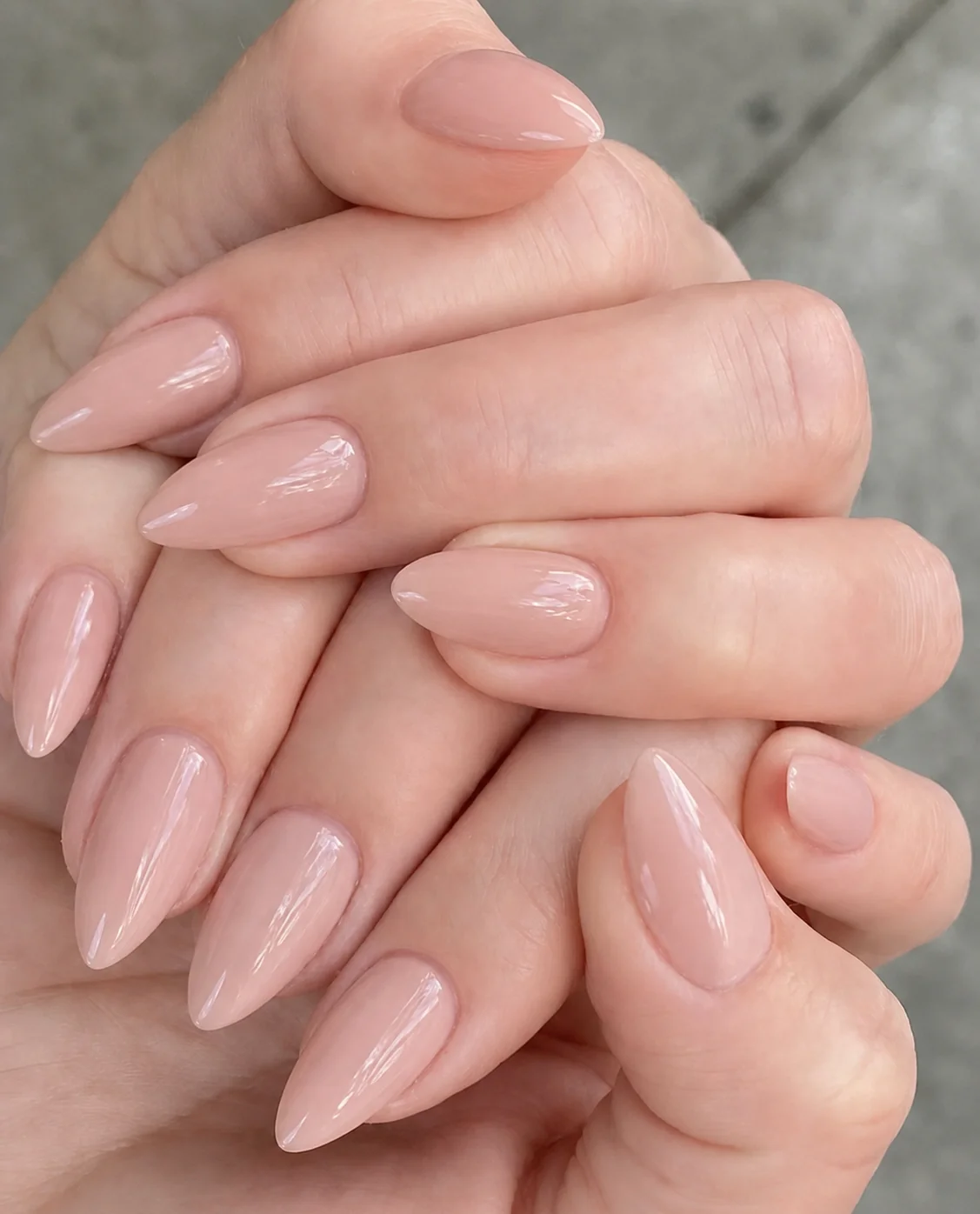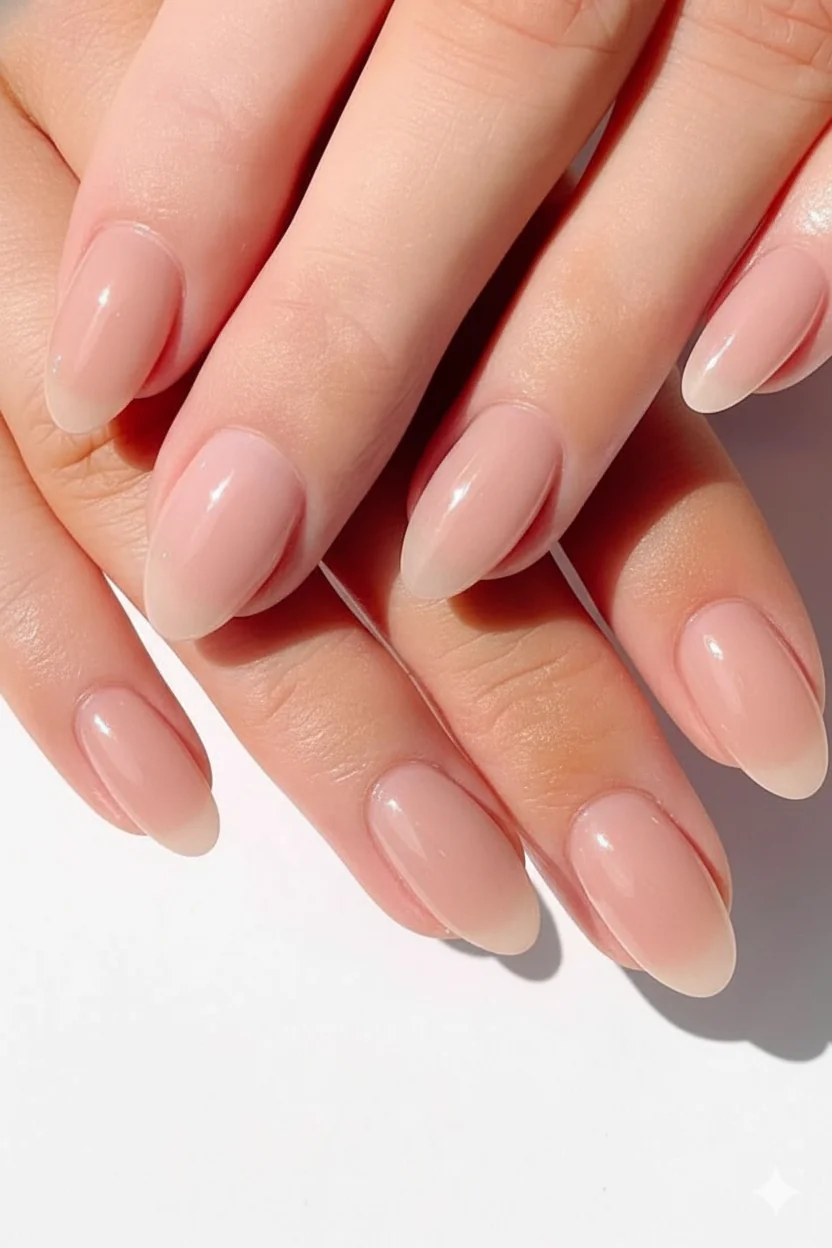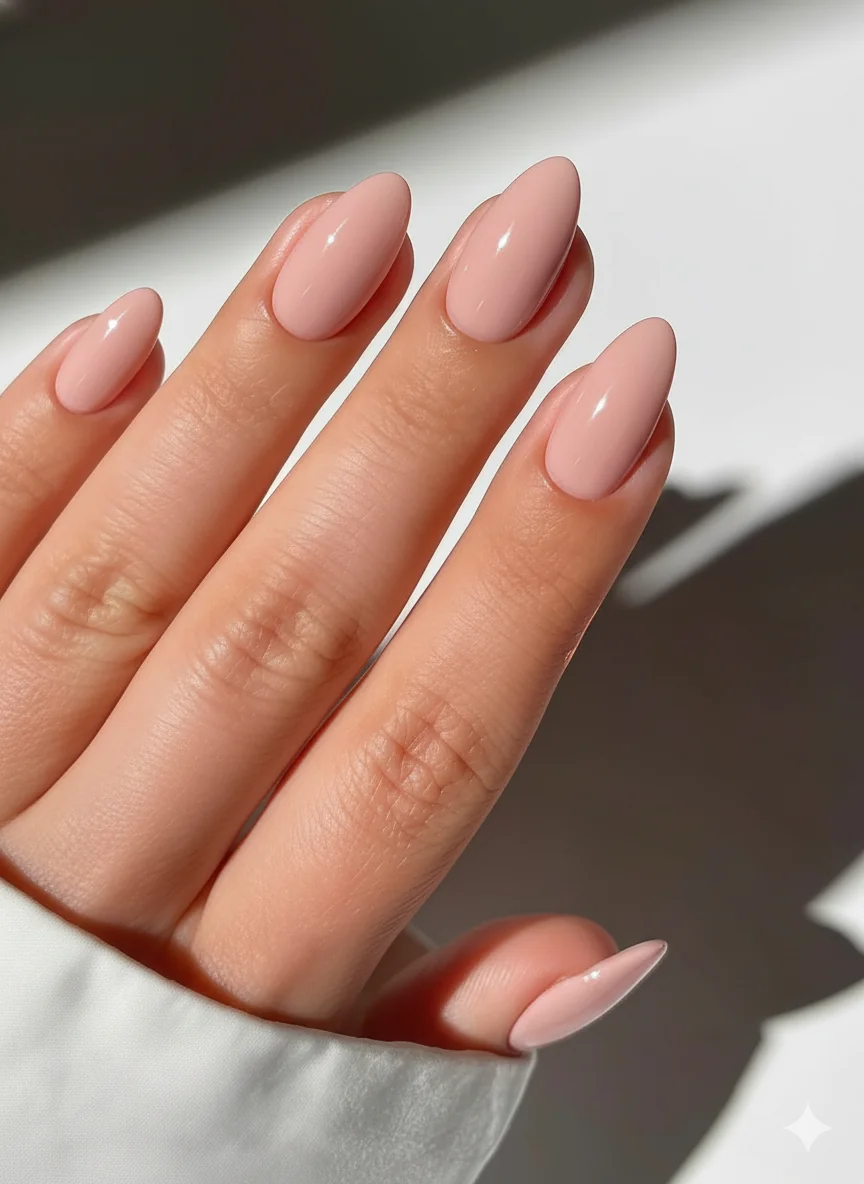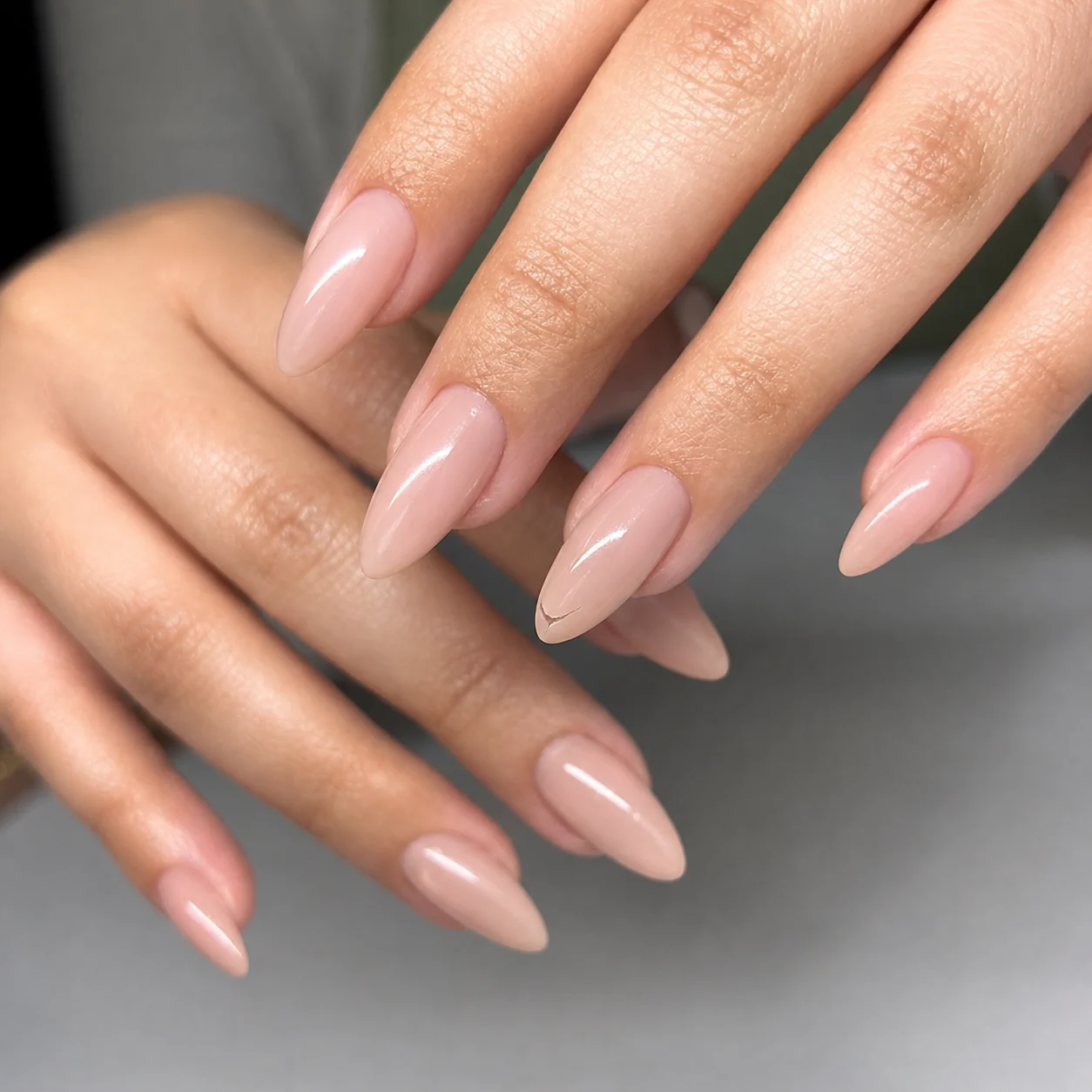
You spent real money on that set. And then, within days, one nail snapped clean at the tip. If almond nails keep breaking on you — appointment after appointment — it is not a coincidence and it is not your fault for existing near a keyboard. Why do almond nails keep breaking is one of the most Googled nail questions, and most of the answers online bury the actual reason under generic advice about drinking more water.
This is the real diagnosis. The almond shape has specific structural vulnerabilities that other nail shapes do not have to the same degree, and when a technician builds the set without accounting for them, a break is not a matter of if — it is when. If you are still figuring out the basics of almond nails, our beginner's guide covers what most first-timers get wrong from the start. But if you already have a broken nail and want to know exactly why, keep reading.
Is Almond Shape Actually More Likely to Break Than Other Nail Shapes?
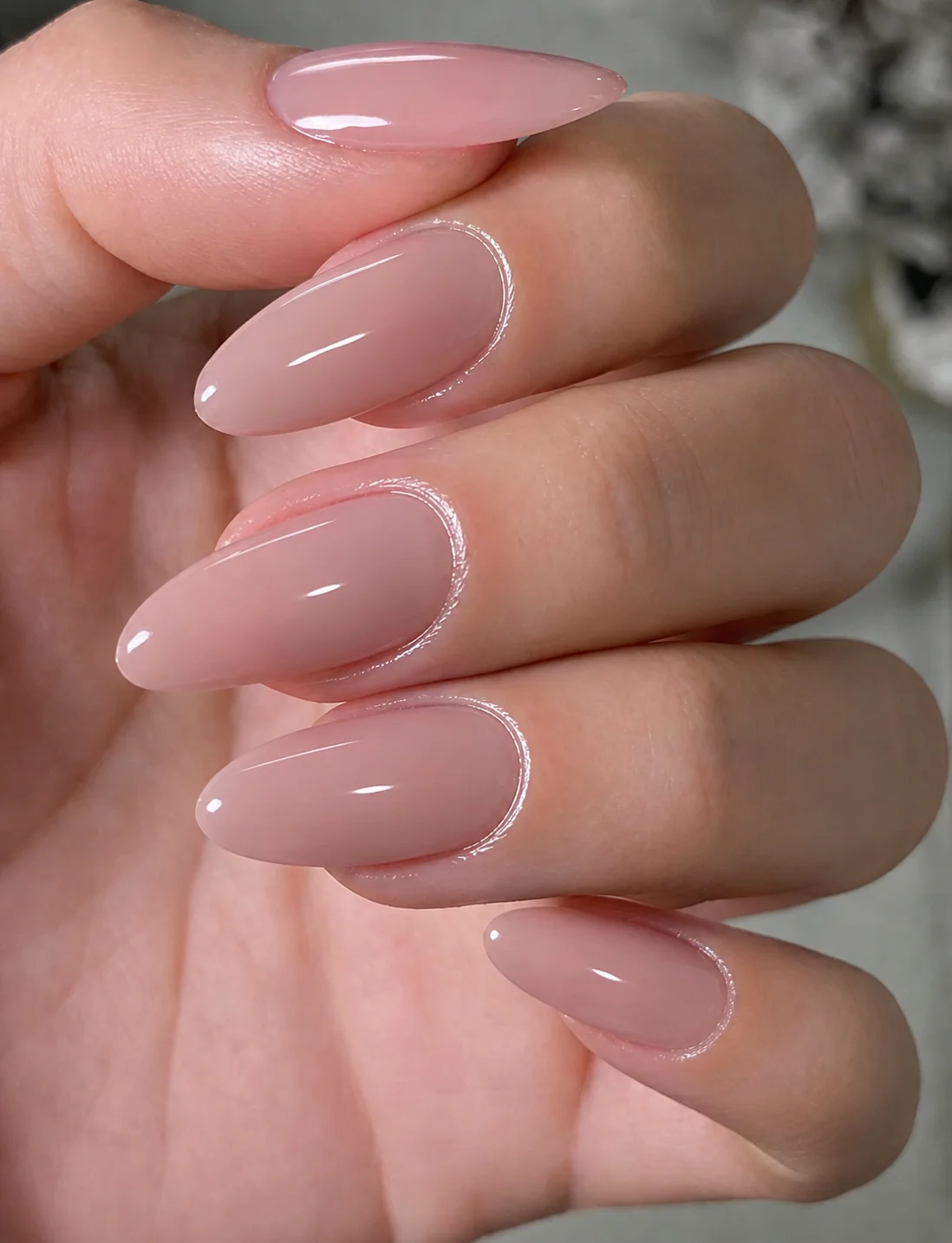
Compared to square, squoval, or oval, the almond shape is structurally more vulnerable at the tip. The taper removes surface area at exactly the point that takes the most impact — the free edge. Square nails distribute stress across a flat edge. Almond nails concentrate it at a narrow point.
That said, shape alone rarely causes a break. Thousands of people wear almond nails for three to four weeks without incident. The shape is a risk factor, not a sentence. What actually determines whether a set survives is how well the build compensates for that structural reality — and whether daily habits respect it.
Why Does the Same Nail Always Break in the Same Spot?
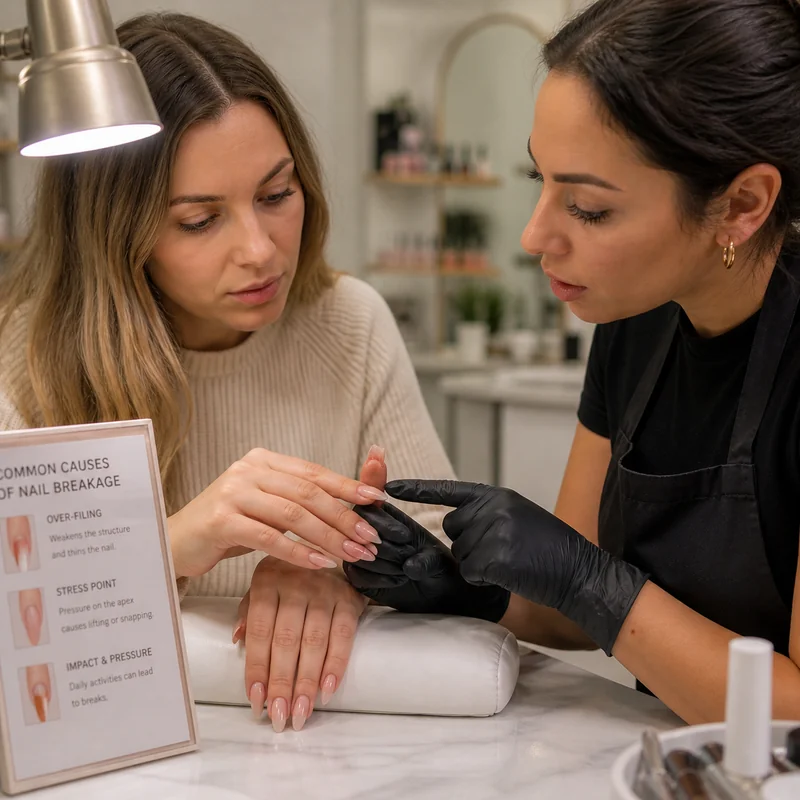
The answer is stress zones. Every nail has points where mechanical force concentrates — typically around the apex (the highest point of the arch) and at the sidewalls where the nail narrows. On an almond nail, the stress zone sits slightly further down the barrel than on a square nail, because the taper shifts where bending force accumulates.
When a nail breaks in the same place repeatedly, it usually means that stress zone has not grown out yet. The nail plate retains structural memory from a previous break or trauma. Until healthy, undamaged keratin grows through that area, it will remain the weakest point in the set. A good technician will build extra support there. Most do not, because most do not check.
Was My Almond Nail Set Filed Too Thin? How Over-Filing the Sidewalls Causes Most Breaks
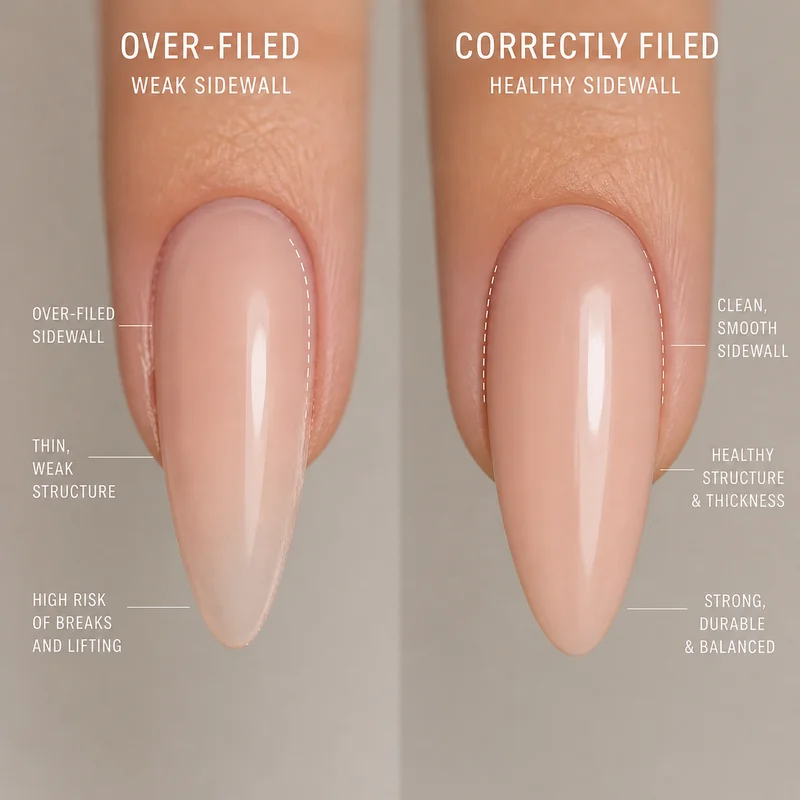
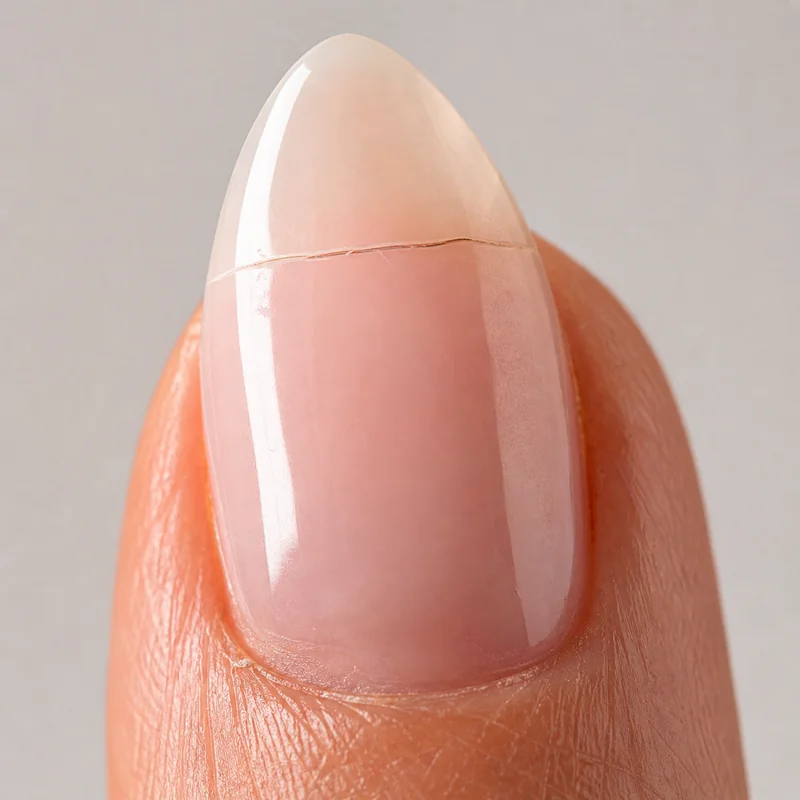
This is the most common technical cause of almond nail breakage, and the one least likely to be admitted at the salon. To achieve the characteristic almond taper, a technician must file the sidewalls inward. Do it correctly and the sidewall retains thickness and structural rigidity. File too aggressively and the sidewall becomes paper-thin — translucent in some cases — and the nail loses its ability to resist lateral pressure.
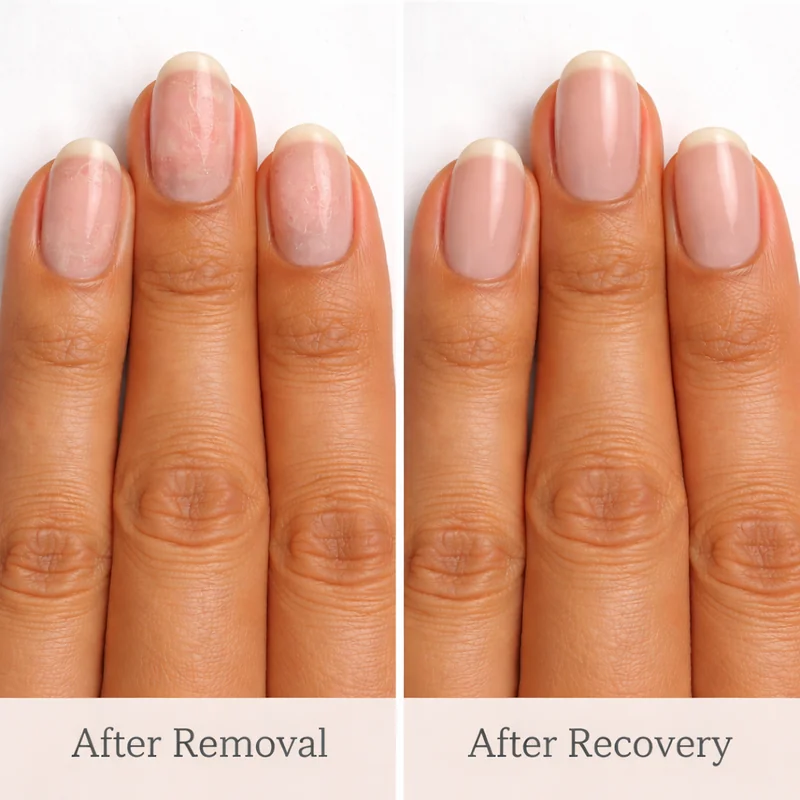
How over-filing during prep causes peeling and breaks is well-documented in professional nail training resources. The tell: if you can see the nail bed through the sides of the enhancement, the sidewalls have been filed past the point of structural safety. A set built this way will not last, regardless of product quality.
Why Do Almond Nails Lift at the Cuticle — and What That Has to Do With Breaking
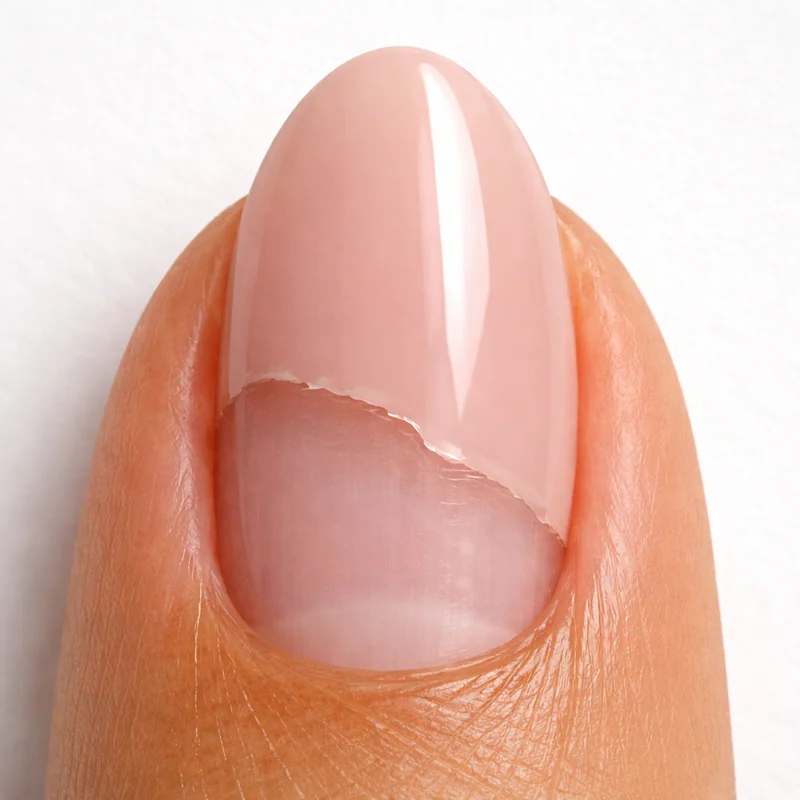
Lifting and breaking are different failures, but they are connected. Lifting is an adhesion failure — the product separates from the nail plate at the cuticle or sidewall. Breaking is a structural failure — the enhancement snaps under pressure. The problem is that lifting almost always precedes breaking. Once product lifts at the cuticle, water gets underneath. That moisture compromises the bond progressively, and what looked like a minor edge lift becomes a full snap at the stress zone within days.
The root cause of most cuticle lifting is prep. Specifically: cuticle tissue left on the nail plate, or skipping the dehydrator and primer step. The seven causes of gel nail lifting are well covered in professional training, and inadequate cuticle prep tops every list. What you do after you leave the salon matters just as much — for the full aftercare picture, our daily aftercare routine covers what keeps a set intact between appointments.
Did My Almond Nails Break Because of Bad Prep at the Salon?
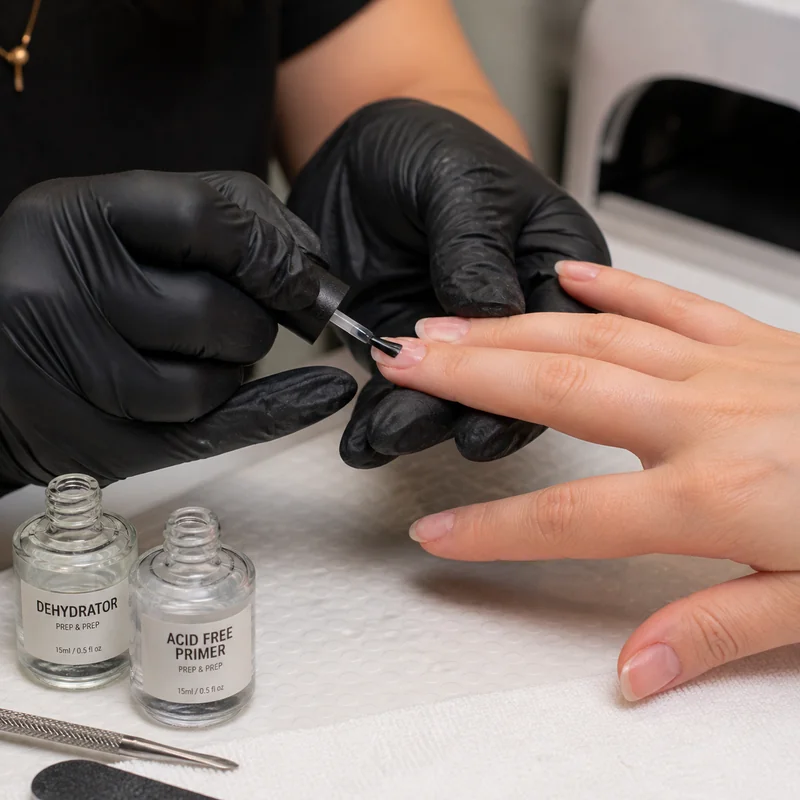
Prep is unglamorous. It is also what separates a three-week set from a three-day one. The prep sequence — removing cuticle tissue from the nail plate, lightly buffing the surface, applying dehydrator, then primer — creates the foundation that everything else depends on. Skip or rush any step and the bond is compromised before a single drop of gel or acrylic is applied.
The dehydrator removes oil and moisture from the nail plate surface. The primer creates a chemical bridge between the plate and the product. FDA nail care product guidance notes the role of nail prep products in adhesion, and professional consensus is clear: no amount of quality product compensates for poor prep underneath it. If your nails break consistently across different salons, ask specifically whether dehydrator and primer are used on every client, every time. The answer will tell you a lot. Choosing the wrong product for your lifestyle also matters — our gel vs acrylic guide breaks this down by durability, flexibility, and nail type.
Can Typing, Dishes, or Daily Life Actually Snap an Almond Nail?
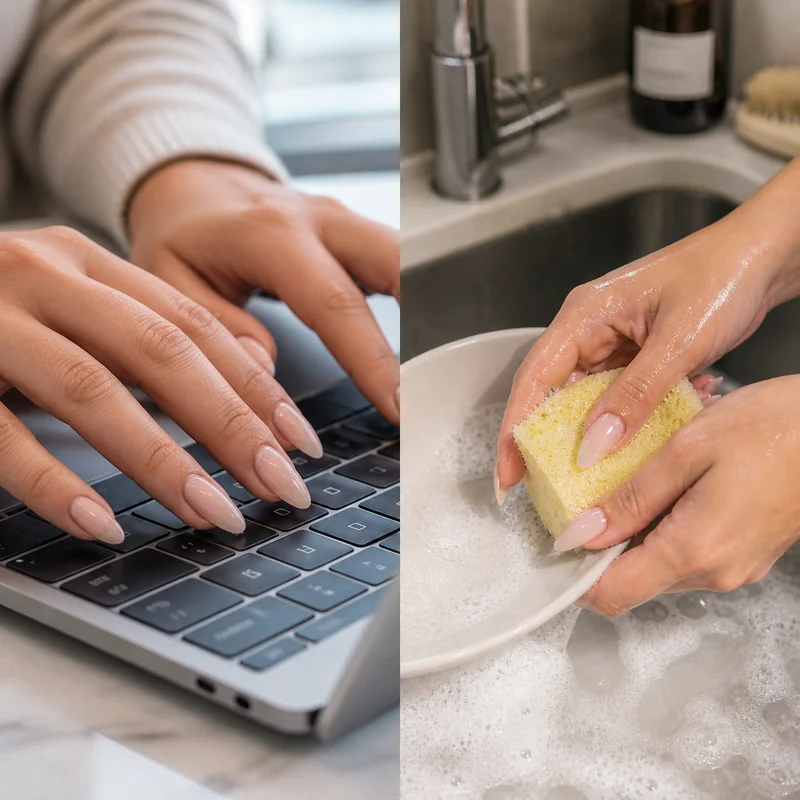
Yes — but only if the set was already compromised. A correctly built almond nail set handles normal daily activity without issue. The problem is that "normal daily activity" applies lateral and compressive force to the tapered tip constantly: typing applies repeated downward pressure at the fingertip, opening cans levers against the free edge, washing dishes combines prolonged water exposure with grip pressure.
A well-built set absorbs this. A set with thin sidewalls, poor prep, or incorrect apex placement does not. The activity does not cause the break — it reveals a weakness that was already there. That distinction matters: if your nails break while typing, the problem is the build, not the typing. This professional guide to nail stress points explains exactly why the same actions affect some sets and not others.
How Long Should Almond Nails Actually Last Before Any Breaking Is a Problem?
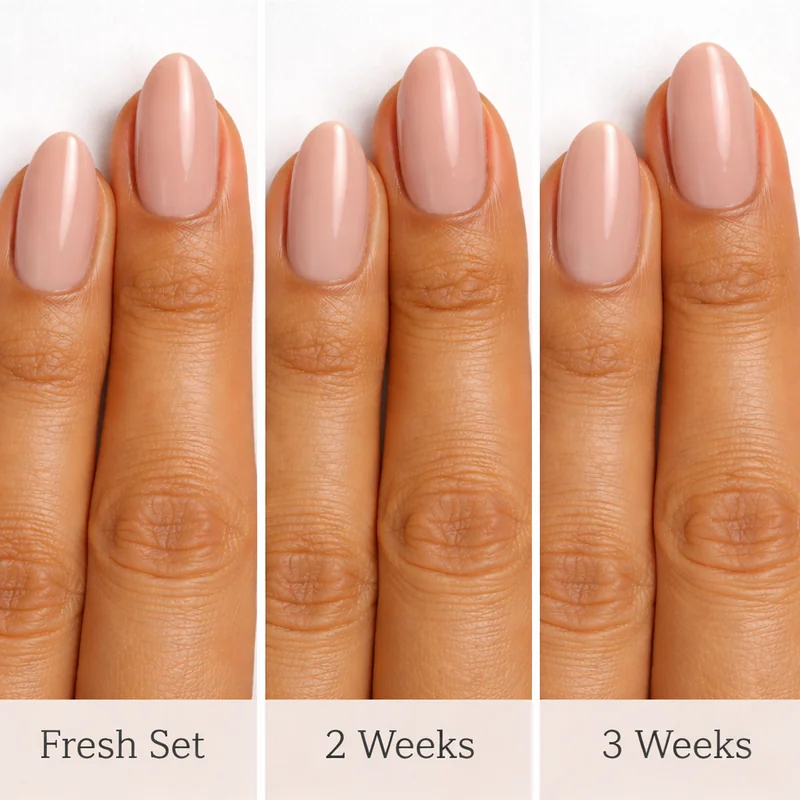
A properly built almond nail set — whether gel or acrylic — should last three to four weeks without breaking. Some people go longer. The benchmark for what counts as a problem: any break in the first week is a prep or structural failure. Full stop.
Week two breaks can indicate lifestyle factors or the set reaching the end of its stress tolerance as the natural nail grows. Week three and four breaks are largely expected as the gap between natural nail and product increases at the cuticle. If you are losing nails in days, the issue is at the salon, not at home. Once you have identified and fixed the underlying cause, the next step is building habits that keep a set intact for the full three to four weeks — our longevity guide covers what actually works.
Does Getting Almond Nails Too Long Make Them More Likely to Break?
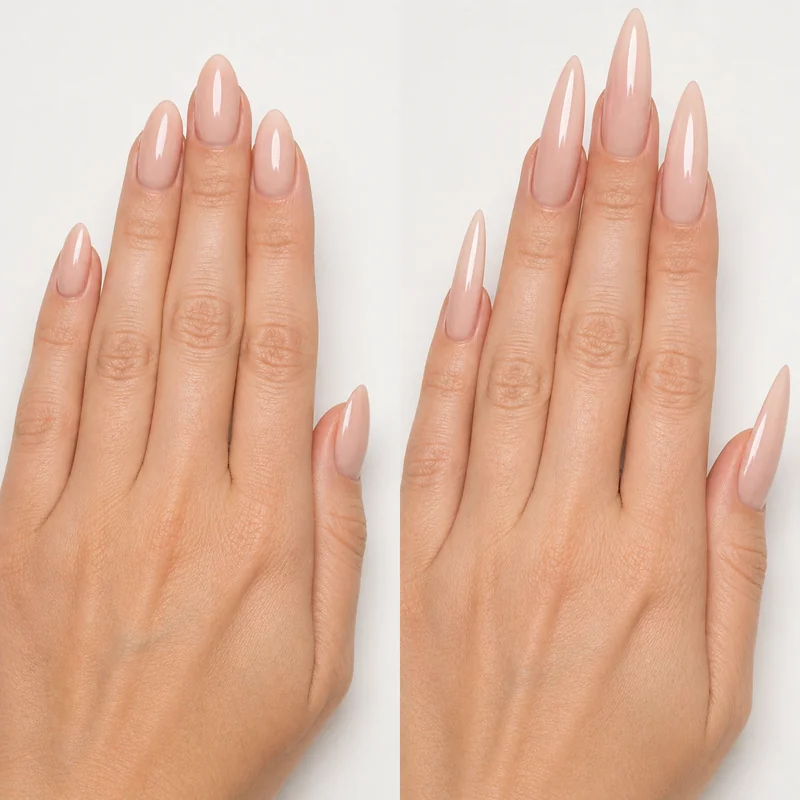
Length amplifies every structural weakness. The longer the free edge extends beyond the fingertip, the greater the leverage force applied to the stress zone with every impact. A medium almond nail — where the tip extends roughly five to eight millimetres past the fingertip — distributes that force reasonably well on a sound build. A very long almond nail on the same build multiplies the risk significantly.
If you are working with short natural nails, the length-to-strength calculation changes entirely — our guide to getting almond nails when your natural nails are short covers what your technician needs to account for. For anyone experiencing frequent breaks, dropping half a length at the next appointment is worth trying before assuming the shape itself is the problem.