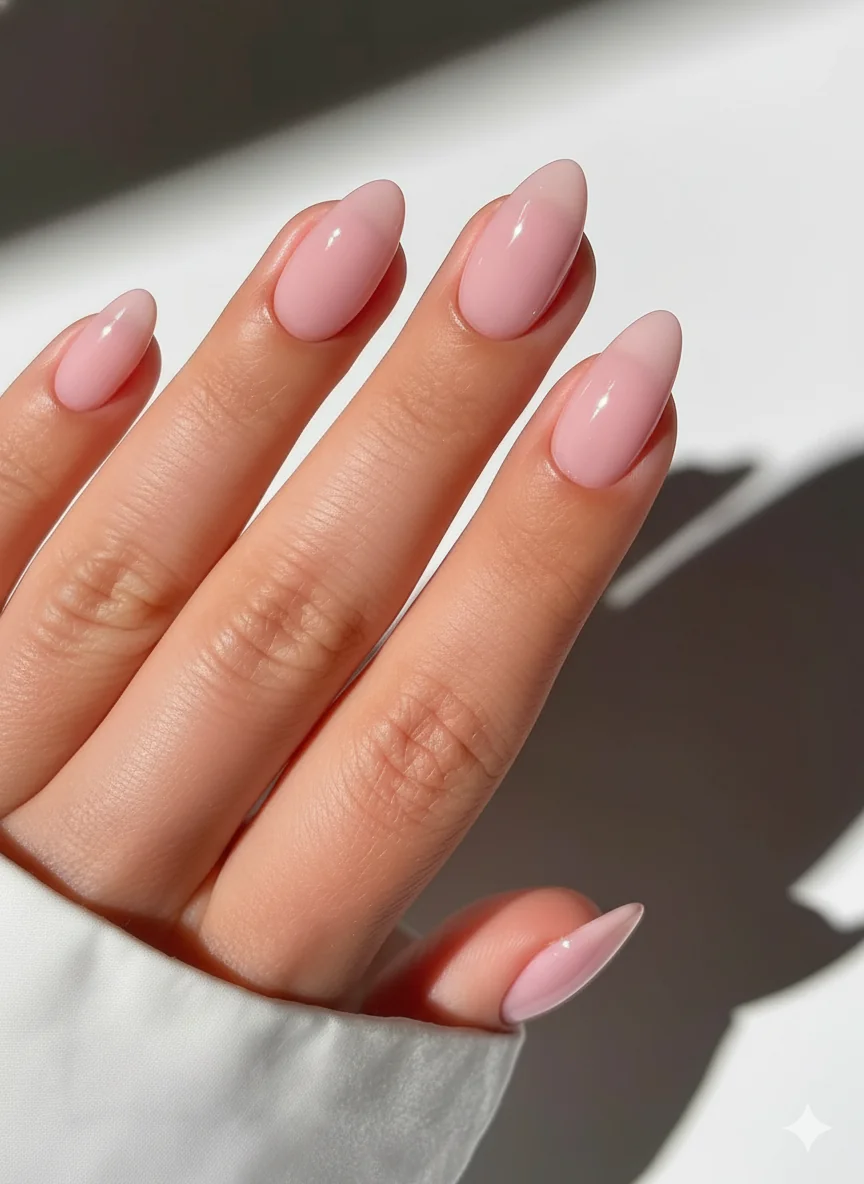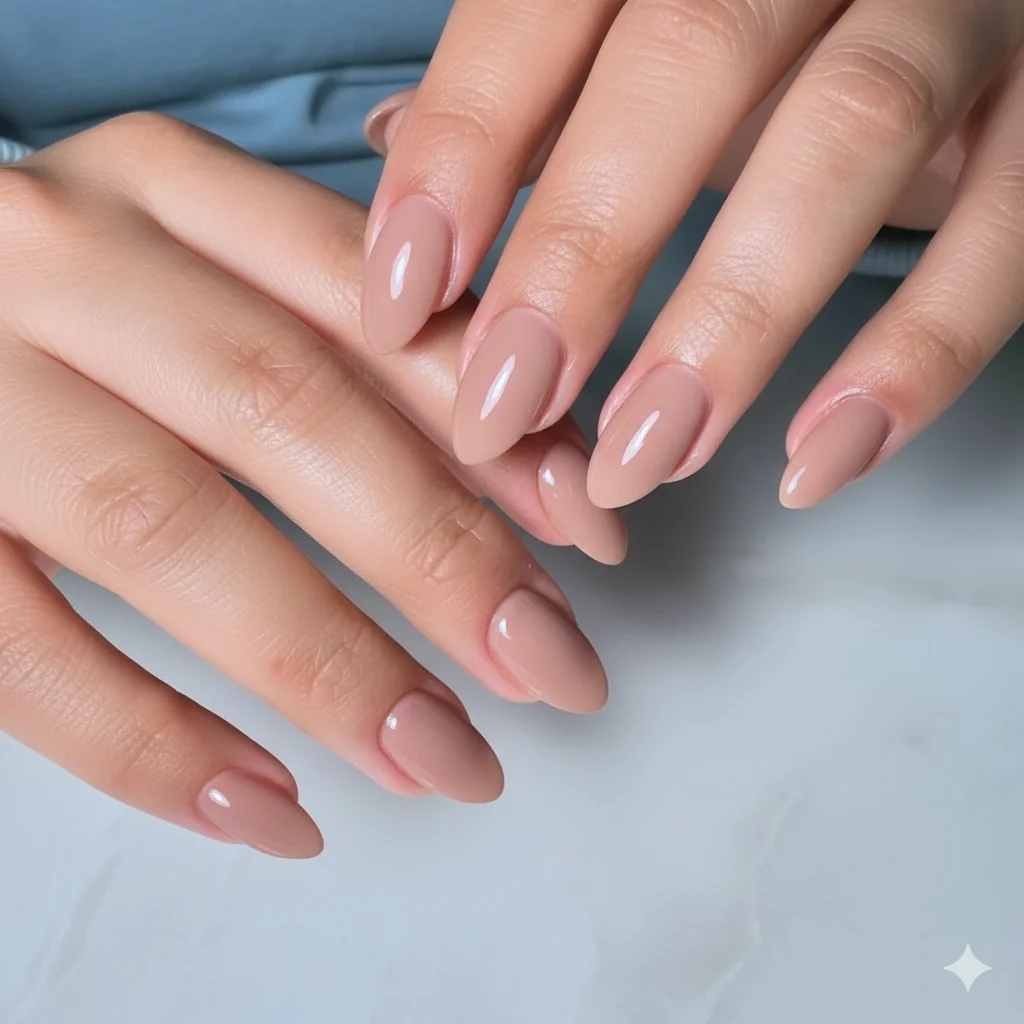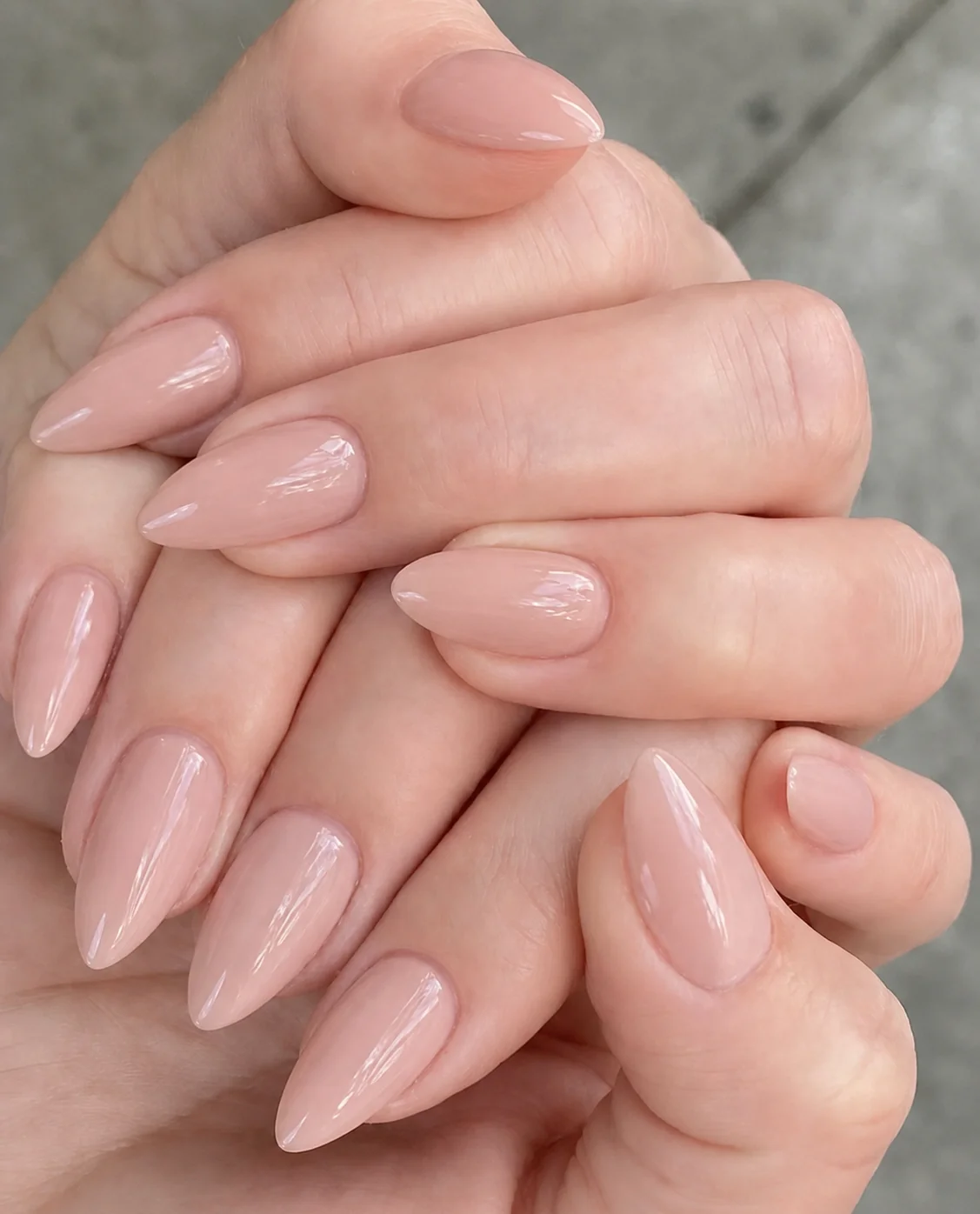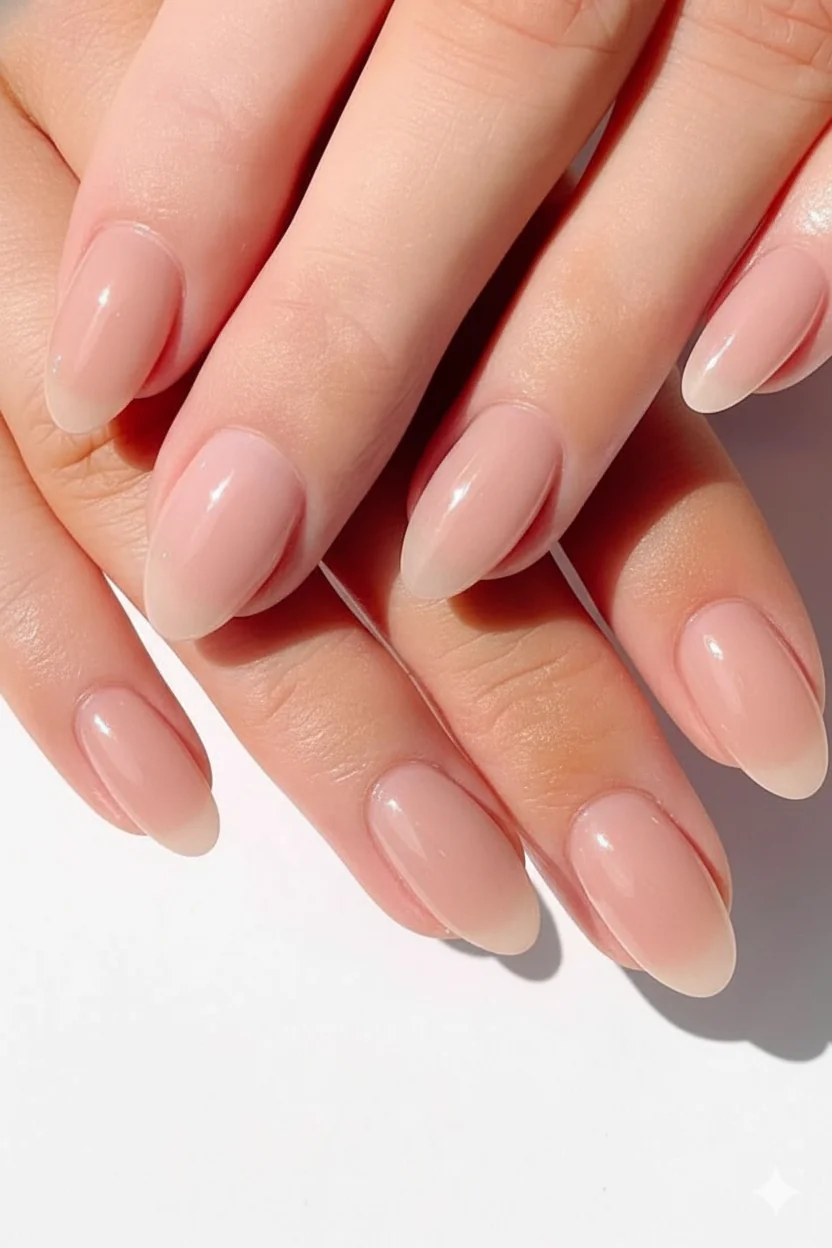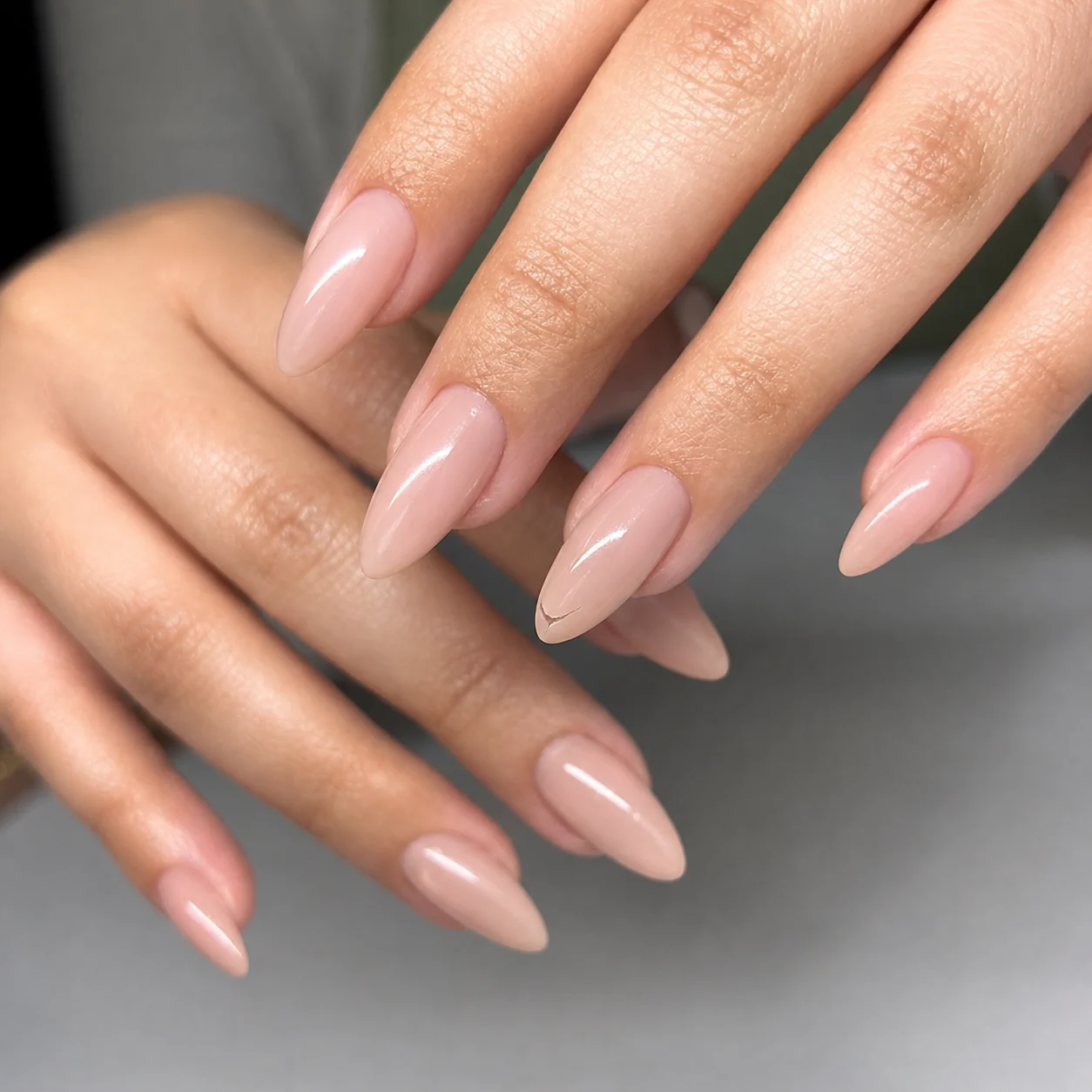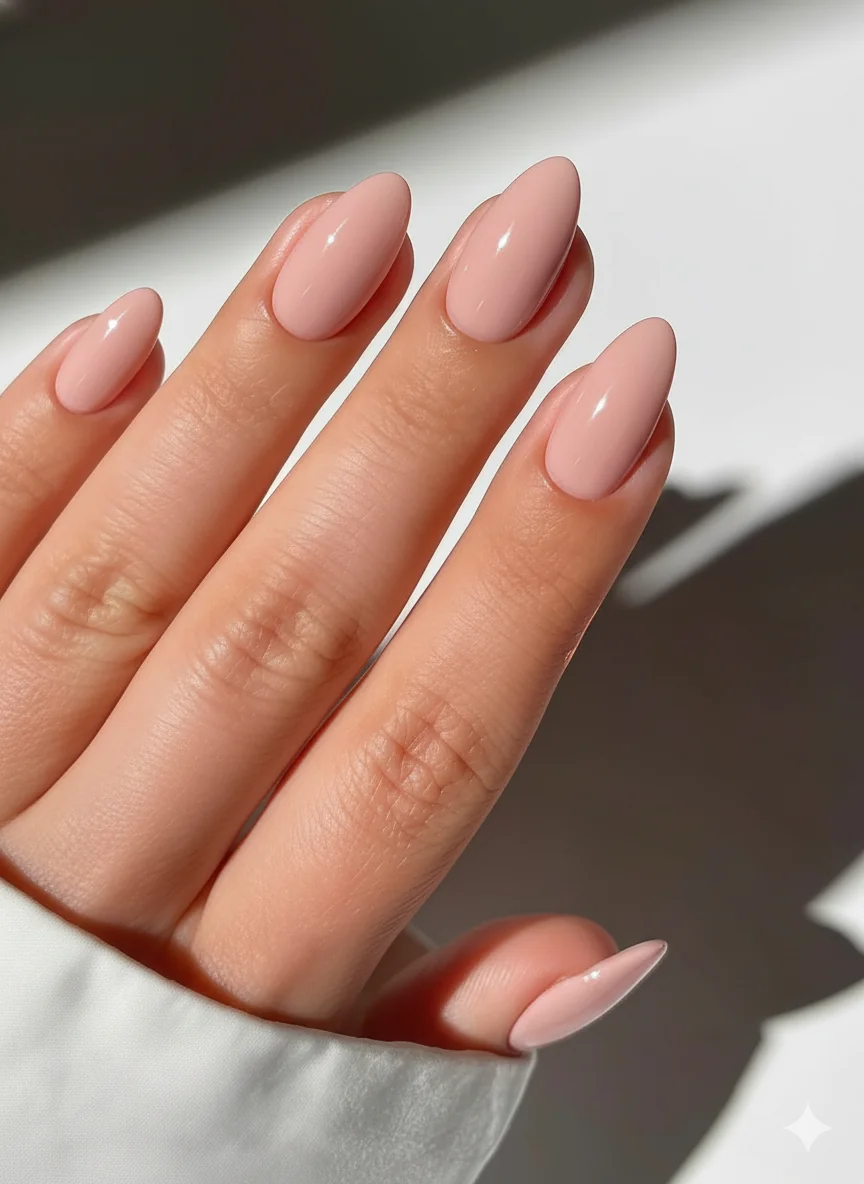
Most people who leave the salon with the wrong nail shape never said the wrong thing. They just didn't say enough. What to ask for almond nails at salon visits isn't complicated once you know the vocabulary — but without it, "almond" can mean anything from a barely-tapered oval to something nearly stiletto. This guide gives you the exact words, the pre-appointment checklist, and the phrase bank to walk in prepared and walk out with the shape you actually wanted.
The almond/oval confusion is the single most common post-appointment complaint in this niche, and it's almost always a communication failure. Understanding what beginners get wrong about almond nails starts with knowing what to say.
Why So Many People Leave the Salon With Oval Instead of Almond
The shapes genuinely look similar in reference photos — especially on shorter nails, where the taper is subtle. Nail techs work fast and interpret "almond" based on what they see most often, which in many salons skews rounder. Add a client who nods when asked "is this okay?" because they don't want to cause a fuss, and the result is a perfectly executed oval that nobody explicitly asked for.
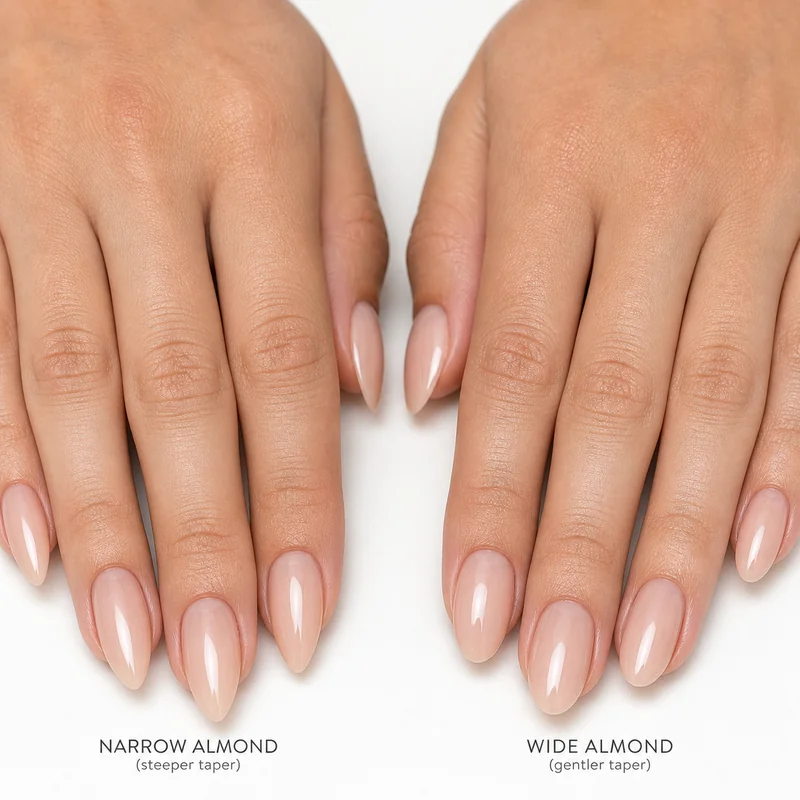
The second reason is that "almond" alone isn't specific enough. There's a narrow almond — sides that draw inward with intention, tip that comes to a real point — and there's a wide almond, closer to an oval with a slightly sharper tip. Both are technically correct. Neither is what you wanted if you had the other in mind.
What Makes an Almond Shape — And How to Describe It Precisely to Your Tech
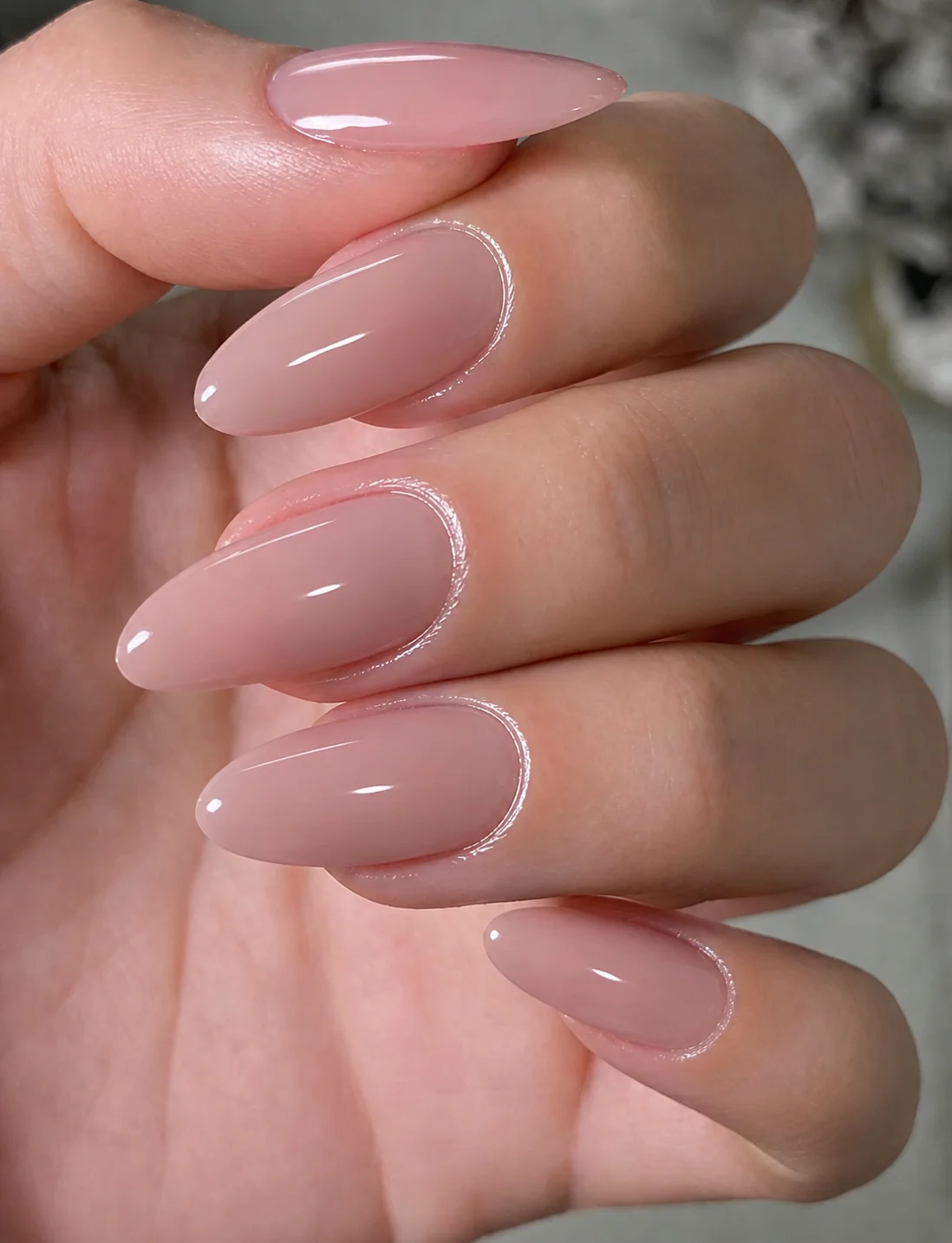
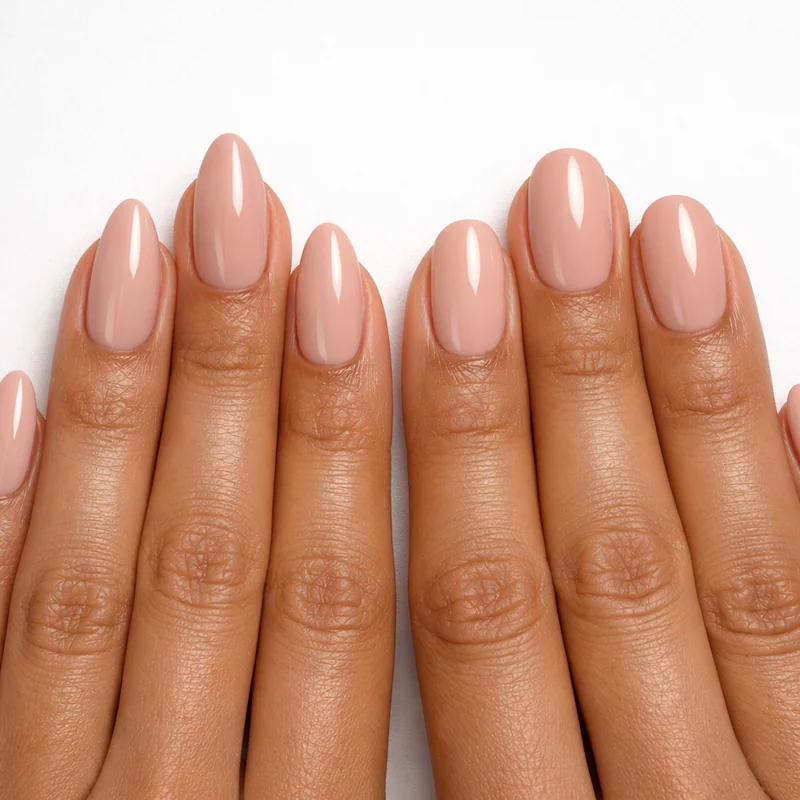
The defining features of a true almond shape are straight sides that taper inward and a tip that comes to a defined point — not domed, not blunt, not softly curved. The nail bed widens at the base and narrows as it approaches the free edge. Think of an actual almond: widest at the centre, narrowing to a point at each end.
When you sit down, the language that lands with most technicians is: narrow almond, tapered sides, not oval. You can also ask for the sides to be filed "straight, not curved outward" — that instruction alone eliminates the drift toward oval that happens when a tech files by habit.
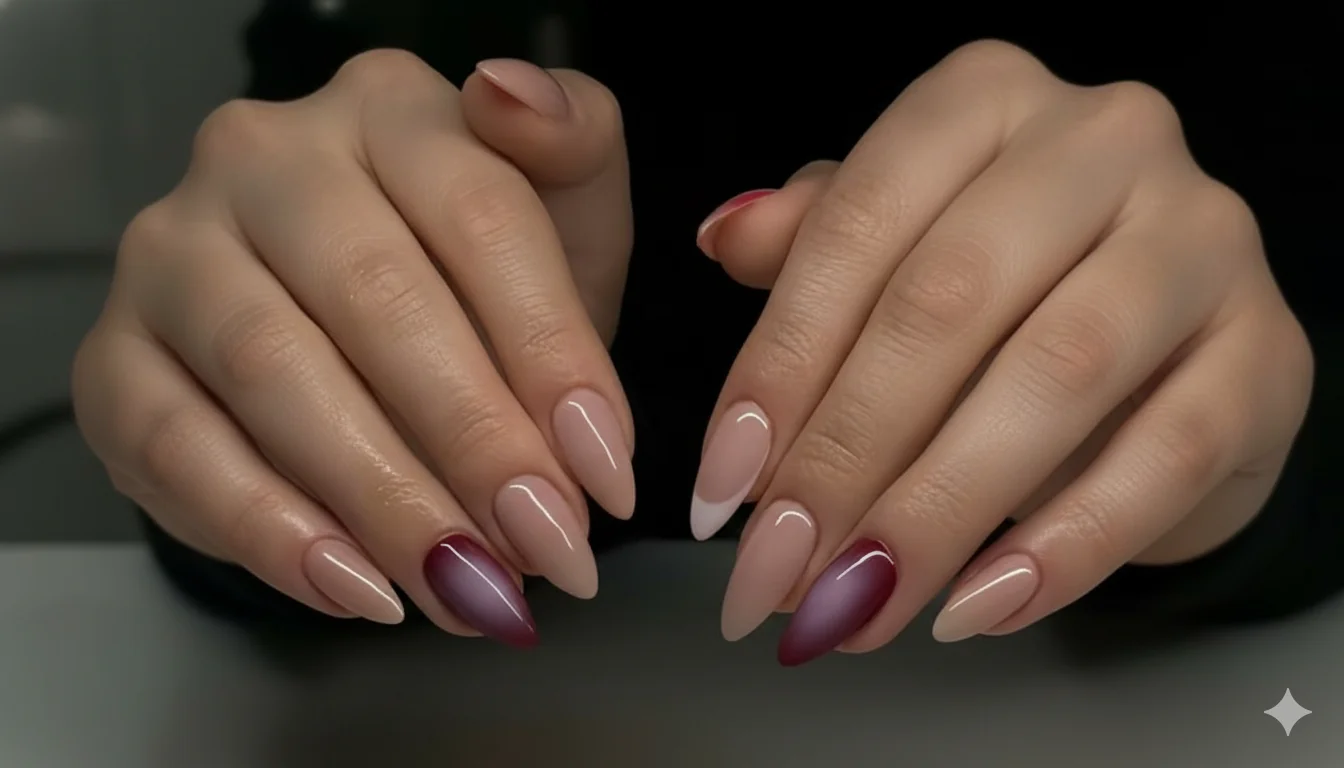
The distinction between narrow and wide almond is worth knowing. Narrow almond has sides that pull in sharply from the nail bed; wide almond keeps more of the nail's natural width and tapers only near the tip. If you want the shape that reads unmistakably as almond in photos, narrow is what you're describing. Saying either phrase out loud removes the guesswork entirely.
Before You Book: Which Service Do You Actually Need for Almond Nails?
This is where most salon visits go wrong before they even begin. Booking the wrong service means the tech doesn't have the product, the time, or the setup to get you the result you came for.
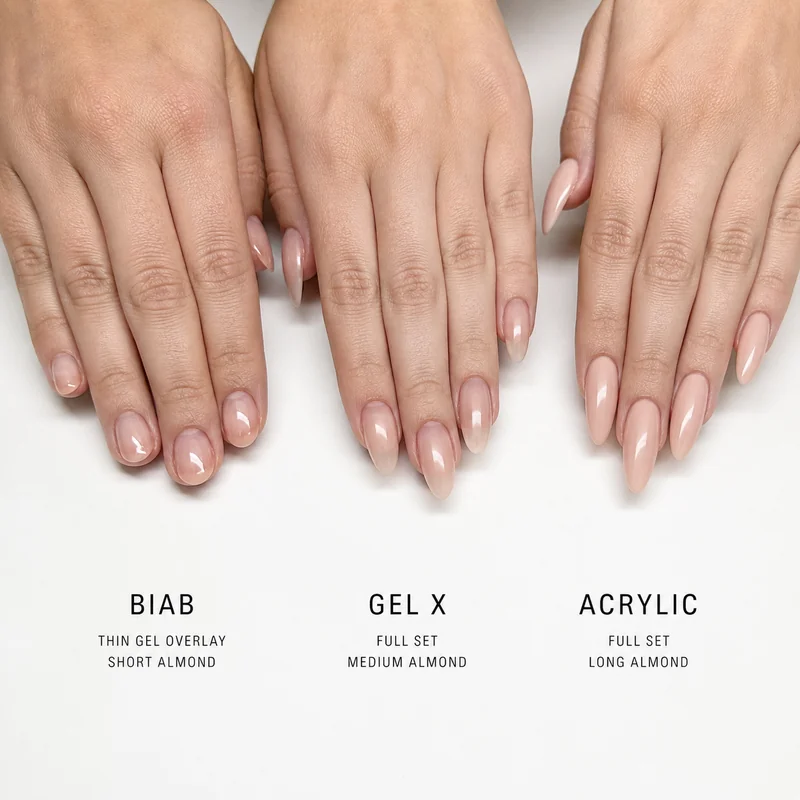
Here's the breakdown. If your natural nails are already past your fingertip and strong enough to file, a gel overlay or BIAB (Builder in a Bottle) adds strength without artificial length. If you need length, you're looking at gel extensions (soft gel tips — lighter, more flexible) or an acrylic full set (stronger, more durable, better for longer lengths). Both can be shaped into almond; the difference is the material and the maintenance schedule.
Never book a basic gel polish appointment if you're expecting length extension or significant shape work. Gel polish is a colour service, not a structure service.
If you're unsure which to choose, the full breakdown is in our guide to gel vs acrylic almond nails. Knowing in advance means you can specify the service type when you call and won't be redirected when you arrive.
Does Your Nail Tech Need to Know About Your Hands Before They Start?
Yes — and volunteering this upfront saves time and sets expectations. Two things are worth mentioning before the tech touches your hands.
First, your current nail length. If your nails are very short or bitten: "My nails are quite short — I'll need extensions to get to the length I want." If they're naturally wide: "I have a wider nail bed, so I'm keen on a narrow taper to get the almond look." A good technician will assess this anyway, but saying it first signals that you know what you're after.
Second, any nail health concerns. Peeling, soft nails, or previous damage affects which products will work and how the shape holds. If you've had issues with almond nails breaking before, say so — it lets the tech recommend the right product and thickness. This isn't oversharing. It's the equivalent of telling a hairdresser your hair has been chemically treated.
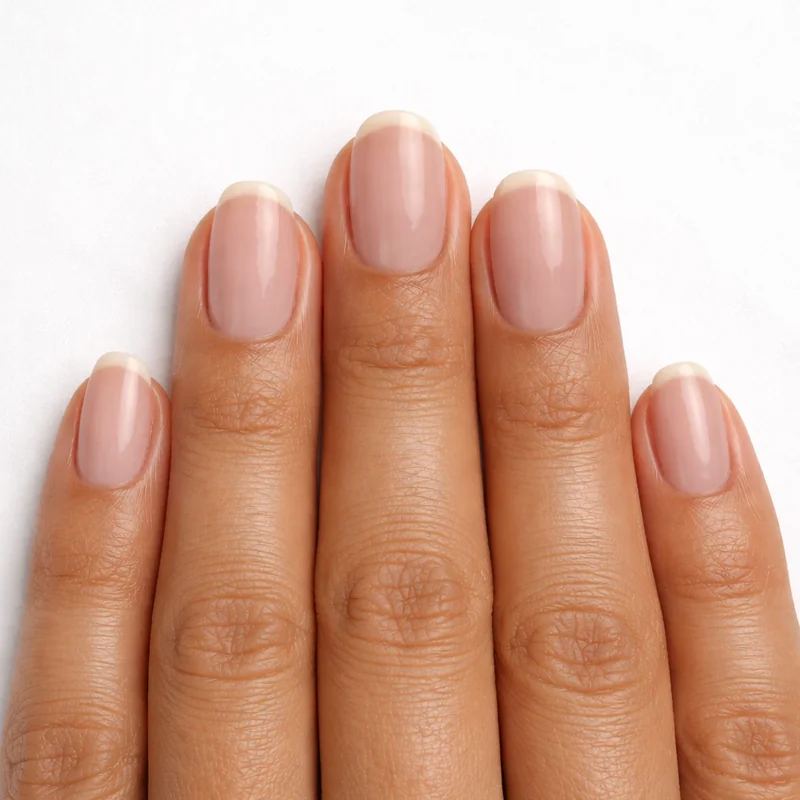
Whether almond nails suit your hands comes down to finger length and nail bed width — knowing this helps you refine the request before you sit down.
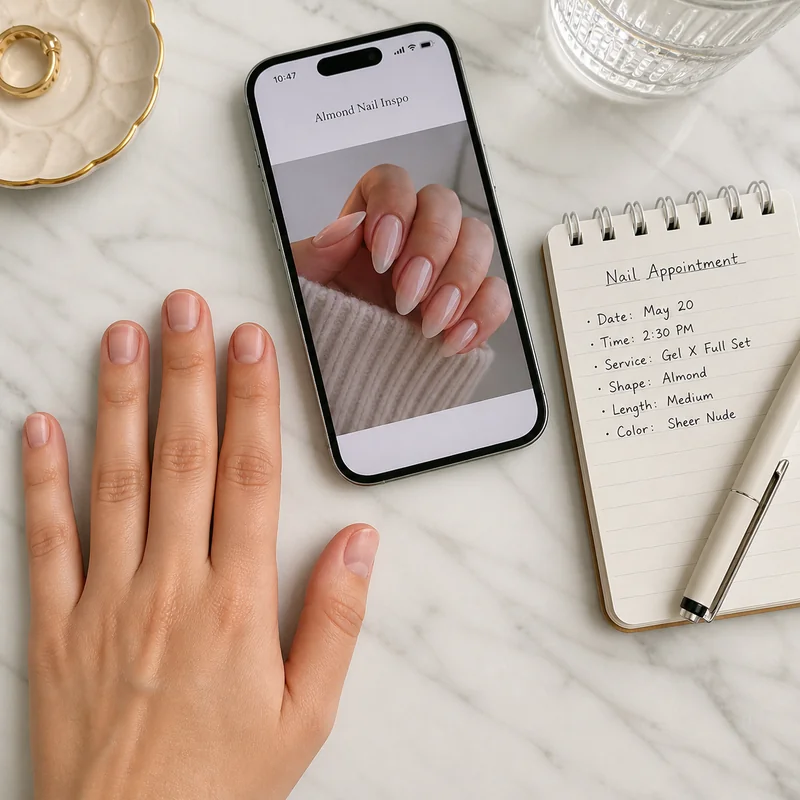
The Pre-Appointment Checklist: What to Prepare Before You Walk In
Screenshot this. Come back to it the morning of your appointment.
Before you book:
- Decide on service type: gel overlay / BIAB / gel extensions / acrylic full set
- Check the salon's Instagram or portfolio — do they have almond sets in their work?
- Book enough time: shape work takes longer than a basic gel. Ask for 75–90 minutes minimum if extensions are involved
The night before:
- Save 2–3 reference photos showing the shape clearly, ideally on hands with a similar nail bed width to yours
- Decide on your length preference in words: short (at or just below fingertip), medium (slightly past fingertip), long (well past fingertip)
- Remove existing gel or acrylic at home, or factor in removal time at the salon
When you arrive:
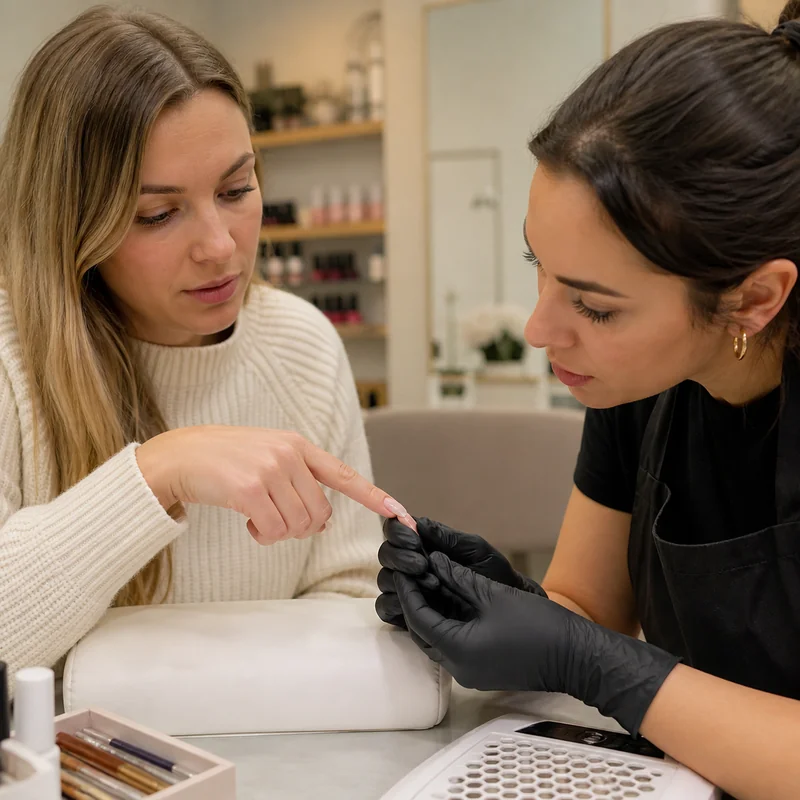
- Show the reference photo before the tech starts — not after
- State your service, shape, and length in one sentence (see the phrase bank below)
- Ask whether the tech is comfortable with almond shapes if you haven't seen their portfolio
Exactly What to Say When You Sit Down: A Word-for-Word Phrase Bank
This is the section worth saving. Real phrases, organised by scenario — so you're not improvising when you're already in the chair.
Opening statement (say this first, before anything else):
"I'd like a narrow almond shape, please — tapered sides that draw in, not oval. [Length: short / medium / long, just past my fingertip]. I have a reference photo."
If you need extensions:
"I'd like gel extensions to add some length first, then shaped into a narrow almond."
If you're working with natural nails:
"My natural nails — just a gel overlay shaped into almond, narrow taper, not round at the tip."
If you're nervous about the almond/oval confusion:
"I specifically want almond, not oval — the sides should taper inward, not curve out. I'll show you the photo so we're working from the same image."
When specifying length:
"Medium length — just a few millimetres past my fingertip, nothing dramatic."
"Quite short — I just want the shape, not much extra length."
"Longer — I'd like them to extend well past my fingertip."
If your tech says "I'll do what looks best":
"I appreciate that — I'd still love to stick to narrow almond if possible. It's quite a specific look for me."
How to Check the Shape Mid-Set (Before It's Too Late to Change)
The best time to course-correct is before the product is cured or the filing is finished. Once a gel extension is fully cured and the shape is locked in, adjusting it means filing down structure — which weakens the nail. If something looks off, ask early.
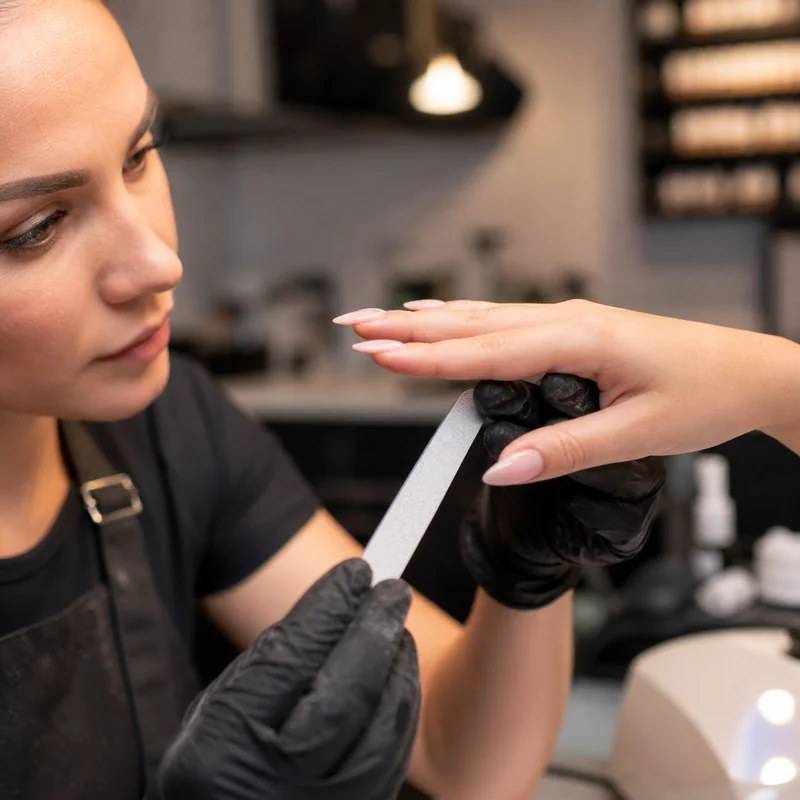
The right moment is after the tech has shaped one or two nails and before they've moved on. Hold your hand up and look at the profile — the taper should be visibly drawing inward. If it looks round, say something now.
The phrase that works without awkwardness: "Could we just pause and check the shape on this one? I want to make sure the taper is coming in on the sides." No apology, no over-explanation. Techs hear this from clients who know what they want, and it's far easier to adjust one nail than redo a full set.
The same habit extends to what you check before leaving the chair — paying attention throughout, not just at the end.
What to Say If the Shape Isn't Right — Without Making It Awkward
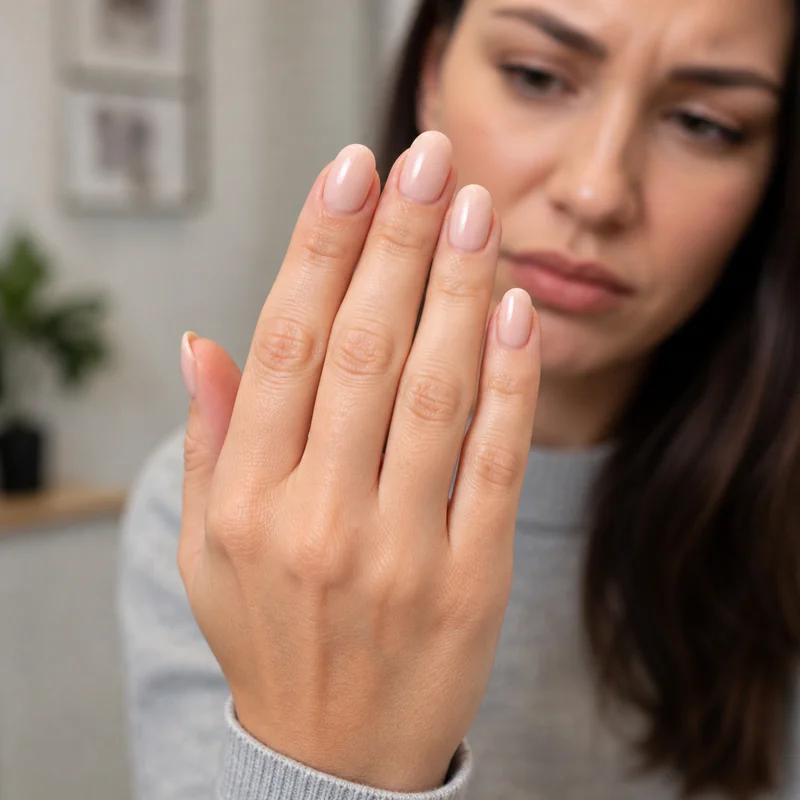
Most people know the feeling: your nails look off, but the tech seems pleased and you don't want to make it weird. The silence stretches. You pay. You leave. You're annoyed for three weeks.
The cost of saying something is a few uncomfortable seconds. The cost of staying quiet is nails you hate for a month.
Specificity is what makes it easy. Vague dissatisfaction is hard for a tech to act on. Precise feedback is not. Instead of "they don't look right," try: "The shape feels more oval than almond — could we bring the sides in a bit before the top coat?" That tells them exactly what to fix. It's not a criticism of their skill; it's clarifying the brief.
If the set is done and you genuinely dislike the shape, you can still ask. Nail etiquette guides including Refinery29's nail salon etiquette guide note that technicians prefer a client who speaks up over one who leaves unhappy. You're not causing a scene. You're doing what a paying client is entitled to do.