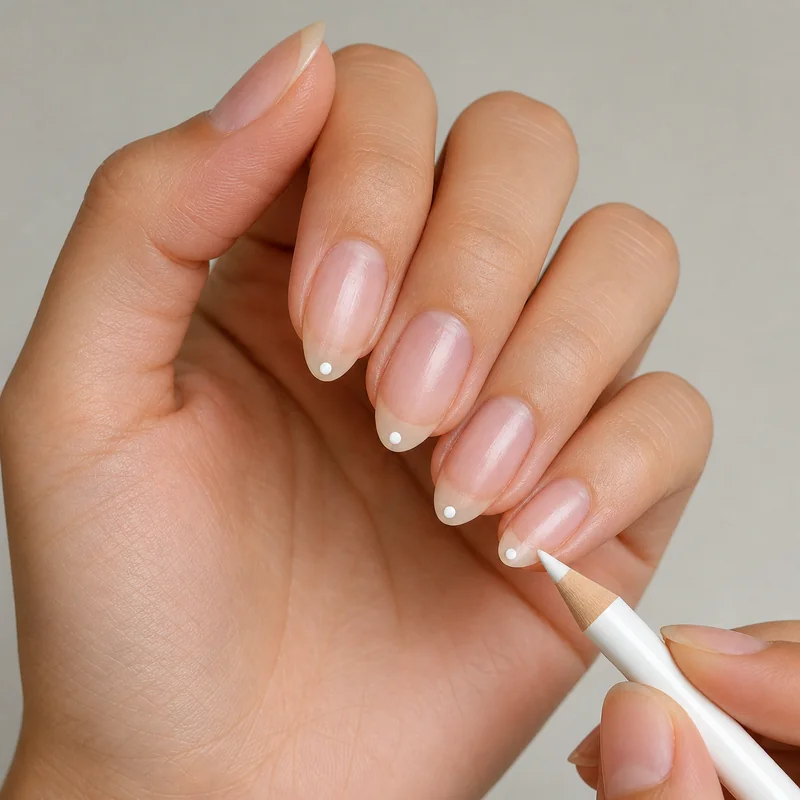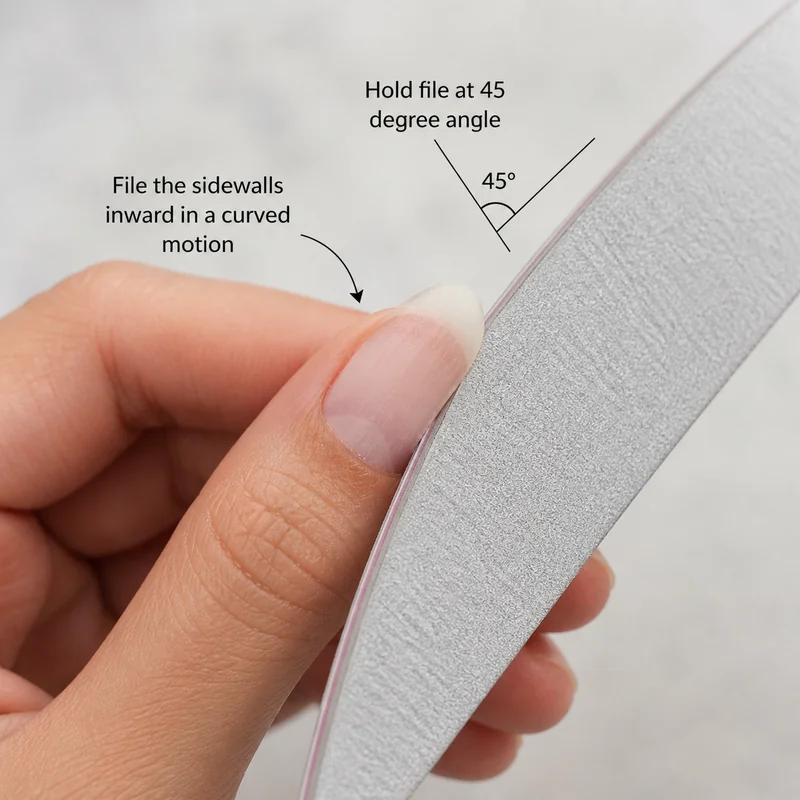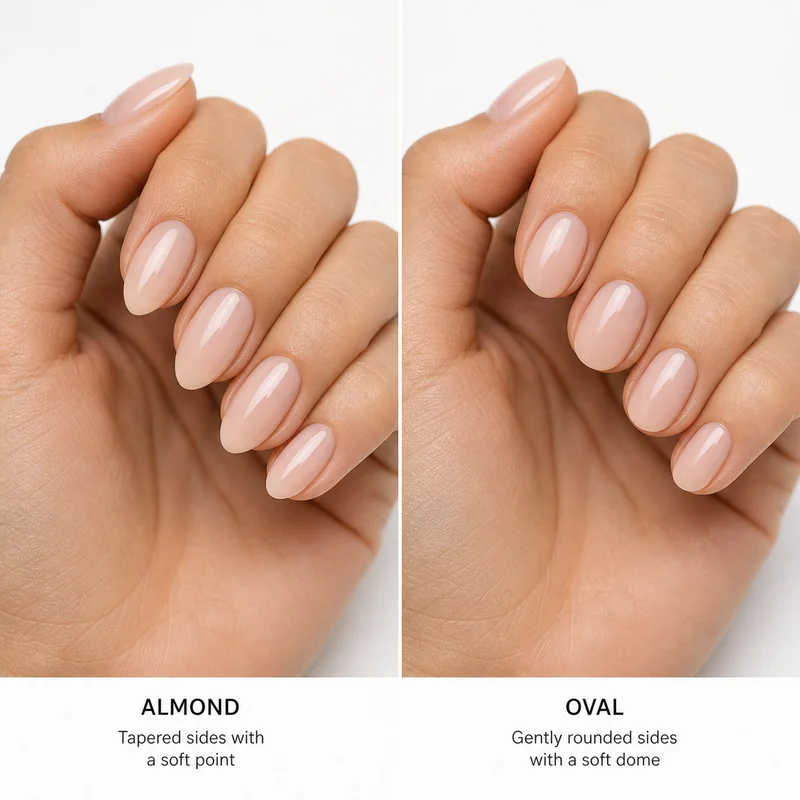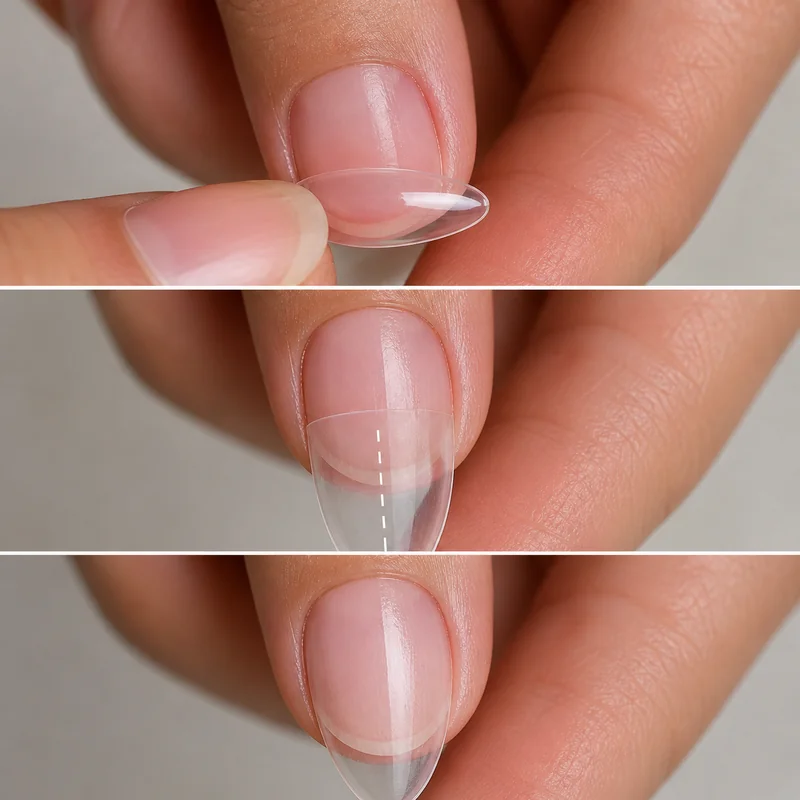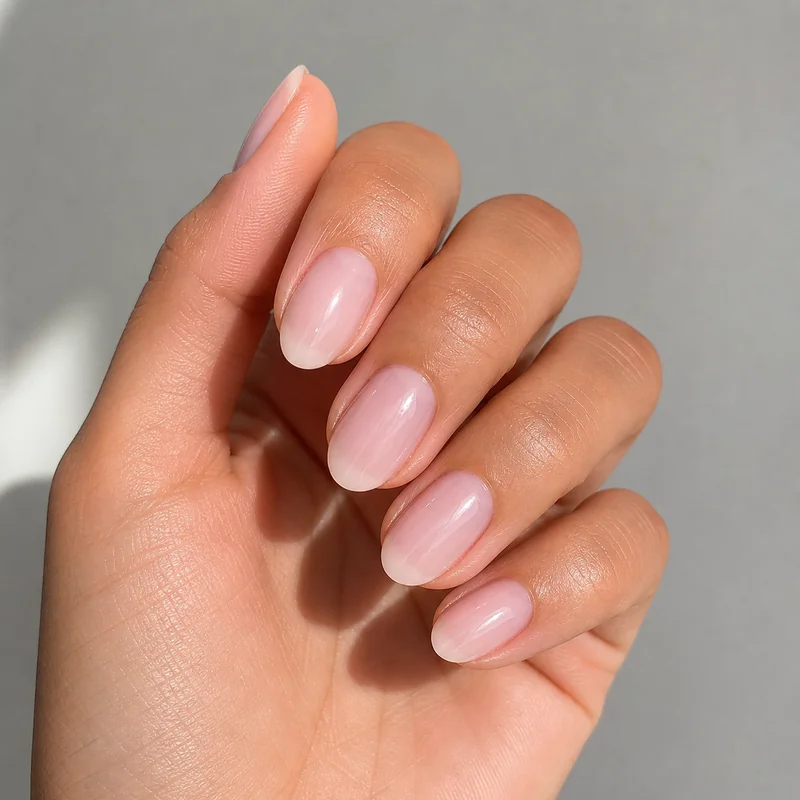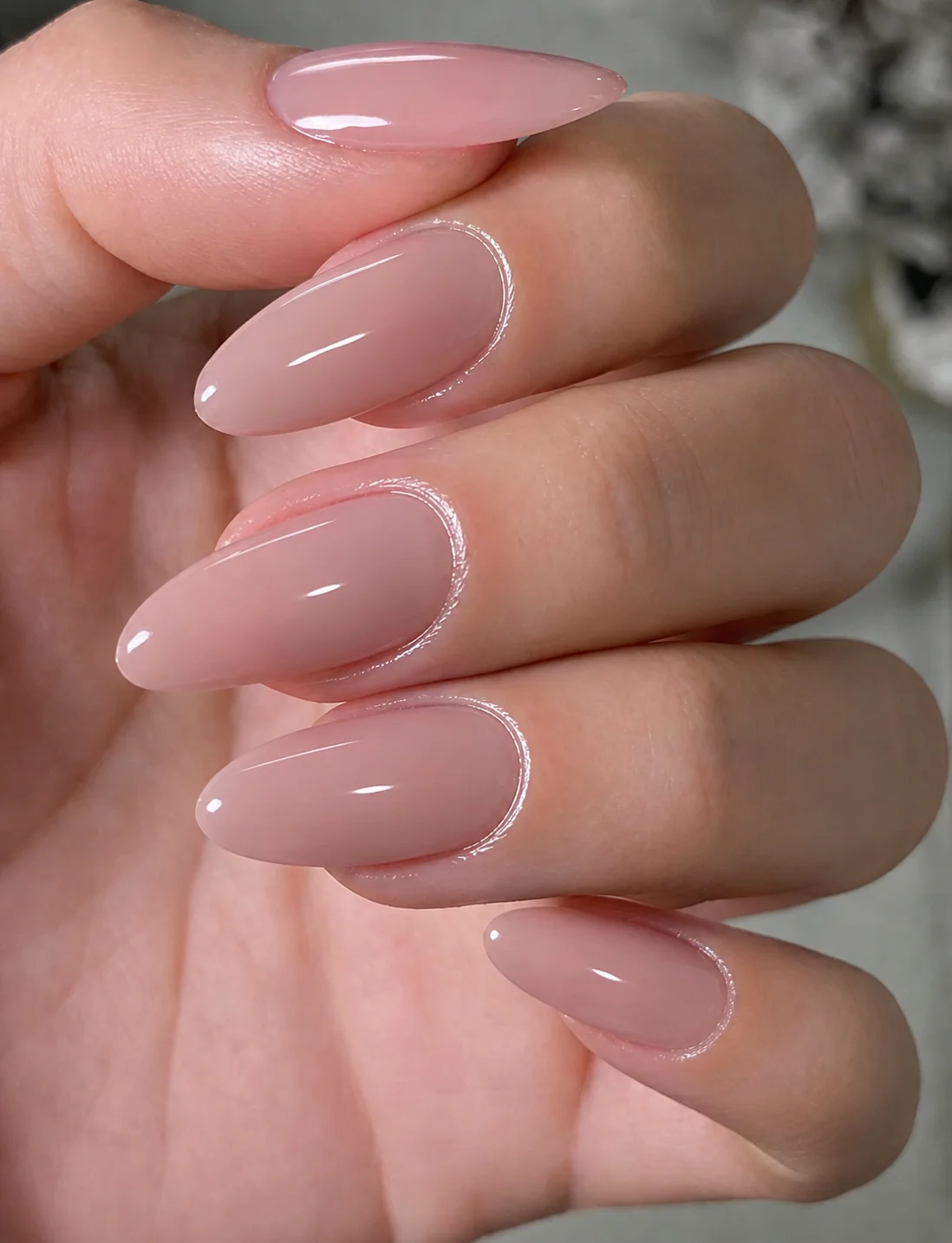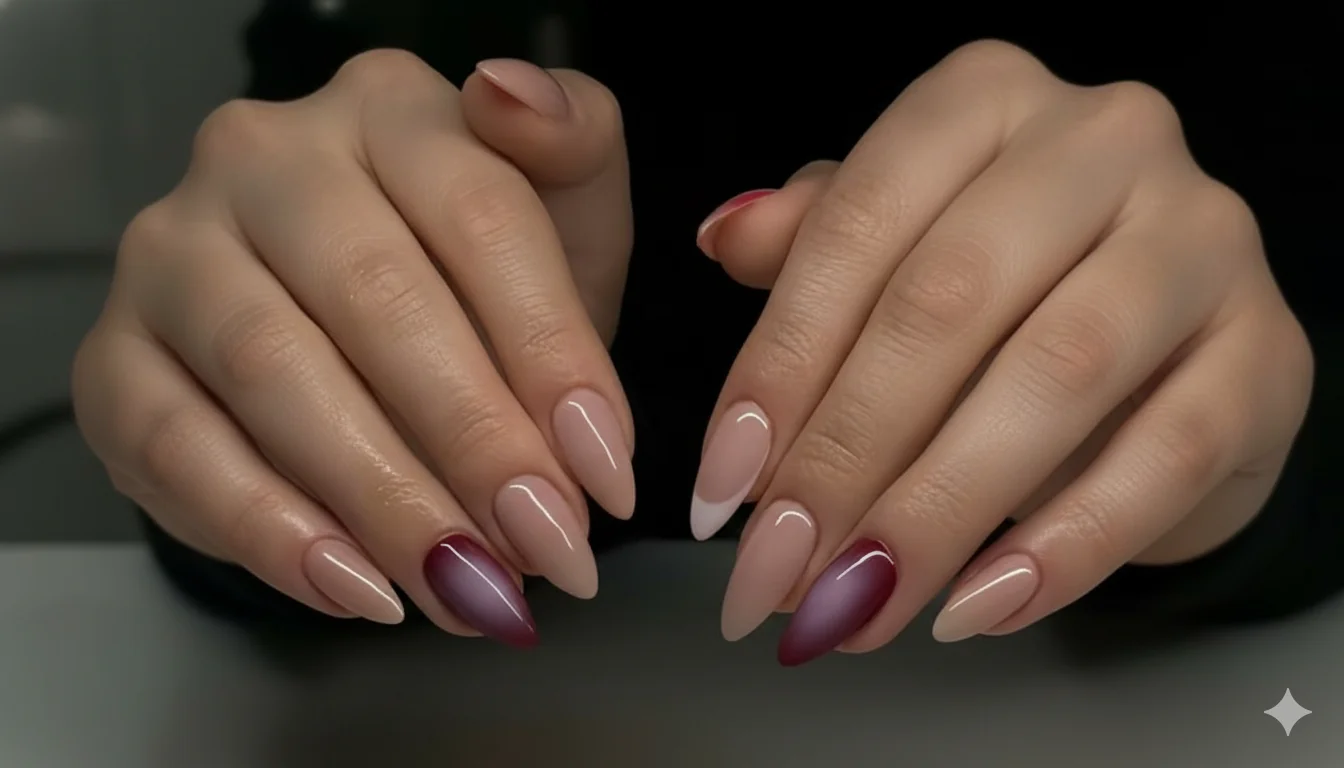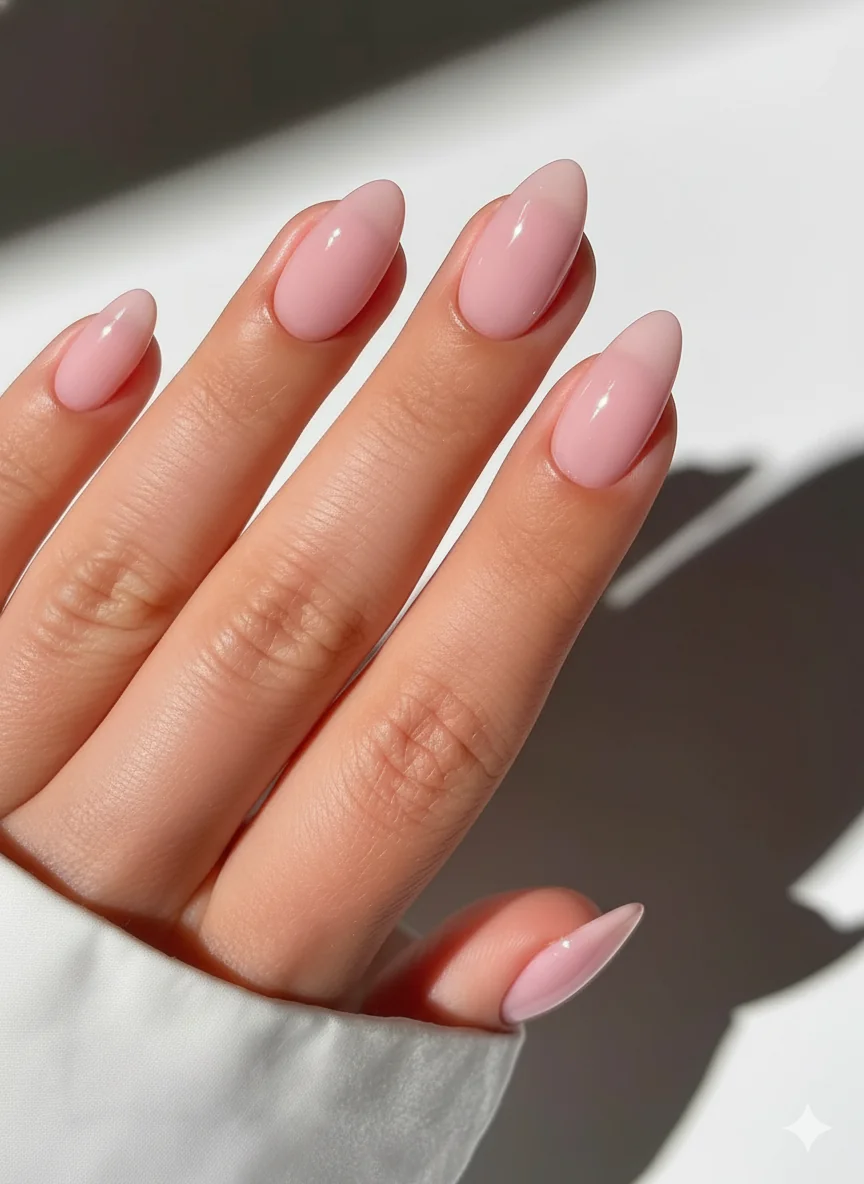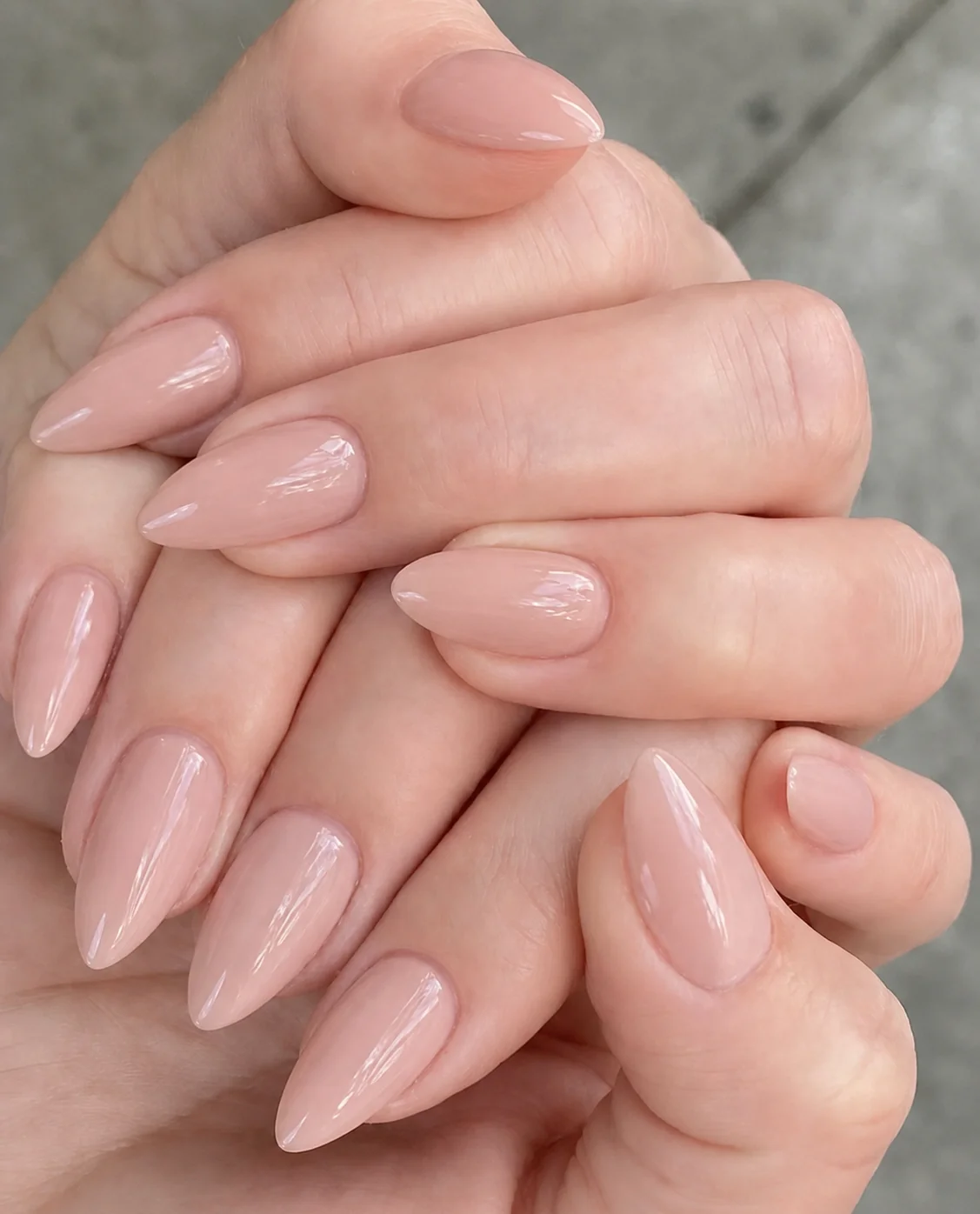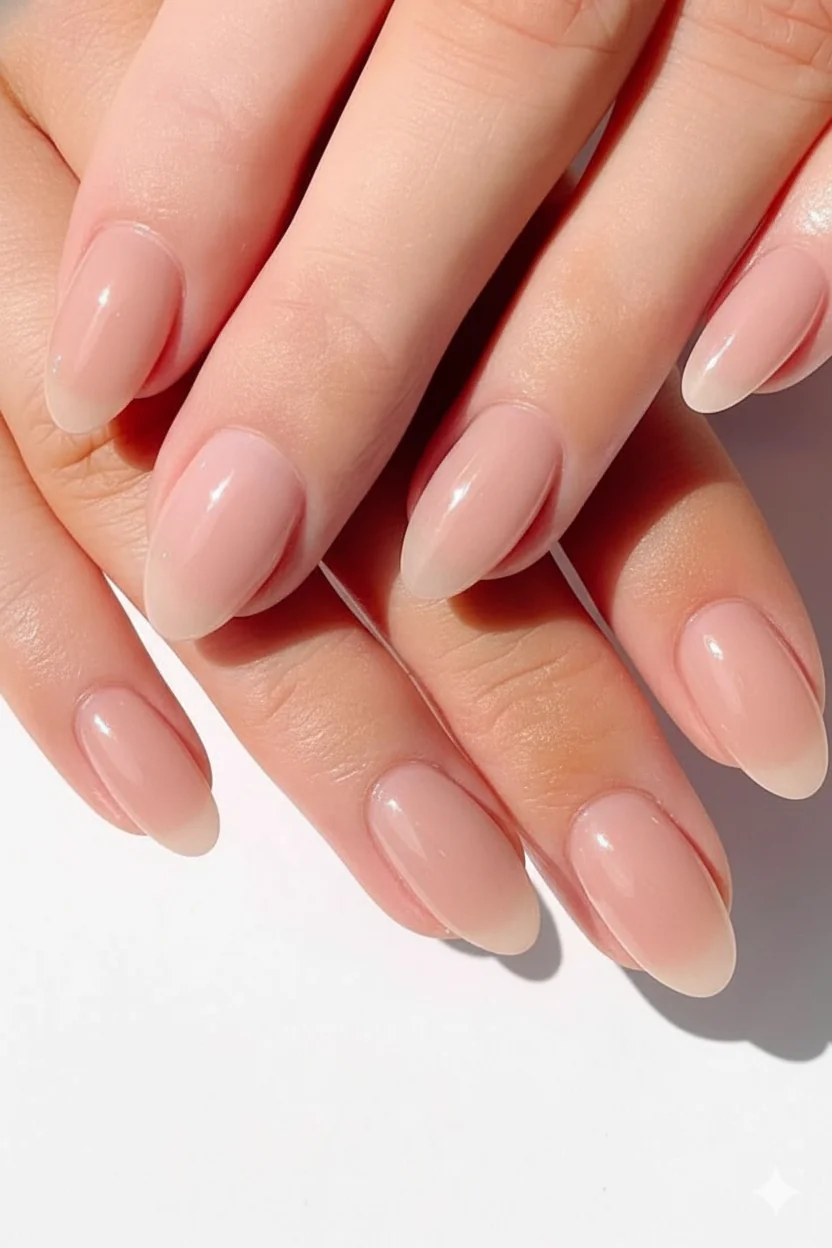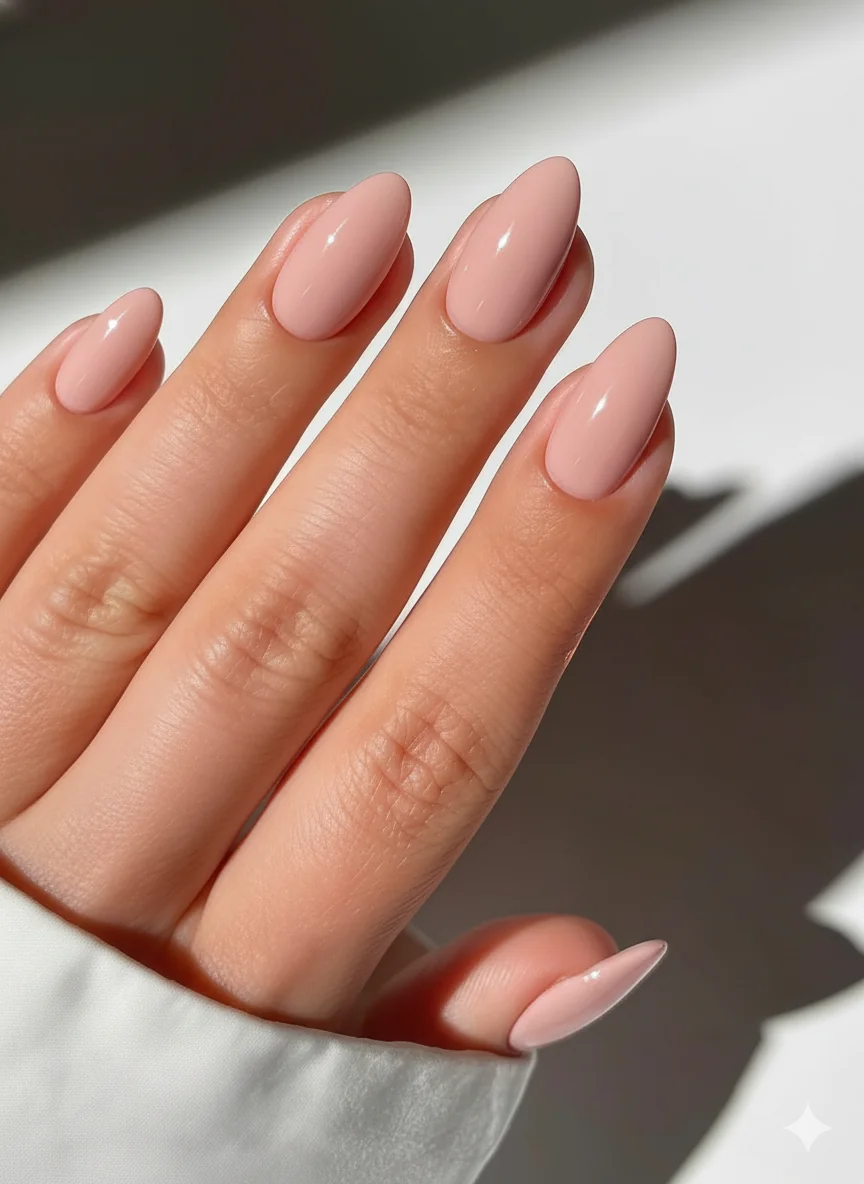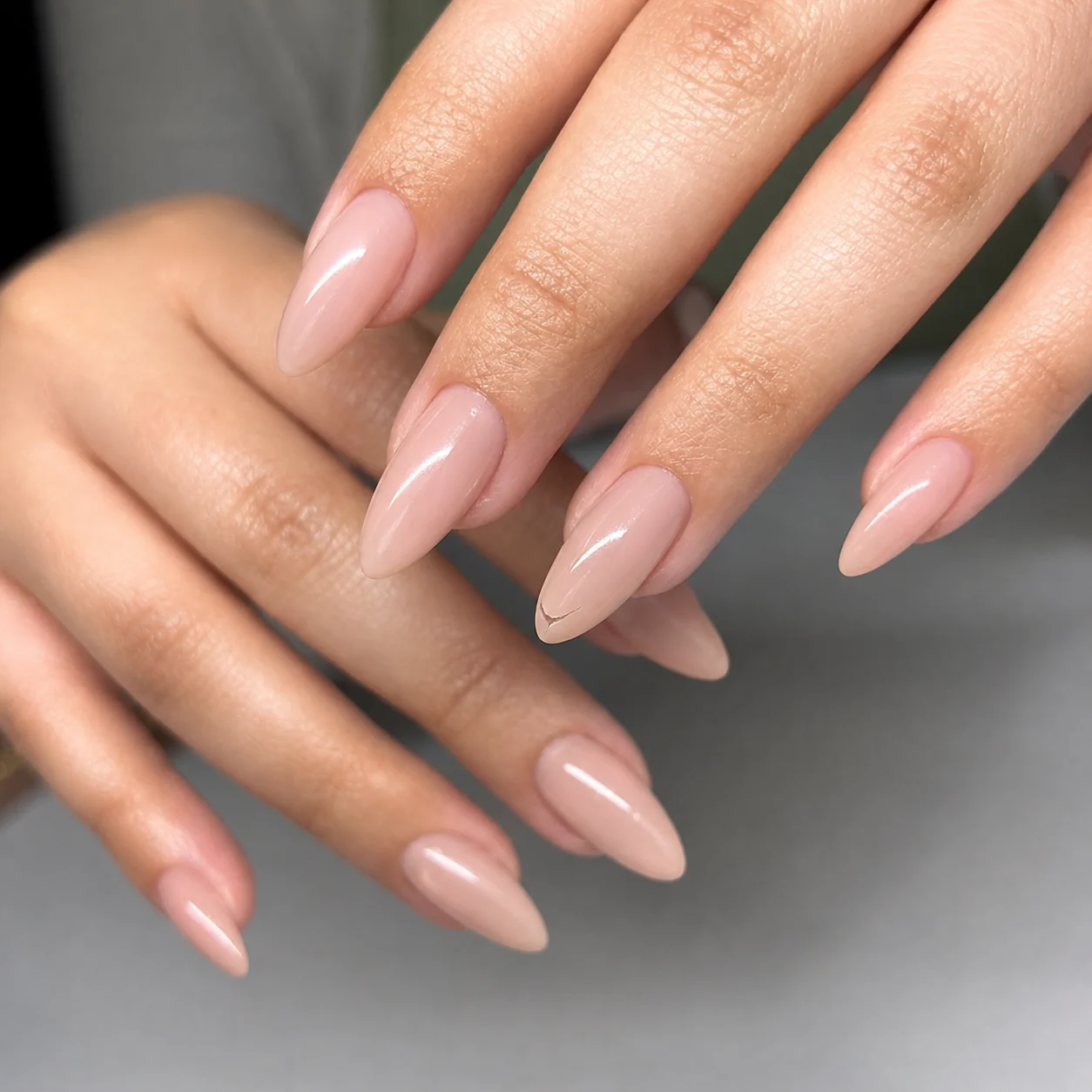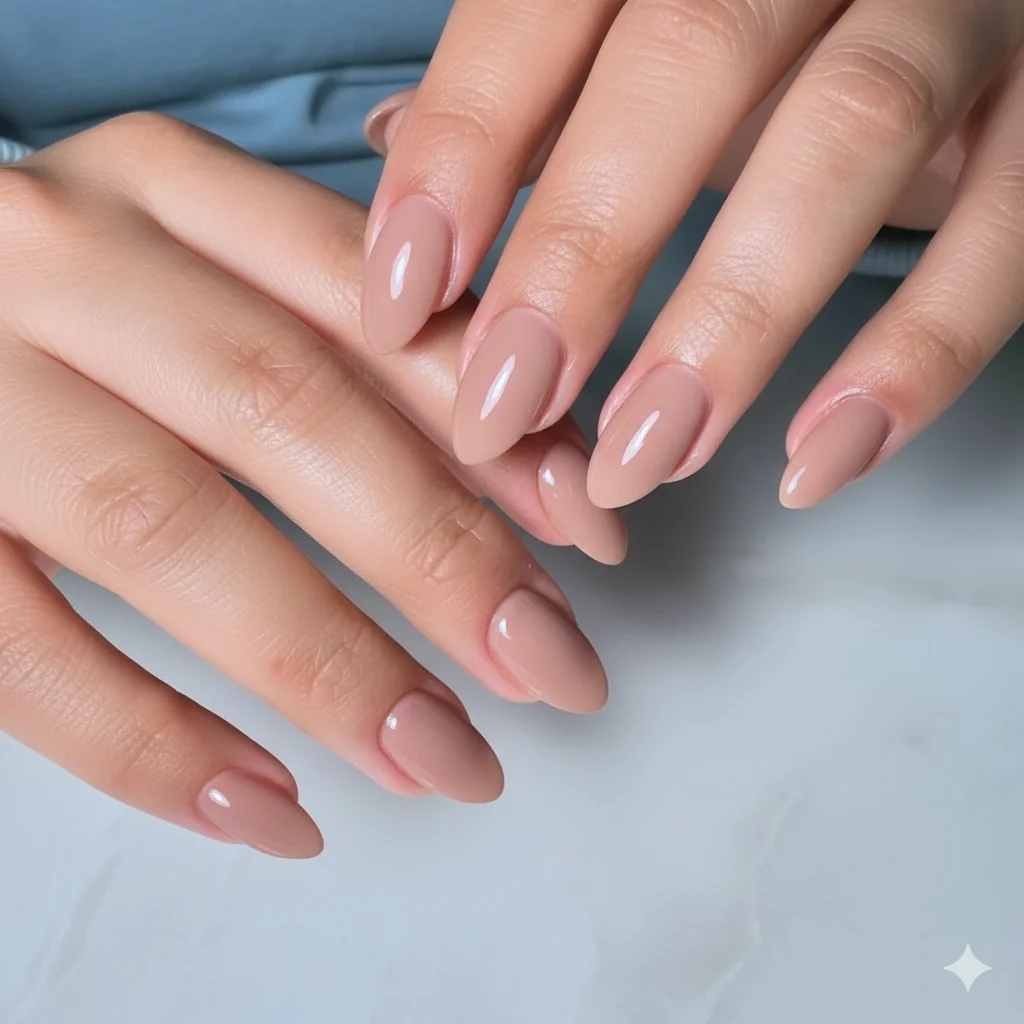
The most common assumption about almond nails on short natural nails is that short means impossible. It does not. What it means is that you need to check your length first, then choose the right path, because there are three, and most tutorials skip all of them. If you are brand new to the shape entirely, start with the beginner's guide to almond nails before coming back here.
Short almond nails on short natural nails is one of 2026's most-searched looks precisely because it works on real hands. Soft, tapered, wearable. And achievable at home.
Do You Have Enough Nail Length for Almond Shape? Here's How to Check
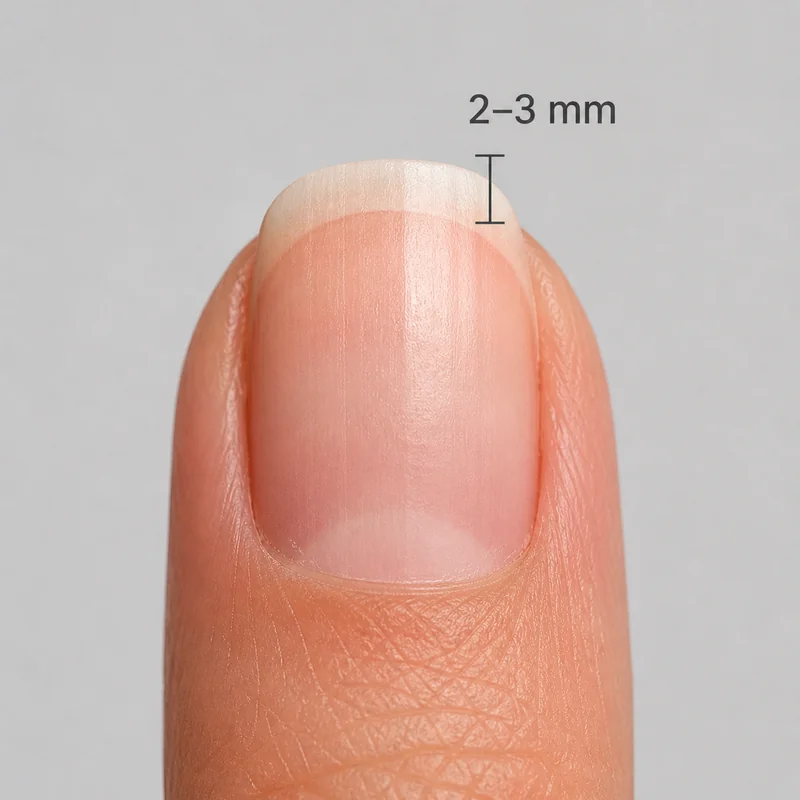
Before you pick up a file, check your free edge, the part of the nail that extends past your fingertip. You need roughly 2–3mm to create an almond taper on short natural nails. That is not much. Less than a quarter-inch. But it matters.
Press your fingertip gently against a flat surface. If the nail edge clears the skin by even a small amount, you likely have enough to work with. If the nail sits flush with or below your fingertip, natural shaping alone will not give you the almond point. You will lose too much structure in the process.
What Tools You Actually Need to Shape Almond Nails at Home
Short list. None of it exotic.
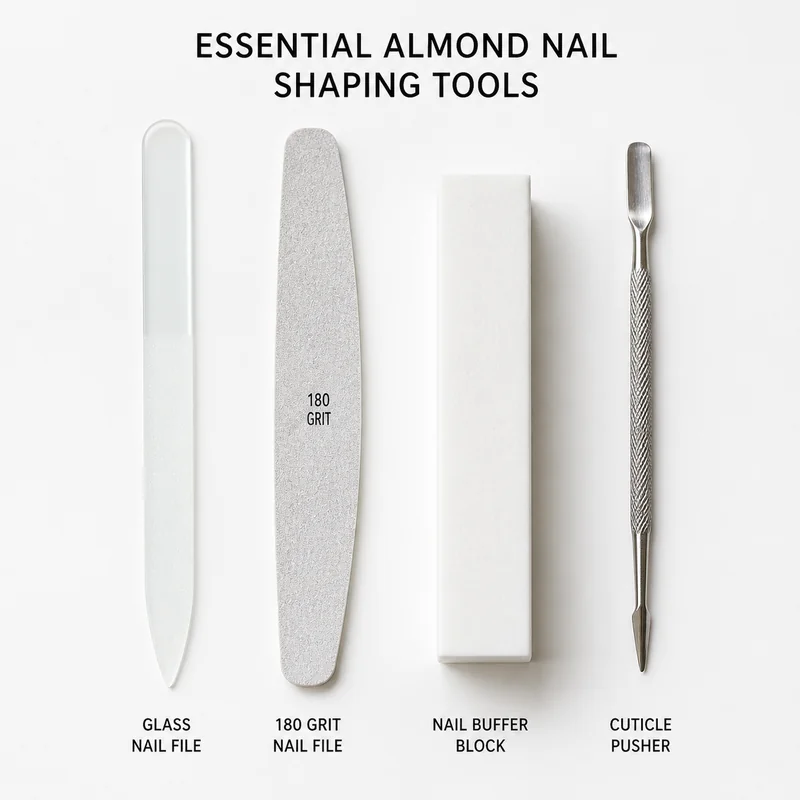
A glass nail file or 180 grit file is the non-negotiable. Glass files seal the keratin layers as they cut rather than tearing them, which matters enormously on short nails where splitting at the tip can undo a week of growth. How glass files help prevent nail splitting is worth reading before you buy anything else.
A 240 grit file for refining the tip once the shape is in. A nail buffer to smooth any rough edges. A cuticle pusher (push only, never cut) to tidy the base before you start. And an alcohol pad to clean the nail plate before filing. Oils or residue on the surface make it harder to see exactly where you are filing. Why glass files are better for natural nails, via NAILS Magazine, covers this in detail.
Prep Your Nails Before You File (Skip This and the Shape Will Not Hold)
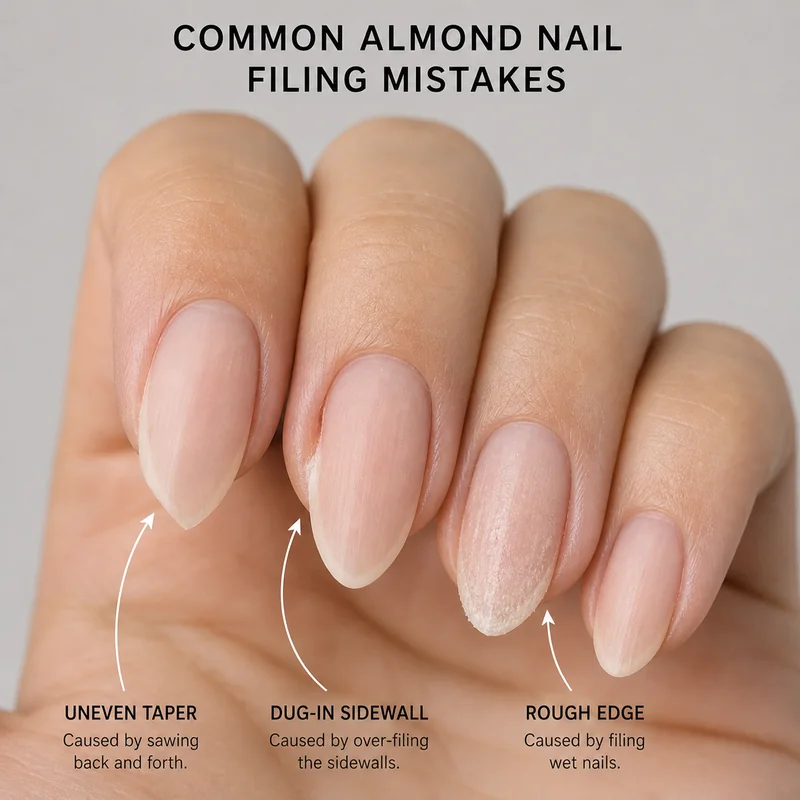
Dry nails only. This is the rule that most people ignore and then wonder why their tip frays. Wet nails, even slightly damp from washing your hands, tear rather than cut cleanly when filed.
Remove any existing polish. Push your cuticles back gently with the cuticle pusher. Wipe each nail with an alcohol pad and let it dry fully. The dermatologist-recommended nail care guidance from the AAD confirms that filing direction and prep directly affect how long a shape holds. Clip any uneven length first, then file.