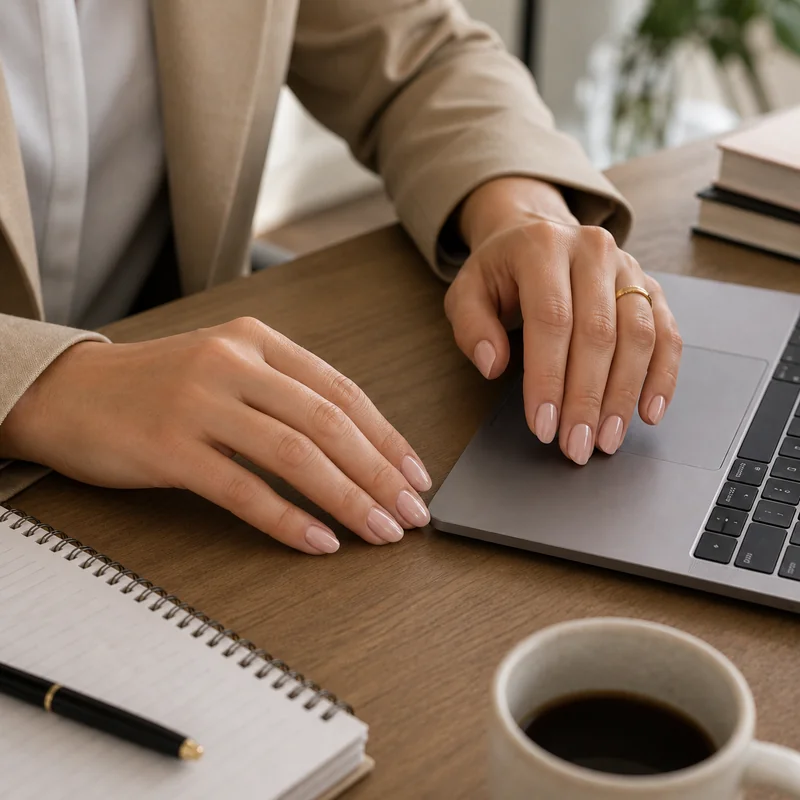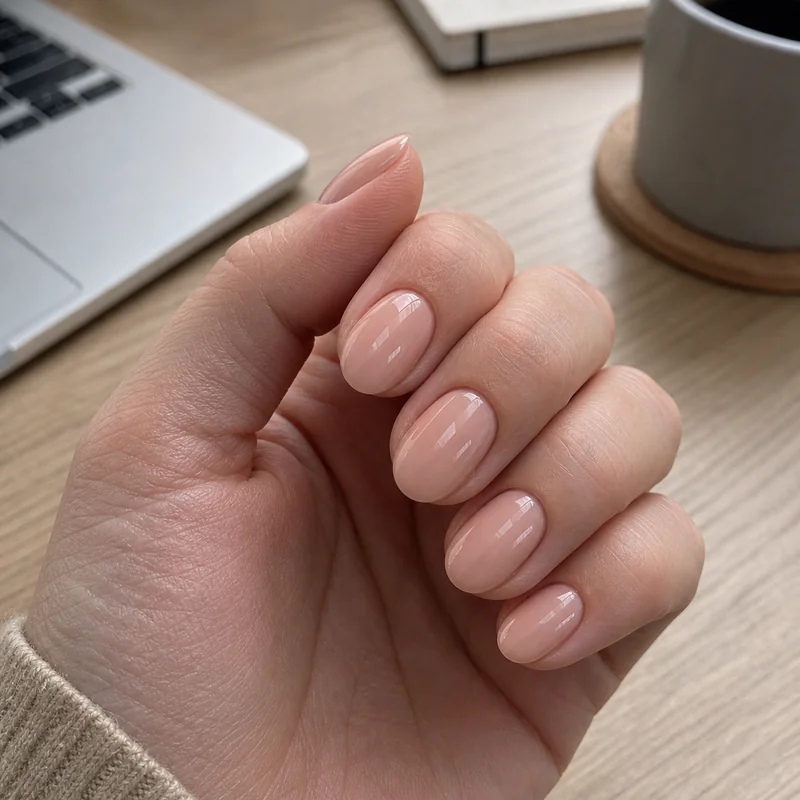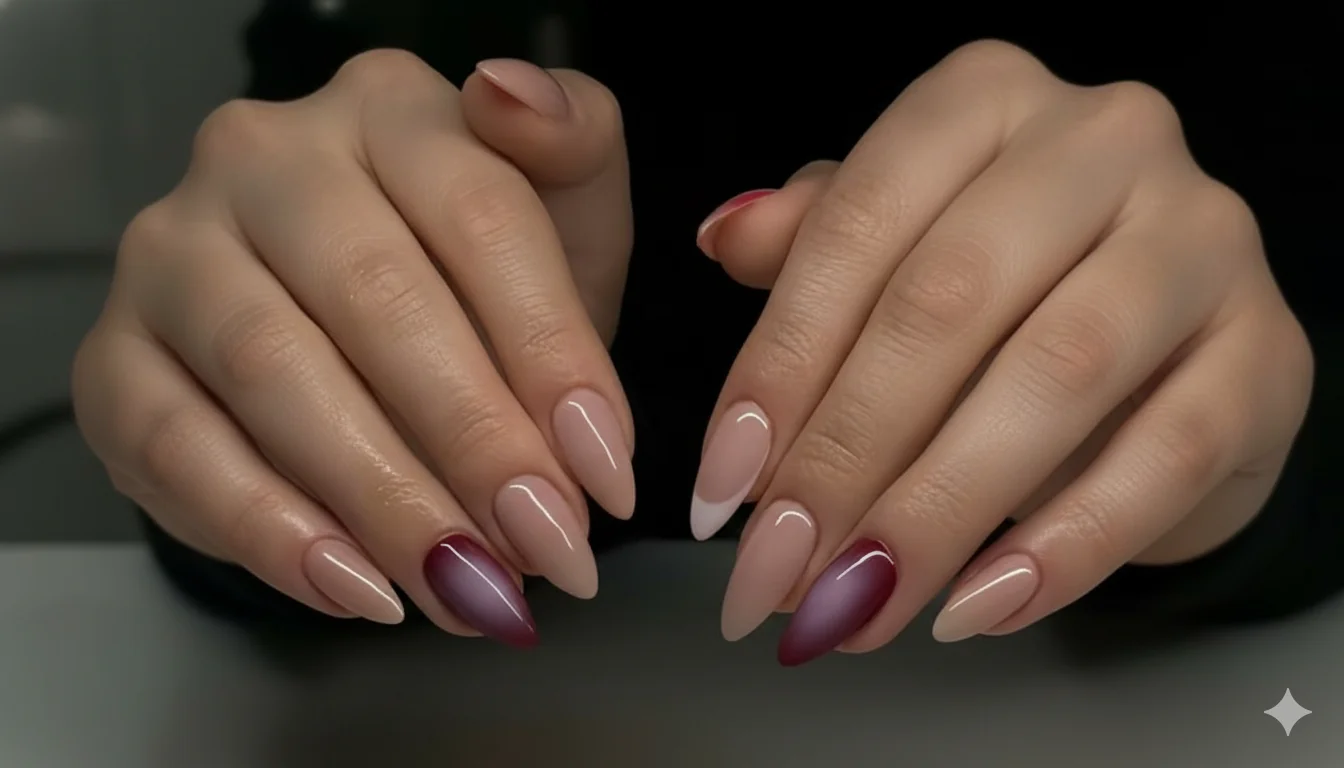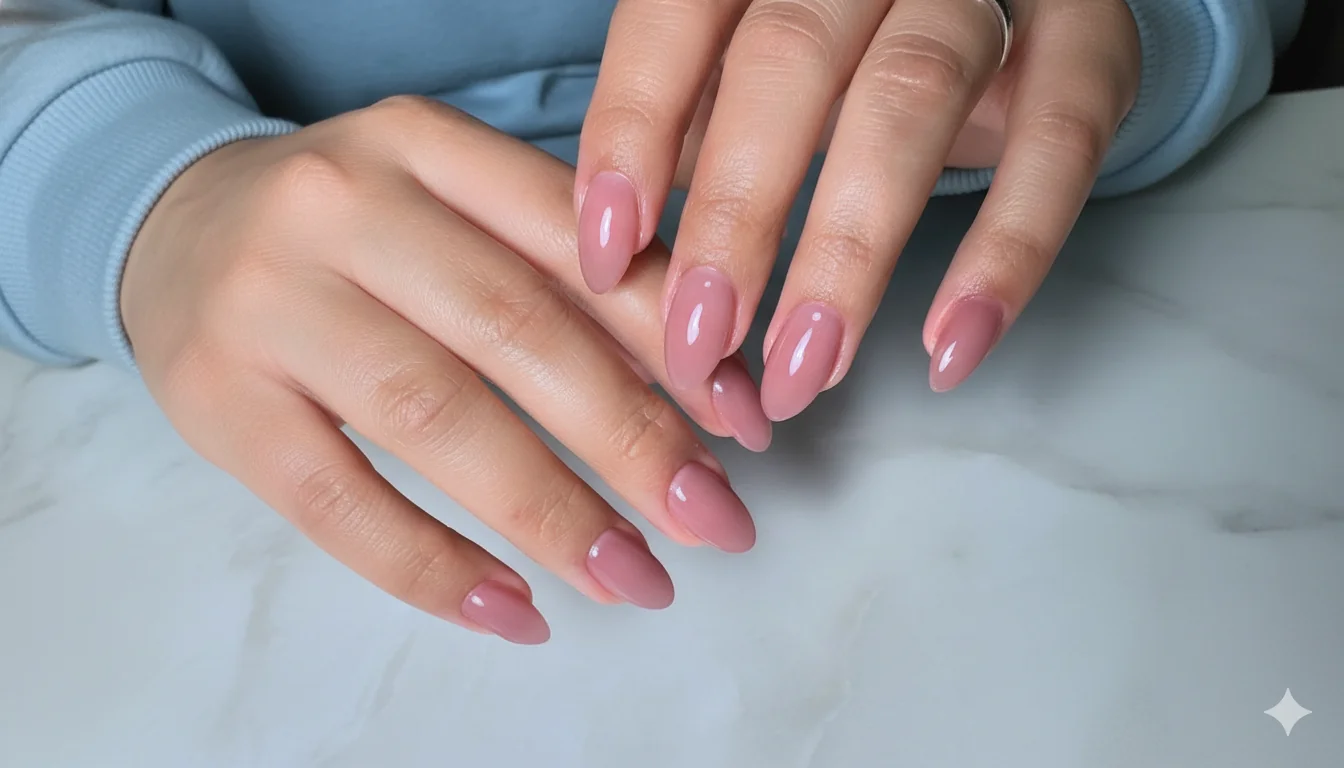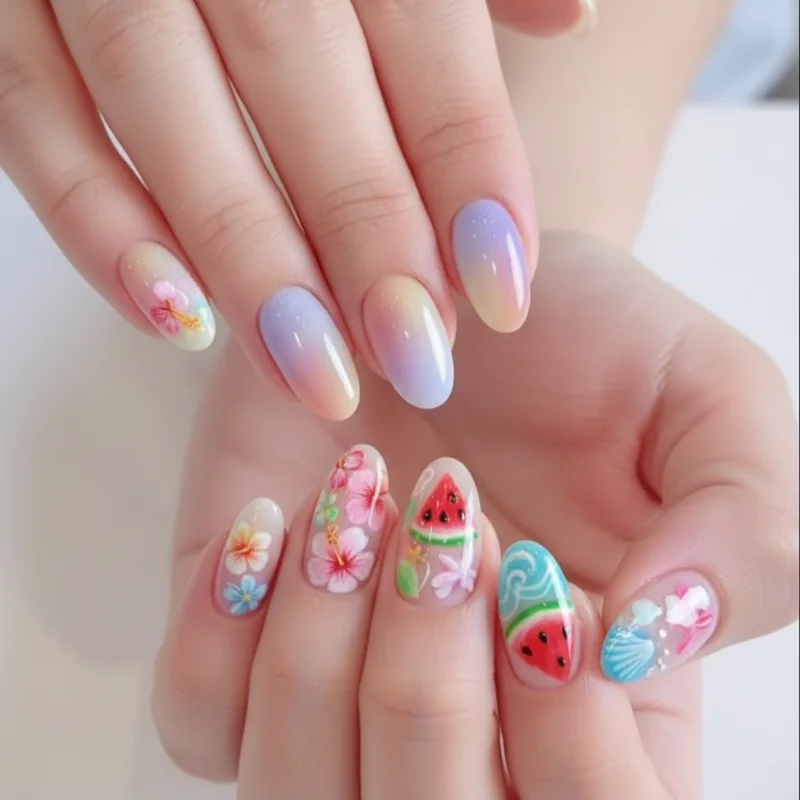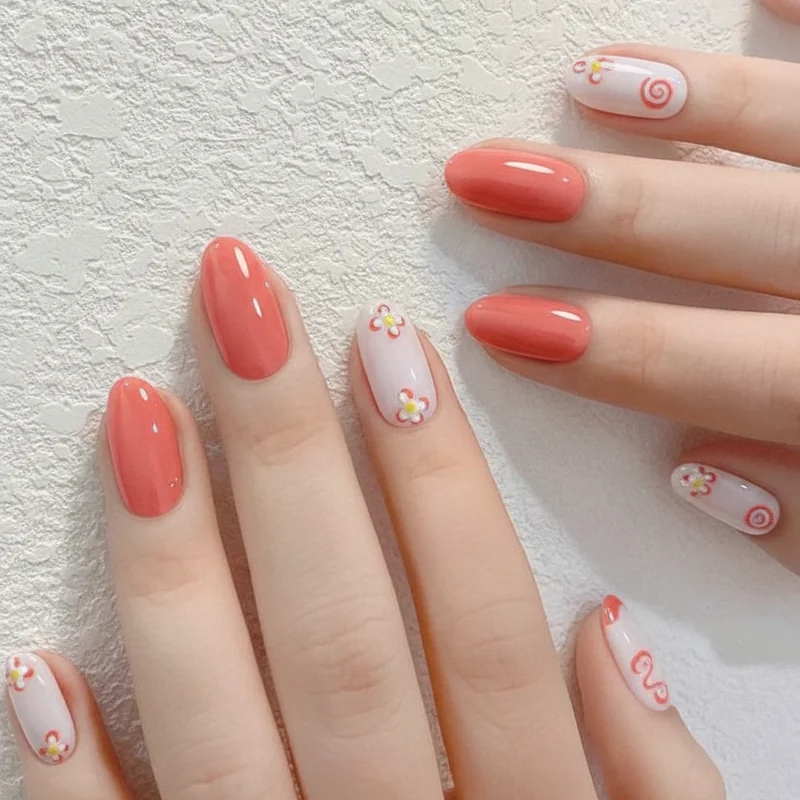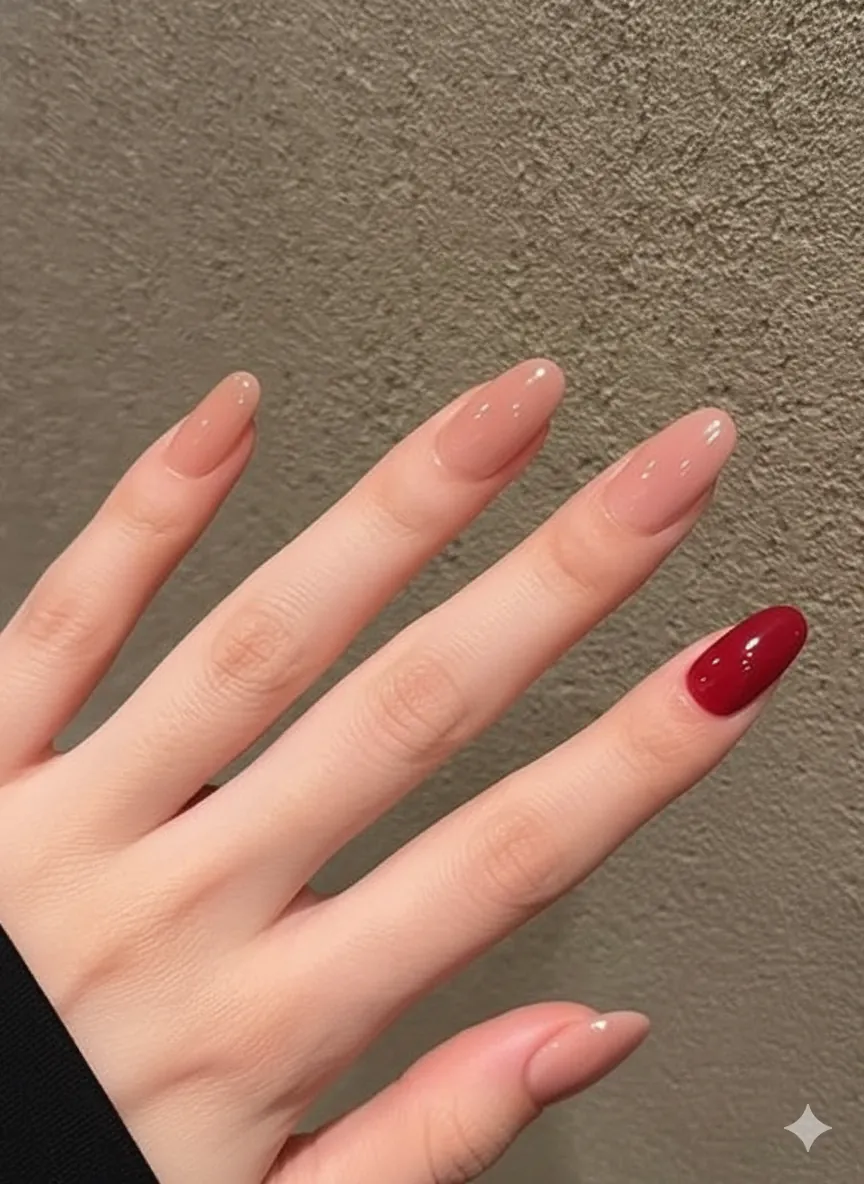
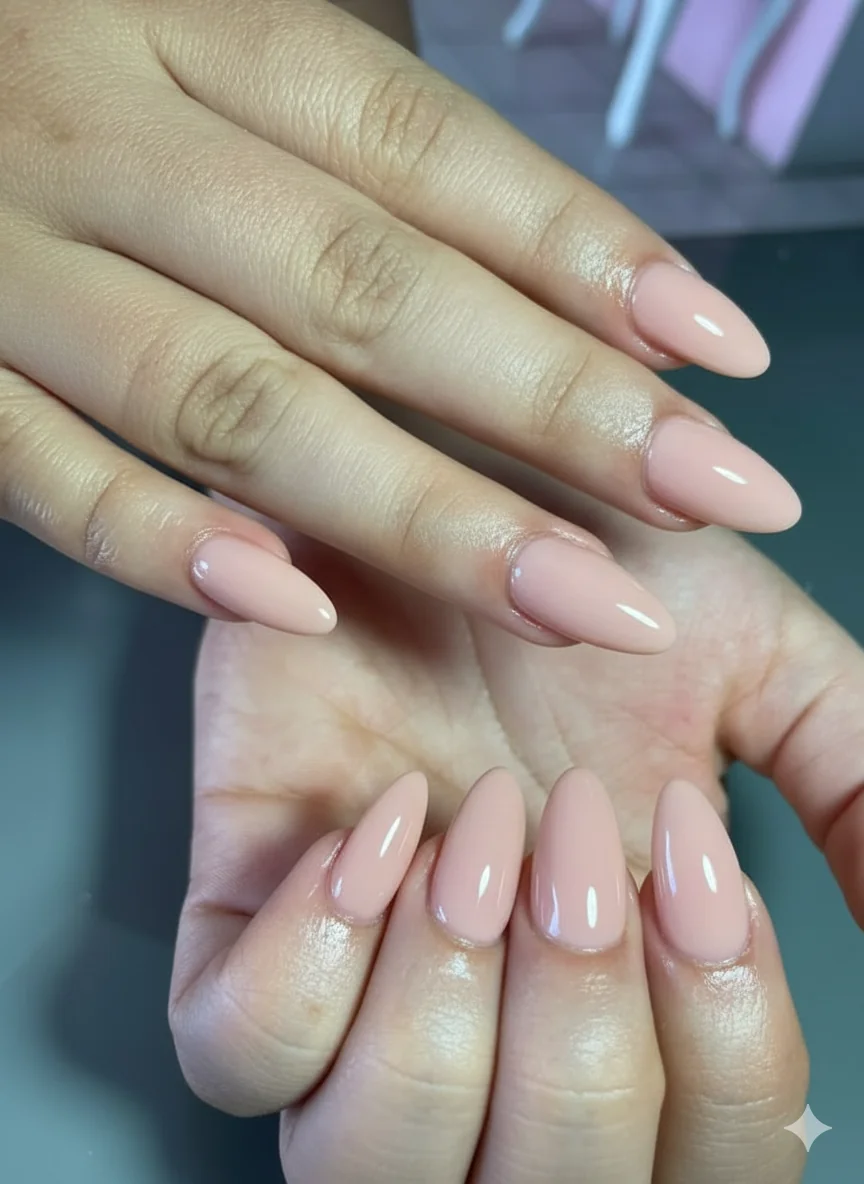
The question is never whether almond nails look professional. They do. The soft taper, the clean elongation — it is one of the most inherently elegant shapes in the nail canon. The real question is whether almond nails for work function in your specific job, at your specific length, in your specific industry. That is what no one answers directly.
This post does. By length tier, by industry, by job type — so you can make the decision once and wear your set with confidence all week.
New to the shape entirely? Start with Everything Beginners Get Wrong About Almond Nails first.
Are Almond Nails Actually Professional? (What Most Posts Get Wrong)
The debate about nail shapes in professional settings is almost always framed wrong. Shape is not the variable. Length is.
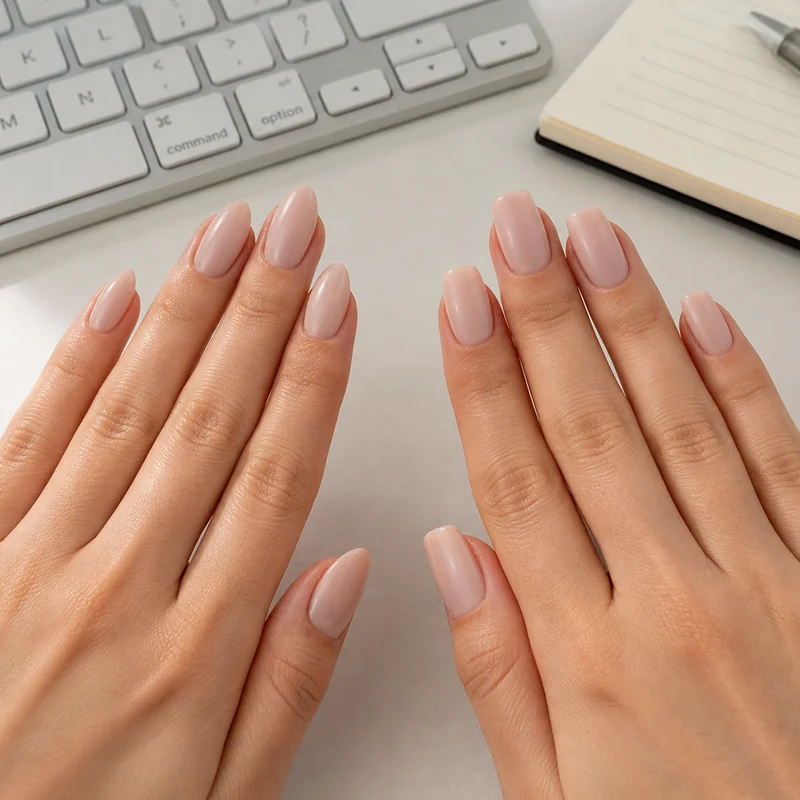
A short almond reads as polished, intentional, and sophisticated — arguably more so than a blunt square at the same length. The tapered tip creates visual elongation without projection. It is the same reason beauty editors favour it. A long almond in deep burgundy reads entirely differently. Not because the shape changed, but because the length signals leisure over practicality.
Fix the length, and the shape takes care of itself.
What Length Almond Nails Are Actually Work-Appropriate?
The professional standard is a nail projection of 2–4mm past the fingertip. That is the threshold where a shaped nail reads as intentional grooming rather than statement dressing.
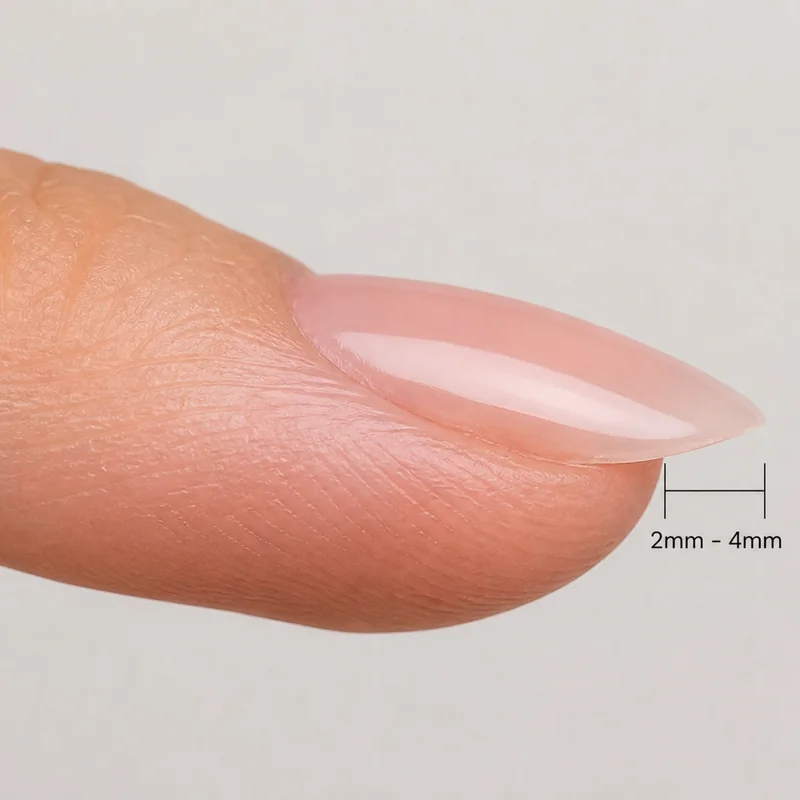
Three tiers to know:
Short almond (fingertip level to 2mm projection): Safe in every industry except patient-contact healthcare. The tapered shape still reads as almond — not stubby, not boring. This is your baseline for conservative environments.
Medium almond (3–5mm projection): Right for most standard offices — finance, tech, HR, education, hospitality management. The shape is visible and elegant without crossing into statement territory.
Long almond (6mm+ projection): Reserved for creative industries, fashion, advertising, and roles where aesthetic presentation is part of the job. Not a practical choice for keyboards, active-hand tasks, or client-facing roles in conservative sectors.
Can You Actually Type All Day in Almond Nails?
Short answer: yes, with short almonds. Longer answer — it depends on which length you are wearing and how long you have worn them.
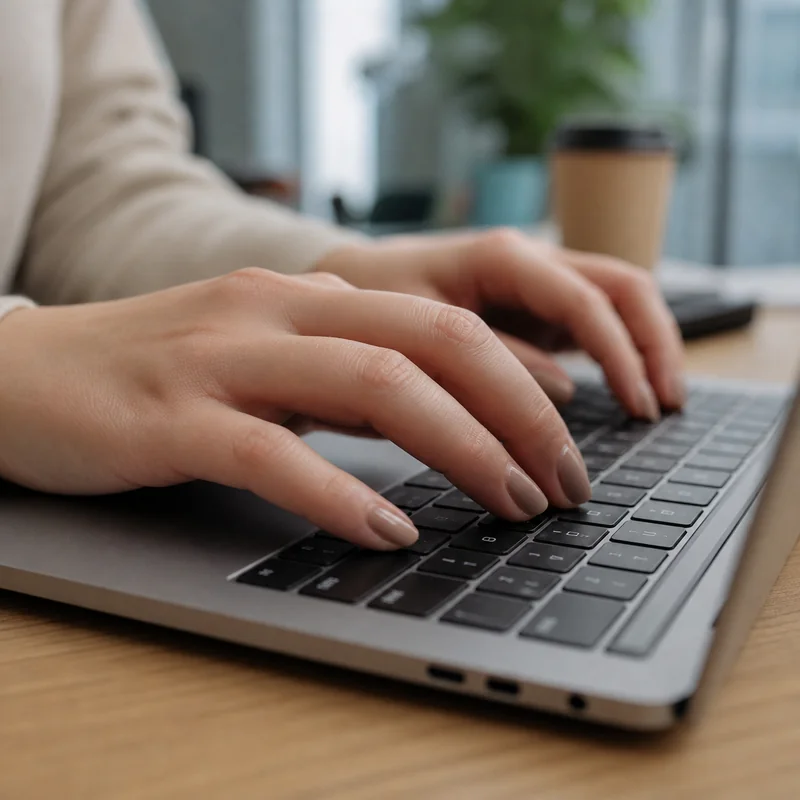
The tapered sidewall on a short almond actually helps. Because the sides narrow toward the tip, there is less nail catching laterally on adjacent keys. The fingertip pad still leads contact. Heavy typists on Lemon8 and SalonGeek consistently flag short almond as the "best of both" — you get the shape, you lose the interference.
Long almond is the problem. The tip hits the key before the pad does, which means relearning your strike angle. Most people adapt within one to two weeks, but if you are on a keyboard eight hours a day, that adjustment period matters. The smarter move is to wear short almond at work and extend length gradually on weekends to test what you can manage.
Almond Nails by Industry: What You Can Actually Get Away With

Finance, Law, Consulting: Short to medium almond, neutral colours — nude, milky pink, soft sheer, micro French. Bold art and dark shades work only when paired with a shorter length. The conservative read matters here more than anywhere else.
Tech, Marketing, HR: Medium almond is fine. Colour freedom increases. Subtle chrome, muted terracotta, dusty rose — all viable. This sector rewards polish over conformity.
Creative, Fashion, Advertising: Length and design freedom are genuine. Long almond, statement colour, editorial art — all appropriate and often expected.
Healthcare and Medical: This is a hard no on extensions. WHO hand hygiene guidelines flag artificial nails as infection risk in clinical environments. Natural short almond is the only option, and only in non-patient-contact roles — confirmed by nursing nail guidelines across hospital and nursing school policy.
Teaching and Childcare: Short gel almond is the answer. Durable, practical, professional, and nothing catches on a year-six craft project. Gel overlay on natural nails at short length holds through the full working week.
How to Read Your Office's Unspoken Nail Rules
Every workplace has a nail register — it is just unwritten. The way to read it is not to ask HR. It is to observe.
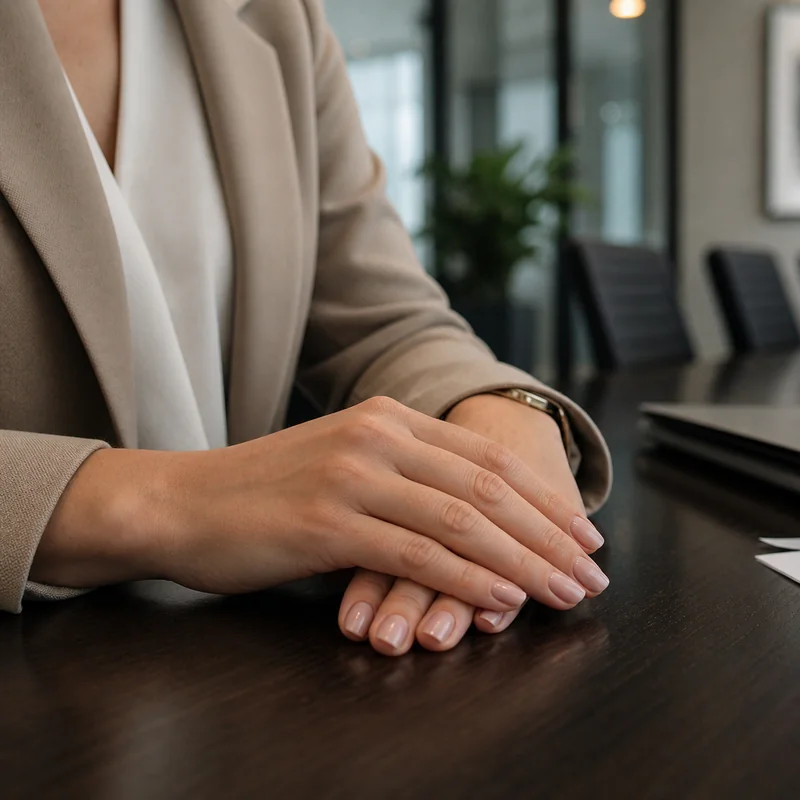
Look at the senior women in the room on day one. Not the newest hire — the people who have navigated this environment for years. Their choices are calibrated. Then look at your peers across the first week. That range tells you the floor and ceiling.
A practical rule from the professional nail length discussion on Corporette: start conservative, adjust after week three. If you come in with a medium almond in a milky nude and no one flinches, you have your answer. If you want to test bolder length or colour, week three onwards is when you have enough social context to read the room accurately.
One specific note on interviews: hands appear significantly closer on video. For Zoom interviews particularly, a neutral shorter length gives you nothing to manage. Save the more considered choices for once you are in the role.
The Almond Nail Designs That Work in Every Office
Design matters as much as length in conservative environments. A long almond in soft nude reads differently from a short almond in heavy nail art — but a long almond in heavy nail art reads loudest of all.
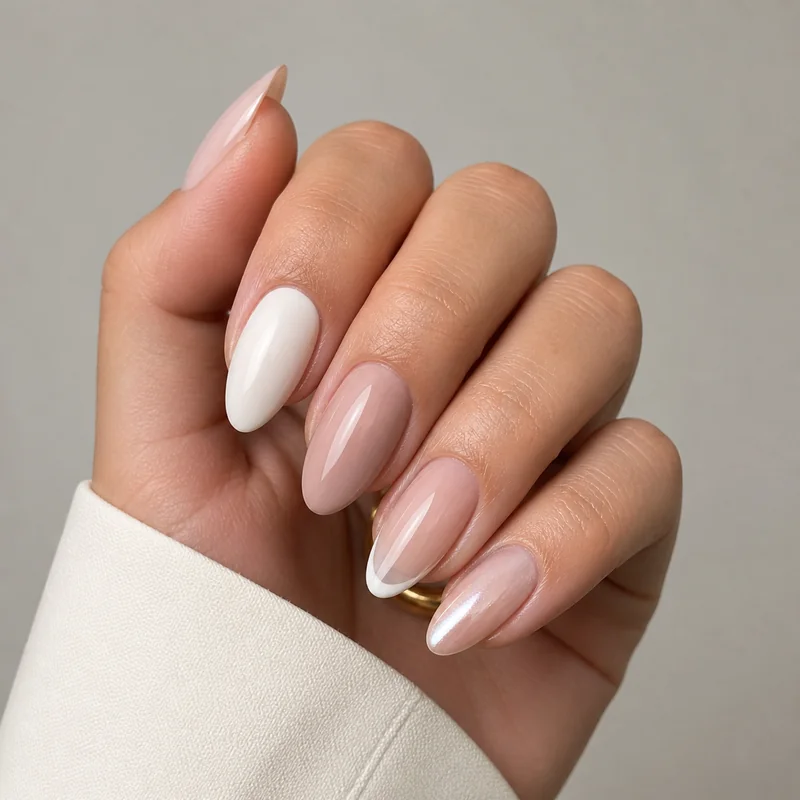
Designs that work universally:
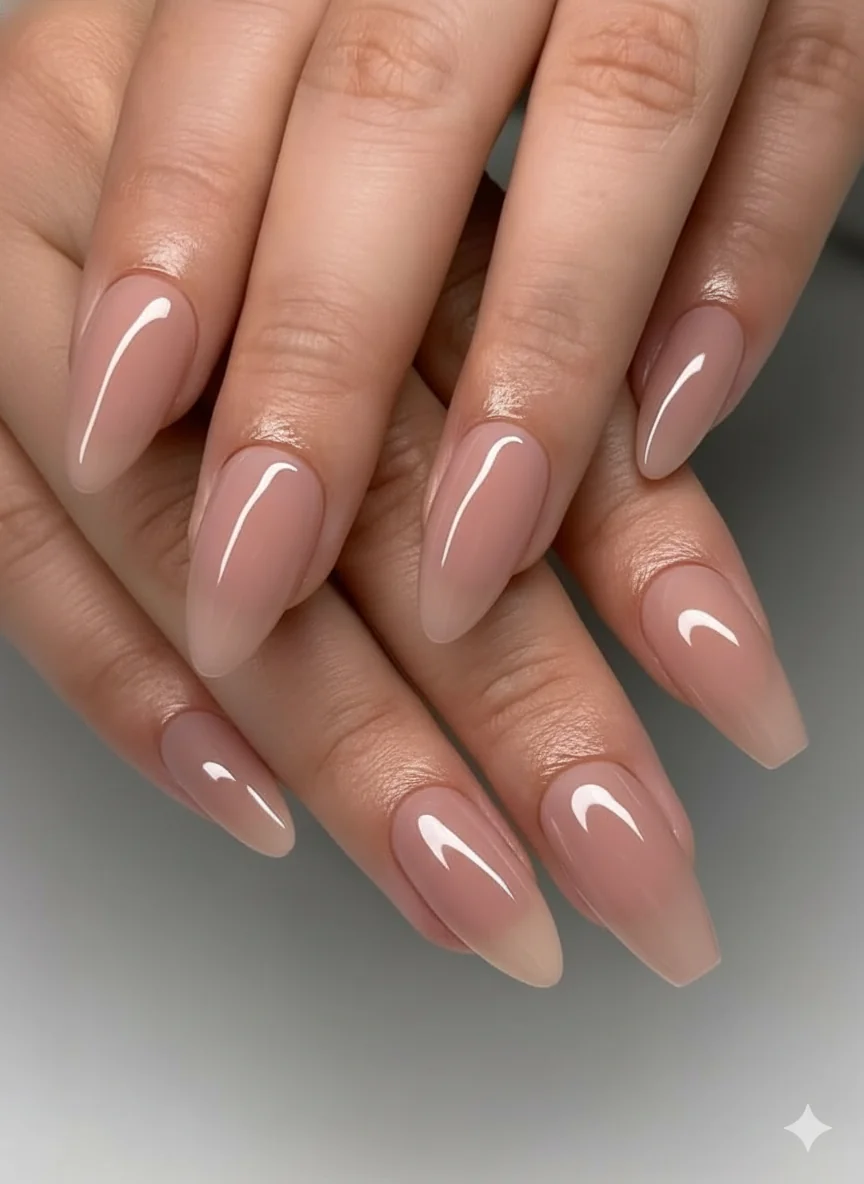
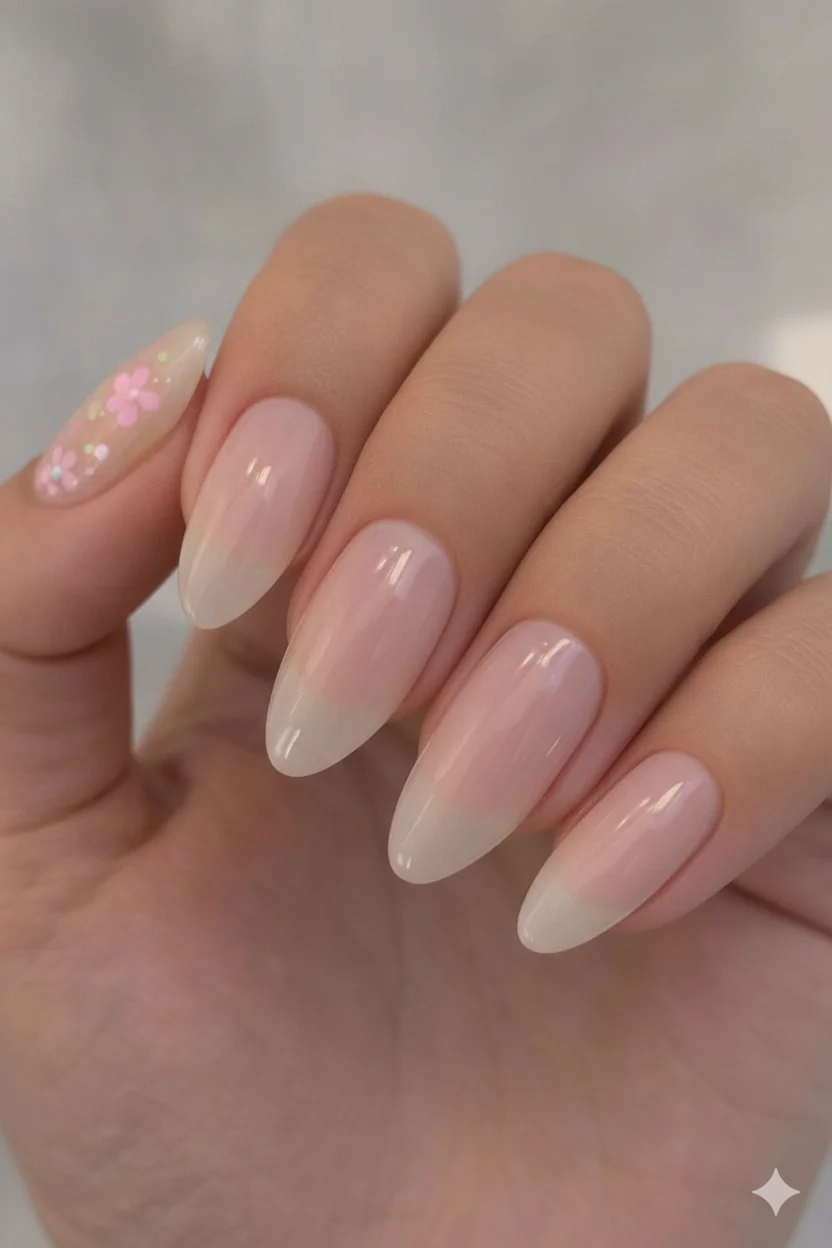
Milky white / soap nails: The 2026 quiet luxury standard. Translucent, clean, elegant — reads as intentional grooming in every industry sector.
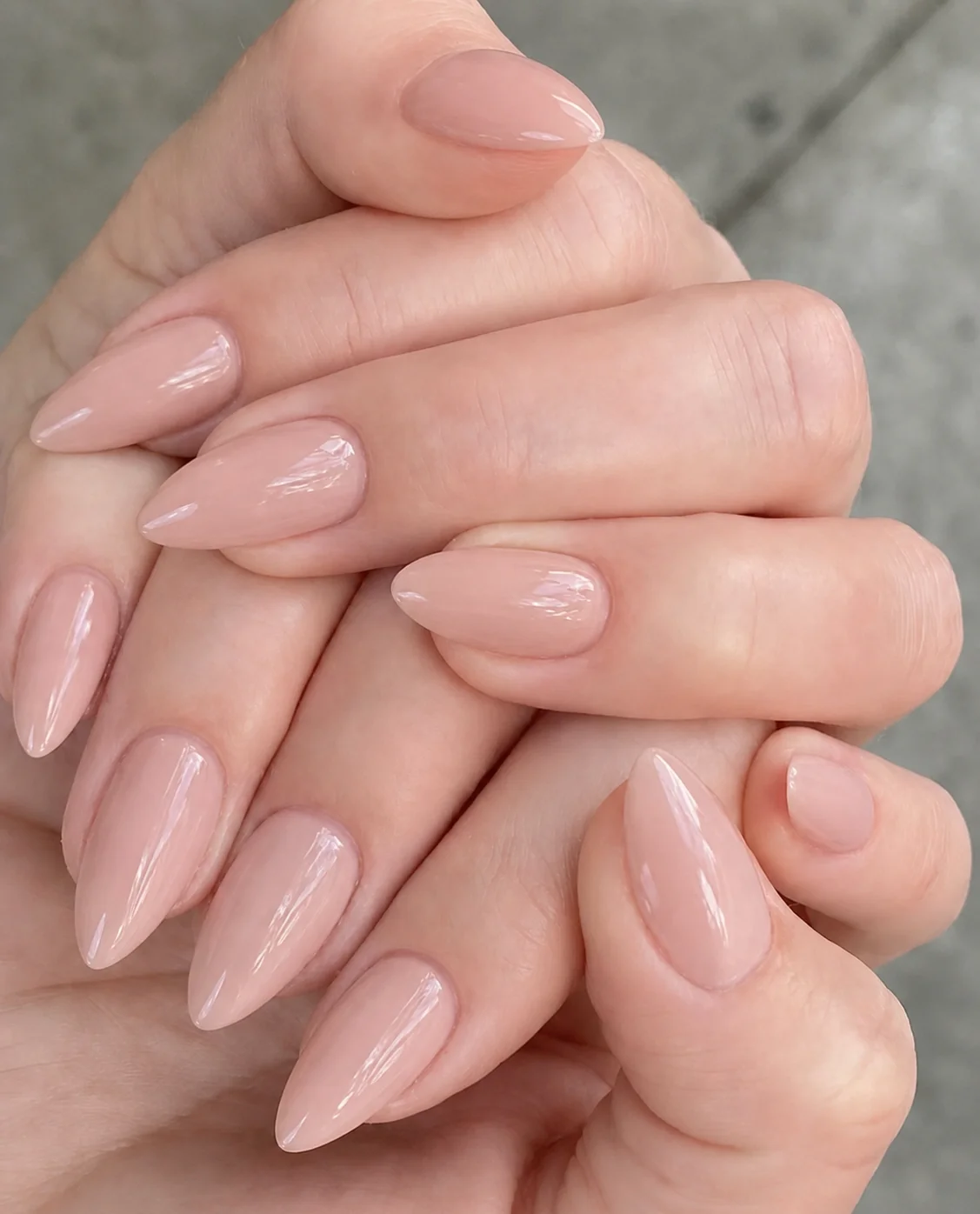
Nude almond: The original "old money" manicure. Skin-matching nude with a sheer finish is virtually invisible as a style statement, which is exactly the point in conservative offices.
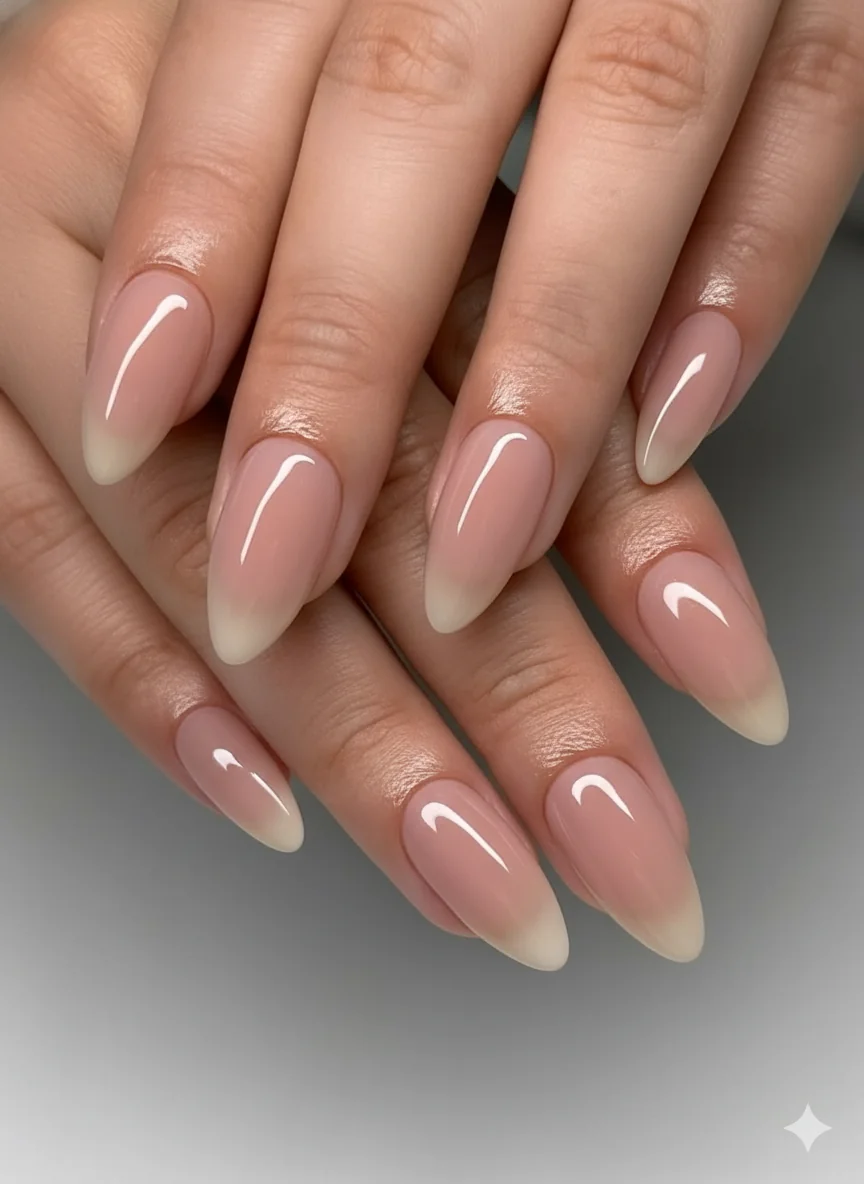
Micro French almond: Subtle white tip, thin application, elongating. More distinctive than a nude but still universally accepted.
Sheer chrome: Works in most offices when the base is neutral. A soft gold or silver chrome over a milky base reads as sophisticated rather than flashy.
What to avoid in conservative settings: 3D elements, rhinestones, graphic nail art, and bold dark shades at longer lengths. Any of these is fine in a creative environment. In finance or law, they draw attention you may not want.
Short Almond vs Oval at Work: Which One Is Actually Better?
Most readers asking about work-appropriate almond nails are secretly also weighing oval. They are similar shapes with meaningfully different professional reads.
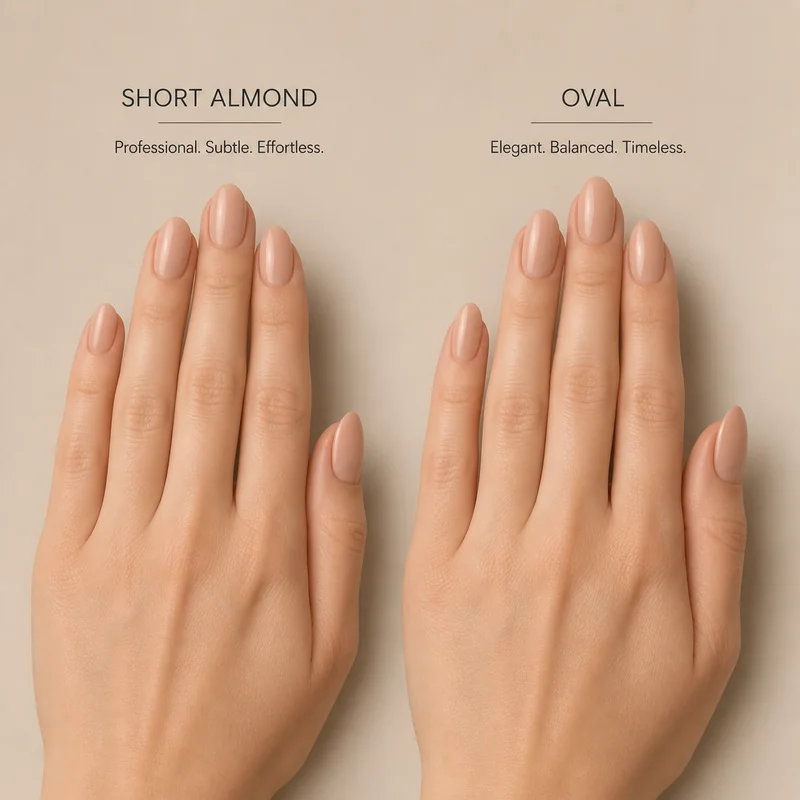
Oval is universally accepted in every professional setting without exception. It is also, frankly, less interesting. The rounded tip is safe precisely because it reads as low-maintenance — there is no shape to commit to.
Short almond carries more visual intention. The tapered tip is a deliberate choice, and in most offices, that reads as polished rather than problematic. Choosing the right length for your hand type also affects wearability — Do Almond Nails Actually Suit You covers the proportional considerations that shape this decision.
The practical verdict: if you are in a standard office environment, short almond is the better choice — more elegant, more distinctive, equally professional. If you are in an ultra-conservative sector with documented dress codes or client-facing roles in very traditional firms, oval is the safer call until you have read the room.