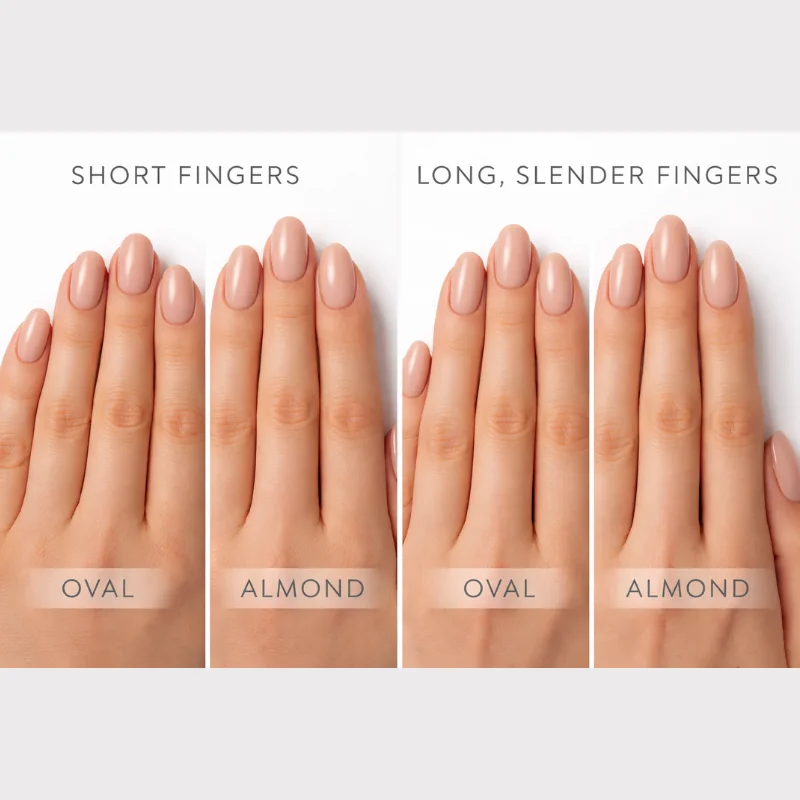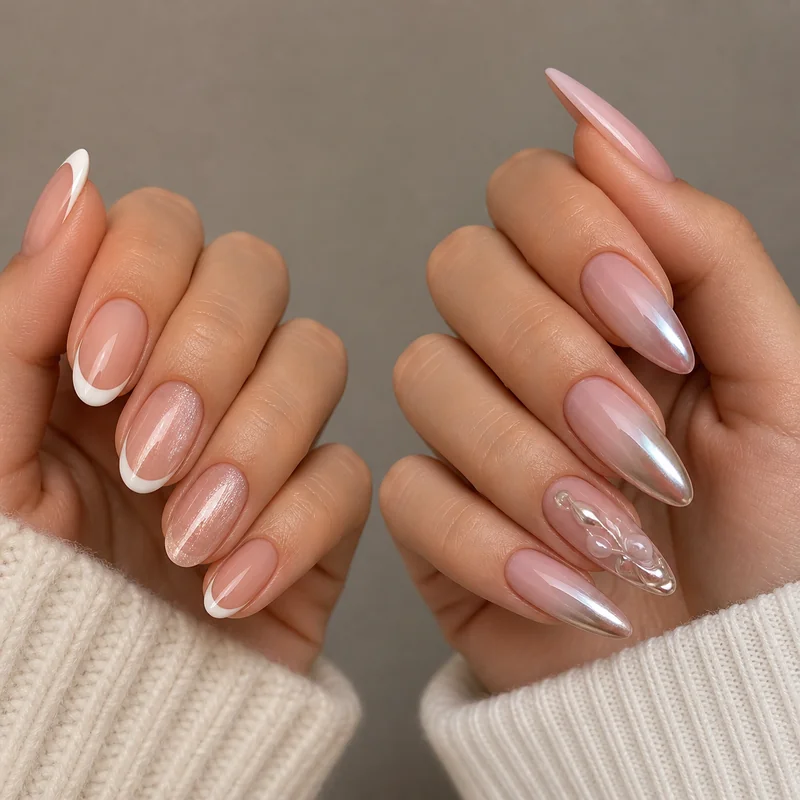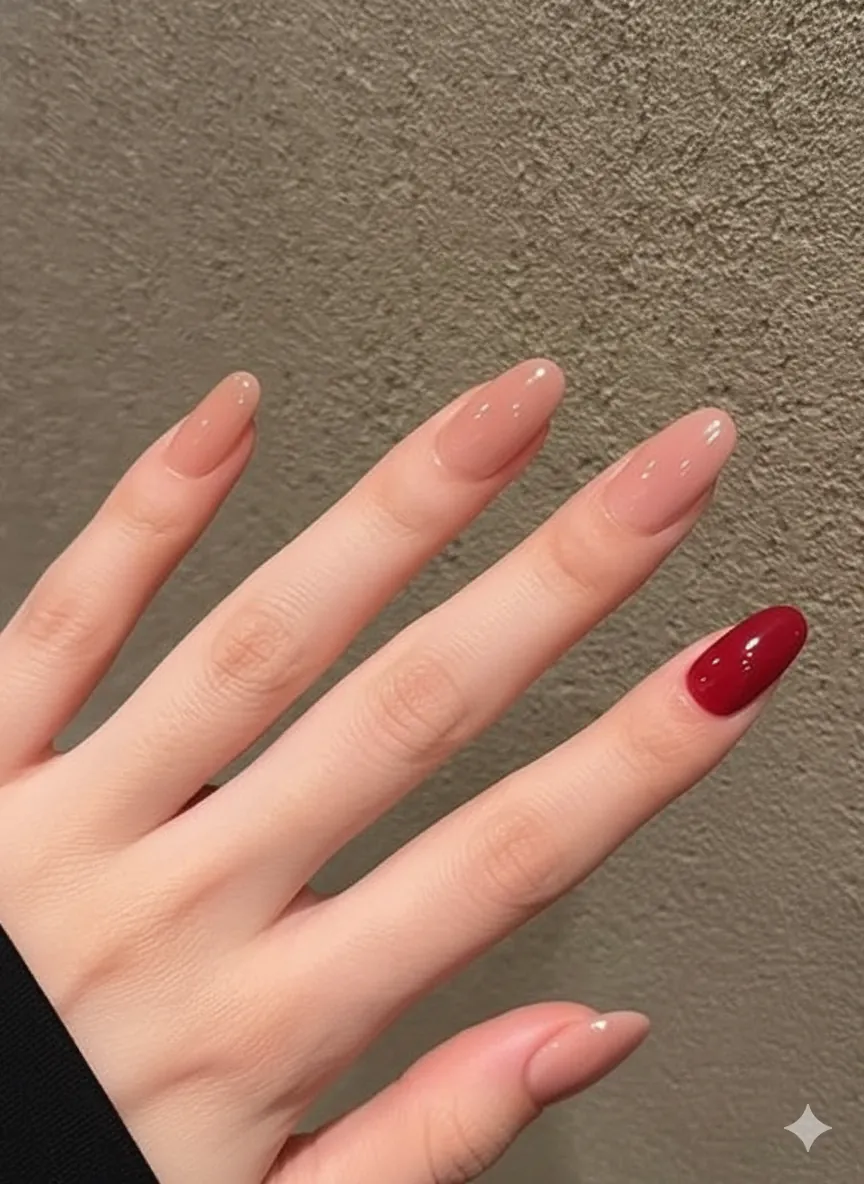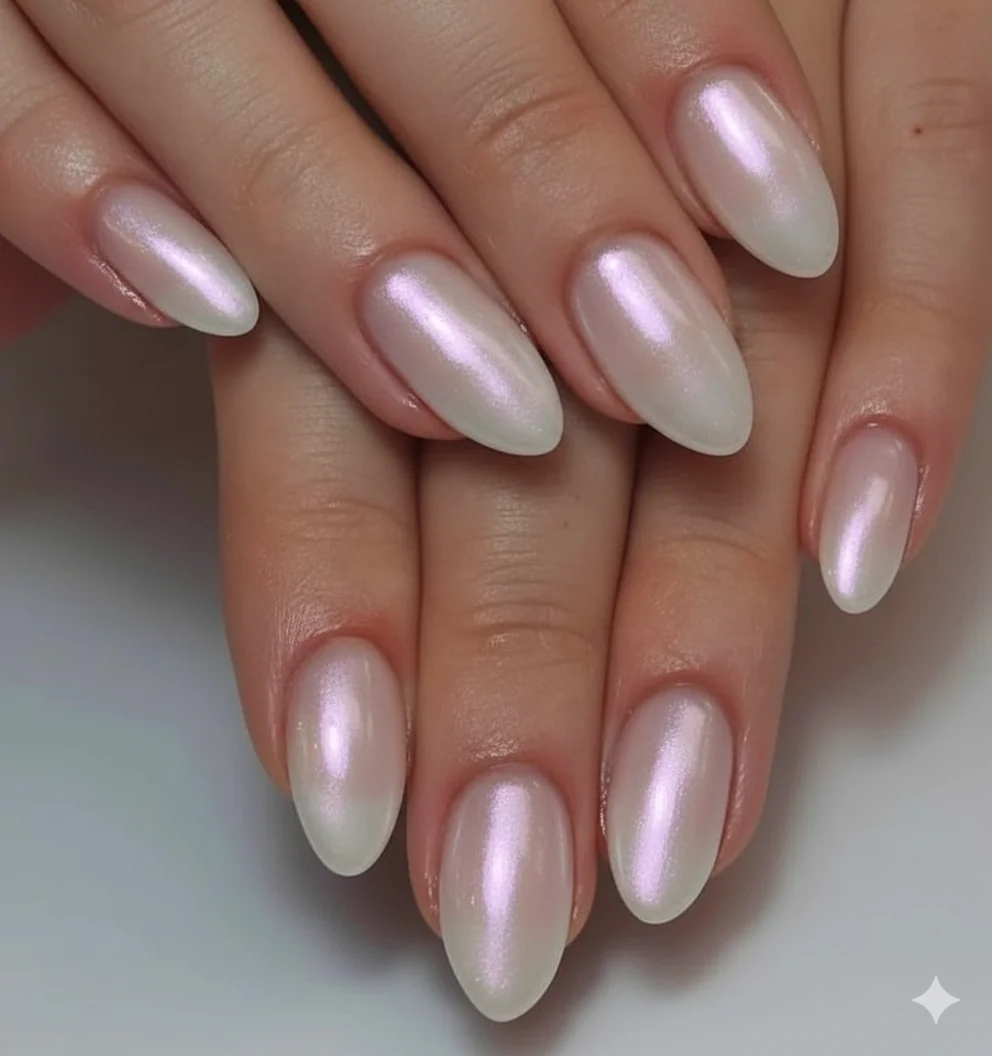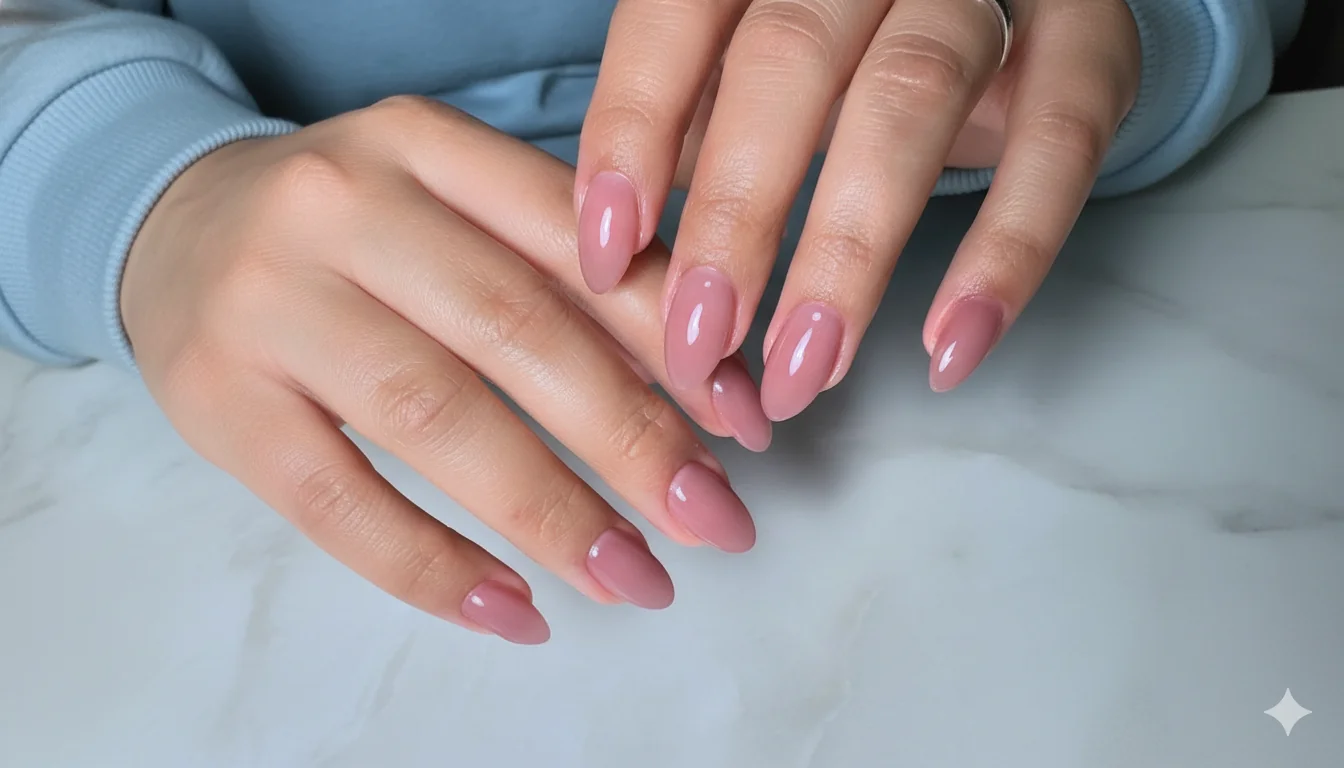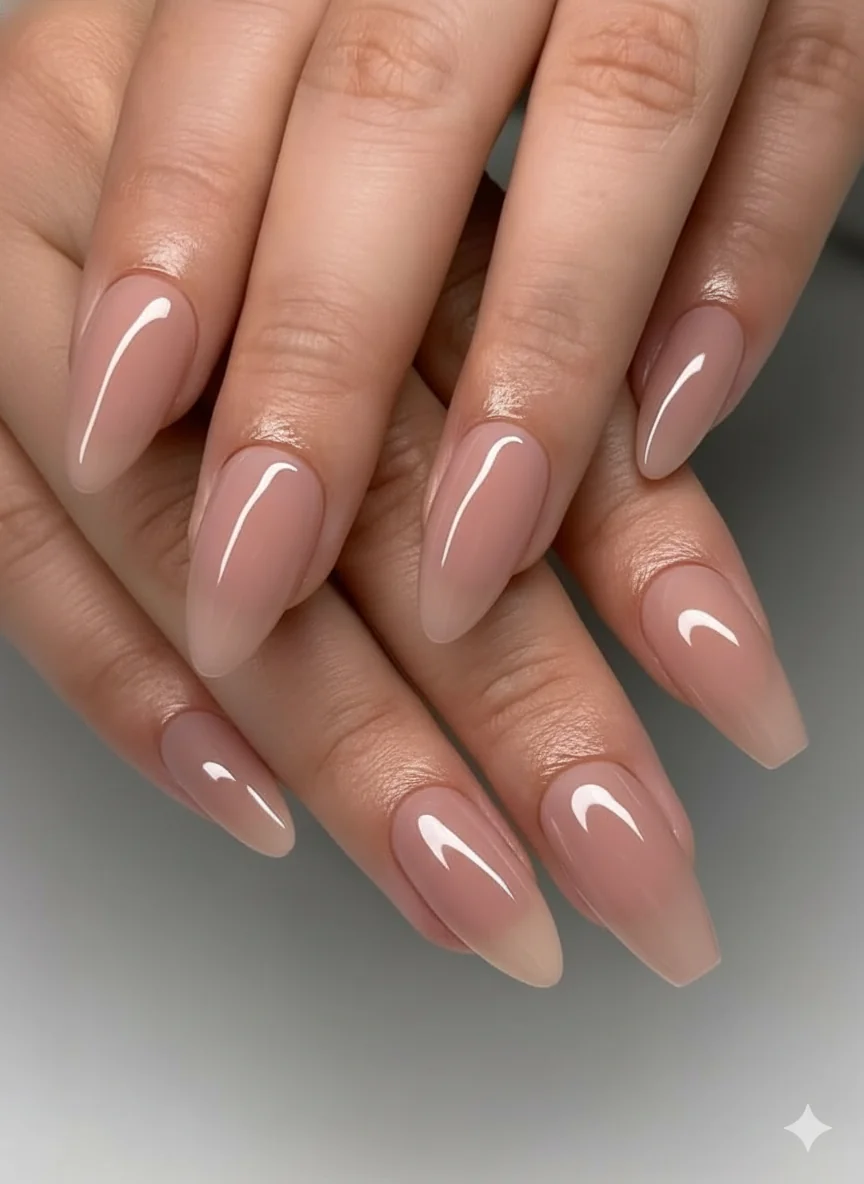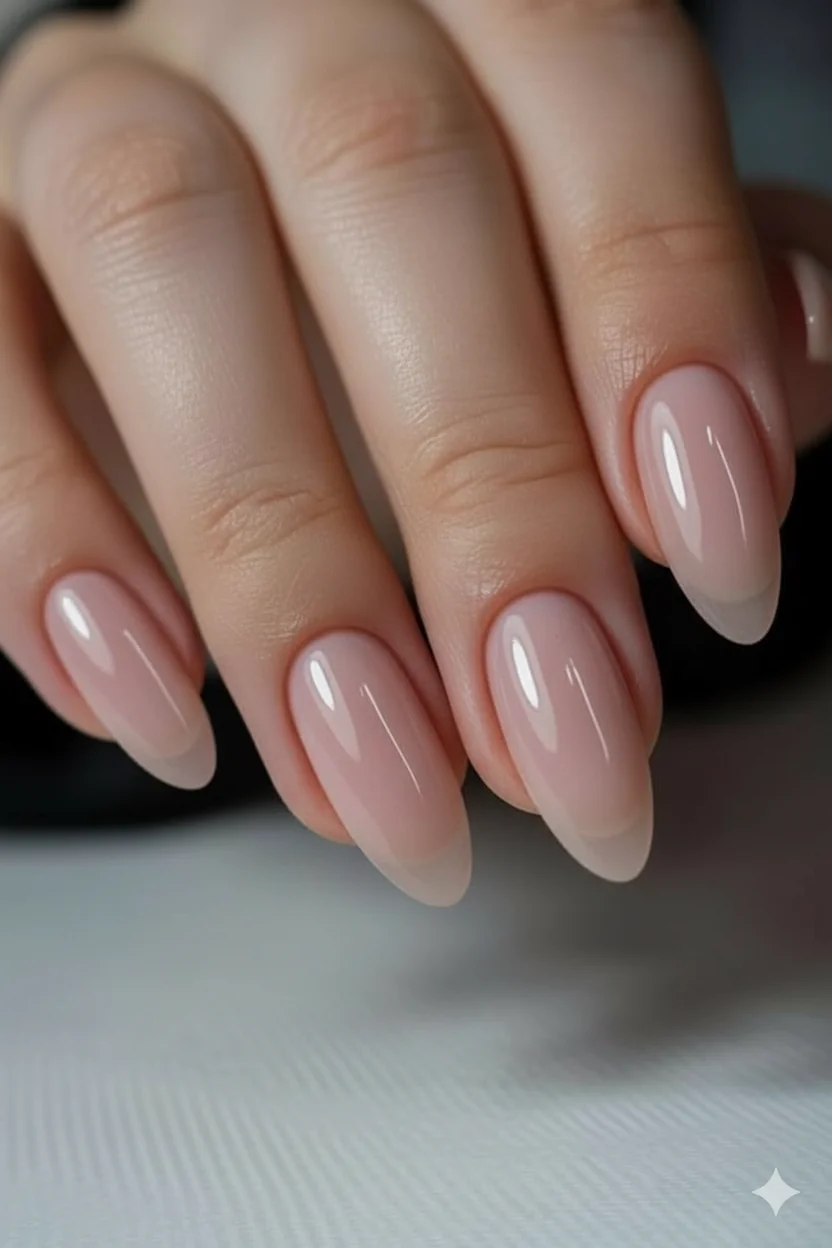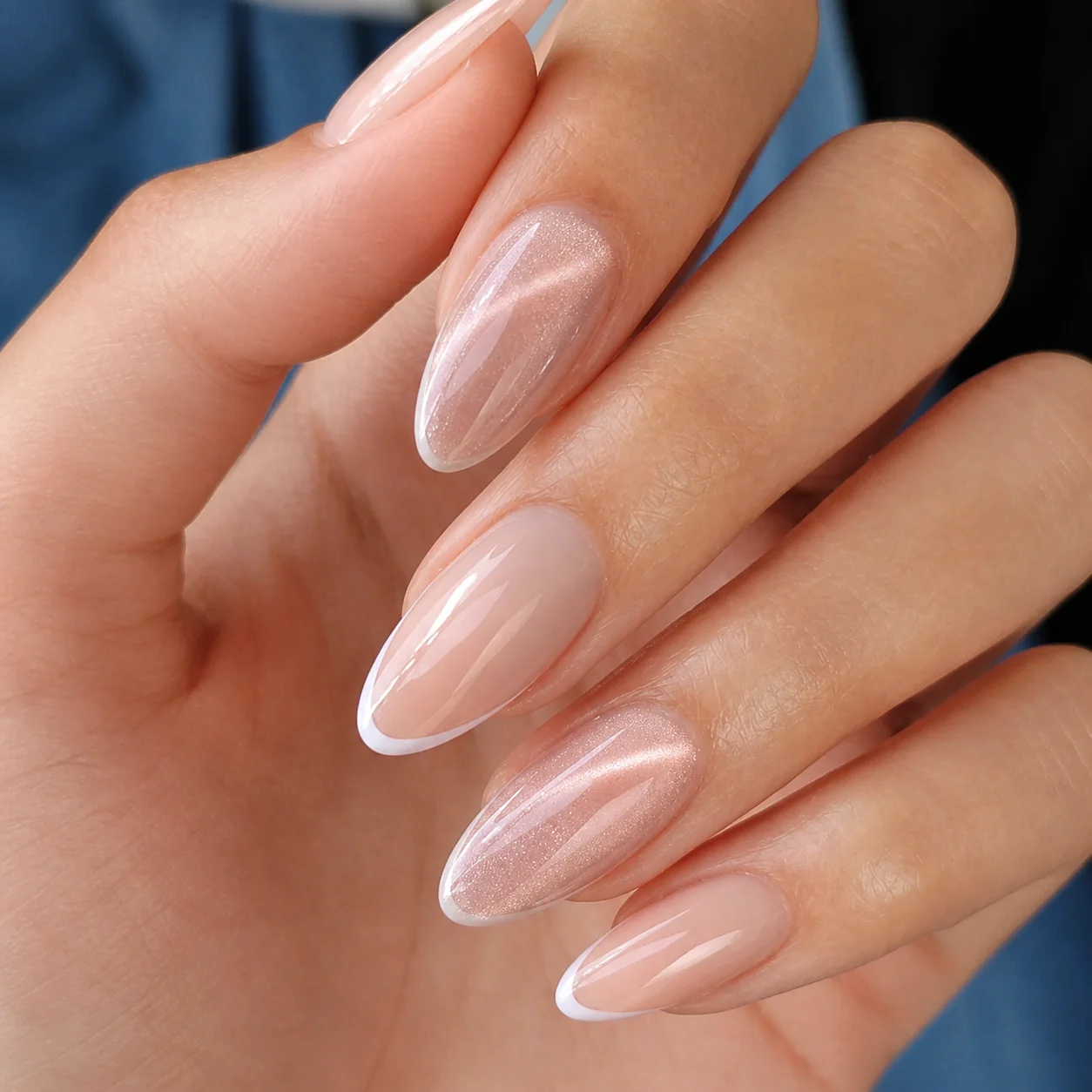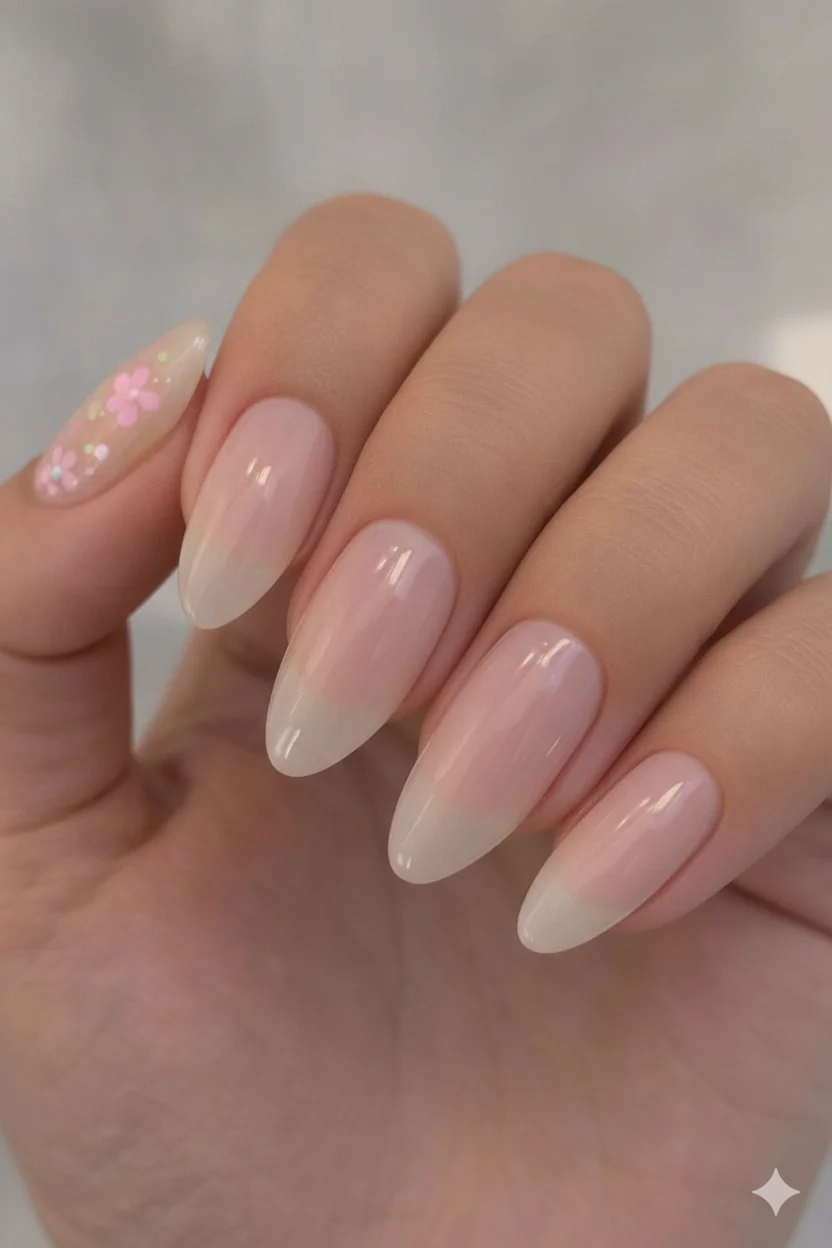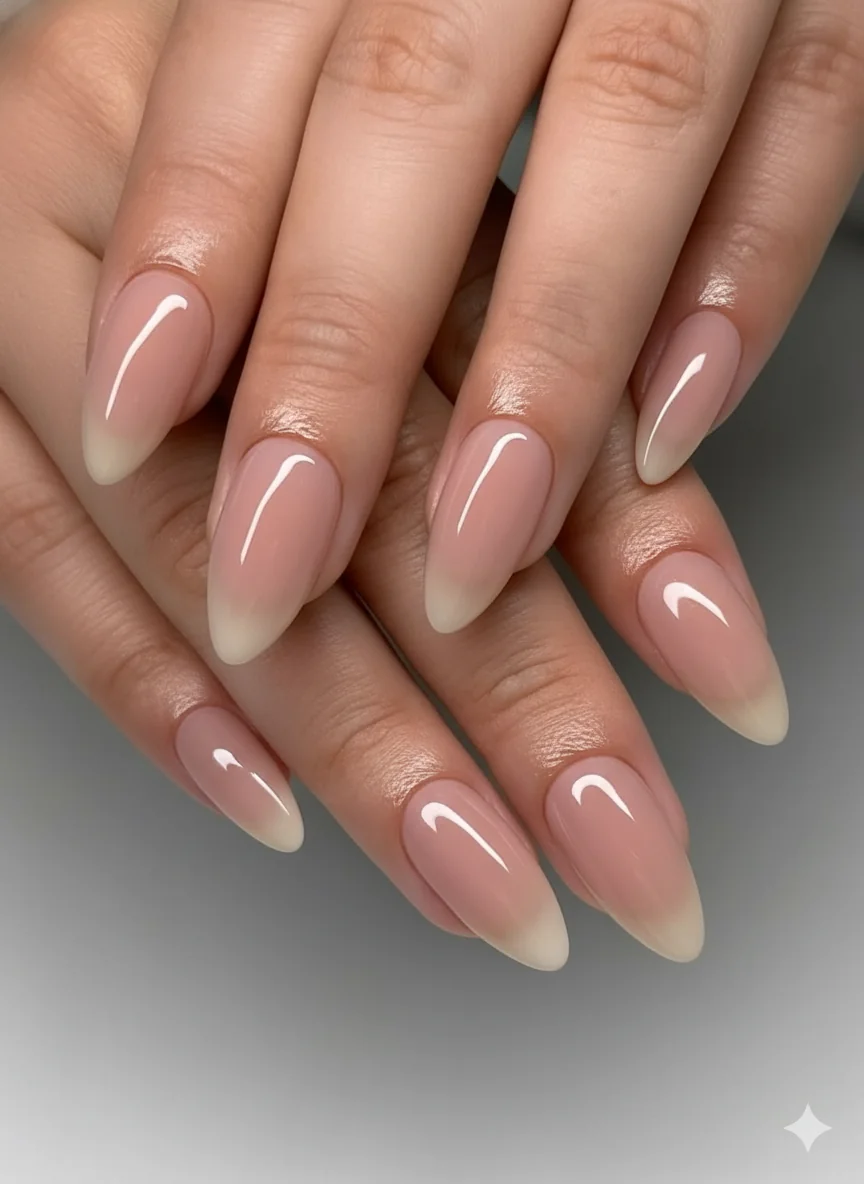
The problem is not that they look similar. The problem is that from a photograph — at the salon, on TikTok, in your inspiration folder — oval vs almond nails look almost identical. Same rounded silhouette. Same elongating effect. And yet they are not the same shape, they do not suit the same hands, and they do not behave the same way under daily wear.
This post dissolves that confusion — not with a feature table that ends in "it depends on your preference," but with a framework that maps your hand type, lifestyle, and nail art taste to a confident, personalised choice. Everything about the almond shape in full lives in our complete guide. This is specifically for the oval-or-almond decision.
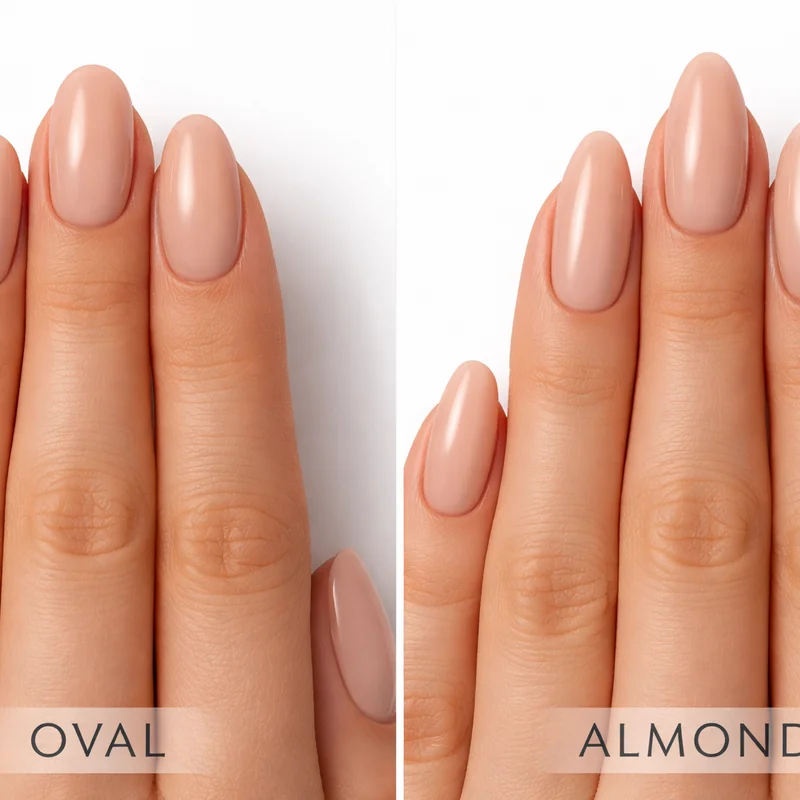
Two shapes. One subtle difference that changes everything about how your hands look.
What Is the Actual Difference Between Oval and Almond Nails?
Both shapes are rounded. Neither has a flat edge. Both taper inward from the sides. The difference lives in how much they taper — and what happens at the tip.
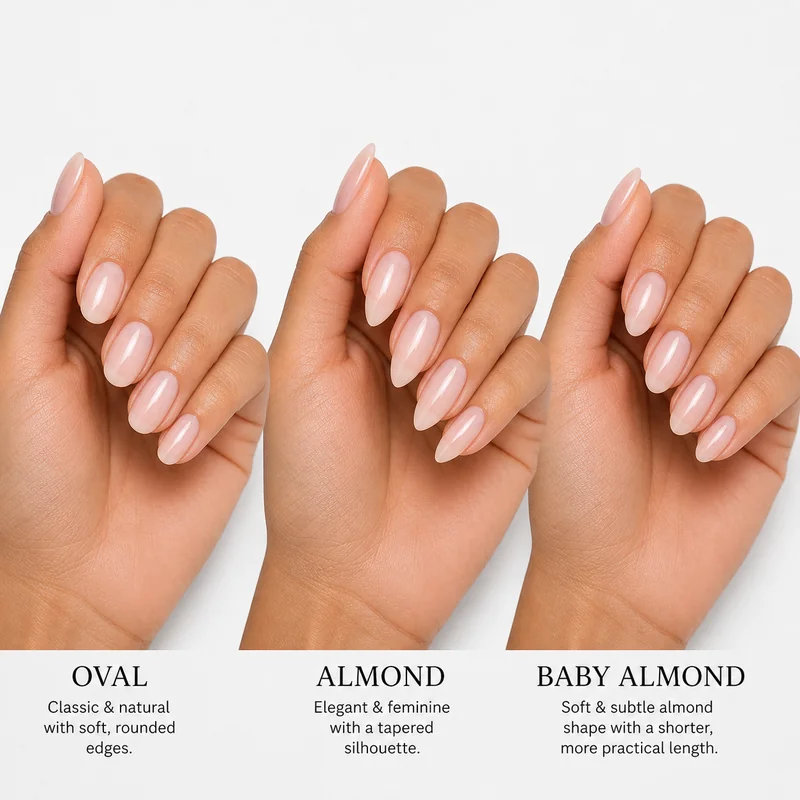
Oval nails curve evenly into a smooth, egg-shaped free edge. The taper is gentle, and the tip mirrors the natural cuticle line. Almond nails taper more dramatically. The sidewalls pull inward with intention, narrowing to a soft peak rather than a full semicircle. Think of the spectrum: round → oval → almond → stiletto. Almond sits between oval and stiletto — rounded, but with directional momentum toward a point.
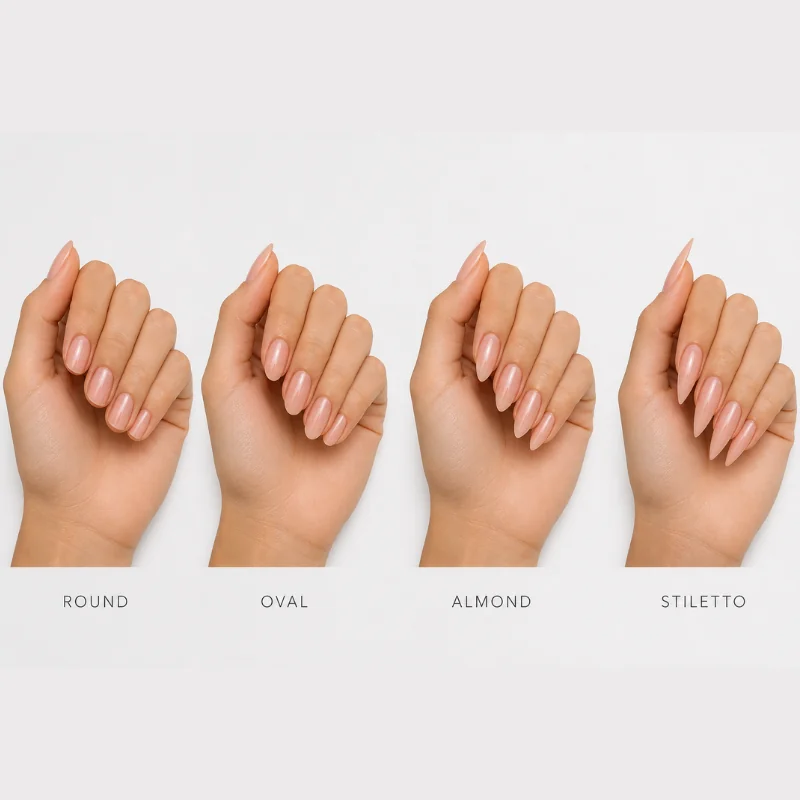
The shape spectrum makes the separation visible — it is always about degree of taper, not the presence of it.
At very short lengths, the two shapes converge — which explains the widespread "I can't tell them apart" complaint. At medium to long lengths, the distinction is unmistakable.
Oval Nails vs Almond Nails Side by Side — The Key Comparison
Five differences that actually matter: shape definition, length requirement, durability, maintenance, and nail art suitability.
Oval is the more forgiving shape across nearly every metric. It requires less free edge to show its silhouette, distributes stress evenly across the tip, takes less precision to file, and reads polished at any length. The trade-off: less visual drama. Oval is classic in the truest sense — it works for almost everyone without asking much in return.
Almond requires more. It needs length for the taper to be visible. It concentrates stress at the narrower tip. It demands symmetrical filing to look deliberate rather than accidentally pointy. The payoff is a shape that reads unmistakably feminine and directional — the kind of silhouette that looks purposeful in photographs.
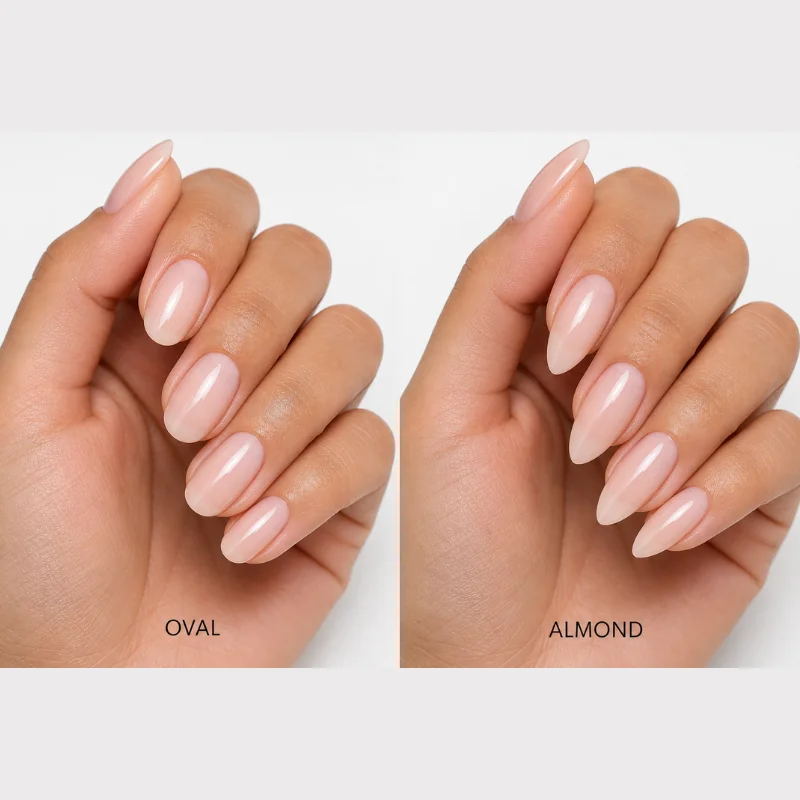
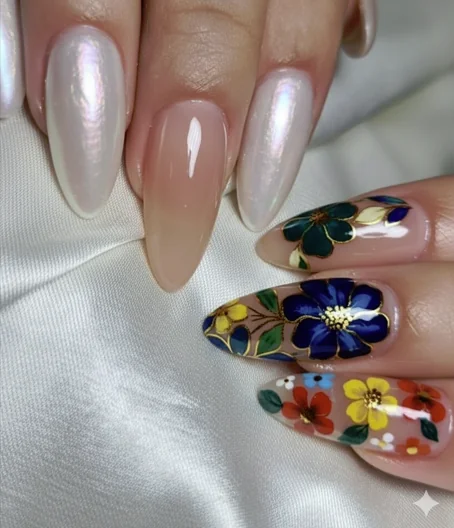
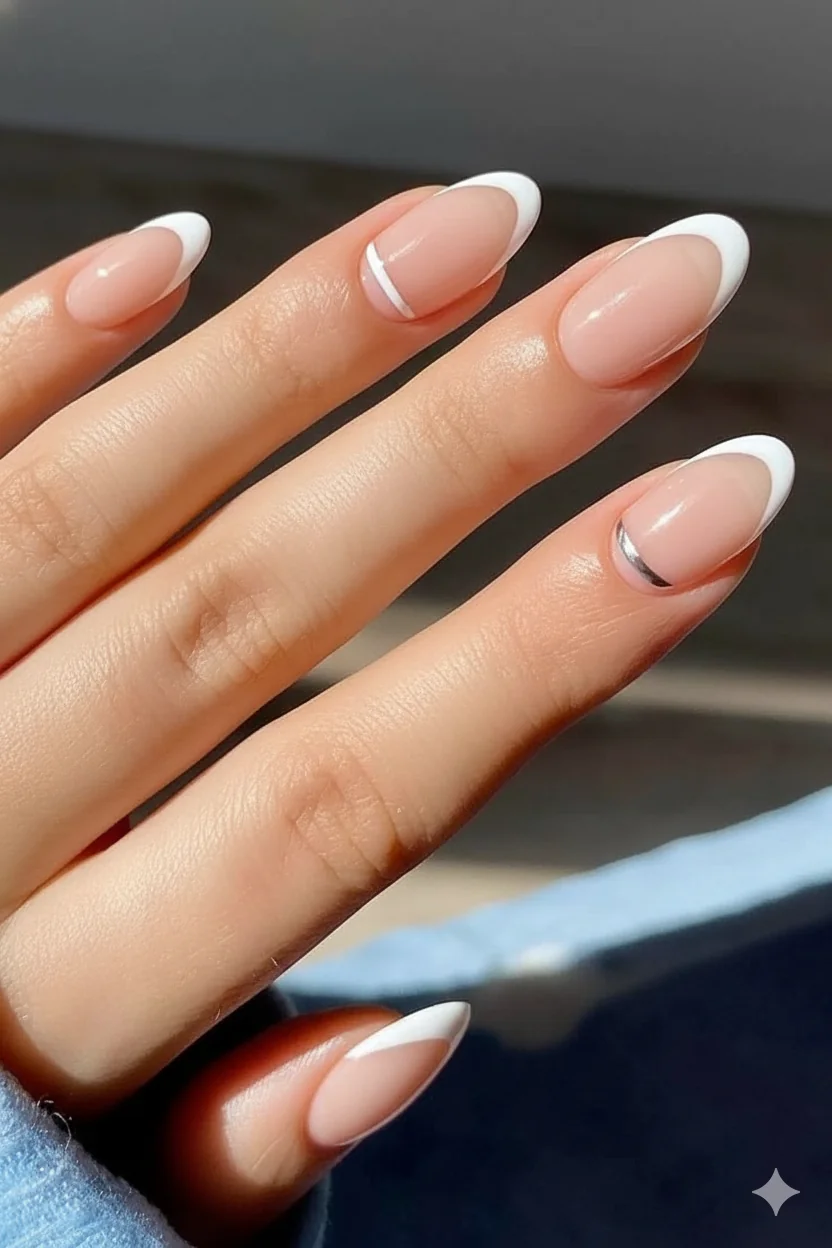
The same hand reads differently in each shape — the differences are subtle but cumulative.

Which Nail Shape Makes Your Fingers Look Longer?
Oval elongates by creating a visual line that flows smoothly from the cuticle through the sidewalls into a softly rounded tip. The effect reads natural — fingers look elegant before you consciously register why. Almond elongates more aggressively: the tapered sidewalls draw the eye inward and upward toward the narrower tip, slimming the nail bed width and lengthening the finger simultaneously. The effect is more pronounced, more visible as a deliberate aesthetic choice.
Celebrity manicurists consistently recommend choosing between the two based on how much elongation you want, not just how much your fingers need.
The elongating effect is real in both cases — one reads subtle and natural, the other reads intentional.
Is Oval or Almond Better for Your Finger and Hand Shape?
Shape recommendations divorced from hand type are just aesthetics. Here is the honest map.
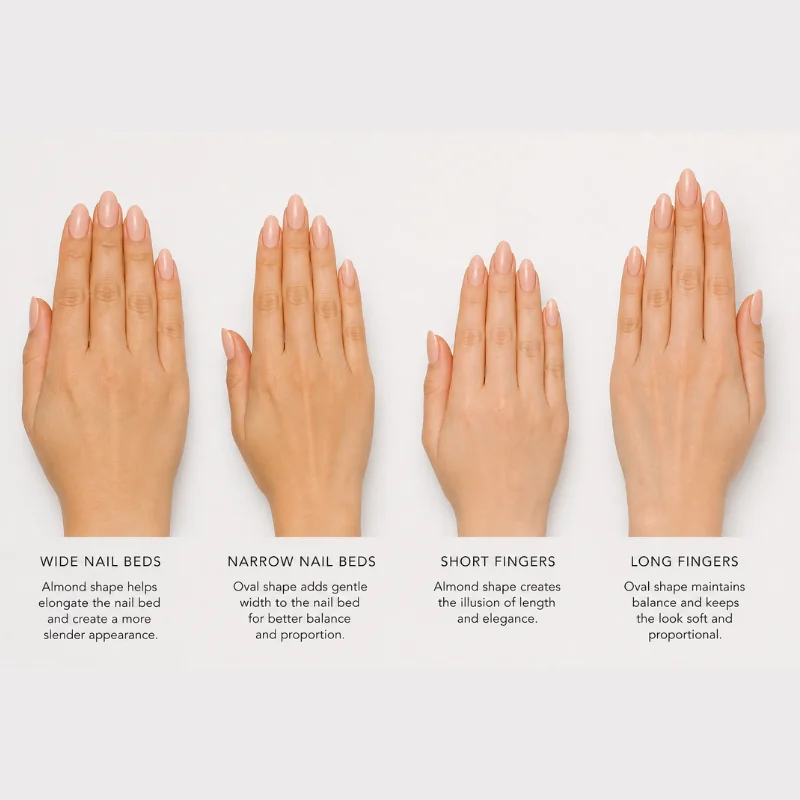
Short fingers: Oval is the safer choice — gentle elongation without the taper looking compressed. Baby almond can work, but needs careful length management to avoid a stubby appearance.
Wide nail beds: Both suit wide beds differently. Oval mirrors the natural breadth of the nail, reading soft and polished. Almond's tapered sides create a narrowing illusion that counterbalances width — but needs enough length to read as intentional. Nail shape guidance by nail bed type consistently names length as the deciding variable on wide nail beds.
Narrow nail beds: Almond is particularly striking here. The taper works with natural narrowness rather than against it.
Long fingers: Both work well. Almond reads high-fashion; oval reads quietly elegant. The choice is about presence.
Your hand type is the most reliable decision variable — more so than trend cycles or abstract preference.
Do Almond Nails Break More Easily Than Oval Nails?
Yes — genuinely, honestly — with context.
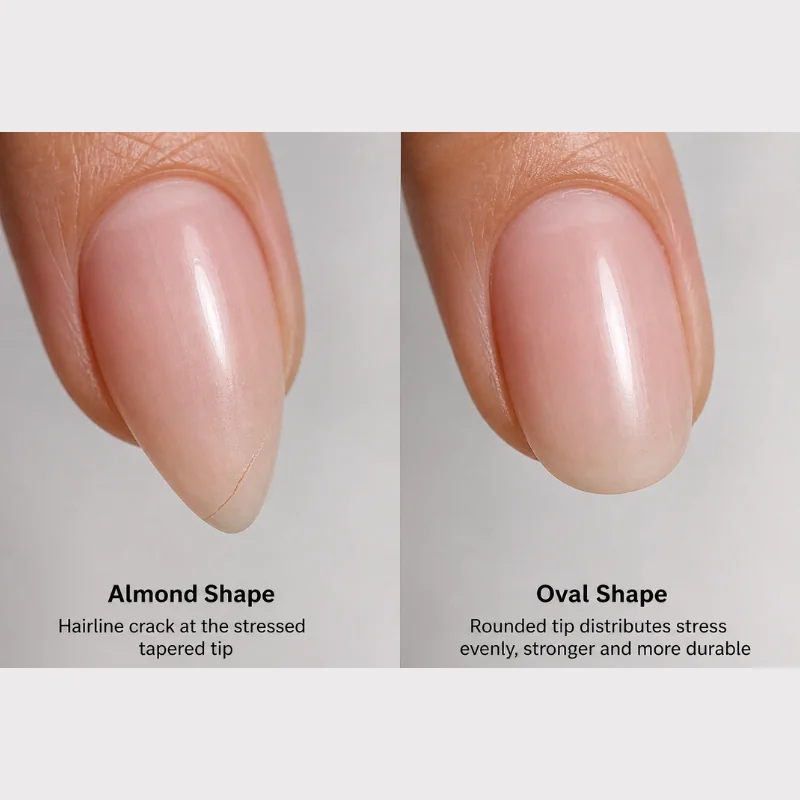
The almond tip concentrates mechanical stress at a narrow point. When you catch a nail on something, the force travels directly to the weakest part of the free edge. Nail technicians identify almond as among the shapes most prone to breakage on natural nails precisely because of this geometry. Oval distributes the same force across a broader curve — a chip is more likely to be minor than catastrophic.
The calculus changes with gel overlay. A gel coat adds reinforcement that closes a significant part of the durability gap. On natural nails alone: oval wins, straightforwardly. For gym-goers, parents, or anyone who works with their hands — that matters. Nail care basics from the American Academy of Dermatology reinforce that rounded tip shapes maintain nail plate integrity more consistently.
The structural difference between the two tips is real — and worth factoring in before you commit.
Can You Get Almond Nails on Short Natural Nails?
Oval works at virtually any length — the shape reads clearly even with minimal free edge. Almond on short nails is more complicated. The taper requires free edge to develop, and on very short nails the shape compresses into something closer to a slightly pointy oval than a true almond.
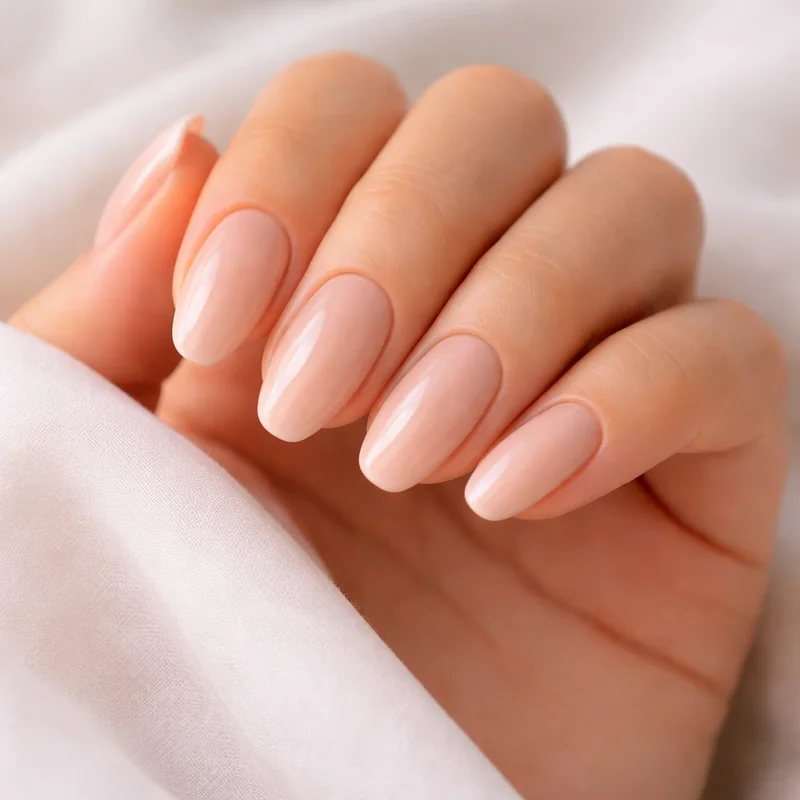
Enter "baby almond" — the most interesting nail development of 2026. It is a shorter, subtler version of the almond silhouette: enough taper to read as distinctly almond, not so much that it demands significant length. Baby almond sits visually between oval and classic almond, and the nail art community has adopted it quickly because it delivers almond's elegance without oval's softness or almond's length requirements. It is not a compromise. It is a third option.
Baby almond is not a compromise — it is a third option that the shape market genuinely needed.