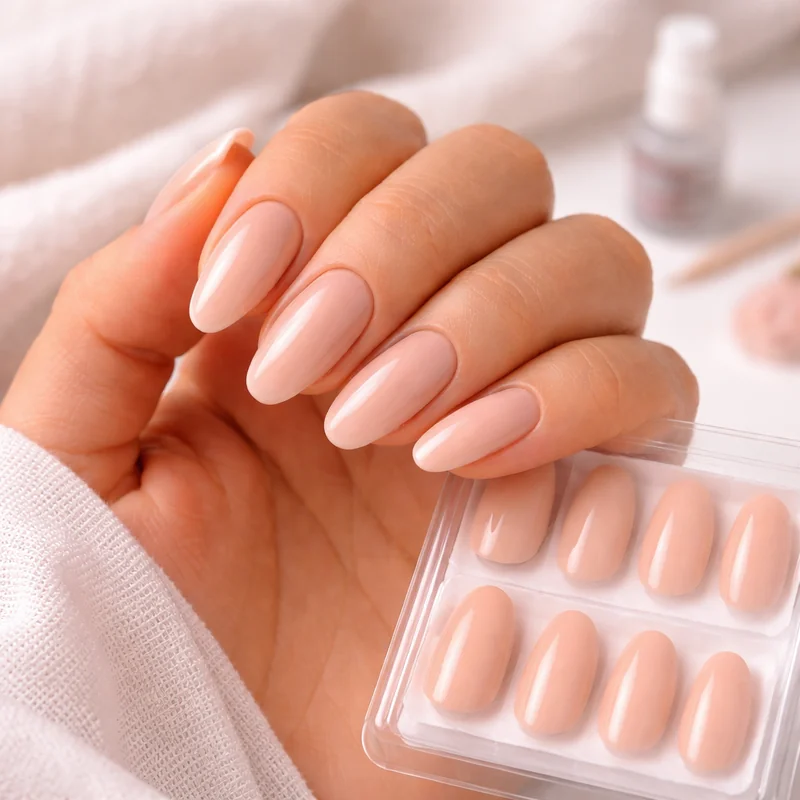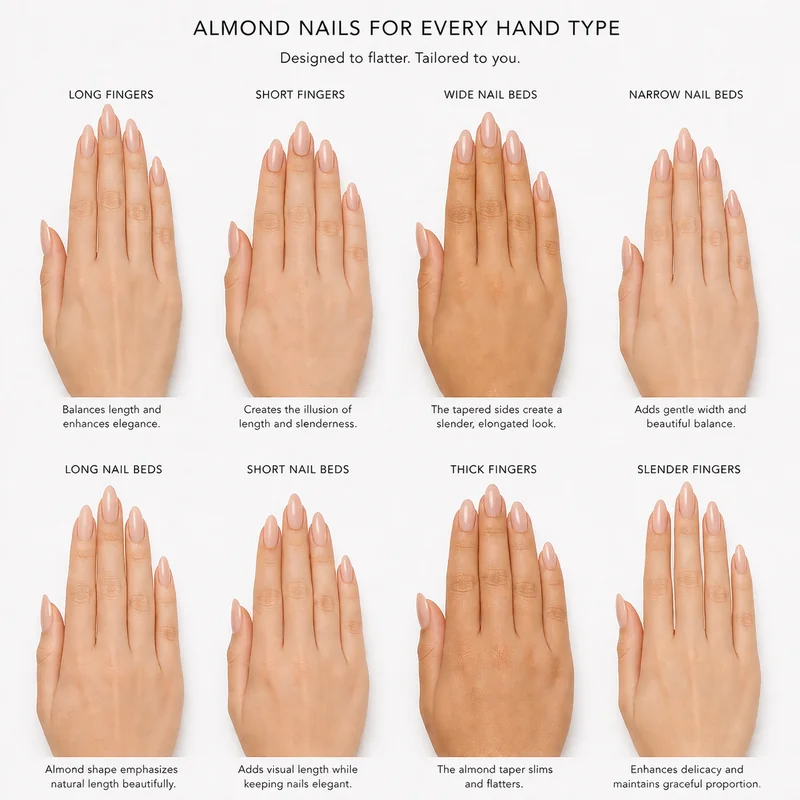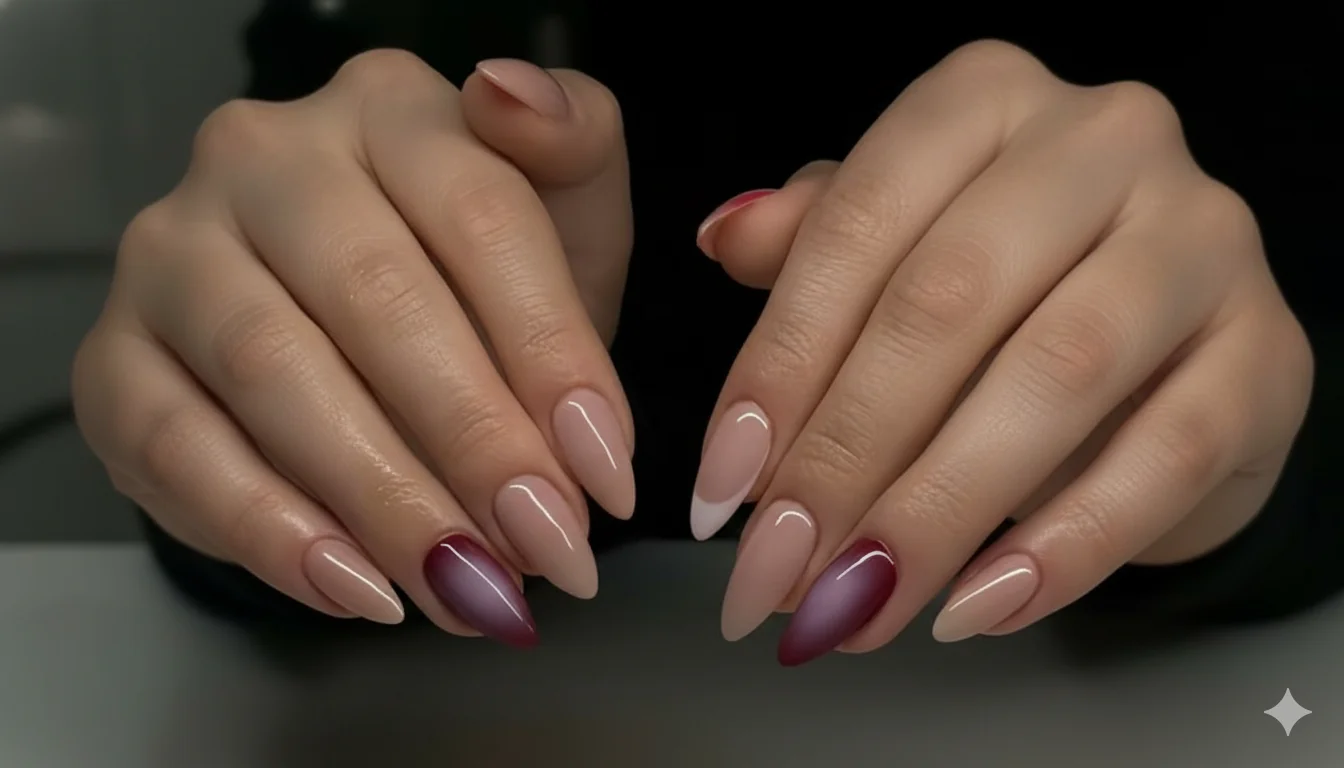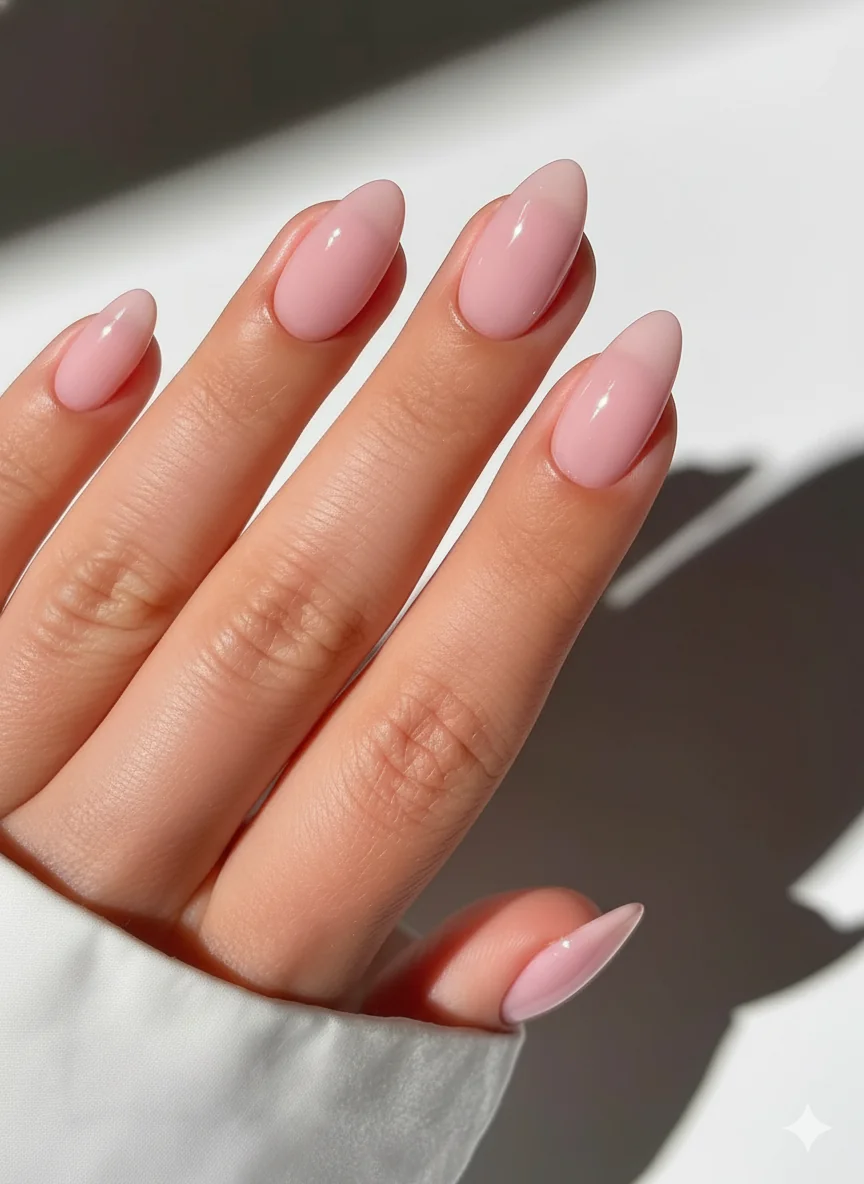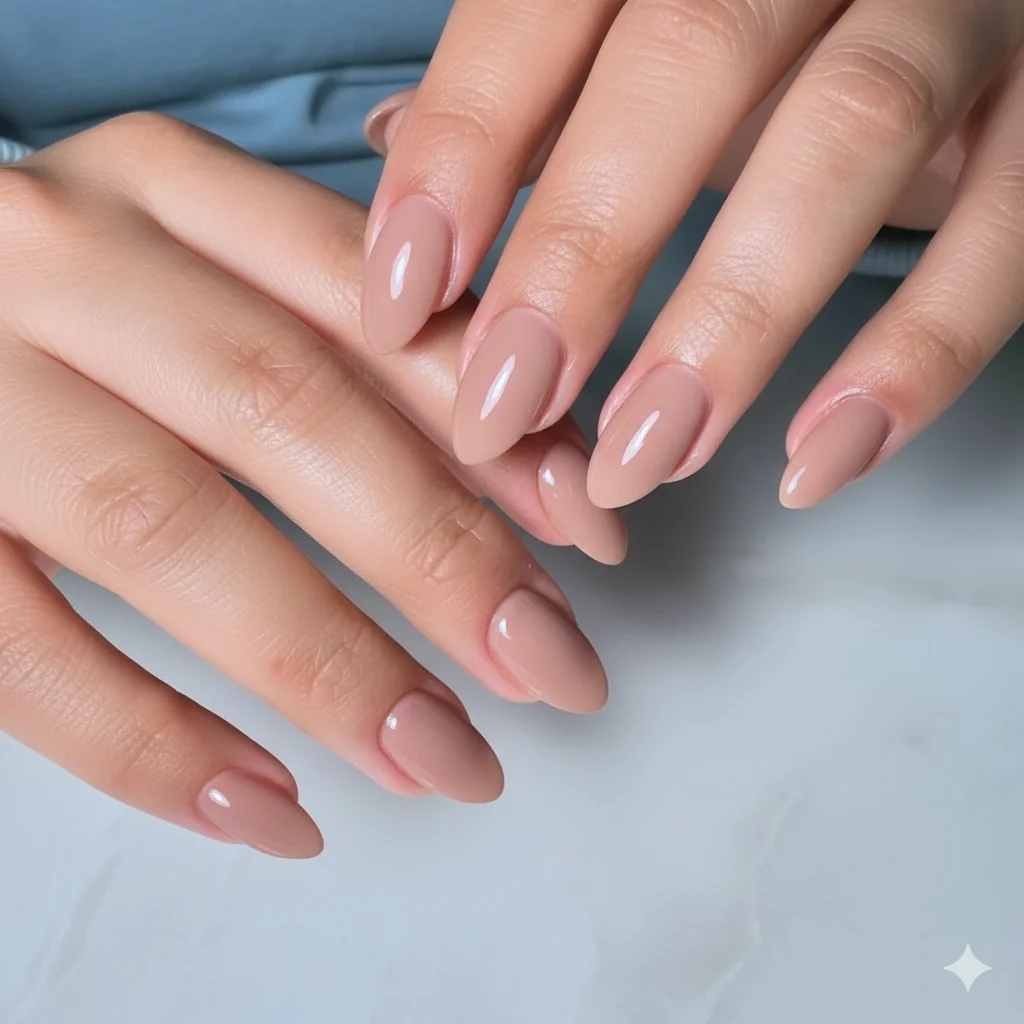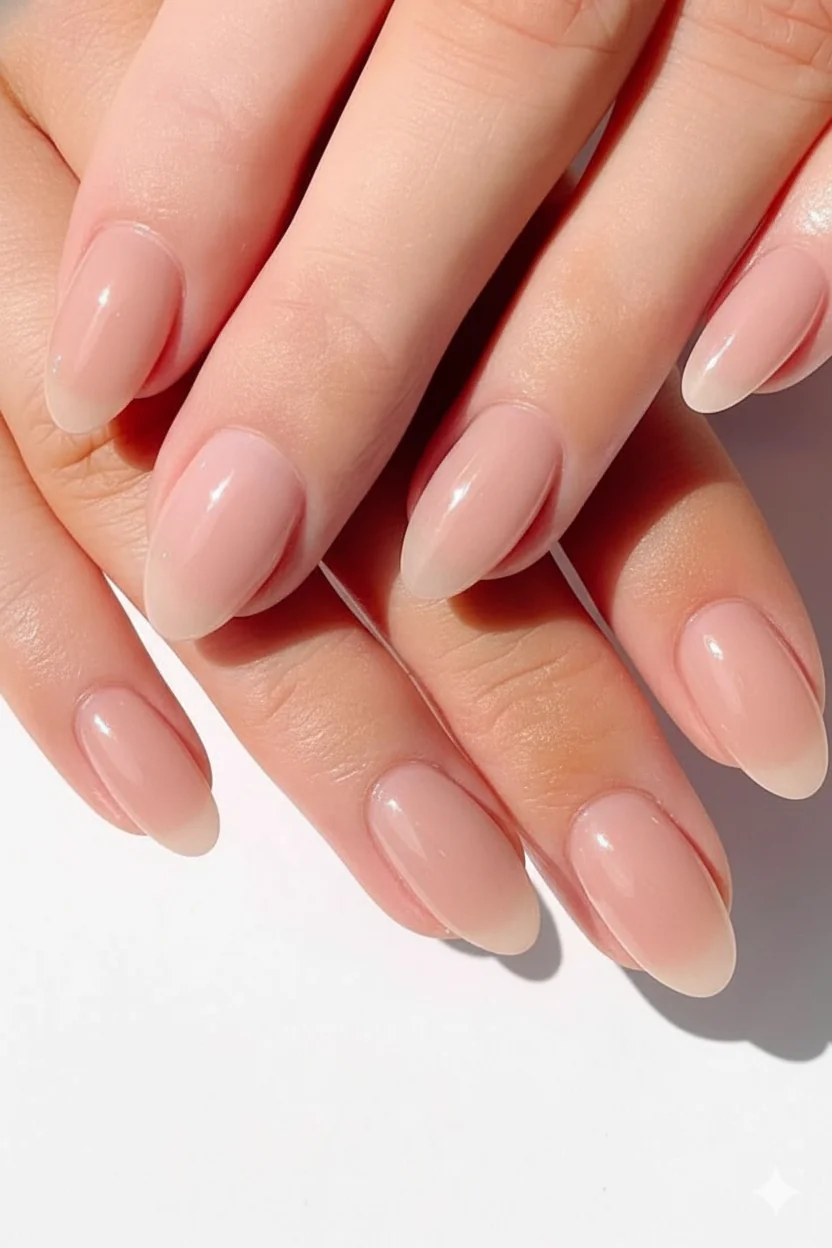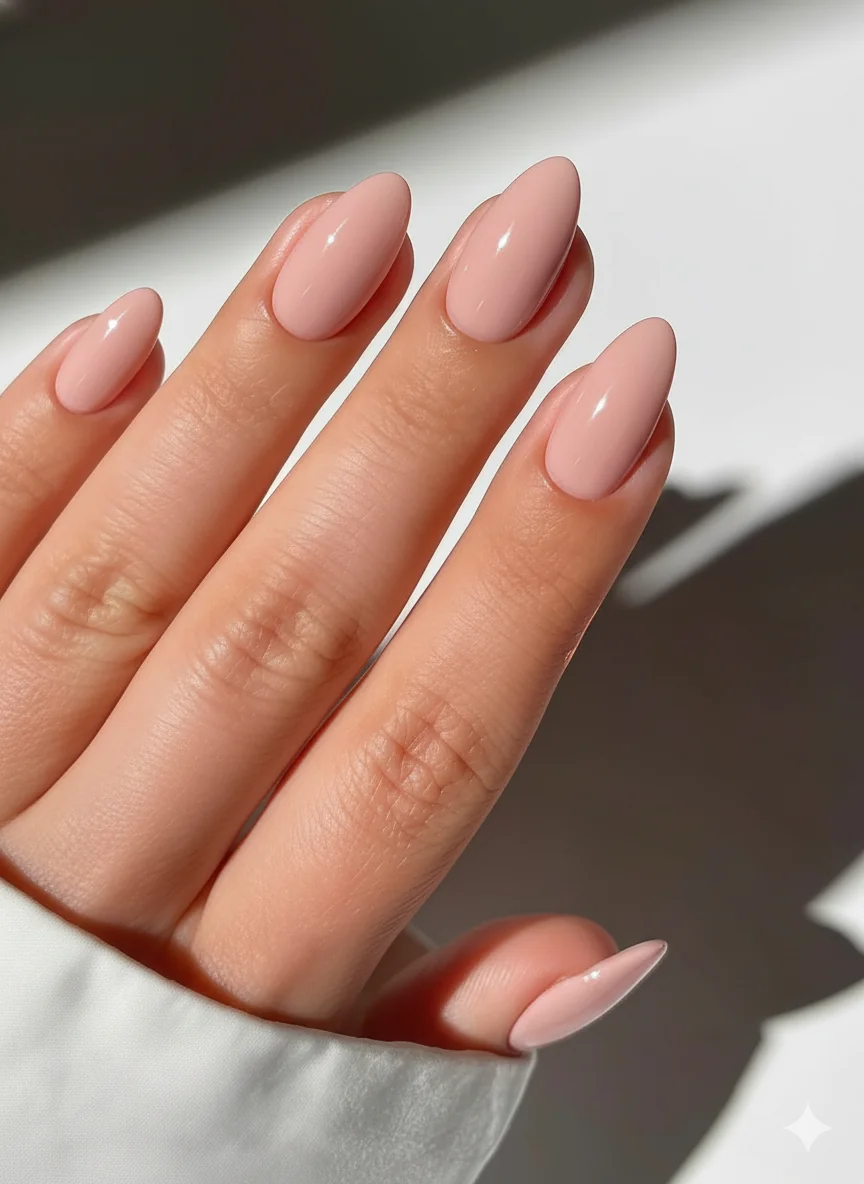
Do almond nails suit me — it is one of the most Googled nail questions, and most guides answer it the same vague way: "almond suits almost everyone." That is not an answer. It is reassurance theatre, and it does not help you decide anything.
The shape does suit a wide range of hands. But whether it suits yours depends on specific variables — your finger length, your nail bed width, your palm proportions, and how much free edge you are working with. Get those right, and almond is one of the most flattering shapes available. Get them wrong, and you end up with a set that feels off without knowing why.
This guide answers the question properly, by hand type. No blanket promises. If almond is going to work for you, you will know exactly why by the end of it. If another shape would serve you better, that will be clear too. If you are completely new to the shape and want the full picture before reading on, start with our almond nails beginners guide.
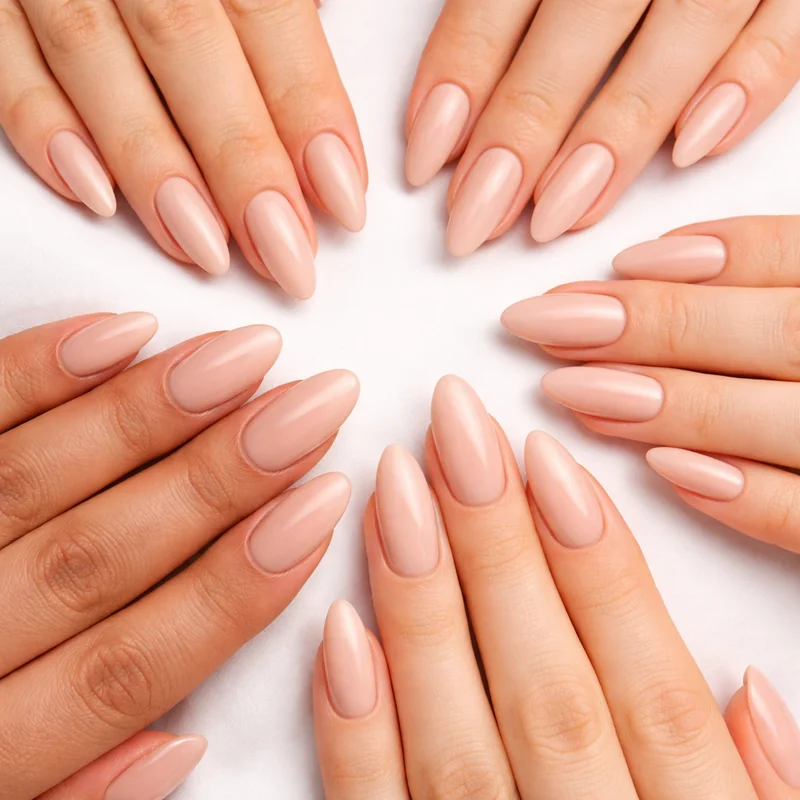
Why Everyone Wonders "Will Almond Nails Suit Me?" — And Why Most Guides Don't Actually Answer It
The anxiety around almond nails is specific. This is not someone wondering whether they like the shape — they clearly do, or they would not be searching. The question is whether they can pull it off. Whether it will make their fingers look stubby, or their nail beds look wider, or just generally wrong in a way they cannot quite articulate.
Most content answers this with some version of "almond is universally flattering." Celebrity nail artists get quoted saying the shape elongates, softens, and flatters every hand type. And while there is truth in that — the tapered tip does create a lengthening illusion — it glosses over the conditions under which that illusion actually works.
Almond is not universally flattering without qualification. It is conditionally flattering, and the conditions matter. Nail bed width, free edge length, and the ratio between the two are what actually determine whether almond works for a specific hand. That is what this guide addresses — not the general case, but yours.
What Makes Almond Nails Different From Oval — And Why That Difference Matters for Your Hands
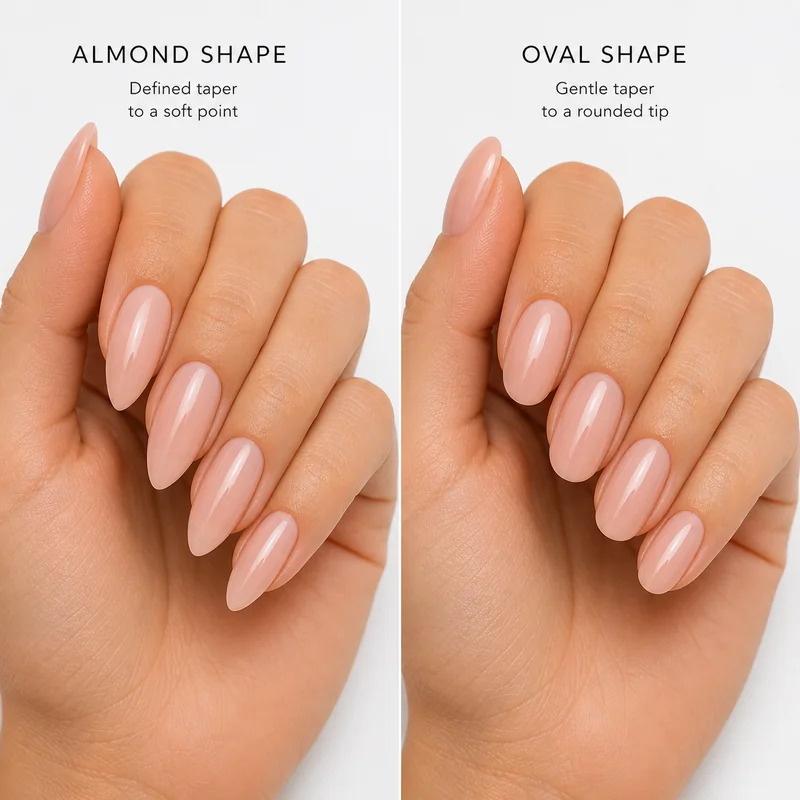
Oval and almond are often treated as interchangeable. They are not. The distinction is precisely what determines whether the shape flatters your particular hands.
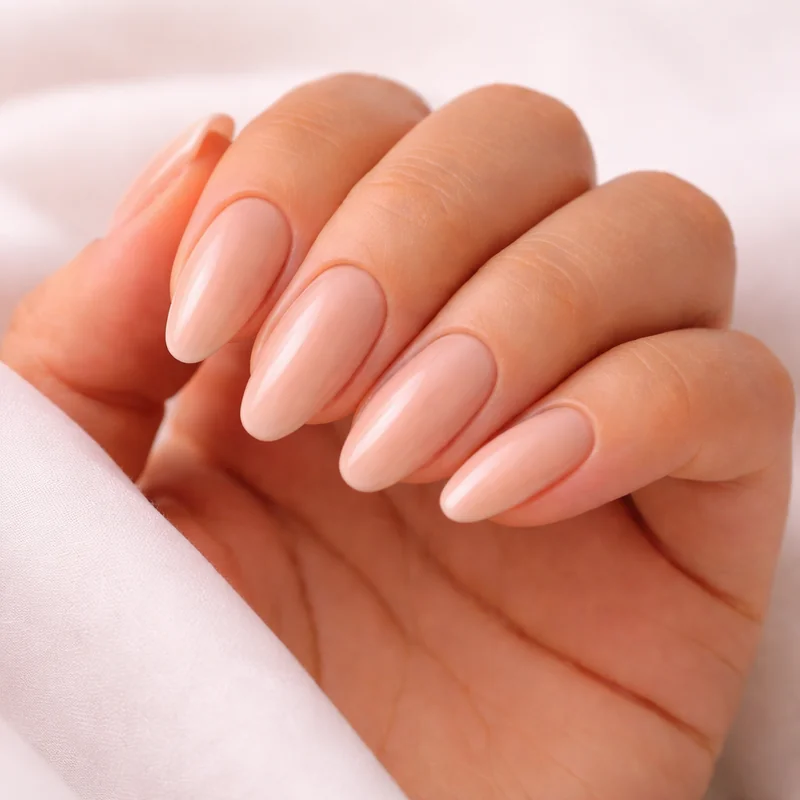
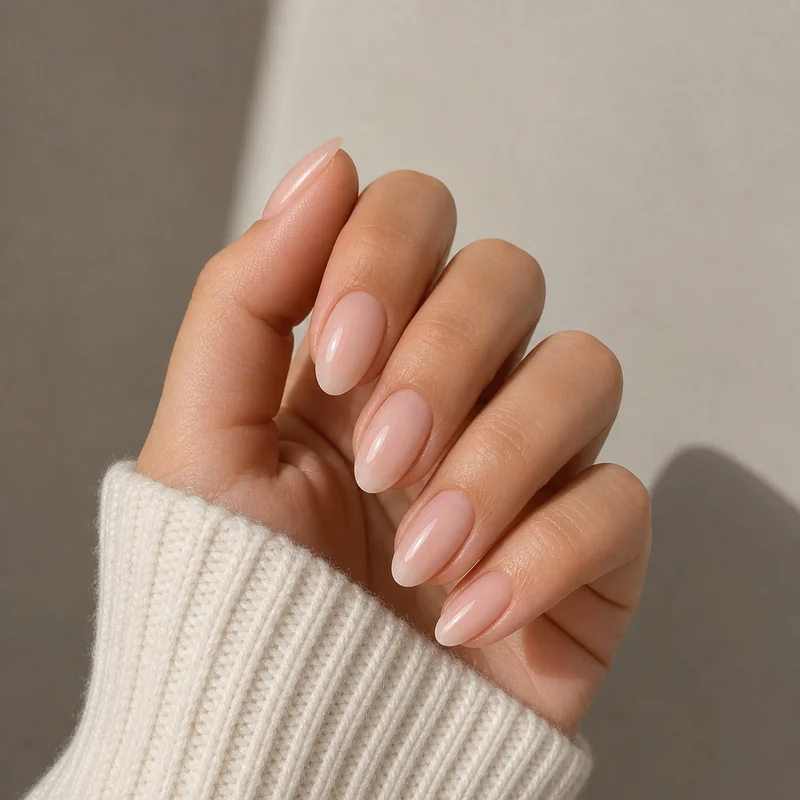
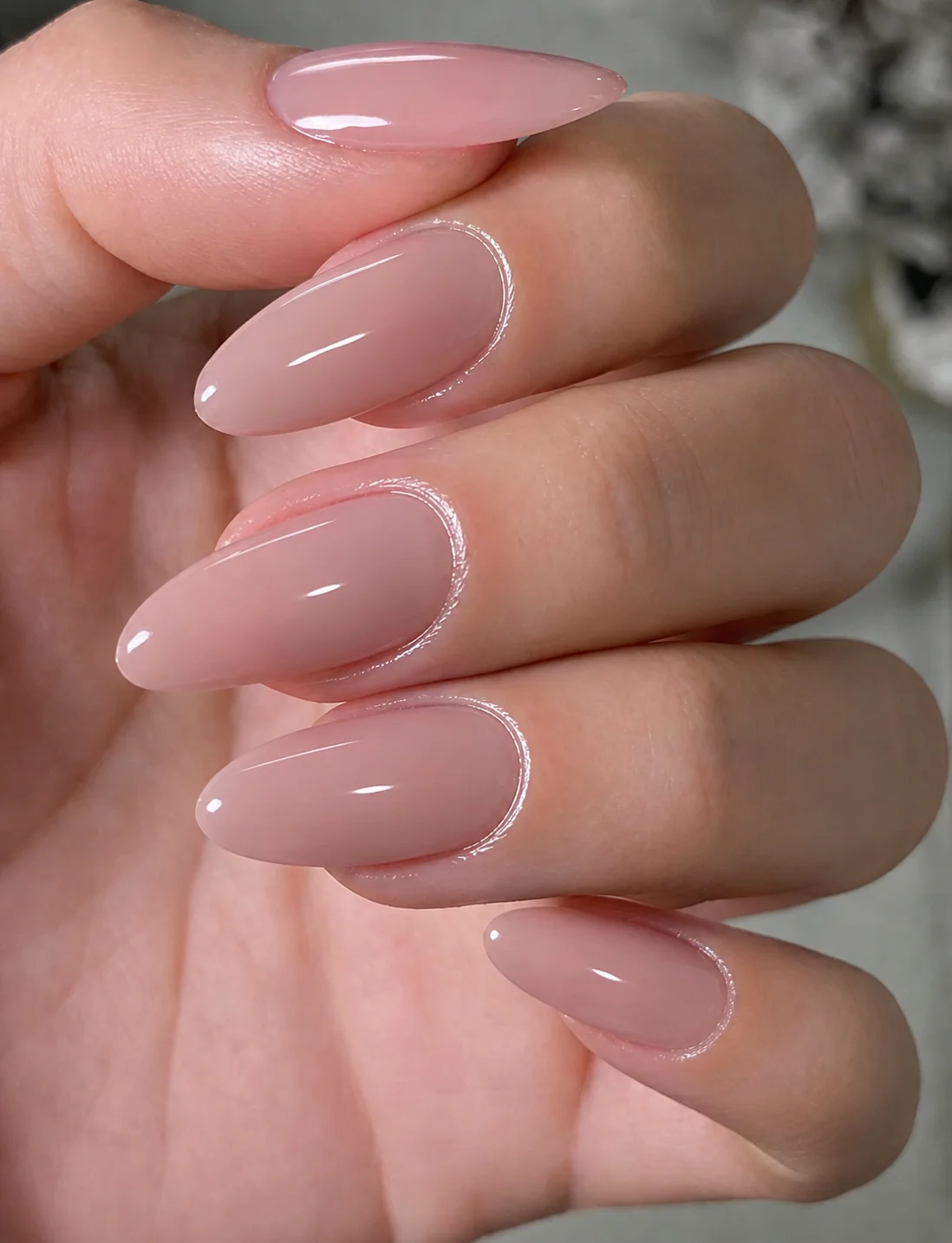
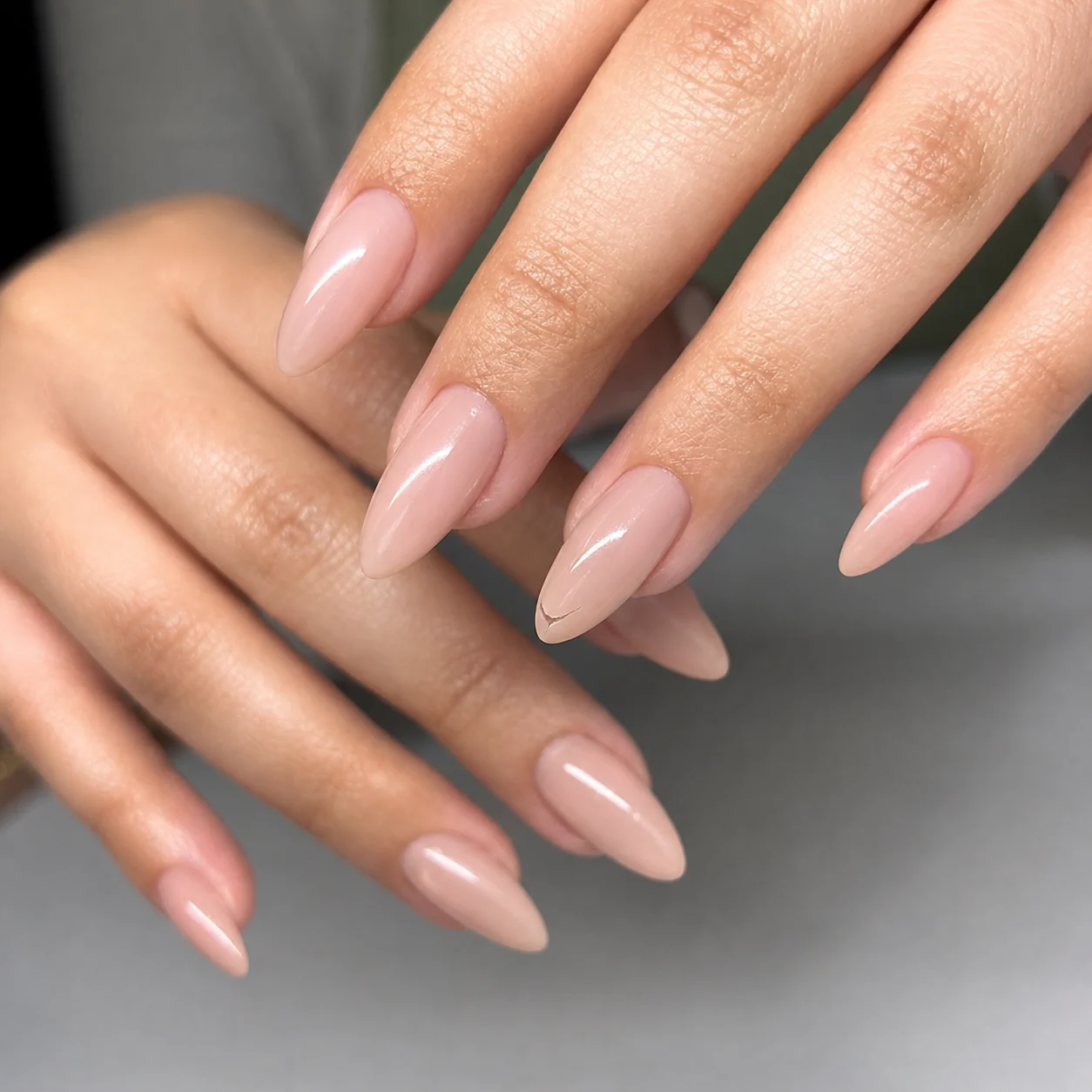
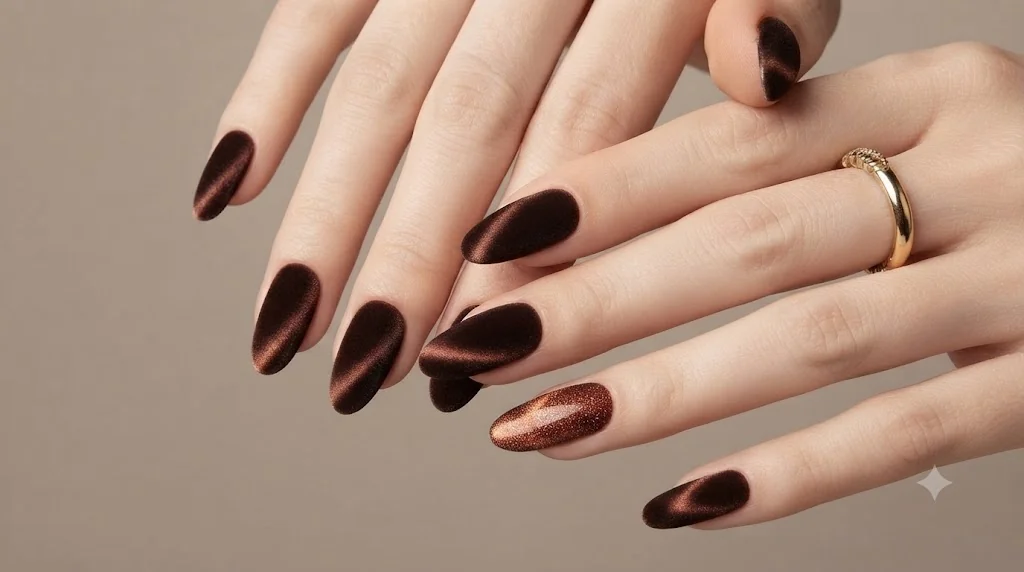
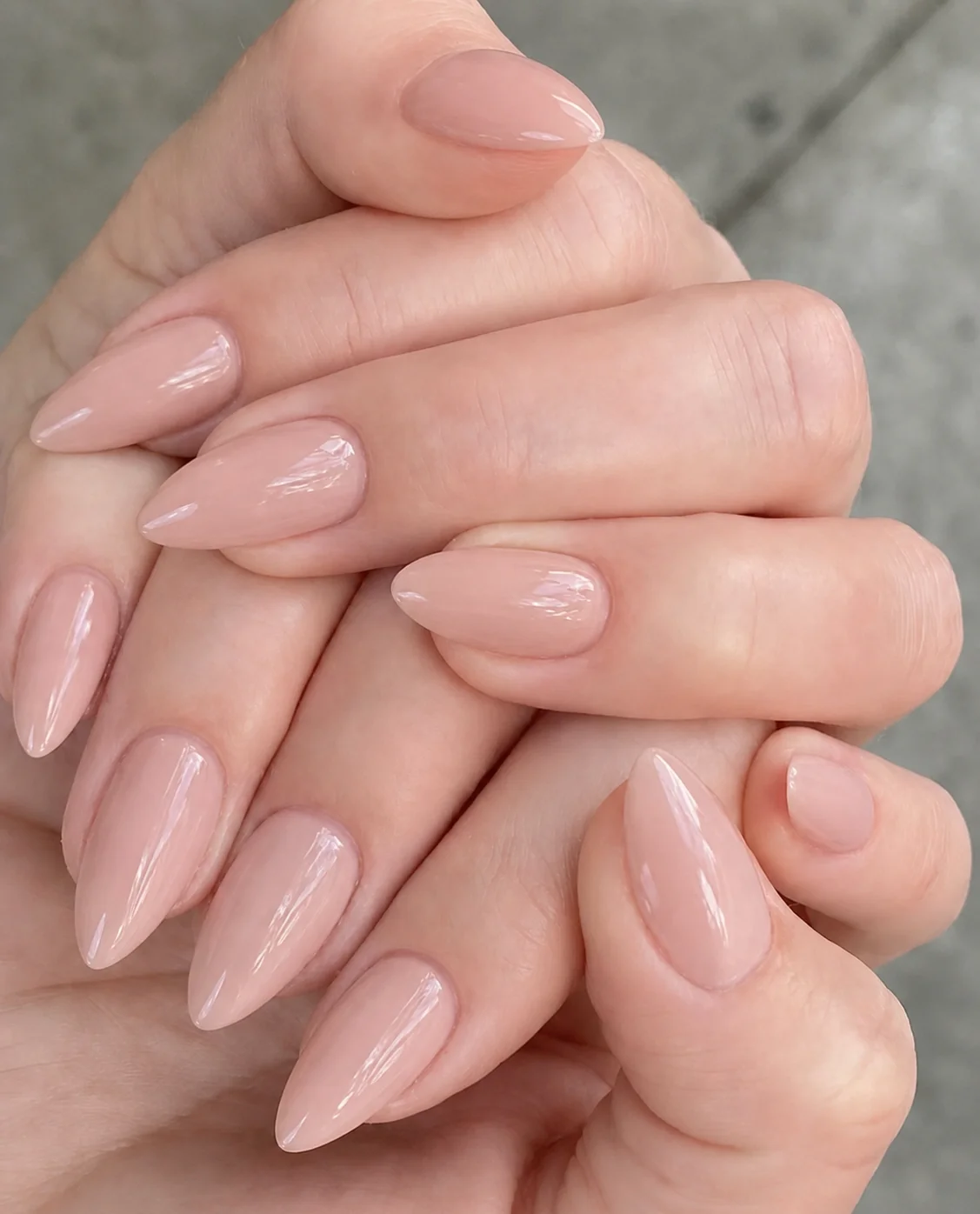
Oval files straight up both sides of the nail and rounds gently at the tip. The silhouette stays relatively close to the width of the nail bed. Almond does something different: it tapers. The sides narrow as they travel toward the tip, drawing in before the rounded peak. The result is a shape that is visibly slimmer at the tip than at the base — which is where the elongating effect comes from.
That taper is the key variable. It creates the illusion of a narrower, longer finger — but only if there is enough free edge length to show it. A taper that starts and finishes within 2mm of the fingertip reads as a blunt oval. A taper that has 4–6mm of free edge to work with reads as almond. Length is not just aesthetic preference here. It is structural to whether the shape functions as intended.
Do Almond Nails Suit Short Fingers? Here Is the Honest Answer
Short fingers are the most common concern, and the answer is more nuanced than most guides admit. Finger length is actually less important than nail bed length — and those two things are not the same.
You can have a short overall finger with a proportionally long nail bed, which is an ideal canvas for almond. The taper at the tip draws the eye along a vertical line, and that optical upward pull is exactly what makes almond one of the better shapes for shorter fingers. Celebrity manicurist Julie Kandalec has spoken about mid-length almond being one of her go-to recommendations for clients with shorter fingers precisely because the shape does work the eye in the right direction.
The caveat is length. Very short natural nails — nails that barely clear the fingertip — do not give the taper anywhere to go. Extensions solve this. If your natural nails are shorter than you would like, read our guide on how to get almond nails when your natural nails are short — it covers the extension options in detail. The verdict for short fingers: yes, with at least mid-length. Extensions make it fully accessible.
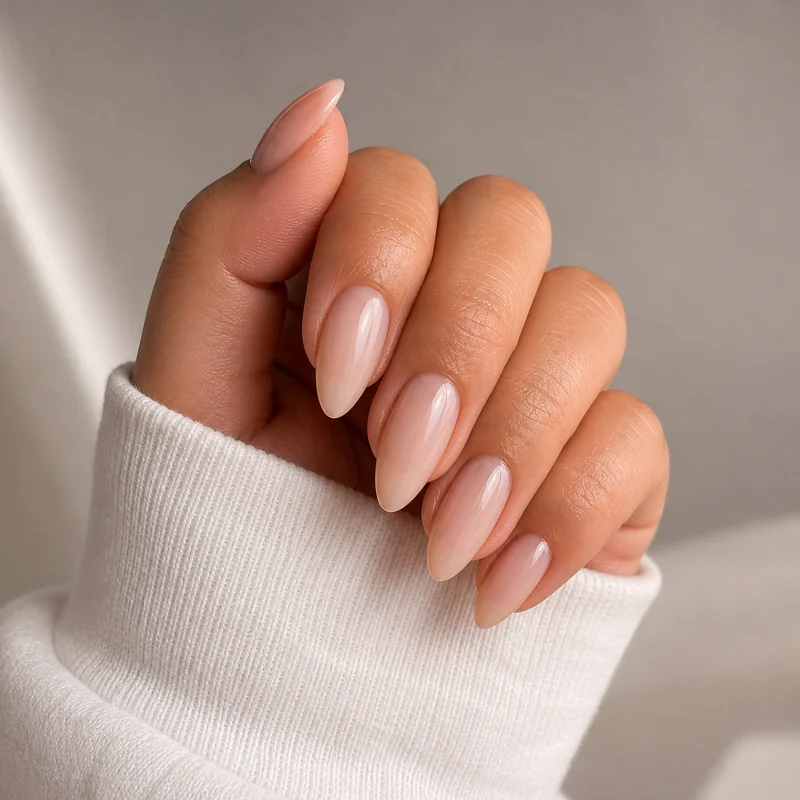
Do Almond Nails Suit Wide Nail Beds or Chubby Fingers?
This is the anxiety that carries the most emotional weight, and it deserves a direct answer rather than a pivot to reassurance.
Nail bed width and finger shape are separate variables. Wide nail beds do not automatically disqualify almond — but they change the conditions under which it works. Celebrity manicurist Jacqueline Pham, quoted via NewBeauty, is one of the few experts to say plainly that almond on shorter, wider nail beds "may appear stubby or less flattering" — and that honest caveat is more useful than blanket reassurance.
Here is how to think about it. Wide nail beds with adequate length — 4mm or more of free edge — respond well to almond because the taper actively counteracts the width. The narrowing tip creates visual contrast with the wider base, and that contrast reads as slimming. Where it breaks down is the combination of very wide nail bed and very short free edge. Without length, there is no room for the taper to work, and the shape can read as oval or blunter than intended.
For wider nail beds with shorter length, oval is a more forgiving starting point. Almond at medium length is almost always the stronger choice once the length is there. The published research on nail health in women confirms that nail plate dimensions vary significantly by individual — there is no single "wide" or "narrow" that applies universally, which is part of why prescriptive shape advice so often fails. The verdict: yes at medium length, maybe at short length, oval first if both width and length are working against you.
Do Almond Nails Suit Long, Slender Fingers? And Can They Look Too Dramatic?
The flip-side anxiety is less discussed but equally real. Longer, more slender fingers carry a different concern: will almond look excessive? Too pointed? Almost witch-like when the fingers are already narrow?
The short answer is no — but length management matters more here than it does for other hand types. Long, slender fingers with very long almond nails can push into stiletto territory visually, which is a specific aesthetic rather than a universally flattering one. Mid-to-long almond on slender fingers is typically the sweet spot: enough length for the taper to read elegantly, not so much that the overall silhouette becomes dramatic.
Slender fingers also show nail shape detail more clearly, which means filing precision matters more. A slightly uneven taper that looks acceptable on a wider nail bed will be immediately visible on a narrow one. Worth knowing before you file at home.
Do Almond Nails Suit Small Hands? What About Big Hands?
Palm size is its own variable, and one that most guides fold into a single sentence. Small hands and large hands both interact with almond differently, and the logic is not what most people expect.
Small hands tend to suit shorter almond lengths. A very long almond set on a small hand can look proportionally overwhelming — the nails become the dominant feature rather than the finishing detail. Short to mid-length almond on small hands reads as polished and balanced. The shape's elegance comes through without overpowering the hand.
Larger hands have more visual real estate to fill, which means longer lengths work without looking out of proportion. The almond shape on a larger palm also tends to look more "hand model" than dramatic — there is simply more frame for it. For very large hands, coffin can feel like a more proportionate option at longer lengths, but almond at medium-long is generally the more refined choice.
How Much Length Do You Actually Need for Almond Nails to Look Right?
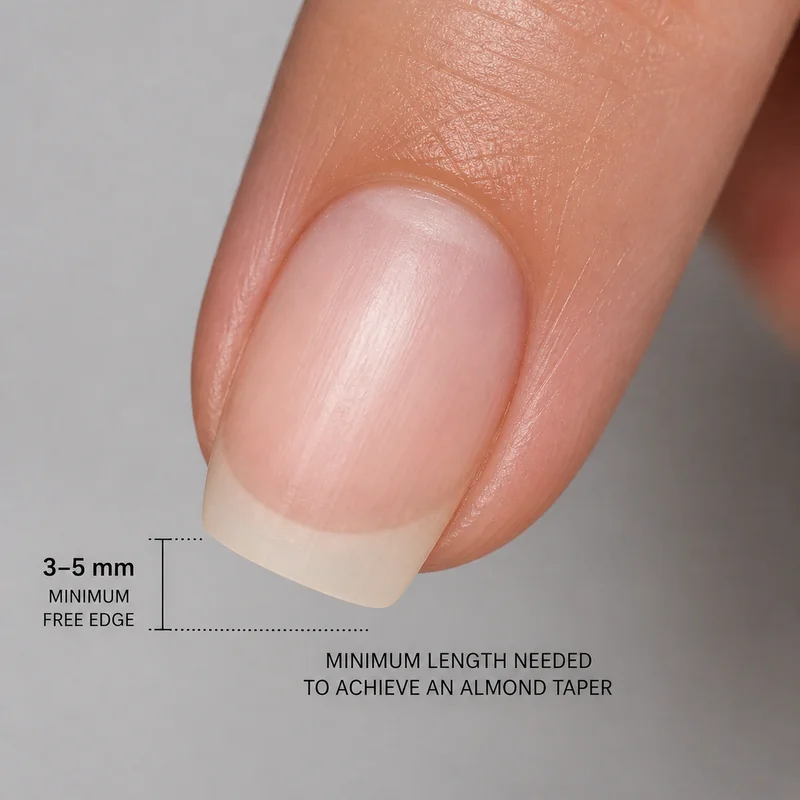
The practical minimum is 3–5mm of free edge beyond the fingertip. That is enough for a nail technician to create the lateral taper that defines the shape. Below that threshold, there is not enough nail surface to work with, and the result tends to read as oval at best.
The Mayo Clinic's nail health guidance notes that nail growth averages around 3mm per month — which means reaching a workable almond length from a very short starting point takes patience. Extensions are the faster solution. Gel and acrylic both work well for almond; the American Academy of Dermatology's guidance on artificial nails outlines what to expect from each in terms of maintenance and nail health considerations.
Natural nail almond is entirely possible for those who grow their nails to at least 4–5mm past the fingertip. The filing process removes material from the sides rather than the tip, so natural length is preserved even as the shape forms. Short of that threshold, do not fight it — extensions exist precisely for this.
The One Thing That Matters More Than Your Hand Shape: Nail Bed Width vs Tip Length Ratio
Most competitors miss this entirely. Hand shape is a useful frame, but the detail that actually determines whether almond works is the ratio between your nail bed width and your free edge length.
The taper in almond creates a visual narrowing effect — but that effect only registers if the free edge is long enough relative to the nail bed width. A narrow nail bed with 3mm of free edge reads as elegant almond. A very wide nail bed with 3mm of free edge reads as stubby. The same free edge length produces entirely different results depending on the nail plate it sits on.
This is why the "almond suits everyone" line is technically true but practically useless. It suits everyone at the right length for their nail bed width. The shape requires a proportional relationship between how wide the base is and how much length there is to taper from. When that ratio works, the elongating illusion functions. When it does not, the shape looks compressed. Knowing your nail bed width and your current free edge length is more useful than knowing your "finger type."