BIAB Infill: How Often You Really Need One (Every 3-4 Weeks)
BY jyoti-mirelle
July 10, 2026
Nail Care / BIAB
BIAB Infill: How Often You Really Need One (Every 3-4 Weeks)
BY jyoti-mirelle
July 10, 2026
Three to four weeks. That is the honest answer to how often biab infill appointments should happen, and if you have been quietly wondering whether you can push it, you already suspected as much. "It still looks fine though" is the sentence every nail tech has heard right before a client's BIAB starts lifting at the edge. It is not a judgement. It is just timing, and timing is fixable.
BIAB is a structural product, not a polish. It holds its shape through an apex, the slightly raised curve running down the centre of the nail that gives it strength. That apex only sits correctly for a limited window before your natural nail growth pulls it out of position, and how often you get a biab infill is really a question about how long that structure holds. Once you know the number, the guesswork ends.
How Often Should You Get a BIAB Infill?
Get a BIAB infill every three to four weeks. Some clients stretch to five, depending on growth rate and how gently their nails are treated day to day. That is the window nail techs actually book against, not a rough estimate.
Here is the mechanism. When BIAB is applied, the apex, that structural high point, sits exactly where it needs to for support. As your natural nail grows, the nail bed pushes forward underneath the product, and the apex travels with it, drifting away from where it was built to sit. By week three, the shift is small. By week five, it is significant enough that the product starts working against the nail instead of with it. A rebalance, which is what technicians call refilling that regrowth gap and rebuilding the apex in the right place, resets the structure before that happens.
This is also where the two- to four-week fill window matters for cost, not just health. Nails grow at different speeds, so treat three to four weeks as the reliable default and let your own regrowth pattern nudge it earlier or later.
Follow us on
Instagram@mirelle_inspo
Pinterest@mirelle_inspo
X@mirelleinspo
FacebookMirelleInspo
YouTube@mirelleinspo
LinkedInmirelleinspo
Elevate the Season with Mirellé
Elevate the Season with Mirellé
Trend forecasts, product picks, and reader FAQs from Mirellé Inspo. Unsubscribe anytime. Privacy Policy
Signs You're Overdue for an Infill
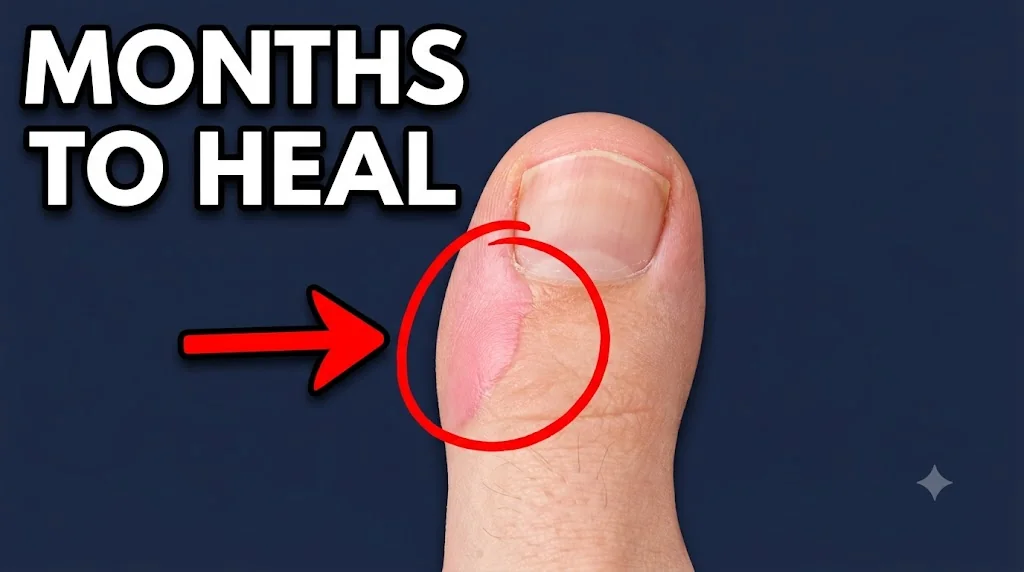
Your BIAB infill is overdue when you see visible lifting at the cuticle, a band of bare regrowth separating the product from your nail bed, or the whole nail starts to feel top-heavy when you tap it against something. Any one of these on its own is worth booking for. Two together means you are already past the ideal window.
Lifting is the loudest signal, and it rarely appears out of nowhere. It is a bond problem, and the bond breaks down once regrowth has pushed the product far enough from where it was originally sealed. Nail experts flag lifting as the clearest overdue signal precisely because it shows up before anything actually fails, giving you a genuine warning rather than a surprise.
"Banding" is the quieter version, that thin strip of natural nail at the cuticle that looks like nothing until you notice it has been there a week longer than you thought. It doesn't look like much, but it is often more regrowth than it appears, because the apex has already shifted underneath it even if the surface still looks intact. And the "my nails feel top-heavy" sensation clients describe is real. It is the product's weight distribution changing as your growth moves the balance point forward, past where it is meant to sit.
If a nail has already lifted enough that it has caught on something or come away at the edge, that is not a maintenance question anymore. That nail needs attention immediately, infill or not.
How Many Infills Before a Full Removal?
Most BIAB sets can go through two to three infills before they need a full soak-off and fresh application. After that point, continuing to rebalance over existing product starts costing you more than it saves.
Every infill adds a thin layer over what is already there. Do that two or three times and the product stack is fine. Push past it and the base layers underneath have been through multiple cure cycles, multiple filing passes, and multiple rebalances, and the structural integrity starts to degrade in ways a surface-level rebalance cannot fix. Your technician also loses the ability to properly assess your natural nail plate underneath, which matters more the longer product has been sitting on it. A full removal resets everything, including your nail's actual condition, which an infill by definition cannot show.
If you have been getting infills for two months straight without a full soak-off in between, that is worth raising with your technician at your next appointment. It is a normal question, and any tech worth booking again will have a straight answer. If you have let something go past that point already, what a full gel removal actually costs when you wait too long is worth understanding before you assume a soak-off is a minor add-on.
What Affects Your Personal Infill Timeline
Does nail growth rate affect your BIAB infill timing? Yes, more than almost anything else. Faster natural growth means the apex shifts sooner, which shortens your realistic window even if everything else about your nails is identical to someone stretching comfortably to five weeks.
Length plays a close second. Longer nails have more leverage at the tip, so the same amount of regrowth translates into more stress at the stress point than it would on a shorter nail. If you type all day, do manual work, or your hands are simply busier than average, that daily wear shortens your window too, regardless of what the calendar says. How the BIAB was applied originally matters as well. A nail set with a slightly thinner, more even layer and a well-placed apex will outlast one that was rushed or overworked at application, even on identical growth rates.
It's also worth knowing how BIAB compares to a regular gel manicure here, because gel relies on adhesion alone, while BIAB relies on structure. That difference is exactly why BIAB timing is governed by growth and apex position rather than by chipping the way gel wear usually is.
How to Safely Stretch Time Between Infills
Can you stretch a BIAB infill past four weeks? Sometimes, but only under specific conditions: short nails, slow natural growth, gentle daily use, and no visible lifting yet. Meet all four and five weeks is realistic. Miss two or more and you are borrowing against your next appointment.
Cuticle oil, used daily rather than occasionally, keeps the nail plate flexible and slows the moisture loss that makes lifting worse. Gloves for anything involving water, cleaning products, or repeated hand-washing protect the seal at the edges, which is usually where lifting starts first. Avoid picking at any lifting you do spot, even a small edge, since pulling at product can tear the natural nail underneath it rather than just the overlay.
None of this changes your underlying growth rate. It buys you the difference between a nail that lifts at week four and one that holds cleanly to week five. That is a genuinely useful stretch. Treating it as permission to ignore lifting once it starts is not.
Elevate the Season with Mirellé
Elevate the Season with Mirellé
Trend forecasts, product picks, and reader FAQs from Mirellé Inspo. Unsubscribe anytime. Privacy Policy
What Happens If You Wait Too Long
Leave a BIAB infill too long and the risk shifts from cosmetic to structural. Prolonged lifting lets moisture and bacteria sit between the product and the nail plate, and an unbalanced apex puts uneven pressure on a nail that was never designed to bear it that way.
The nail underneath is the part that actually pays for it. Repeated stress at a shifted apex point can thin the nail plate over time, and lifting left unaddressed for weeks rather than days raises the odds of infection at the point where the seal has failed. None of this happens overnight, which is exactly why it is easy to miss. It happens in the gap between "it still looks fine" and the appointment you kept pushing back.
If your BIAB has gone well past its window, whether from a missed rebooking or simply life getting in the way, how to remove BIAB at home safely is the right next step rather than continuing to leave it. A technician assessing the nail plate at that point is worth more than another rebalance would be.
BIAB Infill Timing and Cost
An infill costs less than a full new set, and that gap is exactly why staying inside your three- to four-week window pays off twice: healthier nails and a lower bill. Infills use less product and less appointment time than a full soak-off and reapplication, which is reflected directly in what most salons charge for each.
Wait long enough that lifting sets in or the apex has to be rebuilt from scratch, and you are no longer paying for maintenance. You are paying for a repair, and repairs almost always cost more than the appointment you were trying to postpone. This is the same logic behind why the two-to-three week fill window saves the most money across gel and BIAB services generally: earlier, smaller, cheaper beats later, bigger, and more expensive every time. For the full picture of what BIAB actually costs across a full cycle of sets and infills, the full BIAB cost breakdown lays out the numbers in one place.
The Number Was Never the Hard Part
Three to four weeks, five if your nails and habits allow it. That was always the answer. What makes BIAB maintenance feel confusing isn't the interval, it's not knowing what "overdue" actually looks like on your own hands, and now you do.
Book on the schedule your nails actually need, not the one your calendar prefers. Watch for lifting and banding rather than waiting for a nail to fail outright, and treat two or three infills as the natural point to ask about a fresh set rather than an inconvenience to push past. Your nails were never the unpredictable part of this. The gap between "it still looks fine" and "it's actually a lot of regrowth" always was, and it just closed.
Follow us on
Instagram@mirelle_inspo
Pinterest@mirelle_inspo
X@mirelleinspo
FacebookMirelleInspo
YouTube@mirelleinspo
LinkedInmirelleinspo
Frequently Asked Questions
Mirellé Inspo
The biggest beauty stories, trends, and product recommendations.
You'll receive nail trend forecasts, product recommendations, and reader FAQs from Mirellé Inspo. Unsubscribe anytime. See our Privacy Policy for details.
Researched & Written By
Co-Founder, Content Writer & Social Media Manager
Jyoti
Jyoti is the co-founder of Mirellé Inspo. She writes all editorial content across the publication and manages Mirellé's social presence, turning research into writing the nail community actually wants to read.
Mirellé is an editorial platform dedicated to nail trends and inspo. We track what the nail community is searching, pinning, and loving, and turn that into curated style guides, trend breakdowns, and inspiration.
Every piece on this site starts with real research: Pinterest data, search trends, and what nail enthusiasts, techs, and salons are actually gravitating toward. We curate so you don't have to.