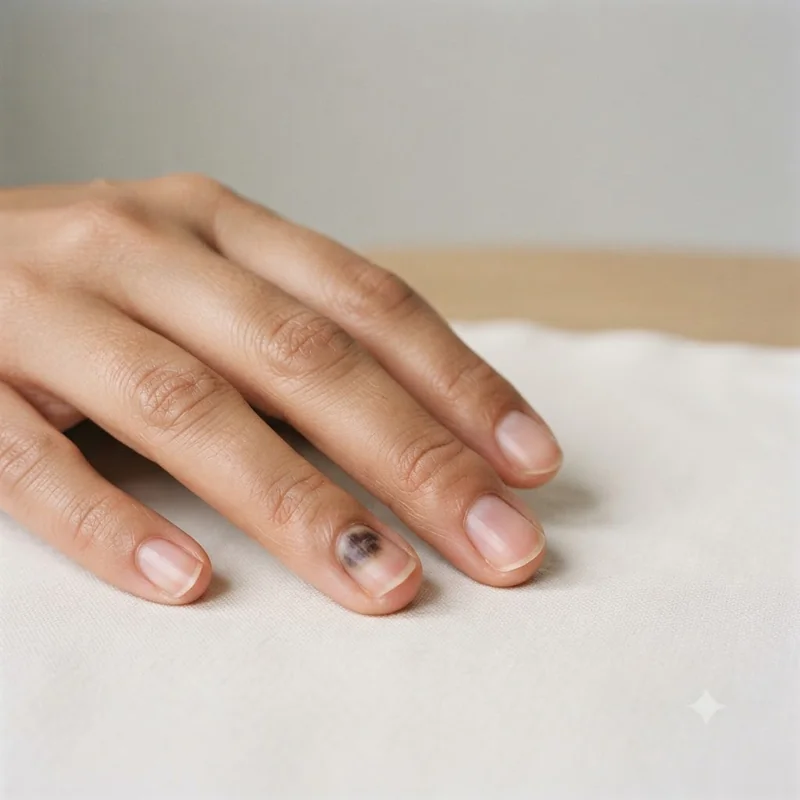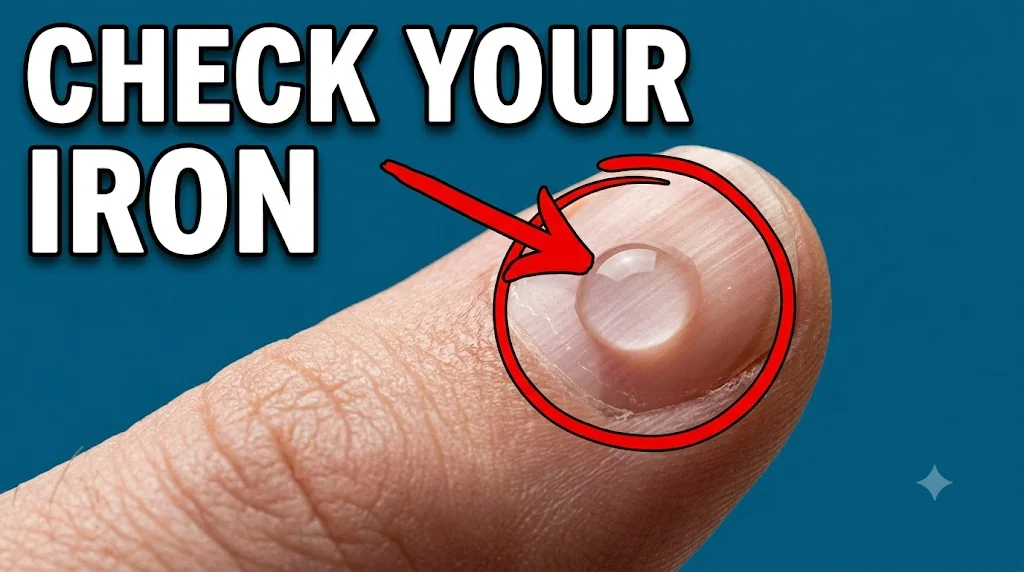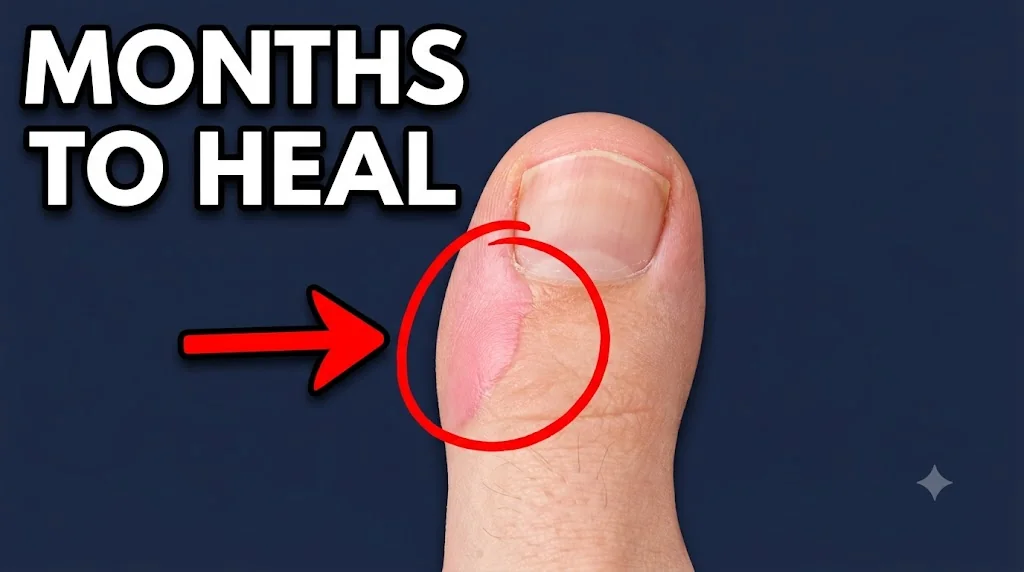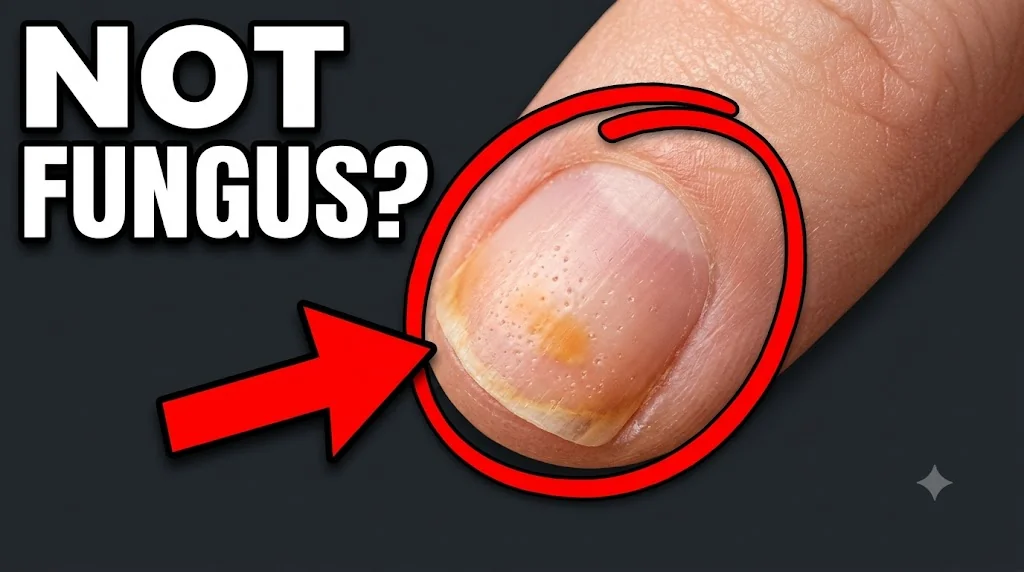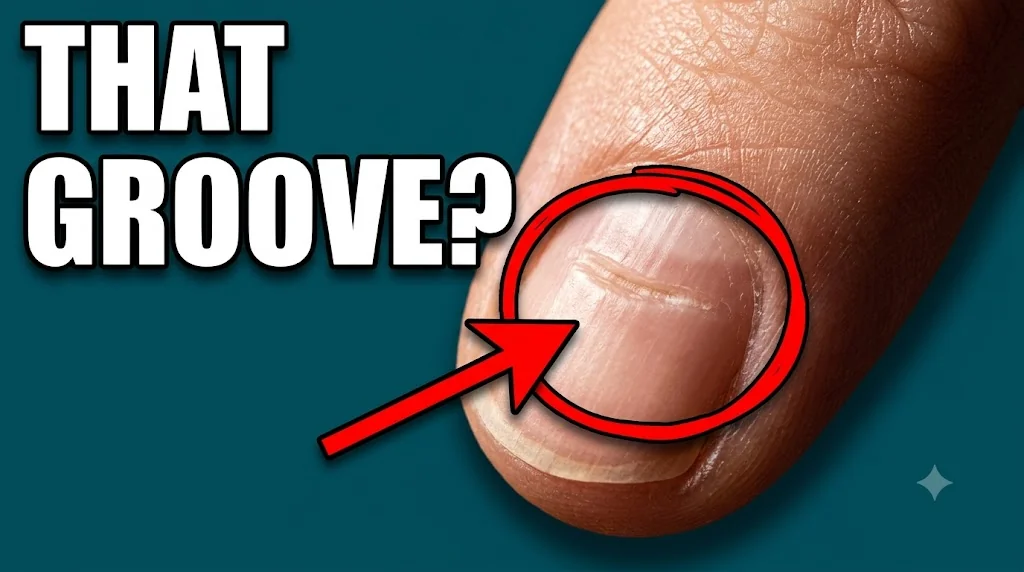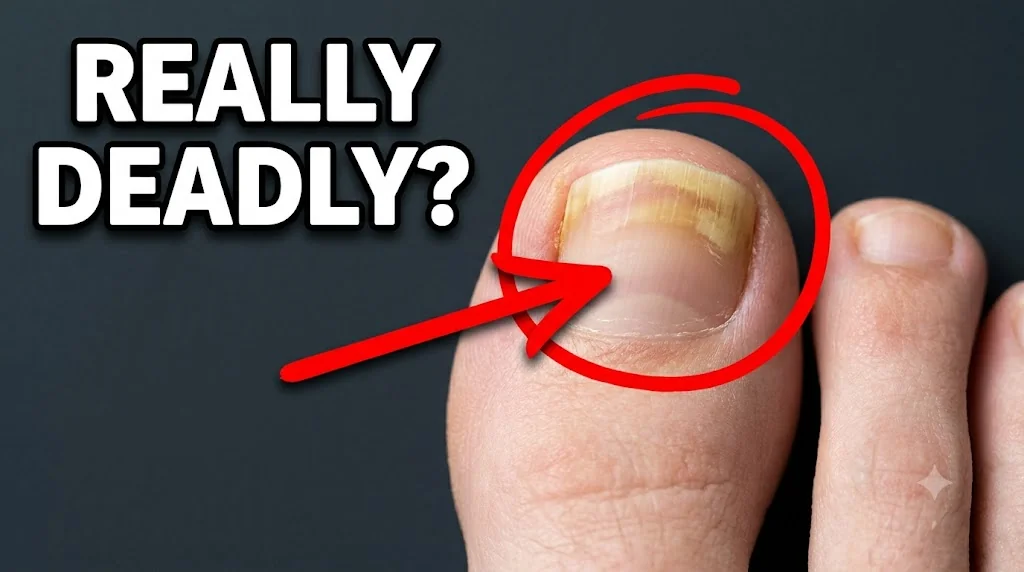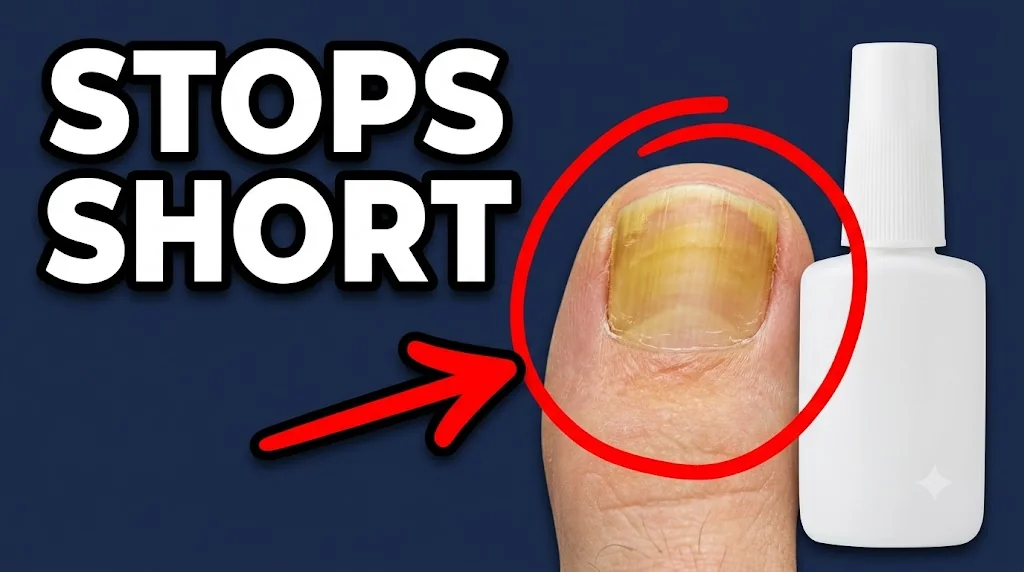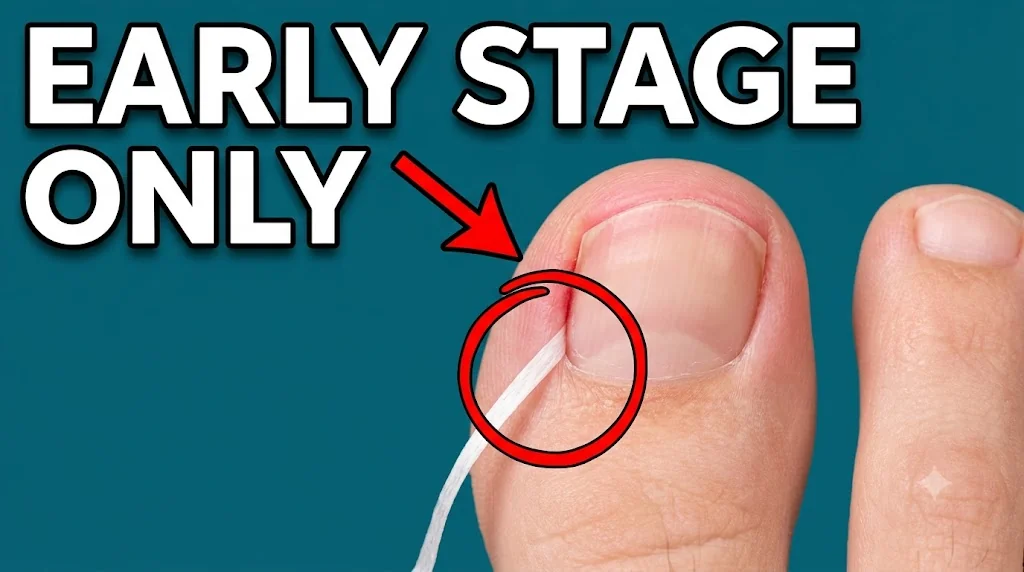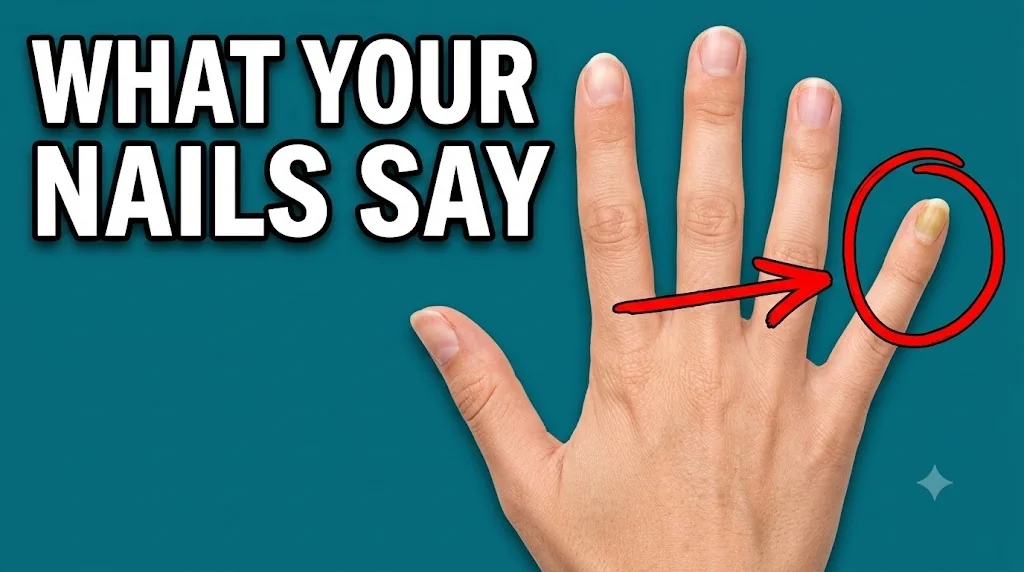
Most nail color meaning is harmless: a stain from polish or gel, a bruise, or fingertips that ran cold. A short list of changes is not harmless, including dark streaks with no injury, green under lifted product, and any shift that keeps worsening after a few weeks.
This guide treats nail color meaning as health information, not polish personality, and it gives you a four-check sort before any color list. Most charts do the reverse. They pair every shade with a serious disease and skip how unlikely that pairing is, so a faintly yellow thumbnail starts to read like a diagnosis. Nail changes are rarely the first sign of illness, because other symptoms usually show up first.
The order here is different. Sort first, then match your shade, then check the threshold that applies. Fingernails and toenails are both covered. It takes a few minutes, and you will finish knowing what your nails most likely mean and exactly when to book an appointment.
What Color Are Healthy Nails Supposed to Be?
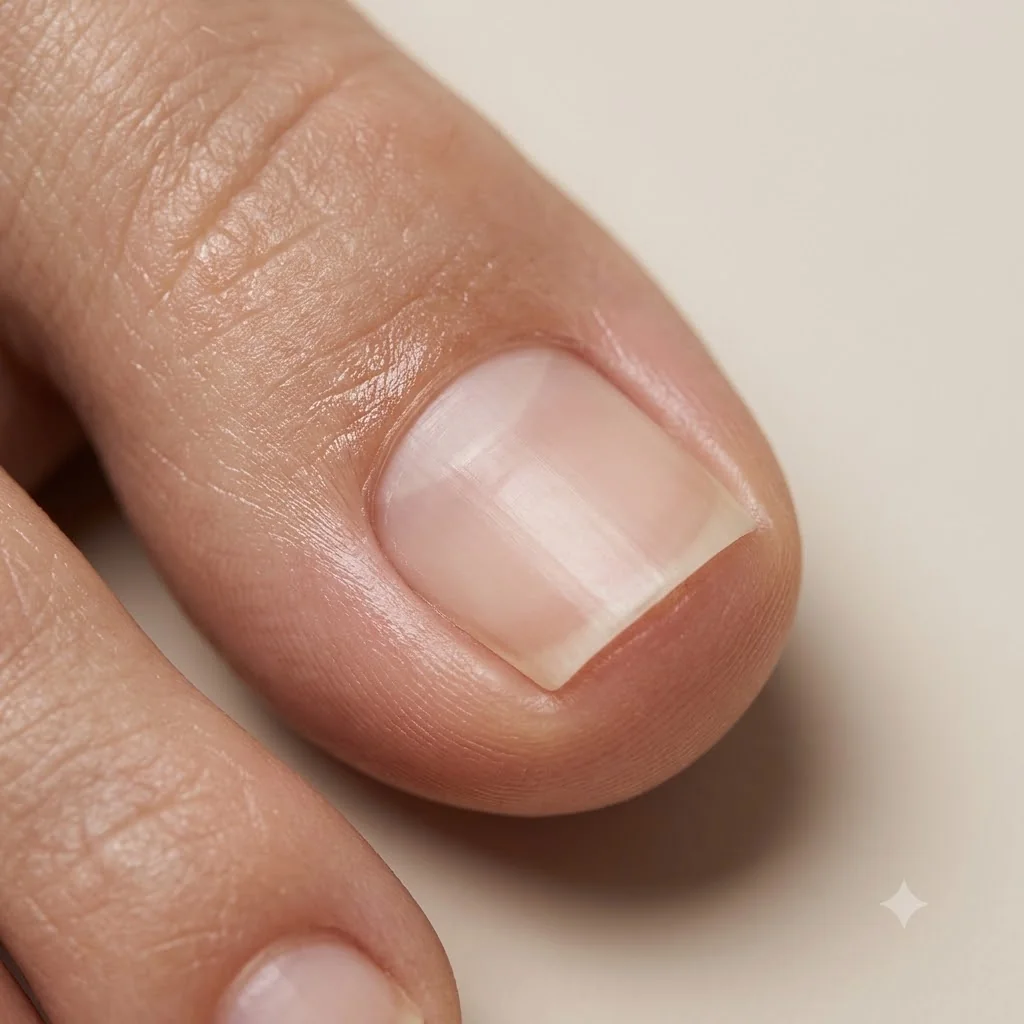
Healthy nails look pale pink, but the pink does not belong to the nail. The plate is nearly transparent, so the color you read as nail color is the nail bed underneath showing through. A healthy bed is even in shade from cuticle to tip, with no patches, lines, or dark areas.
The lunula is the pale crescent at the base of the nail, the visible edge of the matrix where new nail forms. Thumbs show it most clearly, and some nails show none at all, which is normal.
Skin tone shifts the baseline, so the comparison that matters is your own nails on a normal week. Toenails follow the same pattern but run thicker and slower-growing than fingernails, which can leave them a shade duller even when healthy. The free edge, the part that extends past the bed, looks white or see-through because no pink tissue sits beneath it, and that is also normal.
Is It Your Health, Your Polish, or an Injury? A 4-Check Test
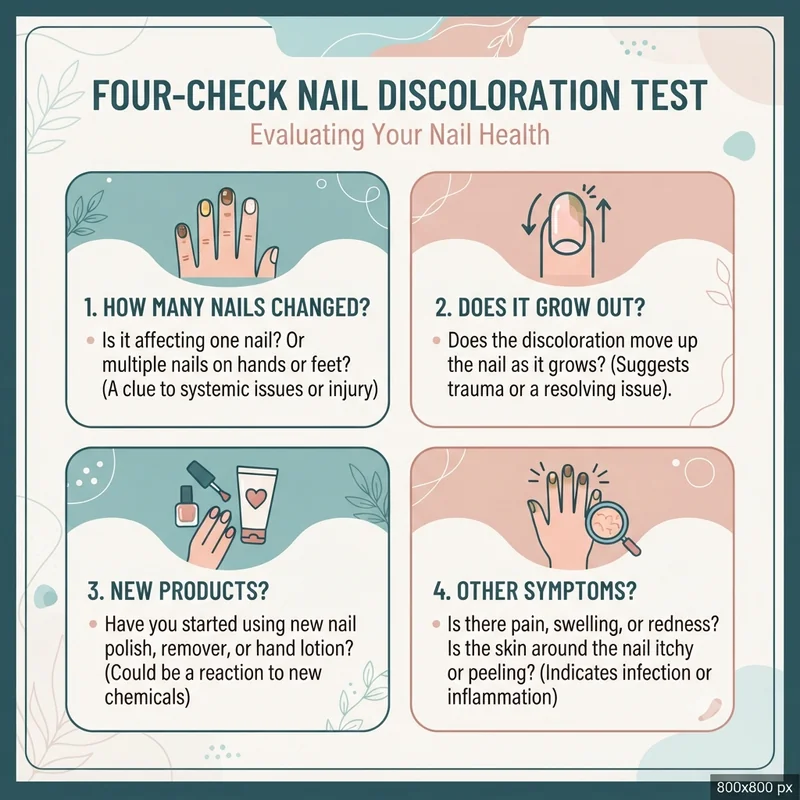
Nail discoloration is serious when it affects one nail with no injury behind it, keeps changing after a few weeks, or arrives with other symptoms such as fatigue, pain, or swelling. Most color changes fail all three tests. Four quick checks come before any shade, because they change the nail color meaning more than the shade does.
- Count the nails. Color on one nail usually has a local cause such as an injury, a stain, or lifted product. Color on many nails at once can be a body-wide signal, or a product that touched all of them.
- Watch whether it moves. A dark patch that travels toward the free edge as the nail grows is reassuring for a bruise. A stain fades from the base as new nail replaces it. A patch that never shifts is not behaving like a bruise, and that is worth noting.
- List what changed. New polish, gel, acrylic, nail glue, or a medication in the past few weeks is often the explanation.
- Check the rest of the body. Fatigue, pale skin, shortness of breath, swelling, or pain alongside a color change carries more weight than the color alone. A change with no other symptoms usually has a nail-level explanation.
Do Fingernail and Toenail Color Changes Mean Different Things?
Fingernail and toenail color changes follow the same rules, but the likely causes differ in weight. Toenails take more knocks from shoes and stubbed toes, so bruise-colored patches show up there more often. They also grow 2 mm a month or less, against about 3 mm for fingernails, so any change takes longer to clear. Everything below applies to both, with toenail differences noted where they matter.