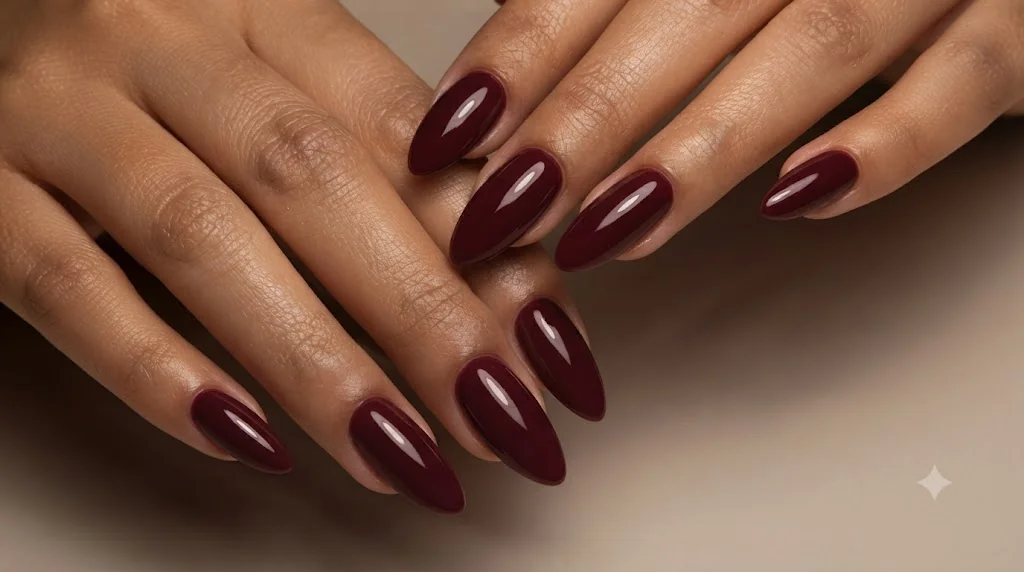
Hanukkah nails almost always mean the same thing: a blue base, a white tip, maybe a dusting of silver glitter. It is a fine mani. It is also the only Hanukkah mani most people ever see, which is exactly the problem. This year's Hanukkah nails can pull from menorahs, dreidels, Star of David linework, gold and metallic finishes, and beginner-easy single accents, all while staying genuinely tied to the holiday instead of reading as generic winter sparkle.
That is the promise of this roundup: more than fifty ideas that go past the blue-and-white default without drifting into symbols that only look Jewish. Some of what circulates as "Hanukkah inspired" online is actually Hamsa or Evil Eye art, borrowed from broader Judaica and mislabeled. Nothing here does that. Every idea below is either grounded in a real Hanukkah symbol or built on colors with real Hanukkah meaning, and the sections are organized so you can jump straight to the category that fits your style, your skill level, or your split-family mantel this year.
What Colors and Symbols Actually Mean Hanukkah
Why blue and white? It is not an arbitrary palette choice. The colors trace to the Israeli flag and, further back, to the tekhelet dye historically used in tzitzit thread on a tallit, which is where the blue itself carries its oldest symbolic weight. Silver gets folded in as a modern extension, standing in for candlelight and menorah metal rather than replacing the original two.
Traditionally used Hanukkah nails colors are blue, white, and silver, with gold as a well-established fourth option tied to gelt and candle glow. None of the four is more "correct" than another. What actually matters for a design to read as Hanukkah is symbolism, not a strict palette, which is why several ideas further down lean on gold or even soft neutrals with one symbolic accent.
"Chanukah nails" and "Hanukkah nails" are the same search, the same holiday, and the same nail art. The spelling difference comes from transliterating the Hebrew ח into English, and it has no bearing on what to ask for at a salon or type into a search bar. Use whichever spelling feels natural.
Symbol clarity matters more than color choice for Hanukkah nails to feel authentic. The menorah, the dreidel, and the Star of David (Magen David) are Hanukkah-specific. The Hamsa and the Evil Eye are real, meaningful symbols in broader Jewish and Middle Eastern tradition, but they are not Hanukkah symbols, and several competitor galleries lump them in anyway. If a design's only nod to the holiday is an Evil Eye in blue polish, it is not actually Hanukkah nail art. It is winter nail art borrowing the palette.

Menorah Nail Art Worth Copying
A menorah is a nine-branched candelabrum, one arm for each of the eight nights plus a ninth, the shamash, used to light the others. That structure is exactly why it photographs so well in miniature: nine small vertical lines with a single raised center read instantly as a menorah, even reduced to a thumbnail-sized accent nail.
Full hand-painted menorahs across all ten fingers are rare for a reason. Most of the strongest looks reserve the menorah for one accent nail and keep the rest of the set solid or simple, which lets the detail actually hold up at nail scale instead of blurring into a smudge. A gold or silver menorah on a navy accent nail is one of the cleanest versions, since the metallic reads as candlelight against a dark base. A negative-space menorah, where the design is scratched out of a solid polish rather than painted on top, works especially well for anyone without a steady brush hand.
For anyone who wants the full nine-branch version done properly, without freehanding it themselves, menorah nail art ideas breaks down placement, proportion, and the easiest ways to get the shape right.