Why Alcohol and Cold Air Dry Out the Nail Plate
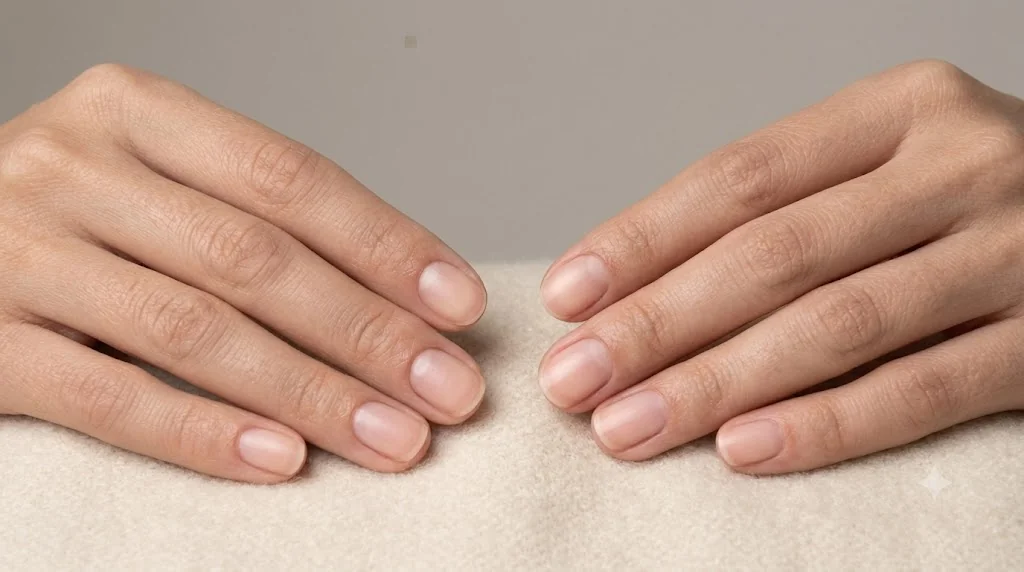
Hand sanitizer makes nails brittle and peeling by drying out the nail plate, which looks solid but depends on water to stay flexible. Cold air and indoor heating pull moisture from the same surface, so the effects stack instead of taking turns.
The nail plate is the visible, hard keratin part of the nail, and it needs some water content to flex instead of snap. A dry twig snaps; a green one bends. Nails behave the same way.
Washing adds a second mechanism. The wet-dry cycle is the repeated swelling of the nail when wet and shrinking as it dries, which dehydrates and splits the nail plate. Alcohol rubs push the drying along more directly. Zoe Draelos, M.D., in Dermatology Times tied waterless sanitizers to cracked, weakened nails through the nail's water content, though the piece dates to 2009 and reads as clinical observation, not a modern trial.
That is how hand sanitizer and your nails in winter become a poor match: no dramatic event, just water leaving a little faster than it returns.
Is Hand Sanitizer Worse Than Hand-Washing for Your Nails?
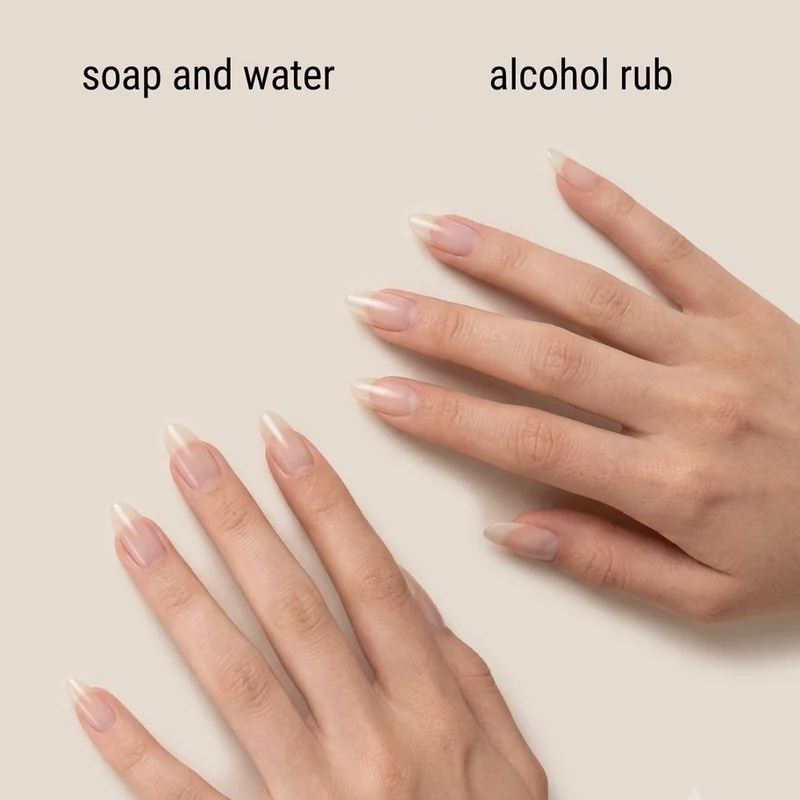
Neither is clearly worse for nails, because the research that compares them measured skin, not nails. Hand-washing exposes nails to the wet-dry cycle, while an alcohol rub dries them directly, so both feed the same dryness. What changes the outcome is the cream that follows.
The hygiene guidance is clear. The CDC recommends soap and water whenever possible. An alcohol-based hand sanitizer, per the CDC, is a sanitizer with at least 60% alcohol, used when soap and water are unavailable. Wash when a sink is near, sanitize when it is not, and treat cream as part of either routine.
The skin evidence runs against the popular blame. Healthcare research, including a study in the American Journal of Infection Control, found that alcohol rubs containing emollients irritated skin less than soap and water. Two limits apply. Those studies measured skin, mostly in healthcare settings with emollient-containing products, and nails were not the outcome. The case against sanitizer for nails rests on a dermatologist's clinical observation, not on that data.
How to Use Hand Sanitizer Without Wrecking Your Nails
Protecting your nails from hand sanitizer is less about using less and more about what surrounds each use: sanitize when soap and water are unavailable, rub it in until it dries, then seal the nails with cream. The sanitizer matters less than the step people skip after it.
- Wash with soap and lukewarm water when a sink is within reach.
- Choose a sanitizer with at least 60% alcohol, since weaker formulas may not work equally well, and favor one with emollients.
- Rub it into the palms and fingertips until it dries.
- Put cream on the nails and cuticles straight away.
University of Miami dermatologist Brian Morrison, M.D., also flags repeated wet-dry exposure and advises avoiding sanitizers that contain triclosan. Outdoors, cold air joins the list, and Dr. Amir's advice is brief: "Keep your hands warm and wear gloves when you're outside."
Anyone sanitizing dozens of times a shift may want more than cream, and there is a nail strengthener built for nonstop sanitizer and hand-washing shifts. Done this way, hand sanitizer and nails in winter stop working against each other.
What to Put on Your Nails After Sanitizing
Plain petrolatum or a thick hand cream goes on the nails right after the sanitizer dries, and it goes into the cuticles too. Both hold in the water the nail has left.
Petrolatum is an occlusive ointment that seals moisture in. Dr. Amir recommends it plain or as a thick hand cream: "Use a thick hand cream or plain petrolatum after washing your hands, and rub some into the nails and cuticles as well." His rule is written for washing, but it applies equally after sanitizing, since the nail dries out either way.
Thin lotions wear off fast, so the thick texture is the point. Cuticles that crack along with the nails get their own full breakdown in why cuticle oil stops working after one hand wash in winter.