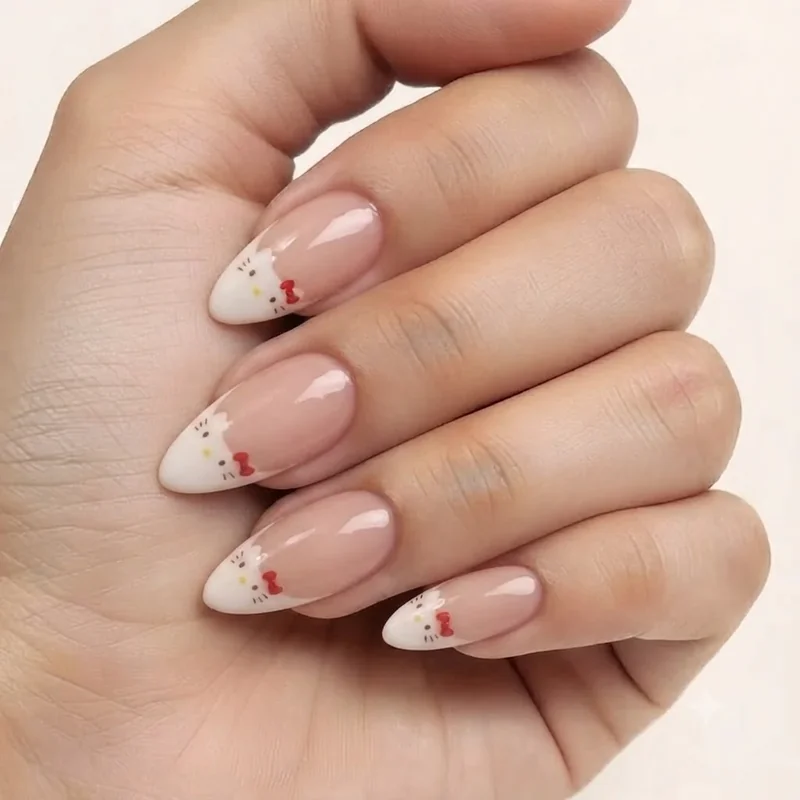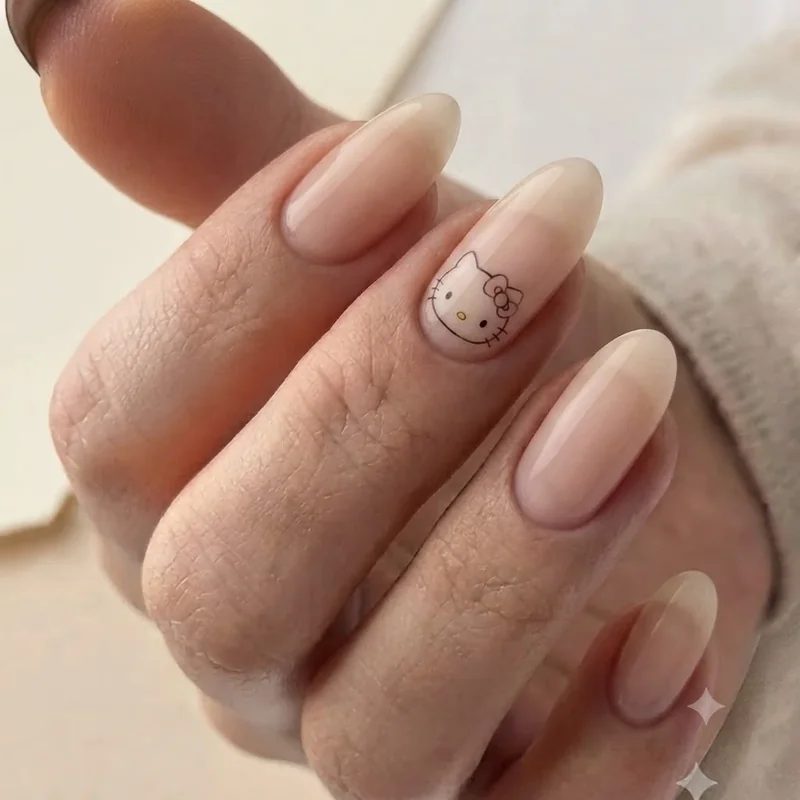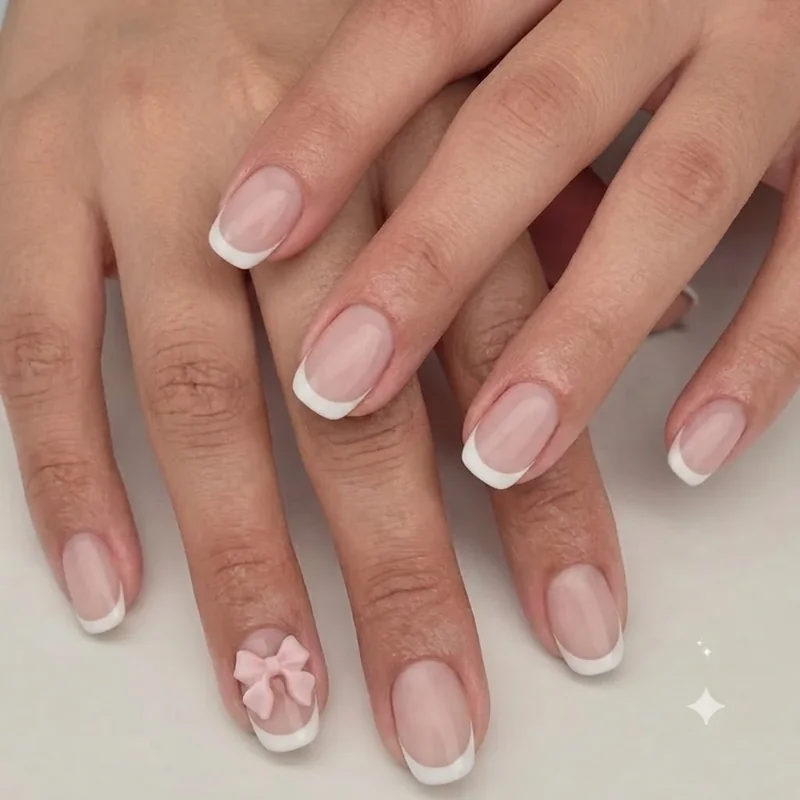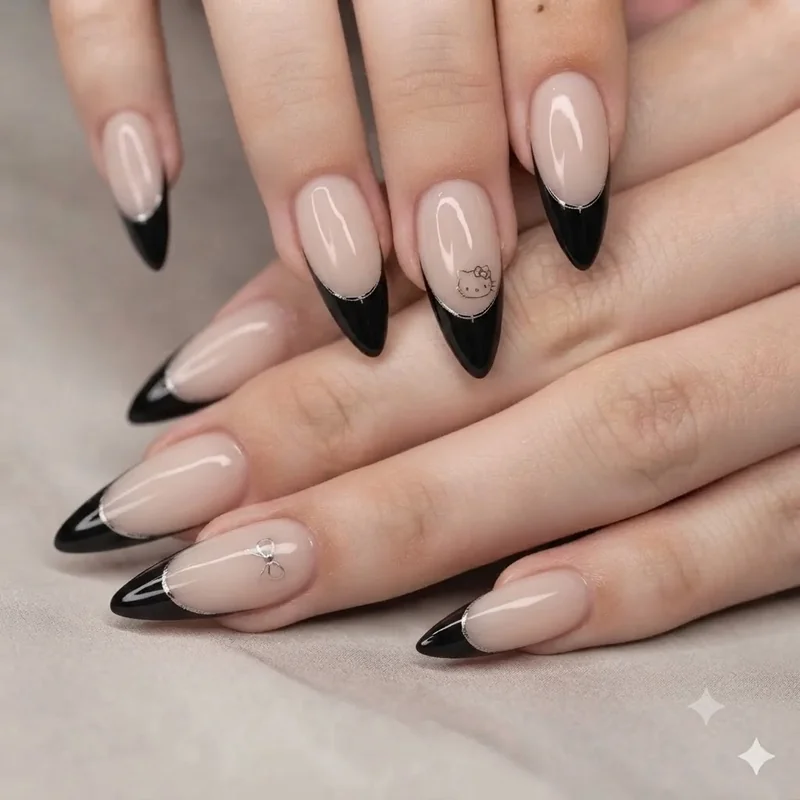
Hello Kitty nails are not a childhood leftover you are too old for. Done with any intention at all, a bow accent or a clean French tip smile line reads as a deliberate nostalgia choice, the same way a vintage band tee or a Le Creuset in the exact shade you wanted reads as a choice. That is the actual answer to the question most people are quietly asking before they even type "hello kitty nails" into a search bar: does this look like an adult chose it, or does it look like a leftover party favour. The difference lives entirely in the execution, not the character.
That hesitation is fair, by the way. A full ten-nail set of primary-colour Hello Kitty faces does read young. But that is one execution choice out of dozens, and it is the one competitor roundups keep photographing because it is the easiest thing to screenshot from Pinterest. This guide skips the random photo grid. Instead, it maps the actual decision points: which nail shape carries which style, what is realistically DIY-able versus salon-only, how long the 3D and charm-heavy looks actually hold up, and where the line sits between "kids' theme" and "collector's item energy." By the end, you will know exactly which version of this to book or attempt, not just what it can look like in theory.
Are Hello Kitty Nails Too Childish for Adults? (Short answer: no)
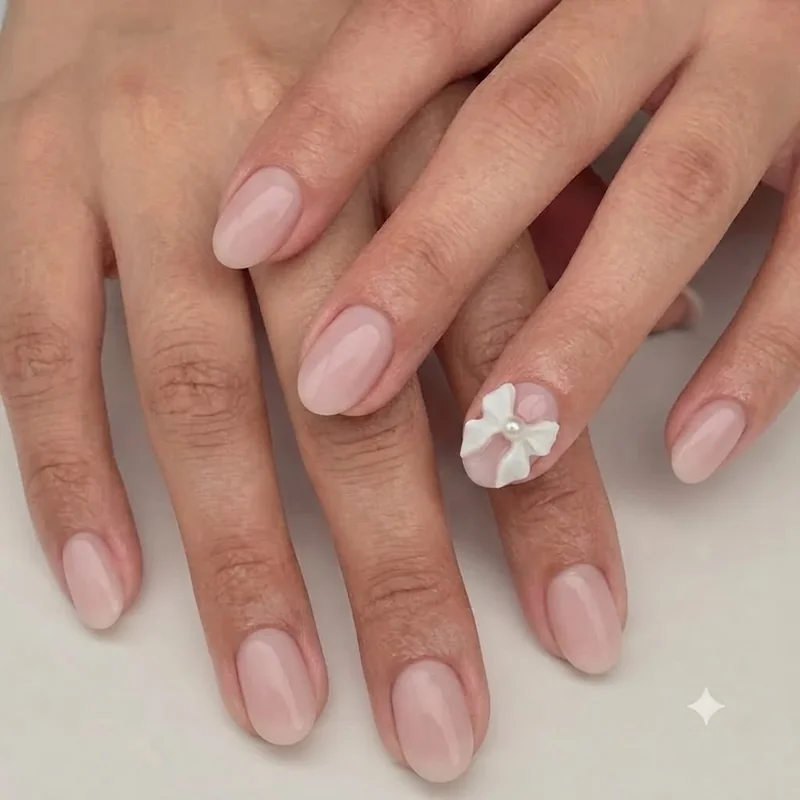
Short answer: no, and the reasoning holds up under scrutiny. Childish or not comes down to density and colour, not the character herself. One considered accent nail on a pastel or nude base reads as a nostalgia flex. Ten nails of loud primary-colour cartoon faces reads as a costume.
Look at where the "grown-up twist" language keeps showing up across the sources actually driving demand right now: nail creators explicitly frame sophisticated Hello Kitty sets as their own category, distinct from anything aimed at kids. That is not a coincidence or a marketing angle invented for this post. It reflects a real shift, the same one that has pulled other 2000s and Y2K signifiers back into adult wardrobes without anyone treating them as costumes. Hello Kitty in 2026 sits inside a wider wave of Korean-influenced nail trends built on milky pink bases, chrome accents, and one restrained statement nail rather than full-coverage character art.
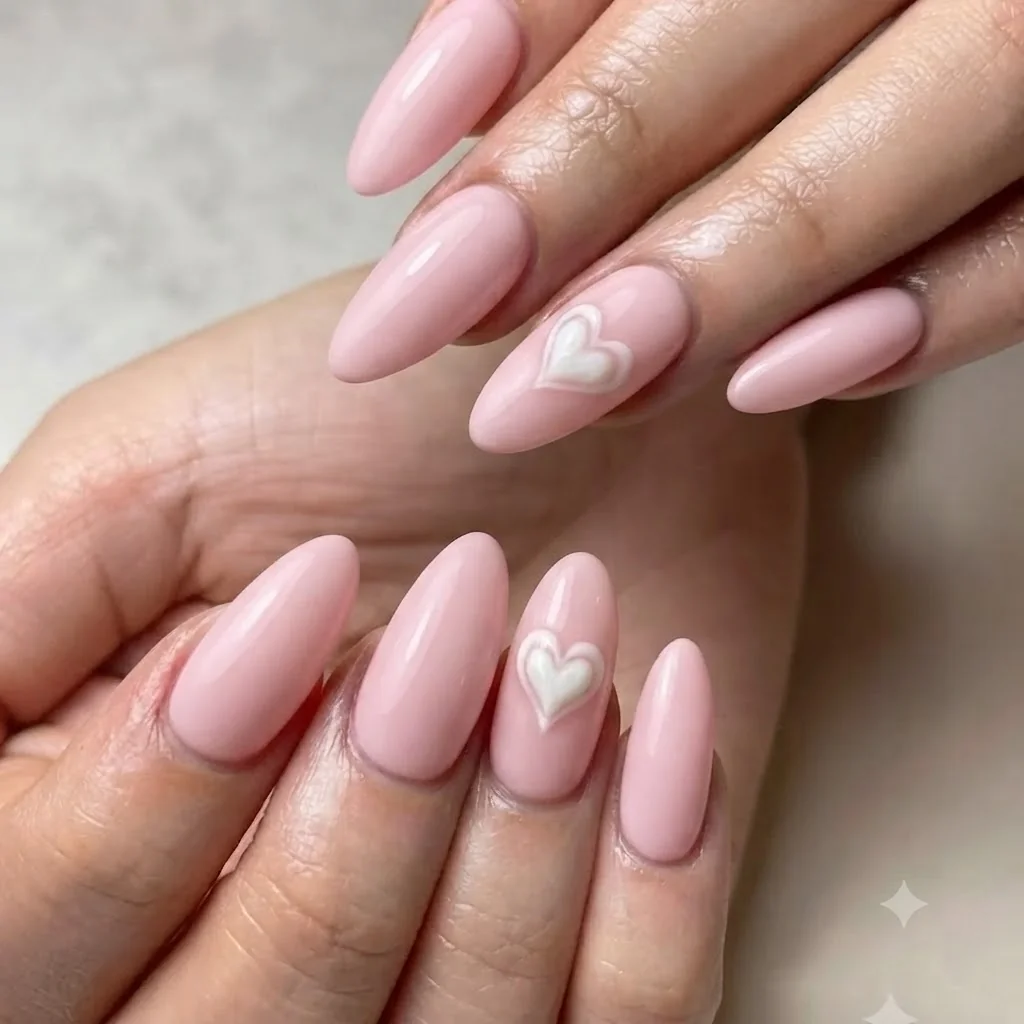
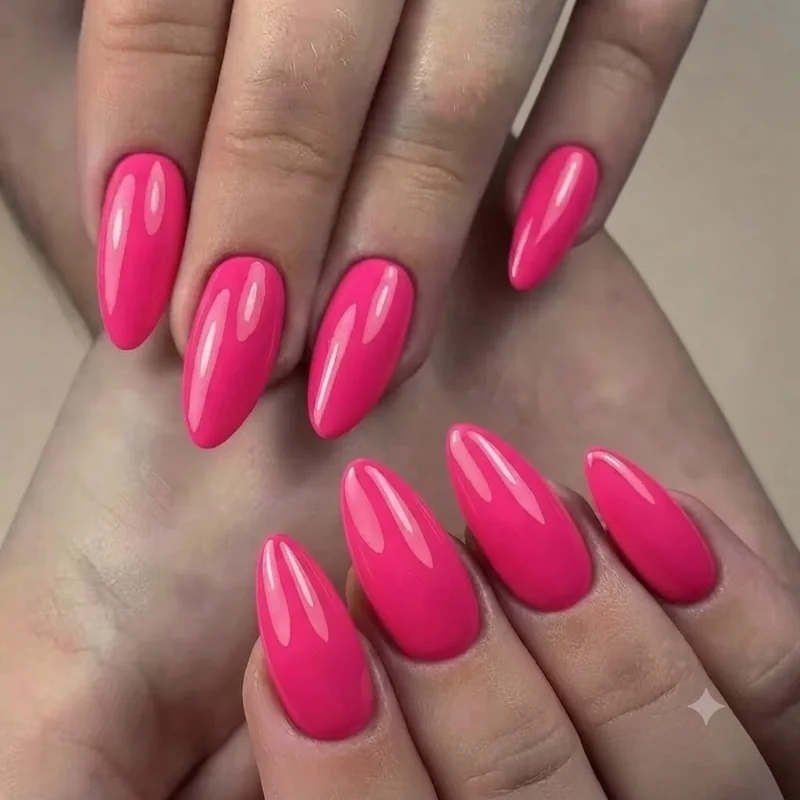
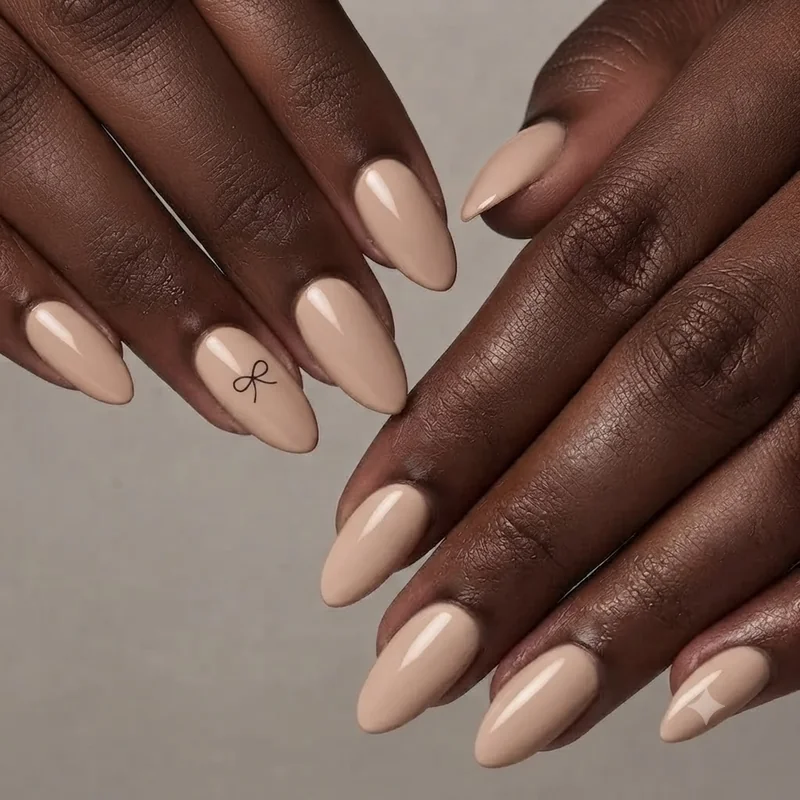
The version that reads young: full cartoon faces across all ten nails, saturated primary red and white, glossy high-shine finish, no negative space anywhere on the nail. The version that reads intentional: a single accent nail, a jelly or milky base, a bow or ear silhouette reduced to a clean line rather than a full illustration, and a matte or soft-shine top coat instead of high gloss. Same character, completely different read, and the gap between them is a handful of specific choices rather than some vague sense of "maturity."
If you work somewhere with a real dress code, the accent-nail approach or a French tip with a bow detail sits comfortably inside "creative but professional." A full character set reads more overtly themed and is better saved for a weekend, an event, or a day when you are not walking into client meetings.
The Best Nail Shape for Your Hello Kitty Design
Most people pick their Hello Kitty design first and their nail shape second. Flip that order and the whole set looks more deliberate.
Shape determines how much surface area a design has to work with and which direction the lines naturally pull, and that matters more here than it does for a plain colour set. Hello kitty nails built around a French tip smile line need length and a curved free edge to let that line arc properly, which almond and coffin shapes provide and short square shapes do not.
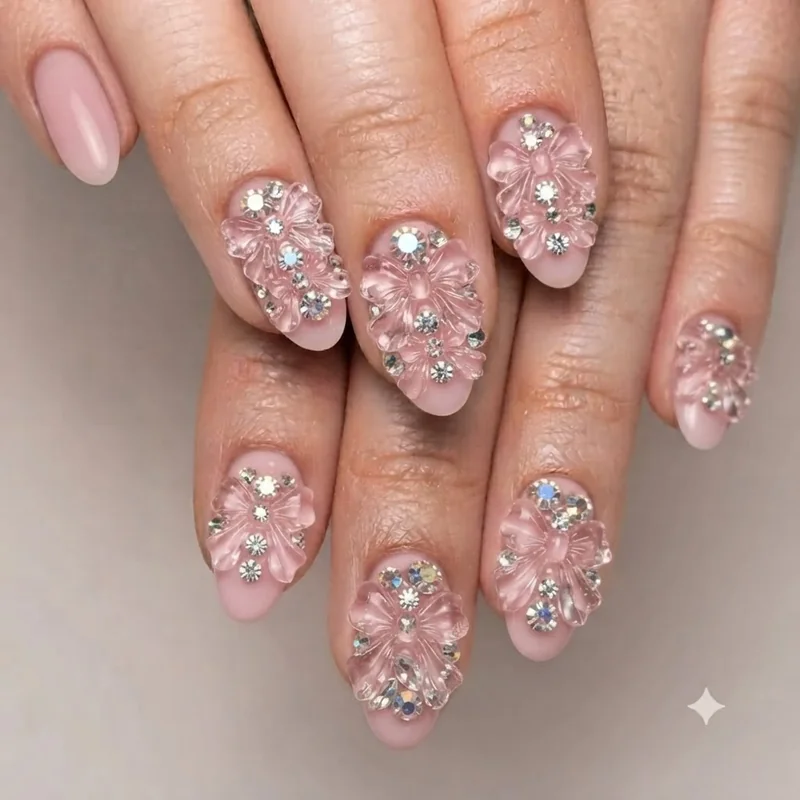
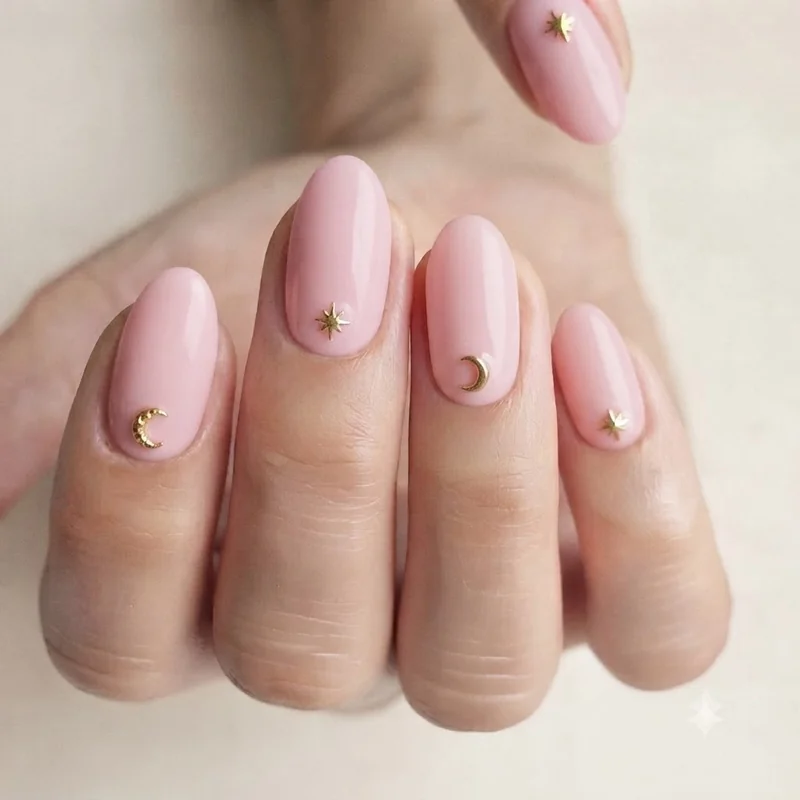
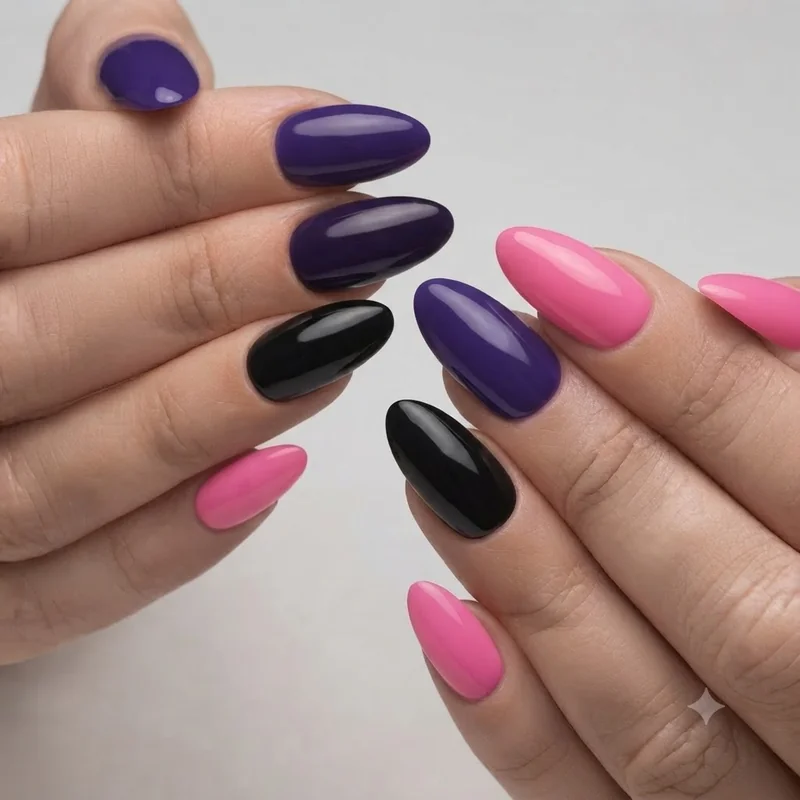
Almond and coffin shapes are the strongest match for French tip and single-accent character work. The tapered or squared-off tip gives a bow or cat-face silhouette enough room to sit cleanly without crowding the cuticle line, and the elongated surface lets a smile line curve the way it is meant to instead of sitting flat and stubby. Square and shorter round shapes suit the minimalist end of the spectrum better: a small dot-and-line bow, a single whisker mark, or a tiny rhinestone cluster near the base, where the design does not need much real estate to read clearly.
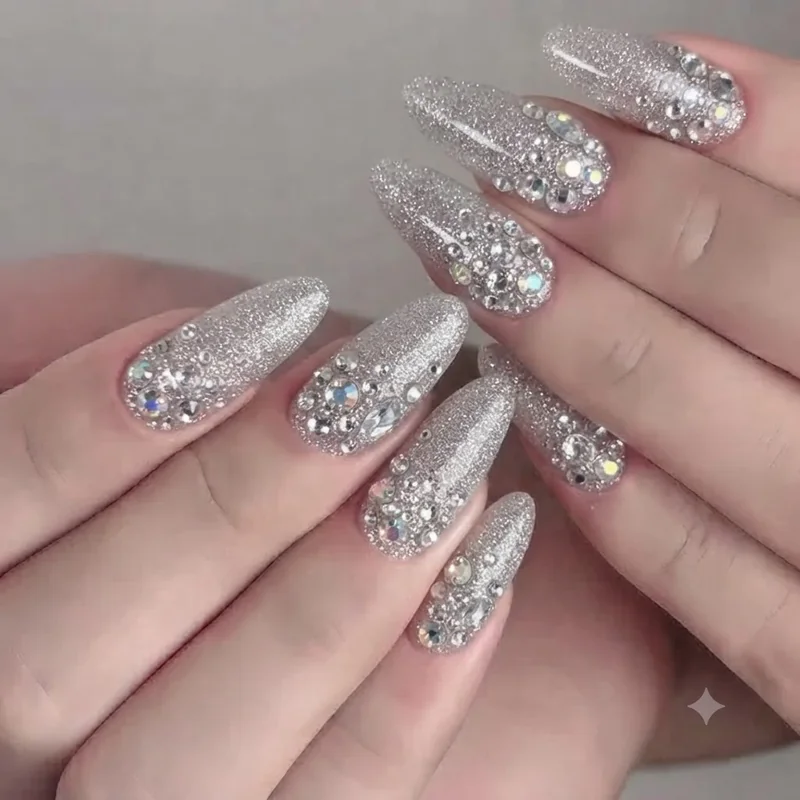
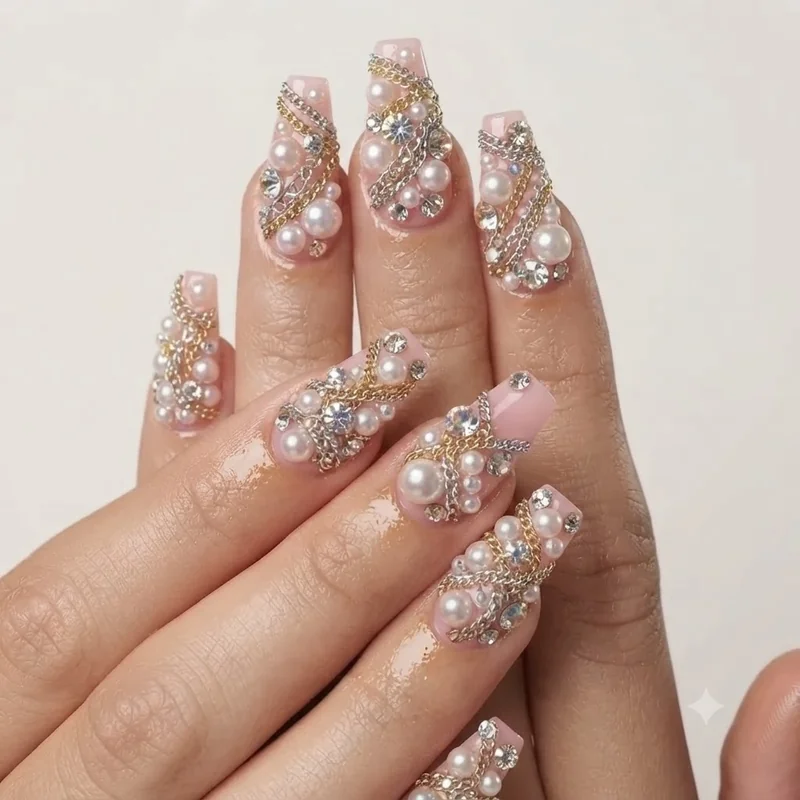
Length plays its own role, separate from shape. Detailed work, meaning full character faces, layered 3D charms, or intricate line art, needs medium to long length to avoid looking cramped. Shorter nails are not off-limits, but they push you naturally toward the minimalist or French tip categories rather than the maximalist charm route, simply because there is less physical space to place detail without it blurring into the next nail over.