Nail Care Routine for Mature Hands: The Daily, Weekly, and Monthly Reset
Your nails did not gradually decline. For most women, there is a distinct before and after. Nails that used to bend now snap cleanly. Polish that used to last ten days chips by day four. The nail care routine for mature hands that worked in your forties has stopped working, and no one has explained why. The nail care routine for mature hands you actually need is built around that shift not around generic tips that ignore it.
This is not another overwhelming tip list. It is a structured daily, weekly, and monthly routine organised by what your nails need right now, with the hormonal and circulatory science behind each step so it makes sense to follow. If you have been looking at the broader topic of nails for older women, this is where the practical routine lives.
Why Do Nails Change So Much After 50?
Nail care routine for mature hands starts with understanding what changed. Nails become more brittle after 50 primarily because falling oestrogen levels reduce both keratin production and moisture retention in the nail plate. Oestrogen helps regulate hydration throughout the body when levels drop during perimenopause and menopause, the nail plate loses its ability to hold onto water, making it drier, more prone to splitting, and slower to grow.
The nail matrix is where this matters most. The nail matrix is the living tissue at the base of each nail, beneath the cuticle, where new nail cells are produced. It contains oestrogen receptors. When oestrogen declines, circulation to the nail matrix can slow, collagen and keratin synthesis decreases, and the nails that grow out are structurally weaker before they have even emerged. According to Mayo Clinic's nail care guidance, age-related nail changes are directly connected to reduced oil production and impaired circulation both of which accelerate sharply during the menopause transition.
Studies suggest around 65% of women notice nail changes during this period, yet fewer than half recognise those changes as hormonal. That matters because the fix for hormonally driven nail fragility is different from the fix for dehydration alone. You need both moisture replacement at the surface and structural support at the nail matrix level.
The additional factor that compounds everything: hand washing. Frequent contact with water and soap strips the natural lipid layer from the nail plate faster than it can regenerate. Hand sanitiser, with its high alcohol content, accelerates that stripping further. You are not imagining it. Since brittle nails after 50 have a specific biological cause, the routine that addresses them has to work on both levels simultaneously hydration at the surface, and nutrition and protection at the root.
Vertical ridges deserve a separate mention. They are a normal part of nail ageing, caused by the same slowing of cell turnover that creates fine lines in skin. They are not a sign of illness or deficiency on their own. What a good routine can do is reduce their severity over time by keeping the nail plate consistently hydrated.
The Daily Nail Care Routine for Mature Hands
Most people think a nail routine means the hours you spend on a manicure. The real routine is what you do in the other twenty-three hours of the day.
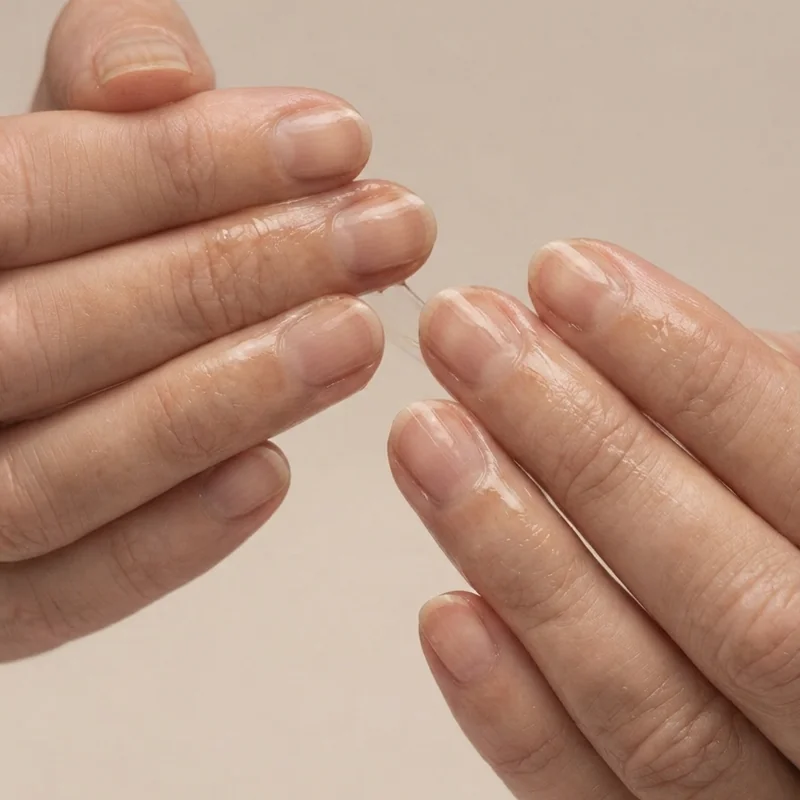
Cuticle oil: morning and night. Yes, every day. Cuticle oil applied twice daily is the single highest-return habit in this routine. You should use cuticle oil every day, not just sometimes. For mature nails, once daily is a minimum twice produces meaningfully better results because the oil is absorbed within hours and the nail plate needs continuous moisture input. Look for jojoba, vitamin E, or sweet almond oil as primary ingredients; these penetrate the nail plate rather than sitting on the surface. Apply a small drop to each cuticle, massage in circular motions, and let it absorb. This takes approximately forty-five seconds.
Hand cream after every wash. Not occasionally. Every time. The moment you dry your hands, reach for hand cream. Keep a small tube at every sink in your house. The window immediately after washing while the skin is slightly damp is when cream absorbs most effectively and prevents the rebound dehydration that happens when water evaporates from the skin surface.
Gloves for wet work. This is the habit the old movies had right: "gloves!!!" as one reader put it. Washing up, cleaning surfaces, gardening all of it with rubber gloves. Ten minutes of hands in soapy water does more damage to a mature nail plate than a full week of missed cuticle oil. The nails expand when wet and contract when dry; that repeated swelling and shrinking is what causes splitting and peeling at the free edge.
Hand sanitiser: use sparingly. Does hand sanitiser actually damage your nails? Yes, with repeated use. The alcohol content strips the nail plate's natural oils faster than soap and water. Sanitiser is not avoidable entirely, but when soap and water are available, use them instead. Follow any sanitiser use with cuticle oil or hand cream as soon as practically possible.
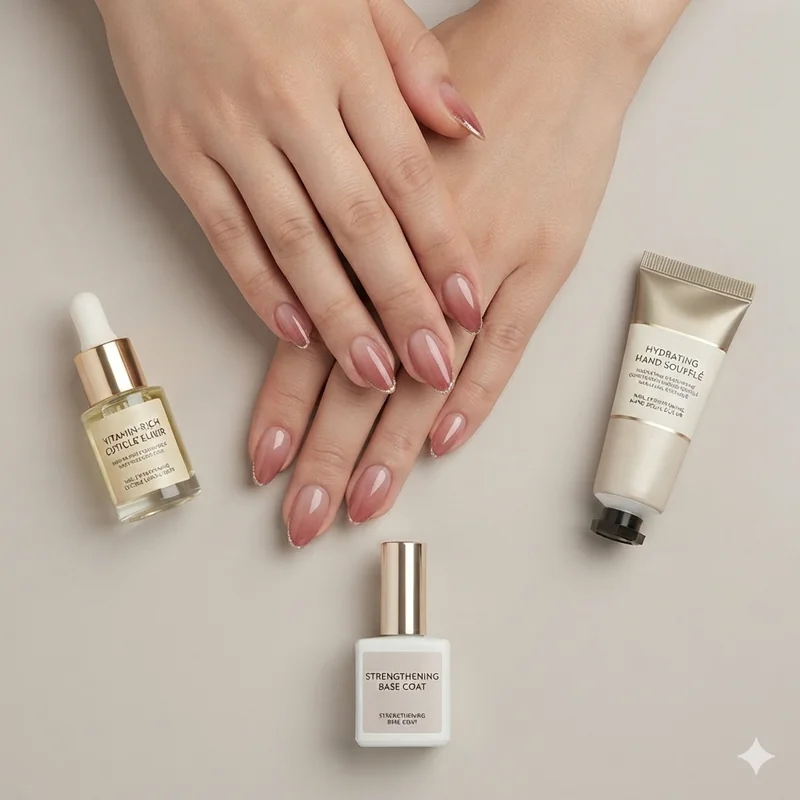
Base coat on bare nails. If you are wearing nail polish, a good base coat protects the nail plate from pigment staining and provides a physical barrier against water penetration. If you are going polish-free, a strengthening base coat worn alone is worth doing several times a week. It acts as an armour layer on a nail plate that is no longer producing its own oils at the rate it once did.