Opal Nail Ideas That Capture the Color-Shift Magic
Hold a hand under three different light sources and the opal manicures below will read as three slightly different colors each time. That's not a flaw in the photography. It's the entire point.
Precious opal is the stone version that flashes distinct, vivid colors, often blue, green, or even a streak of orange or red, as it catches the light. Common opal is the milkier, more uniform cousin, with a soft pearlescent glow but none of the dramatic color-play. Both translate into gorgeous, entirely different nail looks, and knowing which one you're drawn to changes what to ask for.
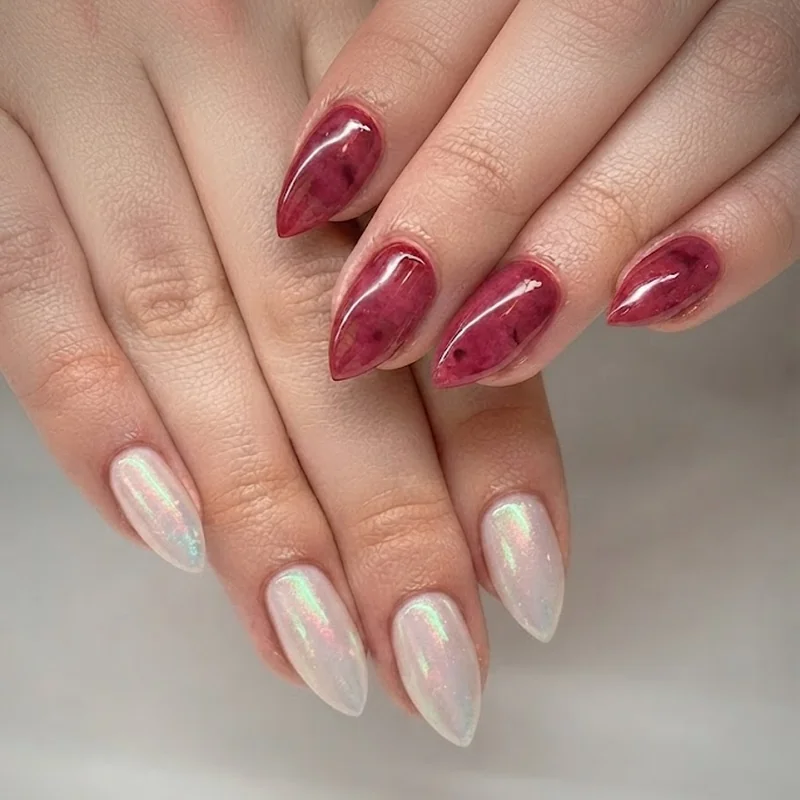
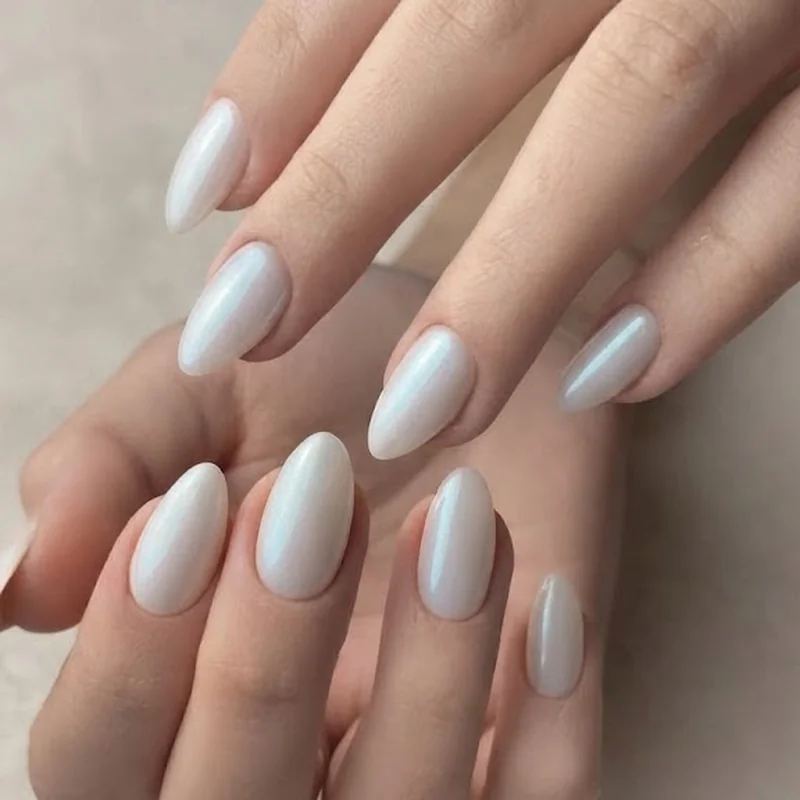
The milky, common-opal end of the spectrum shows up as a soft white-to-pale-pink base with a whisper of shimmer underneath, more glow than glitter. It photographs beautifully in natural light and reads as understated in person, which makes it one of the more office-friendly ways to wear october birthstone nails. This is the shade range for someone who wants the birthstone reference without anything loud.
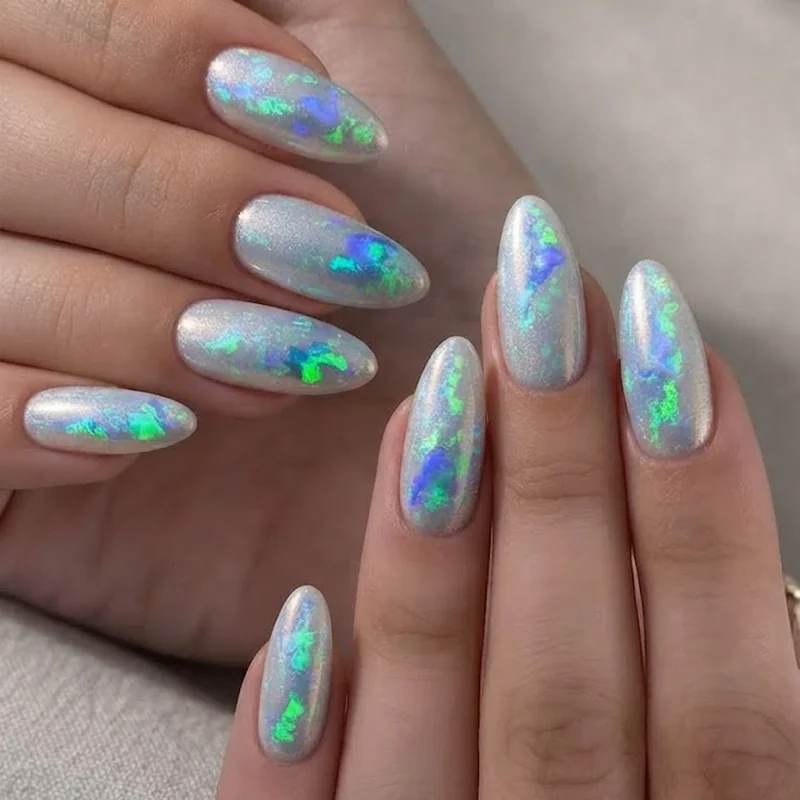
The precious-opal end goes bolder. Think a pale or dark base with genuine color-shifting chrome layered over it, so the nail flashes teal in one light and violet in the next. This is where opal chrome nails earn the name, and it's the more editorial, statement-making of the two directions. A darker base, charcoal or deep navy, pushes the flash even further, since the contrast between the dark backdrop and the bright chrome shift becomes the whole story. Almond and coffin shapes tend to show off the shift best, since the longer surface gives the light more room to move across.
There's a middle ground too, worth mentioning because most galleries skip it: a pale lavender or soft blue base with just a hint of aurora shimmer, landing somewhere between the two extremes. It's the pick for someone who wants more presence than a milky white base but isn't ready for full precious-opal drama, and it's one of the most requested october birthstone nails looks precisely because it splits the difference so well.
How to Actually Get the Opal Effect on Your Nails
The opal effect comes from chrome powder buffed over a no-wipe gel top coat, not from a specialty polish poured straight from the bottle. Yes, you can get a version of it with a duo-chrome or color-shifting polish alone, though the shift will be softer than the salon chrome method. Both routes are genuinely doable without professional training.
Chrome powder is an ultra-fine, reflective pigment that gets pressed or buffed onto a tacky top coat, where it creates a mirror-like, color-shifting surface once it sets. It's the single ingredient behind almost every dramatic opal-effect manicure online, and it's sold in small jars specifically labeled for nail use, often under names like aurora, unicorn, or mermaid powder.
Getting it right at home comes down to three things. First, the base has to be smooth and fully cured. Any texture or unevenness shows through the chrome, since it reflects everything underneath it. Second, the top coat needs to be a genuine no-wipe formula, applied and cured but left tacky rather than wiped clean the way a standard top coat is. Third, the powder goes on with a soft silicone applicator or brush, pressed and buffed in small circles rather than swiped, which is what creates the even, mirrored finish instead of a patchy one.
Regular polish can get you close if chrome powder isn't available. Look specifically for a bottle labeled duo-chrome or color-shift, layered over a pale or dark base depending on how dramatic you want the flash. It won't have quite the same mirror intensity as true chrome, but the color-shift principle is the same, and it's a far lower-commitment way to test whether the opal look is for you before booking a salon appointment for the full effect.
For a deeper technical walkthrough of the layering process, how the opalescent chrome finish is done step by step on white bases covers the application sequence in more detail than fits here.
Tourmaline Nail Ideas in Every Shade From Pink to Green
Pink is the shade most people picture when tourmaline comes up, and it's the right instinct but only half the story. Tourmaline is one of the most color-diverse gemstones that exists, which means tourmaline nails can go in almost any direction and still be technically accurate to the stone.
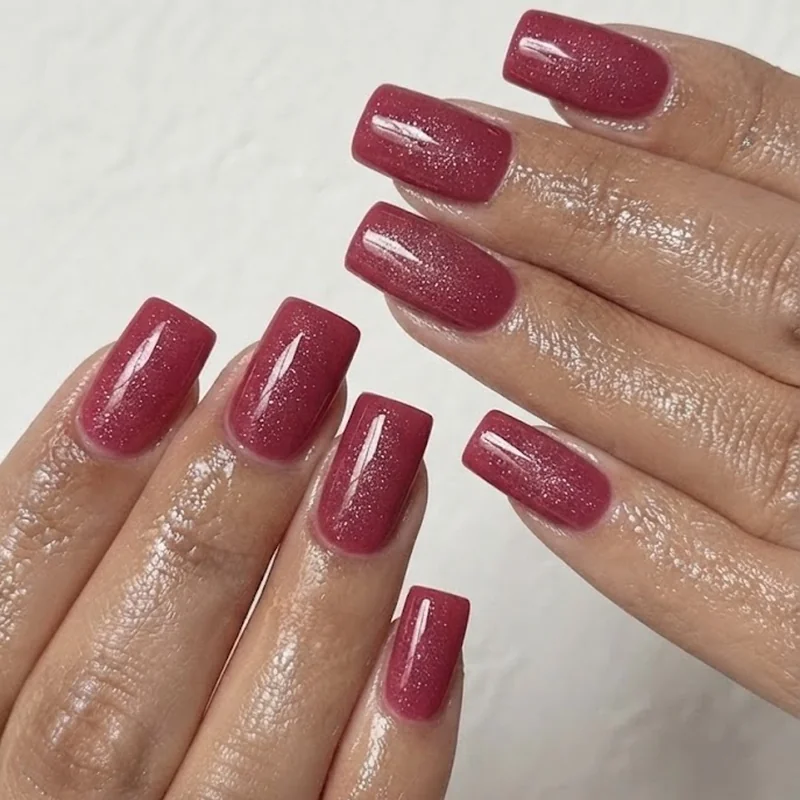
The pink end of the range is the classic, the one that shows up in every jewelry counter and most birthstone content. A clean, saturated bubblegum-to-rose pink, worn glossy for a polished look or with fine glitter mixed in for more sparkle, is the safest and most instantly readable version of tourmaline nails. Square and coffin shapes both wear this shade well, and it pairs easily with gold accents if a manicure feels like it needs one more detail.
Green tourmaline gets skipped constantly in favor of pink, which is a genuine gap since the stone occurs in some of the richest greens in the gem world. A deep forest or emerald-leaning green, worn in a glossy gel finish, reads as sophisticated rather than seasonal, and it's arguably a better fit for October specifically than pink is, given the month's overall palette. october nail colors for fall lean heavily into exactly this kind of deep, warm green, so a tourmaline manicure in this shade does double duty.
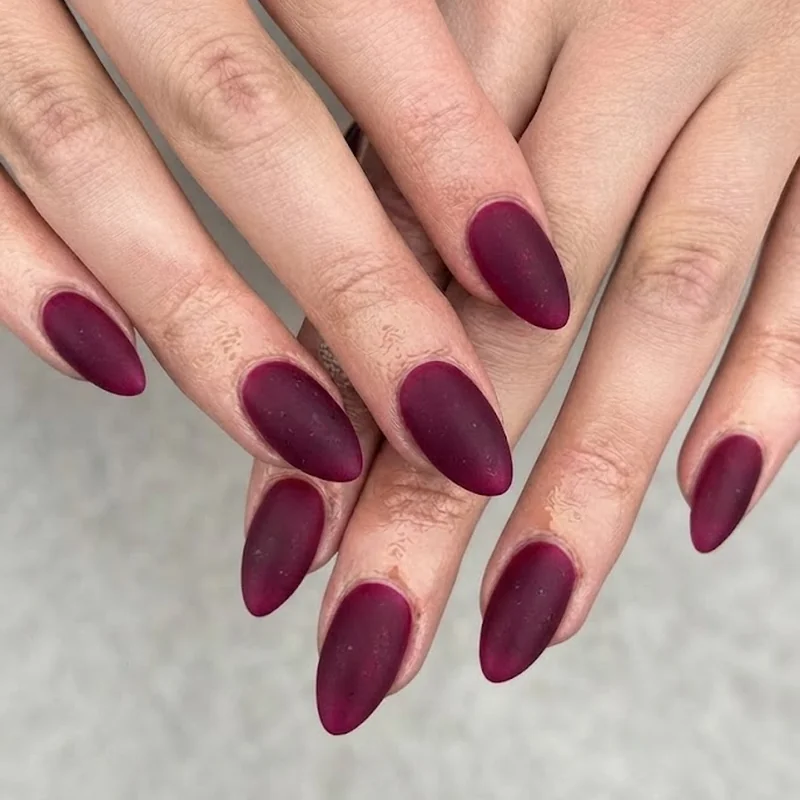
Then there's the deeper end of the spectrum: berry, plum, and near-black jewel tones drawn from rubellite and siberite tourmaline varieties. These are the picks for someone who wants the birthstone connection without anything that reads as pastel or soft. A deep wine-red tourmaline manicure, worn matte or with just a touch of shine, sits at the moodier, more dramatic end of what this stone can offer.
The common thread across all three directions is saturation. Tourmaline nails, regardless of which shade, tend to look best with real depth of color rather than a washed-out or sheer version of the same hue. That's the detail most gallery photos underline without ever spelling out. A single coat of any tourmaline shade tends to look chalky and unfinished, while two full coats build the kind of density that reads as intentional rather than accidental.
Watermelon Tourmaline: The Prettiest Two-Tone Trend
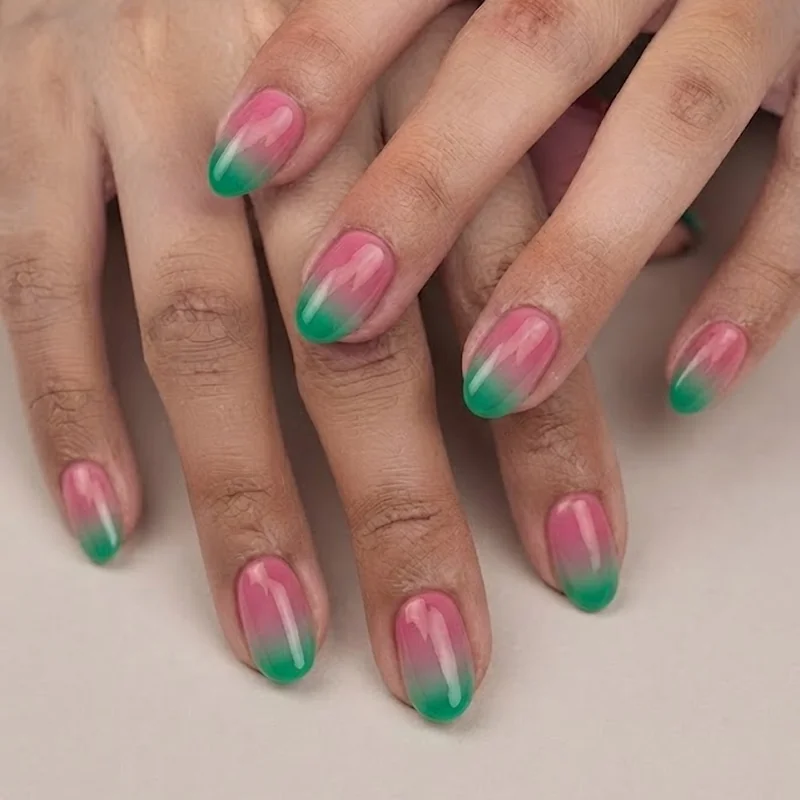
Watermelon tourmaline is a naturally occurring variety of the stone with a pink center and a green outer layer, named for the obvious resemblance when the gem is cut in cross-section. Translated onto nails, it becomes a two-tone manicure with pink dominating the base of the nail and green taking over toward the tip, or the reverse.
The look reads as more sophisticated than a standard French tip because the color transition isn't a hard line. Most watermelon tourmaline manicures use a soft gradient between the pink and green, blended with a sponge or brush technique so the two shades melt into each other rather than meeting at a sharp edge. A crisper, more graphic version exists too, with a defined pink base and a distinct green tip, closer to a colored French manicure, for anyone who wants the two-tone story without the blending.
This is the one shade combination competitor galleries almost never separate out on its own, usually burying it inside a general "pink and green" mention without naming it. It deserves its own moment. The pairing is genuinely unusual among nail trends, distinctly tied to the actual stone rather than a seasonal color story, and it photographs well against almost any nail shape, though a longer almond or coffin gives the gradient more room to breathe.
Ratio matters more than most people expect going in. A watermelon look with too much green can drift toward a generic holiday manicure, while too much pink loses the two-tone story entirely. The most balanced versions keep roughly two-thirds pink at the base and one-third green at the tip, which mirrors how the actual gemstone typically forms.