Metallic and Chrome Finishes to Try This September
Getting a chrome nail finish at home starts with a fully cured, tack-free gel base, since chrome powder only grabs onto a flawless surface. The powder is buffed on with a silicone applicator or brush in small circular motions, then sealed under a no-wipe top coat. Skipping the smoothing step is the most common reason a home chrome attempt turns out streaky instead of mirror-bright.
Chrome powder finish is a mineral pigment applied dry over cured gel polish, distinct from the polish color underneath it, and it is what produces that liquid-metal, mirror-like reflection. It reads differently depending on the base shade: chrome over a nude reads soft and molten, chrome over black reads hardware-store metallic, chrome over a jewel tone reads closer to poured glass. That last combination has real range this September, and pairs directly with how sapphire and jewel-tone pairings work across september nail looks if you want the birthstone angle without going full stone-set nail art.
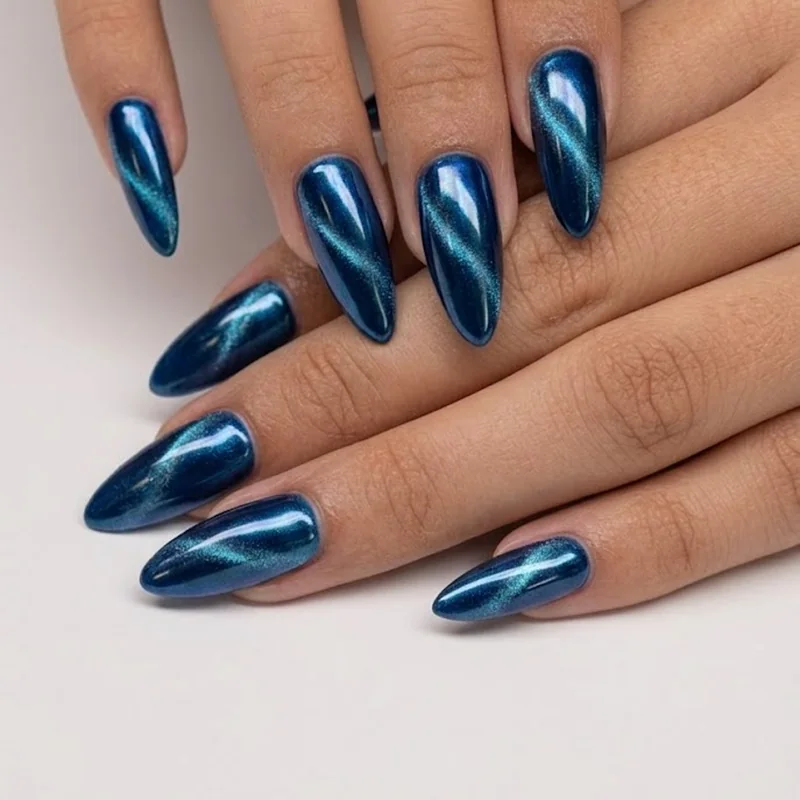
Cat-eye gel polish is a magnetic-infused gel that, once cured under a handheld magnet instead of a lamp first, forms a single shifting line of light down the center of the nail. The mechanism is genuinely different from chrome: metallic particles suspended in the gel align toward the magnet before the gel sets, then the whole thing cures under UV or LED light to lock the pattern in place. Hold the magnet too far from the nail and the line comes out faint. Cure before holding the magnet close enough, and the effect does not form at all, it is the single most common mistake first-timers make.
Both techniques photograph beautifully but wear differently, and worth booking either only after you have decided which finish matches your maintenance tolerance. Chrome shows fingerprint smudging faster in the first 48 hours. Cat-eye holds its shine longer but shows tip wear a few days sooner than a standard glossy gel. Neither is the wrong choice. They are just solving for different things. If your base color decisions usually start with the shade card, september nail colors is worth a look before you commit to which metallic direction fits your existing rotation.
Matte and Velvet Textures for a Softer Fall Mood
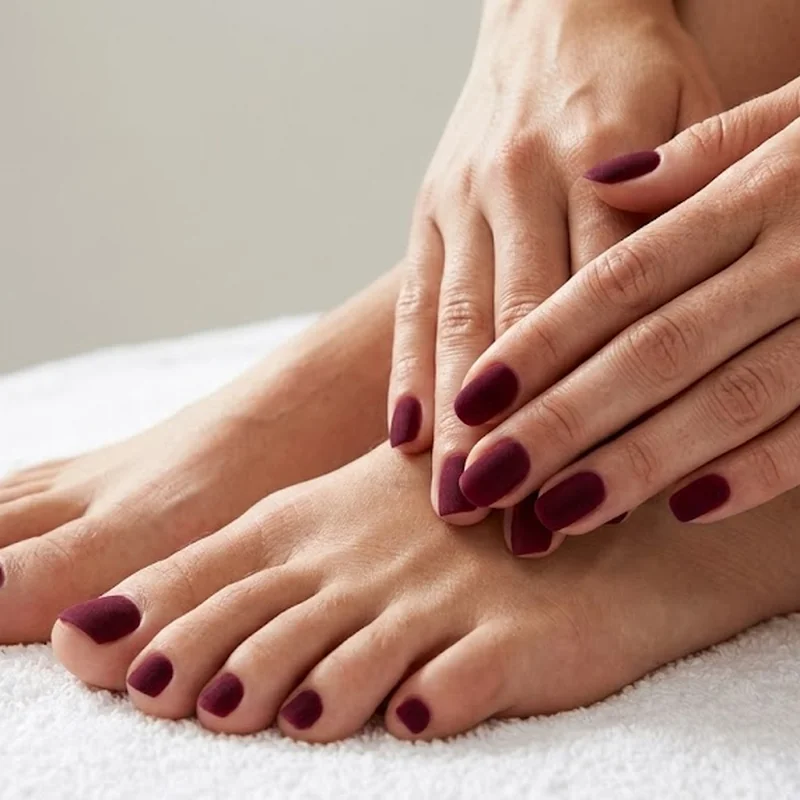
Where chrome and cat-eye pull light in, matte does the opposite. A quality matte top coat kills shine completely, and the better formulas leave a soft, almost suede-like hand-feel instead of the chalky finish older matte polishes were known for. That texture shift alone is why matte read as dated five years ago and reads as elevated now.
Velvet finishes push the same idea one step further. Where matte flattens shine evenly across the whole nail, a true velvet effect uses a fine-textured top coat to create subtle depth, almost a brushed-fabric look under close light. It photographs quieter than chrome, but in person it has more dimension than a flat matte, and it wears the season's mood better than any single color choice could on its own.
Pairing either finish with a deep, saturated base rather than a pastel is what makes the effect land. Burnt umber, deep olive, aubergine, near-black plum, these read as intentional under matte in a way lighter shades do not, since matte tends to mute pastels into something closer to chalky rather than moody. As the month moves on and the palette gets pulled deeper still, late september nail ideas leans even further into this darker, more velvet-forward direction if the early-month shades feel too light.
Matte is also the lower-maintenance choice of the two textures covered so far. It does not show fingerprints the way chrome does, and a matte top coat re-application every week or so keeps the finish looking fresh without a full redo.
Glass, Jelly, and Glazed Finishes Making a Comeback
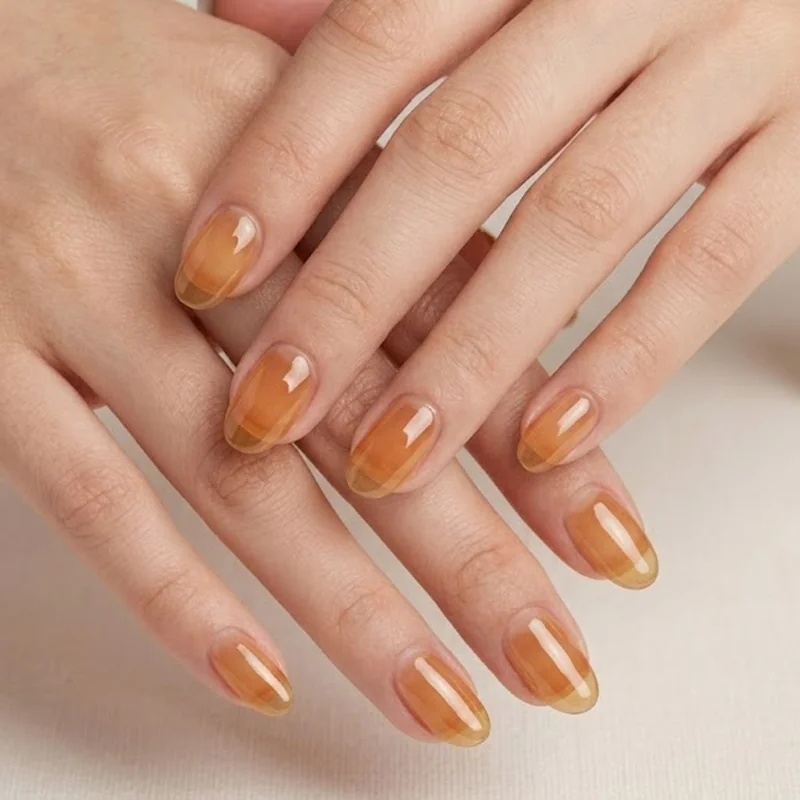
A glass or jelly finish is a translucent gel polish applied in thin, sheer layers so the natural nail shows through, closer to stained glass than a solid opaque coat. It sits at the opposite end of the texture spectrum from matte: instead of killing shine, it is built entirely around depth and light transmission.
This finish disappeared for a couple of seasons while chrome and cat-eye took over the metallic conversation, and its return this September is less a fad revival than a direct reaction to it. After a run of heavy, opaque metallics, a sheer, glassy manicure reads as the palate cleanser. The technique itself is simple in concept, thin coats built up gradually rather than one or two opaque layers, but it rewards patience more than any other finish in this list. Rush the layers and the color pools unevenly at the cuticle.
Glazed donut-adjacent finishes fall into this same family, using a milky, translucent top coat over a barely-there base to mimic that soft-focus, glossy-blur effect. It is one of the few looks here that genuinely splits opinion between "elevated minimalism" and "unfinished," and which side you land on says more about personal taste than the technique's actual execution quality.
For a deeper technical breakdown of exactly how the glazed and velvet cat-eye finishes are layered, the full breakdown of 2026's biggest nail texture trends covers the mechanics in more depth than fits here.
Hand-Painted and Dimensional Nail Art Worth Booking
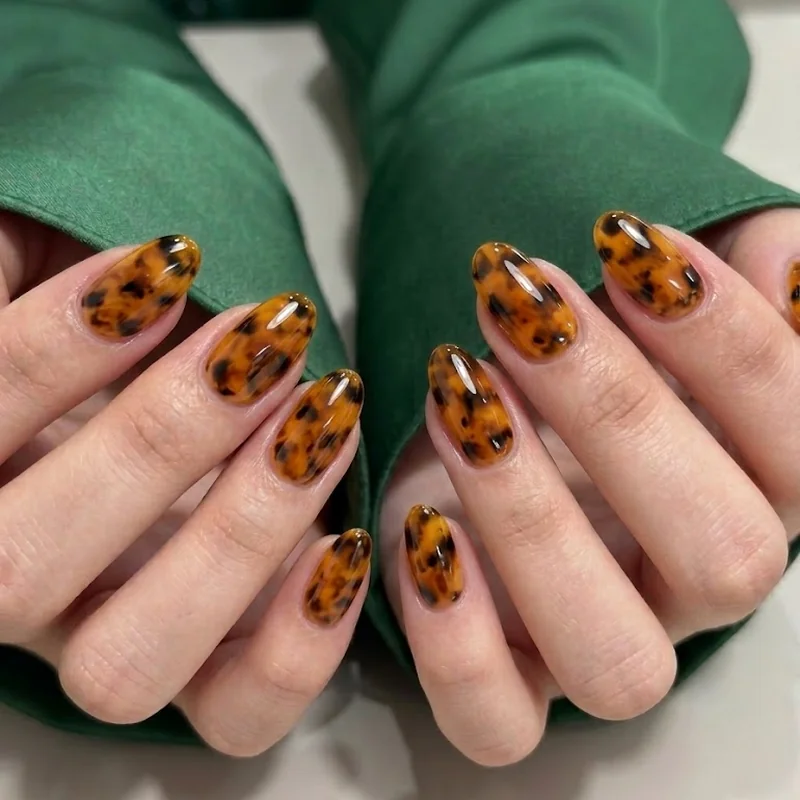
Most people assume hand-painted september nail art requires far more time in the chair than a texture finish. Tortoiseshell, the season's standout hand-painted look, actually takes roughly the same appointment length as a detailed chrome application once a technician has done it more than a handful of times.
Tortoiseshell nail art is done by layering translucent amber, brown, and near-black gel polish in irregular, overlapping patches, then softening the edges before the final cure so the tones blend the way real tortoiseshell does rather than sitting as hard blocks of color. The irregularity is the entire point. A too-symmetrical attempt reads more like a print than the organic material it is imitating. Nail shape actually changes how the pattern sits, longer shapes give the mottled effect more room to develop naturally, and best nail shapes for september is worth a look before booking if tortoiseshell or any dimensional art is the goal.
Blooming gel nail art works through a diffusion technique: color gel is dropped onto a layer of clear gel that has not been cured yet, and the uncured gel lets the color spread and bloom outward into soft, organic floral or marbled shapes before the whole thing is cured under the lamp. It is one of the more forgiving hand-painted techniques precisely because the diffusion does the visual work, not a steady brush hand. The base still needs to be applied evenly, but the bloom itself is closer to a controlled accident than a precise painting.
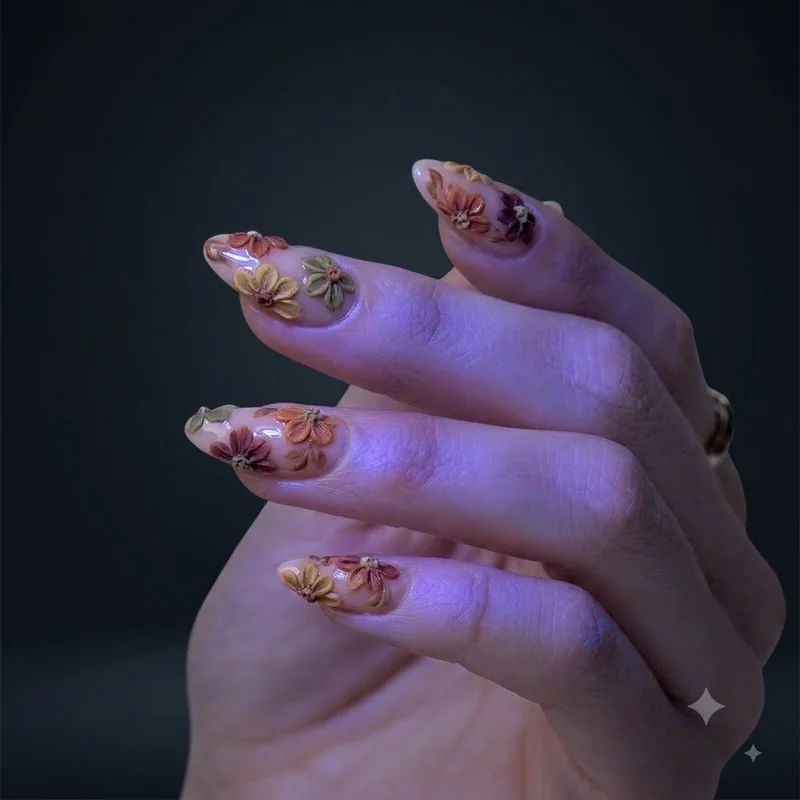
3D nail accents, gems, small sculpted florals, foil shards, sit at the more advanced end of this category, requiring the most technician skill and the shortest realistic wear time before an edge lifts or catches. They are worth booking for a specific event rather than as an everyday finish. Foil transfer, by contrast, is one of the more accessible dimensional techniques: a metallic or patterned foil sheet is pressed onto a tacky, uncured top coat and peeled away, leaving the design behind, no freehand painting required at all.