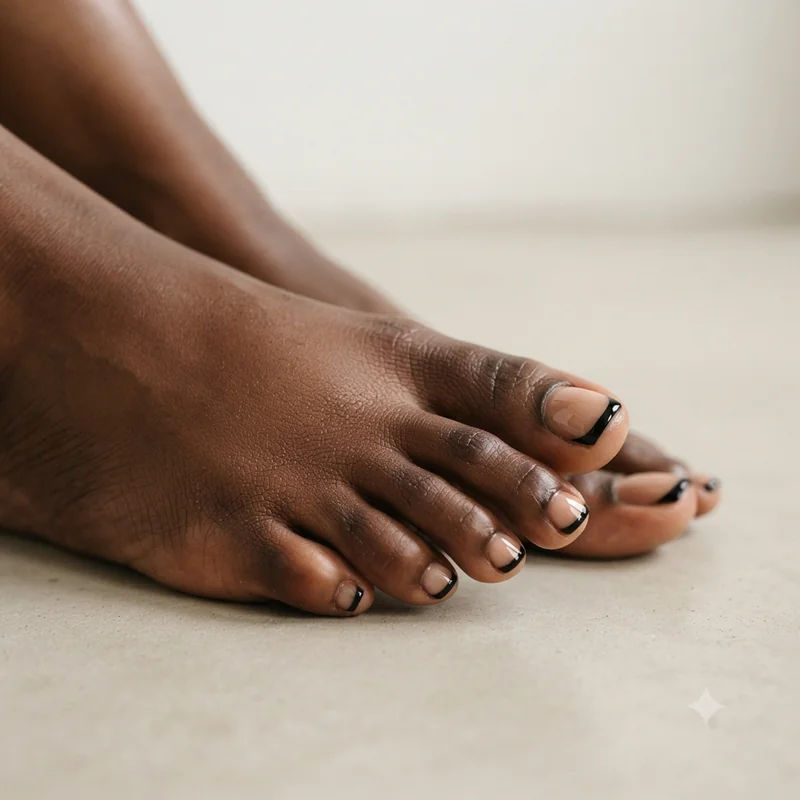
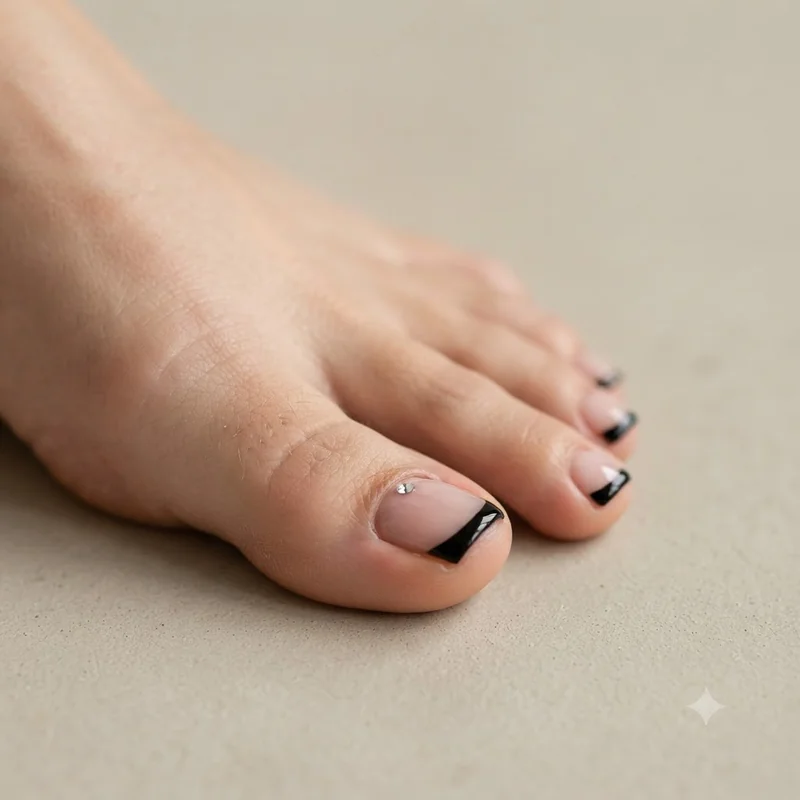
Black french tip toes are not a departure from the French pedicure you already love. They are the sharper edit of it. If the question in your head right now is whether black is too much for a pedicure, the answer is no, not when the tip stays thin and the base stays sheer. This is the version of the French she already wears, just with better contrast and a little more attitude.
You have worn the white-tipped version for years. Maybe you still do. But somewhere between "I used to stick to classic white" and scrolling past yet another black french tip toes look on your feed, something shifted. Consider this the sharper chapter of the same french pedicure guide you already know, not a separate style decision. This is that shift, explained properly: what the look actually is, why it reads editorial rather than harsh, how it sits on every skin tone, and exactly how to ask for it, whether that means booking a salon appointment or reaching for a press-on kit tonight.
What Do Black French Tip Toes Actually Look Like?
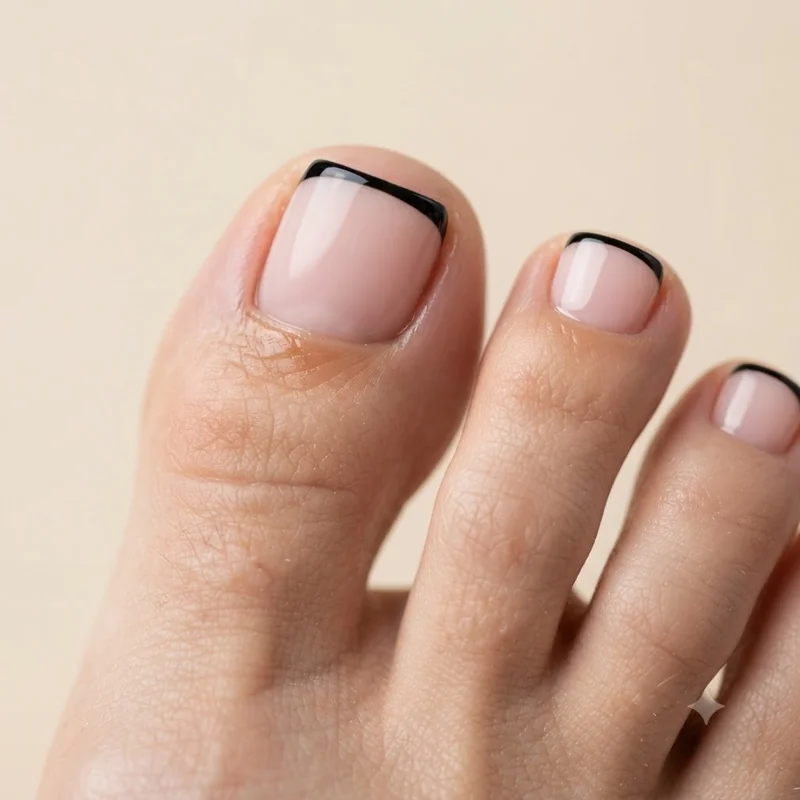
A glossy black line traced along the free edge of the nail, sitting over a sheer or nude base, structured exactly like a classic French pedicure but with the tip colour swapped. That is black french tip toes in one sentence. The smile line, the shape, the proportions, none of it changes. Only the tip colour does.
Where it differs from a standard French is in how much the contrast does the work. White tips sit softly against a nude base. Black tips separate hard, which is exactly why the finish reads more graphic, more considered, less like a wedding-season default. Most versions stay glossy rather than matte, since a high-shine top coat is what keeps the black from tipping into "goth" territory and firmly in "polished" territory instead. The tip itself is usually kept thin, a few millimetres at most, because a thick black band changes the whole proportion of the nail and starts to look heavy rather than sharp.
Shape matters here too. A rounded square or almond nail carries the thin tip line more naturally than a sharp square edge, since the curve gives the smile line somewhere to taper. On toes specifically, the shorter, wider nail bed means the tip guide has less room to work with than it would on fingernails, which is part of why a steady hand or a proper tip guide makes such a visible difference to the final result.
Is a Black French Pedicure Too Dark for Everyday Wear?
No. A black French pedicure reads as polished rather than dramatic once the tip is thin and the base is sheer, which keeps it well within office-appropriate territory for most workplaces. The colour black carries a reputation it does not entirely earn here, because a full black nail and a black-tipped French are two completely different statements.
Think about what actually makes a manicure feel "too much" at work: high shine acrylic length, loud nail art, saturated colour across the entire nail bed. None of that is present in black french tip toes. The base is still sheer or nude, the shape is still contained, and the only bold element is a slim line at the very tip. If your workplace already tolerates a classic French pedicure, it will tolerate this one. For anyone genuinely nervous, a shorter tip length and a warm nude base pull the whole thing even further toward understated.