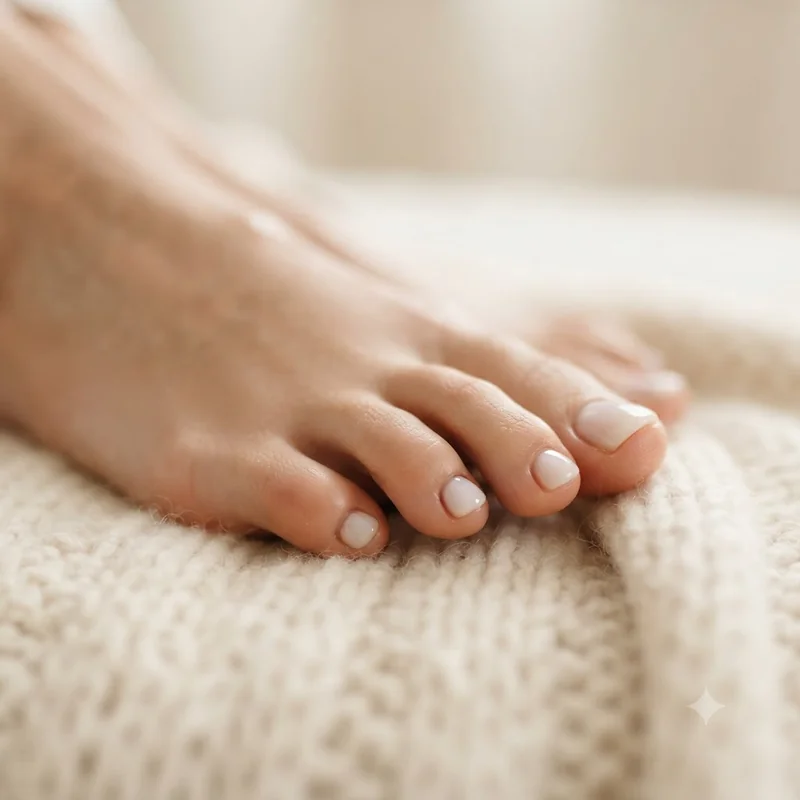
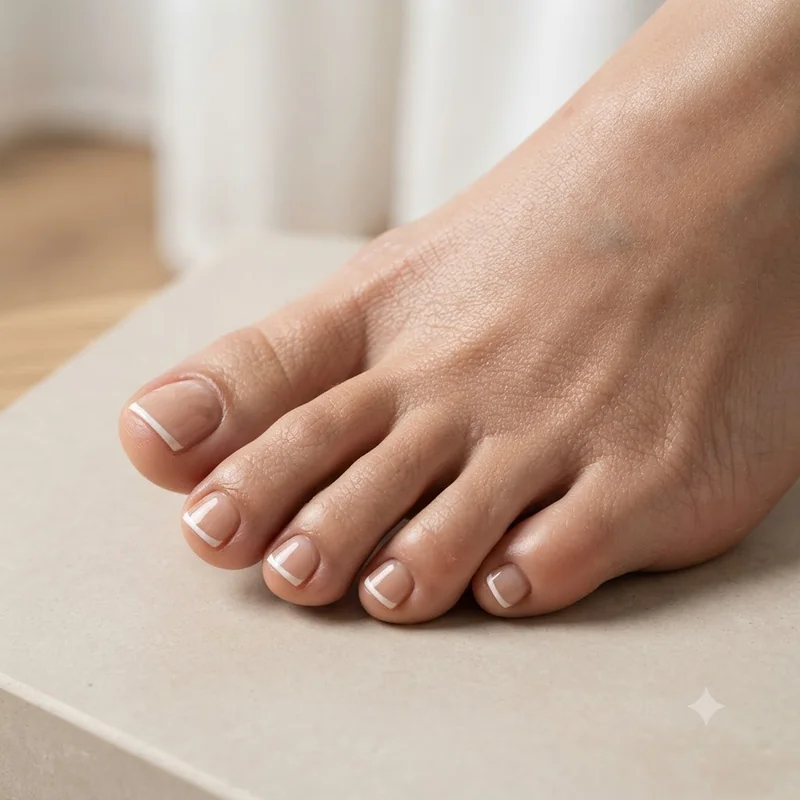
French pedicure for wedding planning usually comes down to one real question: is this classic look going to photograph as elegant, or as expected. It is elegant, and there is a specific reason why. French remains the most consistently chosen bridal pedicure style because it is the one finish that does not compete with anything else in the frame, not the dress, not the venue, not the ten other decisions already made. Whether the debate in your head has been white tips versus something softer, or whether your french pedicure for wedding look even needs to match your manicure, the short answer is that it does not need to be either-or. French works with every dress shade, every venue, every theme, because it was never trying to be the statement. It was always the frame.
That is worth sitting with for a second, because most bridal beauty content treats the pedicure as an afterthought bullet inside a bigger colour roundup. It deserves its own decision. Your french pedicure complete guide covers the technique itself in full if you want the fundamentals first. Here, the focus stays narrow: which bridal variation suits your wedding, how to solve the short-toenail proportion worry if it applies to you, and the two logistics questions almost every bride asks her nail tech eventually, timing and matching.
Is a French Pedicure a Good Choice for Your Wedding?
A French pedicure does not look dated in wedding photos. What looks dated is a French tip that is too thick for the nail bed, applied without attention to proportion. The finish itself has held its place at the top of bridal pedicure choices for years, and it holds that place for a mechanical reason as much as an aesthetic one.
Colour trends move. A shade that photographs beautifully in warm autumn light can read strangely under a reception's cooler string lighting, or clash faintly with a bouquet nobody thought to coordinate against. White tips over a sheer nude base do not have that problem. They read the same in golden hour ceremony light as they do under a tent at 10pm, which is precisely why editors keep naming French among the top bridal picks even as broader colour trends rotate through each season.
The dated feeling people associate with French pedicures almost always traces back to tip width, not the style itself. A thick, stark white tip applied heavy-handed can look like it belongs to an earlier decade of nail art. A well-proportioned tip, thinner, with a soft smile line, looks current regardless of when the photograph is taken. That distinction matters more than most brides realise going in, and it is the one this post keeps coming back to.

Classic White French Pedicure for a Timeless Bridal Look
Picture the moment your shoes come off at the reception. Someone is taking a candid photo of bare feet under a table, or a close-up shot of your toes tucked into strappy heels beside your new spouse's. This is the moment the classic white French pedicure was made for.
The classic version is the one most people picture when they hear the word French: a sheer pink or nude base with a solid, opaque white tip. It is the highest-contrast option in the bridal French family, which makes it the most photogenic against skin tones in bright, direct wedding-day light. Outdoor ceremonies, garden receptions, anywhere the sun is doing real work, this is where classic white earns its reputation.
Proportion is what separates a bridal-appropriate classic French from a dated one. A tip that runs too far down the nail, or one applied with a hard, thick edge, tends to visually shorten the toe, especially in close, macro-style wedding photography where every angle gets scrutinised. Ask for a tip that covers roughly a third of the nail with a clean, slightly curved smile line rather than a flat one. That single adjustment is the difference between a look that says wedding editorial and one that says nail salon walk-in from a decade ago.
Regular polish holds this look for about a week under normal conditions, which matters when you get to the timing section further down. For now, know this: classic white is not the safe, boring choice. It is the choice that works precisely because it refuses to compete with anything else you are wearing that day.