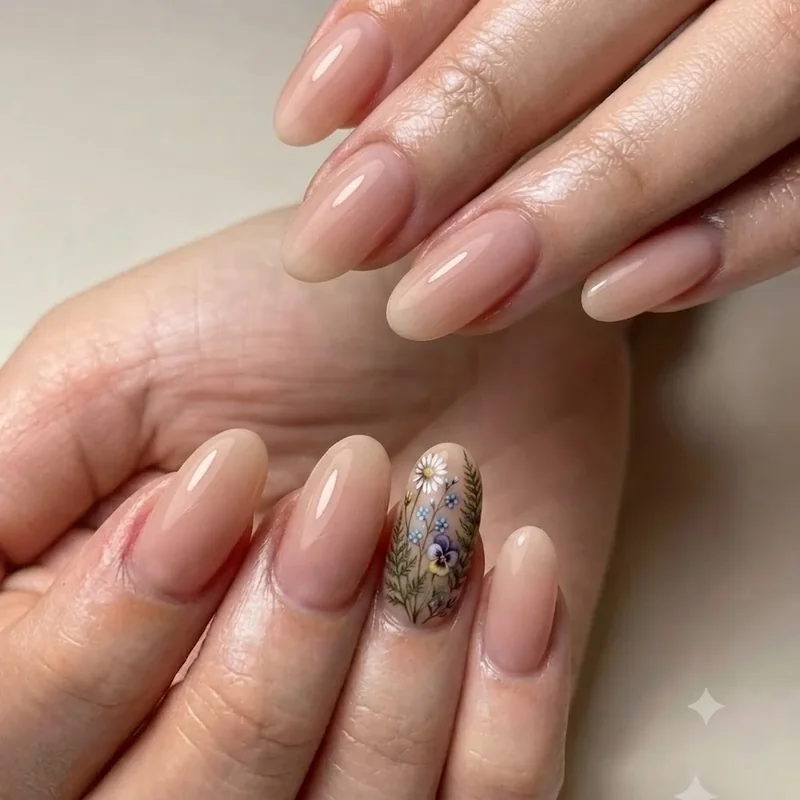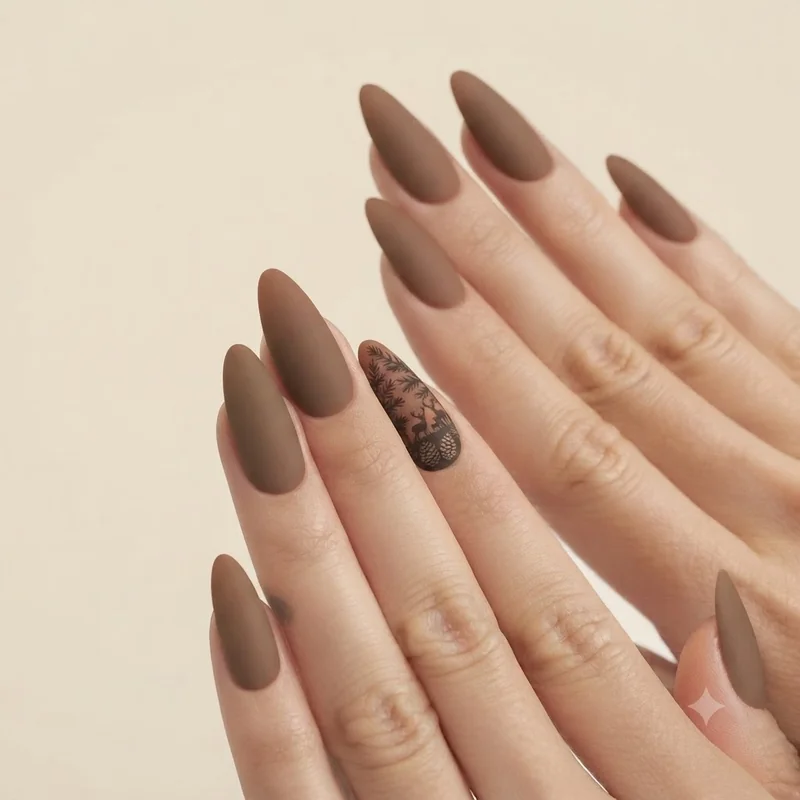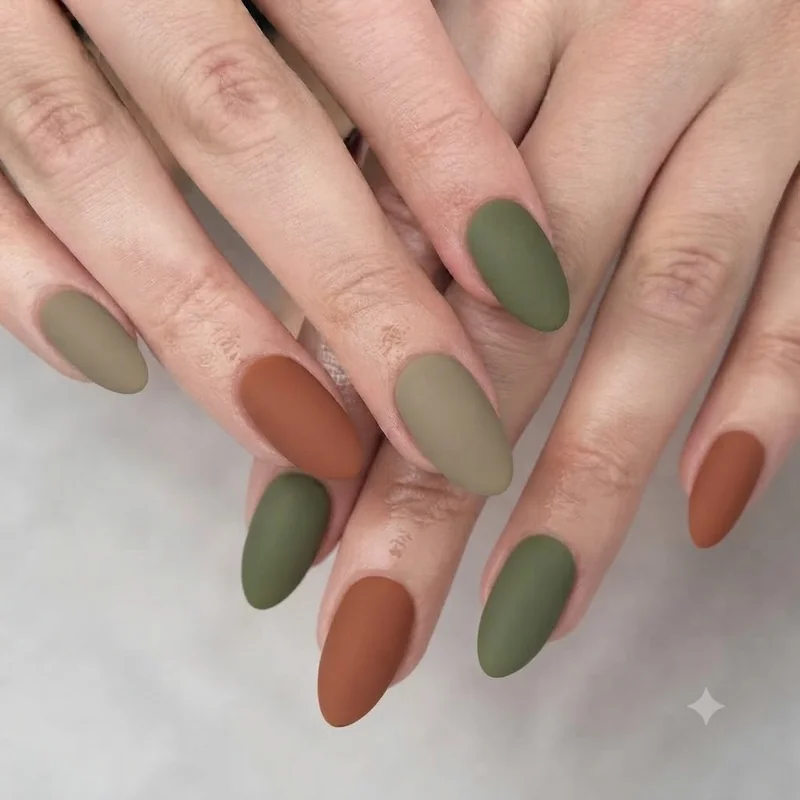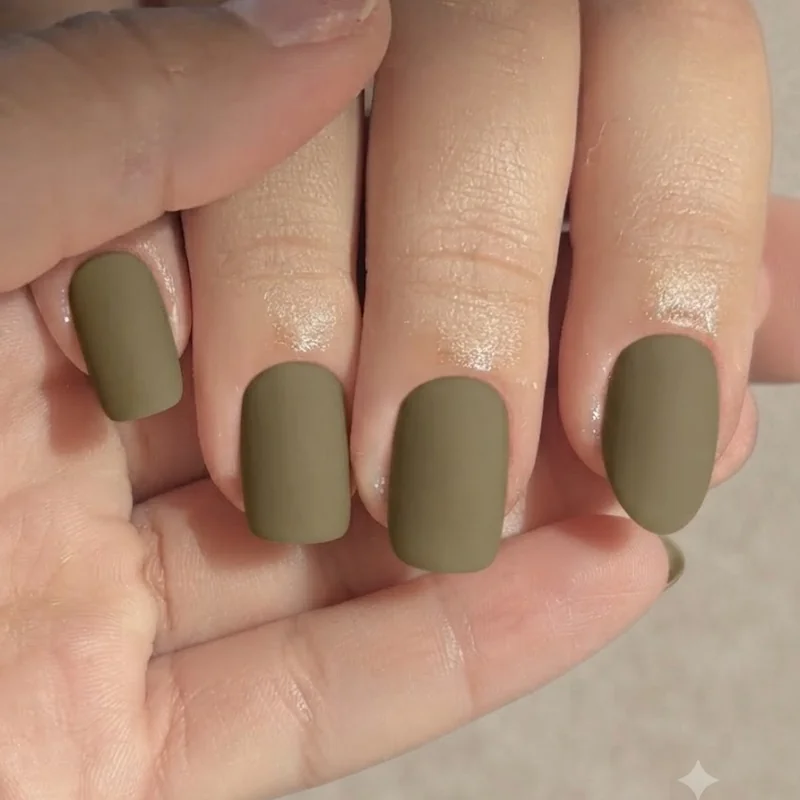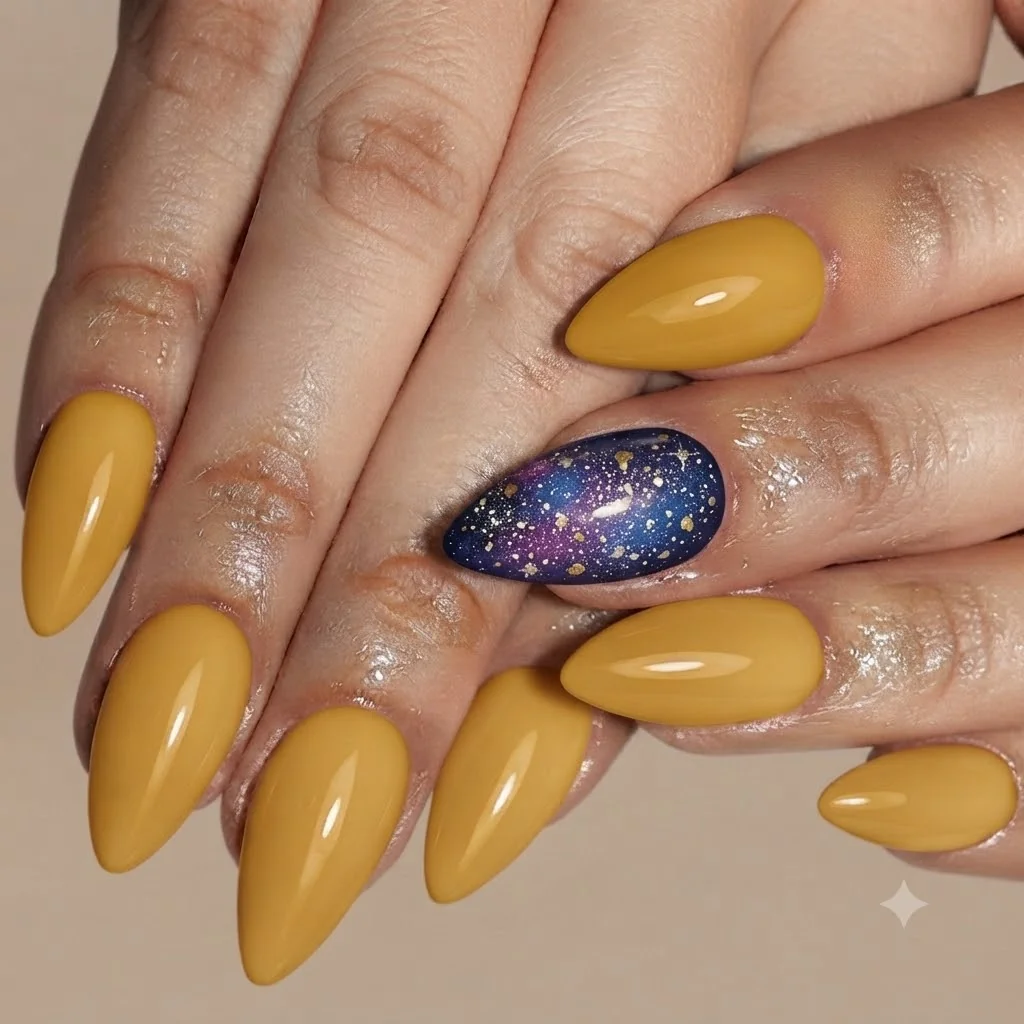
Pinterest has hundreds of photos tagged hiking nails. Not one board tells you which of them will survive an actual trail day. That is the gap this post closes: hiking nails, organized into real categories, with the durability guidance built in rather than bolted on as an afterthought.
There is a difference between a manicure that photographs well at the trailhead and one that still looks good six miles and one water crossing later. Both matter here. This is a guide to designs that do both, sorted the way your Pinterest feed never has been.
What follows are the five real design categories inside hiking nails, the shape and length that actually survive gear contact, and the finish choices that keep any of it looking intact past mile three. No random scroll. No guessing which pin is durable and which one is just a good photo.
What Are Hiking Nails, Exactly?
Hiking nails are a nail art category built around trail-inspired visual motifs, topographic contour lines, trail-blaze color blocking, alpine ombré, and earth-tone palettes, applied with enough durability to hold up through actual outdoor wear. It is a design language, not a technical requirement. You do not need to be mid-trail for it to make sense on your hands.
The trend sits at the intersection of two things: the broader 2026 earth-tone nail movement (moss, terracotta, olive) and gorpcore, the outdoor-utility fashion aesthetic that has moved from clothing racks into beauty. Where camping nails lean toward campfire and string-light imagery and mountain nails lean toward peak silhouettes, hiking nails are specifically about movement through terrain: elevation, trail markers, the textures underfoot.
It also answers a real practical need. Someone gripping trekking poles or scrambling over rock needs a manicure that behaves differently than one meant for a desk. That functional layer is baked into every category below, not treated as a separate boring section at the end.
Topographic & Elevation Line Nail Art
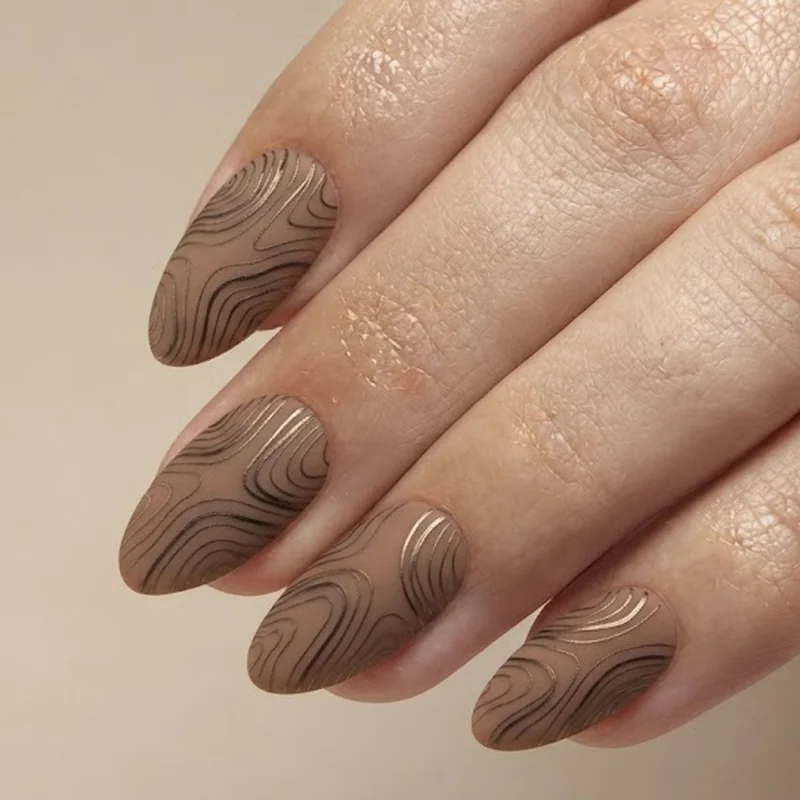
Drop a pin on any elevation map and the first thing you see is the contour lines, thin, close-set rings that thicken where the climb gets steep. That same visual, translated onto a nail bed, is the most editorial of all the hiking nails categories.
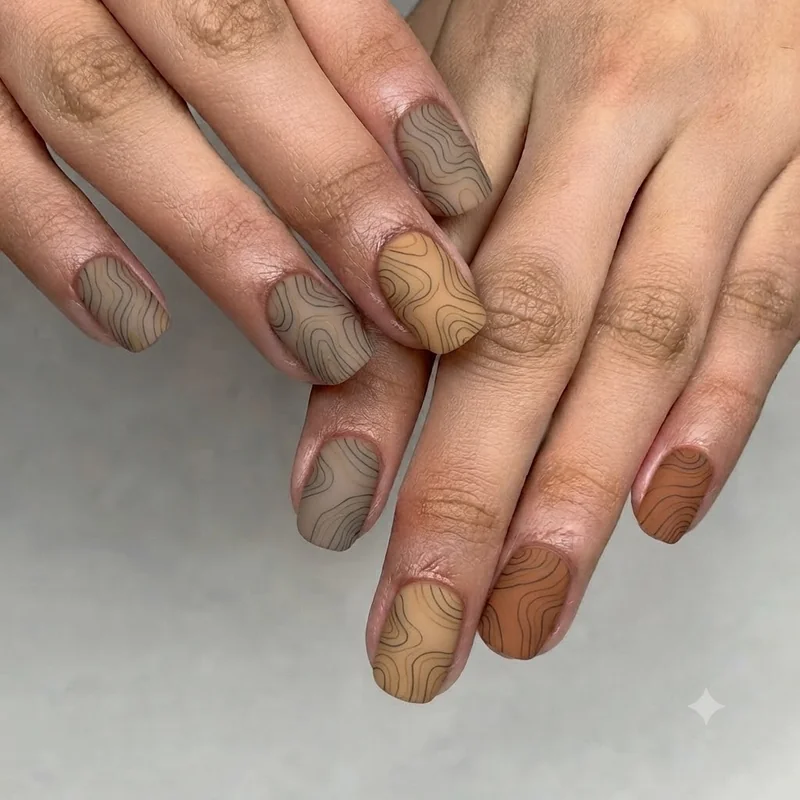
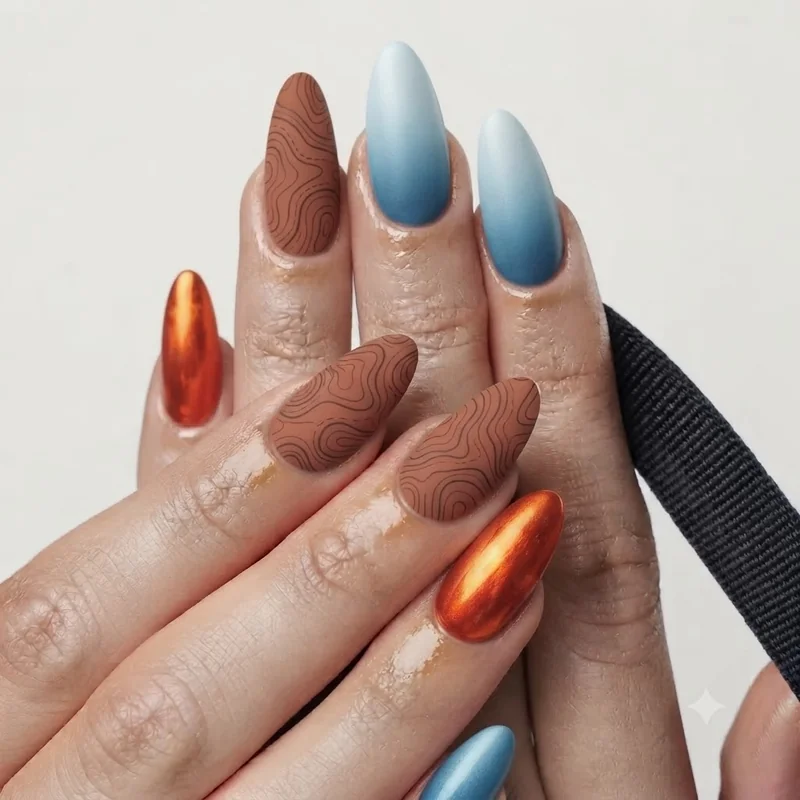
Topographic nail art is a design style that uses fine concentric or wavy contour lines, usually in a darker brown or charcoal, layered over a lighter earth-toned base to mimic the elevation lines on a hiking map. It reads as abstract art first, map reference second, which is exactly why it has staying power beyond a single trip.
The strongest versions keep the base in a warm sand, clay, or muted olive, then use a fine detailing brush for the lines rather than a stamped pattern. Hand-drawn lines vary in thickness the way real contour lines do, and that irregularity is what keeps the design from reading flat or generic. One or two accent nails carry the full topographic detail; the rest stay solid in the base tone so the effect does not overwhelm the hand.
This is a design for someone who wants the "I know something you don't" version of trail-inspired nails, the kind of set that gets asked about rather than immediately recognized.