Who Started the Red Nail Theory?
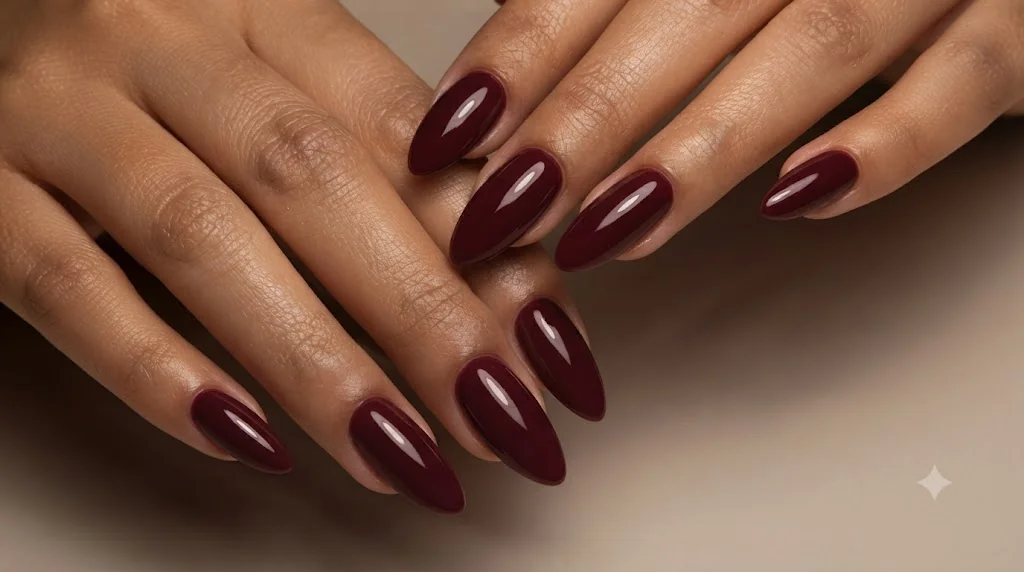
TikTok creator Robyn Delmonte, who posts as GirlBossTown, started the red nail theory in a January 2022 video after noticing she got more attention from men whenever she wore red polish. She framed it as a personal, anecdotal observation, not a scientific claim, and the theory grew almost entirely from that single video.
There was no lab, no control group, no follow-up study. Delmonte, who works in PR, simply noticed a pattern in her own dating life and said so on camera. The video resonated because plenty of women had noticed something similar without ever naming it, and naming a vague feeling is what makes it spreadable. Within months, red nail theory had its own hashtag, then its own genre of testing videos: women applying red polish before a date, documenting reactions, comparing notes.
What's easy to miss in the origin story is how little of it was ever meant to be taken as fact. Delmonte's video was one woman's observation, offered casually, the way friends trade theories about what works and what doesn't. It became a movement because it named something that felt true to a lot of people at once, and that's a very different thing from proving it.
The 2008 Study Everyone Cites - What It Actually Found
Did the 2008 University of Rochester study really prove red nails attract men? No. The study, conducted by psychologists Andrew Elliot and Daniela Niesta and the full nail color psychology research behind why colour affects attraction, ran five separate experiments and found that men rated women as more attractive and more sexually desirable when the color red appeared around them, whether in a shirt, a border on a photograph, or a background. Nail polish was never one of the variables tested.
The 2008 study everyone cites is real, peer-reviewed, and still holds up in later research. Elliot and Niesta's paper, "Romantic Red: Red Enhances Men's Attraction to Women," ran through five experiments using photographs where researchers digitally altered the color surrounding a woman's image, testing red against white, gray, green, and blue. Men consistently rated the woman in red as more attractive, and later replications found the effect extended to red clothing worn in person, with men choosing to sit closer to a woman in a red shirt than a blue one.
Two details matter more than any TikTok caption ever mentions. First, the effect was strongest for sexual attractiveness specifically, not general likability, kindness, or intelligence, meaning red didn't make women seem nicer or smarter, just more desirable in a romantic sense. Second, men in the study were unaware red was influencing their ratings at all, which is the detail that got flattened into "red works subconsciously" and then stretched further into "red nail polish works subconsciously." That stretch is the whole gap. A shirt covers a significant portion of visual field. A manicure, glimpsed across a bar or a coffee counter, occupies a fraction of it. Nobody has run the Rochester protocol using nail polish instead of clothing, so the honest answer to what did the 2008 university of rochester study actually find is: real science about red as a color, applied to a product it never tested.
Is the Mom-Nostalgia Explanation Real?
Is the mom-nostalgia theory behind red nails backed by any actual psychology? No. It's a secondary explanation invented on TikTok, layered on top of the original theory, suggesting men subconsciously associate red nails with their mothers because red polish was common in the 1990s. There is no published research connecting maternal nostalgia to red nail attraction, and the 2008 study makes no mention of it whatsoever.
This detail matters because it's repeated as though it were part of the science, when it's really theory built on top of a theory. Delmonte herself floated the idea in a follow-up video, speculating that men who grew up in the 90s might associate red nails with maternal comfort. It's a plausible-sounding story. It's also unfalsifiable and untested, which is a polite way of saying "sounds made up but okay."
Nostalgia-based attraction cues do exist in psychology more broadly, generally under the umbrella of the mere-exposure effect, where familiarity breeds comfort. But applying that framework specifically to red nail polish and maternal memory is a leap nobody has bothered to test. It's a good story. It just isn't evidence. Treat is red nail theory mom nostalgia real as a firm no, dressed up convincingly.
Does the Red Nail Theory Actually Work? What Skeptics Say
Does red nail theory actually work for every man who sees it? Real-world results are mixed. Some women report a genuine uptick in attention and compliments after switching to red polish. Others, including a significant number of TikTok testers and Quora commenters, say they saw no difference at all, with several men openly stating they don't notice nail polish as a category, red or otherwise.
The skepticism isn't fringe. Search Quora or Reddit threads about the topic and a recurring pattern shows up: men saying nail polish color simply isn't something they clock consciously, regardless of shade. This directly contradicts the theory's core premise, and it's a voice that's been largely missing from mainstream coverage, which tends to lean into the trend rather than sit with the pushback.
There's also the placebo angle, which deserves more credit than it gets. A woman who paints her nails red because she believes it'll make her more noticeable often carries herself differently that day. Straighter posture. More eye contact. A little more willingness to start a conversation. None of that requires red to have any innate power at all. It requires the woman wearing it to feel good, and feeling good is visible from across a room in a way that nail polish alone never could be. My nails did nothing and everyone's obsessed with this trend are two reactions that can both be true, sometimes about the same woman on different days.