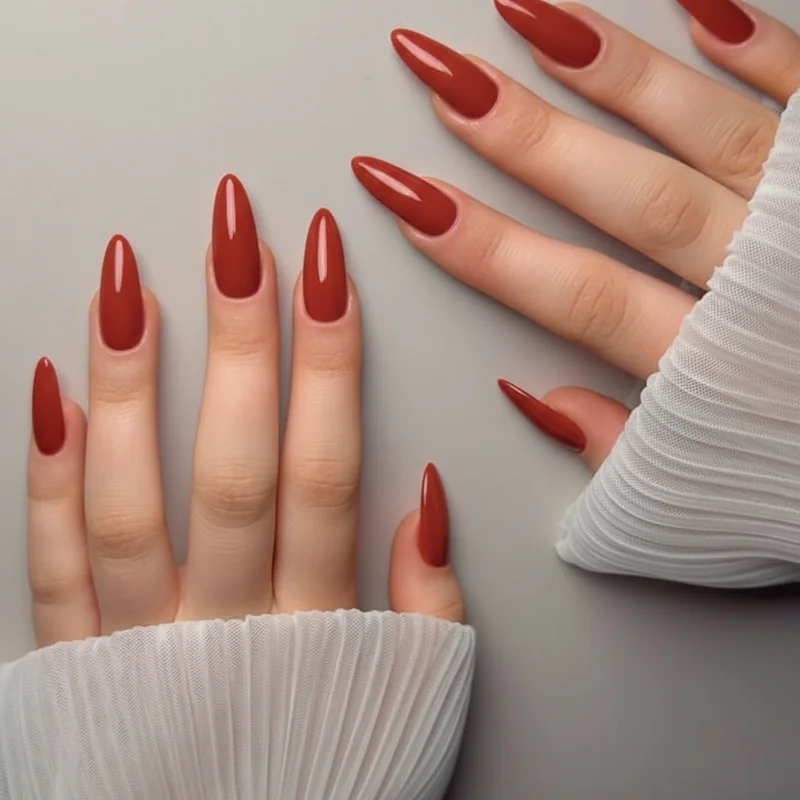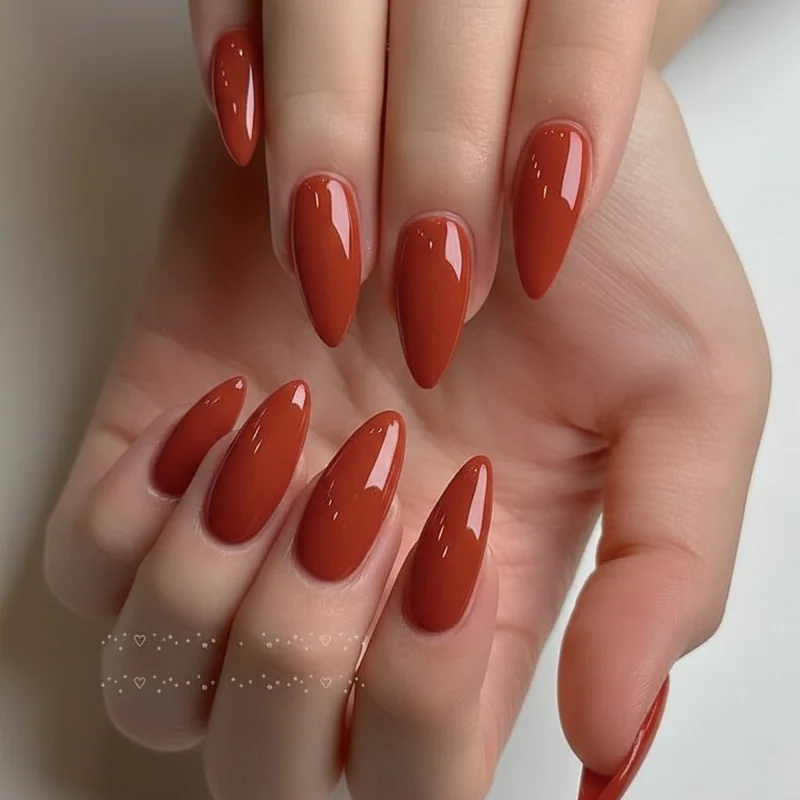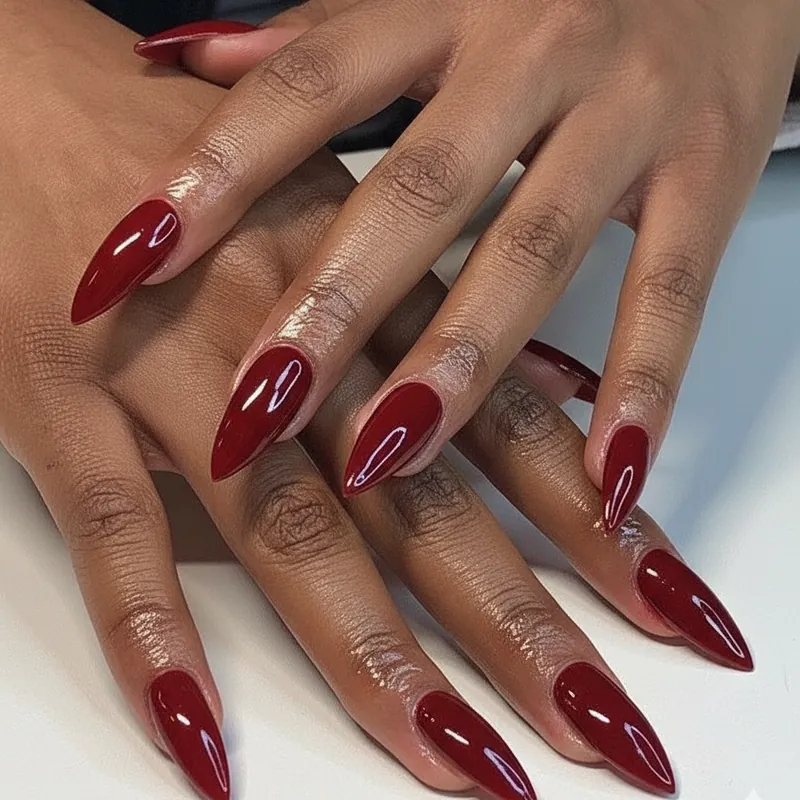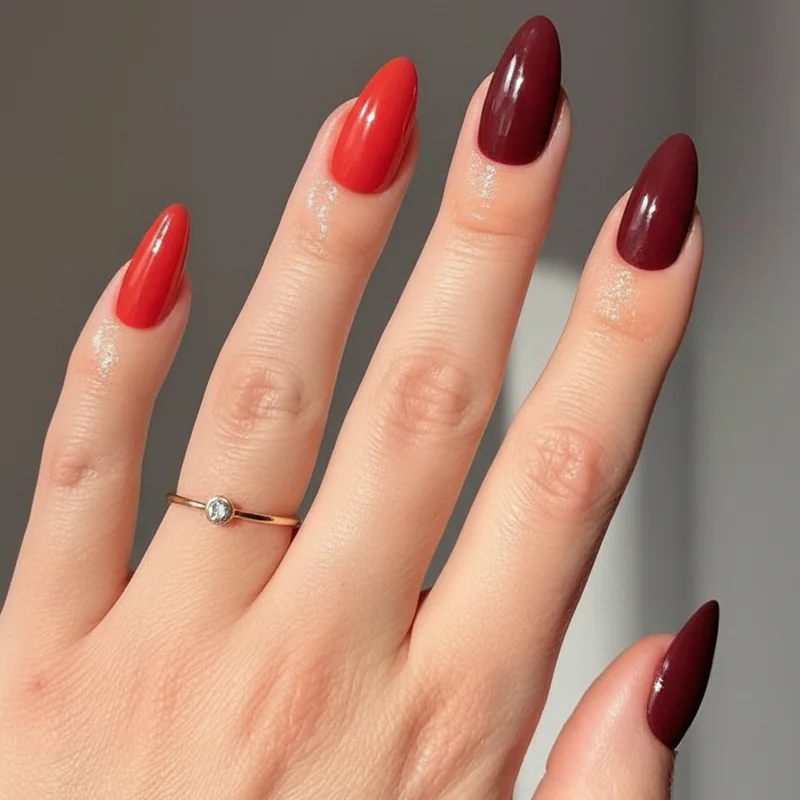
The red that looked gorgeous in the bottle? It made your hands look tired. That is not bad luck, that is undertone mismatch, and it happens to almost everyone at least once.
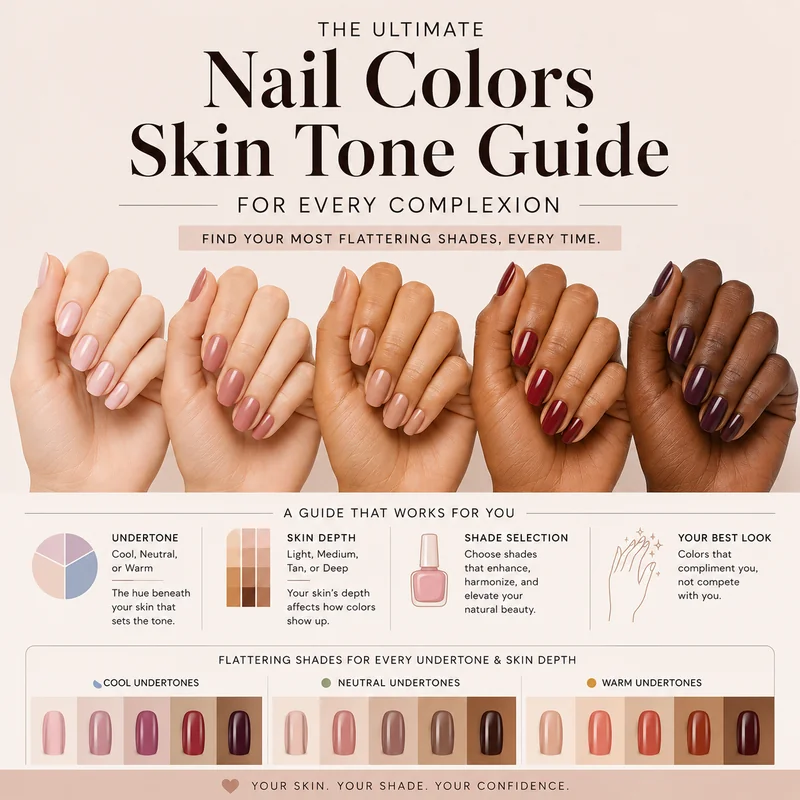
Red nail color for skin tone is not about picking the most beautiful red you can find. It is about understanding that red is not one colour, it is a whole family, ranging from blue-based cherry and crimson through to warm tomato, coral, and brick. That distance determines whether your hands look bronzed and alive or sallow and off. This guide is part of our Complete Guide to Nail Colors for Every Skin Tone, and it exists because the red question is the one nobody fully answers. Most guides give you a single rule per tone and move on. This one explains what actually goes wrong.
Red on an almond shape has an almost sculptural quality, as we explore in our Best Almond Nail Colours for Every Skin Tone guide, but none of that applies if the shade itself is fighting your undertone.
Why the Wrong Red Makes Your Hands Look Off (The Problem Worth Solving)
You have been here. The swatch looked right in the shop. Under the light at home, something was off, your hands looked almost jaundiced, or strangely grey, or the red appeared to have turned into a shade of orange that was never on the label. None of this is imagined.
When you place a warm, orange-based red against skin with cool undertones, the warmth in the polish amplifies the coolness in your skin in the wrong direction, it reads as ashy or washed-out. Run it the other way: a cool, blue-based red on warm or olive skin pulls green undertones forward, making your hands look sallow. Neither is dramatic. Neither is obvious to explain in words. But both are immediately visible, and both read as "something is wrong with my nails."
The good news is that the fix is structural, not subjective. Red nail colour for skin tone follows the same logic as clothing and lip colour, the rule is not that certain skin tones can only wear certain reds. The rule is that undertone alignment determines whether a red enhances your skin or fights it. Warm reds make warm skin look more golden. Cool reds make cool skin look more porcelain. The wrong combination does neither.
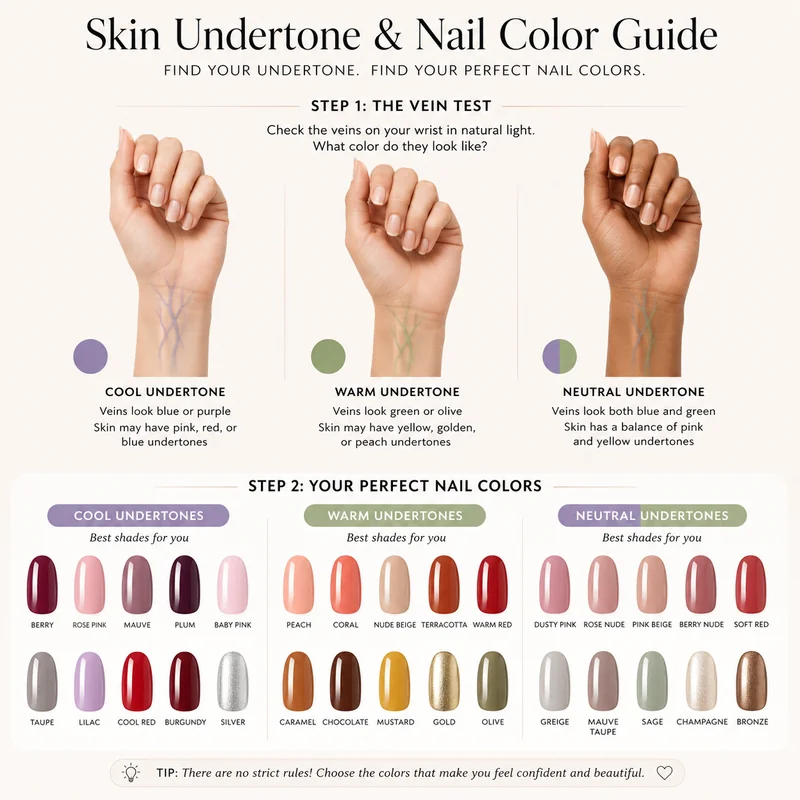
The three families are simple: cool reds (blue-based, cherry, ruby, crimson, burgundy), warm reds (orange-based, tomato, coral, brick, scarlet), and neutral or true reds (balanced, fire engine, classic red). Learn which family flatters your undertone and you will never buy the wrong red again.
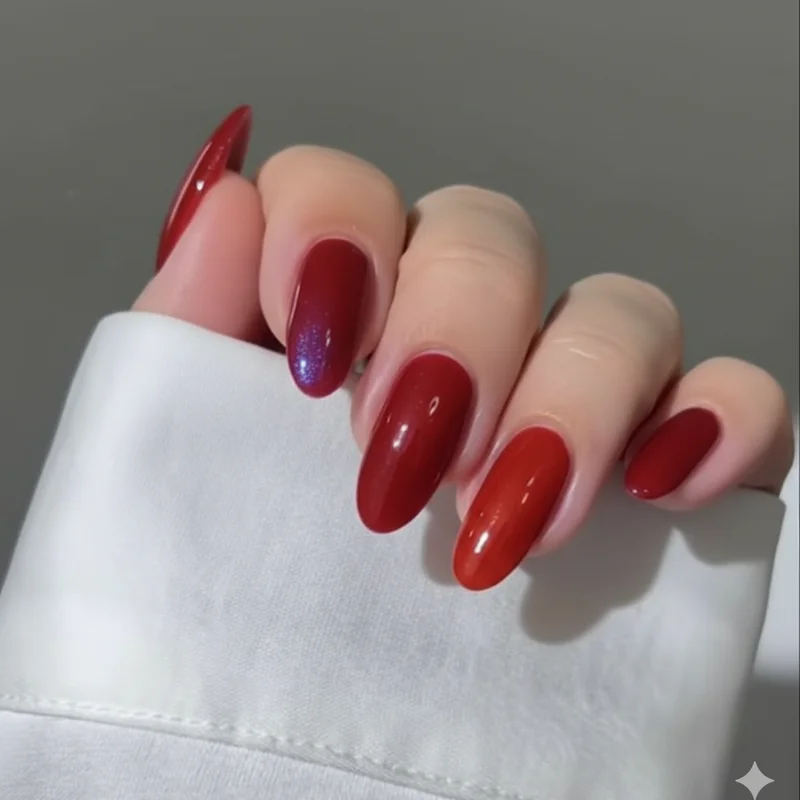
Cool Red vs Warm Red: What These Terms Actually Mean
Three coats of cherry red and three coats of tomato red are both "red nail polish." What separates them is the pigment base, and that difference is visible from across a room.
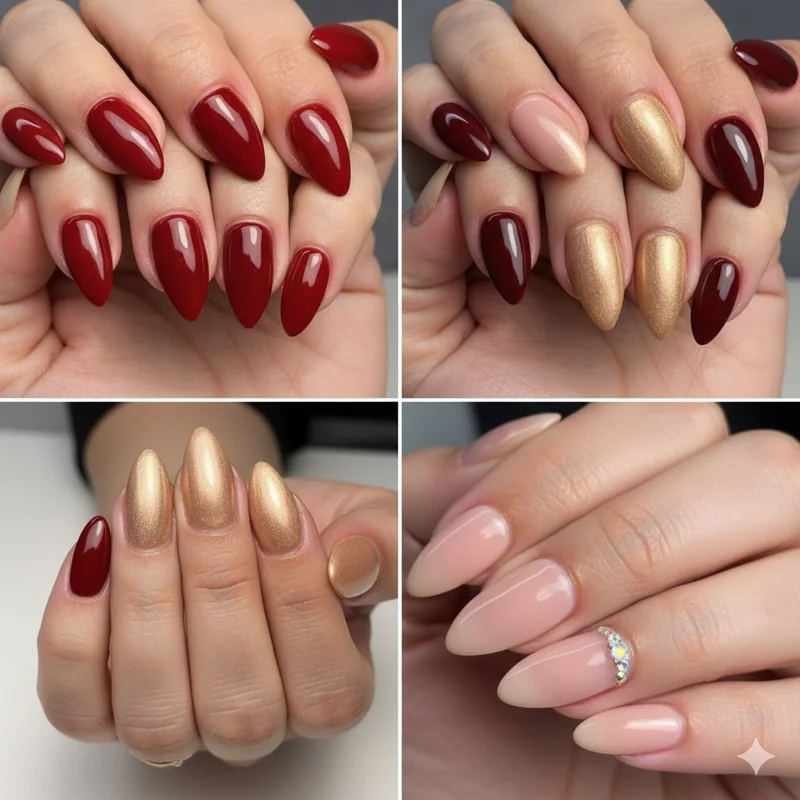
Cool reds carry a blue or pink pigment base. The shades in this family are cherry, ruby, raspberry, crimson, and wine. They sit slightly in the purple-adjacent spectrum, even if only faintly. Hold them up in natural light and you will see a slight blue undertone rather than any orange warmth. These are the polishes that nail artists at ella+mila describe as the go-to for skin with pink or rosy undertones.
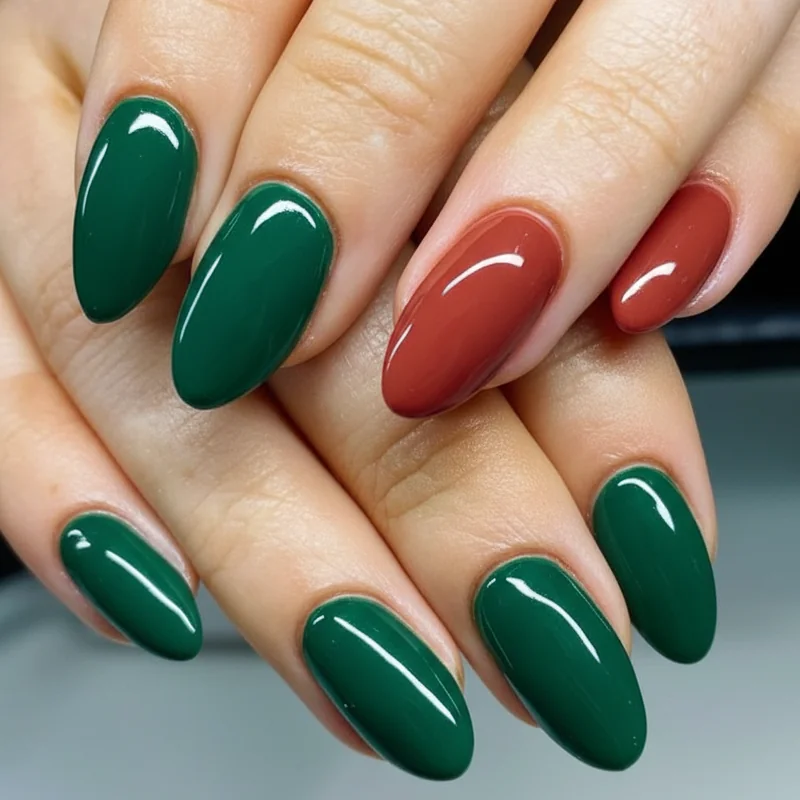
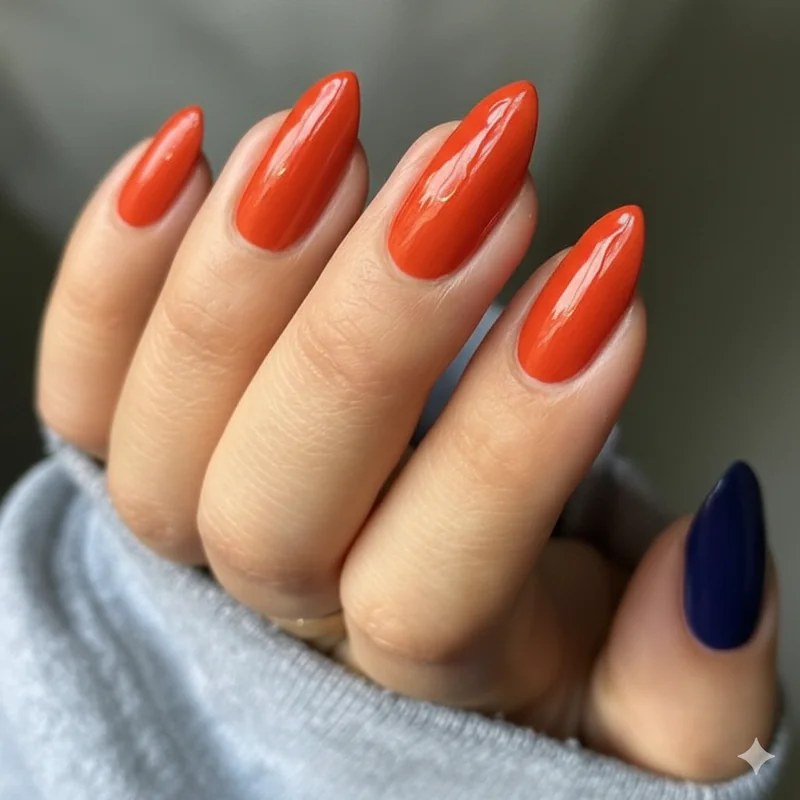
Warm reds carry an orange or yellow pigment base. Tomato, coral, brick, scarlet, and poppy all live here. In natural light, a warm red reads as slightly orange, vibrant and earthy rather than jewel-toned. These amplify the golden quality of warm and olive skin beautifully.
Neutral or true reds, fire engine red, OPI Big Apple Red, classic scarlet, sit at the midpoint. They have neither a pronounced blue pull nor an obvious orange lean. According to celebrity manicurist Deborah Lippmann via Who What Wear, neutral reds are the closest thing to a universal flattering red because they harmonise with both warm and cool undertones without amplifying either.
One specific note on cool reds worth knowing: because blue sits opposite yellow on the colour wheel, wearing a blue-based red near your hands and face creates a visual effect that makes teeth look noticeably whiter in photographs. It is a real hack, and it belongs in your reasoning when choosing between a cool and neutral red.
For a full deep-dive on identifying your personal undertone, How to Find Your Skin Undertone (And Pick the Right Nail Color) covers every method in detail.
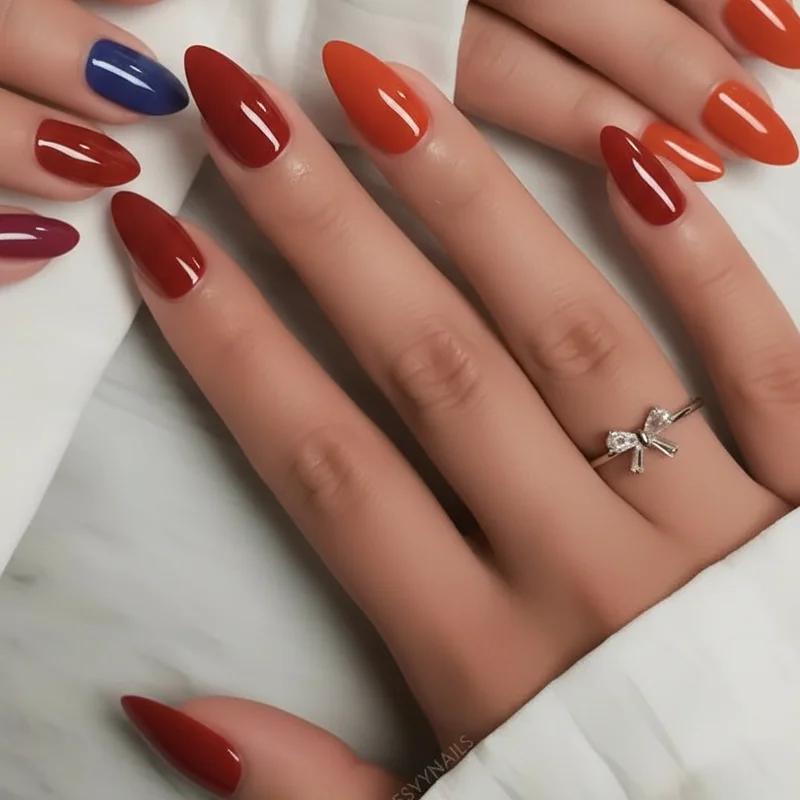
How to Find Your Undertone in 60 Seconds (Before You Pick a Red)
If you have spent time on this question and still feel uncertain, you are not alone, the undertone guide exists precisely because every test seems to give a slightly different answer. Here is the short version.
Vein test: Look at the inside of your wrist in natural light. Blue-purple veins indicate cool undertones. Green veins indicate warm undertones. Teal veins suggest neutral.
Jewellery test: Hold a gold and a silver bracelet against your inner wrist. Whichever makes your skin look clearer and more alive identifies your undertone, gold for warm, silver for cool.
Lipstick hack: If you already own a red lipstick, look at its undertone. A lip colour you gravitate to naturally tends to match your undertone instinctively. If your red lipstick is a cool blue-red (MAC Ruby Woo sits here), you are likely cool-toned. If it is warm and orange-adjacent (MAC Lady Danger), you are likely warm-toned.
None of these tests is definitive on its own. Use two, see if they agree, and trust that result. If all three give you different answers, you are probably neutral, which is the most flexible position to be in when choosing red.