MMA vs EMA: What's the Real Difference?
Ethyl methacrylate, or EMA, is the industry-standard monomer approved for acrylic nail liquid. EMA is a nail-safe acrylic monomer that cures with enough flexibility to file, soak off in standard remover, and cause minimal skin reaction, while MMA cures rock-hard, resists solvent, and is linked to allergic reactions and nail plate damage. Side by side, the gap is not subtle once you know what you are checking.
|
MMA |
EMA |
| Hardness after cure |
Rigid, resists filing |
Flexible, files normally |
| Soak-off time |
Barely softens, often won't lift |
Softens and lifts within 10-15 minutes |
| Smell |
Sharp, chemical, "off" |
Present but not searing |
| Cost to salon |
Roughly a quarter the price of EMA |
Several times more expensive |
| Skin contact reaction |
Burning, itching, dermatitis common |
Rare |
Cost is the entire reason MMA persists. It sits within a broader category of nail polish ingredients to avoid, but MMA earns its own line item because the harm is structural to the nail itself, not just a formulation preference.
One more distinction worth knowing: MMA is not equally dangerous in every form. Cured polymer powder can contain trace, chemically stable amounts safely. It is the liquid monomer, the part brushed directly onto skin and nail plate before it hardens, that causes the reactions and damage state boards warn about. That's the version this guide is really asking you to spot.
Before You Book: 2 Signs to Watch For
Ask yourself two questions before you even pick a salon. Is the price meaningfully lower than everywhere else nearby? Reputable EMA can run several times the cost of MMA, so a set priced well under the local average is not automatically a scam, but it is the first thing worth noticing. How to tell if salon uses MMA often starts here, before you've sat down at all.
Second, check reviews for repeated language. Not one-off complaints, patterns. Phrases like "wouldn't soak off," "nails hurt for days," or "smelled like glue" showing up across multiple reviews over months tell you more than a single bad experience does. One person's rough appointment is an outlier. Five people describing the same symptoms is a pattern worth believing.
Neither sign alone is proof. Together, they're reason enough to call ahead and ask what liquid monomer the salon uses. A salon confident in its products will answer plainly, usually by name, on the first try. Hesitation on that single question tells you more than an hour of browsing reviews ever will.
During Your Appointment: 3 Signs to Watch For
How to tell if salon uses MMA while you're already in the chair comes down to three senses: smell, feel, and behaviour. The moment the liquid monomer comes out, pay attention to the odour. Standard EMA has a noticeable chemical smell, that's normal for acrylic. MMA's smell is different: sharper, more solvent-like, closer to nail glue or paint thinner than anything you'd expect from a professional product.
Watch what container it comes from. Unlabelled bottles, refilled containers, or products with no visible ingredient list are a red flag regardless of what's actually inside them, because it means you have no way to verify. If you ask what the liquid is and the technician can't answer, deflects, or gets visibly uncomfortable, trust that reaction. A tech using approved EMA has no reason to dodge the question.
The third sign shows up after application: how hard the finished nail feels. EMA sets firm but still has some give when you press the tip. MMA sets glass-hard almost immediately and resists a filer even with coarse grit. If your tech is struggling to shape or smooth the product because it simply won't file down, that resistance is the product telling you what it is.
Pay attention, too, to how you feel physically in the chair. Lightheadedness, a headache, or shaky hands partway through a service can point to poor ventilation combined with a stronger solvent load, which is more common with MMA than with standard EMA. Salons with proper airflow rarely produce that reaction, regardless of which monomer they use, so it's worth naming if it happens.
After Your Set: 2 Signs You Already Have MMA Nails
Why won't my acrylic nails soak off in acetone? If a full acrylic set stays largely intact after 20-25 minutes in 100% acetone, with minimal softening or lifting at the edges, that resistance is one of the strongest indicators of MMA, since EMA is engineered to break down in that window. This is the single most reliable after-the-fact test, and you can do it yourself at home with a bowl of pure acetone.
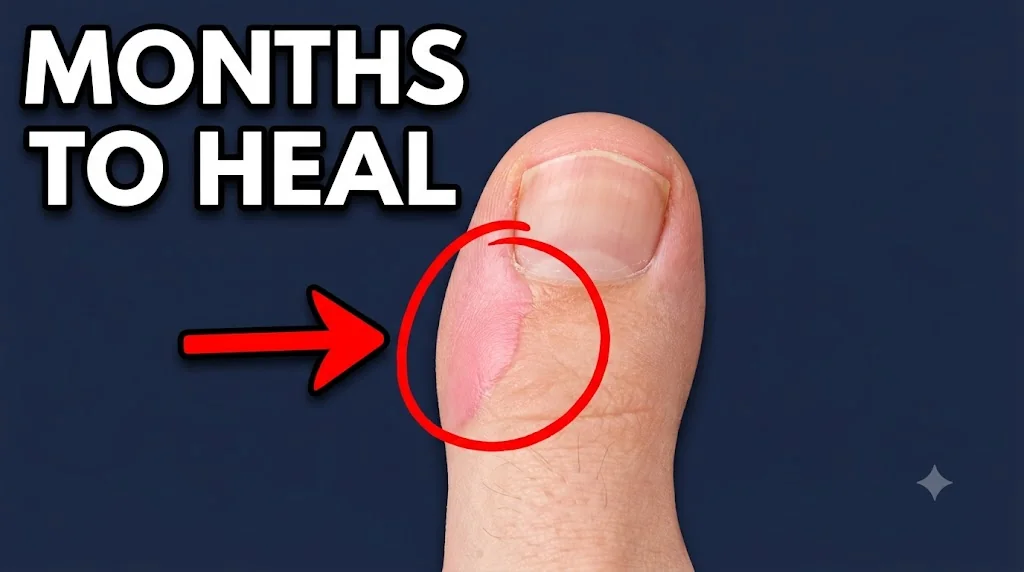
The second sign is how your natural nail looks once the set finally comes off, however it comes off. MMA is associated with a nail plate that looks unusually thin, ridged, or separated at the tip (onycholysis), even without an obvious injury. If a technician had to pop, pry, or drill the product off rather than soak it, and the nail underneath looks worse than it did before your last fill, both of those point the same direction.
Neither sign requires a lab test to notice. You are looking at your own hands and timing your own acetone soak. That's the entire method. If you're unsure how your set behaves, ask a different salon to remove it professionally rather than forcing it off yourself, since prying MMA acrylic free without proper soaking is exactly what causes the nail plate damage in the first place.