Most people who keep getting ingrown toenails are not unlucky. They are cutting their nails into the wrong shape without realising it, and the habit usually looks completely reasonable from the outside. A neatly rounded corner, filed smooth, no jagged edges. It looks like good grooming. The best toenail shape for ingrown toenails is actually the opposite of that instinct, and getting it right is what makes the pain that keeps returning every few weeks stop returning at all.
Podiatrists have recommended the same best toenail shape for ingrown toenails consistently for decades: straight across, corners square. The reasoning behind it rarely gets explained well enough to actually change anyone's habits, and a rule without a reason is easy to abandon the first time a rounded corner looks tidier. This guide gives the exact shape, the mechanical reason it works, a direct answer to the V-notch method a lot of people have heard about, and what to do if your nails naturally curve more than the standard advice accounts for.
By the end, you will know exactly how to cut your own nails, what to say to a pedicurist so they do not undo it, and the point at which shape alone stops being enough and a podiatrist needs to get involved.

What Is the Best Toenail Shape for Ingrown Toenails?
Straight across, corners left visible and square, is the best toenail shape for ingrown toenails. Not rounded, not tapered to a point, not filed into a soft curve at the sides. The nail should end in a clean horizontal line, with each corner still forming a right angle rather than being smoothed away.
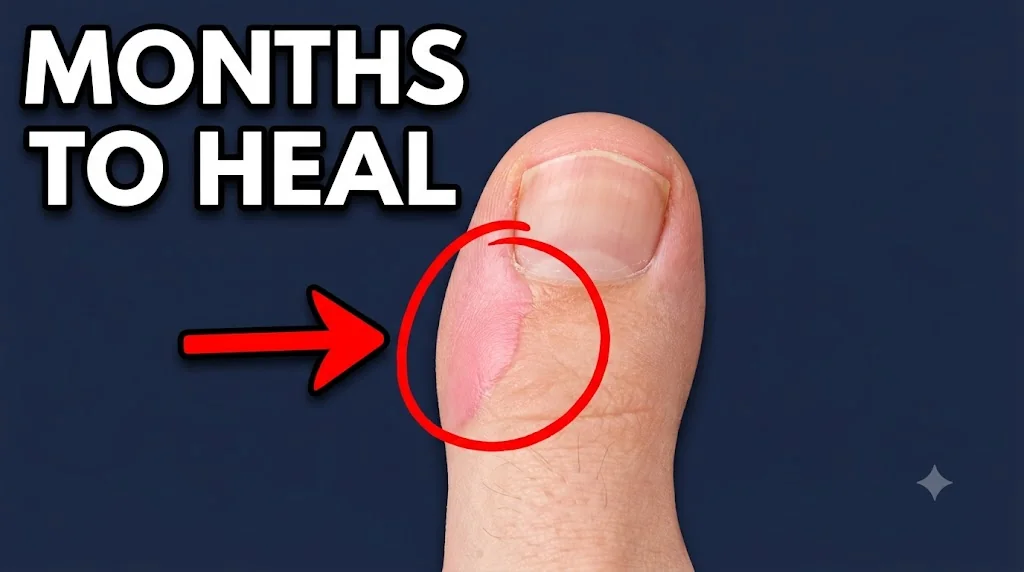
Onychocryptosis, the clinical term for an ingrown toenail, happens when the edge of the nail plate pierces or presses into the soft tissue that runs alongside it. Podiatrists across the board recommend the straight-across cut for one reason: it is the only shape that consistently keeps the nail's growing edge above the skin instead of curling into it. Where confusion tends to creep in is length. Straight across does not mean short. The nail should still be long enough that the white growing tip is visible past the skin line, since cutting both short and rounded compounds the risk rather than solving it.
A complete guide to toenail shapes covers the full range of options for people without an ingrown-nail history, but if that is the specific problem you are trying to solve, straight across is not one option among several. It is the one shape every major podiatric source converges on.
Why Cutting Toenails Straight Across Actually Prevents Ingrown Nails
The mechanism is simpler than most explanations make it sound, and once it clicks, the rule stops feeling arbitrary. A toenail does not grow forward in a straight line the way it looks like it should. It grows forward and slightly downward at the edges, following the curve of the nail bed underneath it.
When a corner is cut straight across, that downward curve has nowhere to go but up and over the skin on either side, resting flat against the top of the toe rather than into it. Round or taper that same corner, though, and the story changes. Skin along the side of the nail groove rises slightly to fill the space the missing corner used to occupy. The nail keeps growing forward exactly as it always has, downward at the edge, and now there is skin sitting directly in its path instead of open air. Within a week or two, the corner that was rounded away starts pressing into tissue that has moved to meet it.
Shoe pressure speeds this up considerably. A narrow toe box or a snug closed-toe shoe pushes down on the nail bed from above, which drives a curved corner into the skin faster than it would happen on its own. This is also why the same rounded cut can feel fine in sandals all summer and then cause pain the moment closed shoes come back into rotation. The shape was always the underlying issue. The shoe just applied the pressure that exposed it.