How to Remove Acrylic Nails at Home With Acetone
Most people assume acetone is the harsh part of this process. It is not. Prying is the harsh part, and acetone is actually what prevents you from needing to pry at all.
Step 1: File the surface. Using your coarse file, buff the top coat and shine off each acrylic nail until the surface looks matte and dull rather than glossy. You are only removing the sealed top layer here, not filing down to your natural nail, so stop the moment the shine is gone.
Step 2: Protect your skin. Apply a thick layer of petroleum jelly around each nail bed and across your cuticles, avoiding the nail plate itself. This barrier is what keeps 20 to 30 minutes of acetone exposure from leaving your fingertips painfully dry afterward.
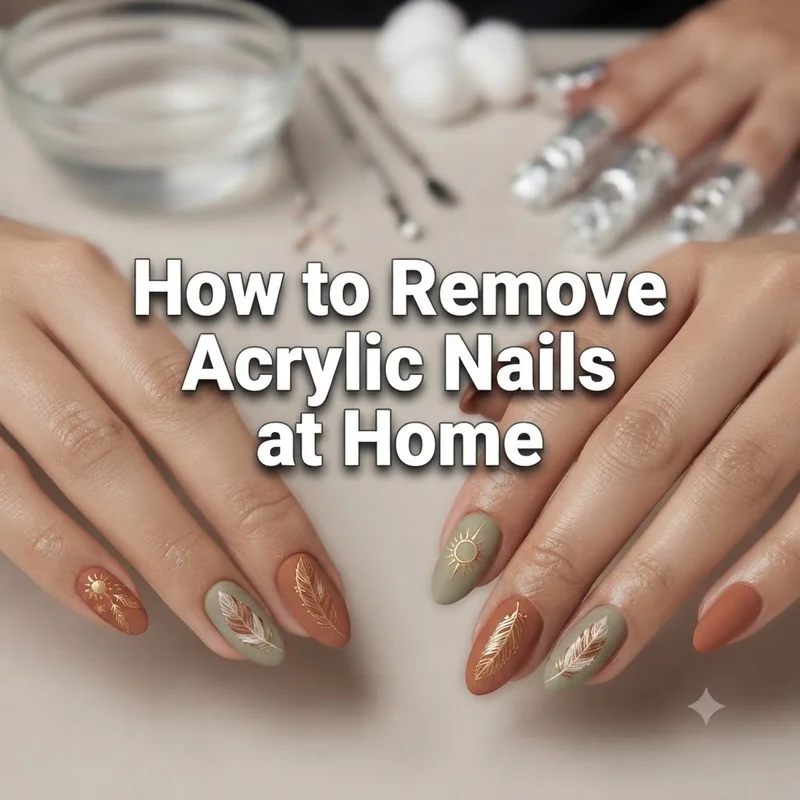
Step 3: Soak and wrap. Saturate a cotton ball with 100% acetone until it is genuinely dripping, not just damp, and press it flat against the top of each nail. Wrap a small square of foil around the fingertip to hold the cotton in place and trap warmth, which speeds the process along. Repeat across all ten nails.
Step 4: Wait. Set a timer for 20 minutes and leave it alone. Do not check every five minutes, and do not tug at the foil out of impatience. If it is your first time, plan closer to 30 minutes, since a fresh, well-applied set takes longer to break down than a set that has already started lifting naturally.
Step 5: Check and lift. Unwrap one nail at a time. The acrylic should look bubbled, softened, and easy to flake away with a cuticle pusher, working from the cuticle toward the tip. If it resists, that nail goes back into a fresh acetone-soaked cotton ball and foil wrap for another 10 minutes. Never lift it off, never force it. Resistance means it needs more time, not more pressure.
Step 6: Repeat as needed. Move down the row of nails, rewrapping any that need extra soak time, until all ten are clear.
How Long Does It Take to Remove Acrylic Nails at Home?
Removing acrylic nails at home with the acetone soak method takes 20 to 40 minutes total, including a 20 to 30 minute soak plus a few extra minutes per nail for stubborn spots. A no-acetone method using warm water or oil typically runs longer, closer to 30 to 45 minutes, since the softening process is gentler and slower by design.
The wide range you have probably seen elsewhere, some guides say 10 minutes, others say over an hour, comes down to how fresh your set is. A set applied within the last week is denser and takes longer to break down than one that has already started lifting at the edges on its own. Filing the top coat off first, per Step 1 above, is the single biggest factor in landing at the shorter end of that range rather than the longer one.
Budget a full hour for your first attempt, tools and aftercare included, even though the actual soak is shorter. Rushing is what turns how to remove acrylic nails at home into a damaged nail bed rather than a straightforward 30 minute job.
How to Remove Acrylic Nails at Home Without Acetone
Yes, acrylic nails can come off without acetone, using a warm water and oil soak or the dental floss technique, though both take longer and require more patience than the acetone method. This route suits sensitive skin, a strong dislike of the smell, or simply not having pure acetone on hand.
The warm water and oil method. Fill a bowl with warm, not hot, water and add a few drops of dish soap along with a tablespoon of a neutral oil like olive or coconut oil. Soak your fingertips for 30 to 40 minutes, moving your fingers occasionally to help the warmth and oil work into the seam between acrylic and natural nail. Once the edges look and feel loosened, use a cuticle stick to gently work underneath the acrylic, starting at the cuticle end, rather than lifting the whole nail off at once.
The dental floss method. This one works best on a nail that has already started lifting slightly, either naturally or after a warm soak. Slide a length of unwaxed dental floss underneath the loosened edge of the acrylic, then move it back and forth in a gentle sawing motion while walking it toward the tip of the nail. It genuinely helps to have a second pair of hands holding the other end of the floss steady while you guide the nail. Go slowly. If you feel any pain rather than pressure, stop and go back to soaking instead.
Whichever no-acetone route you choose, the same rule from the acetone method still applies here: check your progress every few minutes, and if it won't budge, soak longer rather than pulling harder.