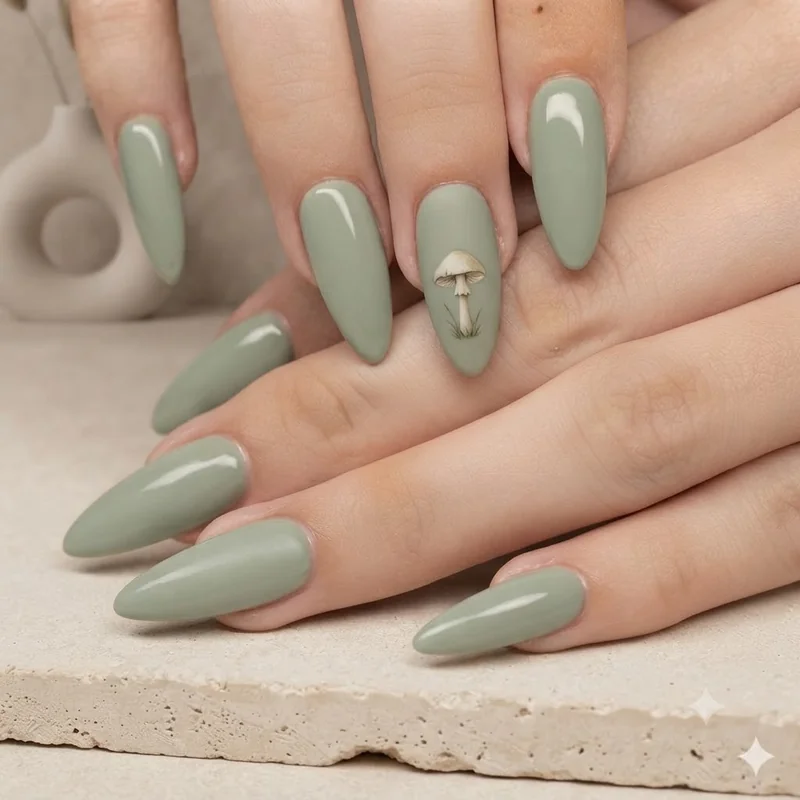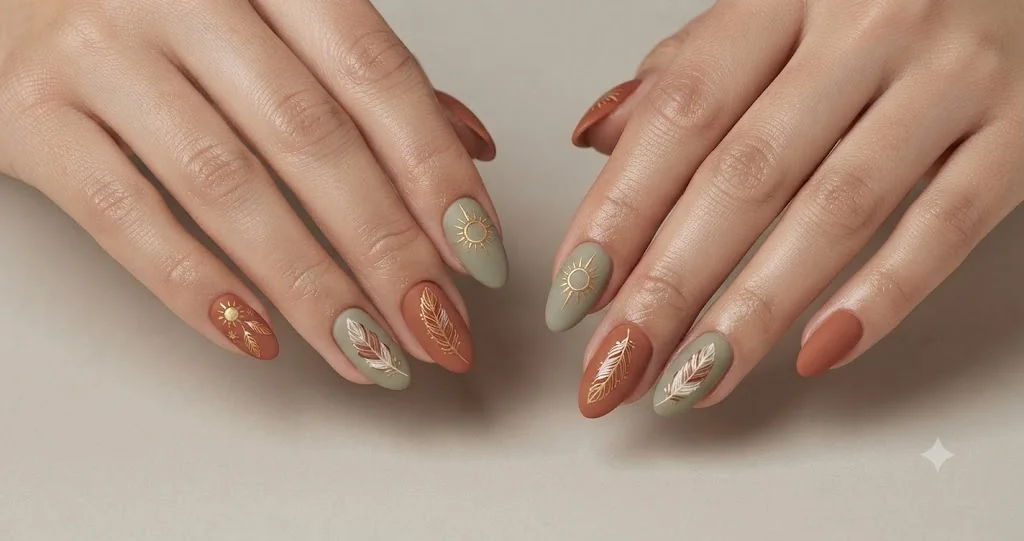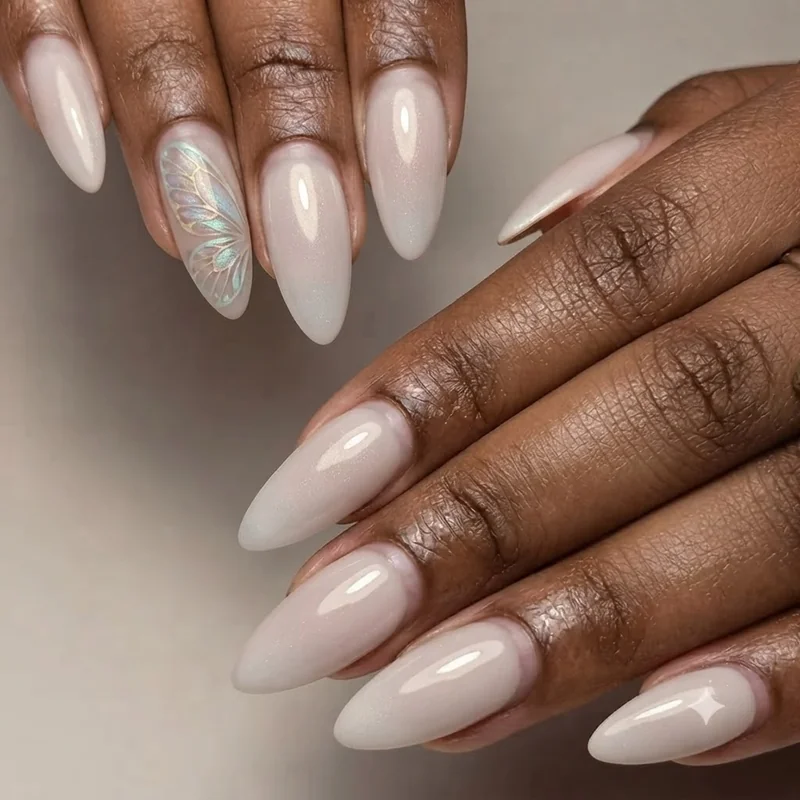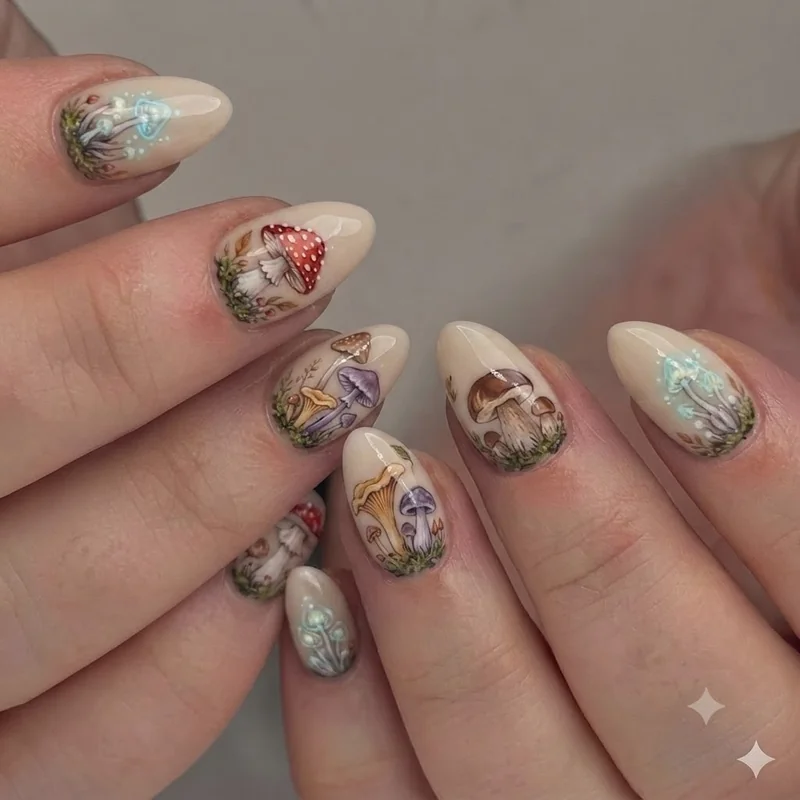
If you already fill your Pinterest boards with cottage gardens, milk bath candles, and prairie dresses, cottagecore nails are the earthy, hand-painted manicures built around sage green, dusty rose, and tiny mushroom or gingham details that carry that same slow-living identity onto your hands. Your nails have quietly been the one part of this aesthetic without its own clear language. Every other corner of your life already speaks cottagecore nails: the ceramic mugs, the linen dresses, the herb garden on the windowsill.
This is a different manicure family entirely, rooted in real countryside texture rather than fantasy or free-spirited layering. It draws from cottagecore's actual visual DNA, muted, sun-faded colour, produce-stand imagery, the quiet confidence of someone who means it rather than someone borrowing the aesthetic for a season. What follows is built around the real decisions you're weighing: which shade reads as authentically cottagecore, which shape holds it best, whether it survives a work week, and where it splits cleanly from fairycore and boho so you stop second-guessing which one is actually yours.
What Actually Makes Nails "Cottagecore"?
Cottagecore nails are manicures built on muted, earth-derived colour and hand-rendered nature motifs, sage, dusty rose, cream, forest green, paired with mushrooms, gingham, or wildflowers, rather than saturated brights or high-shine finishes. The aesthetic pulls from a real cultural lineage, and it idealizes rural living and embracing a simpler existence, a throughline that traces back to the cottagecore aesthetic's roots in early internet subcultures before it moved into fashion and home decor.
Plenty of floral nail art gets labelled cottagecore without belonging to it. A hot pink rose isn't cottagecore. Neither is a rhinestone French tip with a stamped daisy. What separates the real thing is restraint: dusty colours, not saturated ones, motifs you'd actually find in a garden or pantry, and an overall effect that reads handmade rather than manufactured. Think of a supermarket bouquet against something cut from your own garden that morning. One is generic. The other has a story.
Texture logic sits underneath the colour logic too. Matte and soft jelly-gel finishes read as cottagecore far more convincingly than chrome or high-gloss, since they mimic the slightly worn, sun-faded quality of things that live outdoors. A single hand-painted motif does more for the aesthetic than a nail crowded with five elements. Less is the whole point.
The Cottagecore Nail Color Palette, Decoded
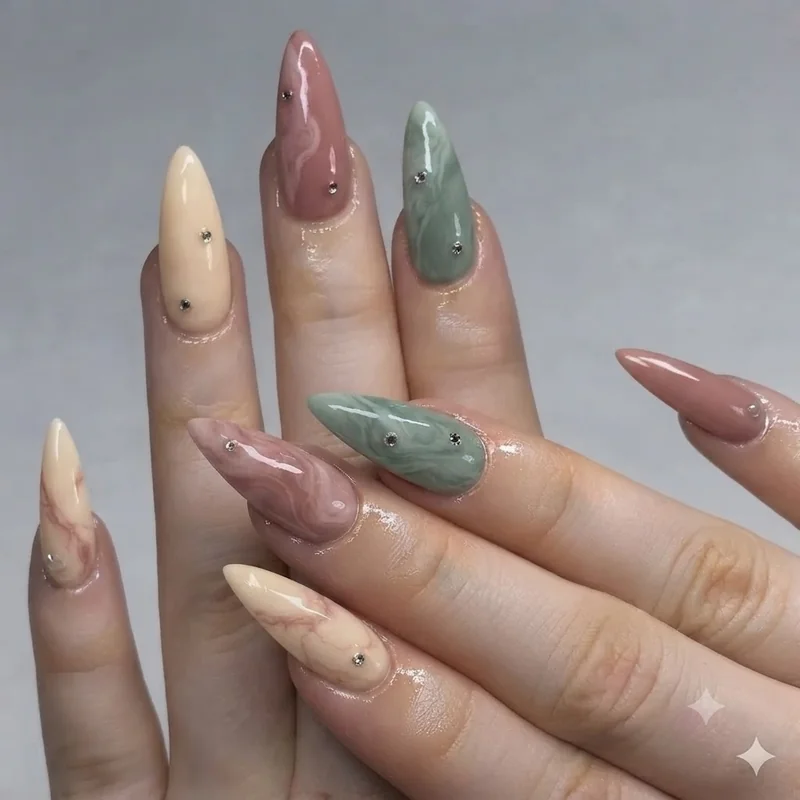
You'd think cottagecore just meant florals, but the real foundation is the palette, and the motifs only work once the colour underneath is right. The core palette for cottagecore nails runs sage green, dusty rose, warm cream, and butter yellow, with forest green, terracotta, and muted lavender rounding it out by season. Every shade shares one thing: it looks pulled from a dye bath of tea, berries, or crushed herbs, never a bottle straight off a shelf.
Sage green does the most work in the palette. It reads herbal and grounded, and pairs cleanly with nearly every motif in the vocabulary, from mushrooms to gingham. Dusty rose sits close behind, a rose left in the sun a little too long rather than fresh-cut pink. Warm cream is the neutral base, the linen tablecloth of the palette, most often used underneath a single painted motif so the detail has room to breathe.
Butter yellow and terracotta bring warmth without tipping into saturated territory. Forest green and muted lavender extend the palette into cooler, moodier registers for autumn and evening. Cottagecore centres around a countryside vibe, and that instinct carries directly into shade choice: nothing neon, nothing metallic, nothing that couldn't plausibly have come from a plant.