Why Antibiotics Alone Don't Fix an Ingrown Toenail
A sliver of toenail is keratin, the same tough protein as hair, and no antibiotic dissolves it. Antibiotics do not cure an ingrown toenail because they act on bacteria, not on the nail edge that started the problem. When the course ends, the edge is still there, which is why an ingrown toenail keeps coming back after antibiotics.
A nail spicule is a small, sharp fragment of nail that pierces the skin, and the body treats it as a foreign object. That foreign body reaction swells and inflames the toe with or without bacteria, so a course of antibiotics can bring real but temporary relief while the cause stays put.
The same expert puts the sequence plainly. With the edge out, antibiotics usually add little: "Once the offending piece of nail is removed, the infection should settle quickly without them." Leave the edge in, and the outcome changes: "Antibiotics without removing the piece of nail will only suppress the infection." The return follows on schedule, because "once the antibiotics are stopped, the infected ingrown edge almost always returns, since the nail is still broken through the skin."
If a clinician has prescribed a course, finish it as directed and ask at the same visit what is being done about the nail edge.
What the Research Says: Antibiotics vs Removing the Nail Edge
Taking antibiotics feels like the careful choice, and the trial evidence does not support the instinct. Antibiotics do not help an ingrown toenail after removal of the nail edge either: a Cochrane review found that no postoperative treatment, antibiotics included, reduced infection, pain, or healing time.
The American Family Physician's clinical review of ingrown toenail management recommends against oral antibiotics unless cellulitis is present, with clear, widespread cellulitis as the trigger. A randomized trial of 54 healthy patients whose ingrown toenails were infected found that antibiotics did not shorten healing time or reduce problems after the procedure. Immunocompromised patients, people with vascular disease, and anyone with cellulitis spreading up from the toe were excluded, which is exactly why the exceptions in the next section exist.
Two limits keep this honest. The evidence describes routine use in healthy people, not every toe. And it is no argument for skipping a prescription a clinician has written after examining you.
Inflamed or Infected? Why the Difference Matters
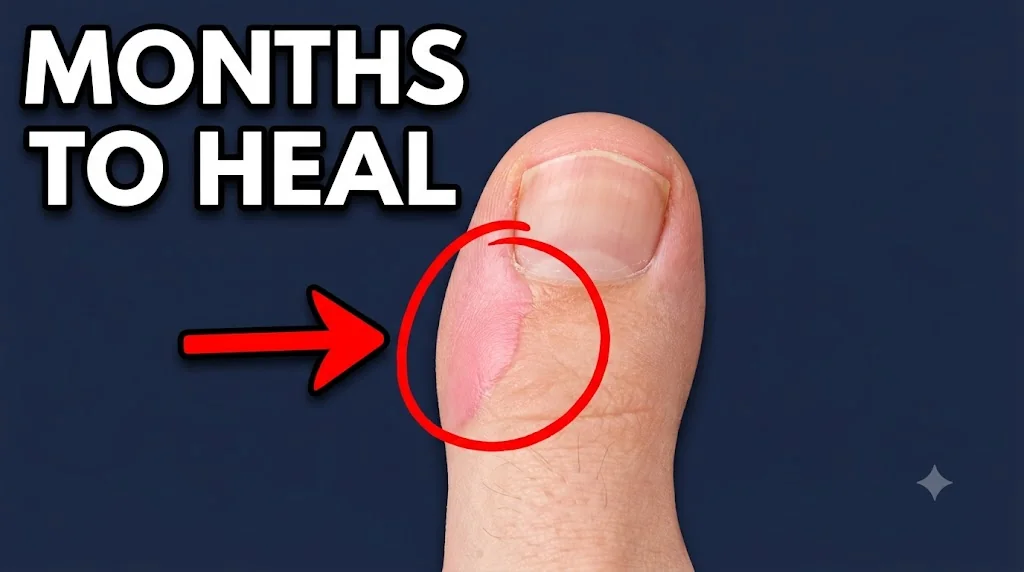
A pink, tender rim along one side of the nail is inflammation. Redness that spreads across the toe or up the foot, red streaks, or a fever points to infection, and that is when antibiotics enter the picture. Inflammation is the skin reacting to the nail edge; infection is bacteria multiplying in the tissue, and only that is what antibiotics treat.
Redness by itself is not proof of infection. What matters is direction: redness that stays at the nail fold is local, while redness that travels is spreading. Reading the signs one by one is covered in signs you need a doctor for an ingrown toenail.
The decision runs on three rungs:
- Inflamed, redness confined to the nail fold: the edge comes out of the skin, and warm soaks ease the soreness meanwhile.
- Local infection with a swollen, tender pocket: a clinician removes the edge and drains the pocket.
- Spreading redness, red streaks, fever, or higher-risk health: same-day urgent care, where antibiotics are often part of treatment.
When You Actually Do Need Antibiotics (The Red Flags)
Antibiotics earn their place when infection has moved beyond the nail fold or when the person's health makes infection risky. Doctors prescribe antibiotics for an ingrown toenail when cellulitis is spreading, when fever or chills appear, or when diabetes, poor circulation, or a weakened immune system is involved. Cellulitis is a bacterial infection of the deeper layers of skin that spreads outward, leaving the area red, warm, swollen, and tender.
Treat these as red flags and seek same-day care:
- Redness spreading across the toe or onto the foot
- Red streaks running from the toe toward the foot
- Fever or chills
- Swelling, warmth, and throbbing that are getting worse, not settling
- Diabetes, nerve damage, poor circulation, or a weakened immune system alongside any sign of infection
Higher-risk groups should not wait it out, and Cleveland Clinic's ingrown toenail guide is a good reference for why.
The reverse also happens. A GP or primary care doctor who declines to prescribe, or who sends you home with advice to see a podiatrist, is often following the evidence rather than dismissing you. The question worth asking is what will be done about the nail edge, because a prescription without that answer is the start of the loop described earlier.