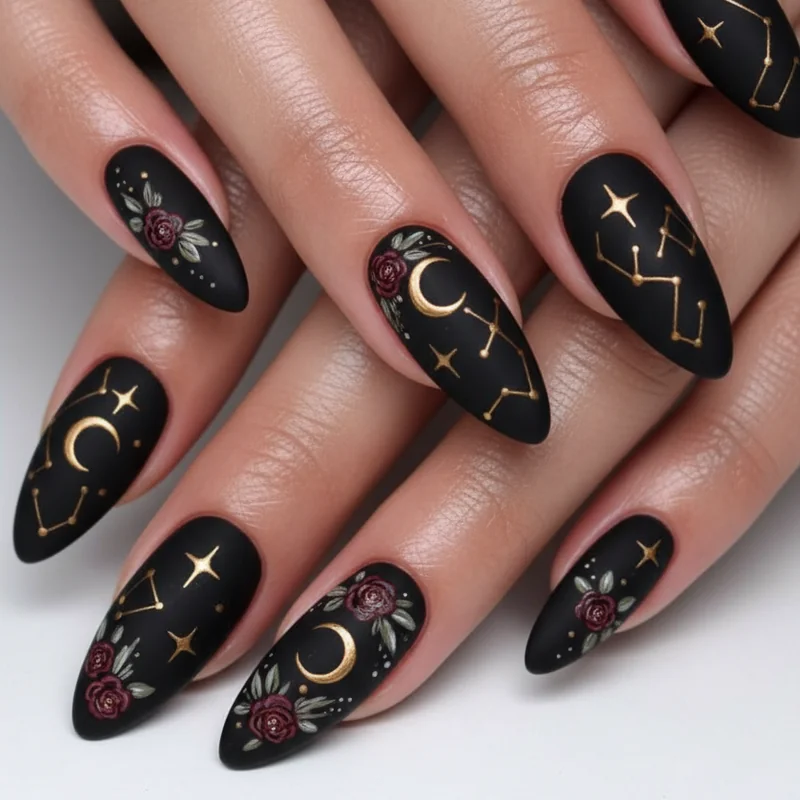
Most nail aesthetics are easy to place. Whimsigoth nails are not. They sit in a particular kind of in-between: too soft for straight gothic, too dark for fairycore, too celestial for dark cottagecore. That tension is exactly what makes them so compelling. The aesthetic has a logic, a mood, a specific cultural lineage. Once you understand it, you can spot a true whimsigoth nail set immediately. And you can build one with intention, not by accident.
This is the guide for readers who already feel the pull of this world but want the vocabulary to go deeper: the colour names, the motif combinations, the pop culture anchors that explain why a moon phase on matte plum feels right, and a skull on glossy black feels like something else entirely. Whether you're taking inspiration to your next appointment or building a set yourself, what follows will give you the full picture.
What Actually Makes Nails "Whimsigoth" (And How It Differs From Witchy or Dark Cottagecore)
Most people assume whimsigoth is just gothic with a softer colour palette. It is not. The distinction is more specific than that, and it matters, especially if you're trying to communicate the look to a nail tech or build a set that feels cohesive rather than just dark.
The term itself was coined by Consumer Aesthetics Research Institute co-founder Evan Collins to describe an aesthetic that fuses gothic darkness with whimsical, ethereal lightness: vintage-inflected, nostalgia-led, and defined by a specific mood rather than a set of symbols. As covered by covered by Bustle, it's Stevie Nicks, Lisa Bonet, Sandra Bullock and Nicole Kidman in Practical Magic. It's Tim Burton's colour palette. Not his horror, his magic..
What separates whimsigoth from witchy nails is intent. Witchy nail art reaches for occult weight: stark black, pentacles, skulls, a deliberately serious darkness. Whimsigoth softens that edge with celestial whimsy, dusty colour, and nostalgic references that feel enchanted rather than foreboding. It's the difference between a spell and a dream.
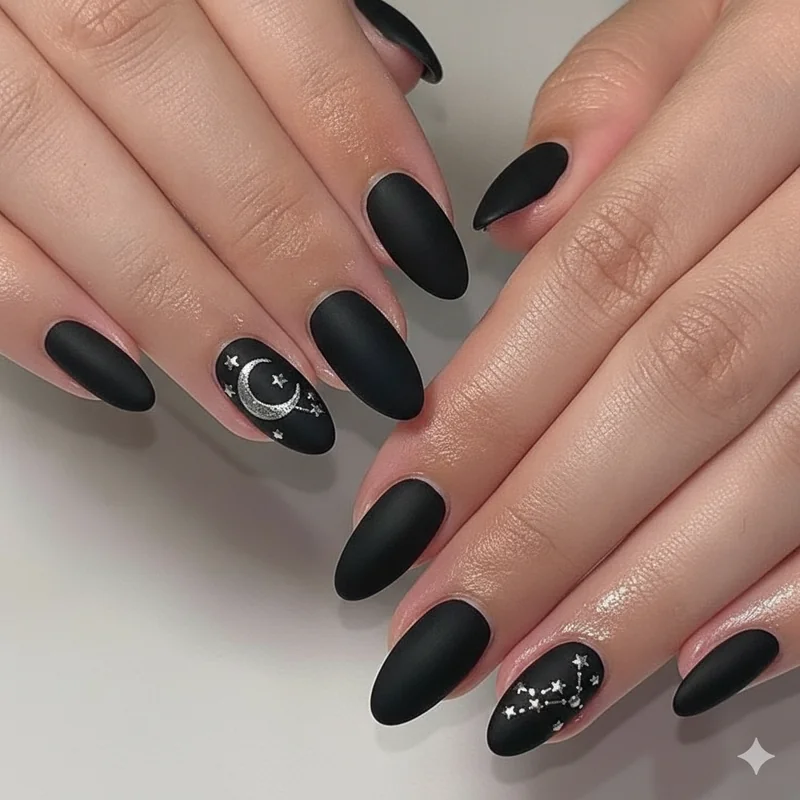
The distance from dark cottagecore is similar but different in direction. Dark cottagecore stays earthbound, rooted in mushrooms, pressed botanicals, forest browns, and natural textures. Whimsigoth reaches upward, toward the celestial. Moon phases replace toadstools. Constellations replace leaf motifs. The palette overlaps in places (dusty mauve, deep plum, muted sage), but whimsigoth carries more of the supernatural.
For the full goth lineage this aesthetic sits within, Goth Nails: The Ultimate Guide to Dark & Edgy Nail Art maps the broader family tree. Whimsigoth is one of the most distinctive branches on it.
The Colour Palette: Deep, Moody, and a Little Magical
Four coats of flat black is not a whimsigoth nail. That's the single most useful piece of information for building the palette correctly.
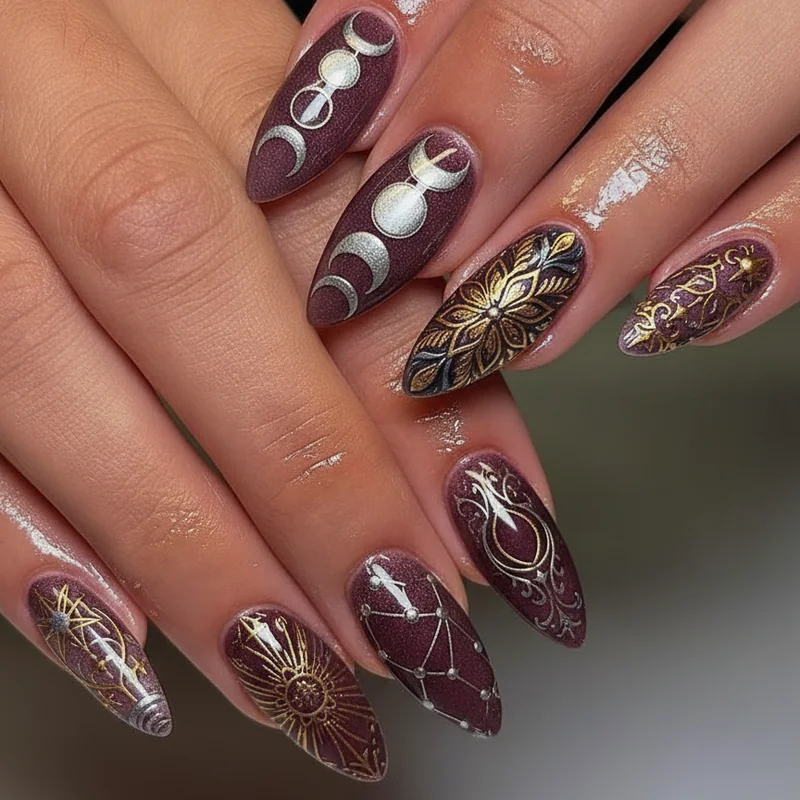
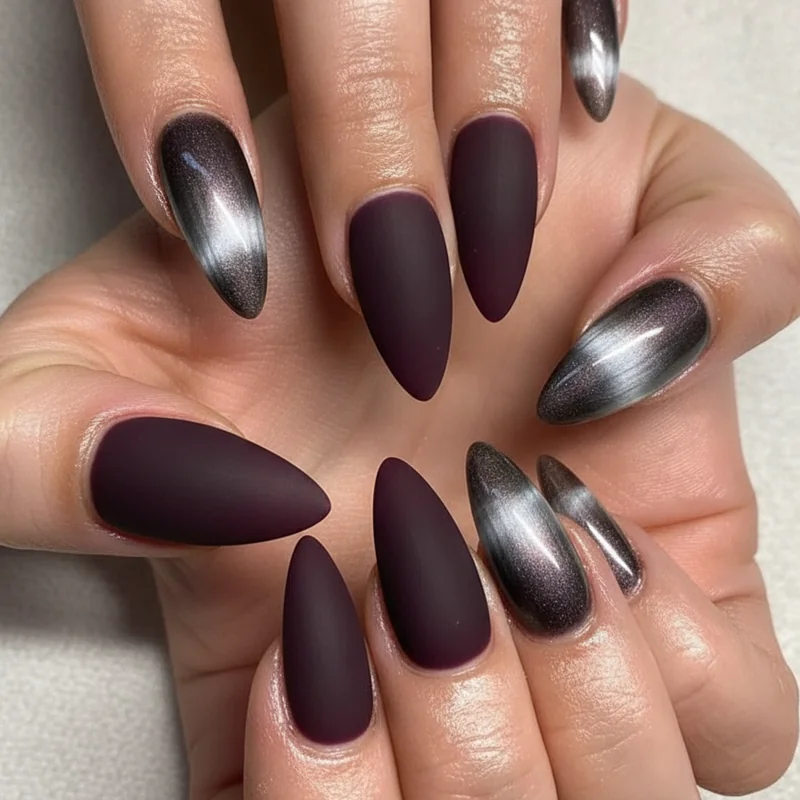
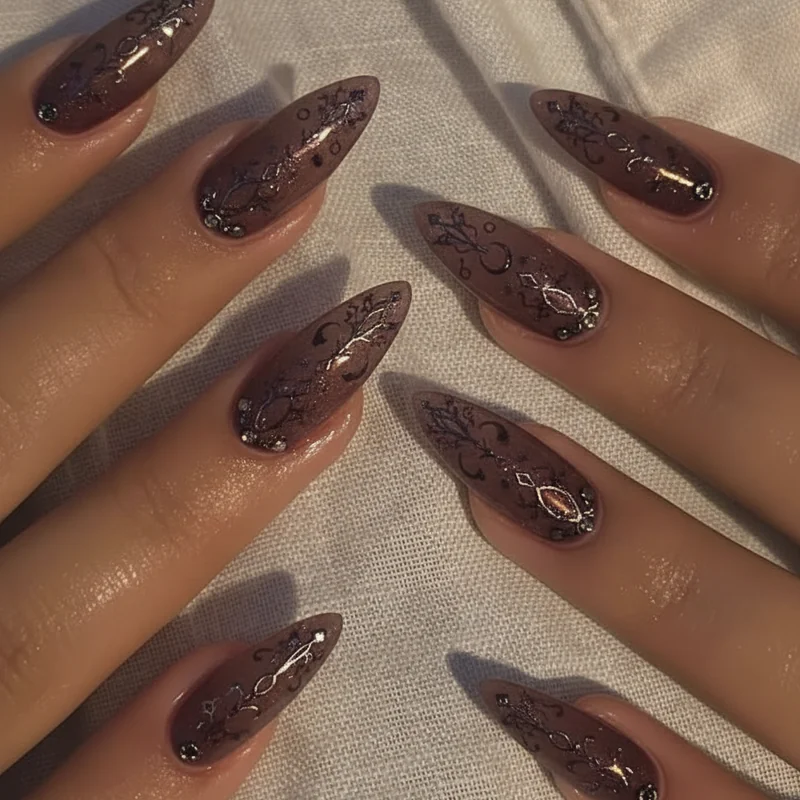
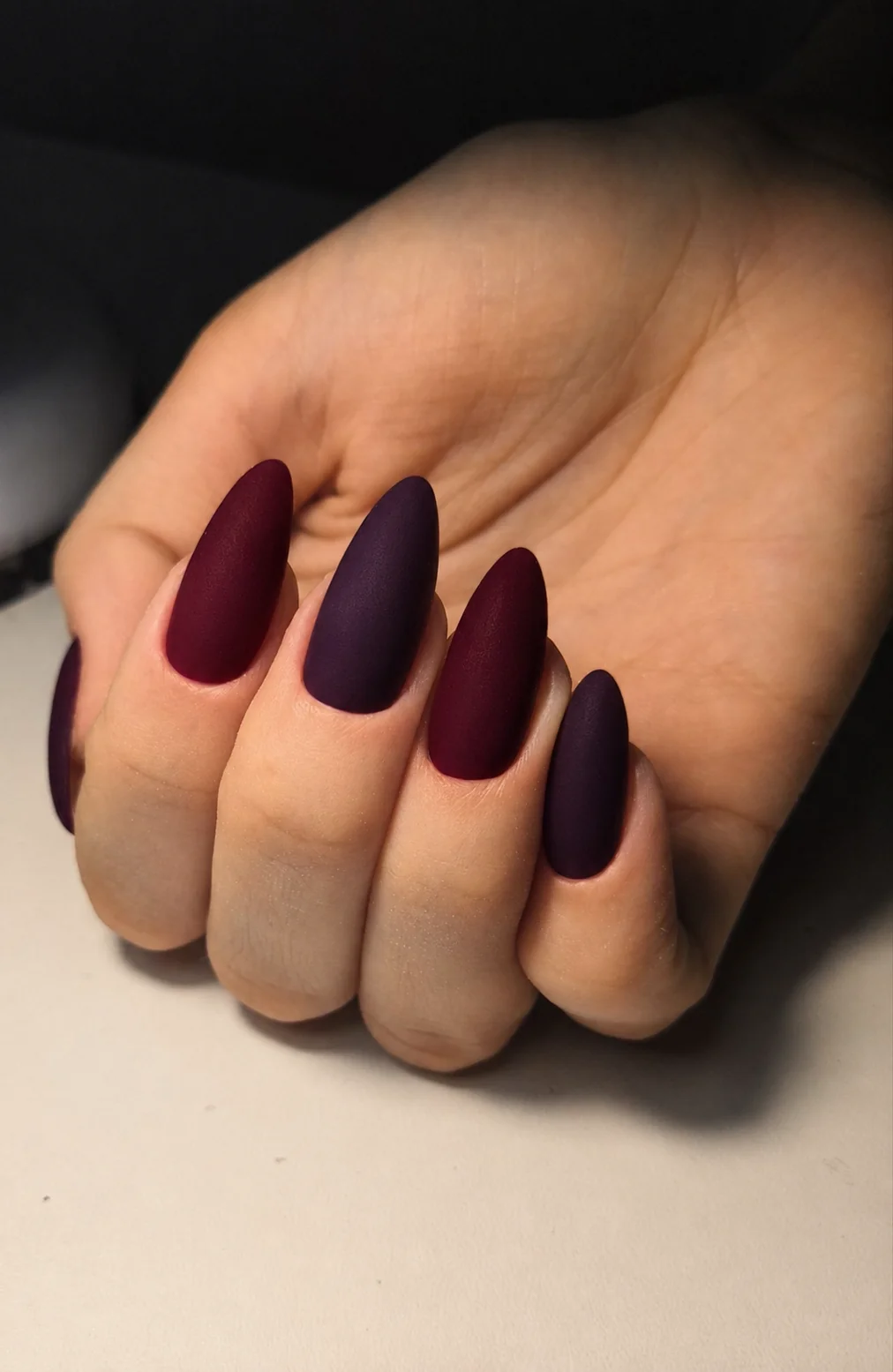
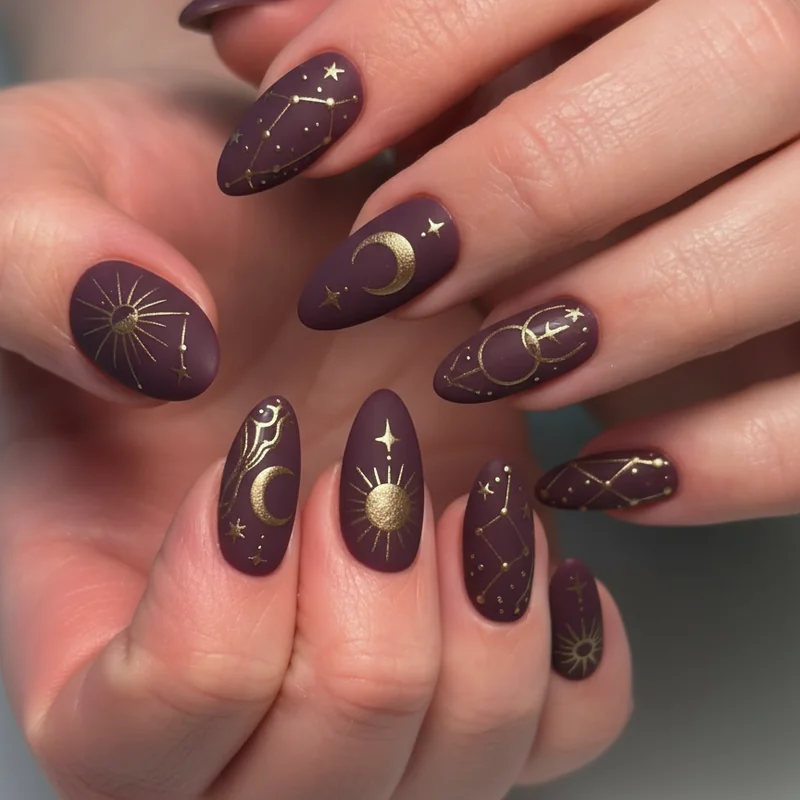
The whimsigoth nails colour vocabulary lives in the muted, the deep, and the slightly otherworldly: matte black as a base rather than a statement, deep plum and blackened burgundy as warm counterpoints, dusty lavender and smoky mauve for softness that still reads dark. Tarnished gold and aged silver for metallics, never bright chrome, always with a patina. Moonstone white and translucent grey for accent nails.
What unites the palette is the absence of brightness. Even the lighter shades, the lavender and the pale grey, are muted, as if seen through fog or by candlelight. This is what separates a whimsigoth set from a pastel goth one. Pastel Goth Nails: Soft Colors, Dark Edge leans into contrast: candy pink against black, lilac against charcoal. Whimsigoth removes that contrast and replaces it with atmosphere.
A starter palette for 2026: matte black base, one nail in dusty mauve or deep plum, one in aged gold or gunmetal chrome, with any art in either off-white or tarnished silver. That combination is the aesthetic in its most concentrated form.